
1943Steel Penny
The 1943 Steel Penny is a zinc-coated steel Lincoln cent produced during World War II. Its silver-gray color, magnetic core and wheat reverse make it relatively easy to identify.
Reviewed by Coins Identification editorial team · Updated September 14, 2026
- Magnetic
- Zinc-coated steel
- 2.70 g
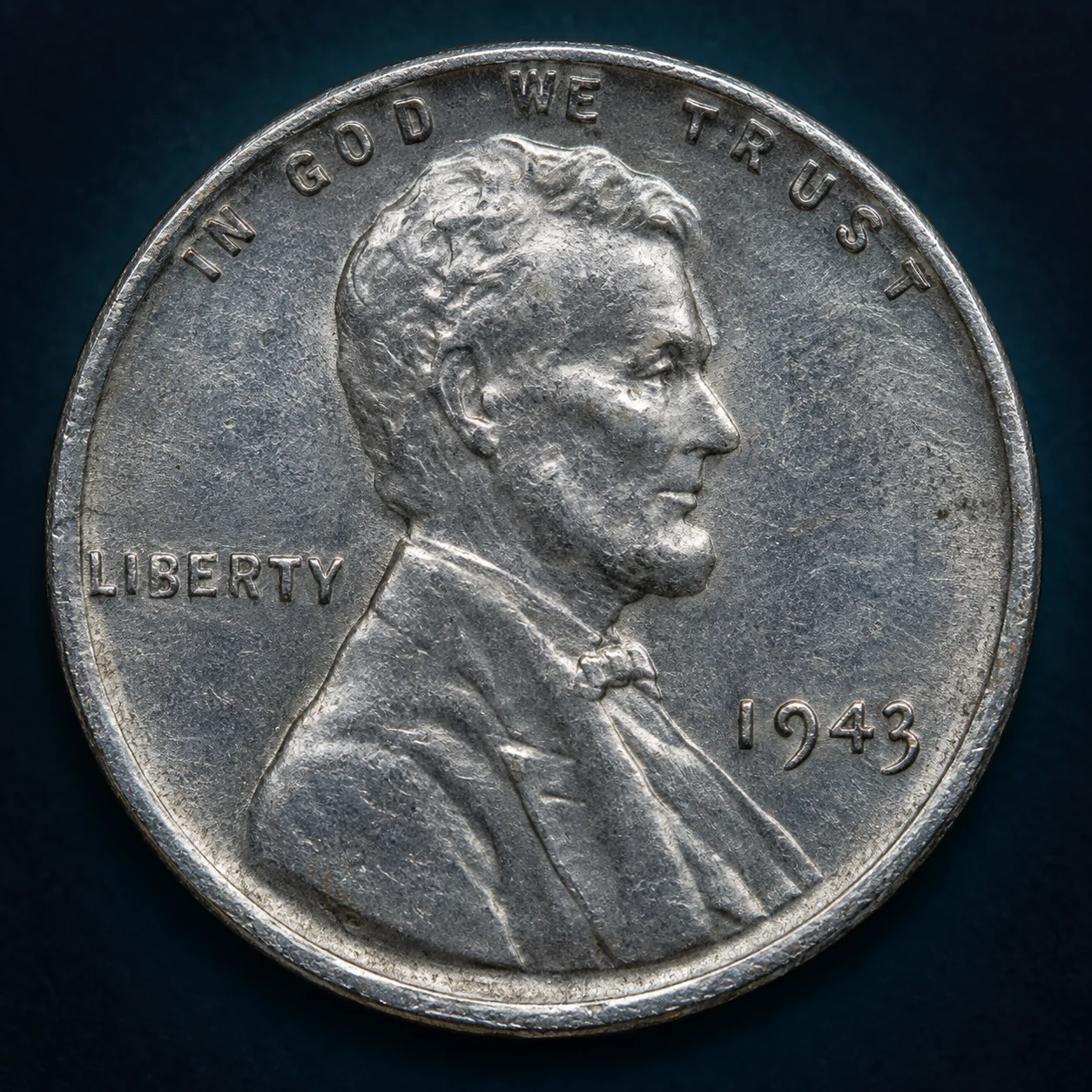
1943 Steel Penny
Zinc-coated steel, silver-gray appearance
- Weight2.70 g
- Diameter19.05 mm
- CompositionZinc-coated steel
- EdgePlain
- Magnet testMagnetic
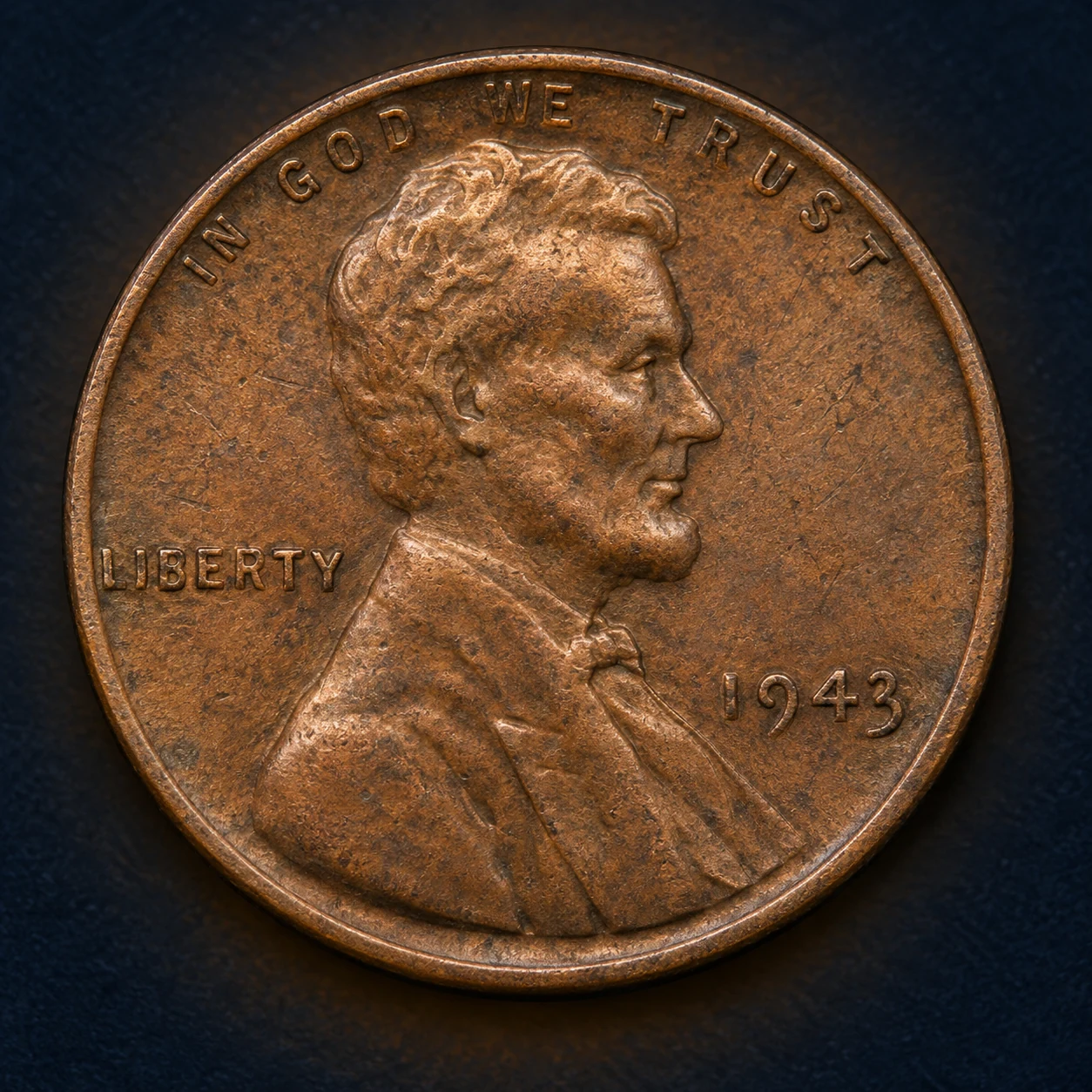
1943 Bronze Penny
Copper / brown appearance
- Weight3.11 g
- Diameter19.05 mm
- CompositionCopper (bronze)
- EdgePlain
- Magnet testNon-magnetic
How Much Is a 1943 Steel Penny Worth?
Typical range for ordinary examples, depending on condition, mint mark, originality and current collector demand.

- CirculatedHeavier wear, common examples ≈ $0.10 – $1
- Better conditionMore detail, original surface ≈ $1 – $10+
- Higher grades / attractive originalsStrong detail, attractive original coin ≈ $10 – $50+


How to Identify a 1943 Steel Penny
Five quick checks that should agree. A single clue—especially color—is not enough.
- 01 ColorSilver-gray
- 02 Magnet testShould be attracted
- 03 WeightAbout 2.70 g
- 04 ReverseTwo wheat ears
- 05 Mint markNo mark / D / S


-
01
Color · Silver-gray
Start with the zinc-coated steel appearance. Circulation, oxidation and corrosion can make a coin dull or dark.
-
02
Magnet test · Should be attracted
A normal 1943 steel cent is magnetic. Hold the magnet close; do not scrape the coin.
-
03
Weight · About 2.70 g
Use a scale that reads to 0.01 g. Wear, dirt and corrosion may shift a reading slightly.
-
04
Reverse · Two wheat ears
The reverse has wheat ears around ONE CENT and UNITED STATES OF AMERICA.
-
05
Mint mark · No mark / D / S
Look just below the date. D means Denver, S means San Francisco, and no letter means Philadelphia.

Is Your 1943 Penny Steel or Something Unusual?
A brown-looking coin is a reason to check the evidence, not to assume a rare error.
Normal 1943 Steel Penny
- Silver-gray
- Magnetic
- About 2.70 g
- Zinc-coated steel
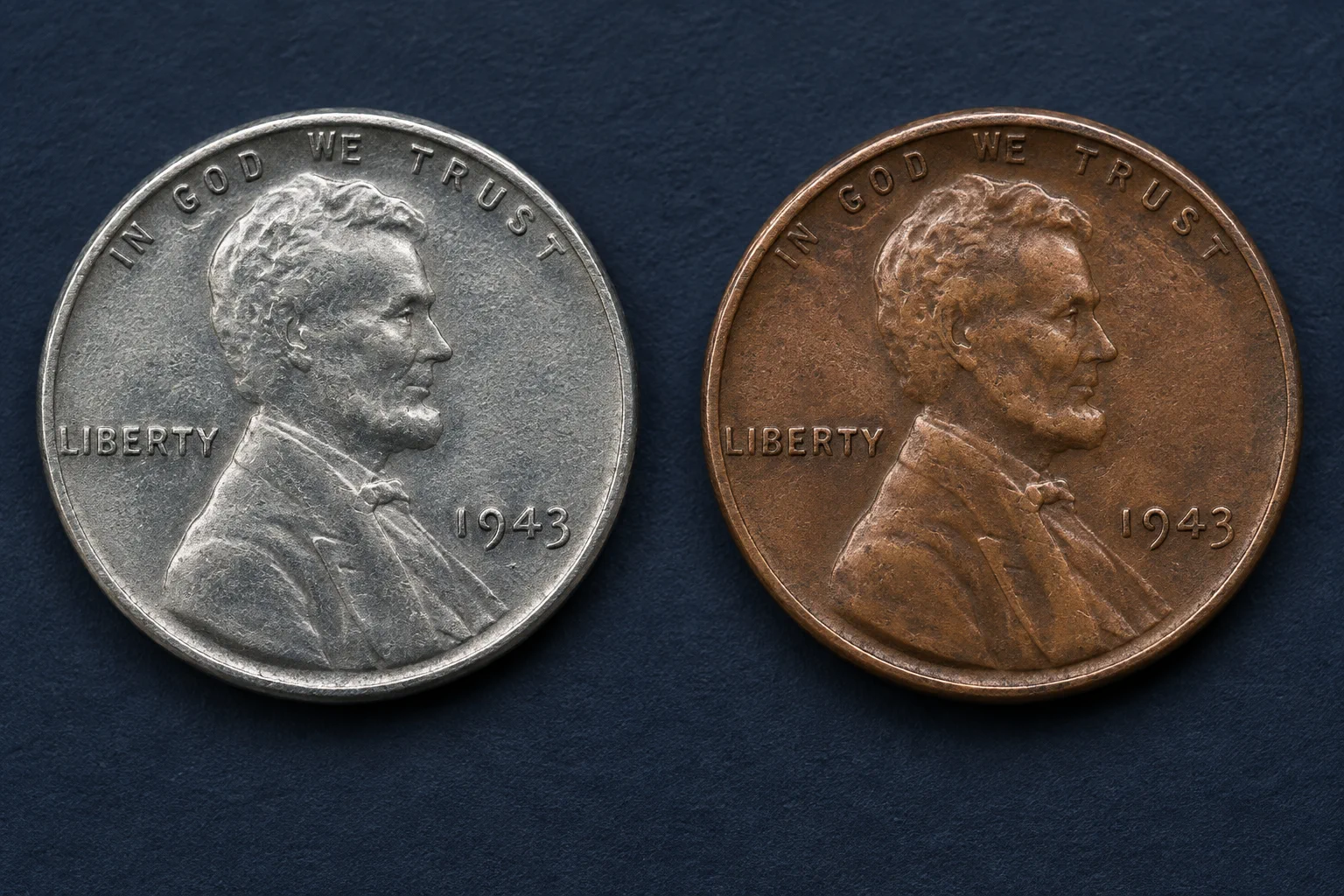
Possible Unusual 1943 Penny
- Copper / brown appearance
- Non-magnetic
- Weight may differ
- Requires additional verification
1943 Steel Penny vs 1943 Bronze Penny
Compare color, composition, magnet response, weight and rarity. No single clue can authenticate a coin.
1943 Steel PennyCommon issue1943 Bronze PennyPossible rare error
Where Is the Mint Mark?
Check directly below the date. The mark may be tiny, so use a straight-on close-up and soft side lighting.
The mint mark appears below the date when present. No letter indicates Philadelphia.
Anatomy of a 1943 Steel Penny
Use the inscriptions and design placement to confirm you are comparing the same type.
- IN GOD WE TRUST
- LIBERTY
- Abraham Lincoln portrait
- 1943 date
- Mint mark below the date when present
- E PLURIBUS UNUM
- ONE CENT
- UNITED STATES OF AMERICA
- Two wheat ears frame the denomination
How Condition Affects Value
The same coin can be worth very different amounts depending on its condition.
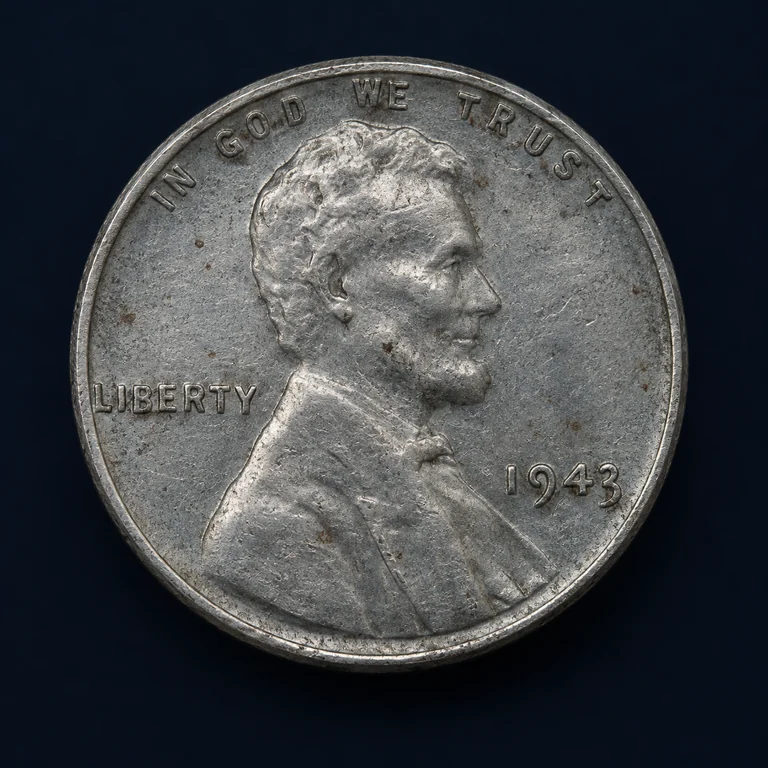
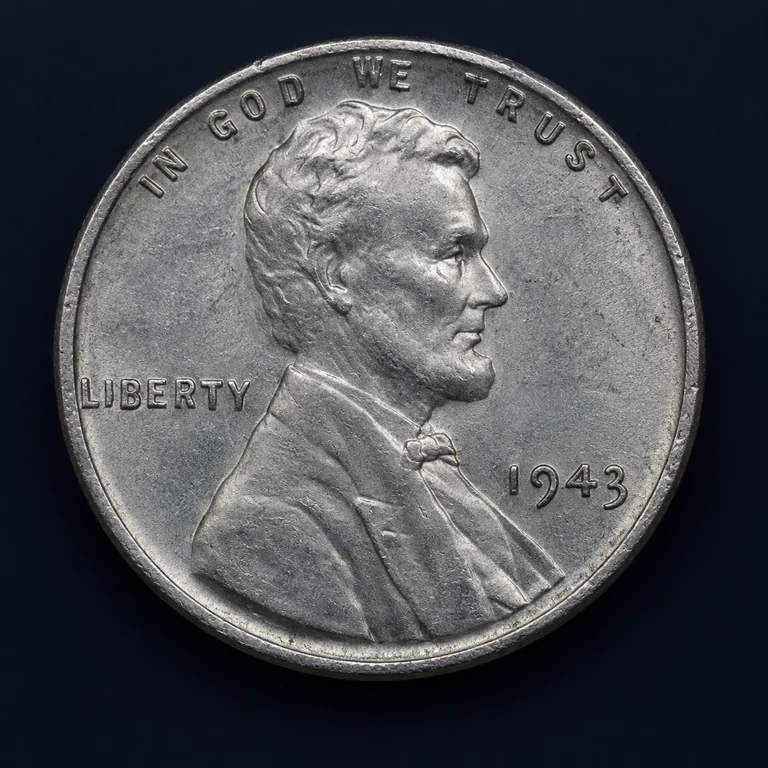
Circulated
Everyday wear- Visible wear
- Softer design detail
- Possible darkening or spots
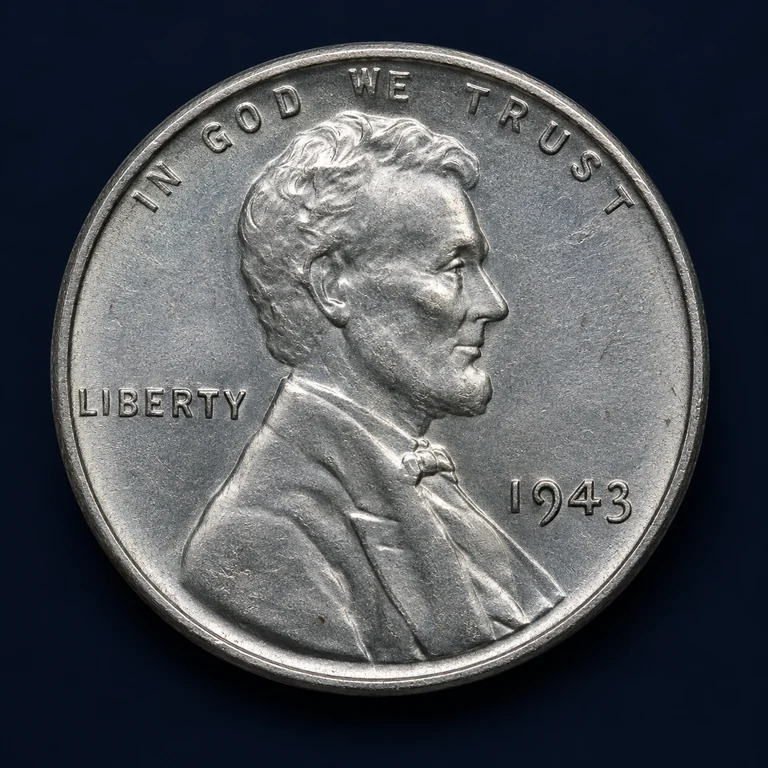
Better condition
Cleaner appearance- Sharper design detail
- More original surface
- Limited corrosion
Higher grade / attractive example
Exceptional quality- Strong detail
- Attractive original coating
- Fewer marks and spots
Illustrative value ranges only.
Check detailed value1943 Steel Penny Value Guide
≈ $0.10 – $50+Updated September 14, 20261943 — Philadelphia
No mint mark| Grade | Guide value |
|---|---|
| G4–XF40 · circulated | ≈ $1 – $22 |
| MS60 | ≈ $24 |
| MS63–MS64 | ≈ $26 – $27 |
| MS65 | ≈ $30 |
| MS66 | ≈ $45 |
| MS67 | ≈ $200 |
| MS68 | ≈ $4,250 |
1943-D — Denver
D mint mark| Grade | Guide value |
|---|---|
| G4–XF40 · circulated | ≈ $1 – $22 |
| MS60 | ≈ $24 |
| MS63–MS64 | ≈ $26 – $27 |
| MS65 | ≈ $30 |
| MS66 | ≈ $42 |
| MS67 | ≈ $185 |
| MS68 | ≈ $3,250 |
1943-S — San Francisco
S mint mark| Grade | Guide value |
|---|---|
| G4–XF40 · circulated | ≈ $1 – $22 |
| MS60 | ≈ $24 |
| MS63–MS64 | ≈ $26 – $27 |
| MS65 | ≈ $40 |
| MS66 | ≈ $70 |
| MS67 | ≈ $200 |
| MS68 | ≈ $3,750 |
What Affects the Value?
Several factors influence what collectors are willing to pay. Consider the bigger picture, not just one feature.
Condition
Wear, marks and surface preservation affect collector demand.
Mint mark
Philadelphia, Denver and San Francisco can differ by grade and variety.
Original surface
Rust, cleaning, polishing and replating can change desirability.
Authenticity / variety
Unusual metal or die claims need evidence and specialist review.
Common Identification Mistakes
Simple assumptions can be misleading. Here are common mistakes to avoid.
Copper color = rare
Not necessarily.Color alone cannot authenticate a rare variety.
Shiny = high grade
Not necessarily.Replated steel cents can look unusually bright.
Non-magnetic = valuable
No.It means the coin needs more testing and authentication.
Old coin = expensive
No.Rarity, condition, demand and authenticity matter more.
60-Second Check
Compare the physical coin, not just a photo or scan result.
- Date reads 1943
- Silver-gray appearance
- Sticks to a magnet
- Weight near 2.70 g
- Wheat reverse
- Mint mark checked
Compare Similar Pennies
1943 Bronze Penny
Rare wrong-planchet issue. Compare color, weight and magnet response.
View coin1943-D Steel Penny
Denver Mint issue with the D mint mark below the date.
View coin1943-S Steel Penny
San Francisco issue with the S mint mark below the date.
View coin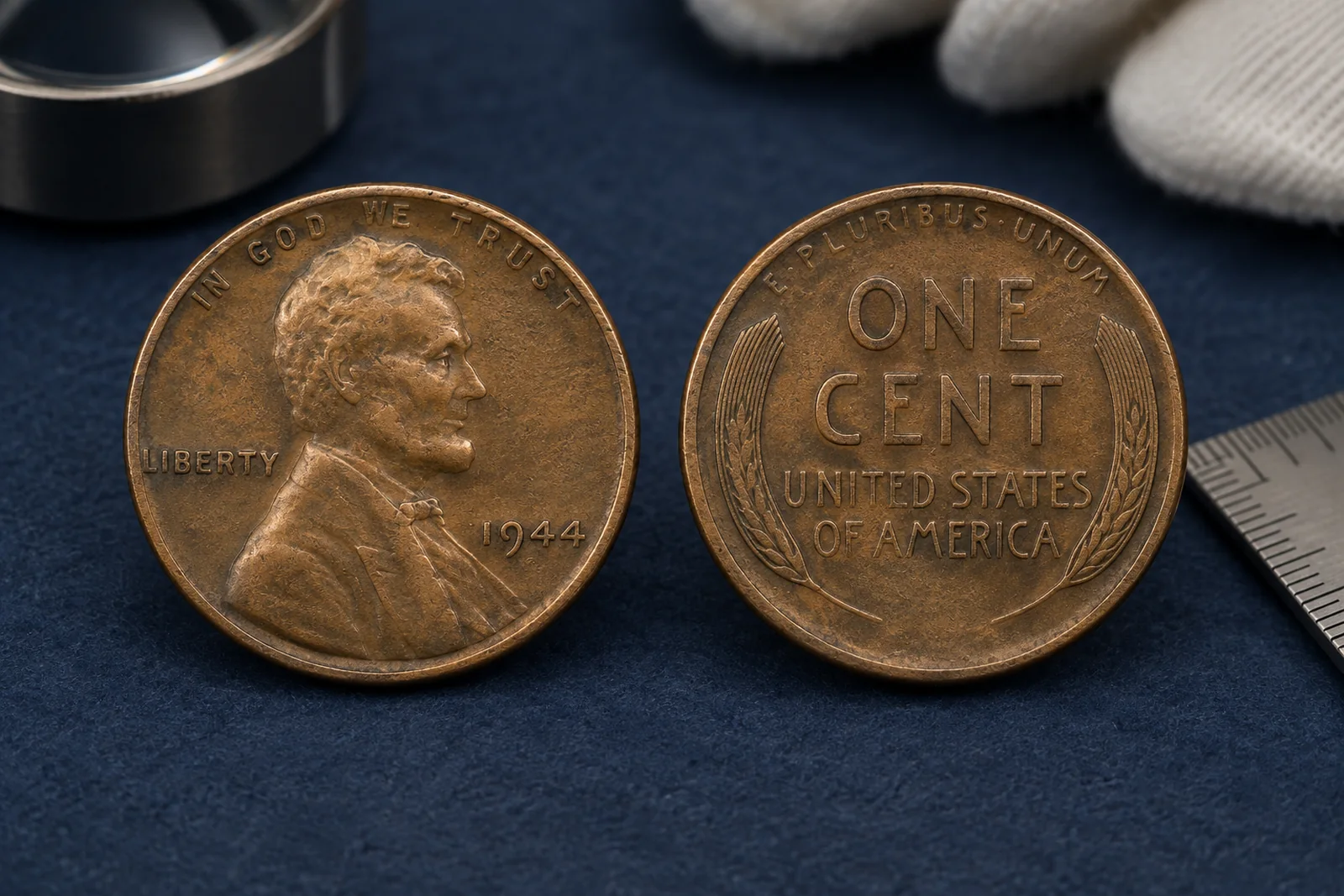
1944 Wheat Penny
Next-year bronze issue for a quick metal and weight comparison.
View coinFrequently Asked Questions
Why is my 1943 penny silver?
Regular 1943 cents were struck on zinc-coated steel instead of the usual bronze alloy, giving them a silver-gray appearance.
Should a 1943 steel penny stick to a magnet?
Yes. A normal steel cent should respond to a magnet. Use a gentle test and do not drag the magnet across the surface.
How much is a 1943 steel penny worth?
Most circulated examples are modestly valued. Grade, mint mark, original surface, authenticity and current demand all matter; use the ranges on this page as estimates only.
Does a copper-colored 1943 penny mean it is rare?
No. Color can come from plating, corrosion, lighting or an altered coin. Check magnet response and weight, then use professional authentication if the results are unusual.
Where is the mint mark on a 1943 penny?
It is directly below the date. D means Denver, S means San Francisco, and no letter means Philadelphia.
Should I clean a rusty steel penny?
No. Cleaning can alter the surface and reduce collector interest. Store it dry and seek conservation advice for a potentially important coin.
How can I tell a 1943 steel penny from a bronze penny?
A normal steel cent is silver-gray, magnetic and about 2.70 g. A suspected bronze example is usually brown, nonmagnetic and near 3.11 g, but those checks are only screening clues; professional authentication is essential.
Does the mint mark affect value?
It can. Compare coins with the same mint mark and grade because population and demand can vary. The absence of a letter means Philadelphia.
Have a 1943 Penny?
Compare its date, metal, mint mark and visible details.
U.S. Mint — Penny specifications and history · PCGS CoinFacts — 1943 steel cents · PCGS Price Guide — graded Lincoln cents