
1944 Wheat Penny Value, Errors & Mint Mark Guide
Most 1944 Wheat Pennies are common bronze cents. Circulated examples are usually inexpensive, while grade, mint mark, original color and surface quality decide whether a coin deserves a premium. A genuine steel off-metal cent is a separate rarity and needs authentication.
Reviewed by the Coins Identification editorial team · Prices last reviewed September 2026
How Much Is a 1944 Wheat Penny Worth?
The ordinary bronze cent is the right starting point.
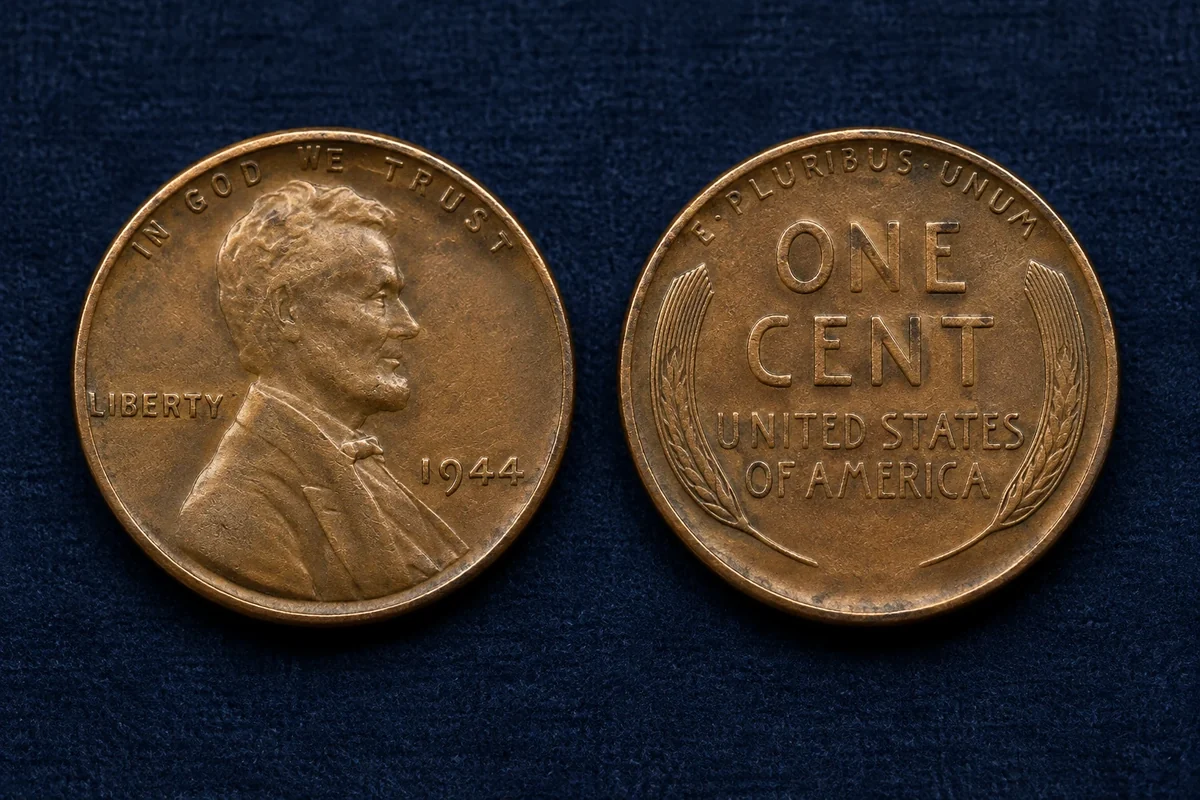
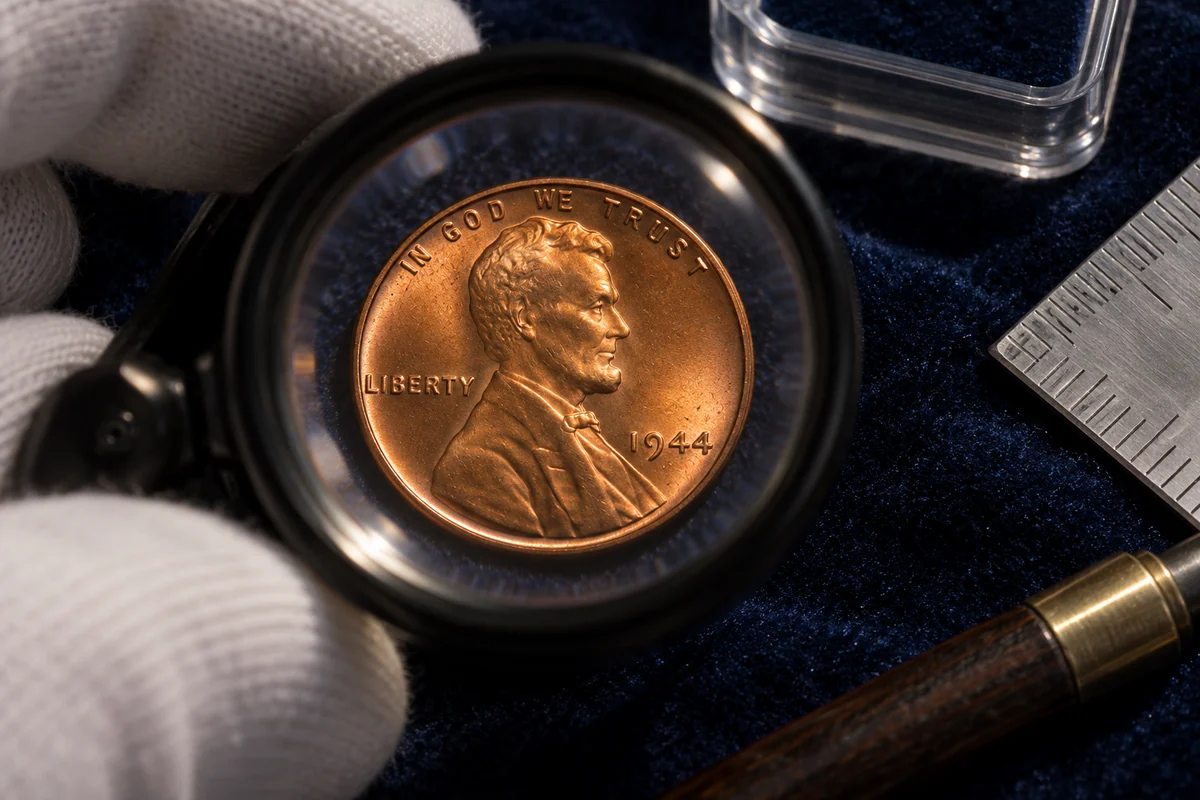
Most circulated 1944 Wheat Pennies are worth less than a dollar. That answer covers the normal bronze cents people find in old jars, albums and inherited collections. A clean, certified Mint State coin can be worth several dollars or more, and original Red color can move the price far above a Brown example at the same numerical grade. The mint mark matters because Philadelphia, Denver and San Francisco had different production totals and different populations in top grades. Surface originality matters just as much: corrosion, scratches, polishing and artificial color can reduce demand even when the date is sharp.
The rare branch is separate. A 1944 cent on a leftover zinc-coated steel planchet should weigh about 2.70 g and attract a magnet, while a normal bronze cent weighs about 3.11 g and is nonmagnetic. Those are screening clues only. Do not scratch, file or chemically test a suspected steel coin. Professional certification is essential before comparing it with a rare auction result.
1944 Wheat Penny Value at a Glance
Reference ranges for normal bronze cents.
| Issue | Circulated | Mint State | High grade | Notes |
|---|---|---|---|---|
| 1944 No Mint Mark | Usually under $1 | About $3.50 to $35 BN | RD can reach higher | Philadelphia |
| 1944-D | Usually under $1 | About $1.75 to $35 BN | RD can reach higher | Denver |
| 1944-S | Usually under $1 | About $2.50 to $40 BN | RD can reach higher | San Francisco |
Regular bronze issues only. Major varieties and off-metal errors are valued separately below. Ranges summarize the published NGC 1944 reference guide, with PCGS CoinFacts links provided for attribution and current checks.
1944 Wheat Penny Value by Mint Mark
No mark, D and S are the first branch in the guide.
1944 No Mint Mark Wheat Penny Value
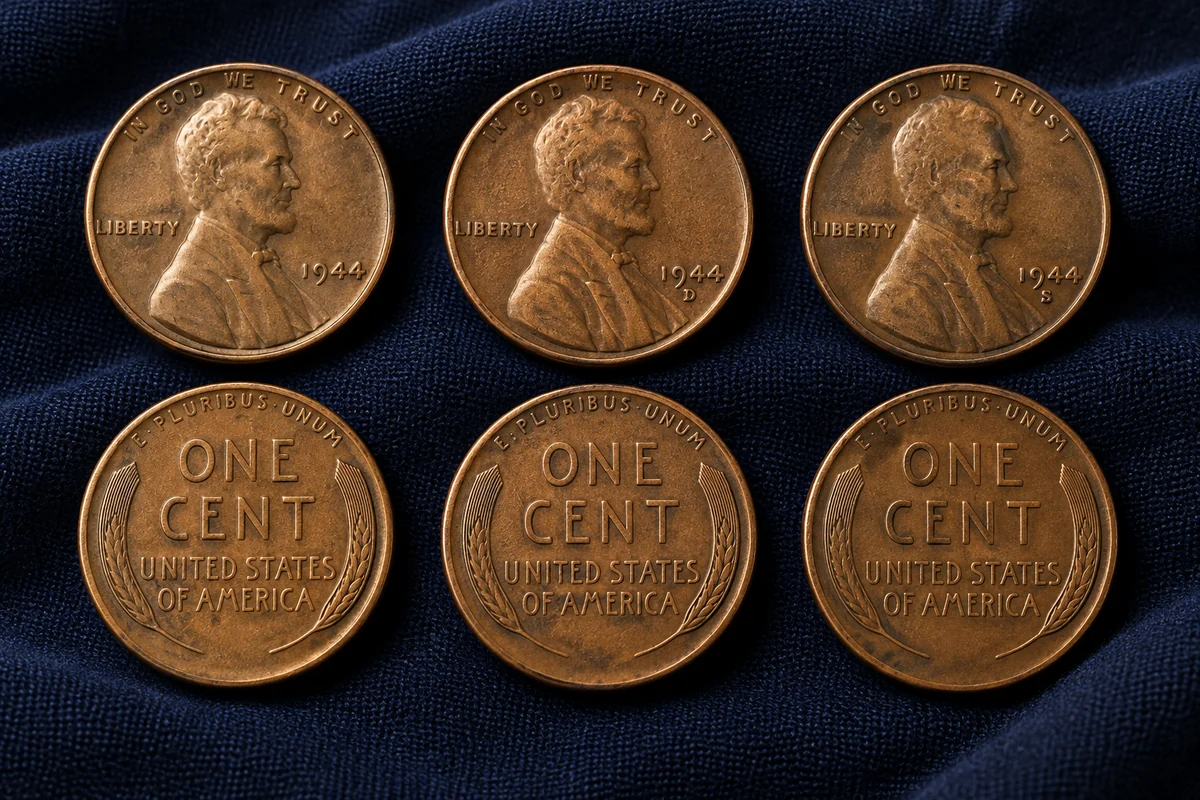
A 1944 penny with no mint mark was struck at the Philadelphia Mint. The missing letter is normal, not a mint error. Philadelphia produced 1,435,000,000 cents. Circulated examples are common; certified Mint State value depends heavily on BN, RB or RD color.
1944-D Wheat Penny Value
D identifies Denver. The regular 1944-D mintage was 430,578,000. Keep it separate from the recognized D/S overmintmark, D/D RPM and steel issues. Typical BN Mint State references run from about $1.75 at MS63 to $35 at MS67, while RD coins can bring much more.
1944-S Wheat Penny Value
S identifies San Francisco. San Francisco struck 282,760,000 cents. Ordinary circulated bronze pieces are modestly priced, but original Red coins in high certified grades are a different market from brown circulated examples.
Prices last reviewed: September 2026. Reference figures: NGC 1944 cent guide and PCGS Price Guide.
Why Is It Called a Wheat Penny or Wheat Back Penny?
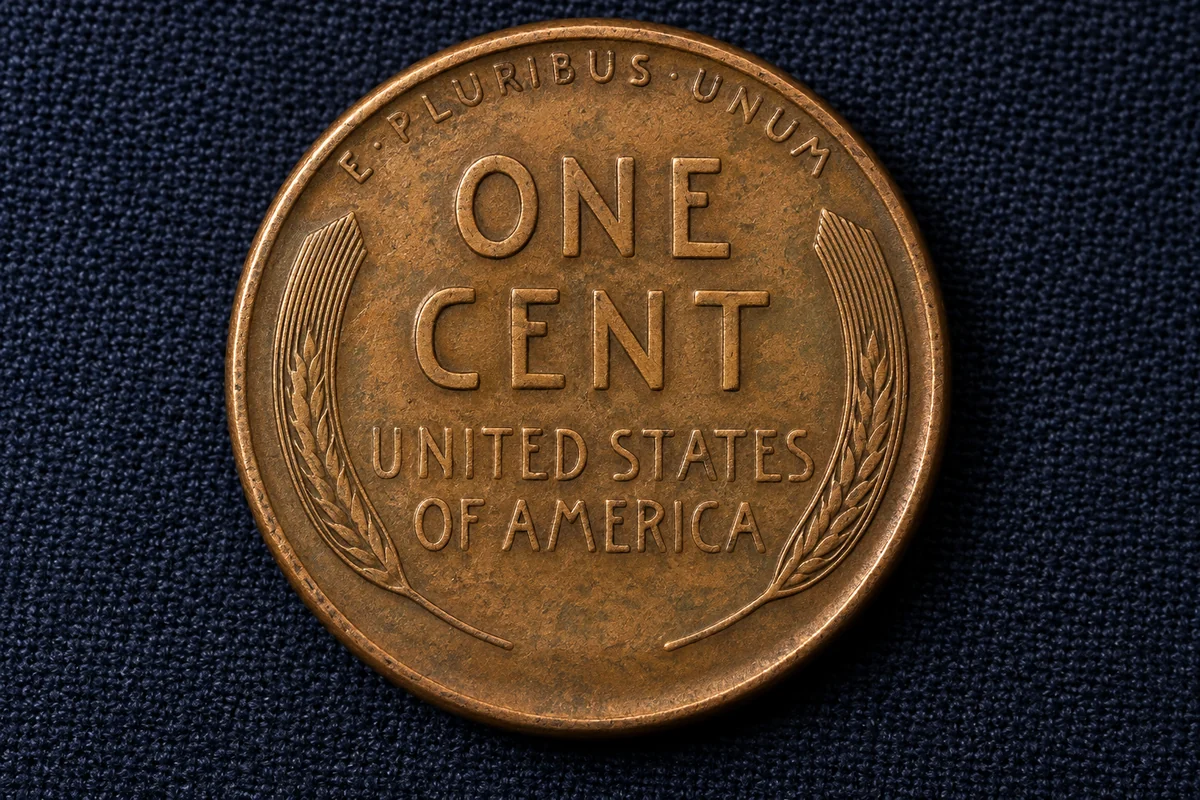
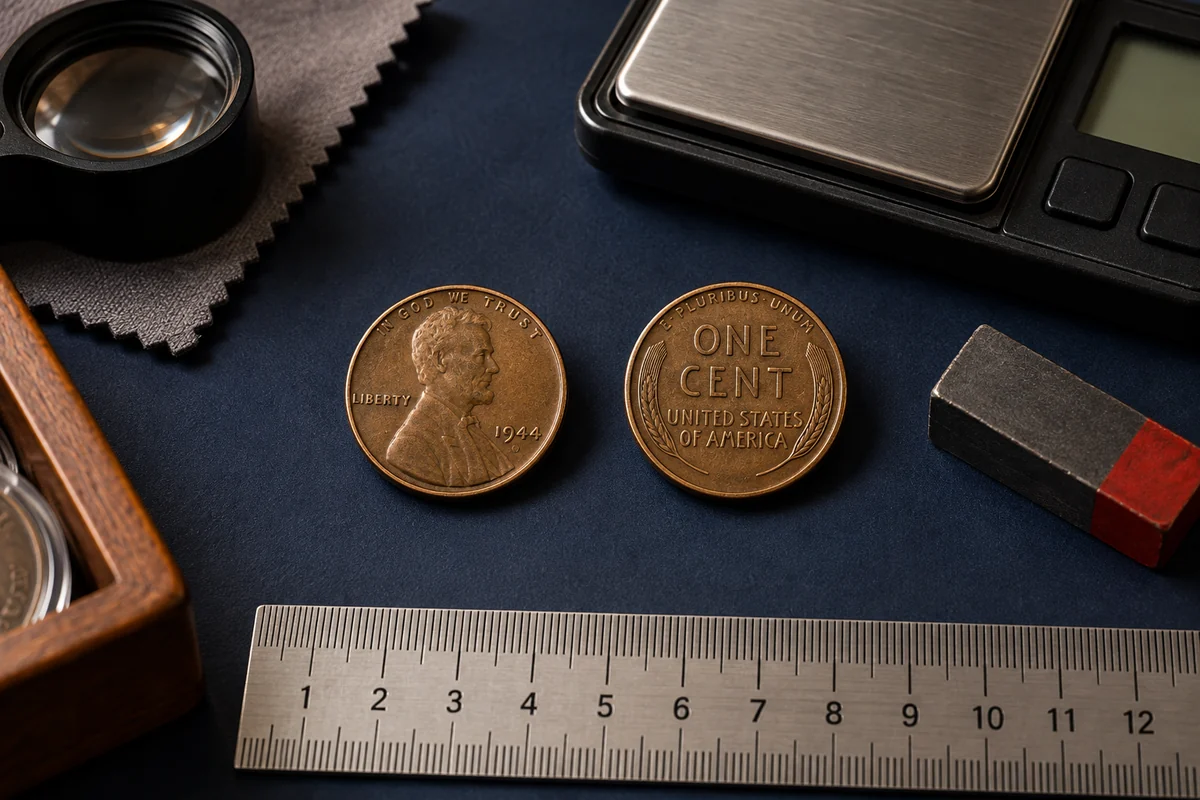
The official denomination is one cent, and the series is the Lincoln Wheat Cent. Its reverse shows two wheat ears curving around ONE CENT, UNITED STATES OF AMERICA and E PLURIBUS UNUM. Collectors usually say Wheat Penny or Lincoln cent. “Wheat back,” “wheat leaf” and “wheat head” are informal descriptions used by people trying to identify the reverse they see. The accurate design term is wheat ears.
That reverse appears on all three regular 1944 issues, so the wheat design alone does not identify Philadelphia, Denver or San Francisco. Find the mint mark below the date on the obverse.
BN, RB and RD: Why Color Changes the Value
Color is a designation, not a substitute for grade.
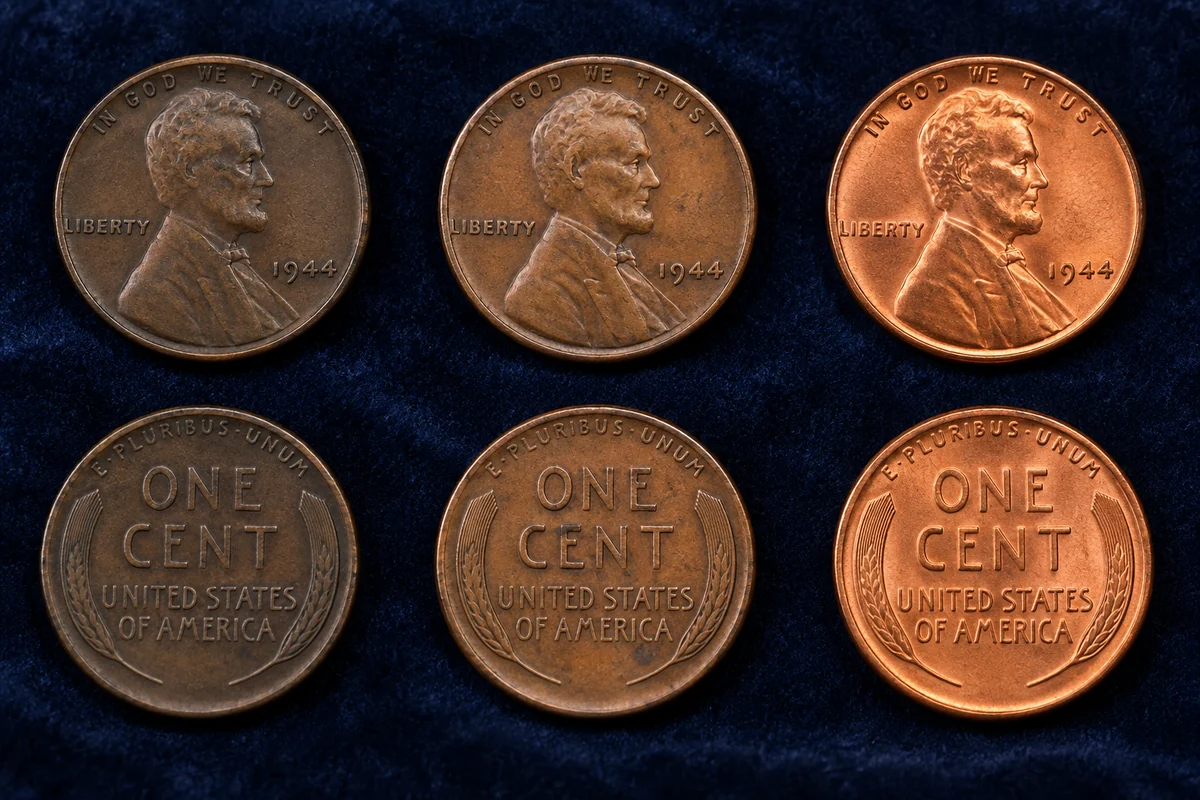
BN means Brown, RB means Red-Brown and RD means Red. The designation describes how much original red luster remains on the copper surface. It is recorded separately from the numerical grade. An MS65 BN and an MS65 RD can have very different values because the RD coin preserved more original color and usually attracts stronger demand. NGC describes RD as at least 85% original red luster, RB as at least 15%, and BN as less than 15%.
Original color is not the same as a freshly brightened surface. Cleaning, polishing, chemical treatment and recoloring can make a coin look brighter while removing the original skin. Graders examine luster, fields, protected recesses and surface disturbances before assigning a color designation. Compare color in neutral light and leave a questionable cent untouched.
1944 Wheat Penny Value by Grade and Color
Do not compare a Brown coin with a Red record.
NO MINT MARK
1944 Philadelphia- MS63 BN · $3.50
- MS63 RB · $4.75
- MS63 RD · $9
- MS67 BN · $35
- MS67 RD · $225
1944-D
Denver- MS63 BN · $1.75
- MS63 RB · $4.75
- MS63 RD · $8.25
- MS67 BN · $35
- MS67 RD · $150
1944-S
San Francisco- MS63 BN · $2.50
- MS63 RB · $2.75
- MS63 RD · $8
- MS67 BN · $40
- MS67 RD · $120
These are sourced reference points, not interpolated prices. Missing grades and color combinations should be checked in the current PCGS or NGC guide rather than filled with guesses.
What Makes a 1944 Wheat Penny Valuable?
Mint mark, numerical grade, BN/RB/RD color, original surface, strike quality, variety, wrong planchet and certification all affect the market. A sharp Red coin can be worth far more than a worn Brown example from the same mint. A recognized overmintmark can create a separate variety market. A steel planchet changes the composition question entirely.
The useful habit is to record evidence in that order. First identify the issue. Then describe wear and color without polishing it. Finally compare a certified coin with the same attribution, grade and designation. A photograph can suggest a question, but it cannot replace examination of the metal and surfaces.
1944-D/S Wheat Penny: D Over S Variety
A strange-looking D is not automatically an overmintmark.
1944-D/S Wheat Penny Value
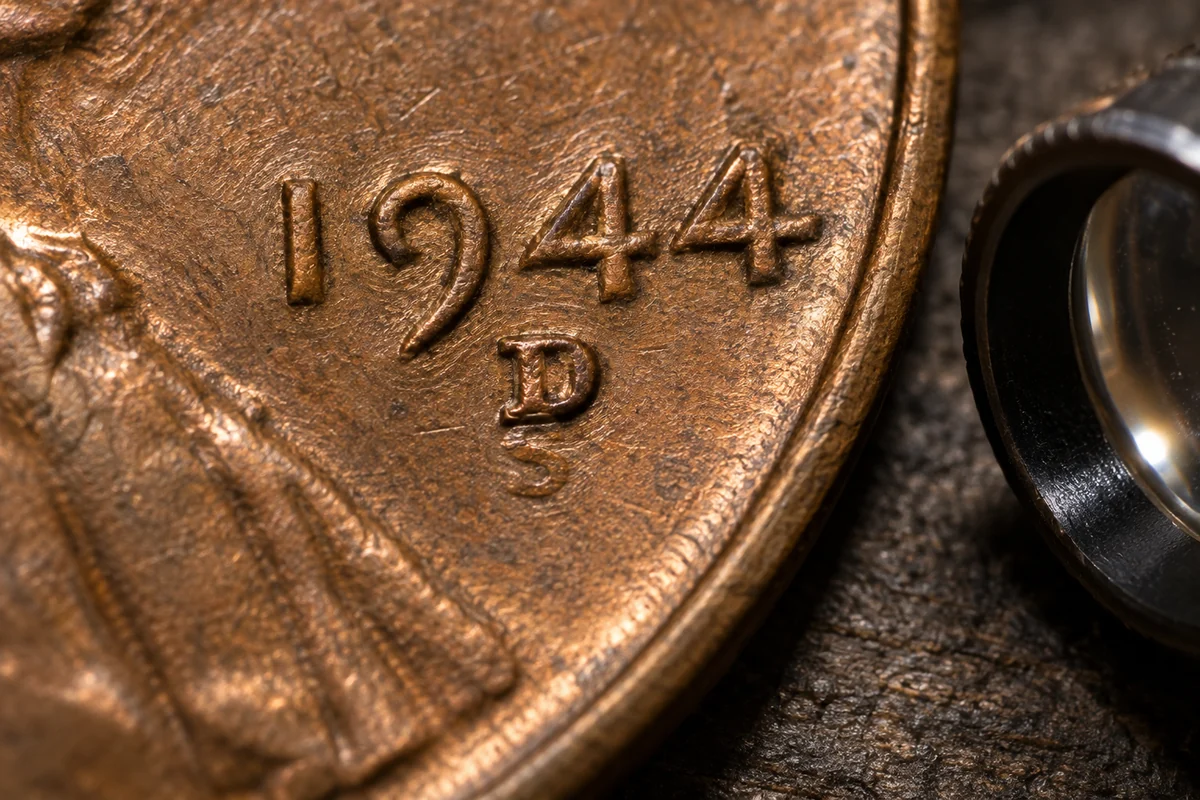
A 1944-D/S was made when a D mint mark was punched over an earlier S. The final D should show evidence that belongs to a real overmintmark, including a shape and placement that match published diagnostics. Look below the date with magnification and compare the entire letter, not one bright edge. Tool marks, scratches and die fill can mimic a second letter.
PCGS catalogs the major D/S attribution as FS-511, while NGC VarietyPlus uses service-specific nomenclature for its 1944 D/S listings. The label on a certified coin matters. One documented NGC MS66 RD FS-512 example realized $1,020 at Heritage in October 2022, which shows why the variety must stay separate from a regular 1944-D value. Confirm the attribution with a recognized service before using a D/S comparable.
Mint Error or Post-Mint Damage?
These are the error and variety clues worth checking.
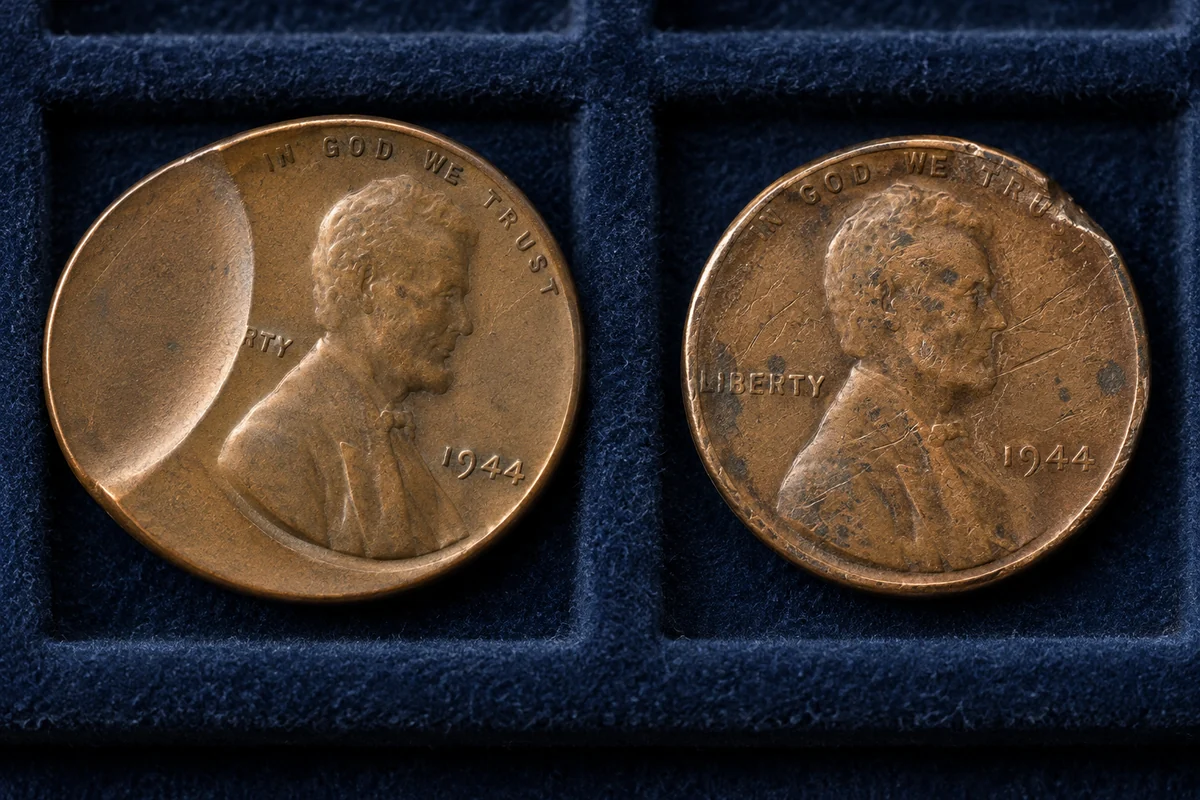
Possible mint-created
- 1944-D/S overmintmark
- Documented D/D RPM varieties
- Off-center strike
- Clipped planchet
- Die crack
- Wrong planchet or steel off-metal
Usually post-mint
- Scratches and dents
- Corrosion or plating
- Polishing and cleaning
- Chemical discoloration
- Weak detail from ordinary wear
1944 Steel Wheat Penny Value and Identification
A normal 1944 Wheat Penny is bronze, not steel.
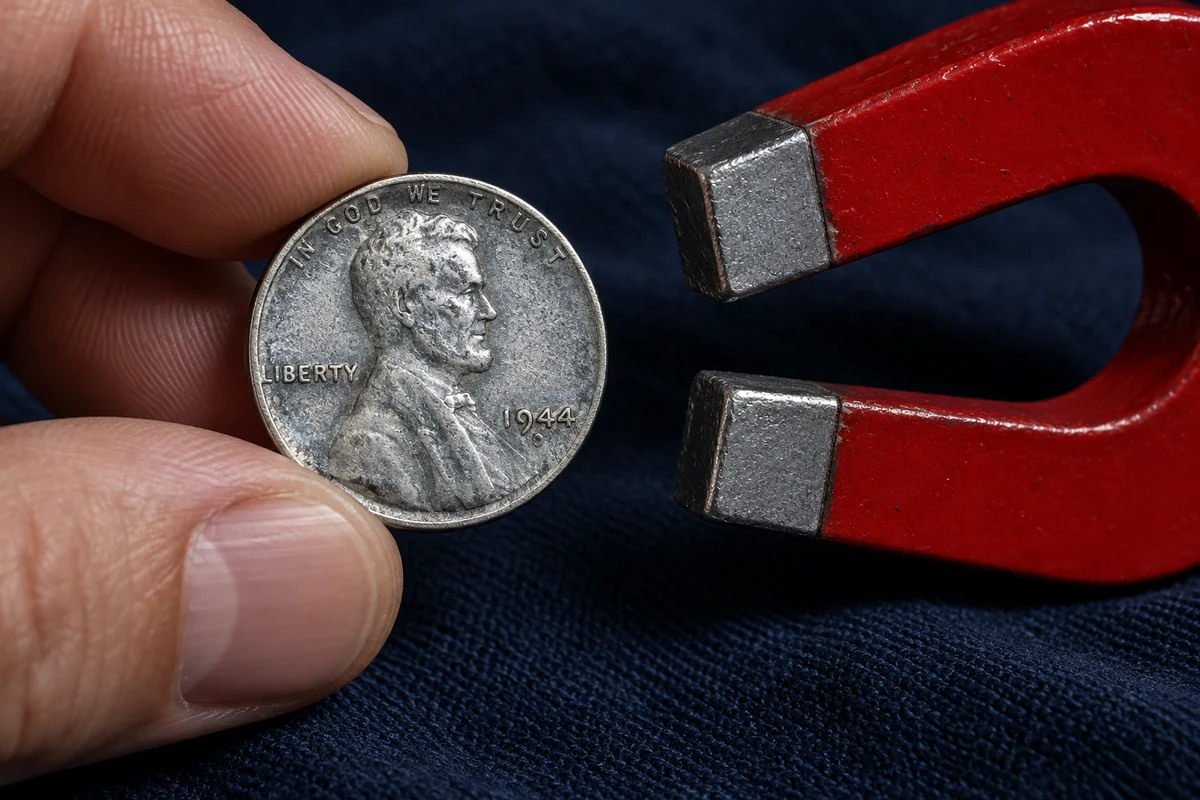
A genuine 1944 steel cent is an extremely rare wrong-planchet error. The normal bronze cent weighs about 3.11 g and is nonmagnetic. A possible steel candidate is near 2.70 g and magnetic because it uses the zinc-coated steel planchet associated with 1943. A magnet and a scale are screening tools only. Plating, corrosion, an altered date or a damaged surface can create the same visual story, so professional authentication is essential.
Verified public examples
| Issue | Grade | Certification | Auction house | Date | Realized |
|---|---|---|---|---|---|
| 1944 Steel, Philadelphia | MS64 | PCGS | Heritage | Jun 20, 2021 | $180,000 |
| 1944-D Steel | MS63 | NGC | Heritage | Aug 2007 | $115,000 |
| 1944-S Steel | MS66 | PCGS | Heritage | Aug 22, 2021 | $408,000 |
These are individual auction results, not a value for a raw gray coin and not a price guide for normal bronze cents.
1944-S Steel Wheat Penny
Keep this separate from the normal 1944-S bronze cent. PCGS identifies the steel issue as an extremely rare San Francisco off-metal striking, with only a handful of known examples and a documented MS66 Heritage result. The date, S, weight, magnetic response, strike and certification must agree.
1944-D Steel Wheat Penny
The Denver steel issue is also a wrong-planchet rarity, separate from the common 1944-D bronze cent and from D/S varieties. Do not use its auction records to price a normal copper-colored or plated coin.
Could My Silver-Colored 1944 Penny Be Plated or Altered?
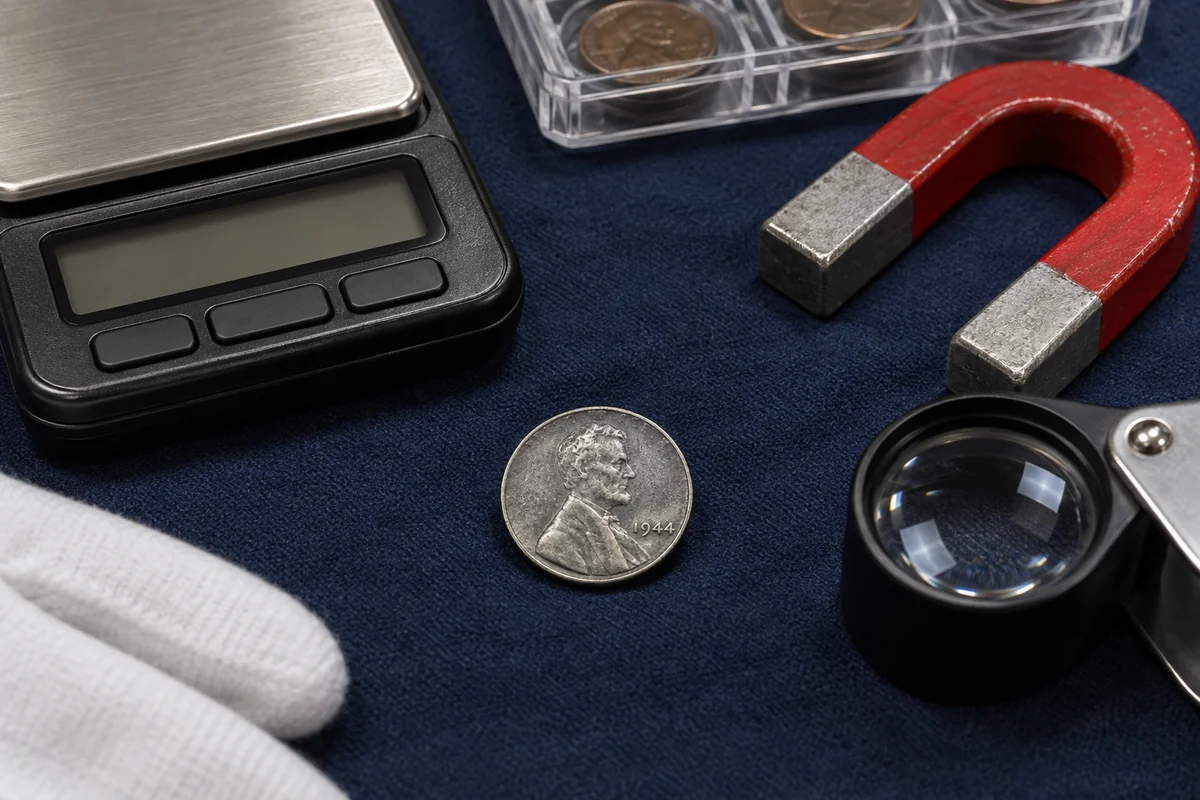
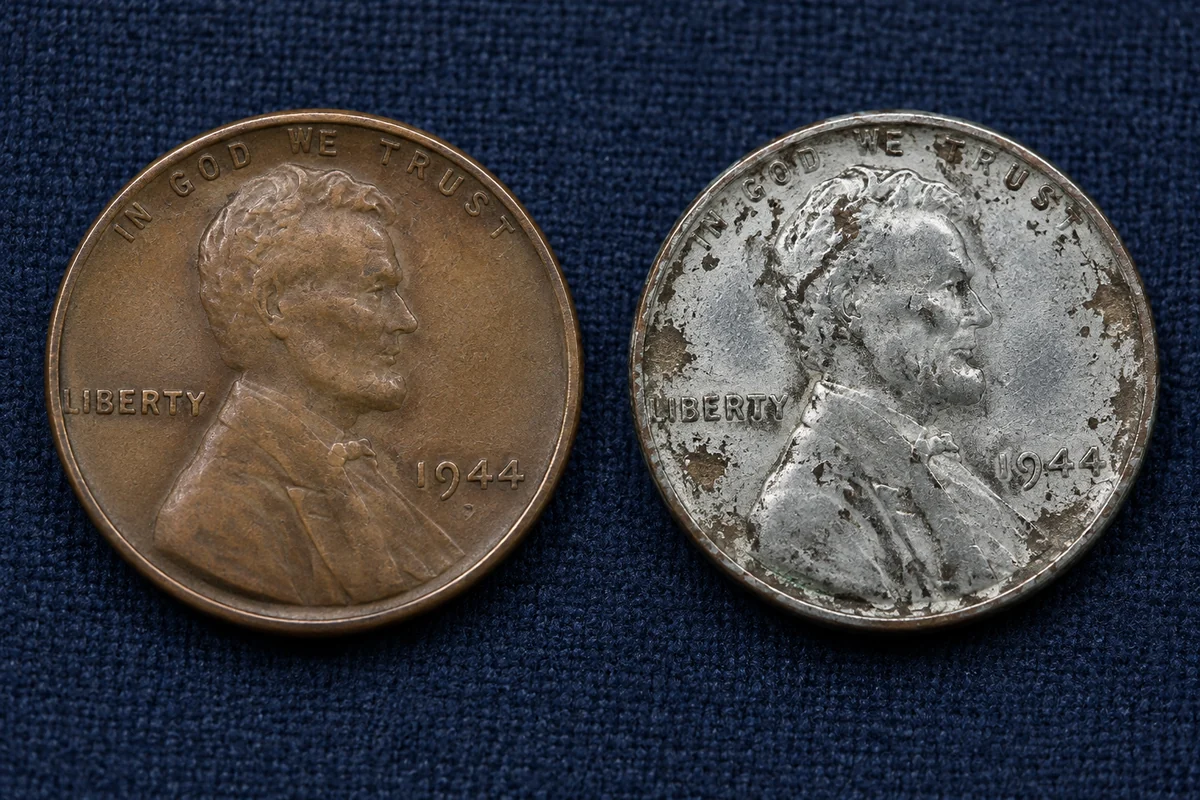
A gray appearance can come from plating, surface treatment, corrosion, cleaning or an altered date. Check whether the color is unnaturally even across protected recesses and scratches. Compare the rim, lettering and edge for seams, flaking or disturbed metal. A wrong weight can also point to damage or an altered piece rather than a steel planchet.
Do not scratch, file, cut, drill or use acid or other chemicals. These tests damage the evidence and can destroy a coin that deserves examination. Photograph both sides, record the weight without handling the surface and submit a suspected rarity to a recognized grading service.
How to Identify a Normal 1944 Wheat Penny
Use several clues together.
Start with the date and reverse. Then weigh the coin on a precise scale and hold a magnet next to it without dragging it across the surface. A normal bronze cent should be close to 3.11 g and nonmagnetic. Find the mint mark below the date: no mark is Philadelphia, D is Denver and S is San Francisco. These checks identify the normal issue; they do not grade the coin or authenticate a suspected off-metal error.
Where Is the Mint Mark on a 1944 Wheat Penny?
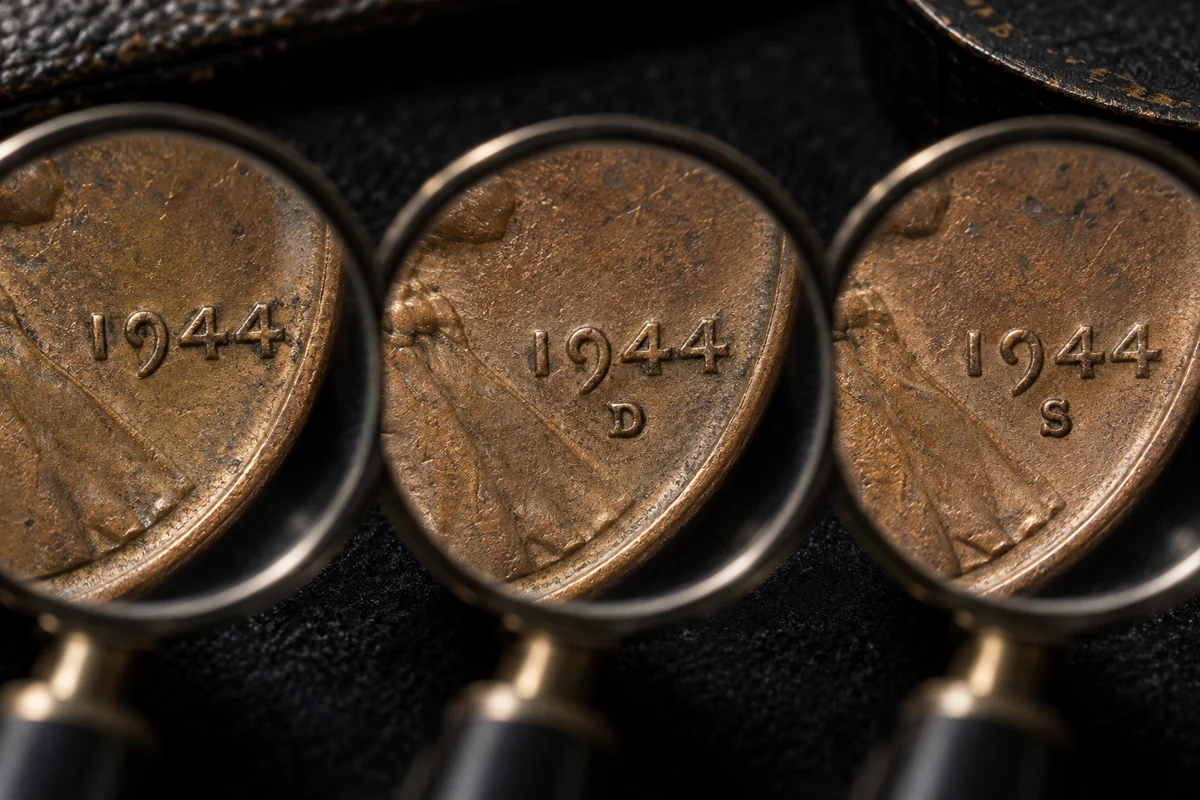
Look directly below the date on the obverse. No mint mark means Philadelphia. A D means Denver. An S means San Francisco. The letter is part of the original design and should blend into the surrounding field. A bright outline, extra metal or disturbed surface deserves comparison with a certified reference.
1944 Wheat Penny Mintage
Mintage is production, not surviving population.
| Mint | Mint mark | Mintage |
|---|---|---|
| Philadelphia | None | 1,435,000,000 |
| Denver | D | 430,578,000 |
| San Francisco | S | 282,760,000 |
| Total | All regular bronze issues | 2,148,338,000 |
The total counts coins struck in the three regular bronze issues. It does not count rare steel off-metal pieces as a separate normal mintage, and it does not tell us how many coins remain today or how many survive in high grade.
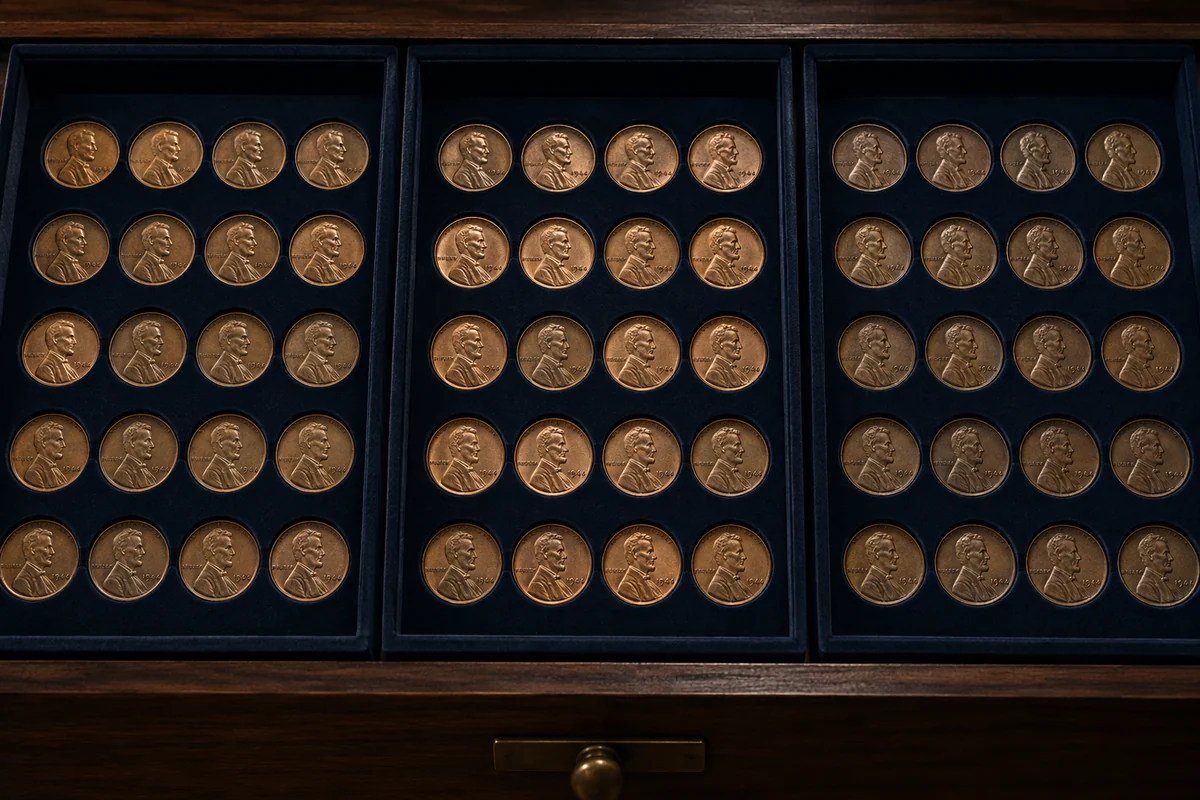
1944 Wheat Penny Specifications
Why Did the Penny Return to Copper in 1944?
One year changed the planchet and the screening questions.
The 1943 regular cent used a zinc-coated steel planchet while copper was reserved for wartime needs. The Mint returned to the familiar copper-based alloy for 1944, using 95% copper with tin and zinc. A few leftover steel blanks remained in the system and were struck accidentally with 1944 dies. Those transitional errors are why a magnetic 1944 cent can be real, but they are rare enough that authentication matters more than a dramatic first impression.
Don't Clean a 1944 Wheat Penny
Cleaning can remove original surface and change a BN, RB or RD assessment. Polishing does not improve a numismatic grade. Keep a suspected rare coin dry, handle it by the edge and leave the patina and marks available for examination.
1944 Wheat Penny Auction Records
Auction results are not price-guide values.
| Issue | Variety / color | Grade | Certification | Auction house | Date | Realized |
|---|---|---|---|---|---|---|
| Regular 1944-D/S | FS-512 service attribution, RD | MS66 | NGC | Heritage | Oct 2022 | $1,020 |
| 1944 Steel | Wrong planchet | MS64 | PCGS | Heritage | Jun 20, 2021 | $180,000 |
| 1944-D Steel | Wrong planchet | MS63 | NGC | Heritage | Aug 2007 | $115,000 |
| 1944-S Steel | Wrong planchet | MS66 | PCGS | Heritage | Aug 22, 2021 | $408,000 |
Only rows with a named realized amount are included. Exceptional steel and variety records are clearly separated from regular no-mark, D and S bronze values.
1944 Wheat Penny FAQ
How much is a 1944 Wheat Penny worth?
Most circulated bronze examples are worth less than a dollar. Mint State value rises with the mint mark, numerical grade, original color and surface quality.
What is a 1944 Wheat Penny with no mint mark worth?
No mint mark means Philadelphia, and it is the normal Philadelphia issue. Typical circulated pieces are inexpensive; NGC reference figures for Mint State BN examples run from about $3.50 at MS63 to $35 at MS67, with RB and RD premiums.
What is a 1944-D Wheat Penny worth?
D identifies Denver. Typical circulated coins are inexpensive, while certified MS63 to MS67 pieces can range from a few dollars to more depending on BN, RB or RD color and the exact sale.
What is a 1944-S Wheat Penny worth?
S identifies San Francisco. Circulated bronze examples are usually modestly priced. Original Red Mint State pieces bring the strongest premiums within the regular issue.
What is a Wheat Back Penny?
It is an informal name for the Lincoln Wheat Cent. The reverse has two wheat ears around ONE CENT, which is why people also say Wheat Penny or Wheat Leaf Penny.
What does BN, RB or RD mean?
BN means Brown, RB means Red-Brown and RD means Red. The color designation is separate from the numerical grade and can change value substantially.
Are there genuine 1944 steel Wheat Pennies?
Yes. A small number were struck on leftover zinc-coated steel planchets. They are extremely rare wrong-planchet errors, and any value depends on the individual mint, grade, certification and provenance.
What is a 1944-D/S Wheat Penny?
It is an overmintmark variety in which a D was punched over an earlier S. PCGS catalogs the major FS-511 attribution; confirm the diagnostics with the grading service before assigning it.
Why is my 1944 penny silver-colored?
Plating, corrosion, cleaning and other surface changes can make a bronze cent look gray. A magnetic response and weight near 2.70 grams justify specialist review, but neither test authenticates the coin.
Related Lincoln Cents
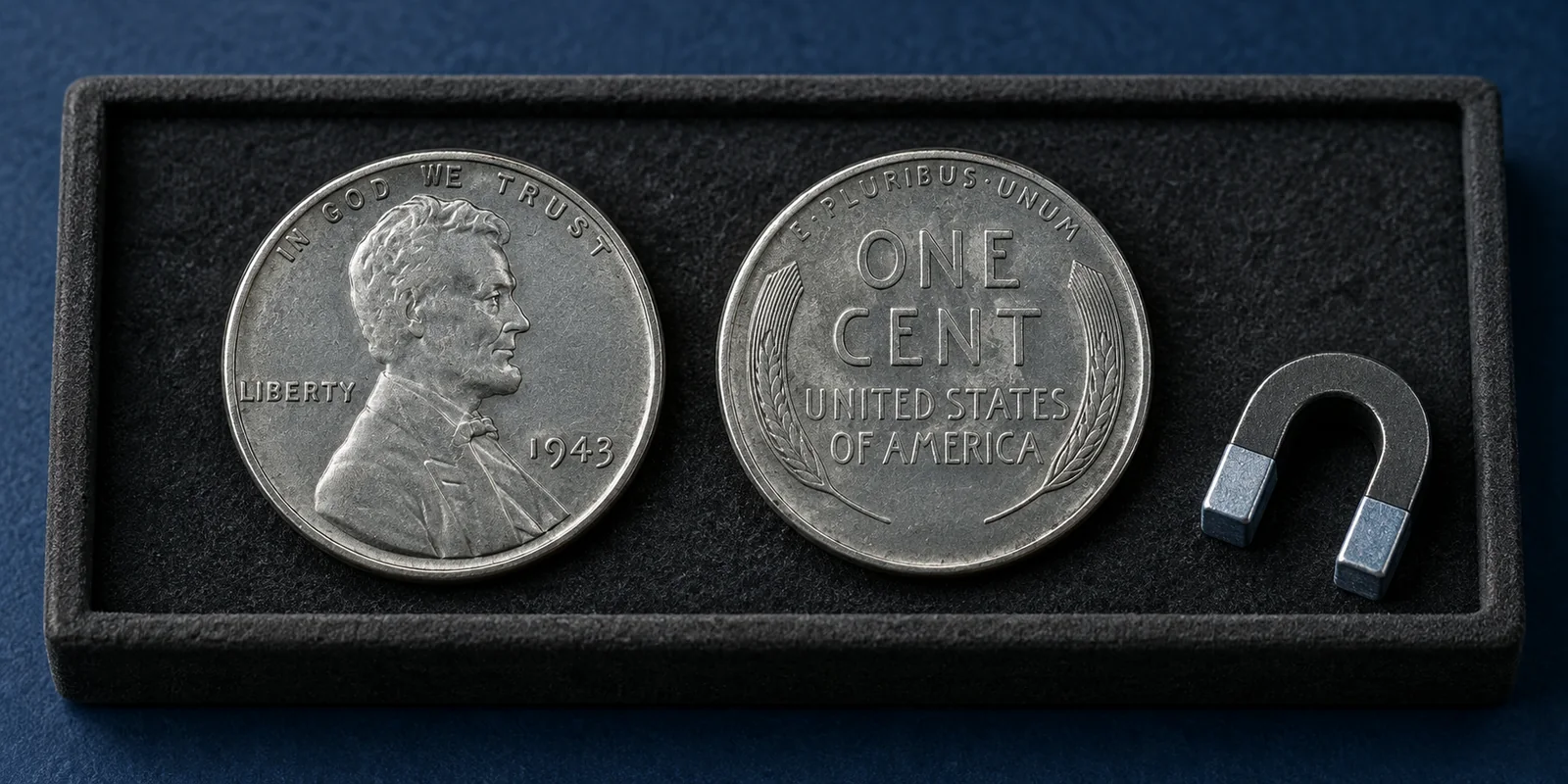
1943 Steel Penny
Compare the metal, mint mark and identification clues.
View coin →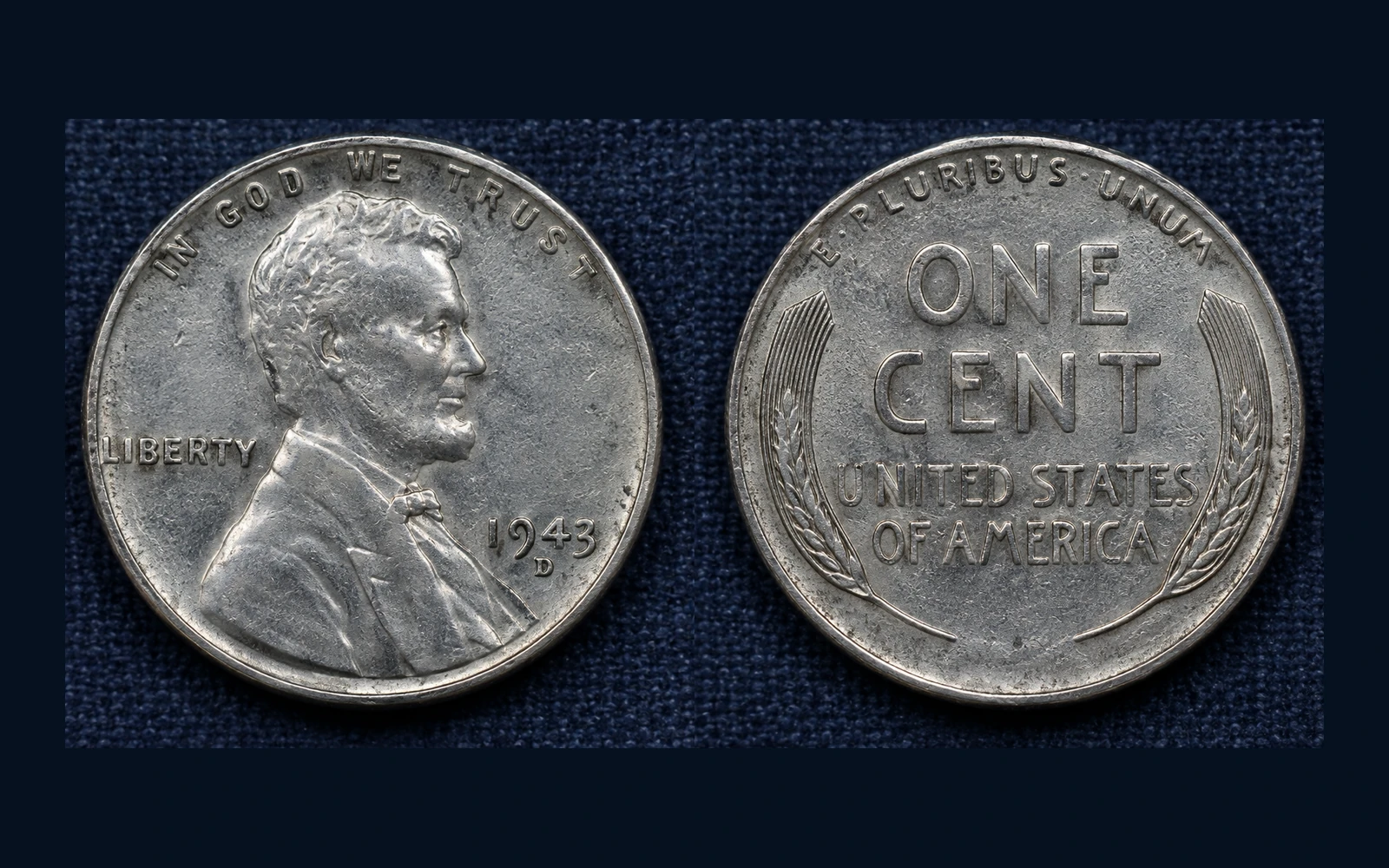
1943-D Steel Penny
Compare the metal, mint mark and identification clues.
View coin →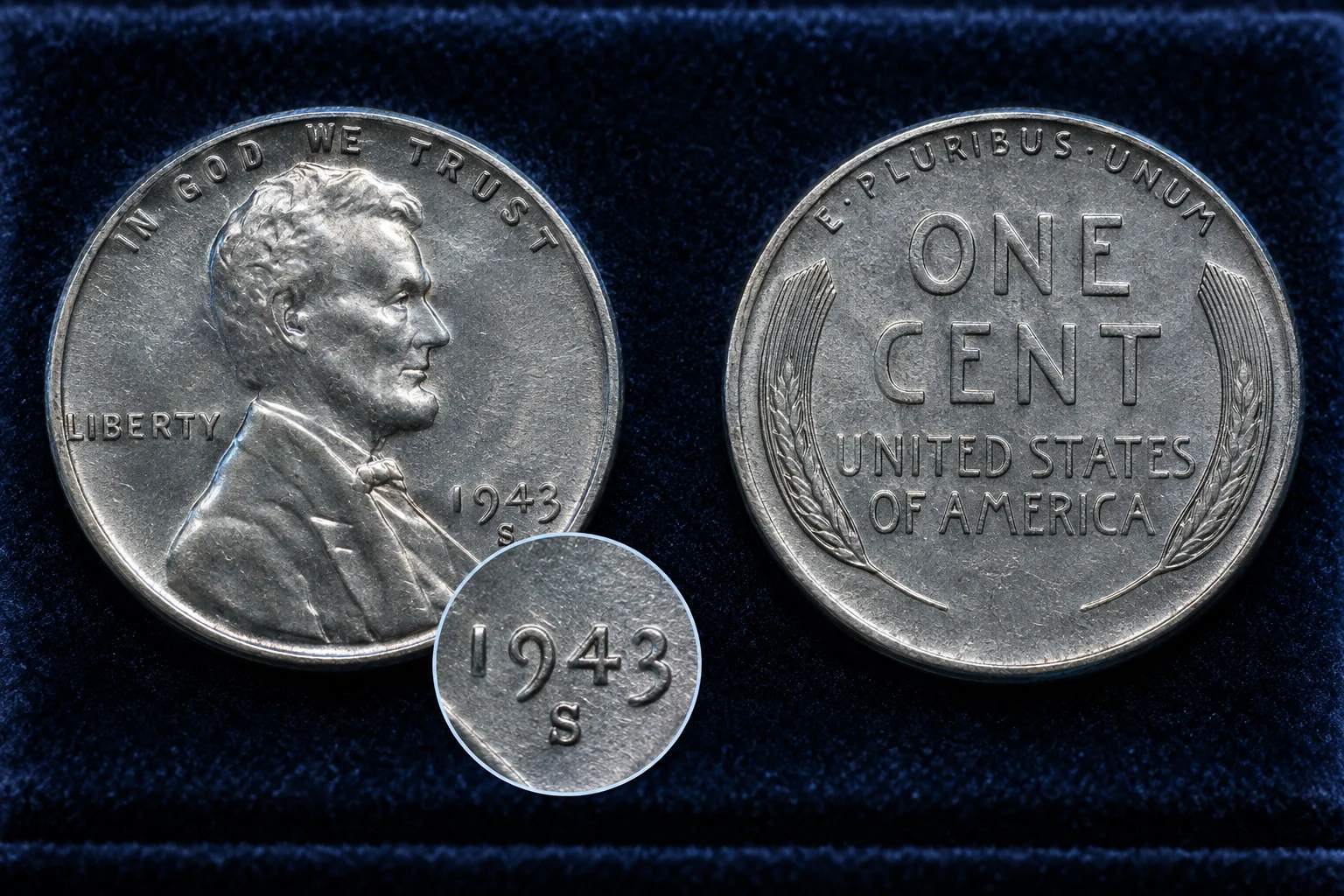
1943-S Steel Penny
Compare the metal, mint mark and identification clues.
View coin →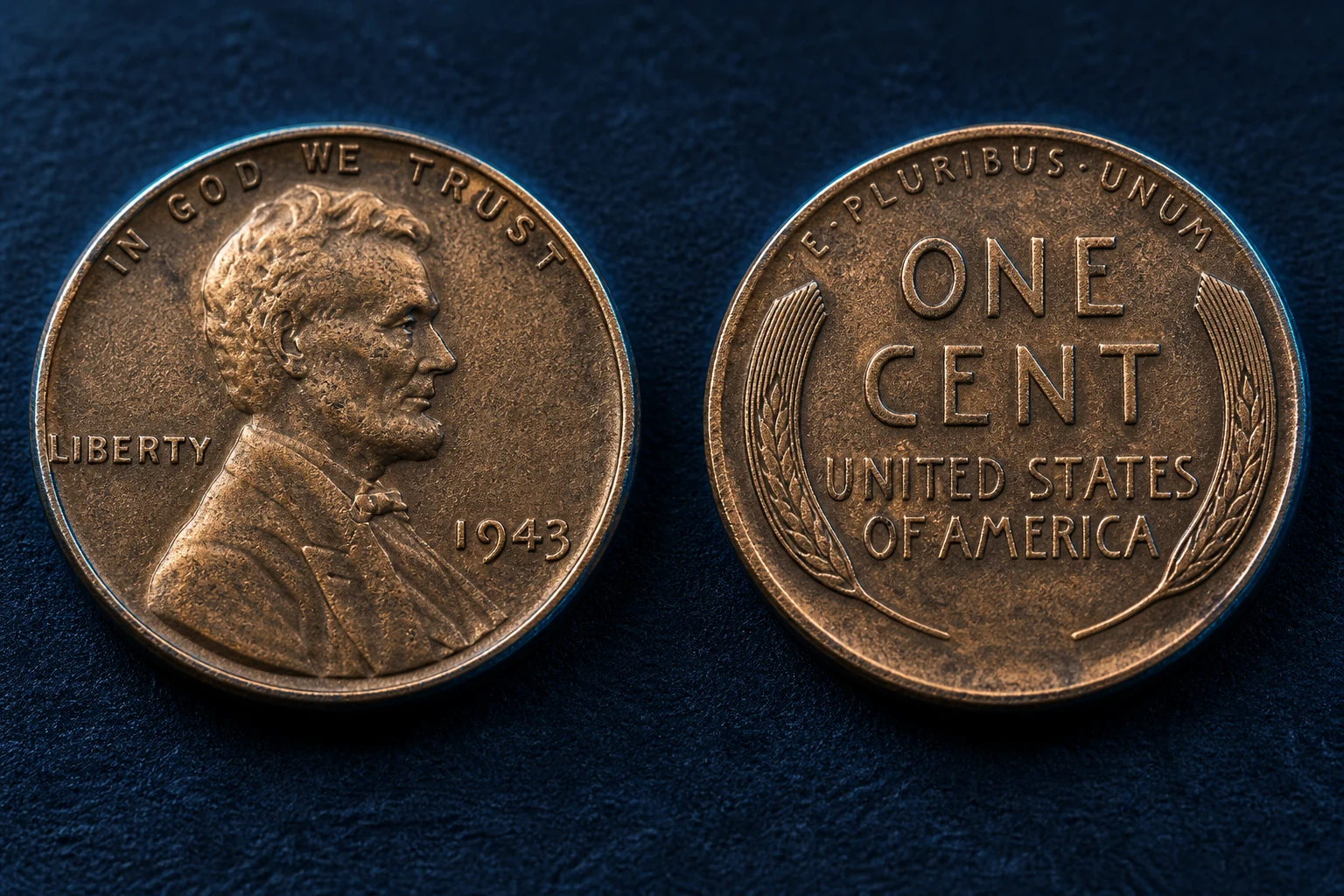
1943 Bronze Penny
Compare the metal, mint mark and identification clues.
View coin →