
1943 Bronze Penny: Value, Rarity & How to Identify It
Most cents dated 1943 were struck in zinc-coated steel. A very small number were accidentally struck on bronze planchets. The coin commonly called a 1943 Copper Penny is more accurately a 1943 Bronze Cent. A genuine example can be extremely valuable, but color, magnet response and weight are screening clues only.
Reviewed by Coins Identification editorial team · Updated September 15, 2026How Much Is a 1943 Bronze Penny Worth?
Authenticated examples can reach six figures. The exact result depends on mint, grade, color designation, surface condition, certification, provenance and demand. These selected historical sales are evidence, not a current appraisal. Last price review: September 2026.
1943 Bronze Penny
$204,000Heritage, 2019. A documented Philadelphia bronze cent auction result.
1943-D Bronze Penny
$840,000Heritage, 2021. The unique known Denver bronze cent, PCGS MS64 Brown.
1943-S Bronze Penny
$282,000Heritage, 2016. An AU53 example sold as a bronze-planchet error.
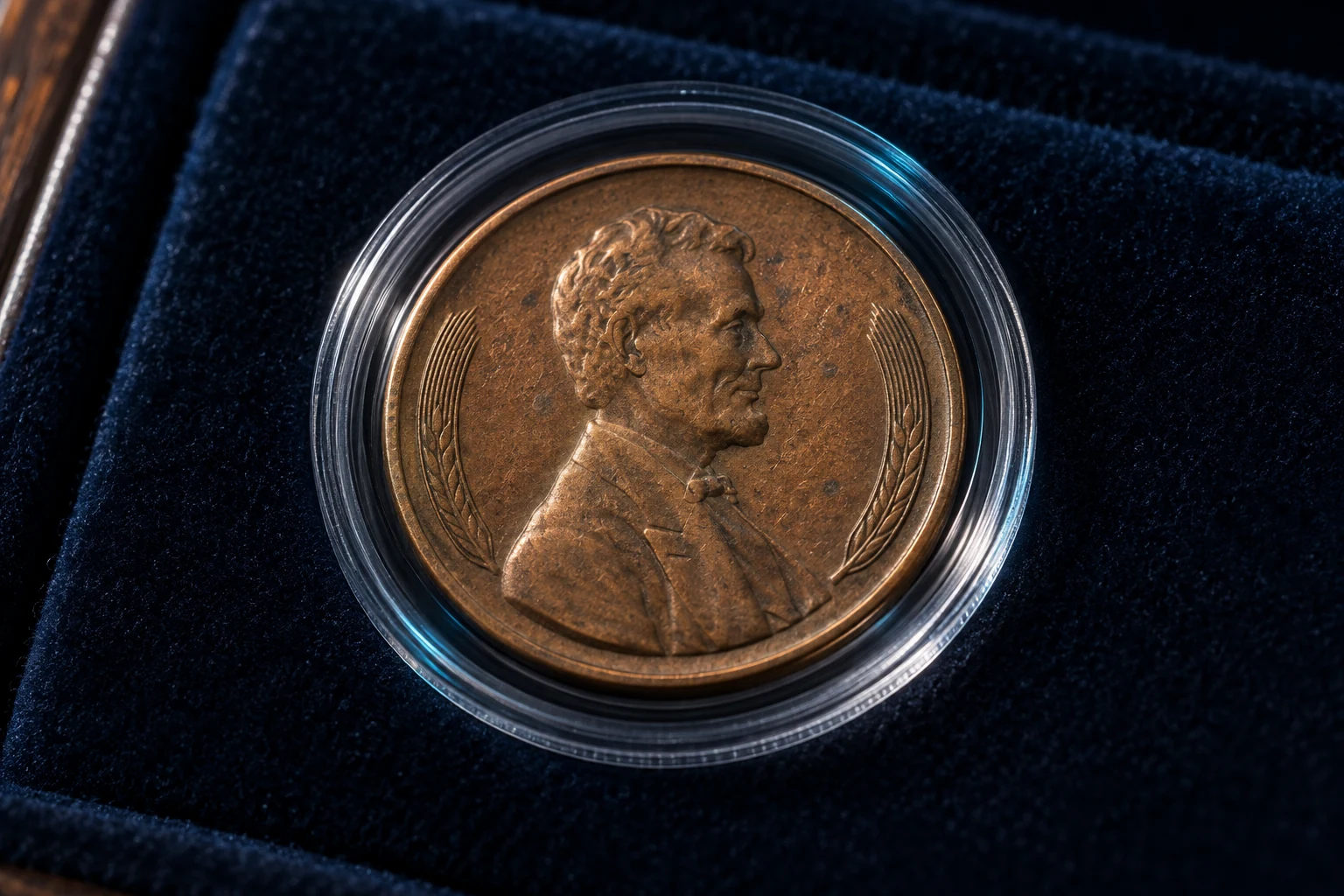
Why Does the 1943 Bronze Penny Exist?
Lincoln cents were normally struck in bronze before 1943. During World War II, the cent changed to zinc-coated steel. The best-supported explanation is that a small number of bronze planchets from the earlier production stream remained in the system and were struck by 1943 dies. That accidental combination created the rare bronze cents known today.
The error belongs to the bronze planchet, not simply to a brown surface. A plated steel cent may resemble it from a distance. The point of a home inspection is to decide whether a coin deserves preservation and professional authentication.
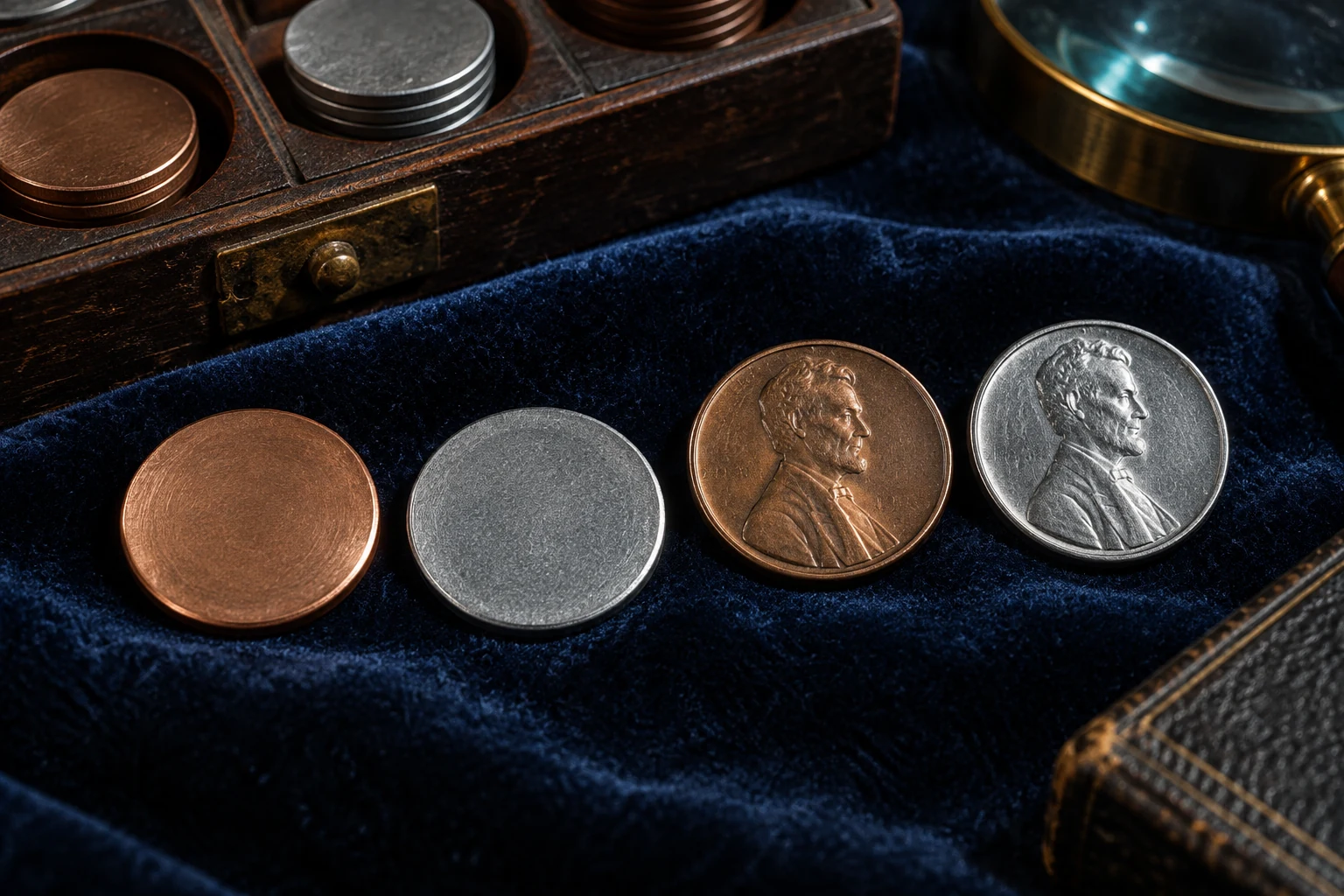
How to Identify a 1943 Bronze Penny
Every test should agree. Do not scrape, file, bend or clean a coin to get an answer.
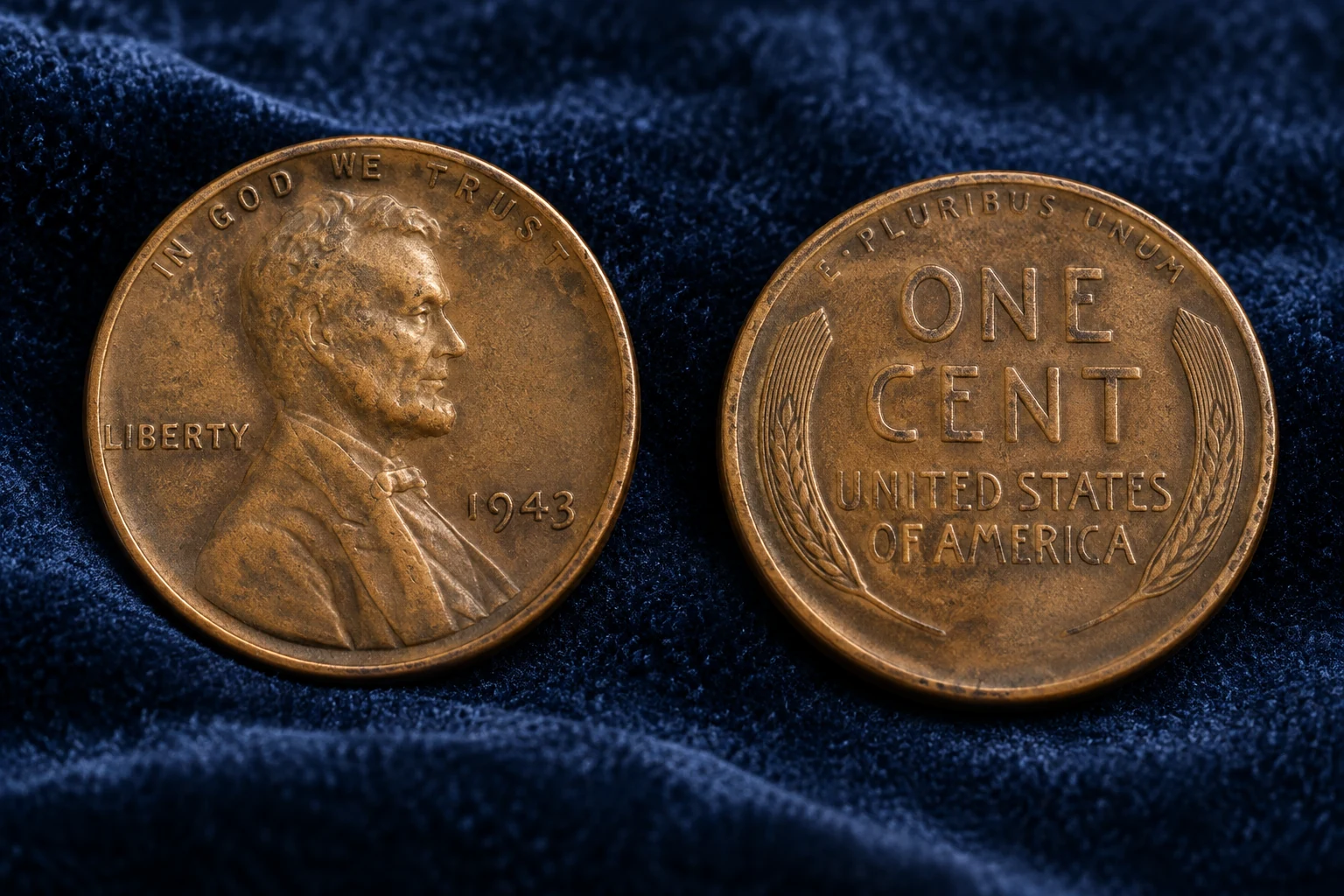
Check the color
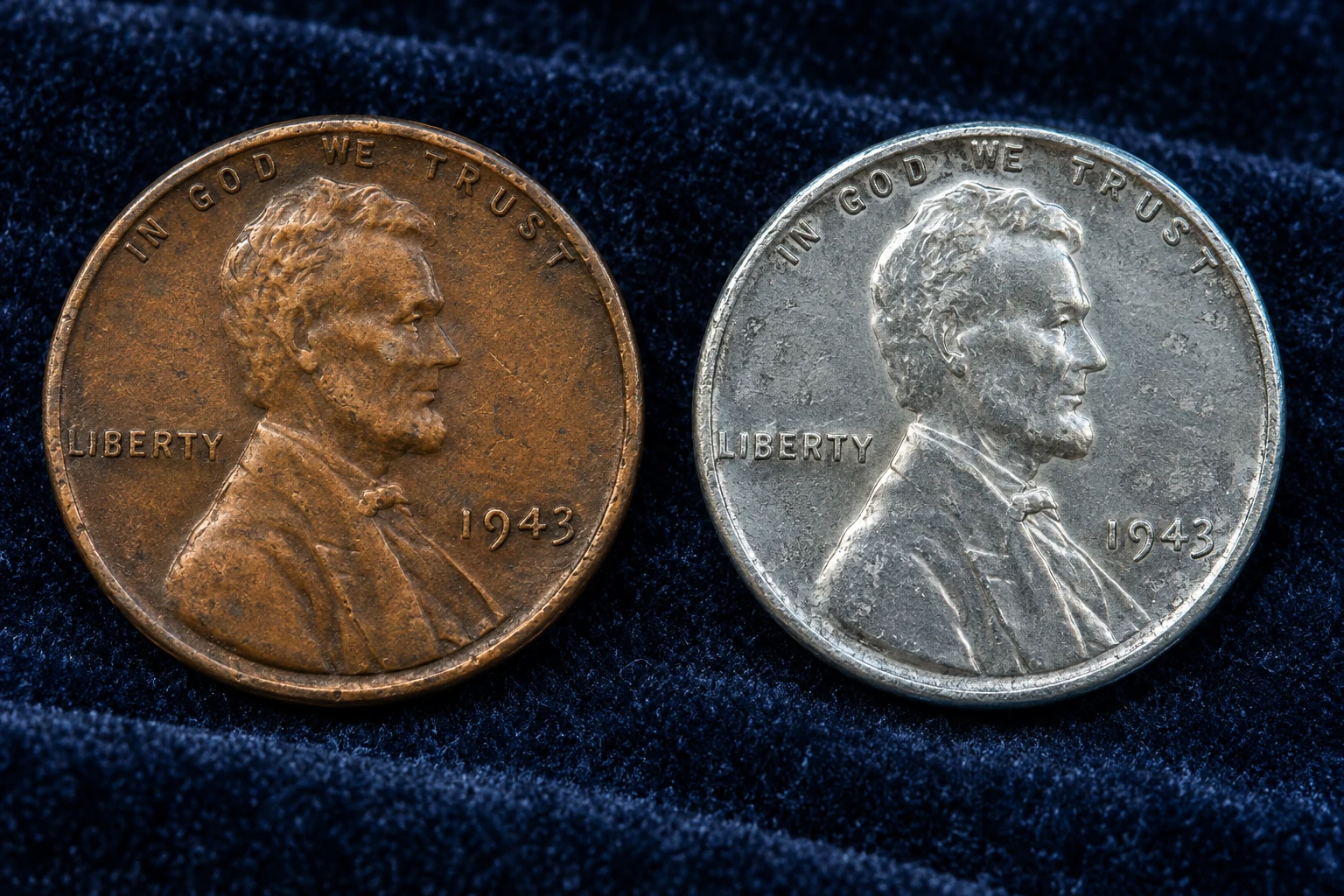
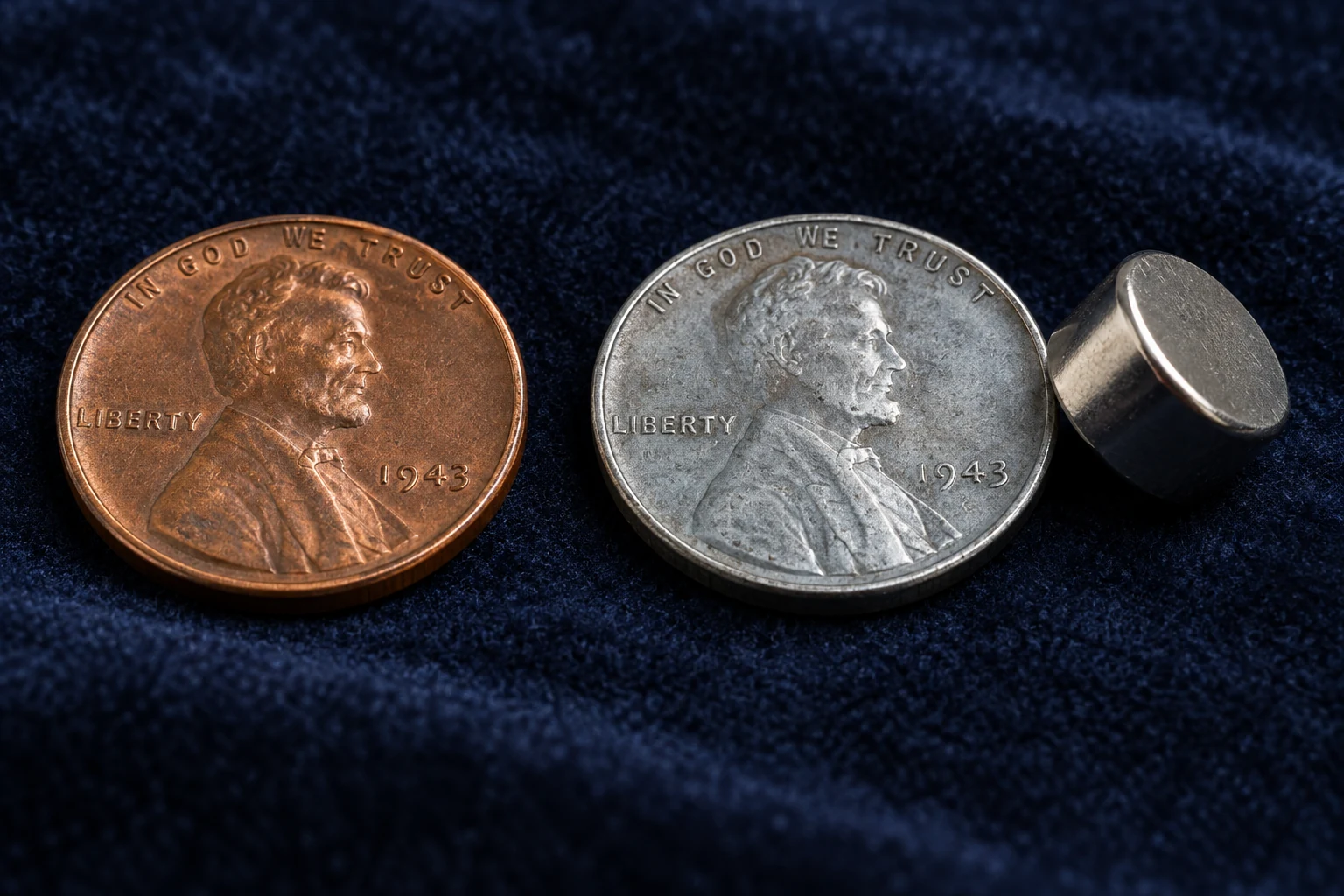
Bronze can be brown, reddish-brown, copper-colored or dark brown. A normal steel cent may have been copper plated, so color never authenticates a coin.
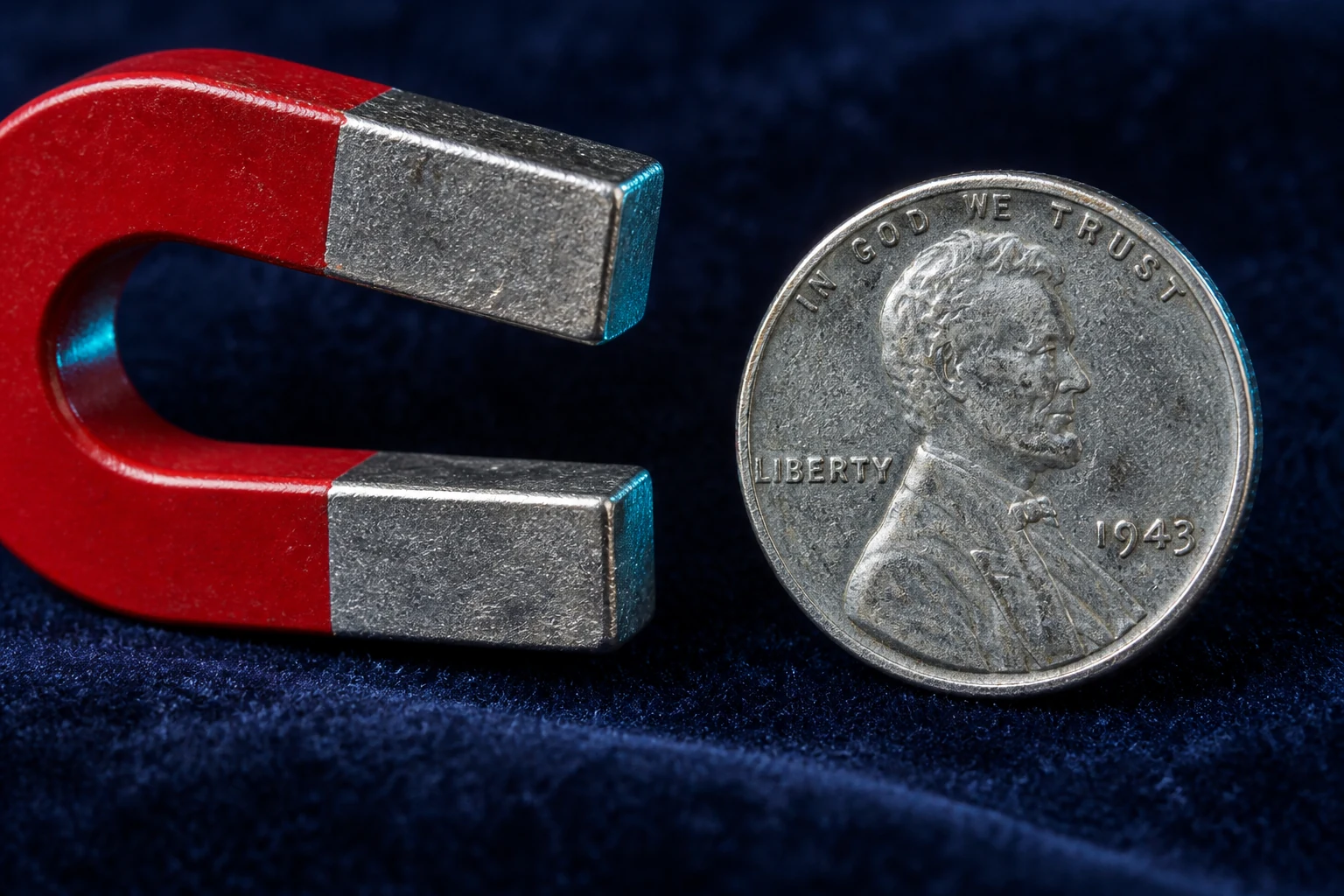
Try the magnet test
A bronze planchet should not respond to a magnet. A magnetic 1943 cent has a steel core. Non-magnetic is a pass to the next test, not proof.
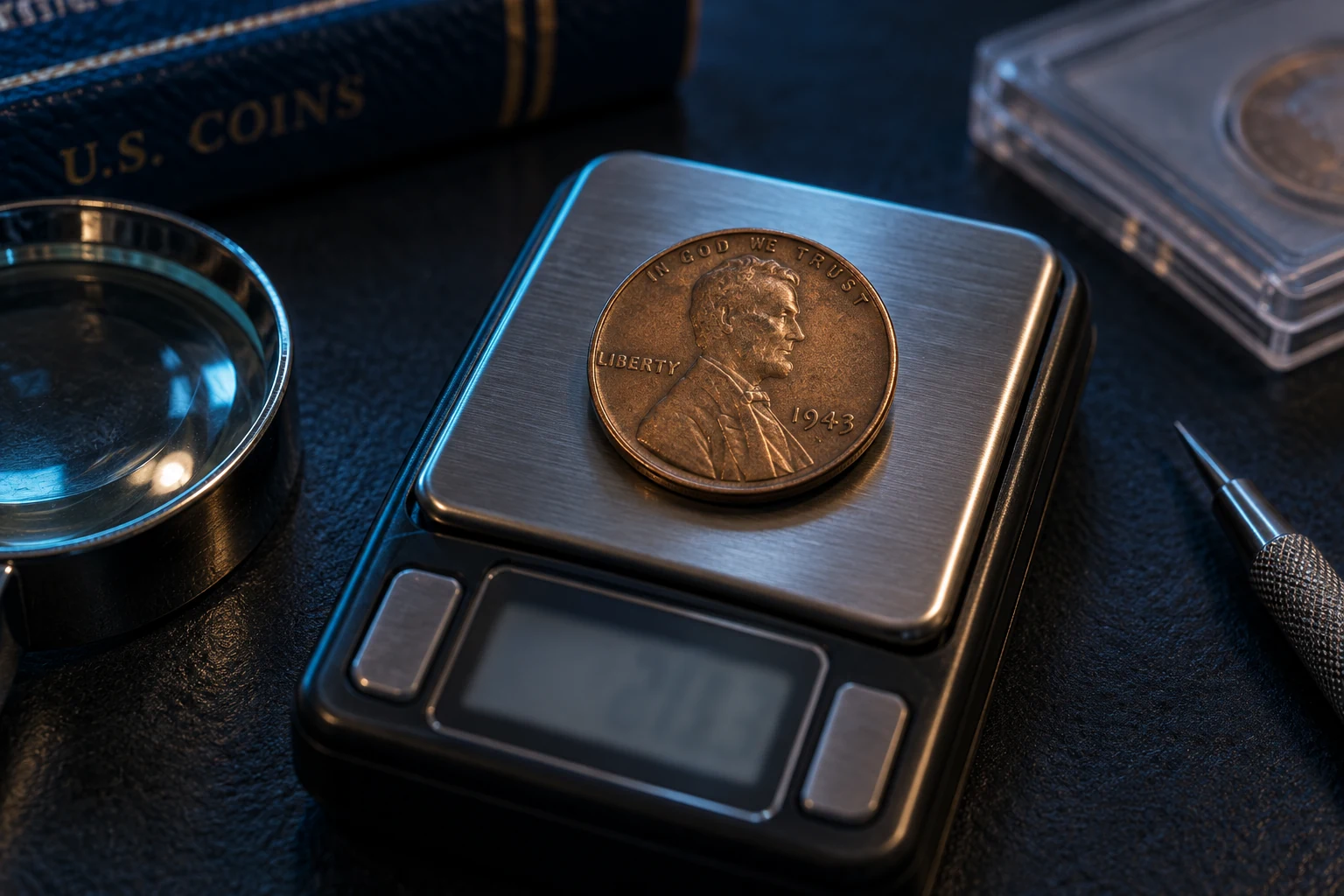
Weigh the coin
A possible bronze cent is about 3.11 g. A standard 1943 cent is about 2.70 g. Wear and a poor scale can shift a reading slightly.
Inspect the date
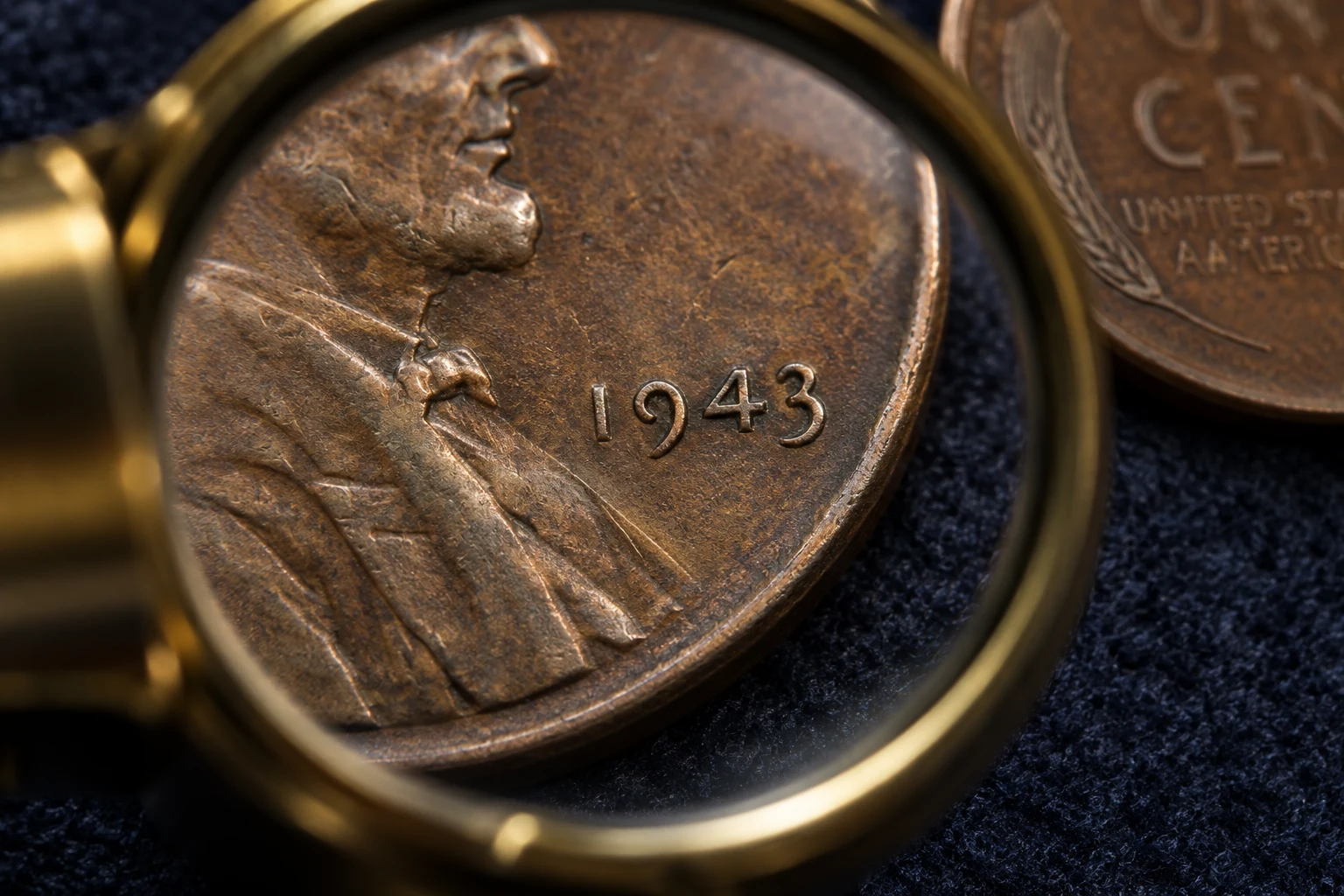
Altered dates are a known problem. Use magnification and look closely at the final digit and surrounding metal. A date check alone cannot authenticate it.
Could Your 1943 Penny Be Bronze?
Check the facts you can verify. This is a screening tool, not authentication.
Bronze or Steel? The Fastest Ways to Tell
A copper-brown, non-magnetic coin close to 3.11 g is worth protecting and checking further. If it sticks to a magnet and weighs about 2.70 grams, see our 1943 Steel Penny guide.
1943 Bronze Penny Mint Marks
Known bronze errors include Philadelphia without a mark, Denver D, and San Francisco S. No mark is normal for Philadelphia. It does not mean a mint mark is missing.
No mint mark
Philadelphia. The rarity comes from the bronze planchet, not the absence of a letter.
1943-D Bronze
Denver. This refers only to the rare bronze error, not the ordinary D-mint steel cent.
1943-S Bronze
San Francisco. The S identifies the mint after the coin is authenticated as bronze.
How Rare Is the 1943 Bronze Penny?
Population figures are reported estimates, not mintages. PCGS describes approximately 15 to 17 Philadelphia pieces, one Denver example and six confirmed San Francisco examples. Counts can differ as coins are certified, reexamined or reattributed.
What Does a 1943 Bronze Penny Look Like?
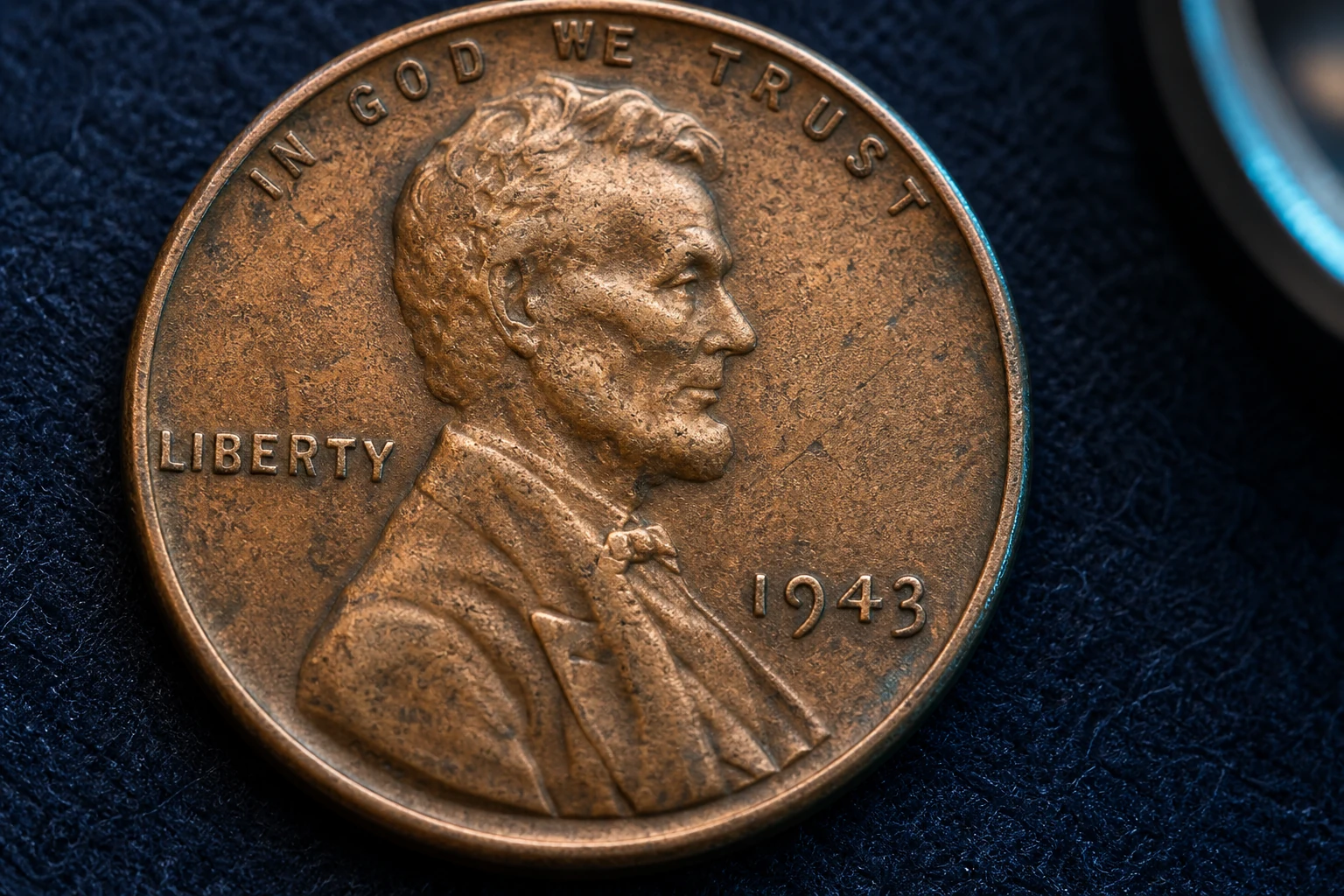
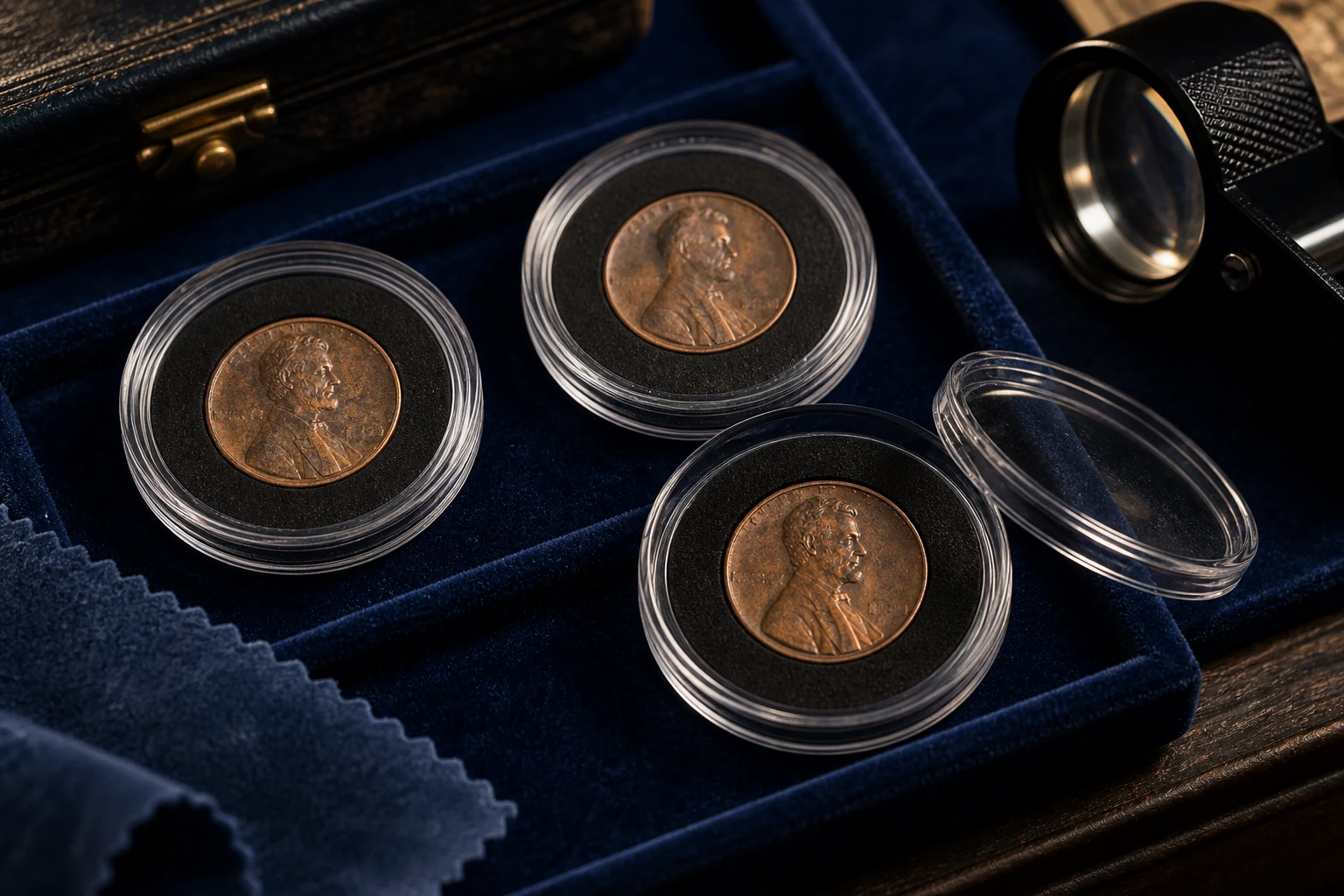
A genuine error cent should show the ordinary Lincoln wheat-cent design, but in a natural copper or bronze alloy. Look for warm brown, red-brown or deep red surfaces that are consistent across protected areas of the coin. The date, portrait, lettering and wheat reverse should be sharply struck for the era, with no signs of altered digits or added mint marks.
Surface color alone never proves authenticity. A plated steel cent, a recolored coin or a modified date can look convincing in a photo. Use the magnet and weight tests before drawing conclusions.
How to Spot a Fake 1943 Bronze Penny
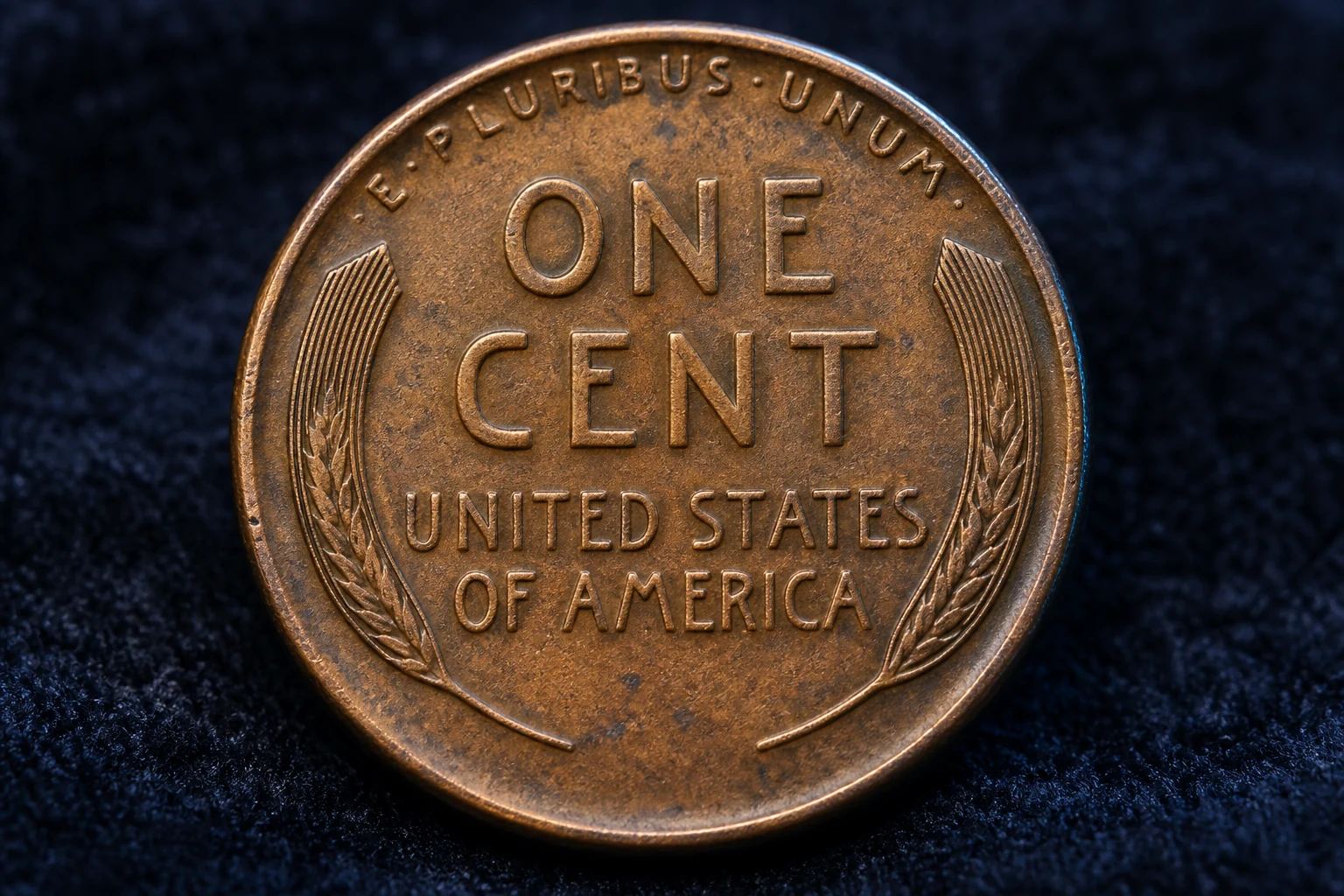
Copper-plated steel: looks brown but remains magnetic. Altered date: examine the last digit and disturbed metal under magnification. Counterfeit: may evade simple checks, so magnet and weight tests only eliminate obvious problems.
What to Do If You Think You Found a 1943 Bronze Penny
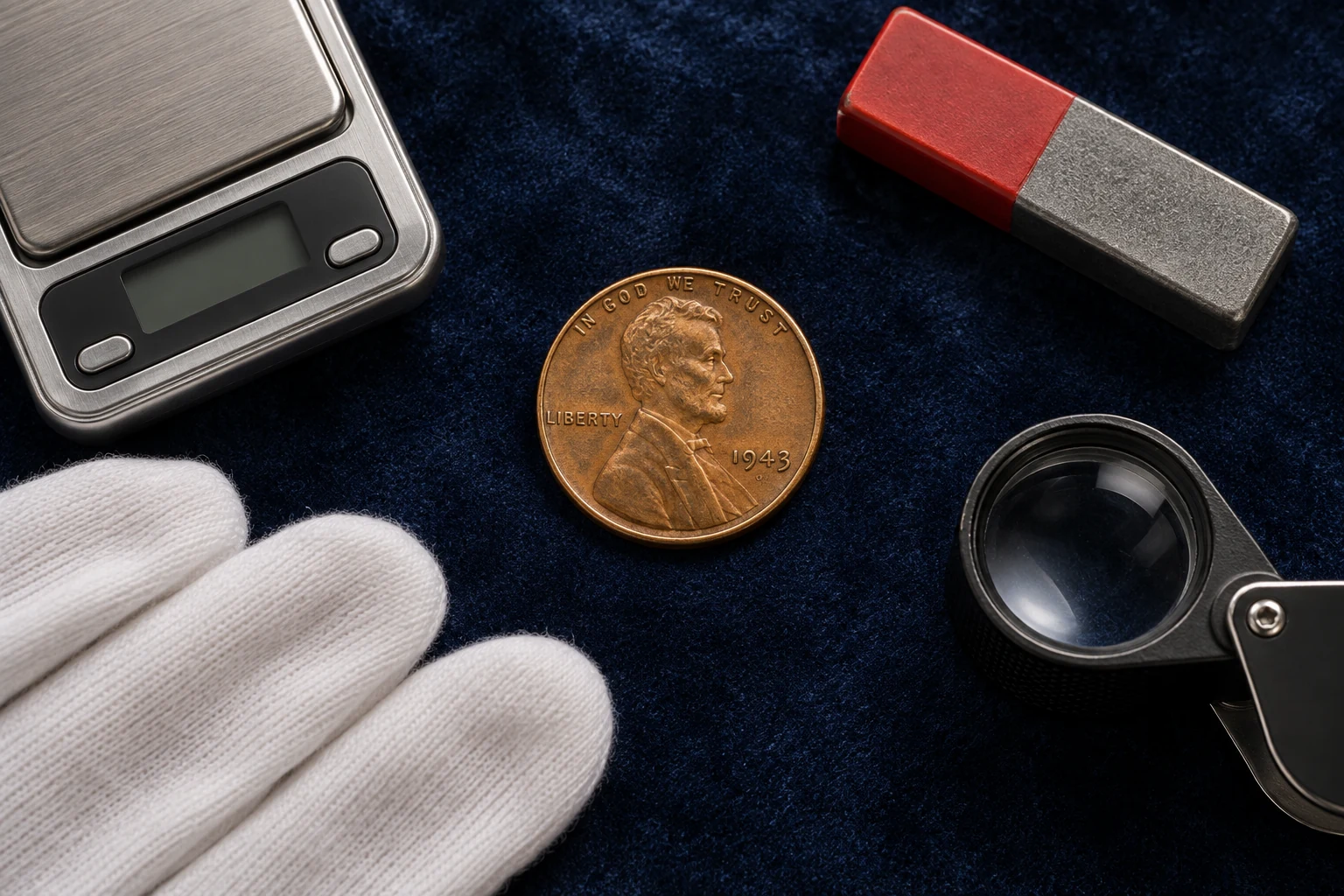
- Do not clean it.
- Test it gently with a magnet.
- Weigh it on a 0.01 g scale.
- Photograph both sides.
- Inspect the date under magnification.
- Protect it from further handling.
- Consider professional authentication.
1943 Bronze Penny Specifications
- Year
- 1943
- Country
- United States
- Denomination
- One Cent
- Series
- Lincoln Wheat Cent
- Composition
- 95% copper, 5% tin and zinc
- Weight
- Approx. 3.11 g
- Diameter
- Approx. 19 mm
- Edge
- Plain
- Designer
- Victor David Brenner
- Mint marks
- None, D, S
- Rarity
- Extremely rare
- Error type
- Bronze planchet error


1943 Bronze Penny Auction Records
Explore documented sales by mint, grade and variety. Historical results do not guarantee another coin’s value. Auction data last checked: September 2026.
Records are historical reference points. Check the original lot, certification and sale terms before citing a result.
1943 Bronze Penny FAQ
How much is a 1943 Bronze Penny worth?
A genuine authenticated example can bring six figures. There is no universal value because mint, grade, color, provenance, certification and market demand matter. Famous auction prices are historical results, not appraisals.
How can I identify a 1943 Bronze Penny?
Screen with several clues: a brown or copper appearance, no response to a magnet, a weight near 3.11 g and an unaltered-looking date. Those clues only justify professional authentication.
How much does a 1943 Bronze Penny weigh?
The normal bronze reference is about 3.11 grams. Use a scale that reads to 0.01 g and account for dirt, corrosion and damage.
Does a 1943 Bronze Penny stick to a magnet?
No. A bronze planchet should not be attracted to a magnet. A non-magnetic coin still needs its date, weight and surface reviewed.
What does a 1943 Bronze Penny look like?
It can be copper-colored, red-brown or dark brown. A genuine coin does not need to look bright red, and bright copper color can also come from plating.
Why is the 1943 Bronze Penny rare?
A small number of leftover bronze planchets appear to have reached presses after the cent changed composition in 1943. They are wrong-planchet errors, not a standard issue.
How many 1943 Bronze Pennies are known?
PCGS reports approximately 15 to 17 Philadelphia pieces, one Denver example and six confirmed San Francisco examples. Estimates vary as coins are studied, certified and reattributed.
What does no mint mark mean on a 1943 Bronze Penny?
No mint mark means Philadelphia. It does not mean a mark is missing. The rarity comes from the bronze planchet.
Is there a 1943-D Bronze Penny?
Yes. The known Denver bronze error is a distinct rare bronze variety. It should not be confused with the standard 1943-D steel cent.
Is there a 1943-S Bronze Penny?
Yes. Confirmed San Francisco bronze examples are known. The S identifies the mint only after the coin itself is authenticated as a bronze error.
Is a 1943 Copper Penny the same as a 1943 Bronze Penny?
Collectors commonly say copper penny, but the standard pre-1943 cent alloy is more accurately called bronze: 95% copper with tin and zinc.
Can a regular 1943 penny look copper-colored?
Yes. Copper plating, toning, corrosion and warm lighting can change the appearance of a standard steel cent. Color by itself does not prove a bronze planchet.
Should I clean a possible 1943 Bronze Penny?
No. Abrasive or chemical cleaning can remove evidence, scratch the surface and reduce collector value. Handle the coin by its edge and protect it from further damage.
Continue your comparison
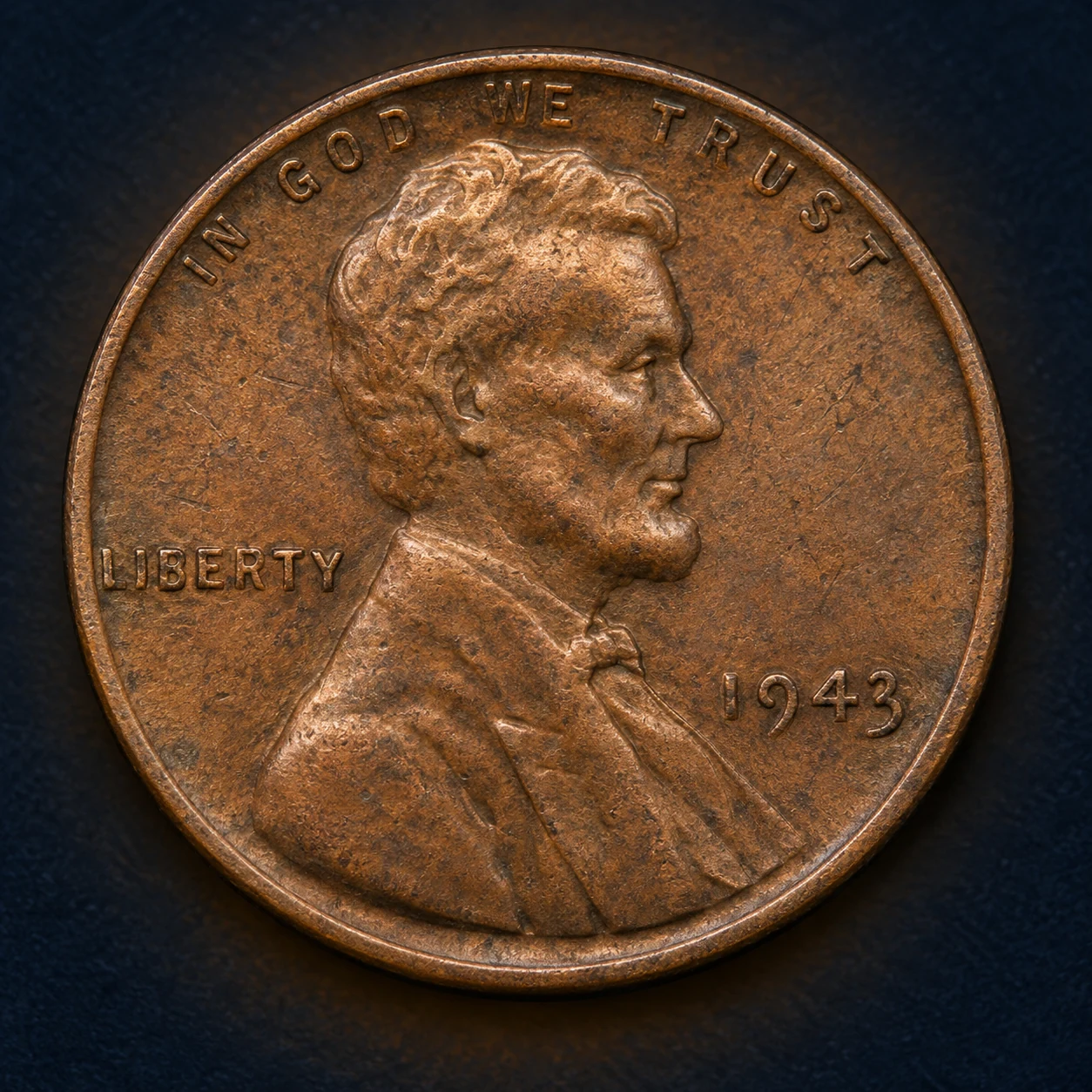
1943 Bronze Penny
Rare wrong-planchet issue. Compare color, weight and magnet response.
View coin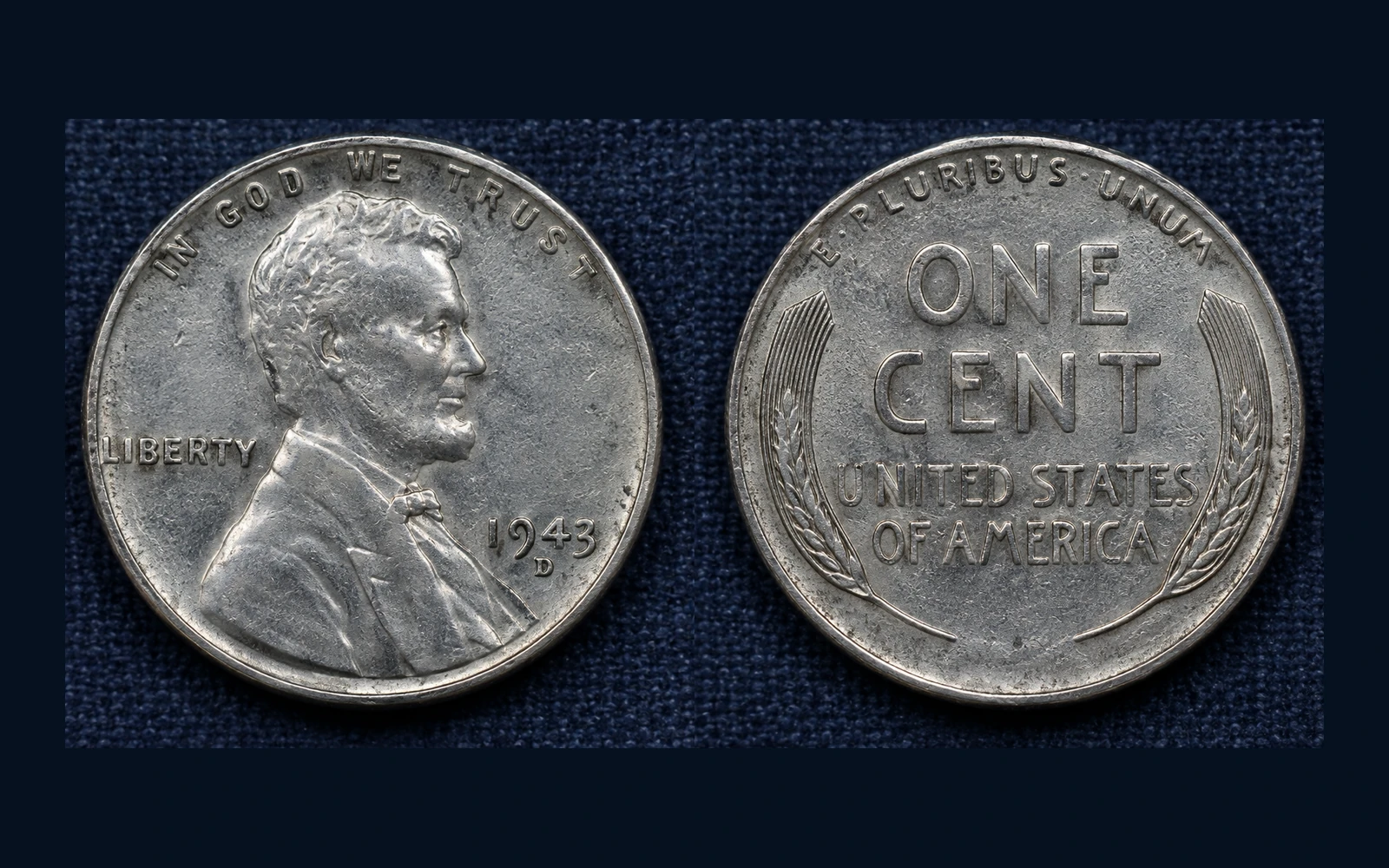
1943-D Steel Penny
Denver Mint issue with the D mint mark below the date.
View coin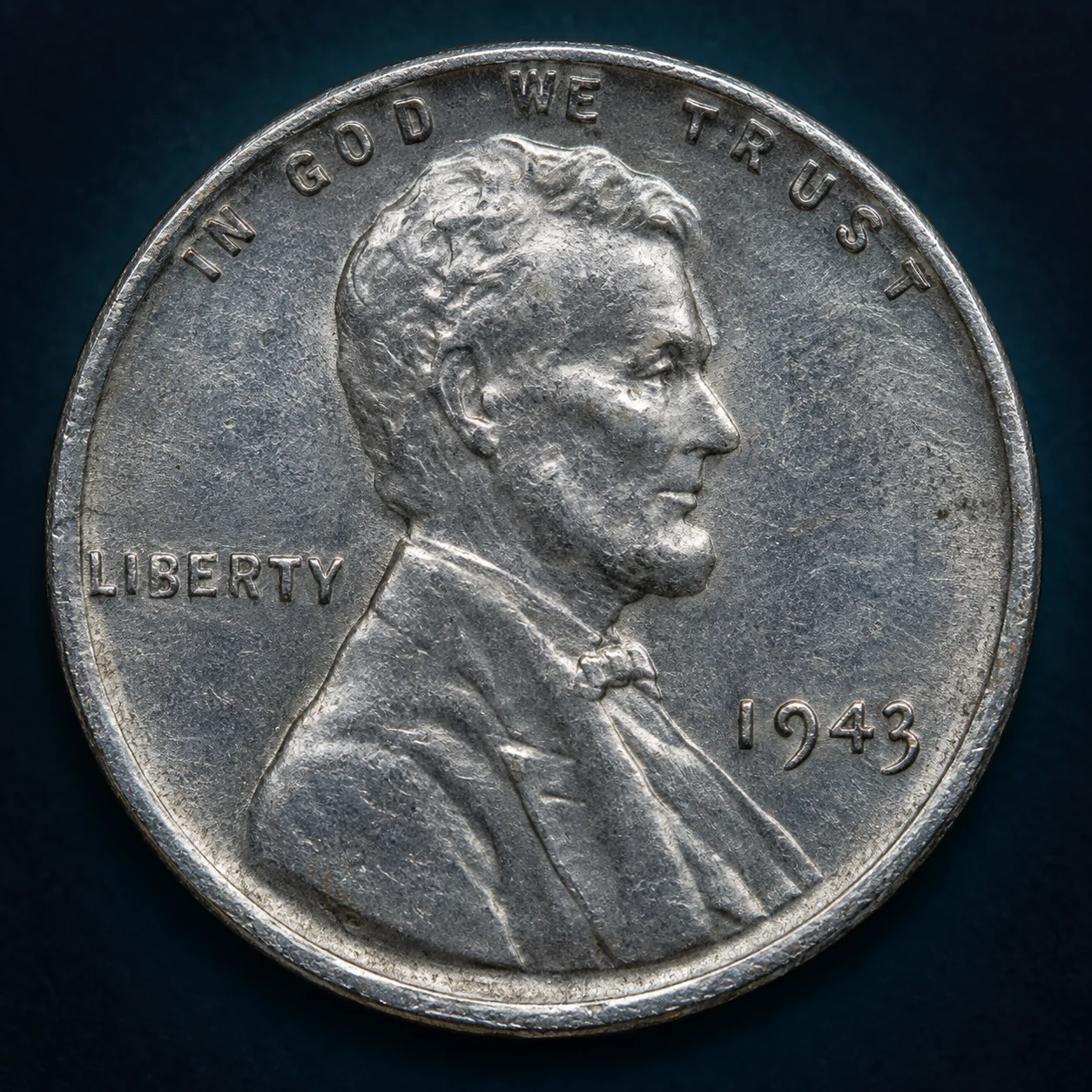
1943-S Steel Penny
San Francisco Mint issue with the S mint mark below the date.
View coin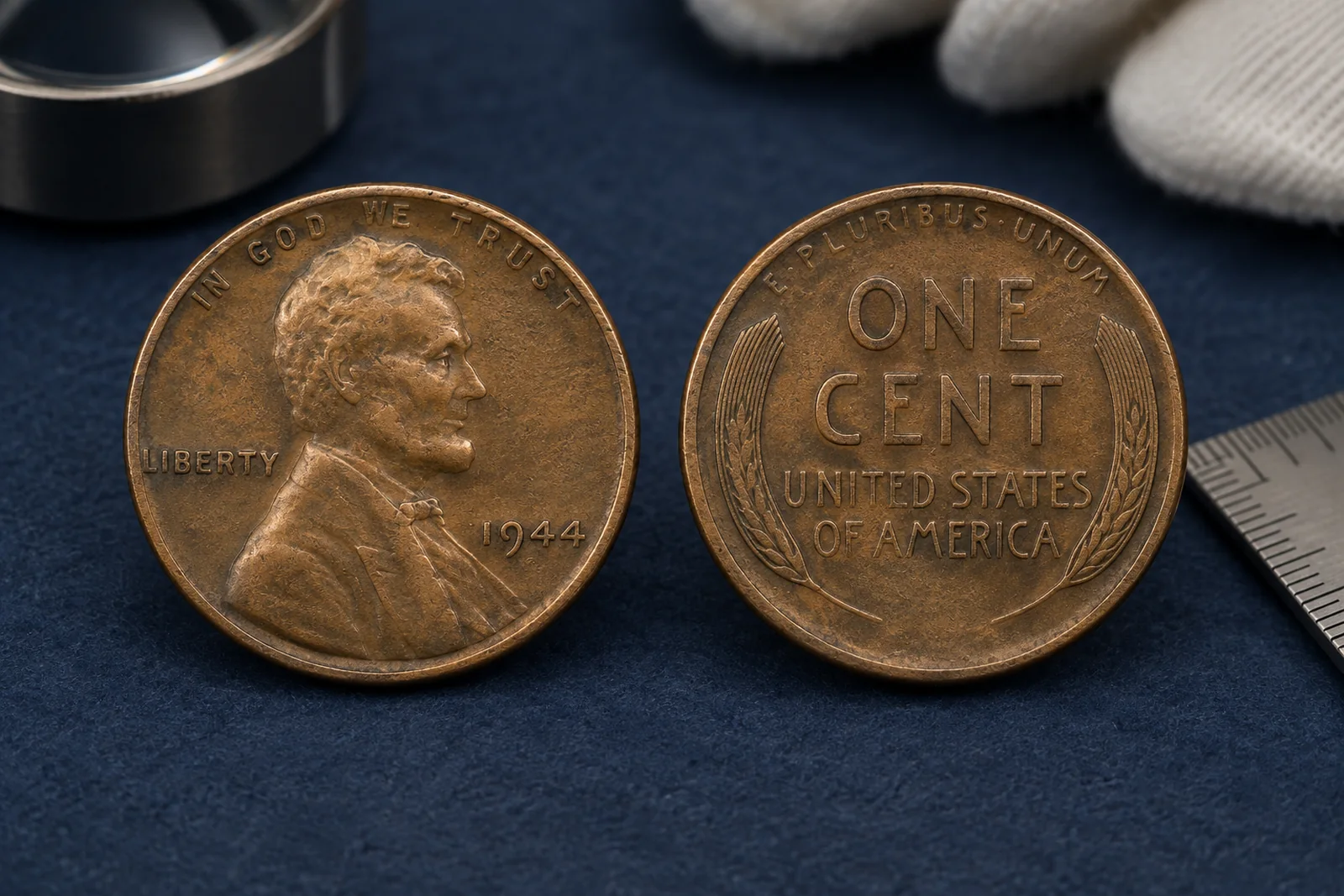
1944 Wheat Penny
Next-year bronze issue for a quick metal and weight comparison.
View coin