
1943-D Steel Penny Value, Errors & Identification Guide
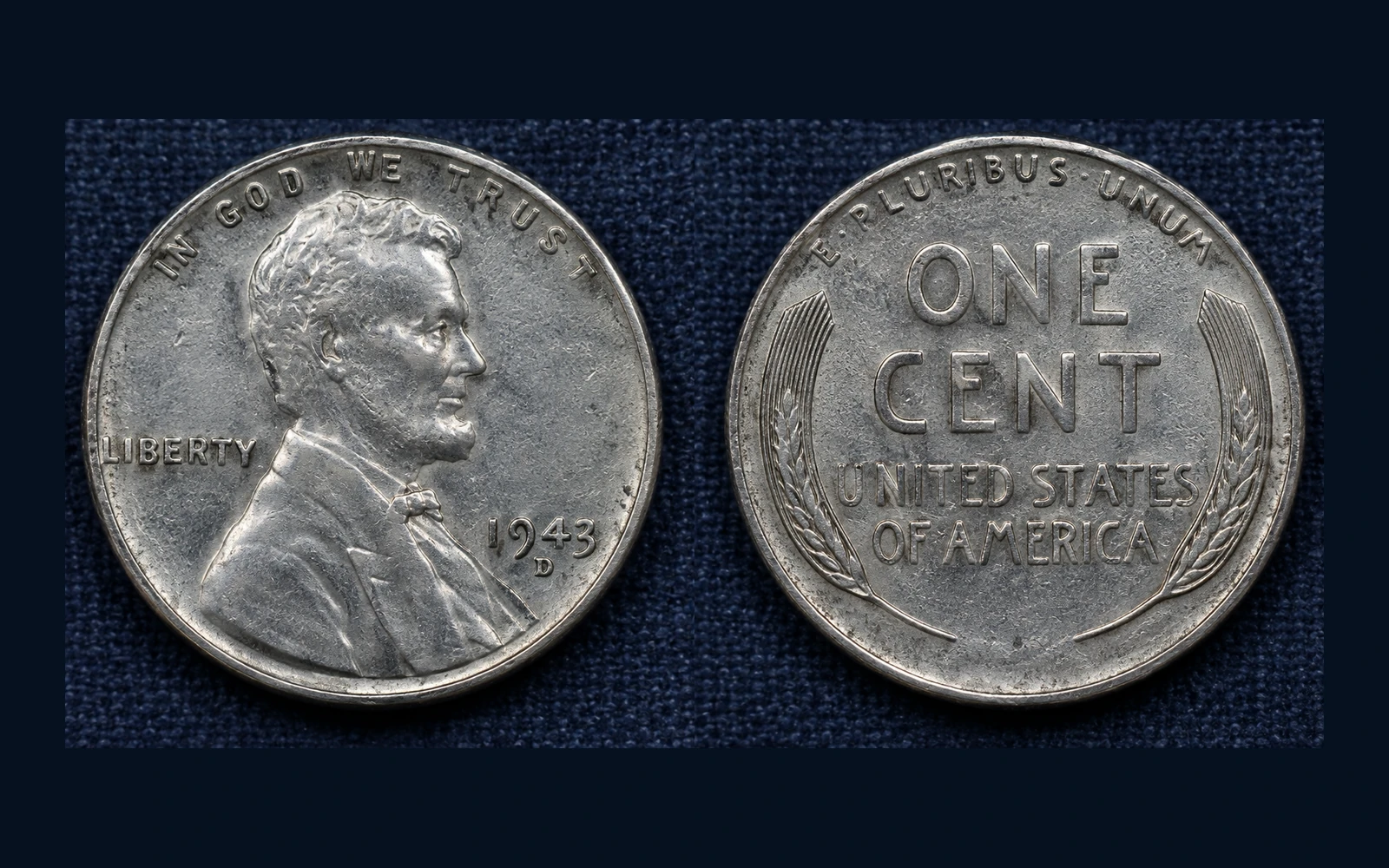
The 1943-D Steel Penny is the Denver version of the one-year zinc-coated steel Lincoln cent. Start with the value range, then confirm the D below the date, a magnetic response, a weight near 2.70 grams and an original wheat-cent surface.
Reviewed by the Coins Identification editorial team · Updated September 16, 2026
1943-D Steel Penny value by grade
Grade, original surface and variety separate a pocket-change example from a certified condition rarity.
A worn 1943-D steel cent is usually worth a modest collector premium. For the regular 1943-D 1C (PCGS #2714), PCGS reference values checked September 2026 are $22 in MS63, $26 in MS64, $30 in MS65, $42 in MS66, $185 in MS67 and $3,250 in MS68. The same grade can trade differently when the zinc coating is original, the strike is sharp, the coin has distracting rust or spots, or a recognized variety is attributed. Compare completed sales for the exact mint, grade and surface instead of using a headline auction result for every 1943-D cent.
| Grade | Condition | PCGS reference value |
|---|---|---|
| MS63 | Mint State · full detail with marks or spots | $22 |
| MS64 | Mint State · stronger detail, possible spots | $26 |
| MS65 | Mint State · clean fields and original luster | $30 |
| MS66 | Mint State · few marks and better eye appeal | $42 |
| MS67 | Mint State · exceptional preservation | $185 |
| MS68 | Mint State · finest-level preservation | $3,250 |
PCGS price-guide values are reference figures, not guaranteed selling prices. Actual prices can vary with surface quality, eye appeal, certification and market conditions. Prices last checked: September 2026. Lower circulated grades and MS60 are omitted here when a separate current PCGS figure was not available, rather than estimated.
What Makes a 1943-D Steel Penny Valuable?
Value is a combination of evidence, preservation and demand.
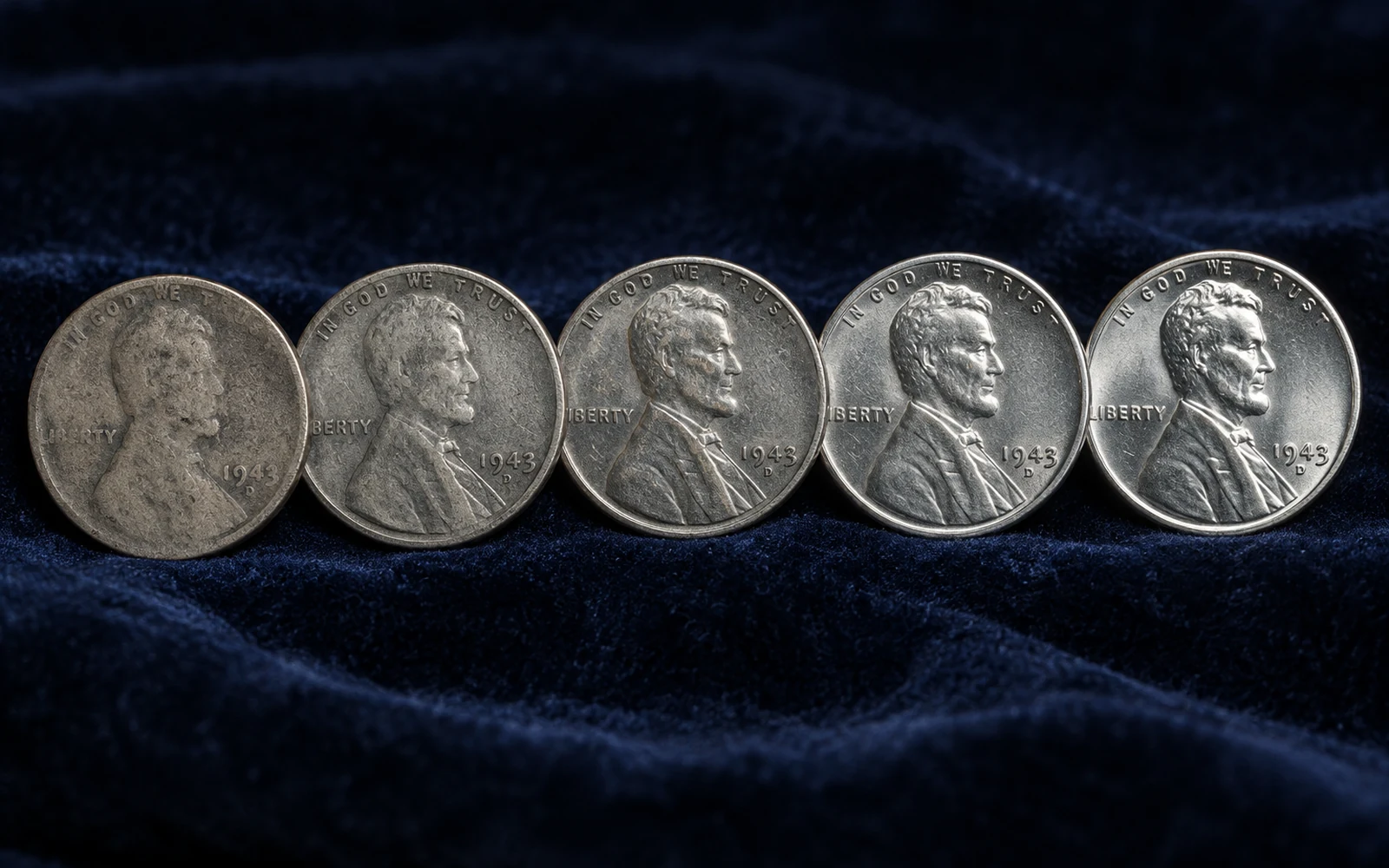
The 1943-D date is not rare simply because it is made of steel. Denver produced more than two hundred million pieces, and many circulated survivors remain. Collectors pay more when the coin shows strong design detail, an even original zinc coating, few spots, no cleaning and a grade that is scarce for the date. A recognized die variety can add another layer of demand, but the attribution must match published markers. Bright color, a large number on a sales listing or a dramatic scratch is not a substitute for authentication. If a coin looks bronze or does not behave like steel, pause before comparing it with regular-date prices.

Sharp detail
MS65+ examples are scarce. Look for complete hair and wheat detail with minimal marks.

Original zinc luster
Even silver-gray texture supports demand; rust, spots and replating can reduce it.

Verified markers
A D/D RPM or die error needs a close match to published attribution references.

Clues agree
Weight near 2.70 g, magnetic response and a natural D mark should tell the same story.
Uncirculated 1943-D Steel Penny value
MS grades are about the absence of wear and the quality of the original surface.
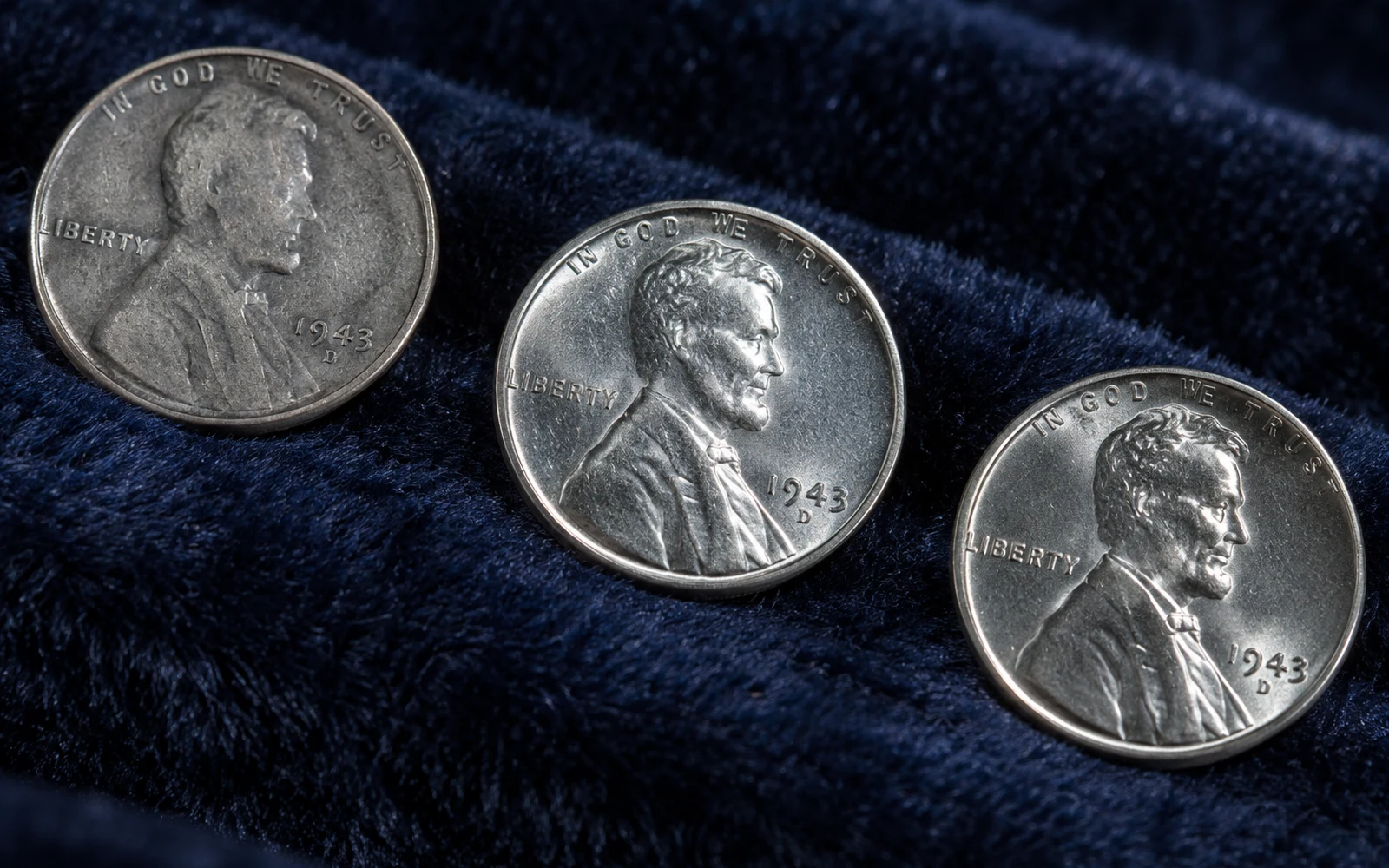
Uncirculated coins retain the design's high points and show no friction from circulation. On a steel cent, the surface still needs careful examination because the thin zinc coating can spot, flake or rust even when the details are sharp. In the current PCGS guide, the regular issue moves from $22 in MS63 to $26 in MS64, $30 in MS65, $42 in MS66, $185 in MS67 and $3,250 in MS68. Do not equate a brilliant white appearance with a high grade. Replating and polishing can make an ordinary coin look bright while removing the original texture that graders expect.
For a raw coin, describe the grade conservatively. A professional service can separate a true mint-state surface from an altered one and can confirm whether a variety is eligible for a premium attribution.
| Grade | Look for | Value context |
|---|---|---|
| MS63 | Full detail, visible marks and possible spots | PCGS guide: $22 |
| MS64 | Stronger detail with possible spots | PCGS guide: $26 |
| MS65 | Clean fields and attractive original luster | PCGS guide: $30 |
| MS66 | Few marks and stronger eye appeal | PCGS guide: $42 |
| MS67 | Exceptional preservation and scarcity | PCGS guide: $185 |
| MS68 | Finest-level preservation and eye appeal | PCGS guide: $3,250 |
Where is the D mint mark?
Look below the 1943 date on the obverse.
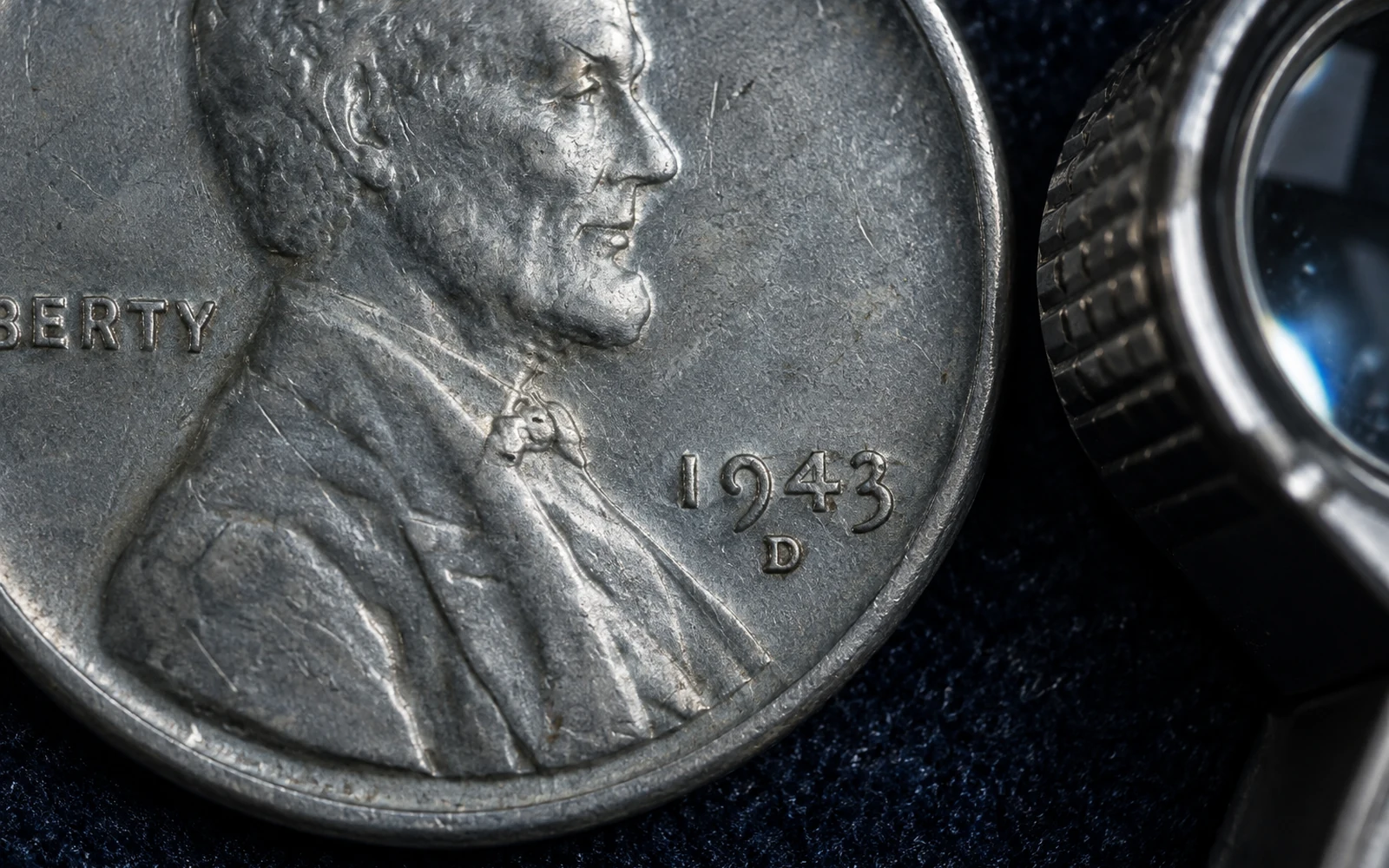
Denver used a D mint mark below the date. On a genuine struck coin, the letter is part of the field and shares the same wear, luster and surface texture as the rest of the obverse. Use a straight-on photograph and soft light. A mark that sits too high, has fresh edges, or shows a raised seam can be altered. The absence of a D means Philadelphia, while an S identifies San Francisco. Mint mark alone does not establish a rare metal or high grade.
1943-D/D repunched mint mark
FS-501 is a recognized Denver RPM, separate from damage and machine doubling.
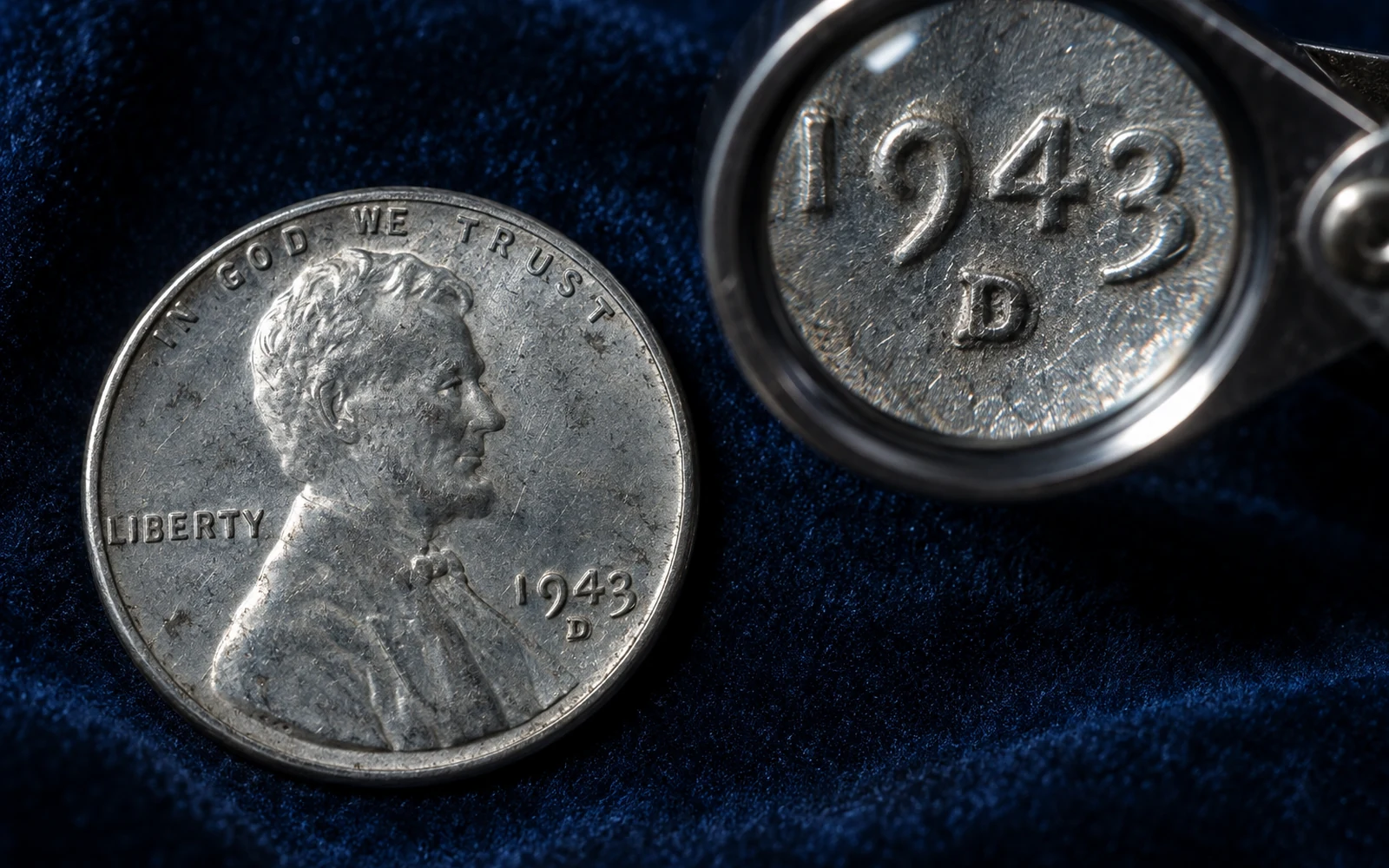
A repunched mint mark was made when a working die received the D punch more than once in slightly different positions. The overlapping outlines can show on the sides or within the letter. FS-501 is listed by PCGS as 1943-D/D 1C RPM FS-501, PCGS #37819. The coin still has the normal steel composition, 2.70 gram reference weight and Denver mintage. Attribution depends on the exact marker, not on a vague second line or a shadow created by lighting.
FS-501 is not the only documented repunched mint mark for the 1943-D cent. PCGS also catalogs 1943-D/D 1C RPM FS-502 (FS-019.1), PCGS #37820. A coin with apparent doubling around the D should therefore not be labeled FS-501 based on appearance alone. Exact mint-mark diagnostics, clear photographs and the published marker are needed for a reliable attribution; the two varieties should be researched and valued separately.
RPM or doubled die?
A repunched mint mark affects the mint mark because the punch was applied to the die. A doubled die is a hubbing variety that can affect design elements such as the date or lettering. Machine doubling usually has a flat, shelf-like step and is common. Keep the terms separate when searching sales and asking for attribution.
What a premium example needs
- Correct 1943-D date and steel profile
- Published FS-501 marker match
- Undisturbed surfaces around the letter
- Clear photos or professional attribution
| D/D reference | PCGS guide context | Known auction point |
|---|---|---|
| FS-501, PCGS #37819 | Separate variety record from regular 1943-D #2714; use the attributed grade for comparison | $14,100, MS67 PCGS, Stack's Bowers, October 2, 2015 |
1943-D Steel Penny errors
Start with mint-made shape and repeatability, then rule out damage.
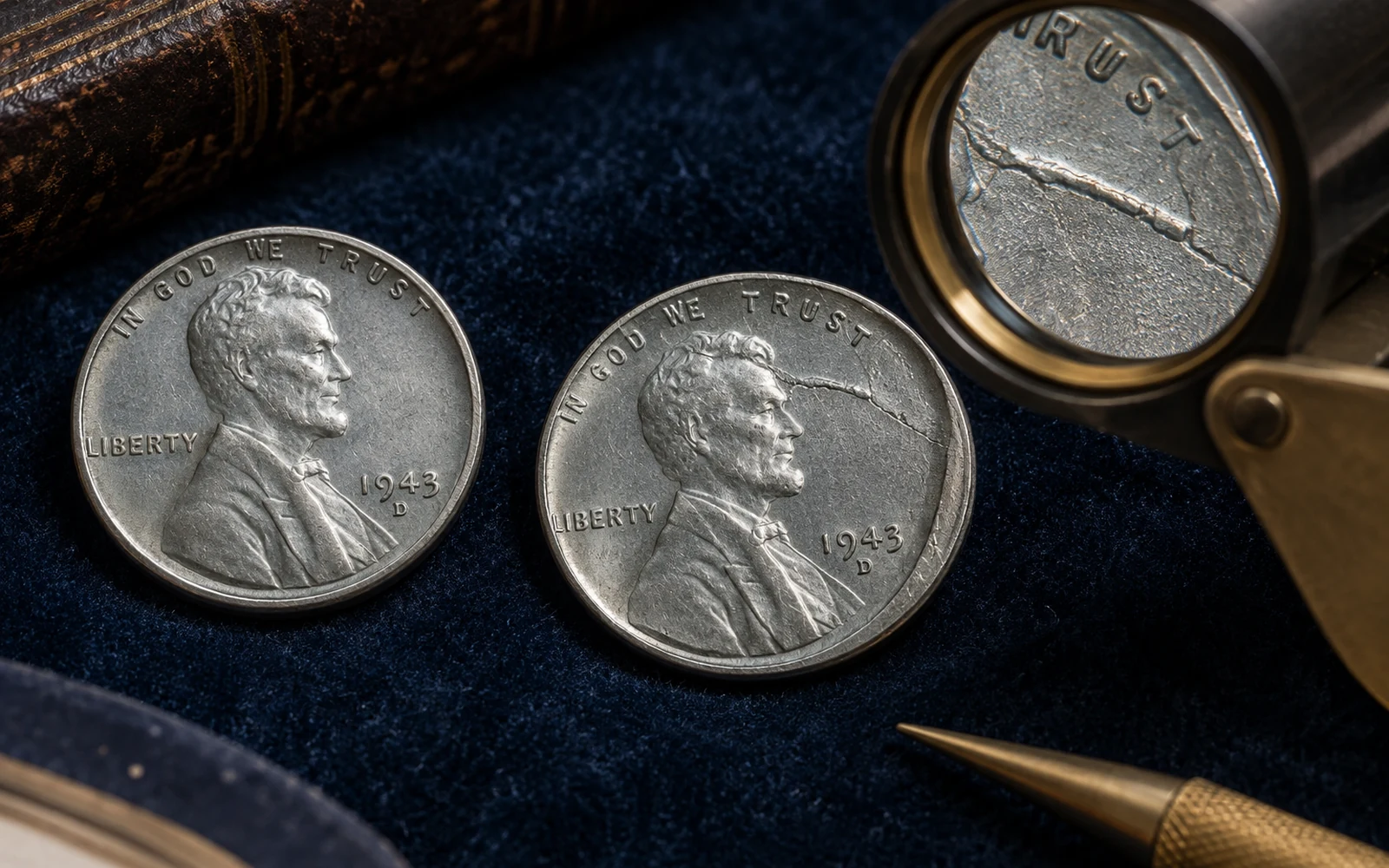
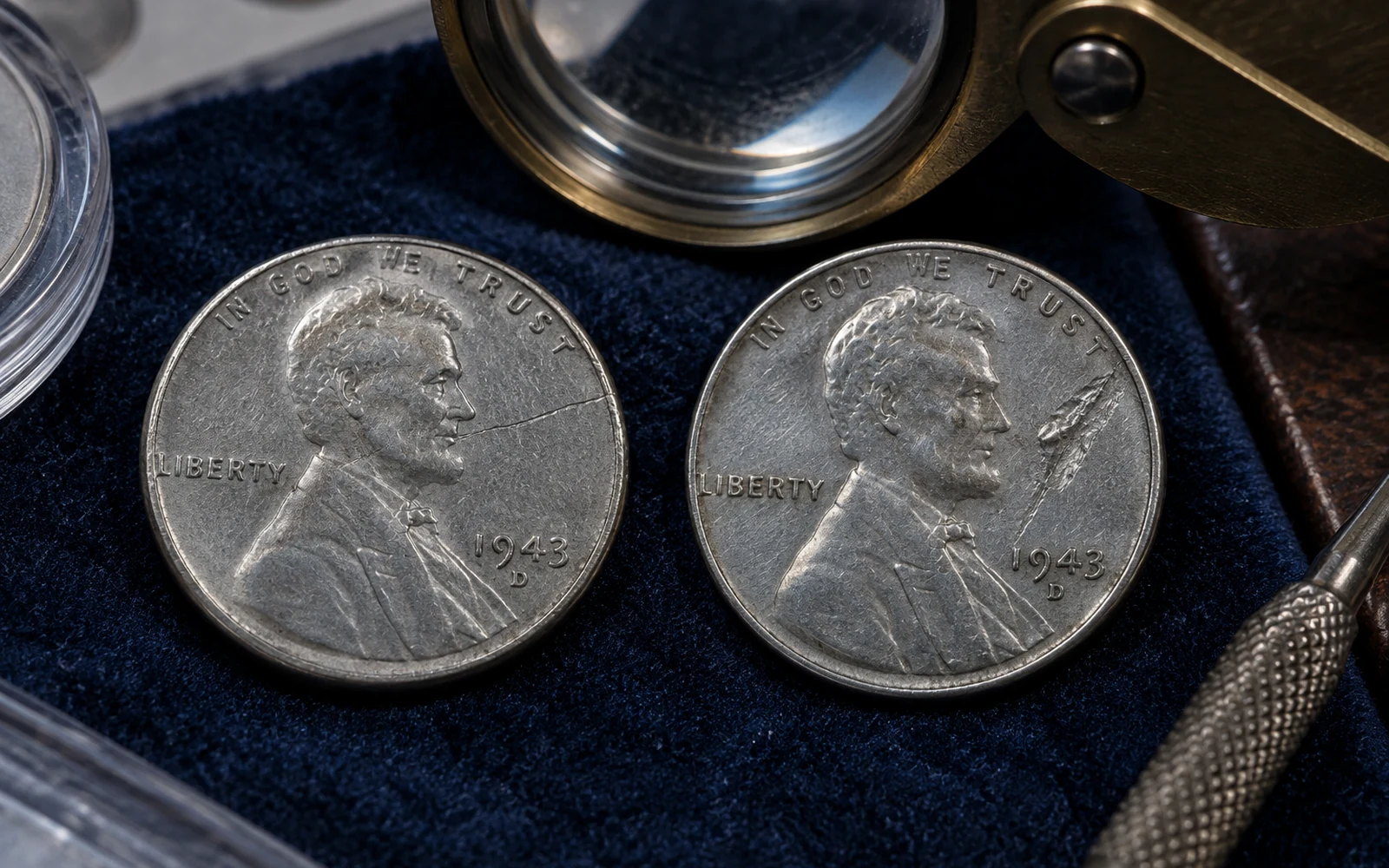
Collectors may encounter off-center strikes, broadstrikes, die cracks, clashed dies and other die or striking anomalies. These features are much less common than ordinary contact marks, plating and machine doubling. A genuine error should make sense in the manufacturing process: the design can be shifted, the rim can expand without a collar, or a raised die crack can repeat across coins from the same die. A gouge, dent or scraped coating happened after the coin left the press and generally does not carry the same premium.
Common claims that need caution
Look for a real shift in the design and a consistent blank crescent, not a clipped edge from damage.
The rim can spread when a collar fails. A random flattened edge is not automatically a broadstrike.
Raised lines from a broken die can be collectible when they are clearly raised and repeatable.
A flat shelf on a letter is common strike chatter and is usually not a doubled die.
Error or post-mint damage?
Shape, height and continuity are more useful than how dramatic a mark looks.
Examine the feature under magnification without scraping it. A die-made feature is usually raised or integrated into the strike, follows a logical path and can be found on other coins from the same die. Damage often cuts into the field, exposes a different color of metal, leaves a sharp gouge or interrupts the design randomly. Compare the same area on clear reference images and document both sides before sending the coin for review.
How to identify a 1943-D Steel Penny
Use four independent clues before writing a value in your notes.
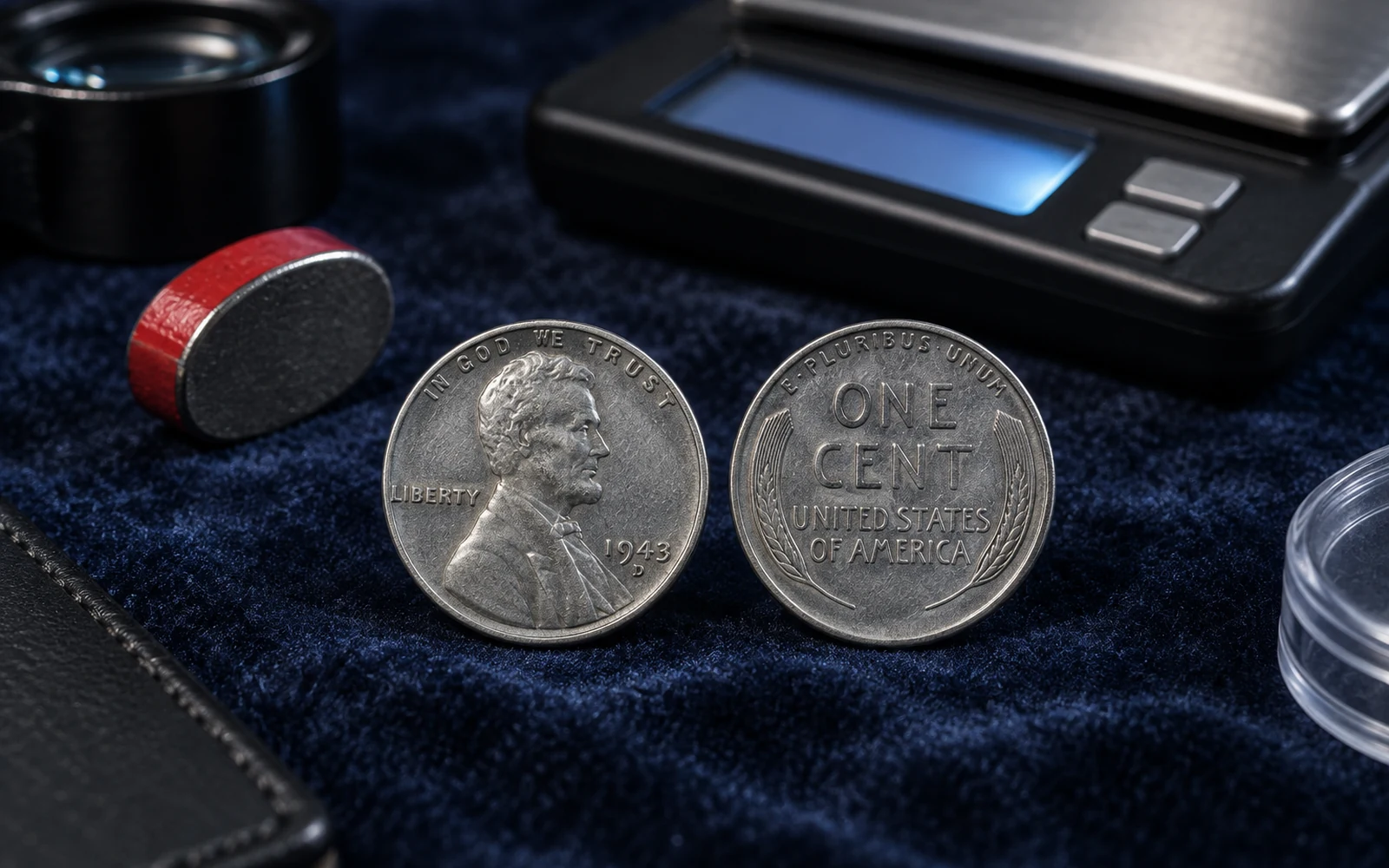
The fastest reliable screen is a combination of date, mint mark, metal and reverse. The date should read 1943 without signs of alteration. The D belongs below the date. The zinc-coated steel planchet should attract a magnet and weigh near 2.70 grams. The reverse should show the wheat-ear design, with a plain edge and a diameter near 19 mm. None of these checks proves a variety or a rare error by itself, but disagreement is a reason to stop and investigate.
Weight and magnet test
Use gentle, repeatable measurements and record the conditions.
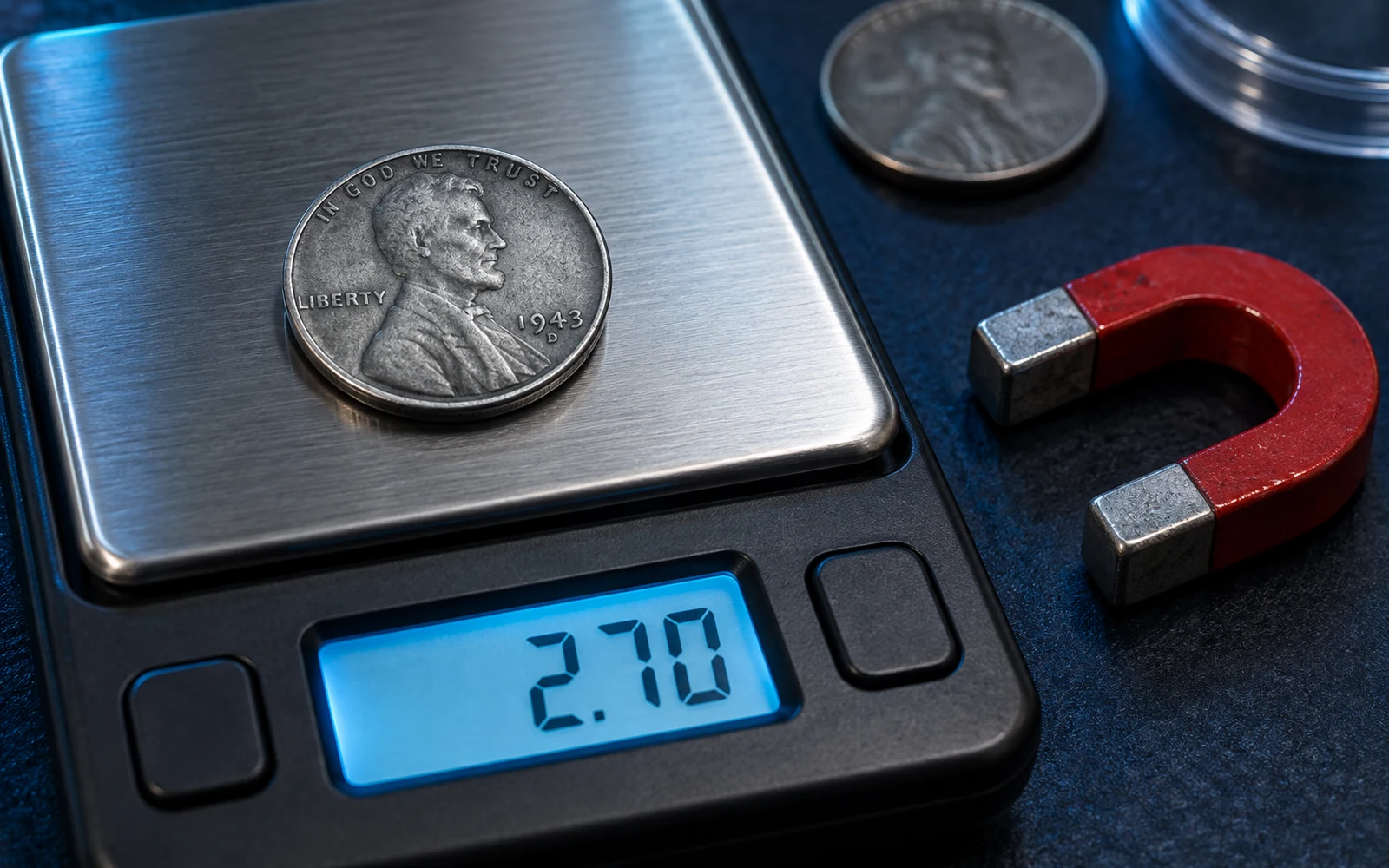
A clean, dry 1943-D steel cent should read close to 2.70 g on a scale accurate to 0.01 g and should respond to a magnet. Place the scale on a stable surface and note whether dirt, corrosion or a holder is affecting the measurement. Hold a small magnet next to the coin rather than sliding it over the zinc coating. A nonmagnetic coin near 3.11 g is a screening lead for a possible bronze planchet, not proof of a rare error. Stop handling it and seek authentication.
Original steel surface versus replating
Color and shine can be altered after minting.
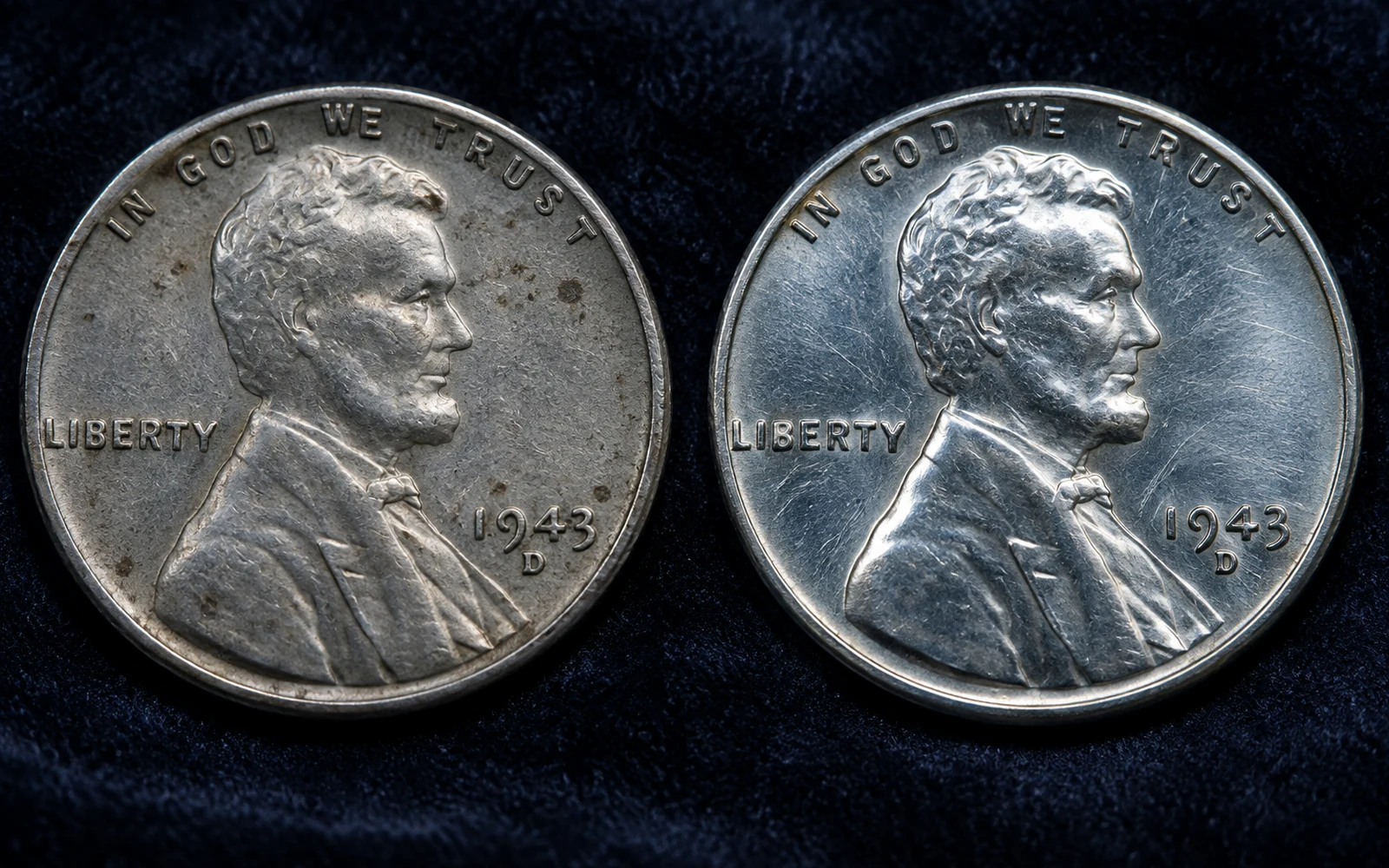
The zinc coating on a steel cent can darken, spot or wear through to the steel core. An original surface often has uneven but coherent luster, with wear and oxidation that follow the coin's age. Replated pieces may look unnaturally bright, show a bluish or mirror-like cast, cover scratches with a uniform film, or have plating that reaches the edge and protected recesses differently. Polishing can leave hairline scratches and a flat glow. These observations help describe a coin, but only professional examination can establish whether a surface is original.
1943-D mintage and survival
Large mintage explains why the regular date is common in worn grades.
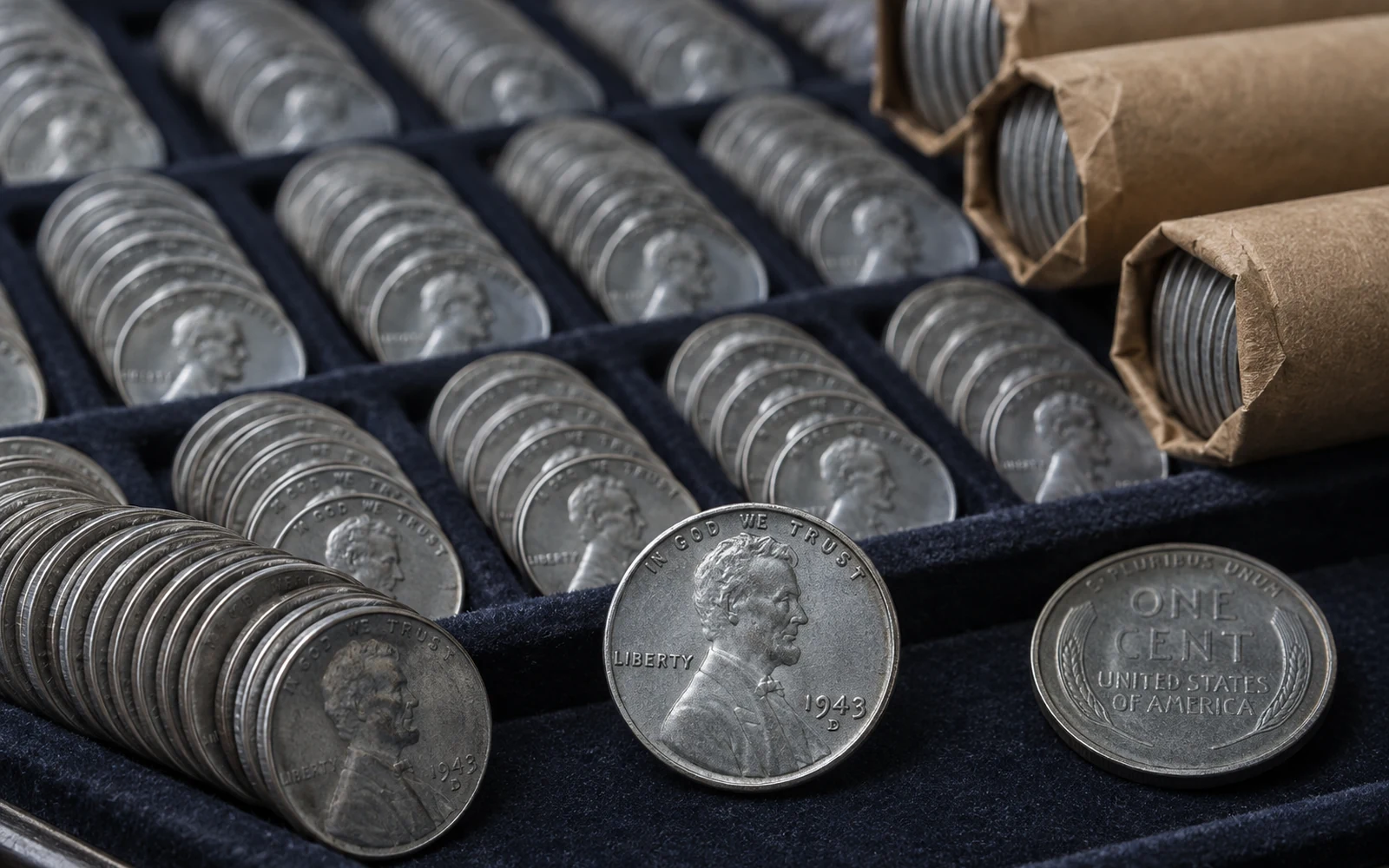
Denver struck 217,660,000 zinc-coated steel cents in 1943. The total is large, but survival is uneven. Many coins lost their zinc coating, developed rust or were discarded after the unusual silver-gray cents caused problems in vending machines and turnstiles. Collectors saved a substantial number in better condition, so the date remains available in low uncirculated grades. The scarcity begins when original surfaces, sharp strikes and top certified grades are combined. Mintage alone is therefore a poor shortcut for value.
The D/D RPM is a die variety within that mintage, not a separate metal issue. Record the regular date and mint before you compare variety prices.
1943-D Steel Penny auction records
Use certified results to understand the ceiling, not to price an ungraded coin.
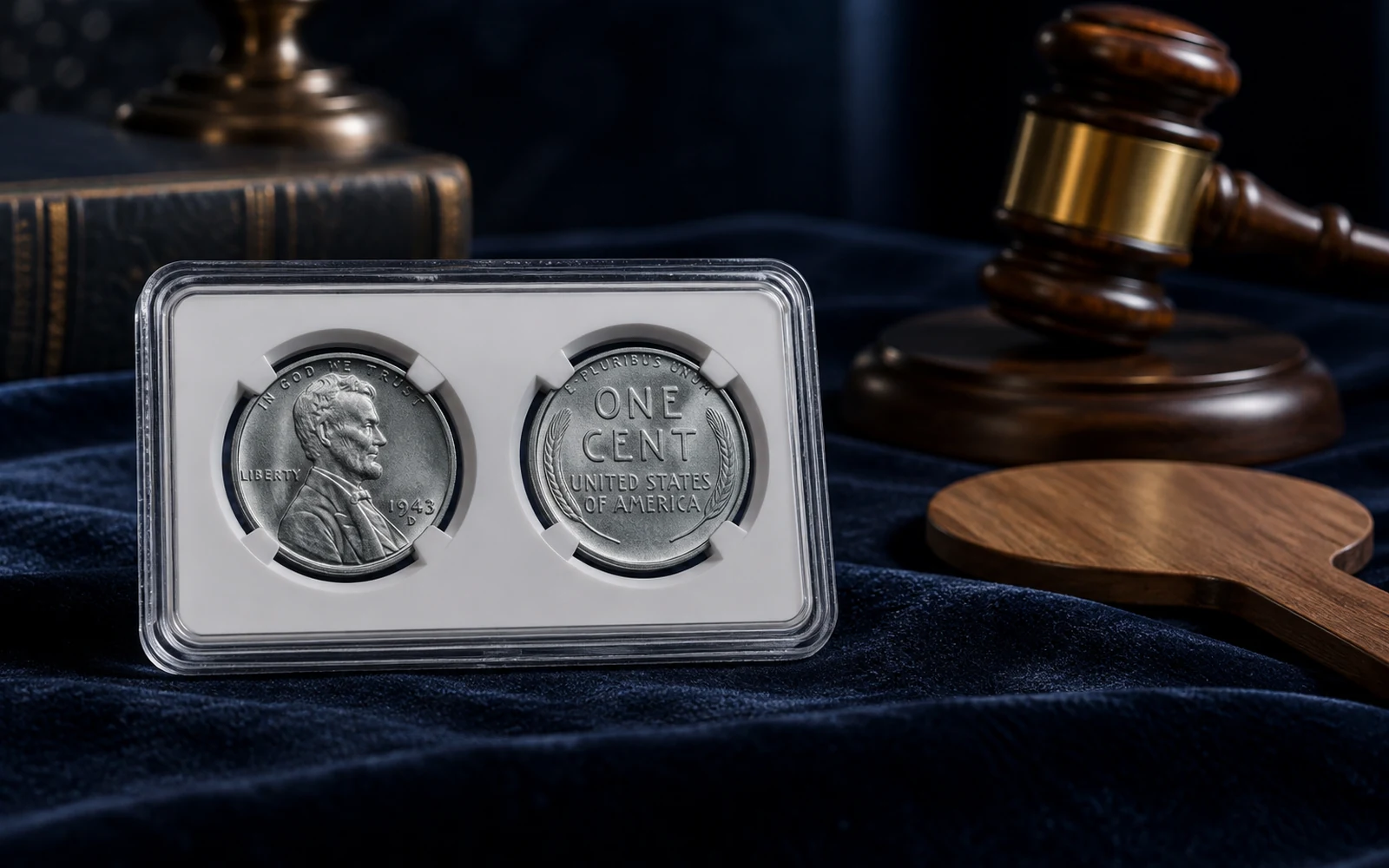
The following reference points are tied to certified examples and named auction houses. They show why grade and variety matter. A sale price includes the coin's eye appeal, certification, timing and buyer demand. It does not transfer automatically to a raw coin with a similar photograph or to a different grade.
| Coin | Grade | Auction | Realized |
|---|---|---|---|
| 1943-D regular | MS68+ PCGS | Heritage Auctions, January 17, 2026 | $19,520 |
| 1943-D/D FS-501 | MS67 PCGS | Stack's Bowers, October 2, 2015 | $14,100 |
| 1943-D regular | MS68 PCGS, CAC | Heritage Auctions, January 15, 2025 | $4,560 |
1943-D Steel Penny specifications
Keep these baseline facts with your inspection notes.
A wartime change in Lincoln cents
During World War II, copper was needed for ammunition and other military material. The Mint changed the cent's planchet for 1943 to low-carbon steel coated with zinc. Philadelphia, Denver and San Francisco struck the steel issue, then bronze returned for 1944. The unusual silver-gray appearance made the cents memorable, but the thin coating was vulnerable to moisture and wear. A few bronze 1943 cents are known as wrong-planchet errors, which is why copper color on a 1943 date attracts attention. The normal Denver issue remains a steel cent and should be identified on its own evidence.
1943-D Steel Penny FAQ
How much is a 1943-D Steel Penny worth?
PCGS reference values checked September 2026 list $22 for MS63, $26 for MS64, $30 for MS65, $42 for MS66, $185 for MS67 and $3,250 for MS68. Circulated pieces and raw coins vary with wear and surface quality, while the $19,520 MS68+ figure is a verified Heritage auction record rather than an ordinary guide value.
What makes a 1943-D Steel Penny valuable?
The biggest drivers are grade, original zinc coating, sharp detail, a verified D/D repunched mint mark, and exceptional eye appeal. A rare metal claim must be authenticated before it is valued.
Where is the D mint mark?
On a normal 1943-D cent, the D is directly below the 1943 date on the obverse. The letter should have the correct shape and sit naturally in the surrounding field.
Is every 1943-D/D a valuable RPM?
No. The D/D designation is a specific die variety. A blurry, damaged or altered mint mark is not enough. Compare the punch overlap with a trusted reference and use a specialist attribution service for a premium claim.
Should a 1943-D cent stick to a magnet?
Yes. The normal issue is zinc-coated steel and should be attracted to a magnet. Test close to the coin without scraping it, then confirm the result with weight and visual evidence.
What should a 1943-D cent weigh?
The steel reference is about 2.70 grams. A reading that is a little high or low can reflect dirt, corrosion or a scale error, so weigh the coin clean and dry on a scale accurate to at least 0.01 gram.
Is the 1943-D Steel Penny rare?
The regular issue is common in circulated grades because Denver struck 217,660,000 pieces. High-grade survivors and recognized die varieties are much scarcer than ordinary worn examples.
Are brown 1943-D pennies bronze errors?
Usually no. Brown color can come from replating, copper wash, corrosion, lighting or an altered date. A suspected bronze planchet needs non-destructive screening and professional authentication.
What errors should I look for?
Study off-center strikes, broadstrikes, die cracks, clashed dies and machine doubling. A dramatic-looking mark is only collectible when it is a mint-made feature and not post-mint damage.
Should I clean or polish a 1943-D cent?
No. Cleaning and polishing remove original surface evidence and can sharply reduce collector interest. Hold it by the edge and store it dry in an inert holder.
Related Lincoln cent guides
Open a nearby date or metal reference when your evidence points elsewhere.
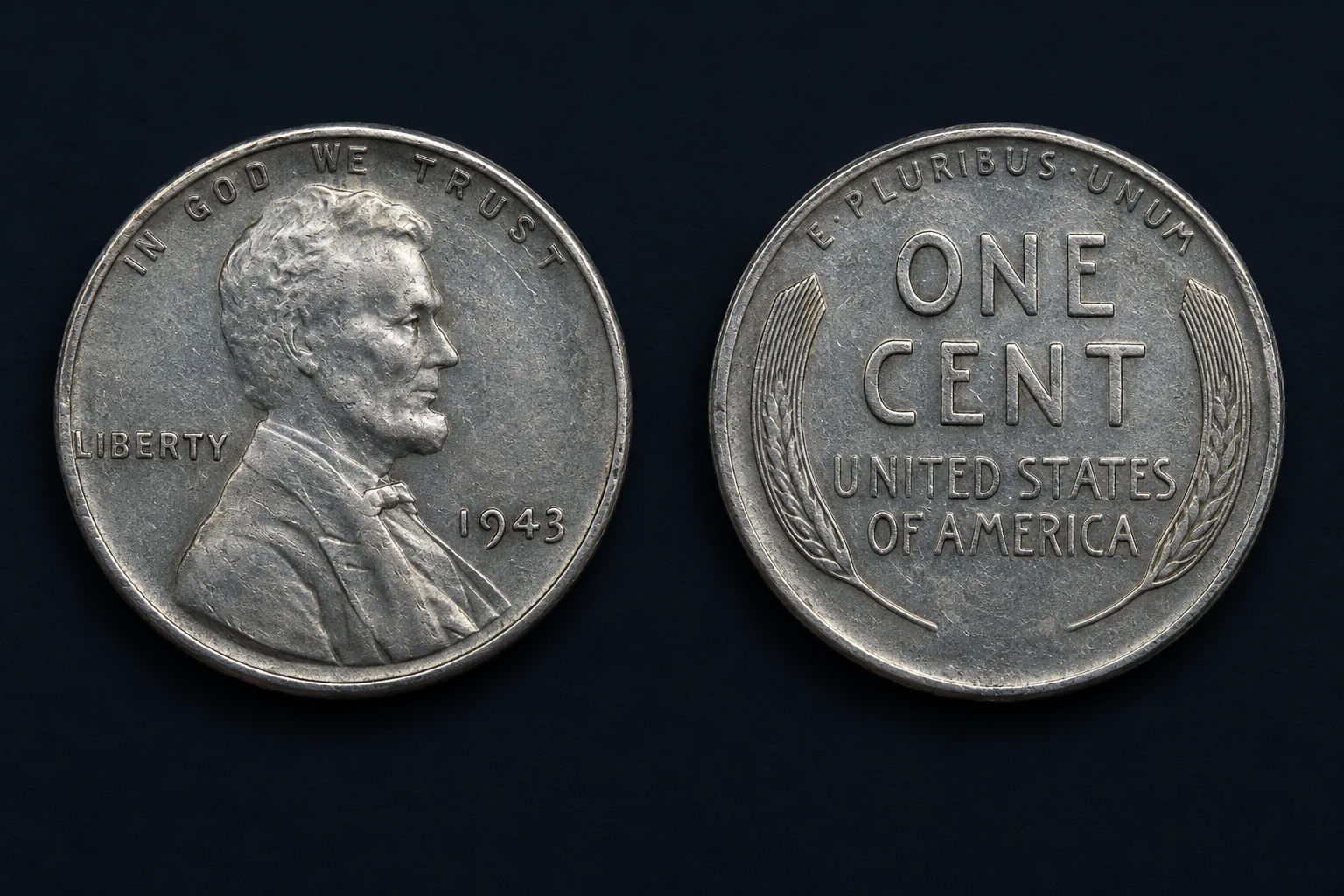
1943 Steel Penny
Compare Philadelphia, Denver and San Francisco steel traits.
Open guide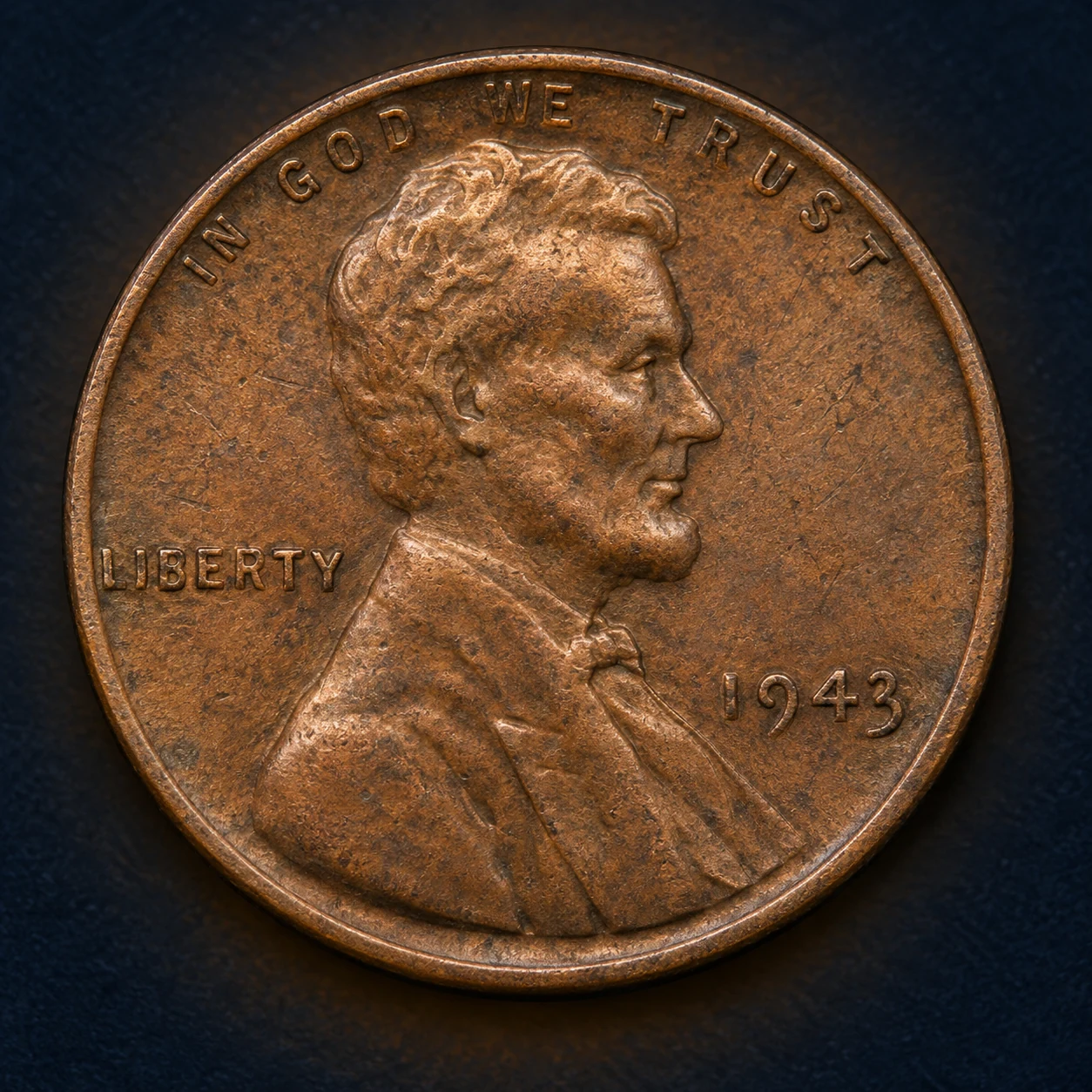
1943 Bronze Penny
Review bronze screening clues and authentication cautions.
Open guide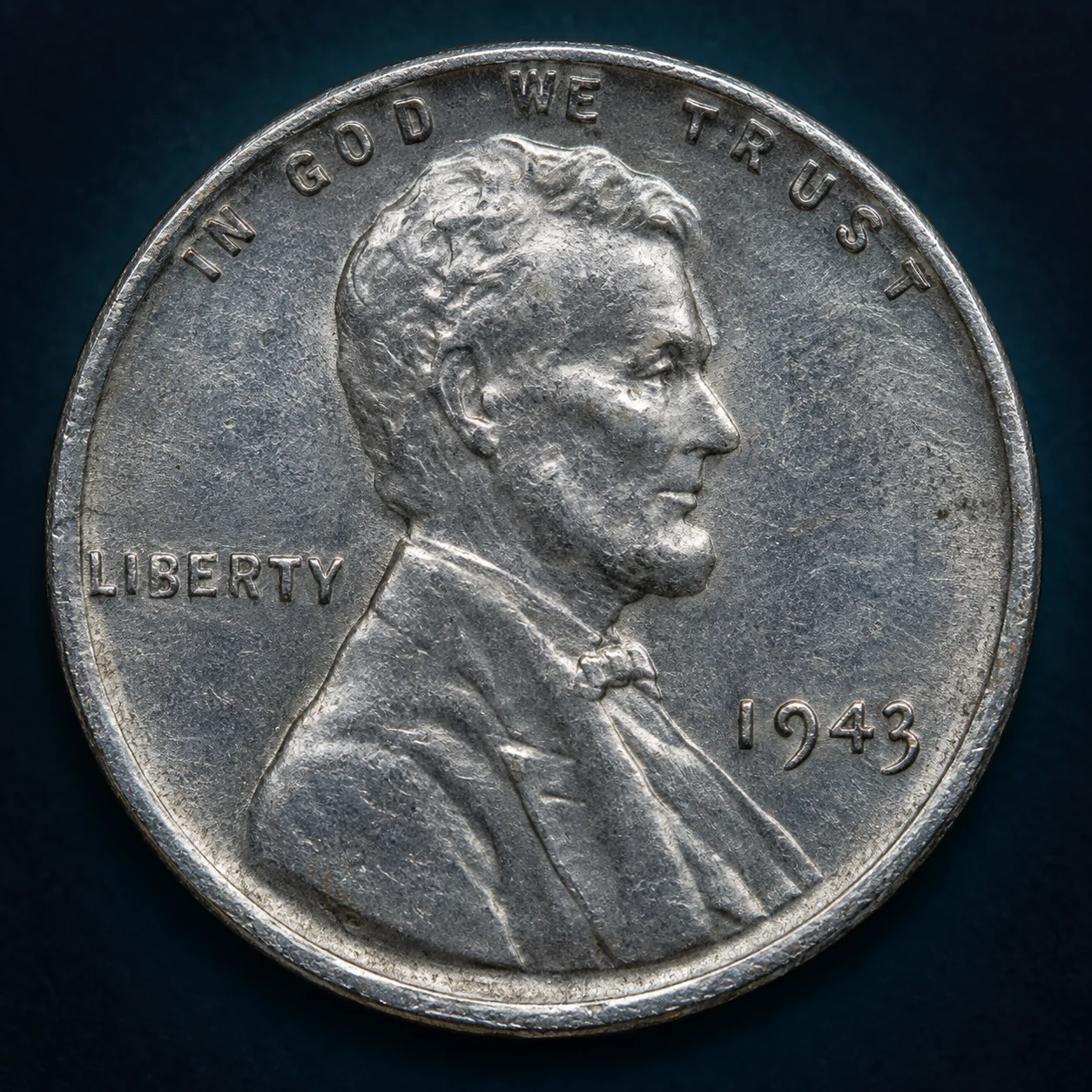
1943-S Steel Penny
Check the S mint mark below the date.
Open guide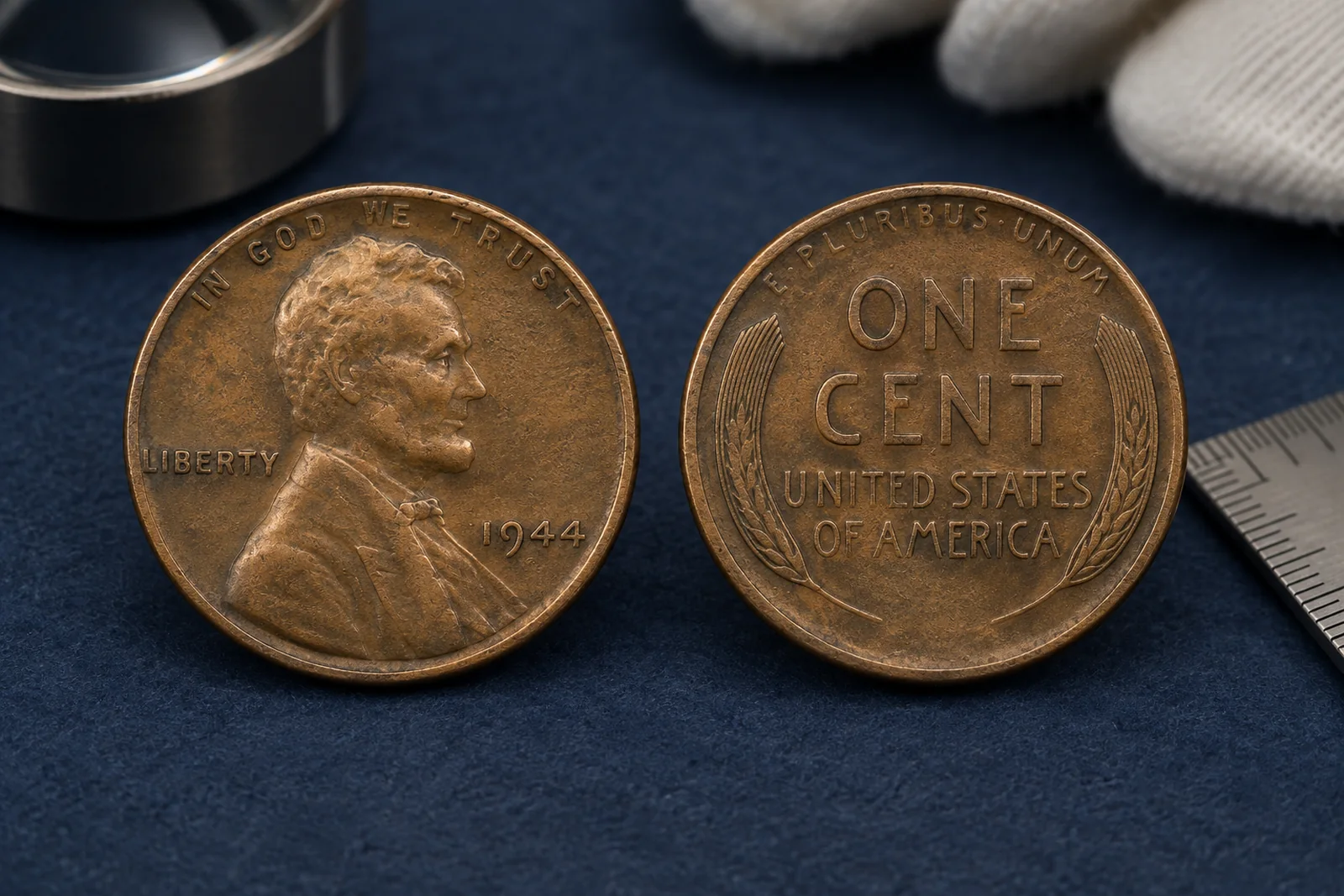
1944 Wheat Penny
See the return to a bronze alloy after the steel issue.
Open guide