
1943-S Steel Penny Value, Errors & Identification Guide
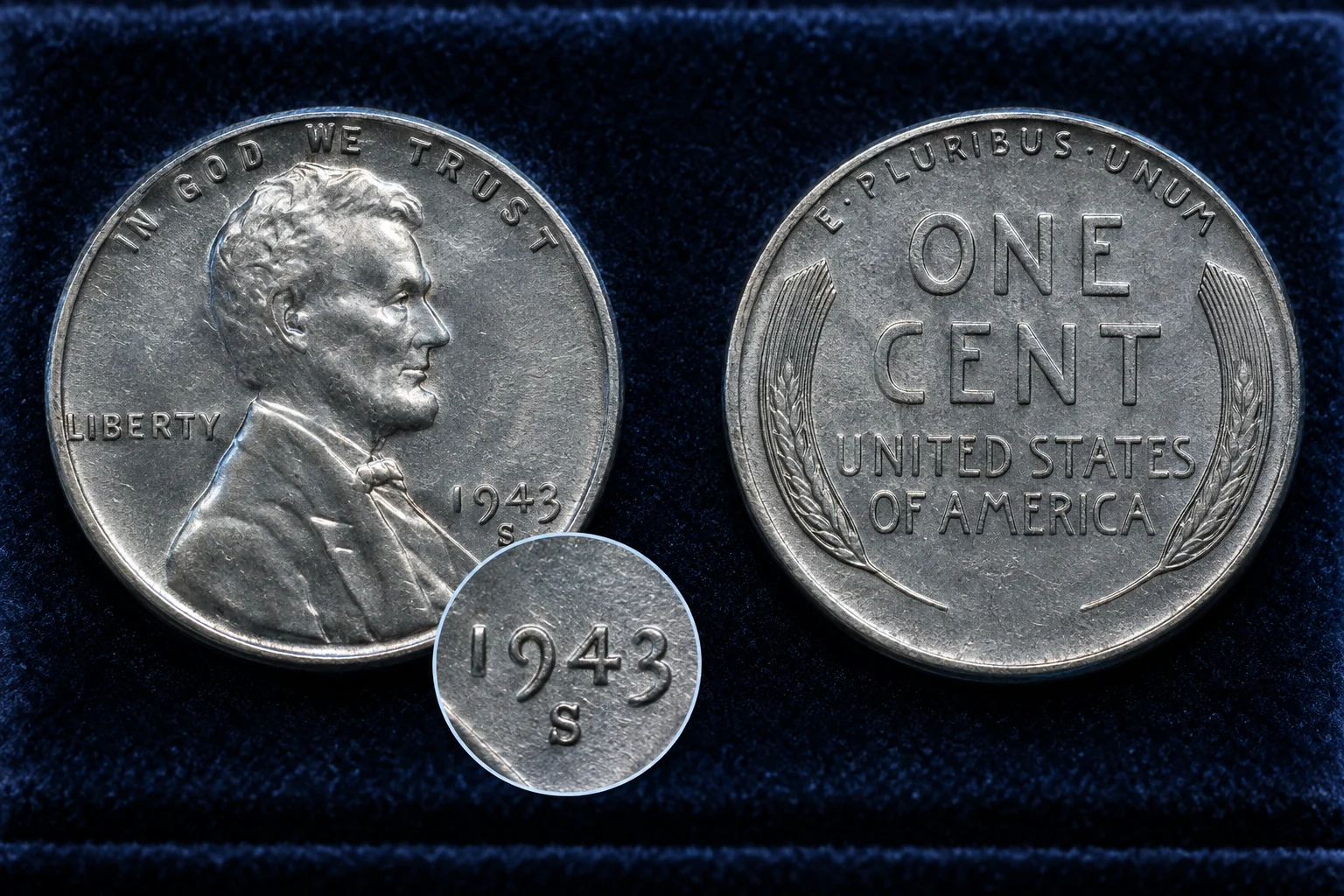
San Francisco struck 191,550,000 zinc-coated steel cents in 1943. The S below the date identifies that mint. Most circulated examples are common, while value rises with grade, original surface, sharp detail and recognized varieties. Start with the price context, then check the date, magnet response and weight near 2.70 grams.
Reviewed by the Coins Identification editorial team · Prices last reviewed September 2026
How Much Is a 1943-S Steel Penny Worth?
Most circulated coins are modestly priced. Original Mint State examples can be a different market.
Most circulated 1943-S steel cents are worth a modest collector premium, often only a few dollars when the date, mint mark and surfaces are ordinary. Certified Mint State examples bring more because they retain sharper detail and more of the original zinc coating. The biggest jumps occur when a coin combines a high numerical grade with clean, original surfaces and strong eye appeal. Corrosion, dark spotting, cleaning or replating can reduce demand even when the design is complete. A doubled-die attribution, 1943/2-S FS-101 or Prooflike designation is priced separately from the regular issue. The regular PCGS record is #2717. Use a completed sale or a current guide entry for the exact grade, rather than an exceptional headline price from a different variety.
1943-S Steel Penny Value by Grade
| Grade | Condition | Verified reference | Notes |
|---|---|---|---|
| AU55 | Light wear, most detail present | PCGS guide: $1.00 | Certified listing reference |
| MS60 | No wear, marks and spots may be obvious | PCGS guide: $11 | Regular #2717, USD |
| MS63 | Full detail with visible marks | PCGS guide: $22 | Regular #2717, USD |
| MS64 | Sharper detail with moderate marks | PCGS guide: $26 | Regular #2717, USD |
| MS65 | Clean fields and attractive luster | PCGS guide: $40 | Regular #2717, USD |
| MS66 | Strong luster with fewer marks | PCGS guide: $70 | Regular #2717, USD |
| MS67 | Sharp, premium Mint State | PCGS guide: $200 | Regular #2717, USD |
| MS67+ | Superb Mint State | PCGS guide: $575 | Regular #2717, USD |
| MS68 | Finest-level Mint State | PCGS guide: $3,750 | Regular #2717, USD |
Current USD references: PCGS Price Guide · regular #2717. Accessed September 16, 2026.
Only separately published PCGS figures or certified listing references are shown here. Lower circulated grades can change with eye appeal and are not estimated. Prices last reviewed: September 2026. Price-guide figures are references, not guaranteed selling prices.
What Makes a 1943-S Steel Penny Valuable?
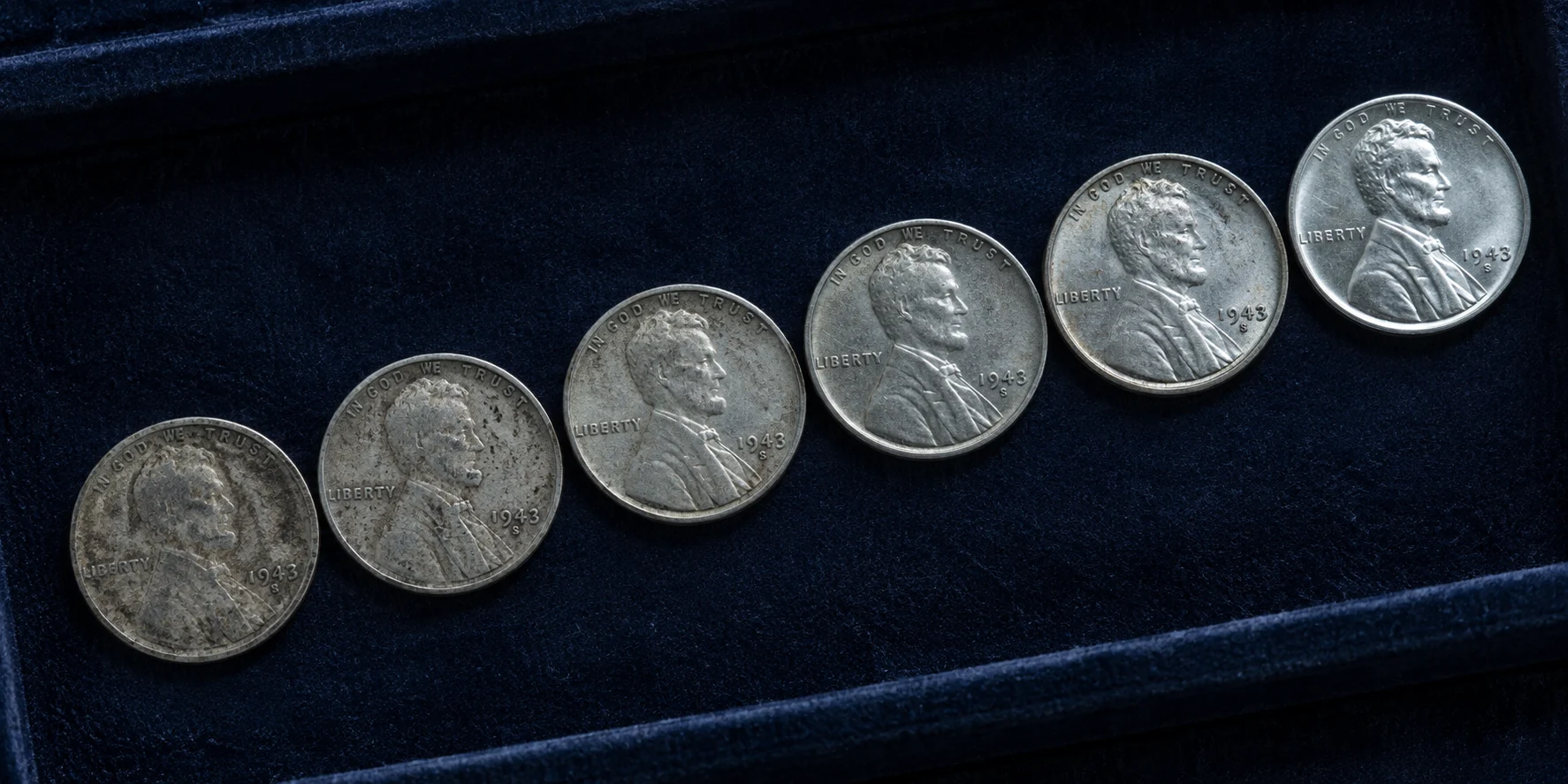
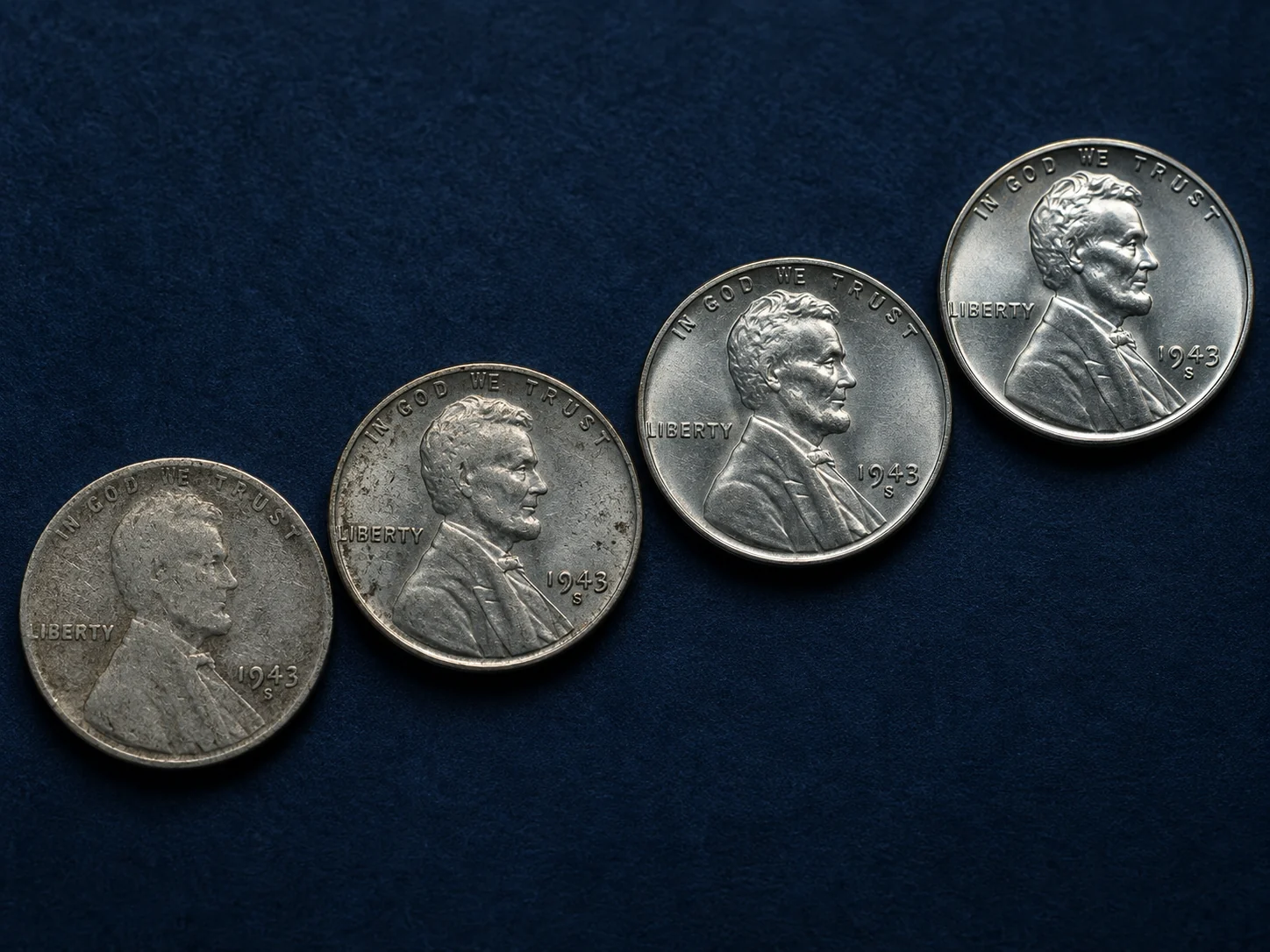
Two coins with the same date can tell very different surface stories.
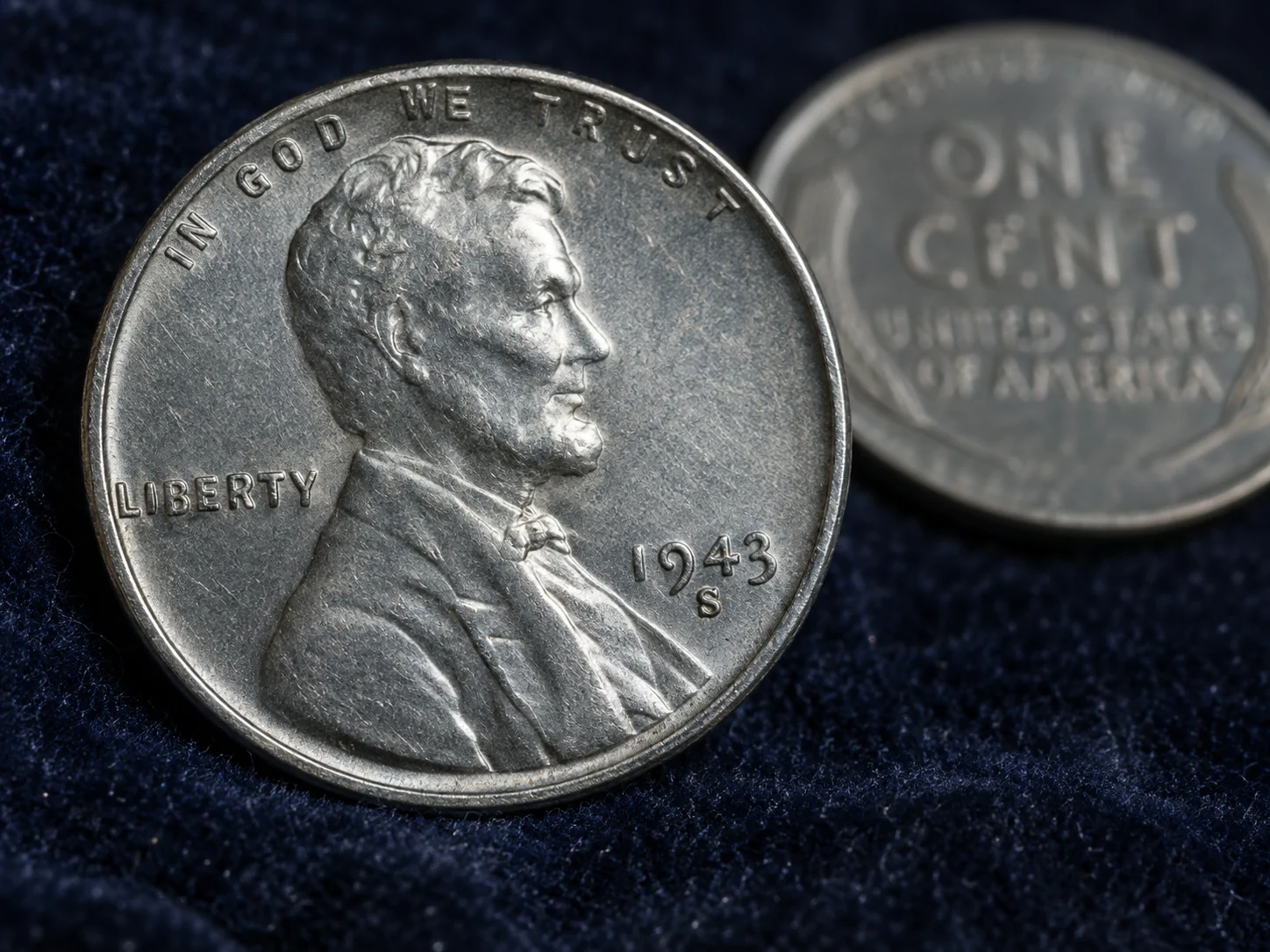
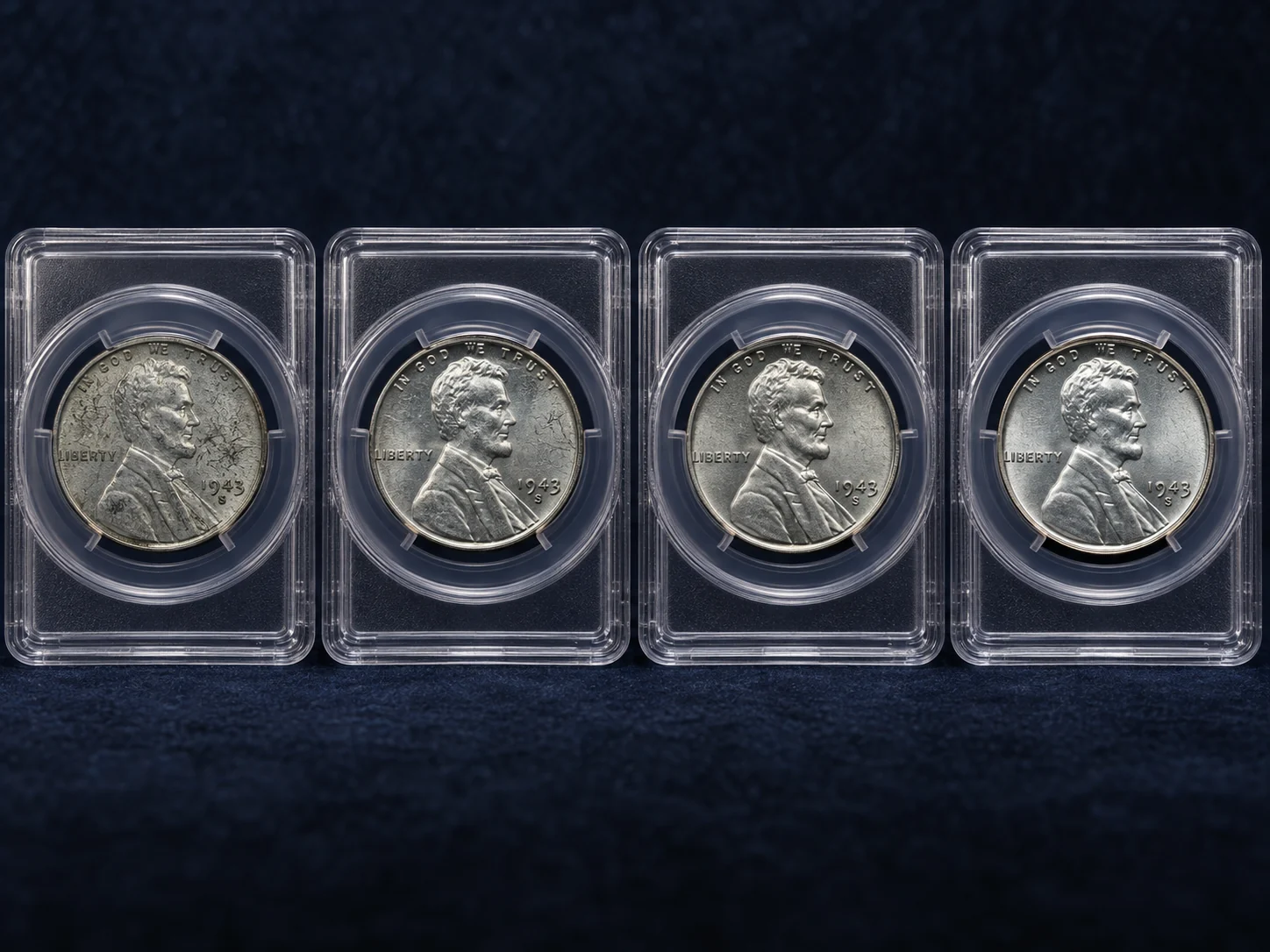
Grade is the first separator. A coin that never circulated keeps fine hair, lettering and wheat detail, but Mint State does not mean spotless. Zinc coating can spot or peel while a coin is still sharply struck. Original luster, even color and clean fields help eye appeal. Heavy rust, scratches and a processed bright finish work in the other direction. Strike quality matters too: a soft strike can hide detail that a buyer expects from a premium grade. Finally, a recognized variety or a qualifying Prooflike surface can create a separate collecting lane. Certification helps because it records the grade, surface assessment and attribution in a way buyers can compare. A raw coin can still be valuable, but its price must allow for uncertainty.
Sharp detail
Preserved hair, lettering and wheat lines support higher grades.
Original zinc
Even luster is more desirable than rust, spots or a uniform reprocessed film.
Published markers
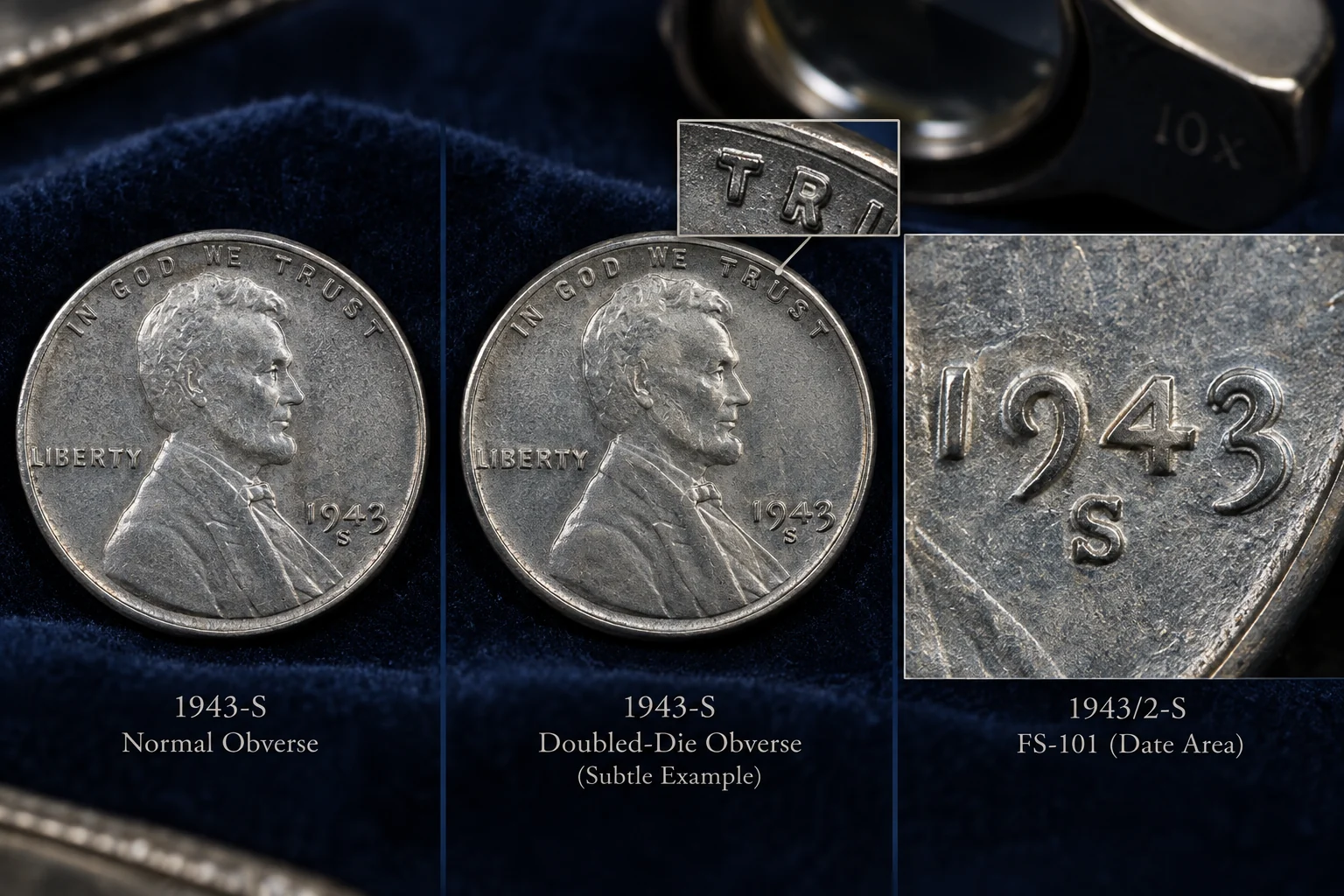
DDO and FS-101 need an exact diagnostic match, not a vague shadow.
Clues agree
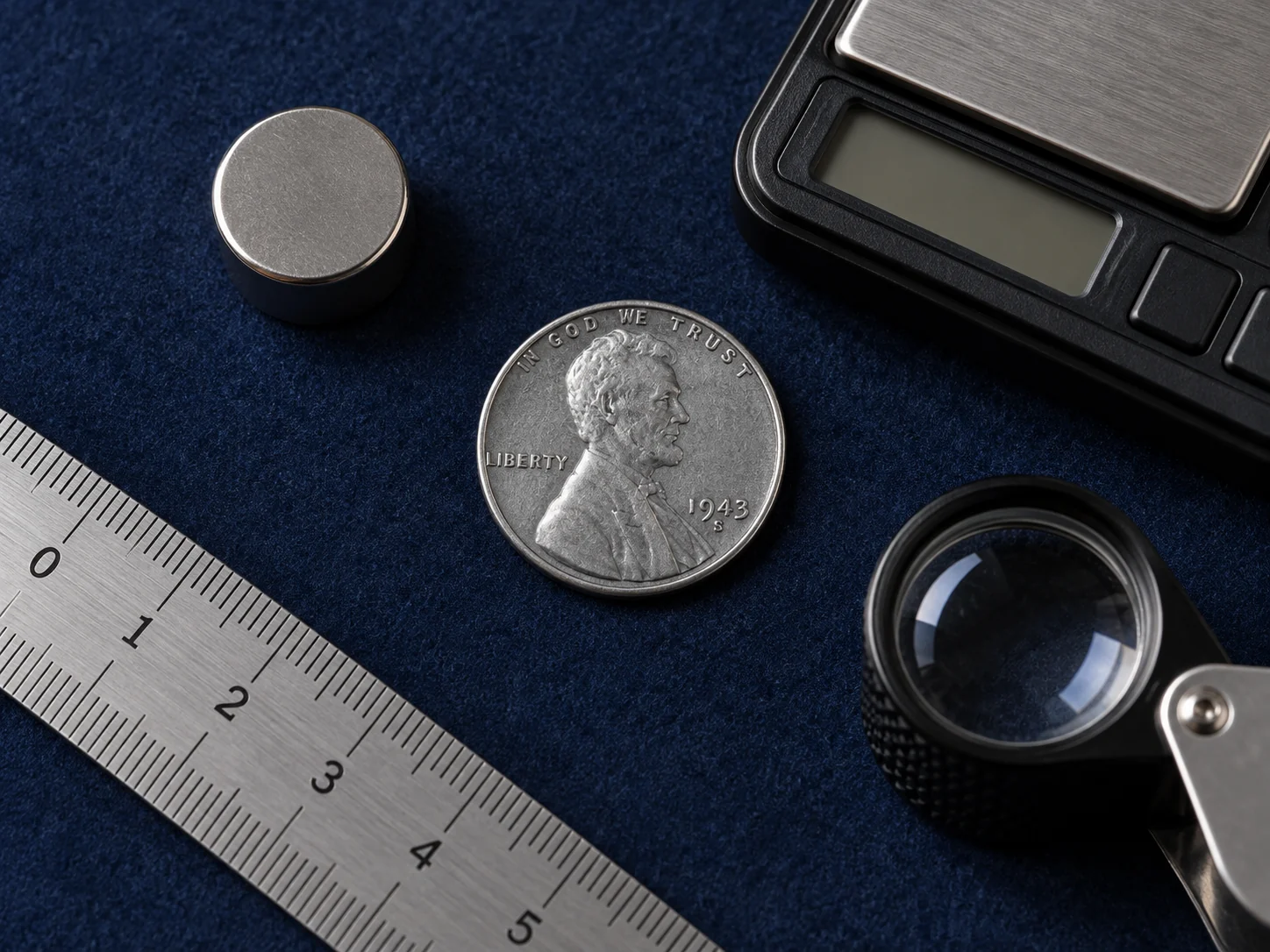
Mint mark, magnetic response and weight should support the same identification.
1943-S Steel Penny Uncirculated Value
Uncirculated is a range of grades, not a single price.
An uncirculated cent shows no friction from circulation, but it can still have contact marks, spots or a weak strike. MS60 through MS68 describe different levels of preservation. The jump from MS67+ to MS68 is especially large because very few examples retain the combination of sharp detail, clean fields and original surfaces that buyers want. A bright raw coin deserves caution: replating and polishing can create shine without preserving the original skin. Compare the fields, rims and protected recesses, then use a grading service when a high premium is at stake.
The table uses the current USD PCGS Price Guide entries for regular #2717, accessed September 16, 2026. PCGS guide prices apply to PCGS-graded coins; a completed sale can realize a different amount.
| Grade | Typical condition | Current reference |
|---|---|---|
| MS60 | No wear, marks and spots may be obvious | PCGS guide: $11 |
| MS63 | Full detail with visible marks | PCGS guide: $22 |
| MS64 | Sharper detail with moderate marks | PCGS guide: $26 |
| MS65 | Clean fields and attractive luster | PCGS guide: $40 |
| MS66 | Strong luster with fewer marks | PCGS guide: $70 |
| MS67 | Sharp, premium Mint State | PCGS guide: $200 |
| MS67+ | Superb preservation | PCGS guide: $575 |
| MS68 | Top-level preservation and eye appeal | PCGS guide: $3,750 |
What Does the S Mint Mark Mean on a 1943 Steel Penny?
The letter is small, but its position is a fast first check.
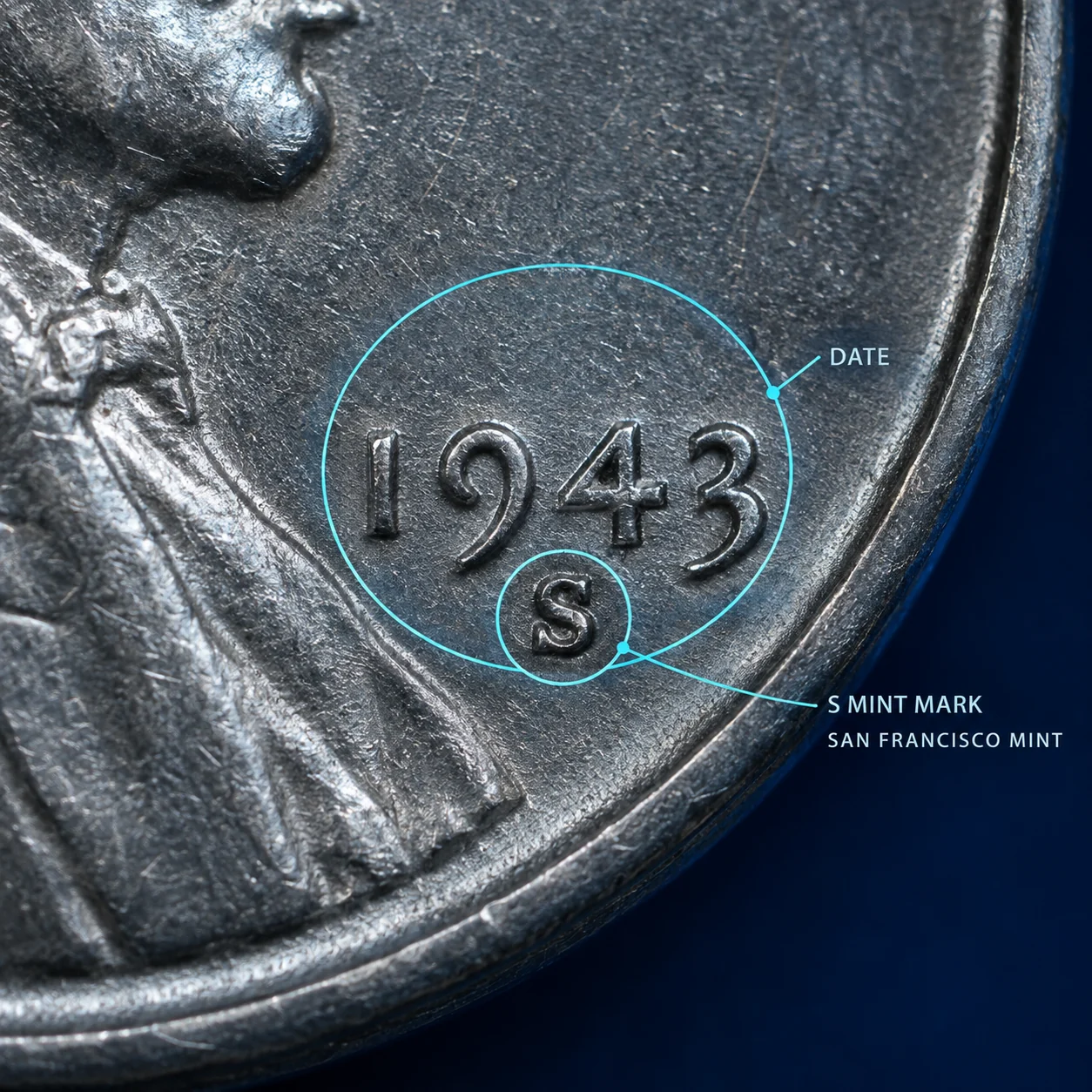
The S below the date identifies the San Francisco Mint. On a normal 1943-S cent, it sits directly beneath 1943 on the obverse. San Francisco struck 191,550,000 steel cents during the 1943 production year. The mint mark does not by itself make a regular coin rare; it separates this issue from Philadelphia cents with no mark and Denver cents with a D. Inspect the letter with soft side lighting and a loupe. A natural punch has an integrated look, while a fresh outline, disturbed field or unusual placement may indicate damage or an altered mint mark. Record the mint mark before you compare prices.
1943-S Steel Penny Doubled Die Varieties
Do not treat every doubled-looking line as a DDO.
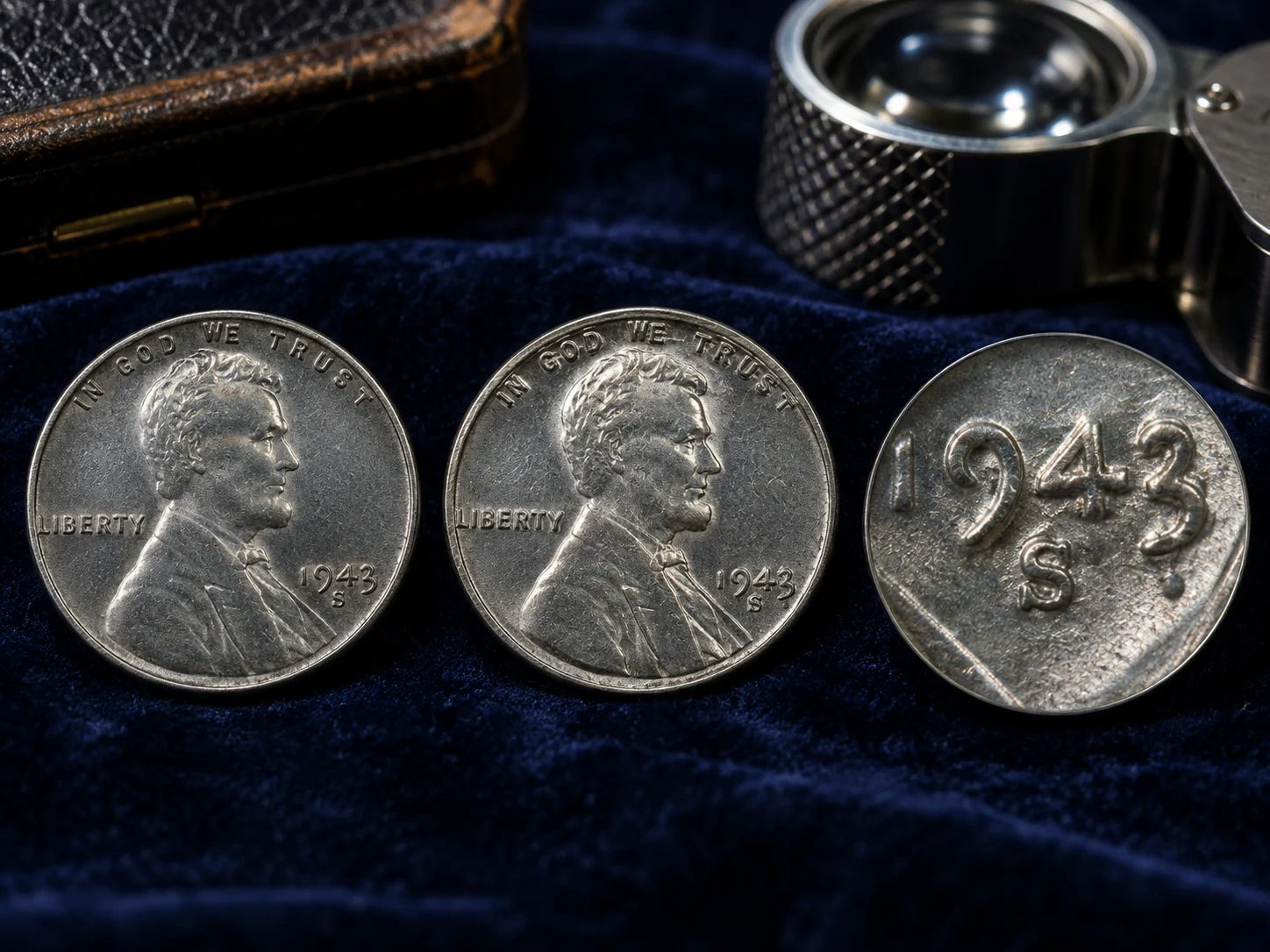
PCGS lists documented doubled-die material for the San Francisco issue. A true doubled die is created during hubbing and can show a shaped, repeated offset on design elements. Machine doubling is a flat shelf caused during striking. Damage, corrosion and glare can create similar-looking edges. Attribution requires the exact marker and a clear image, not a guess based on one blurry letter.
1943-S Doubled Die Obverse
The 1943-S 1C Doubled Die Obverse is cataloged separately by PCGS as #37821. Inspect the date, LIBERTY and motto for notched or split design edges that match a recognized reference. Random shelf-like flattening, a raised scratch or a shadow along the rim is not enough. Keep the coin uncleaned and submit clear obverse photographs if the spread appears consistent.
1943/2-S DDO FS-101
PCGS #37822 is the 1943/2-S 1C DDO, FS-101. The slash notation is reserved for the recognized overdate attribution, not every odd-looking 3 or 4. Compare the date area under magnification with the published FS-101 diagnostics and keep the mint mark, weight and surface in the same evidence file. A suspected FS-101 should be valued as its own variety only after attribution. Do not copy a price from the regular #2717 record.
1943-S Steel Penny Errors Worth Checking
Start with how the feature could have formed at the press.
Legitimate possibilities include the documented doubled dies above, off-center strikes, clipped planchets, die cracks and certain planchet or coating defects. An off-center coin shows a real shift in the design and a consistent blank crescent. A clipped planchet has a curved missing section with metal flow that fits a blanking error. Die cracks are raised lines that follow a die path. Coating loss, rust and dark oxidation are surface conditions, not mint errors. Machine doubling is common and usually has a flat shelf. A dramatic mark is worth researching only when its shape and position make sense as a mint-made event.
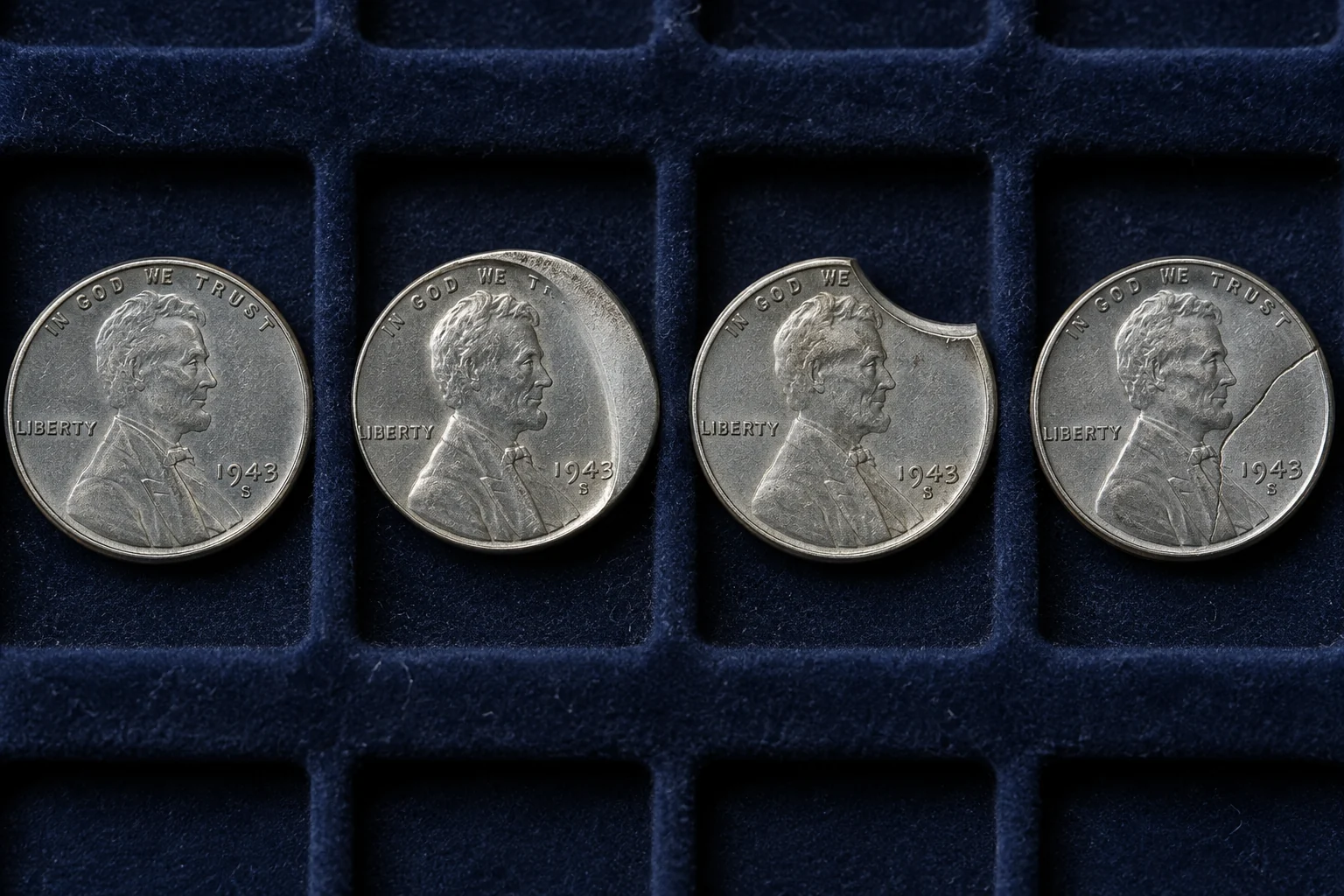
Look for shaped, repeatable spread on the obverse and a recognized marker.
Design shift and a consistent blank crescent support a striking error.
Curved missing metal should show the expected flow at the clip.
Raised, die-shaped lines differ from scratches cut into the field.
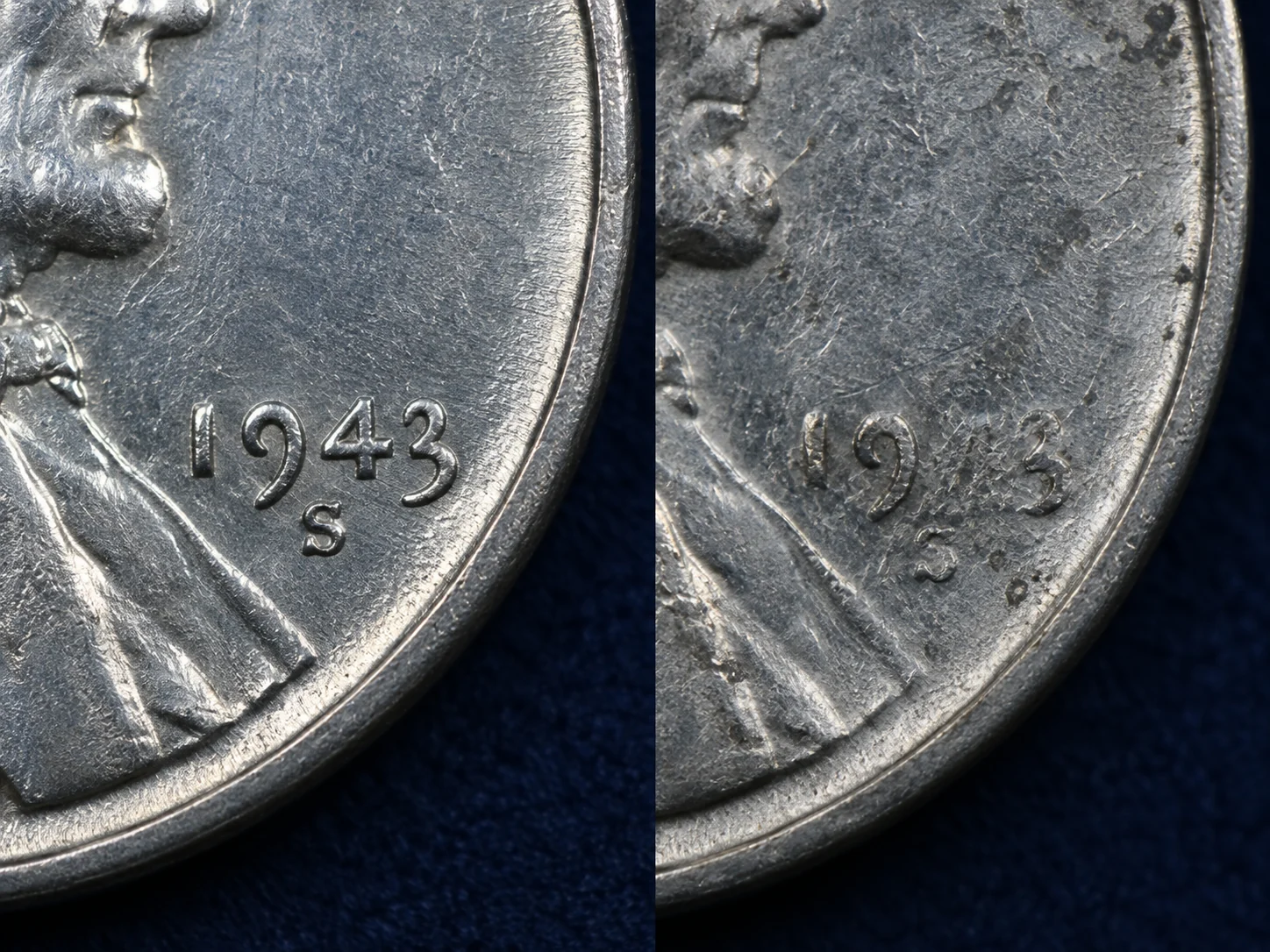
Why Does the 4 Look Missing on Some 1943-S Pennies?
A weak 4 is a clue to investigate, not a rarity label.
A faint or missing-looking 4 can be caused by a weak strike, die fill, wear, surface corrosion or post-mint damage. PCGS lists the recognized 1943/2-S FS-101 separately as #37822, but that does not make every weak 4 an overdate. Compare the entire date, not one numeral, and check the surrounding field for scratches, pitting or a filled recess. If the feature does not match a published diagnostic, describe it conservatively and seek attribution before assigning a premium.
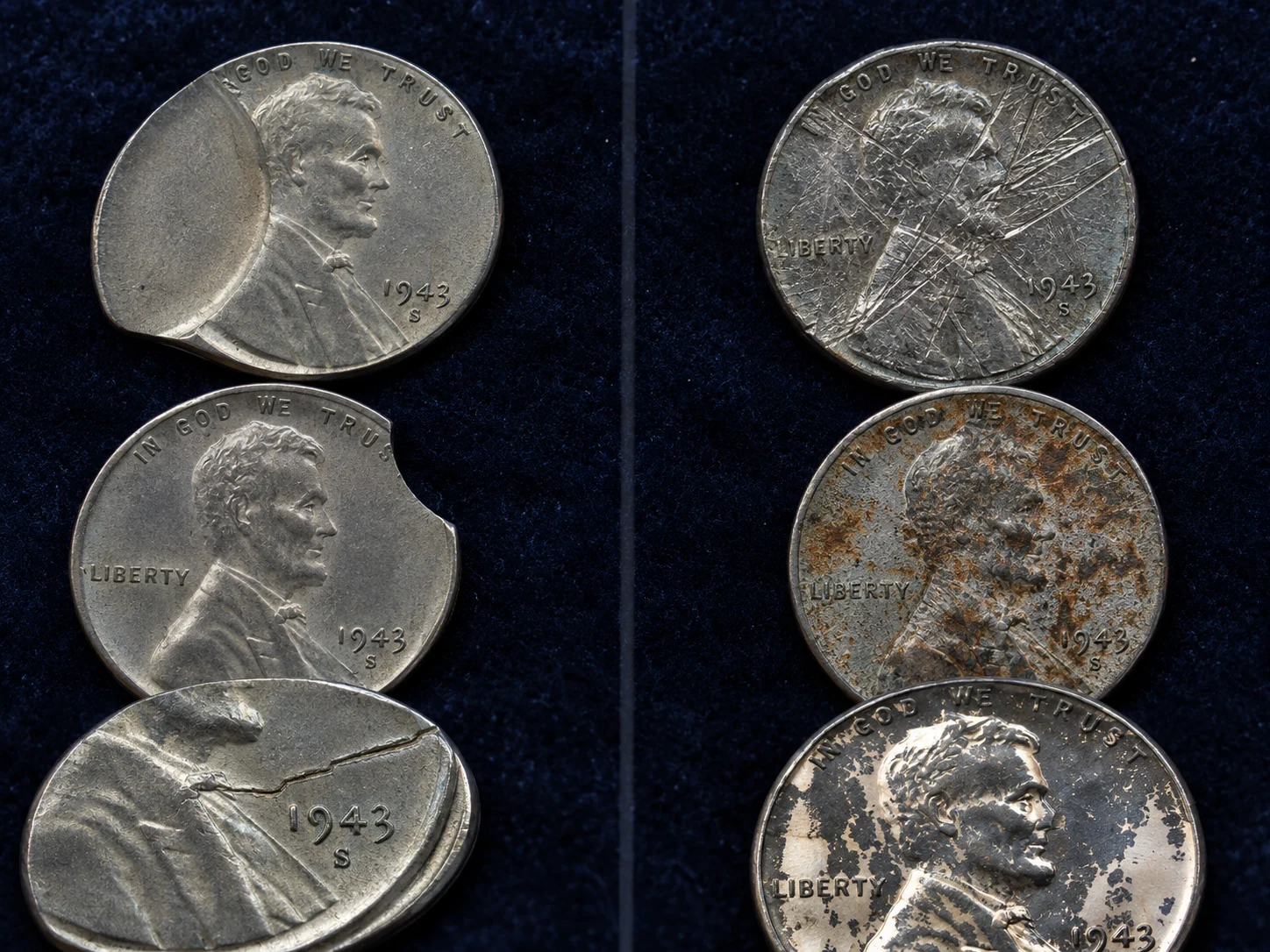
Mint Error or Post-Mint Damage?
Shape, height and continuity matter more than drama.
A mint-made feature is integrated into the strike. It may be raised, repeatable or tied to a logical planchet or die event. Post-mint damage cuts into the field, leaves a gouge, bends the edge, exposes a different color of metal or interrupts the design at random. Rust, corrosion, polishing, chemical damage, scraping and replating happen after the press. Photograph both sides, keep the coin dry and compare the feature with a trusted reference. Do not file the edge or scratch the surface to test a claim.
How to Identify a 1943-S Steel Penny
All six clues should agree before a value claim is made.
Confirm the date reads 1943 and the S sits directly below it. The surviving zinc surface is usually silver-gray, though circulation and oxidation change the color. A normal steel planchet responds to a magnet and weighs approximately 2.70 g. The diameter is about 19 mm, the edge is plain and the reverse carries the Lincoln wheat-ear design around ONE CENT. A single clue can be misleading: lighting can alter color, a dirty coin can change weight, and an altered mint mark can look convincing in a small photograph. When evidence disagrees, stop and seek a specialist opinion.
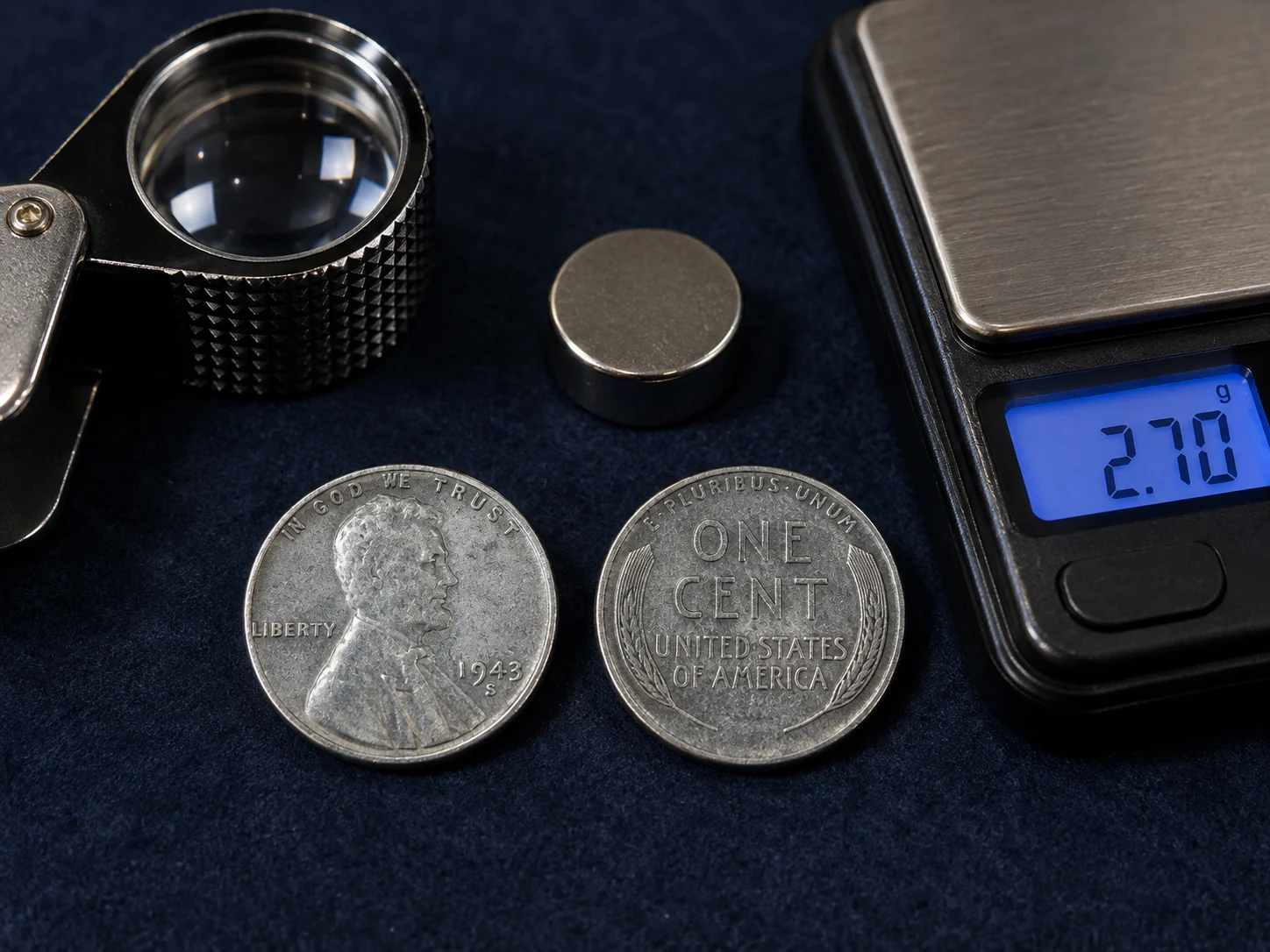
1943-S Steel Penny Weight and Magnet Test
Use gentle, repeatable measurements.
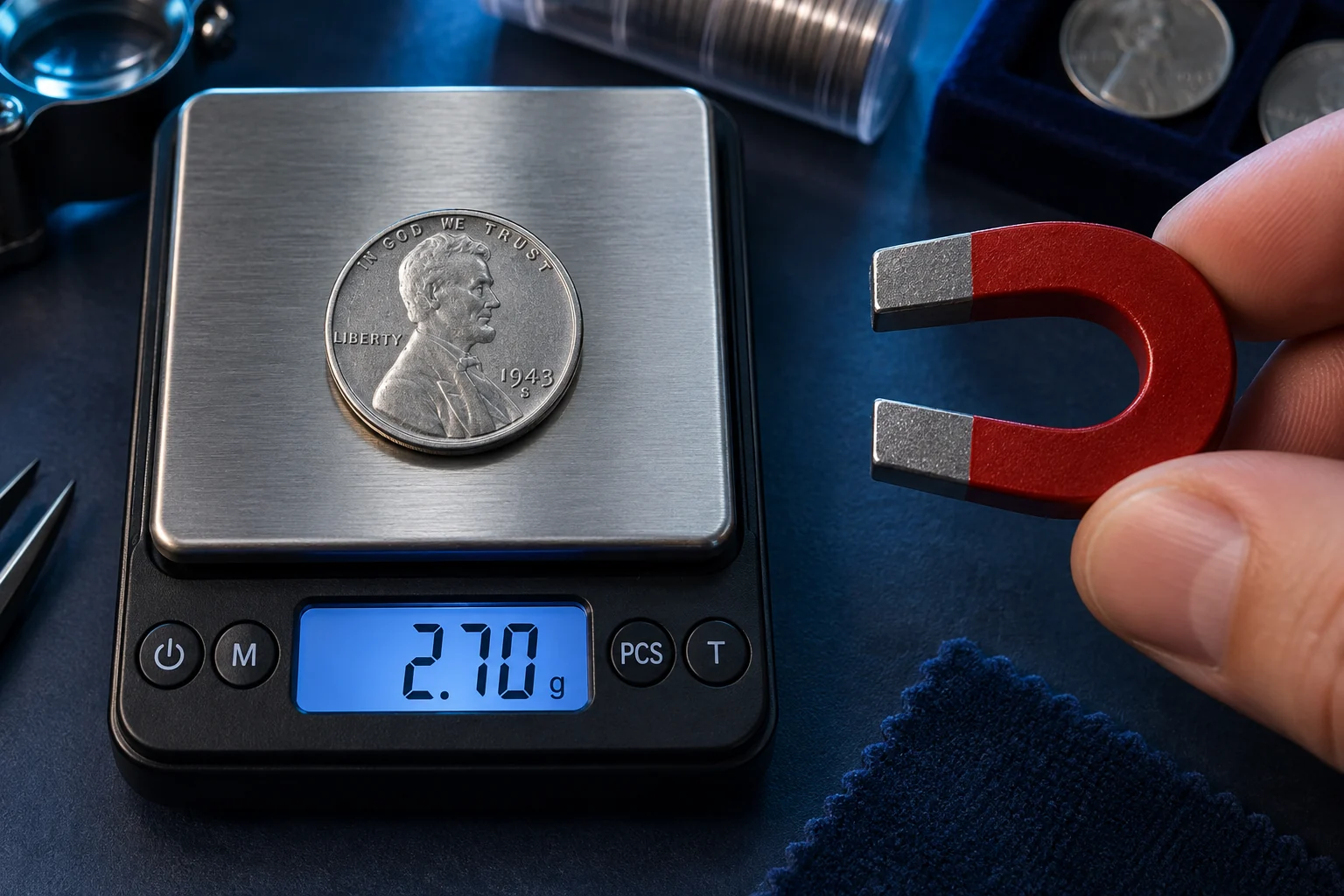
The standard reference is approximately 2.70 g and zinc-coated steel is magnetic. Weigh the coin clean and dry on a stable scale accurate to at least 0.01 g. Hold a small magnet next to the coin rather than sliding it across the coating. A nonmagnetic result near the bronze reference of 3.11 g is a reason for professional examination, not proof of a wrong-planchet error. Wear, corrosion, surface deposits, damage and scale error can all affect a reading.
Has Your 1943-S Steel Penny Been Replated?
Shine is not a grade or an authenticity test.
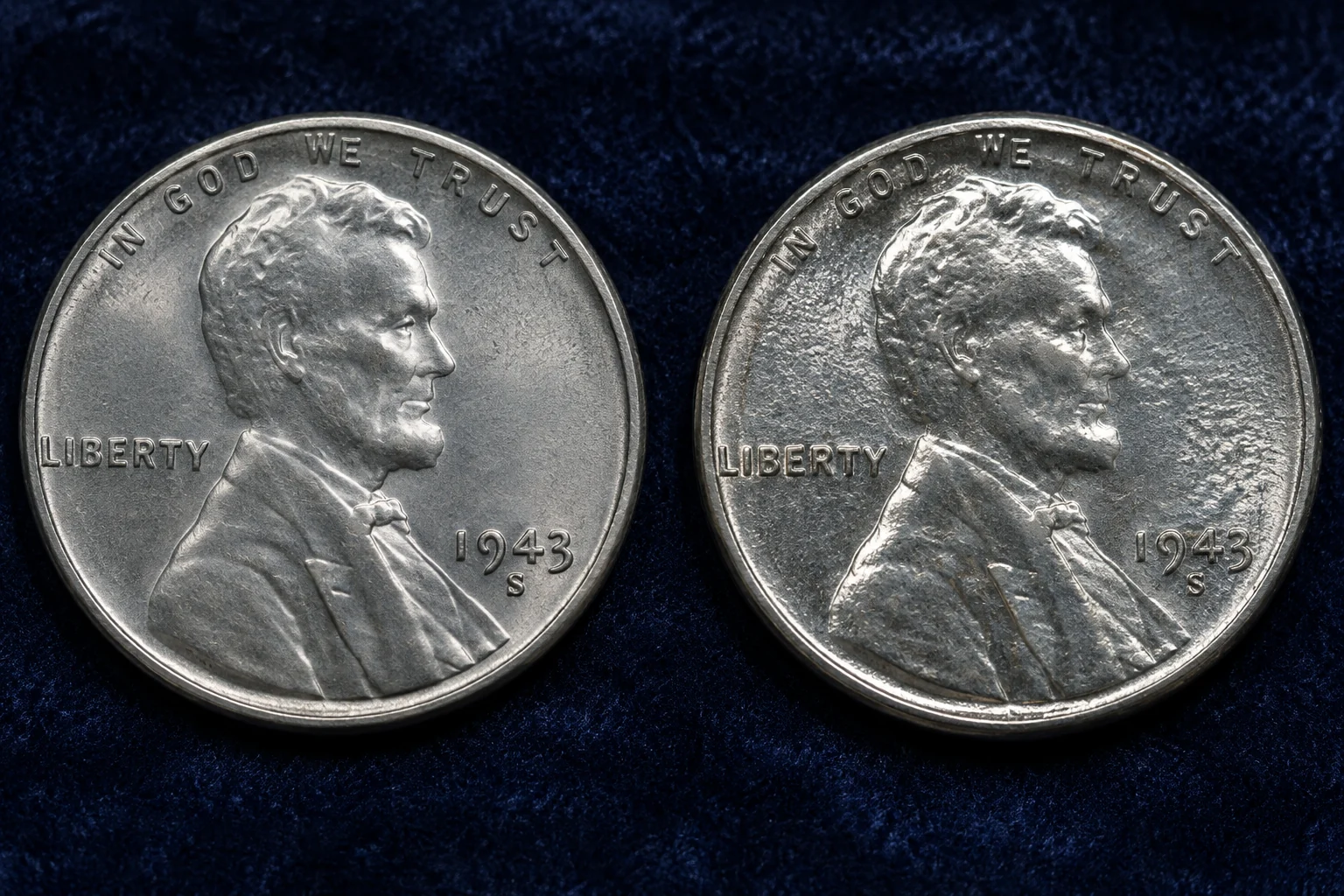
Steel cents can appear unusually bright after replating or other processing. Possible clues include a uniform film over worn details, coating that continues into scratches and recesses, a bluish cast, or surface texture that does not match the wear. Original zinc can also be bright or uneven, so these observations are only screening clues. Shiny does not equal Prooflike, replated does not equal Prooflike and polished does not equal Prooflike. A professional grader can evaluate originality and determine whether a PL designation is appropriate.
How Many 1943-S Steel Pennies Were Made?
The mintage is large, but survival in top grades is limited.
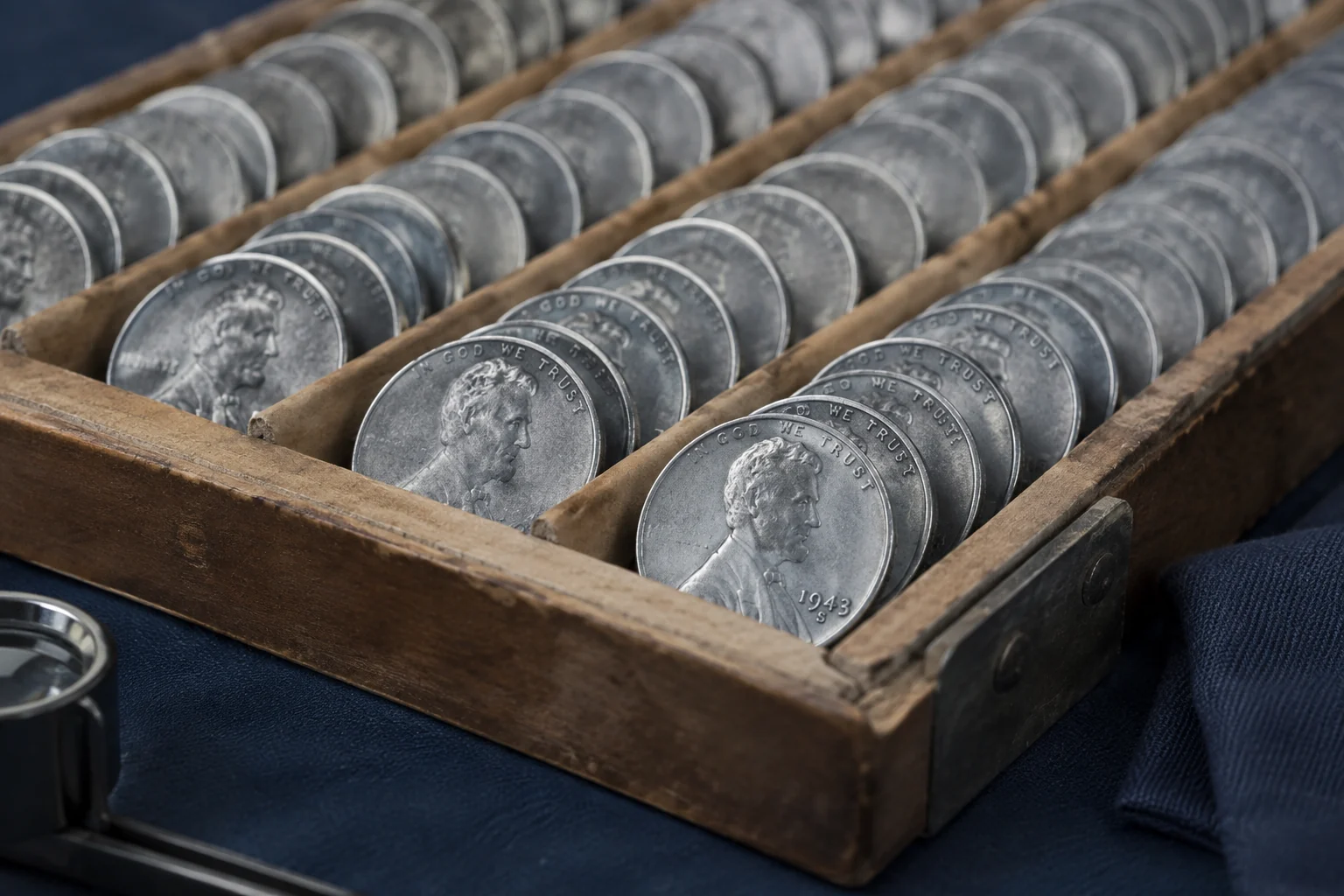
191,550,000 steel cents were struck at San Francisco in 1943. That figure counts coins originally made, not the number surviving today. Many pieces lost their zinc coating, rusted or were discarded, while collectors saved a substantial number in Mint State. The regular issue is therefore common in worn grades, with scarcity increasing as original surfaces and high certification grades are combined. An S mint mark is a location marker, not a rarity guarantee.
Prooflike 1943-S Steel Pennies
PL is a grading designation, not a synonym for shiny.
PCGS catalogs a Prooflike 1943-S 1C as #92717. PL means the certified coin has qualifying reflective surfaces under the service's standards; it does not mean the cent was struck as a Proof. A mirrored-looking field caused by replating, polishing or a processing film does not qualify. Compare the reflection with the texture, wear and edges. Because the regular issue and PL issue are separate records, use the certified designation when researching value. A raw coin should be described as reflective or bright until a grading service confirms PL.
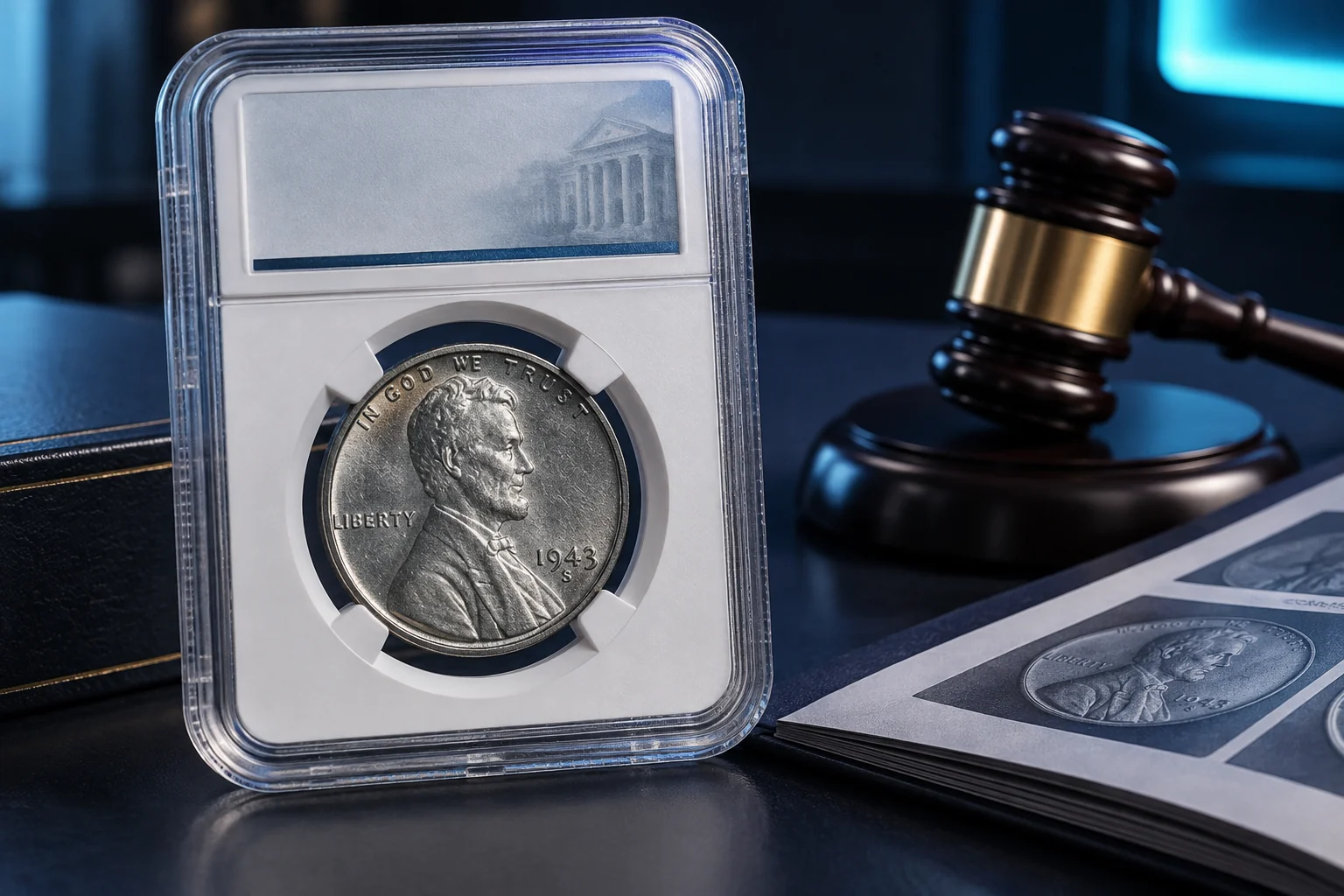
1943-S Steel Penny Auction Records
Historical results belong to specific certified coins.
The examples below are kept separate from regular guide values. Some CoinFacts records can surface auction results associated with related major varieties. For that reason, every sale below is verified against the specific coin, composition and certification before inclusion. The verified steel results listed here are useful context: grade, surface, certification and variety all matter.
| Variety | Grade | Certification | Auction house / date | Realized |
|---|---|---|---|---|
| Regular #2717 | MS67+ | PCGS CAC | Legend Rare Coin Auctions · Jul 2022 | $558.13 |
| Regular #2717 | MS68 | PCGS CAC | Legend Rare Coin Auctions · May 2023 | $3,877.50 |
| Regular #2717 | MS68 | PCGS CAC | Heritage Auctions · Dec 2024 | $3,120 |
1943-S Steel Penny Specifications
Keep the baseline facts with your inspection notes.
Why Was the 1943-S Penny Made of Steel?
During World War II, copper was redirected to military production. In 1943 the Mint used low-carbon steel coated with zinc for Lincoln cents. San Francisco struck its share with the S mint mark, then bronze planchets returned for 1944. The thin coating was vulnerable to moisture and wear, which explains the spotting and dark oxidation seen on many survivors. That wartime context is useful, but it should not replace the practical checks: date, S location, magnet response, weight and surface originality.
1943-S Steel Penny FAQ
How much is a 1943-S Steel Penny worth?
Most circulated examples are modestly priced. The current PCGS Price Guide lists $575 for MS67+ and $3,750 for MS68 on regular #2717. Completed sale prices can differ, so compare the exact grade, surface and certification.
What is an uncirculated 1943-S Steel Penny worth?
Uncirculated is a range, not one price. Current PCGS Price Guide entries for regular #2717 list $575 at MS67+ and $3,750 at MS68. A bright raw coin can be replated, so certification and original surface matter.
Is a 1943-S Steel Penny rare?
The regular issue is common in circulated grades. San Francisco struck 191,550,000 pieces. Scarcity increases for original, sharply struck coins in the highest certified grades and for recognized varieties.
What does the S mean on a 1943 Steel Penny?
The S below the date identifies the San Francisco Mint. It is a mint location, not a guarantee of rarity.
Where is the S mint mark?
Look directly below the 1943 date on the obverse, beneath Lincoln. Photograph the area straight on before comparing the letter with a reference.
How many 1943-S Steel Pennies were made?
The San Francisco mintage was 191,550,000. That is the number struck, not the number that survives today or in high grade.
How much does a 1943-S Steel Penny weigh?
The reference weight is approximately 2.70 grams. Dirt, corrosion, wear and scale accuracy can move a reading slightly.
Should a 1943-S Steel Penny stick to a magnet?
Yes. Zinc-coated steel is magnetic. Hold a magnet next to the coin instead of dragging it across the surface.
Does the 1943-S Steel Penny have a doubled die?
PCGS catalogs a 1943-S 1C Doubled Die Obverse, PCGS #37821, and a separate 1943/2-S DDO FS-101, PCGS #37822. Random shelf-like doubling is not enough for attribution.
What is the 1943/2-S Steel Penny?
It is the recognized 1943/2-S 1C DDO, FS-101 variety. The attribution refers to a doubled-die obverse with an overdate relationship and must match published diagnostics.
Why does the 4 look missing on my 1943-S penny?
A weak-looking 4 can result from strike weakness, die fill, wear, corrosion or damage. Treat it as a screening observation unless a recognized reference supports a variety attribution.
What errors should I look for?
Check for genuine off-center strikes, clipped planchets, die cracks and documented doubled dies. Rust, scratches, dents, polishing and replating are post-mint conditions, not mint errors.
Why is my 1943-S Steel Penny shiny?
Original zinc can be bright, but a uniform mirror-like film may indicate replating or processing. Shiny does not automatically mean Prooflike.
What is a Prooflike 1943-S Steel Penny?
PL means Prooflike. It is a separate certification designation for qualifying reflective surfaces, not a Proof strike. PCGS catalogs the issue as #92717.
How can I tell if my coin was replated?
Look for an unnaturally even coating over worn detail, scratches or recesses. Visual inspection can raise a question, but it cannot prove the treatment.
Should I clean a 1943-S Steel Penny?
No. Cleaning, polishing and chemical treatment change the surface and remove evidence that a grader or authenticator needs to see.
Related Lincoln Cents
Use a neighboring guide when the mint or metal evidence points elsewhere.
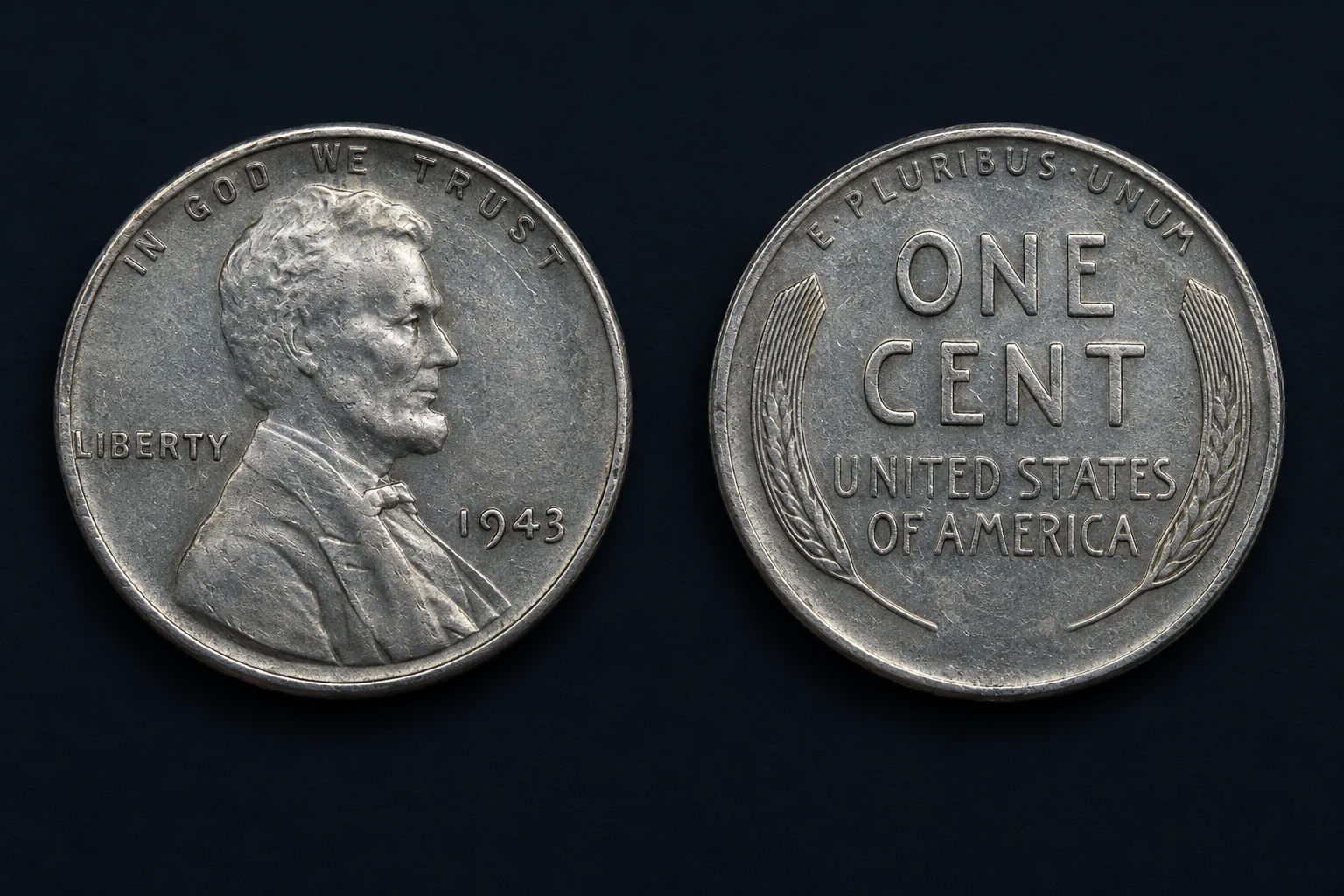 Steel issue1943 Steel Penny
Compare the three 1943 mints and the normal steel profile.
View coin →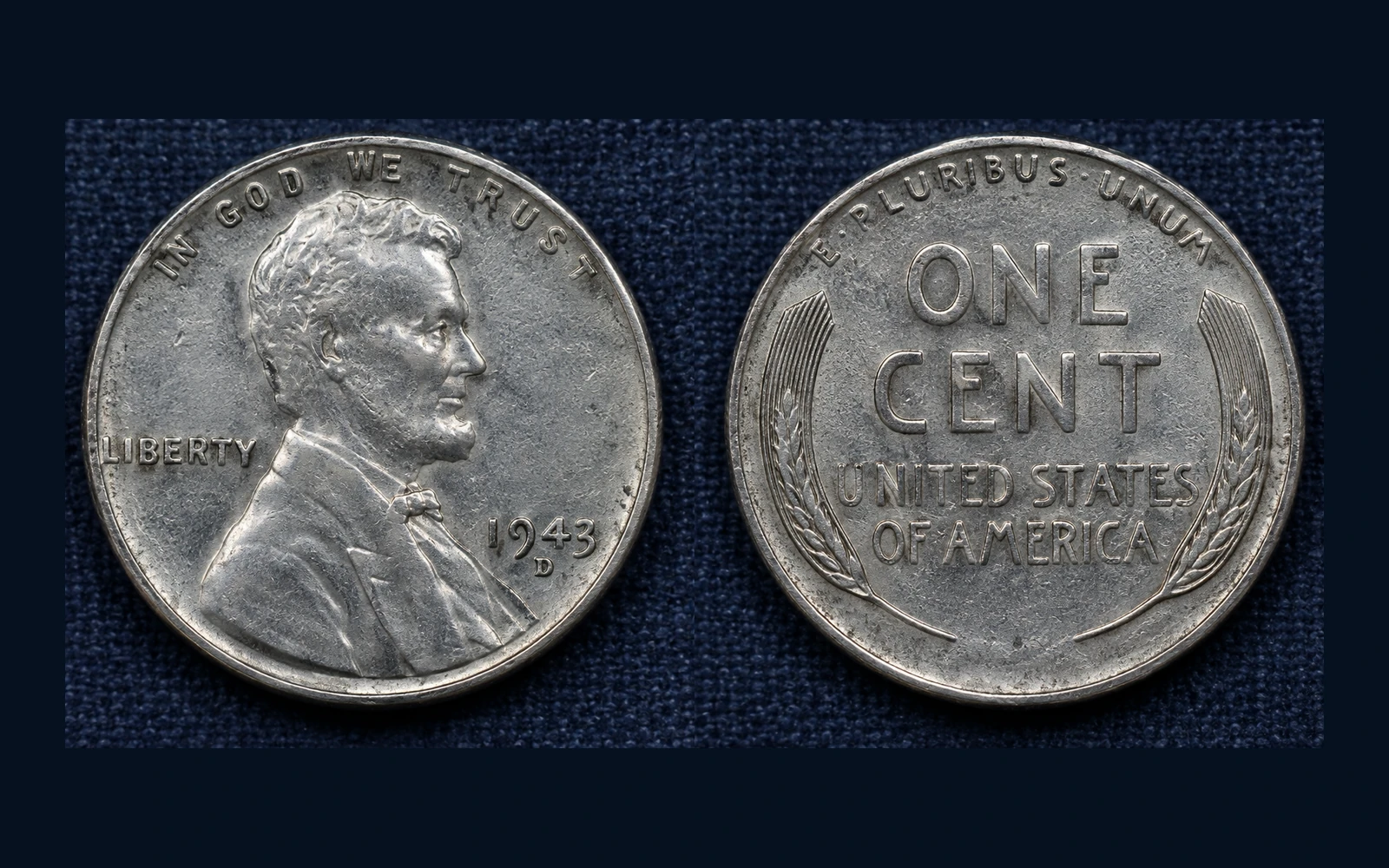 Denver issue1943-D Steel Penny
Check the D mint mark and Denver-specific RPM references.
View coin →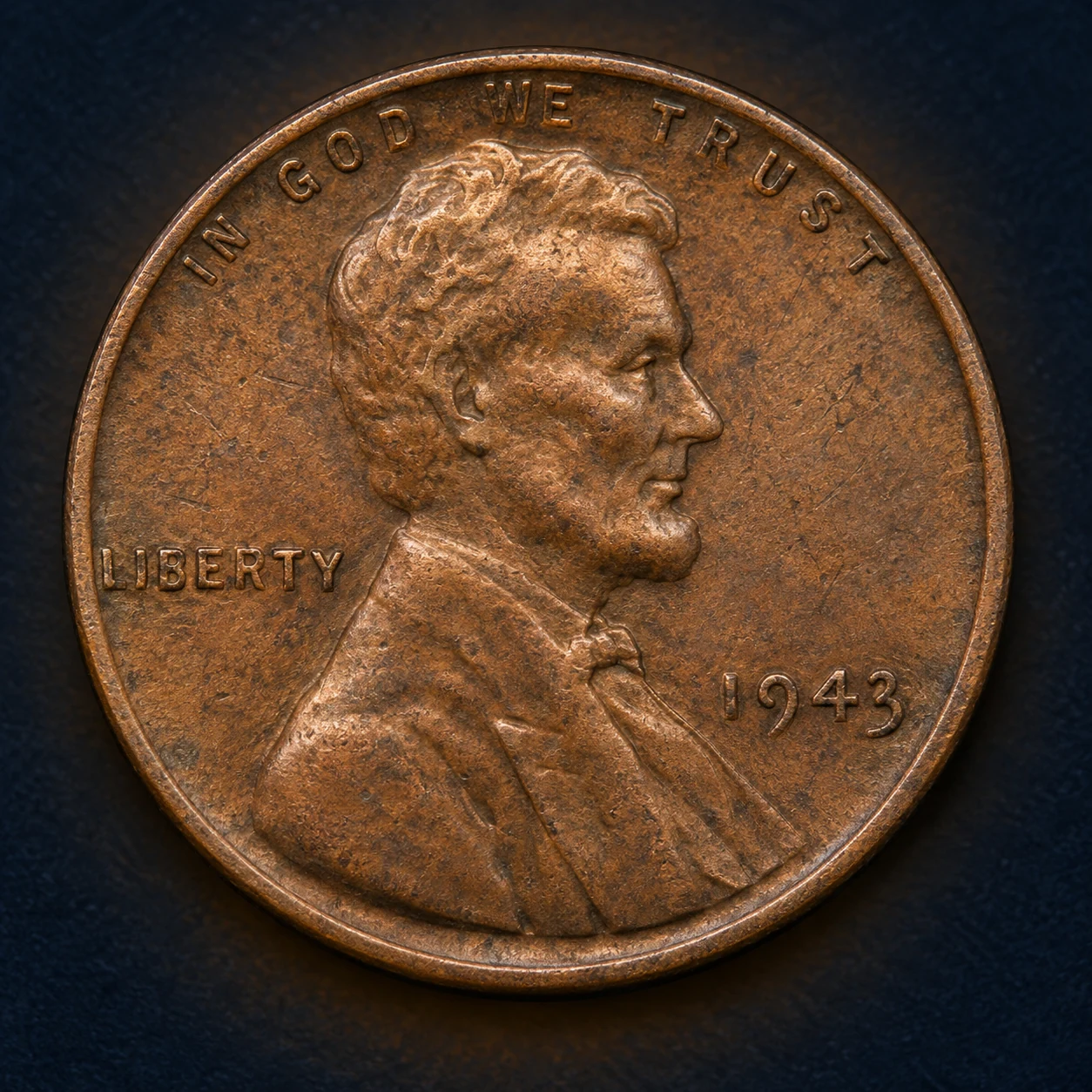 Wrong planchet1943 Bronze Penny
Use the dedicated guide for nonmagnetic, bronze-like 1943 cents.
View coin →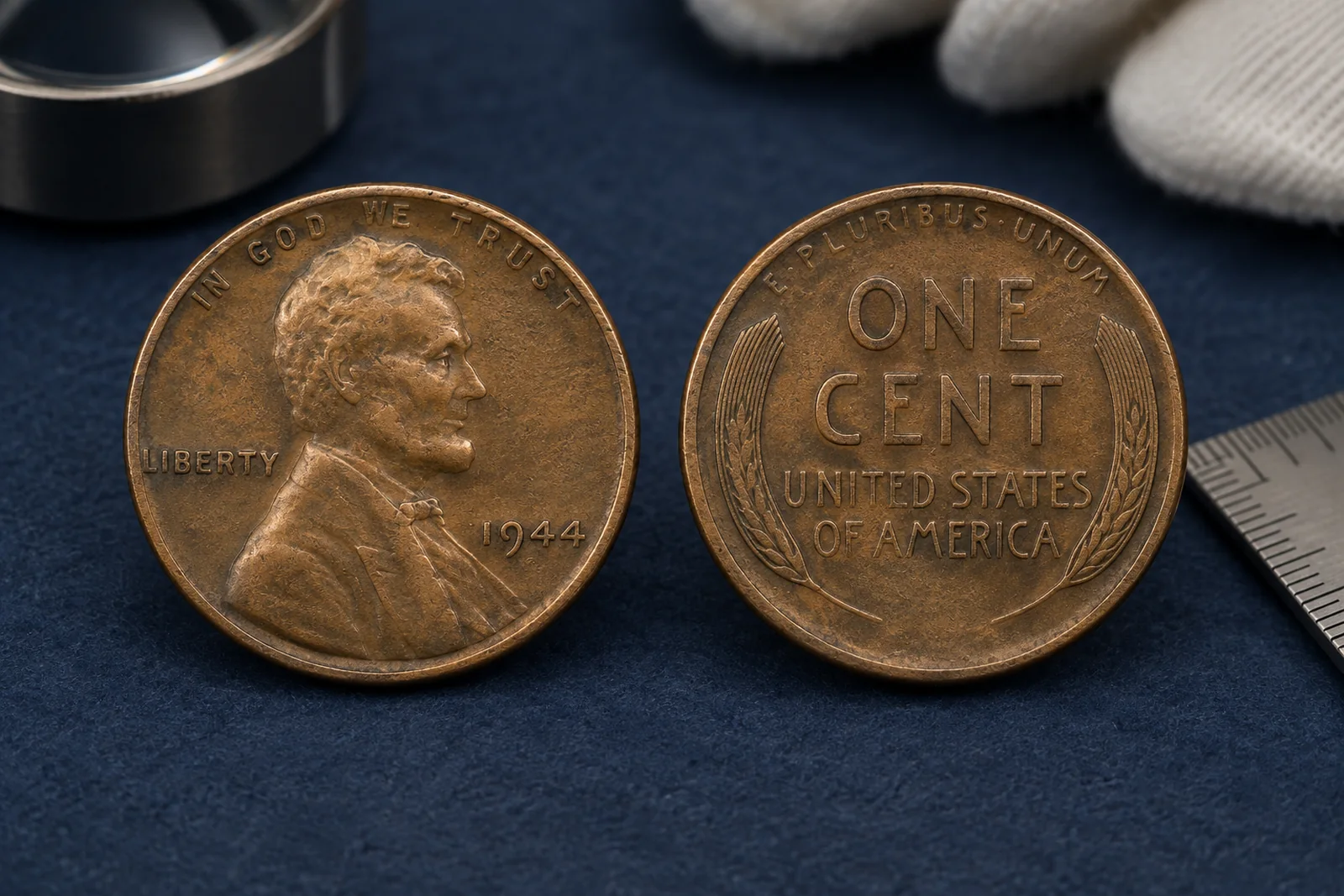 Next year1944 Wheat Penny
See the return to a bronze alloy after the steel issue.
View coin →