Cent
- Weight
- 2.50 g
- Diameter
- 19.05 mm
- Edge
- Plain

A United States coin can look familiar and still be easy to misidentify. The same denomination may use several portrait styles, reverse designs, mint marks, compositions, and collector finishes. A useful identification therefore starts with the complete coin rather than one attractive detail.
This guide gives you a repeatable way to identify cents, nickels, dimes, quarters, half dollars, and dollar coins from clear photos. It also explains when measurements help, how to read a mint mark in context, and why identification must come before a value estimate.
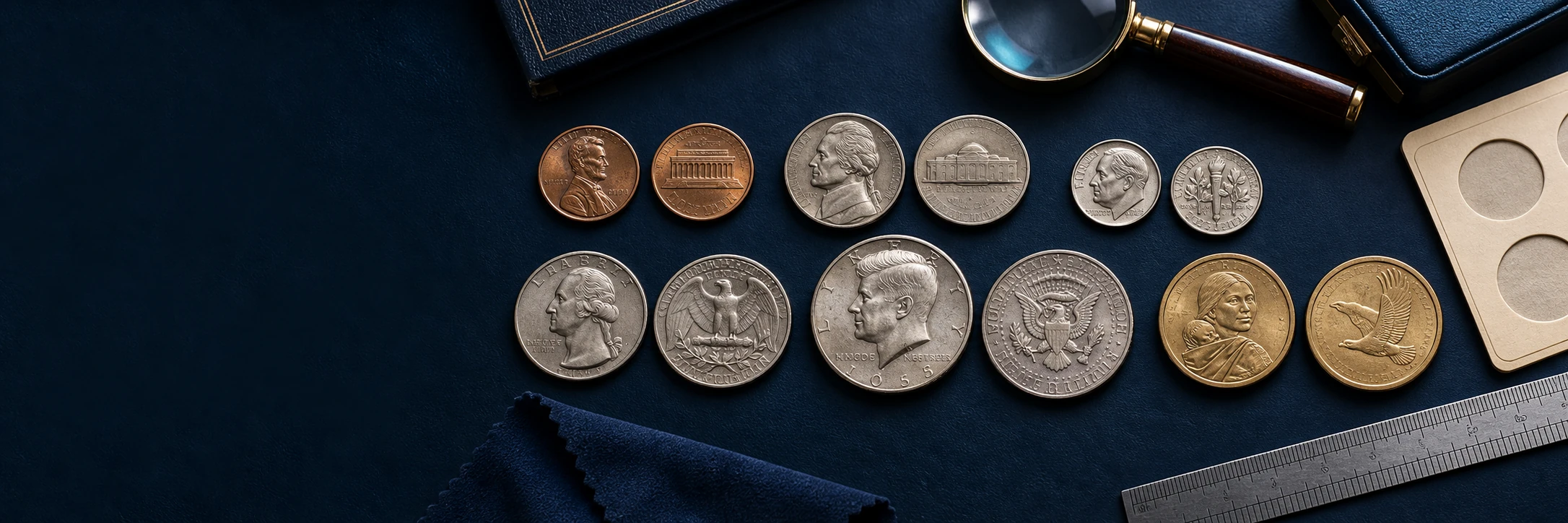
Use the scanner when you are ready to compare your coin with the clues in this guide.
Scan your coinIdentify the denomination and design on both sides, then confirm the date, mint mark, edge, weight, and diameter. Only research value after the exact issue and condition are reasonably matched.
Use these U.S. Mint specifications as a cross-check after a visual match. Older issues and collector versions can use different compositions.
Important: match the specification to the coin’s exact year and type. A correct modern measurement does not authenticate an older or altered coin.
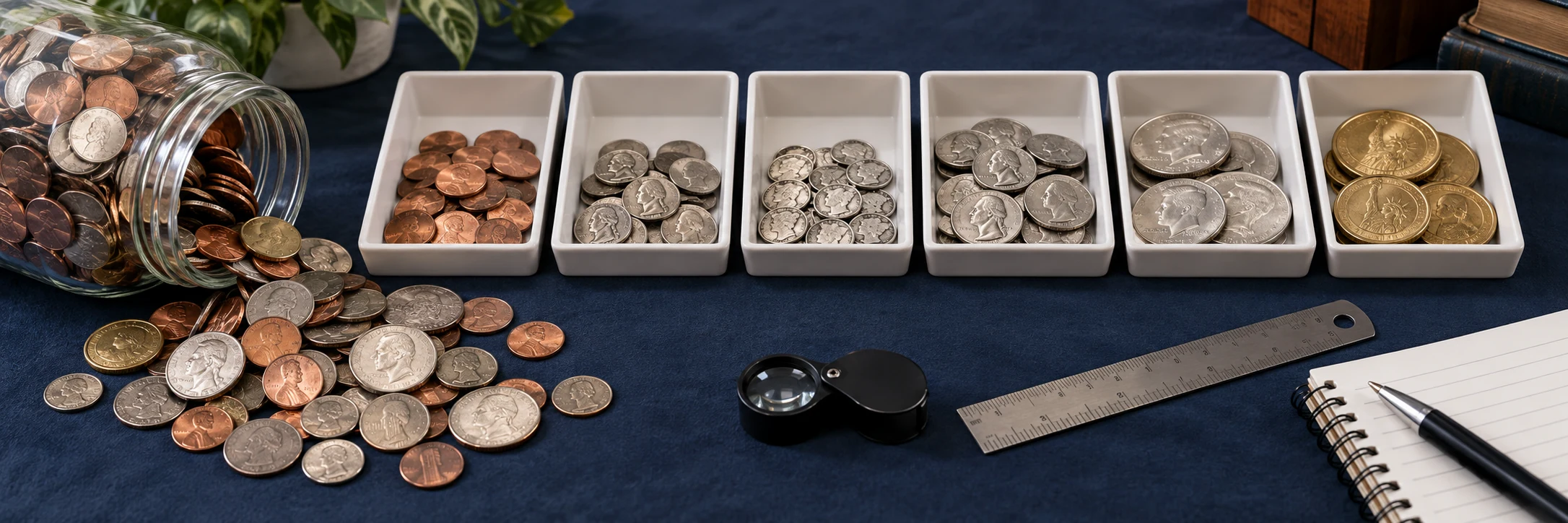
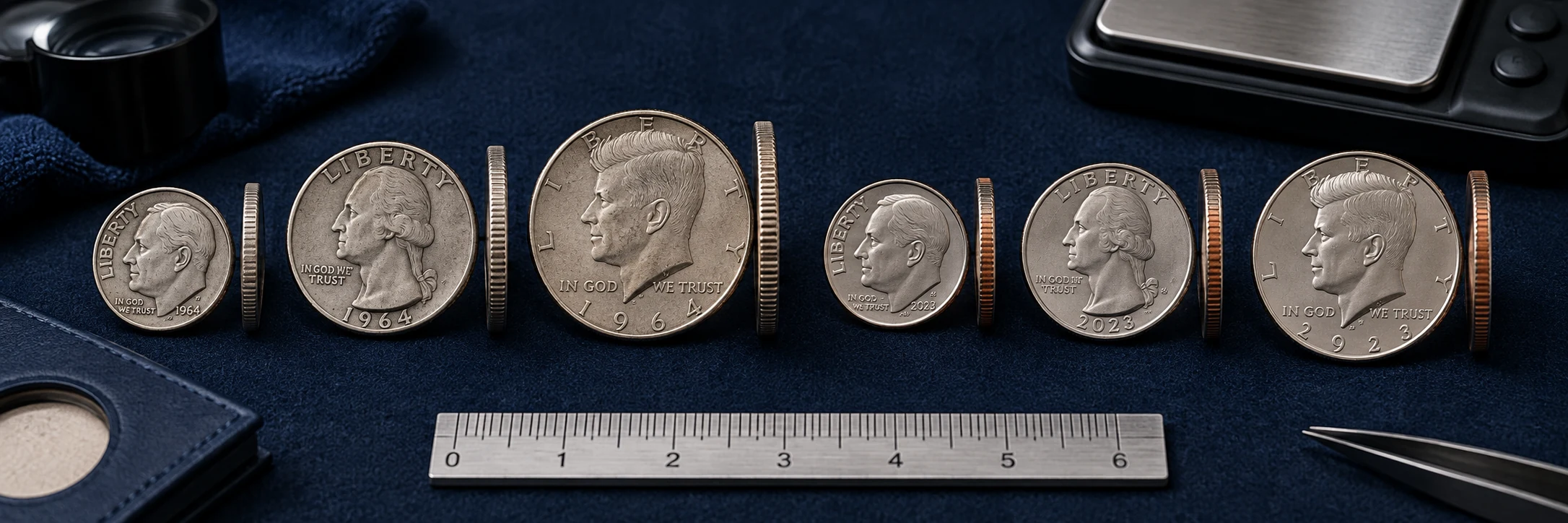
Begin with QUARTER DOLLAR and the Washington portrait, then record the 1964 date and any mint mark. Check the eagle reverse, reeded edge, 24.26 mm diameter, and expected 5.67 g weight. Coins dated 1964 belong to the earlier 90% silver specification, while the circulating quarter changed to a copper-nickel clad composition in 1965. Condition and mint still need separate comparison before estimating value.
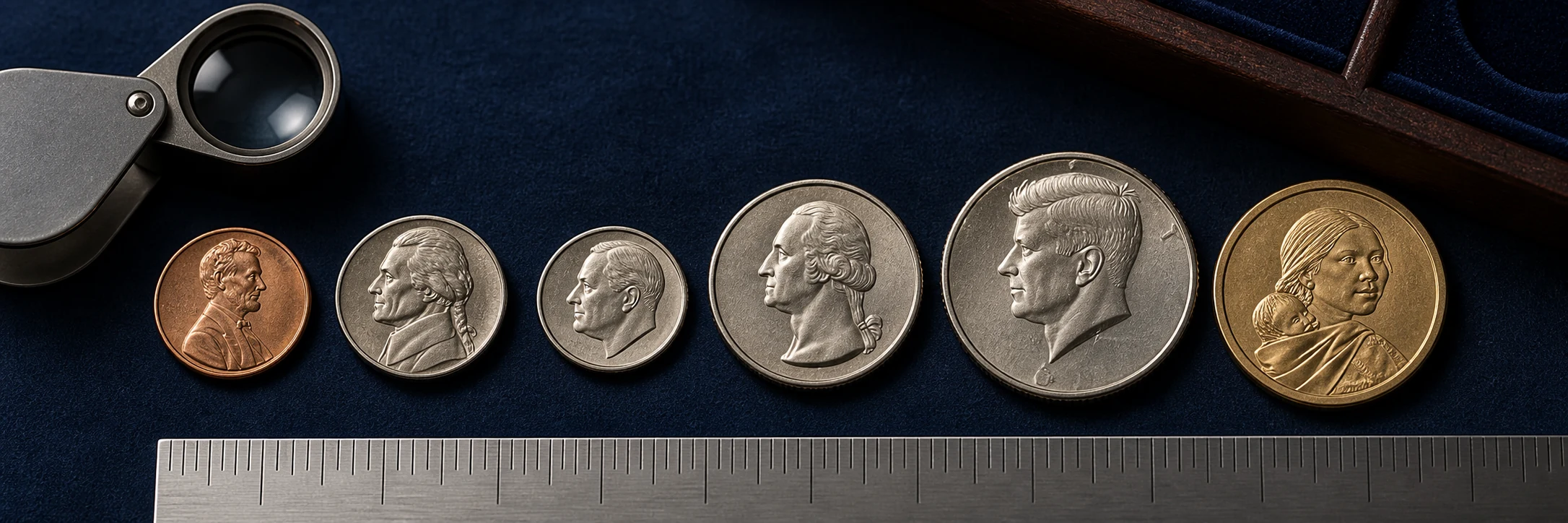
Photograph the obverse and reverse, then record the denomination exactly as it appears. The reverse is often the fastest clue: ONE CENT, FIVE CENTS, ONE DIME, QUARTER DOLLAR, HALF DOLLAR, or ONE DOLLAR separates the basic type before you compare portraits and dates.
Next, identify the design family. A Lincoln cent may have Wheat, Lincoln Memorial, or Union Shield reverse designs. Washington quarters appear with several reverse programs, so a familiar portrait does not identify the complete issue. Compare both sides as one pair and keep the full rim visible.
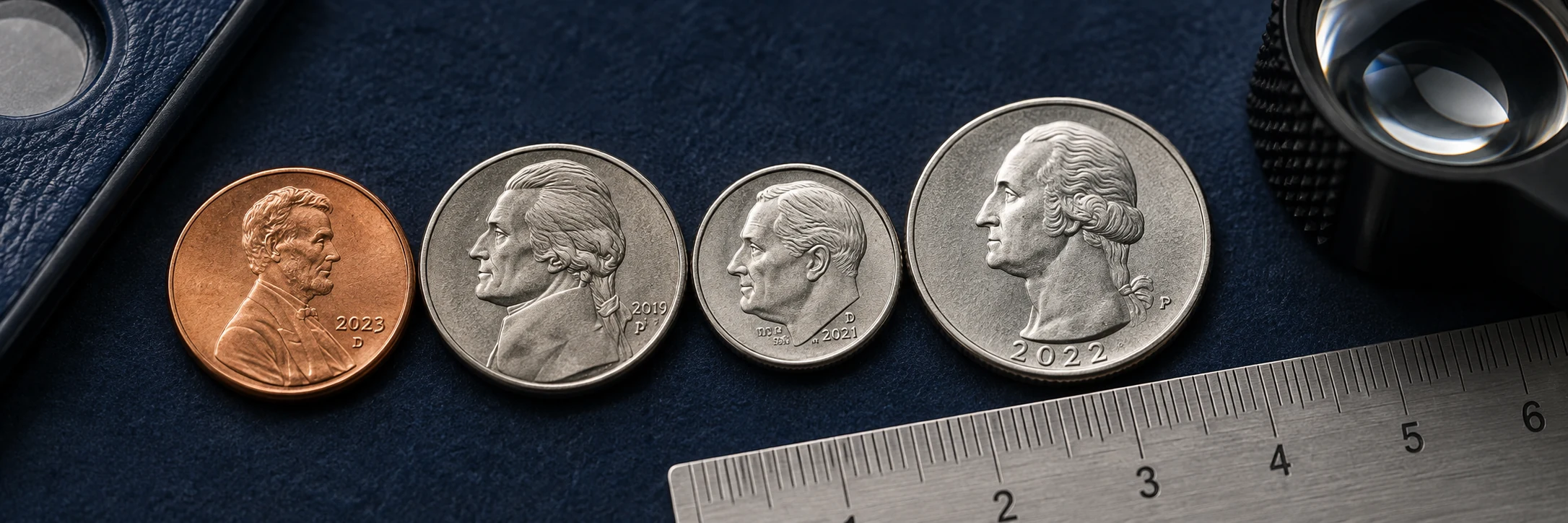
Record every readable digit before interpreting the mint mark. On modern United States coins, common mint marks include P for Philadelphia, D for Denver, S for San Francisco, and W for West Point. Historic issues can use other marks, and the mint-mark position changes by denomination and design period.
A missing mint mark is not automatically an error. Many Philadelphia issues were made without a P, depending on the coin and year. Use a reference for the exact series, then compare the style, position, and surrounding surface. Added, altered, or damaged marks can resemble collectible varieties in a low-quality photo.
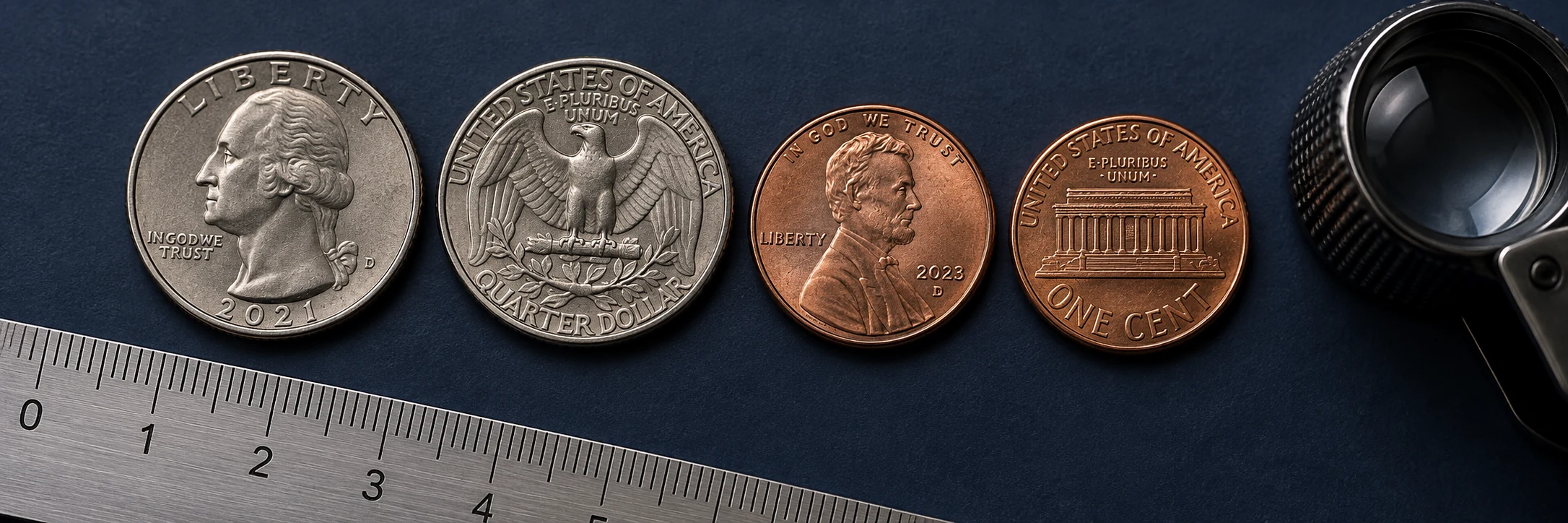
A photo suggests a type, while measurements test whether that suggestion makes sense. Compare the coin’s diameter and weight with a specification for the same denomination and year. Also inspect whether the edge is plain, reeded, or lettered. These checks can separate look-alike denominations and expose an incorrect first match.
Composition must also be tied to the date. United States coin alloys have changed over time, and collector versions can differ from circulation pieces. Metal color alone is weak evidence because lighting, toning, plating, corrosion, and camera processing can change the appearance.
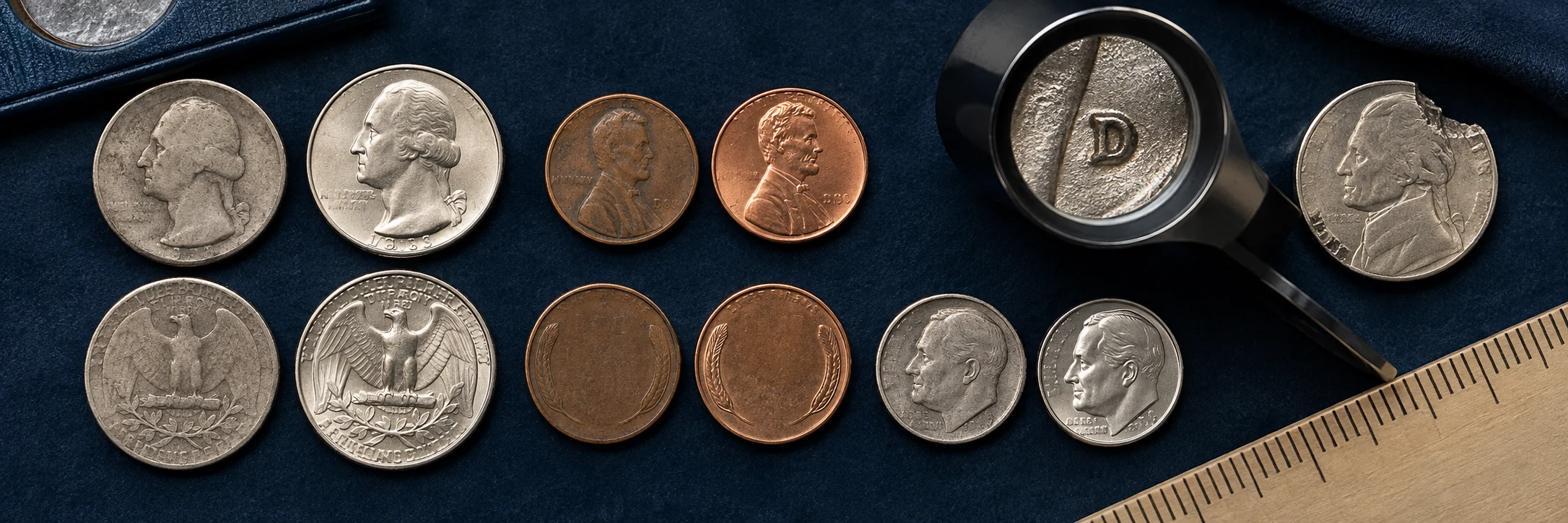
If a letter, date, rim, or design element looks unusual, first ask whether circulation damage could explain it. Scratches, flattening, corrosion, staining, polishing, heat, and impacts occur after a coin leaves the Mint. A genuine mint error should fit a known production process and remain visible in sharp, close photographs.
Do not clean a coin to reveal a detail. Cleaning can remove original surface texture, create hairlines, and reduce collector interest. Take a normal full-coin photo first, then add close-ups of the suspected feature from two lighting angles. Compare with several authenticated examples instead of one marketplace image.
Value depends on the exact denomination, year, mint, variety, authenticity, and condition. Two coins with the same date can trade differently when one has a different mint mark, a recognized variety, stronger original surfaces, or a higher grade. An identification result is therefore a research lead rather than a guaranteed appraisal.
Use completed sales for the same issue and a similar condition. Compare several recent results, ignore asking prices that never sold, and check whether a listed coin was professionally certified. For a coin that may be rare, altered, counterfeit, or expensive, obtain an in-person opinion before buying or selling.
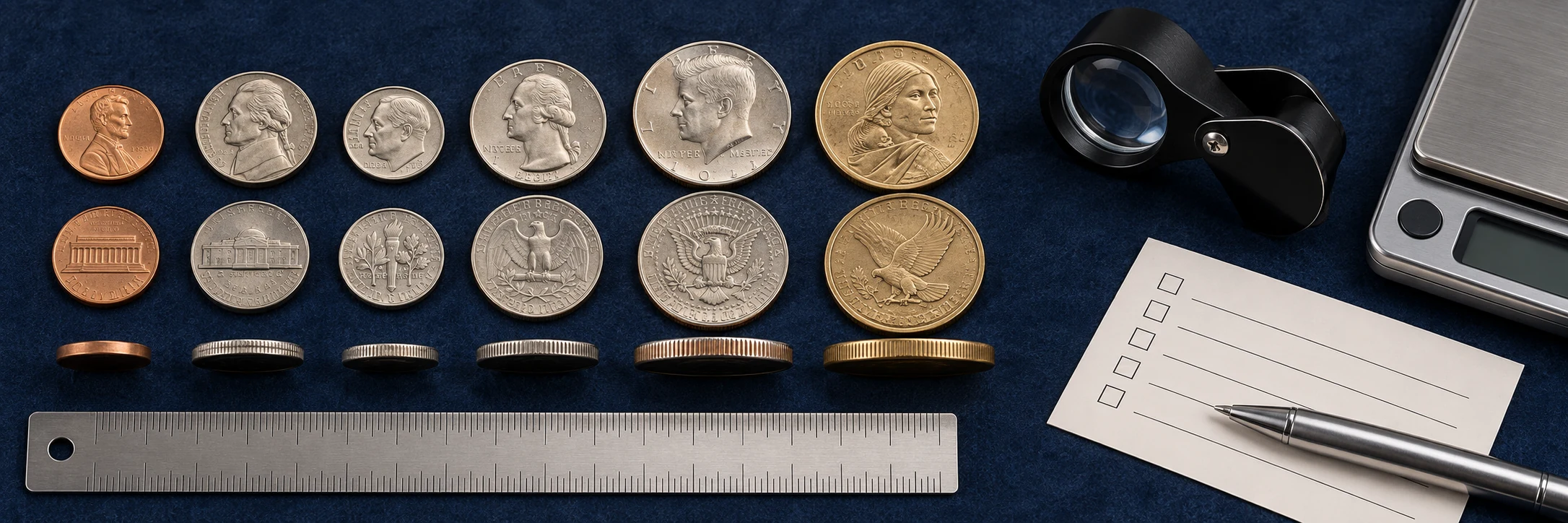
Photograph both sides, read the denomination and date, locate the mint mark, identify the design family, and compare the edge, weight, and diameter with a reliable reference.
It often means the coin was produced in Philadelphia, but the rule depends on the denomination and year. Confirm the exact series before drawing a conclusion.
No. Age alone does not establish value. The exact issue, mintage context, condition, variety, metal, authenticity, and collector demand matter.
A photo can show a possible clue, but a genuine error needs sharp detail images, comparison with a known production process, and sometimes professional examination.
No. Cleaning can damage original surfaces and reduce collector interest. Photograph the coin as found and ask a specialist before any conservation work.
No. It provides an indicative research range. Actual prices vary with grade, authenticity, variety, certification, timing, and the market where the coin is sold.
Use these catalog and reference sites to compare the identification, specifications, and market context. They are reference points, not guarantees of a sale price.