
Common US Coins and Their Values
Many people begin coin collecting with common United States coins found in change, jars, drawers, or inherited boxes. Most modern US coins are worth face value, but some dates, mint marks, silver issues, proof coins, varieties, and errors can be worth more.
This guide gives beginners a practical way to look at US cents, nickels, dimes, quarters, half dollars, and dollar coins. It does not list every date and variety, but it explains what to check before assuming a coin is rare or valuable.
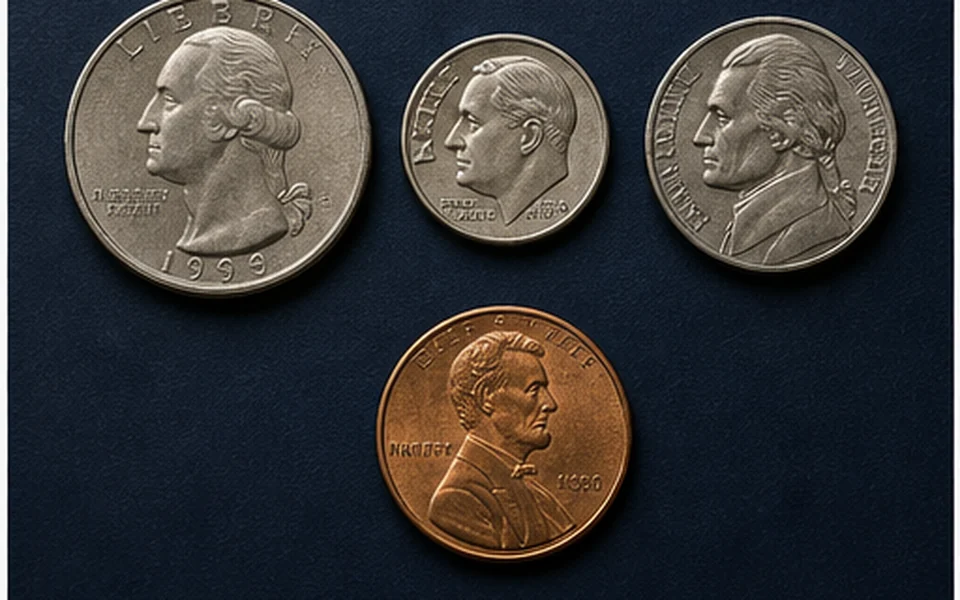
Sort U.S. coins by denomination, date, mint mark, metal clues, and possible varieties or errors. Confirm the exact issue with a catalog before using price references.
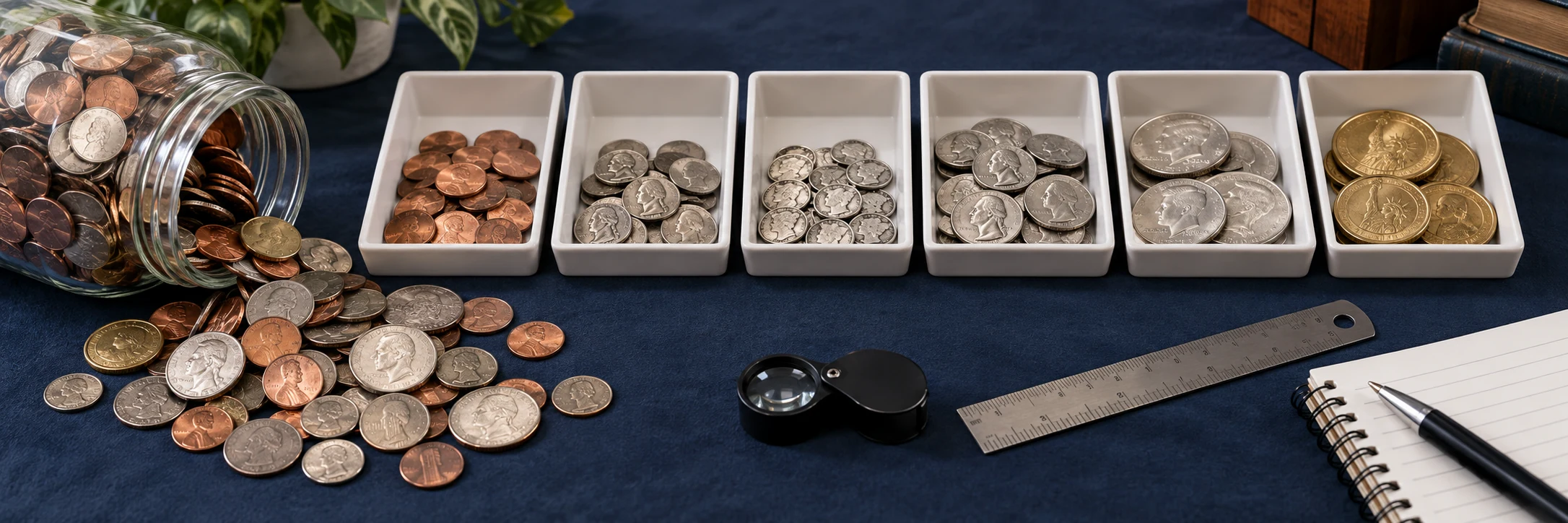
Worked example: sorting a jar of U.S. coins
Separate cents, nickels, dimes, quarters, half dollars, and dollars first. Pull aside older dates, unusual designs, possible silver issues, and suspected errors. Scan one coin at a time so the result can be compared with the physical coin.
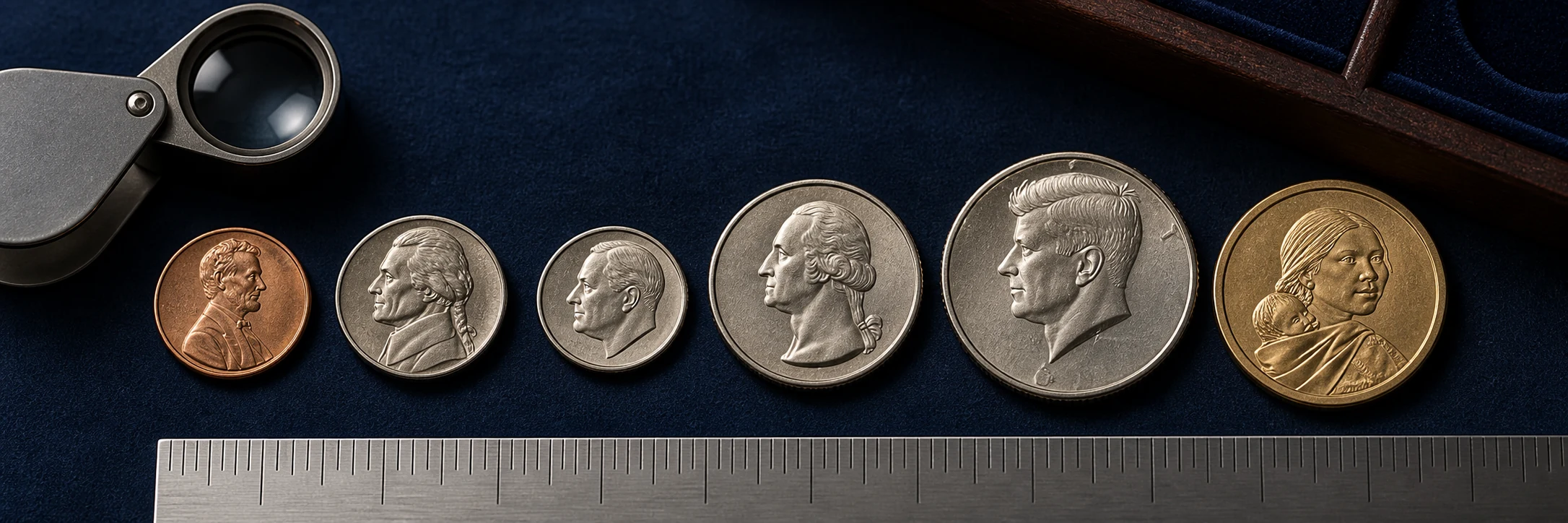
Start with denomination, date, and mint mark
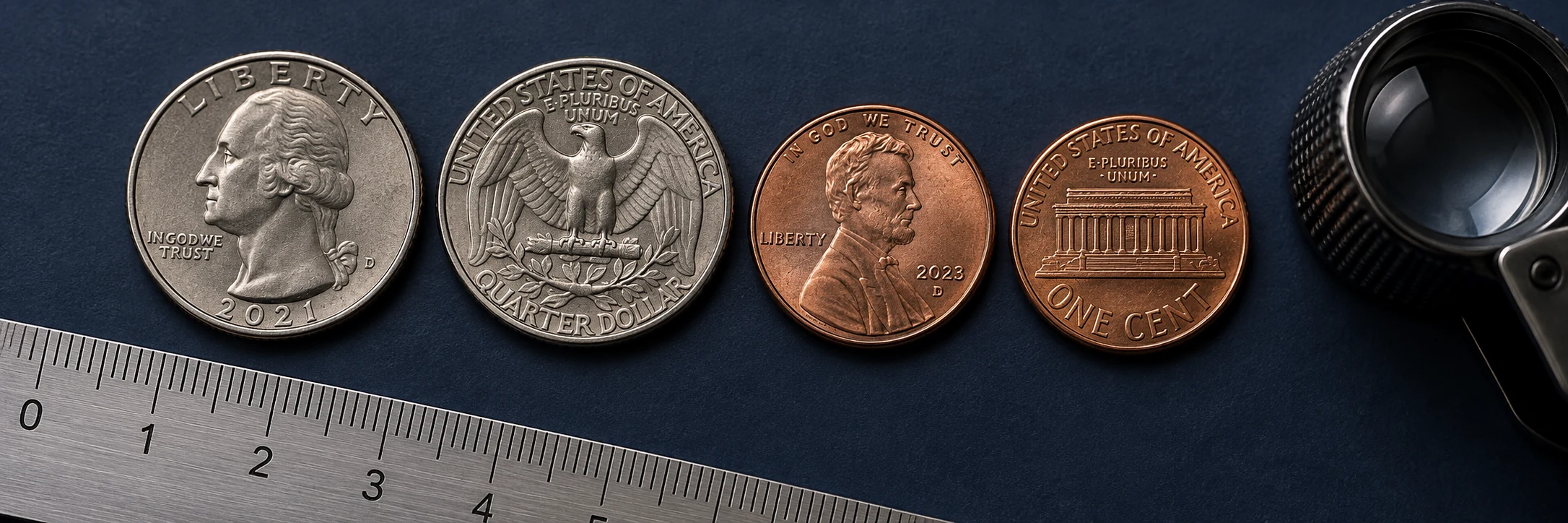
The first step is simple: identify the denomination, read the date, and find the mint mark. US mint marks are usually small letters such as P, D, S, W, or older branch mint letters on certain series. Their location changes by coin type and year. A missing mint mark can also be normal for some issues.
Do not judge value from age alone. A 1960s coin may be common, while a newer error or special issue may interest collectors. The coin type and variety matter as much as the year.
| Coin type | Details beginners should check |
|---|---|
| Lincoln cent | Wheat reverse, steel 1943 cents, mint marks, doubled dies, condition. |
| Jefferson nickel | War nickels from 1942-1945, mint mark, full steps on high-grade coins. |
| Roosevelt dime | Silver issues before 1965, proof coins, errors, condition. |
| Washington quarter | Silver before 1965, Bicentennial design, state and national park issues. |
| Half dollar | 90% silver 1964 Kennedy, 40% silver 1965-1970, older types. |
| Dollar coins | Eisenhower, Susan B. Anthony, Sacagawea, Presidential, Native American issues. |
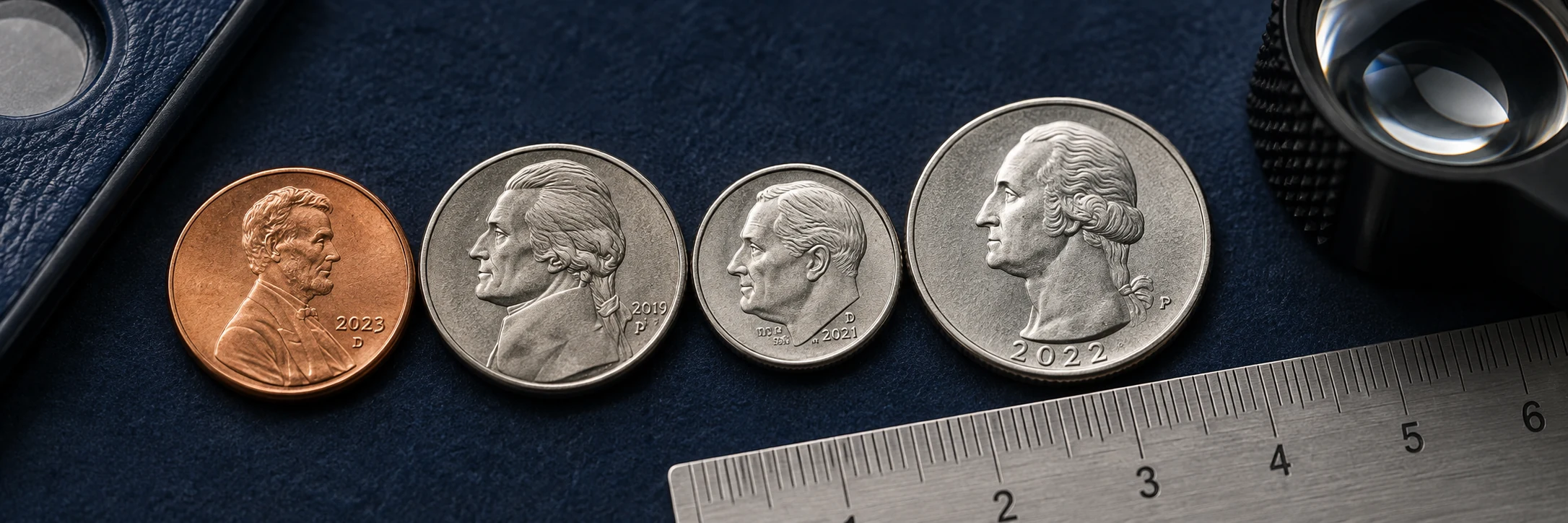
Silver content matters
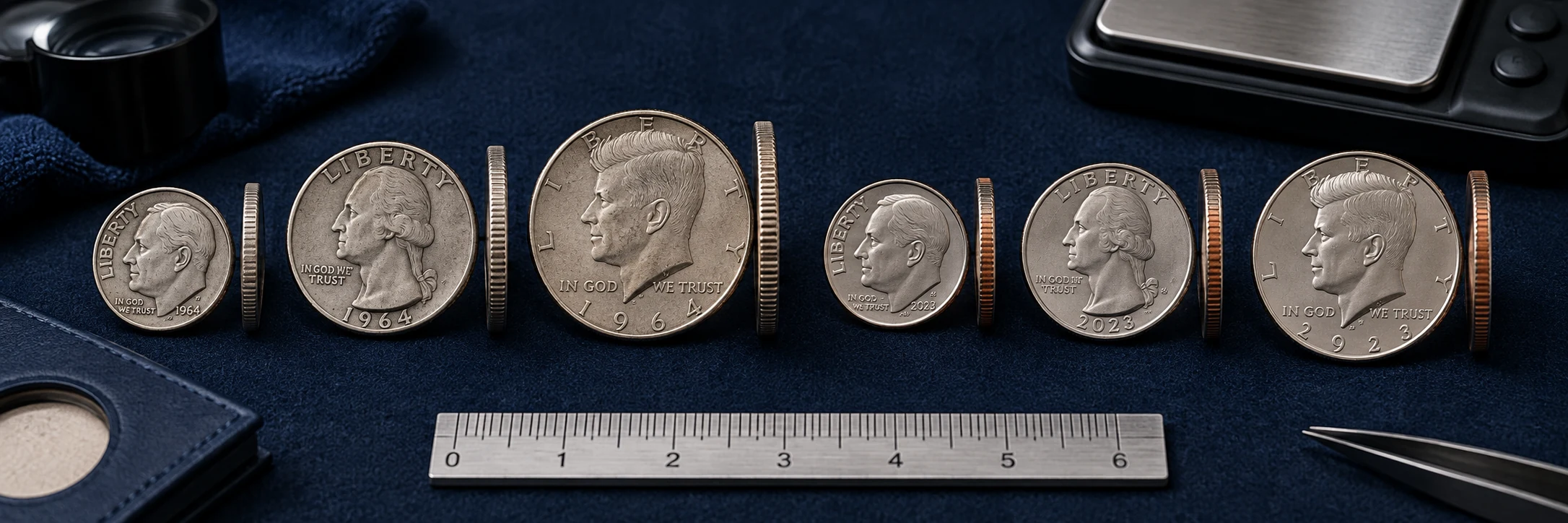
Many US dimes, quarters, and half dollars dated before 1965 contain silver. Silver coins have value from both metal content and collector demand. However, condition, date, mint mark, and rarity still matter. A worn common silver dime may trade near bullion value, while a scarce date in high grade can be worth more.
Kennedy half dollars are a common beginner question. 1964 Kennedy halves are 90% silver, while 1965-1970 examples are 40% silver. Later circulation half dollars are generally not silver unless they are special collector issues.
Common does not mean worthless
A common coin can still be interesting. It may teach you how to identify mint marks, compare condition, recognize wear, understand design changes, and build a first collection. Many collectors begin by sorting common coins before moving to older or scarcer series.
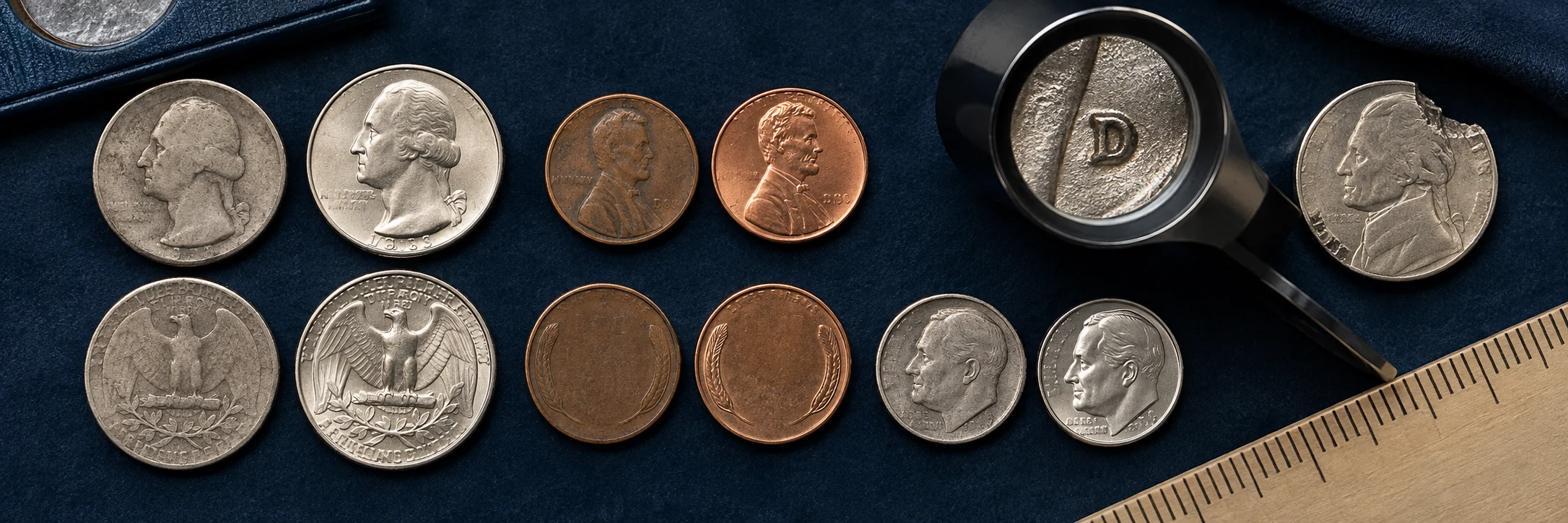
The value of common US coins usually rises when the coin is in exceptional condition, has an attractive surface, belongs to a special set, or shows a genuine mint error. Ordinary damage, discoloration, glue, holes, and scratches usually reduce value rather than increase it.
Using photo identification for US coins
A photo can quickly identify the coin type and suggest a value range. For better results, upload both sides and make sure the date and mint mark are visible. If you suspect an error, take a close-up of the area but also include full-coin photos.
After scanning, compare the result with real sold listings. A common quarter, nickel, or cent may show a low range, while a silver or collectible variety may need deeper research.
Beginner sorting checklist for US coins
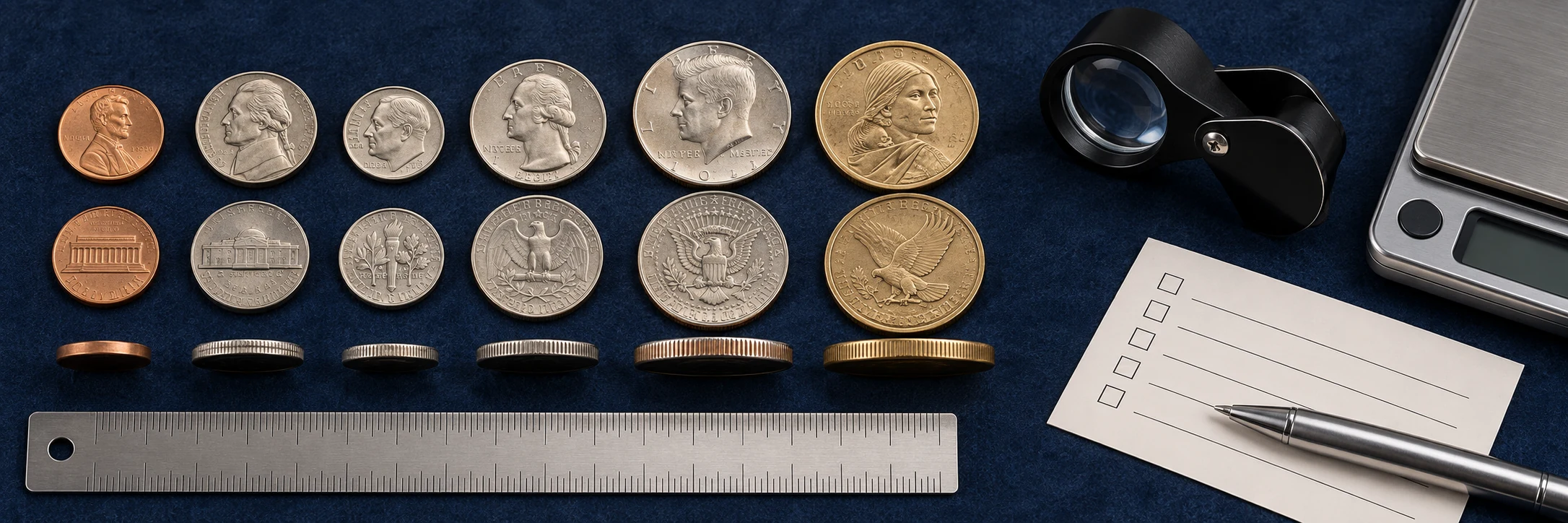
If you have a jar of US coins, sort them before searching values. Separate cents, nickels, dimes, quarters, half dollars, and dollar coins. Then pull out older dates, unusual designs, silver candidates, wheat cents, bicentennial quarters, proof-like coins, and anything with an obvious minting oddity.
This simple sorting process saves time. Most coins will be common, but the act of sorting helps you notice mint marks, design changes, and condition differences. It also makes scanning easier because you can focus on the coins that actually need research.
FAQ
Are most US coins valuable?
Most modern circulation US coins are common, but silver content, rare dates, mint marks, condition, varieties, and errors can increase value.
What US coins should beginners check first?
Check wheat cents, 1943 steel cents, silver dimes and quarters before 1965, Kennedy silver half dollars, older nickels, and unusual error candidates.
Sources and further reading
Use these catalog and reference sites to compare the identification, specifications, and market context. They are reference points, not guarantees of a sale price.