One yen
- Material
- Aluminum
- Weight
- 1.00 g
- Diameter
- 20.0 mm
- Edge
- Plain

Japanese coins often reveal their denomination through a combination of Japanese characters, familiar plants or buildings, distinctive holes, and carefully chosen sizes. A 5 yen or 50 yen hole is an immediate clue, but the year, era notation, design, and modern 500 yen details are needed to identify the exact issue.
This guide covers the familiar Japanese circulation series from 1 yen through 500 yen. It shows how to read the value and symbols, interpret Japanese year marks, check shape and measurements, recognize commemorative issues, and research value without confusing an ordinary circulation coin with a scarce collector piece.
Use the scanner when you are ready to compare your coin with the clues in this guide.
Scan your coinRead the Japanese denomination characters, note the hole and reverse motif, identify the era and year, then confirm weight, diameter, and edge with Ministry of Finance or Japan Mint references before researching value.
Use these current circulation references as a cross-check. Older eras, commemorative issues, and proof sets can have different designs or specifications.
Remember: Japanese era dates and older issues can change the correct specification. Match the exact year, design, and finish before treating a measurement as evidence.
Begin with the central hole and the 5 yen characters, then confirm the rice ears, gear, and sprouting branches on the reverse. Record the era and year on the other side, compare the 22.0 mm diameter and 3.75 g current reference weight, and check the edge and alloy before researching a possible premium.
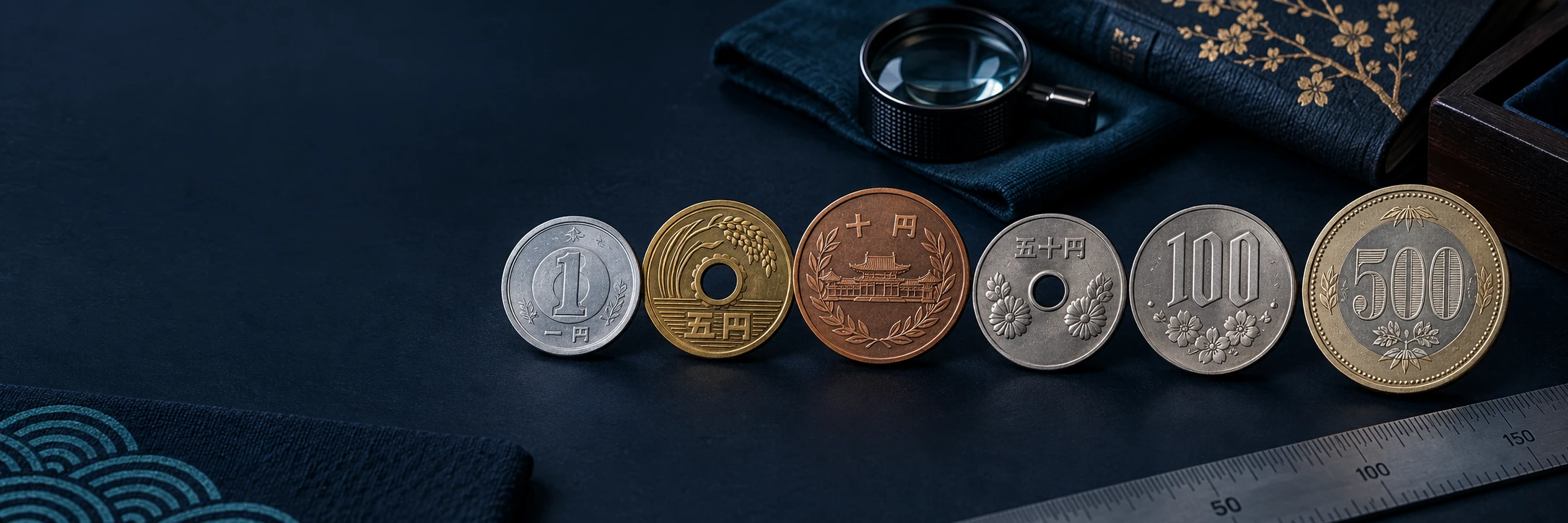
Look for the denomination first. Japanese values are commonly written with kanji such as 一円, 五円, 十円, 五十円, 百円, and 五百円, while Arabic numerals may appear on newer or commemorative designs. The 5 yen and 50 yen coins have a central hole; the 500 yen is the largest familiar denomination and current versions use a distinctive two-tone construction.
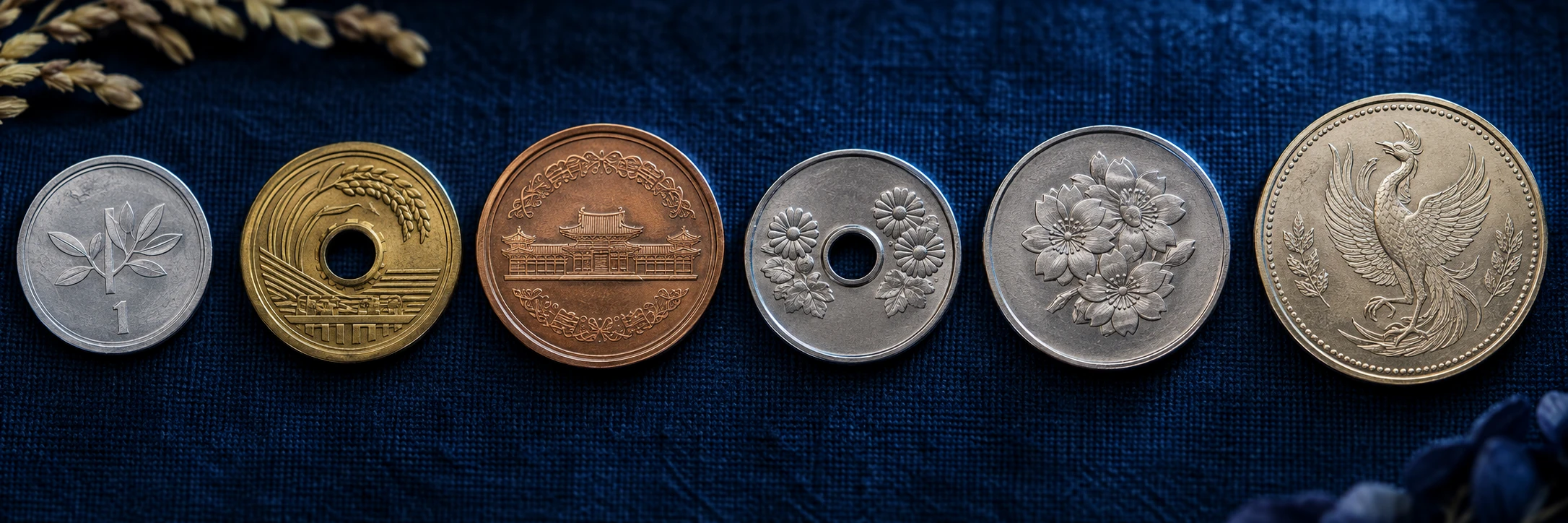
Next, note the main reverse motif. Rice ears and a gear suggest 5 yen, paulownia appears on 500 yen, cherry blossoms are associated with 100 yen, and the Phoenix Hall at Byōdō-in is a well-known 10 yen clue. Use the whole design rather than one character because commemorative coins may replace the standard reverse.
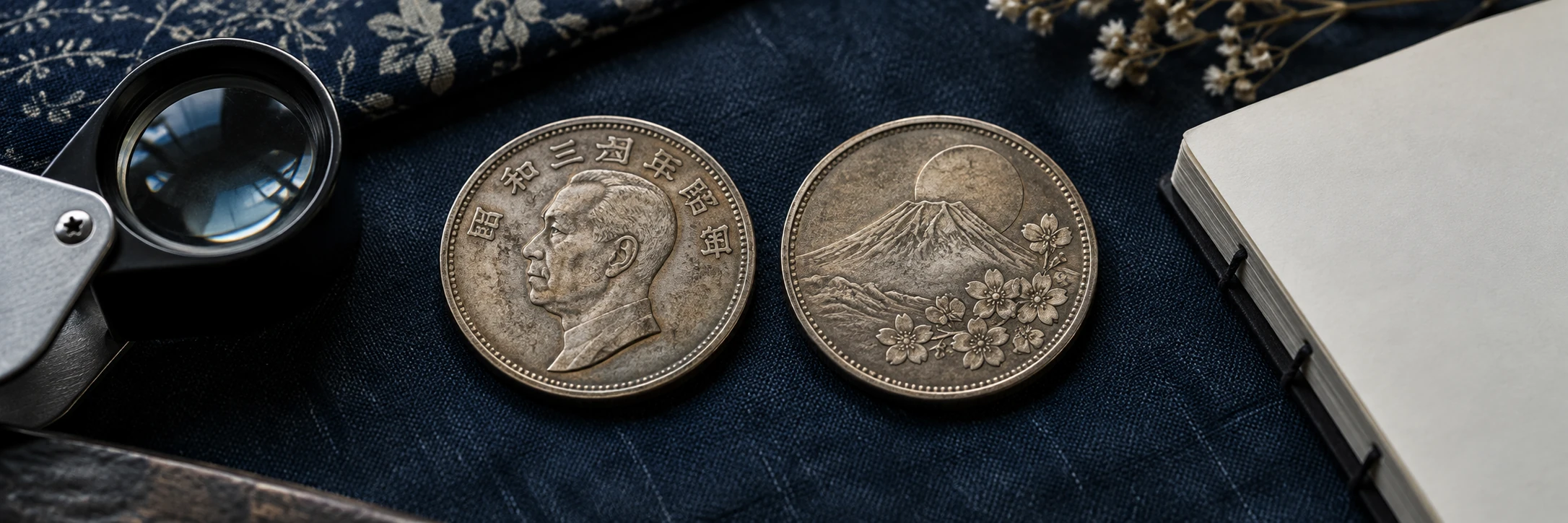
Japanese coins commonly show the year using the Japanese era name, such as Reiwa, Heisei, Shōwa, or earlier eras, followed by a number. A clear photo of the date side is essential because the same denomination and reverse can span several eras and composition changes. If the characters are unfamiliar, transcribe the visible symbols and compare their layout with an official reference.
The obverse and reverse may be described differently in English sources, so keep both images together. Check the text position, portrait or emblem, small mint details, and whether the coin is a normal circulation issue, a proof, or part of a commemorative set.
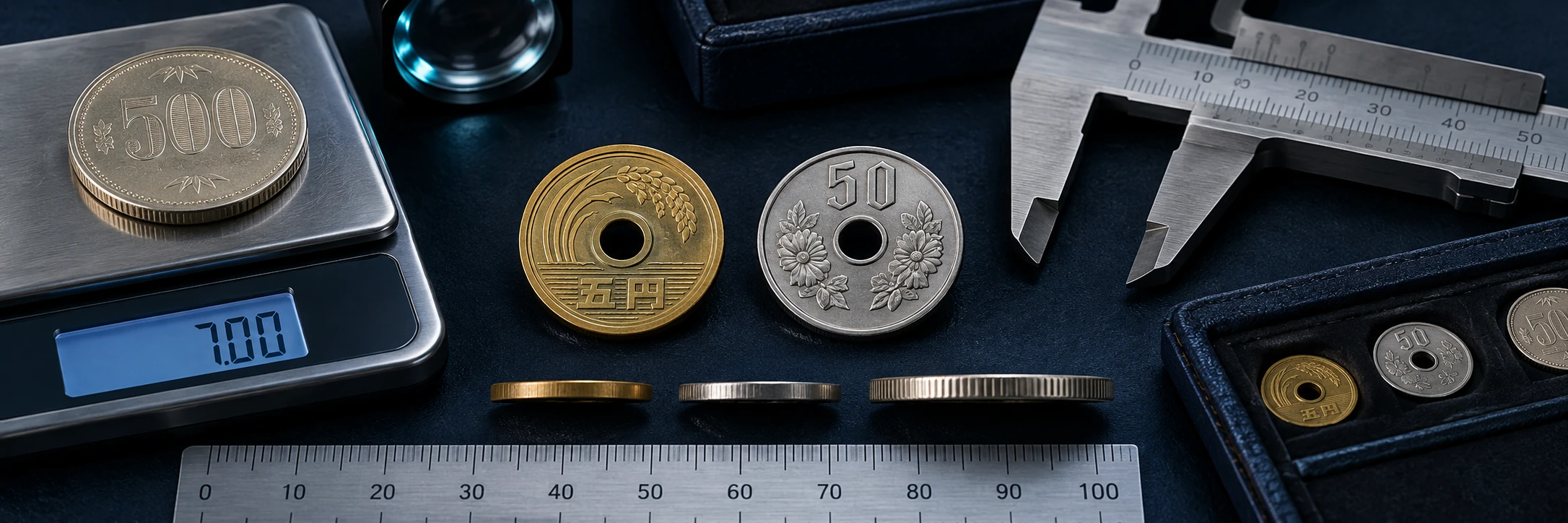
Measure a likely match instead of trusting the apparent scale in a photograph. Current Ministry of Finance references list 1 yen at 1.00 g and 20.0 mm, 5 yen at 3.75 g and 22.0 mm, 10 yen at 4.50 g and 23.5 mm, 50 yen at 4.00 g and 21.0 mm, 100 yen at 4.80 g and 22.6 mm, and the current 500 yen bicolor clad coin at 7.10 g and 26.5 mm.
Inspect the edge and hole carefully. The 5 yen and 50 yen are both holed, but their diameter, weight, characters, and reverse designs differ. The current 500 yen has a bicolor appearance and interrupted edge treatment; older 500 yen versions and collector issues can use different specifications. Measurements support identification but do not authenticate a coin by themselves.
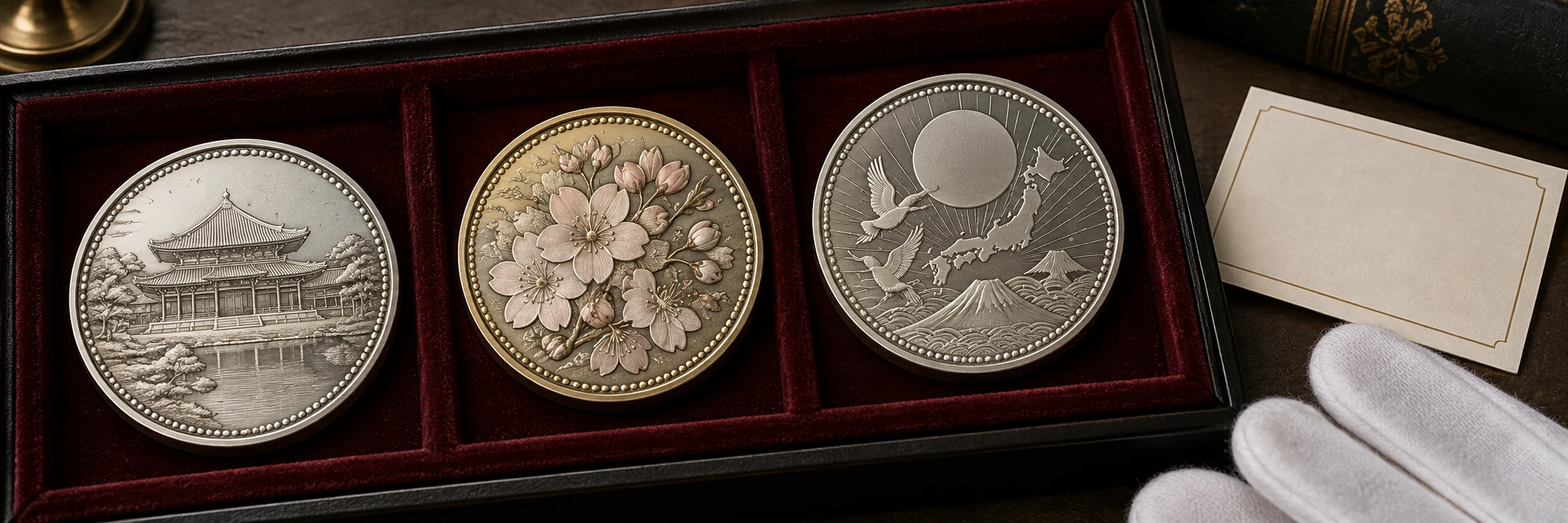
Japan issues many commemorative coins for events, anniversaries, regional themes, and national milestones. A commemorative coin may keep the denomination and general size while changing the reverse subject, inscriptions, or finish. Record the exact subject, denomination, year era, metal, mint mark, and packaging before searching for a catalog entry.
Separate a coin found in everyday change from proof, brilliant uncirculated, colorized, or official-set examples. A beautiful design does not automatically make a coin rare. The issue record and mintage are more useful than a seller’s headline price.
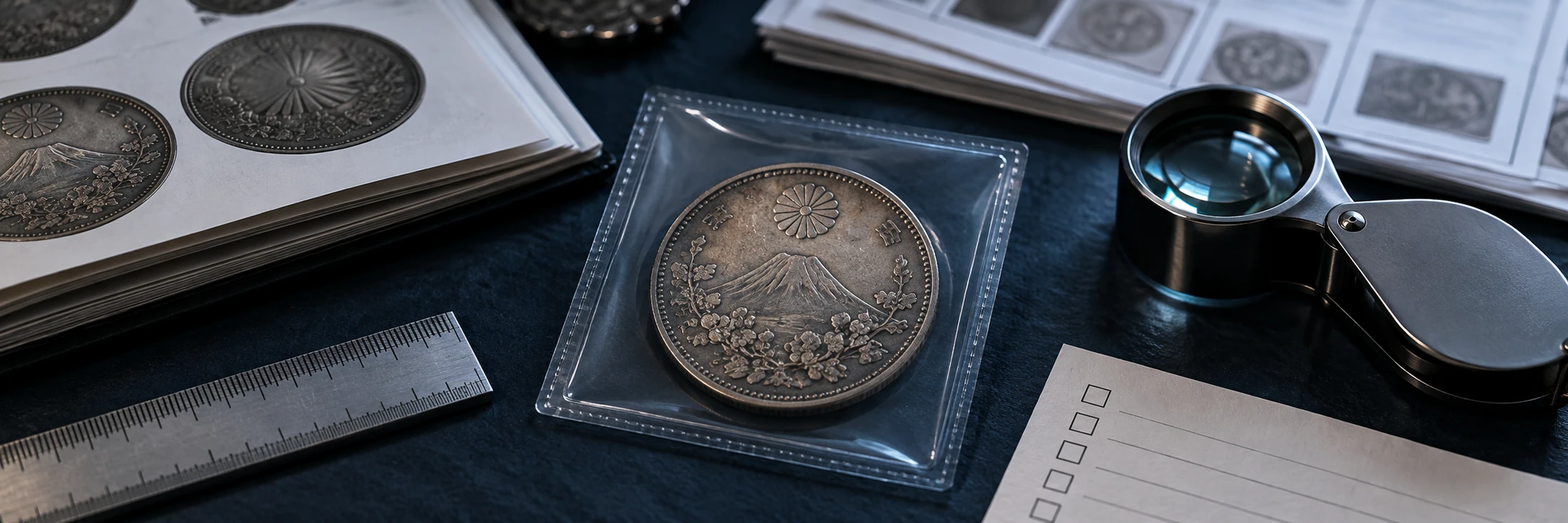
Most worn modern Japanese circulation coins are worth close to face value. A premium may depend on a low mintage, scarce era and year, recognized variety or mint error, silver or gold composition in an older or commemorative issue, proof finish, strong preservation, or collector demand. A hole, kanji inscription, or attractive motif alone does not prove a high value.
Compare the exact denomination, design, era, year, composition, finish, and condition with completed sales. Convert prices carefully when comparing markets, and do not treat an unsold asking price as evidence. For a suspected error, precious-metal coin, or high-value piece, seek in-person authentication before buying or selling and avoid cleaning it.
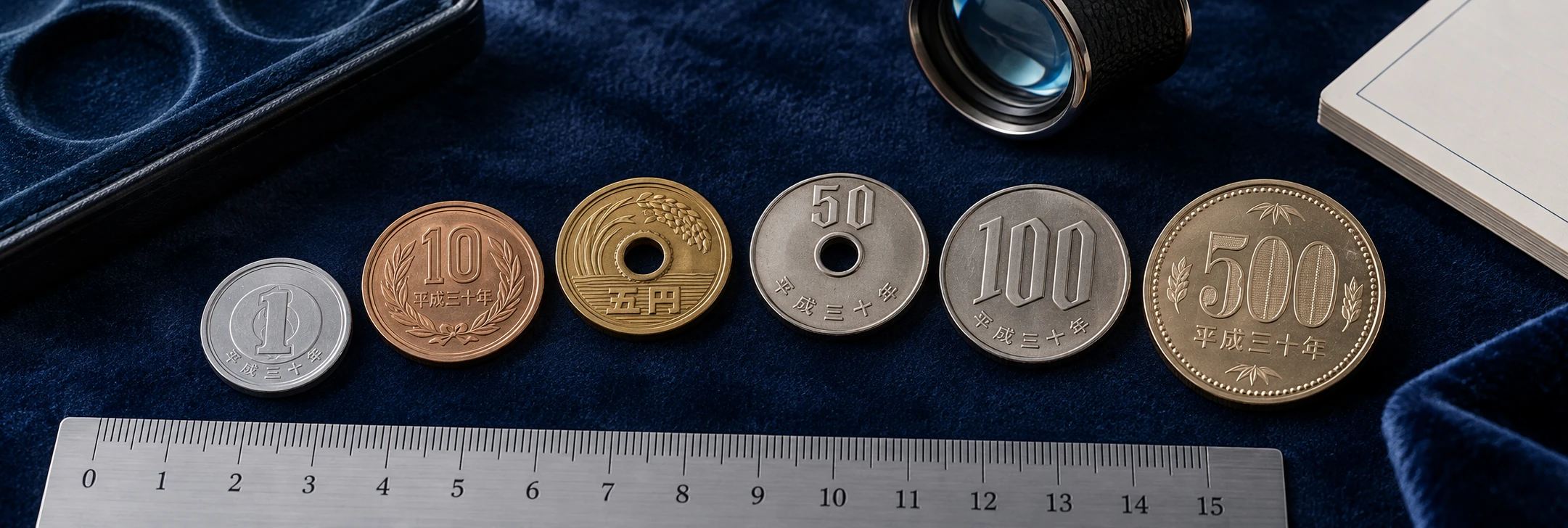
Photograph both sides, read the denomination characters, note any hole and reverse motif, identify the era and year, then confirm weight, diameter, and edge with an official reference.
The 5 yen and 50 yen circulation coins have central holes. Their size, weight, characters, and designs distinguish the two denominations.
Many coins use a Japanese era name followed by a year number, such as Reiwa or Heisei. Compare the characters and layout with a reliable era or mint reference.
The current 500 yen is a bicolor clad coin with updated security and edge features. Older 500 yen issues can have different compositions and specifications.
Some are common, while others attract a premium because of rarity, metal, condition, a recognized variety, or a commemorative mintage. Age alone is not enough.
No. A photo supports identification, but value depends on the exact issue, authenticity, era, composition, condition, finish, mintage, and current completed-sale evidence.
Use these catalog and reference sites to compare the identification, specifications, and market context. They are reference points, not guarantees of a sale price.