
Chinese Coin Identification
Chinese coins can be challenging because many older examples use Chinese characters, reign titles, casting styles, and the classic round shape with a square hole. A photo can help identify possible dynasty, period, type, and value clues.
CoinsIdentification is useful as a first step for people who cannot read the characters or do not know whether a coin is modern, old, common, or potentially collectible.
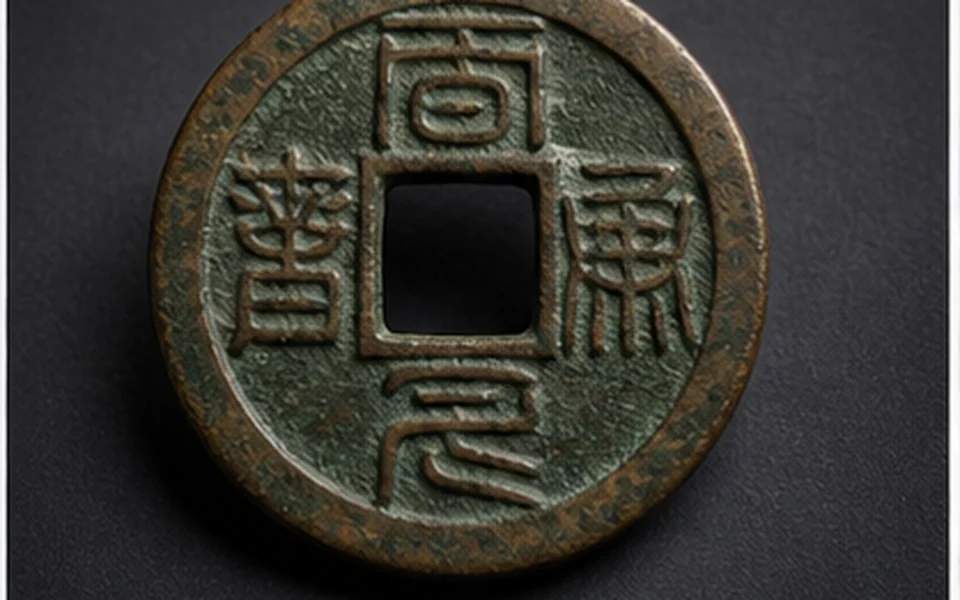
Use the scanner when you are ready to compare your coin with the clues in this guide.
Scan your coinRecord the characters, hole shape, edge, size, and metal, then compare the inscription and period with catalog examples instead of assuming every cash-style coin is old.
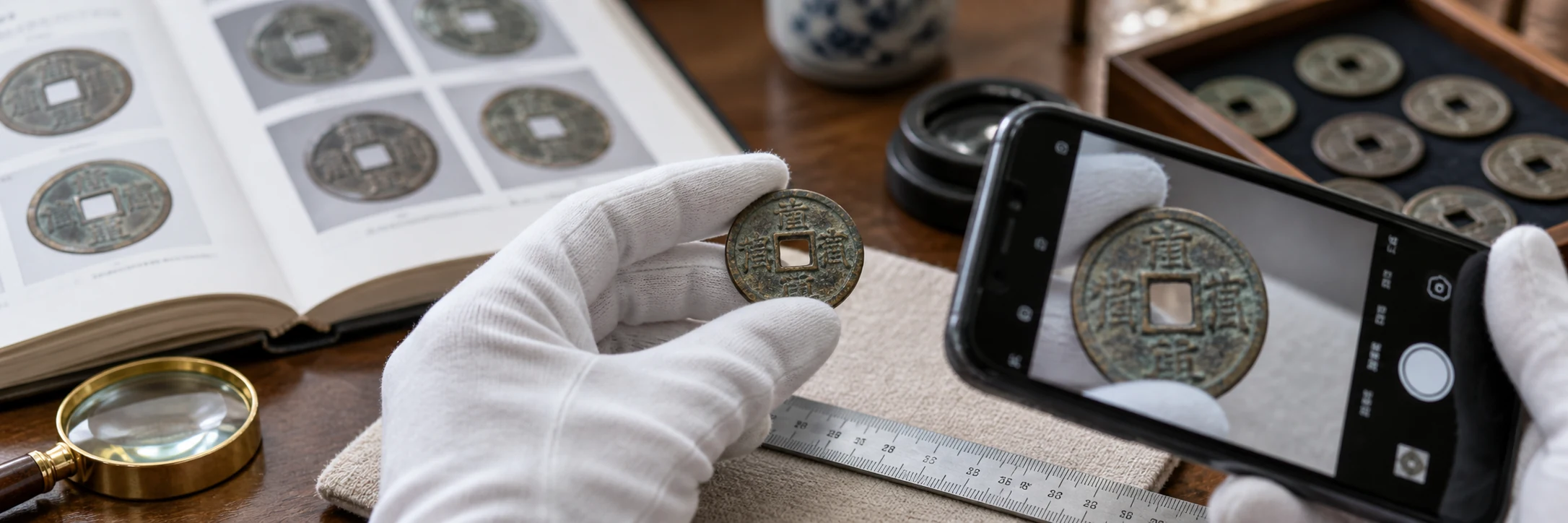
Worked example: a coin with a square hole
Record the characters around the hole, the shape, diameter, edge, and metal appearance. Compare the script and period clues with catalog examples instead of assuming every cash-style coin is old.
Why Chinese Coins Are Hard to Identify
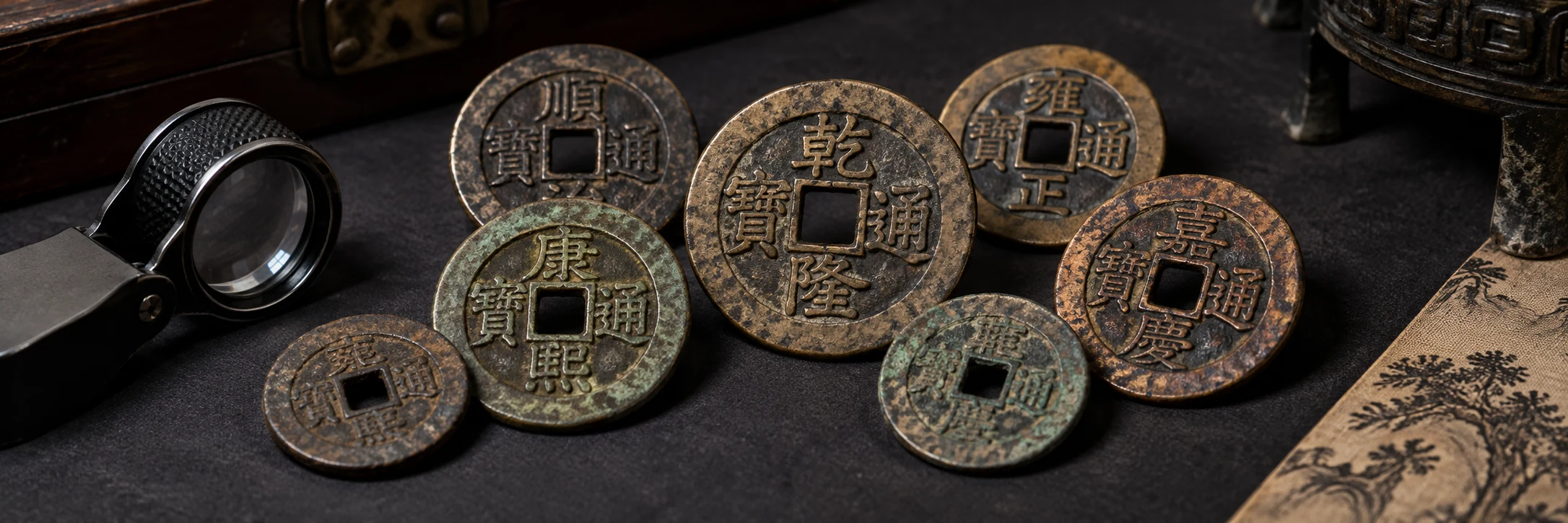
Many Chinese cash coins look similar at first glance: round coin, square hole, and four characters around the center. The characters often identify the reign title or period, but small differences in script and style can matter.
Some coins are common, some are replicas, and some may be older or scarcer. A good photo helps compare characters, reverse marks, shape, metal color, and casting quality.
How to Identify Chinese Coins by Photo
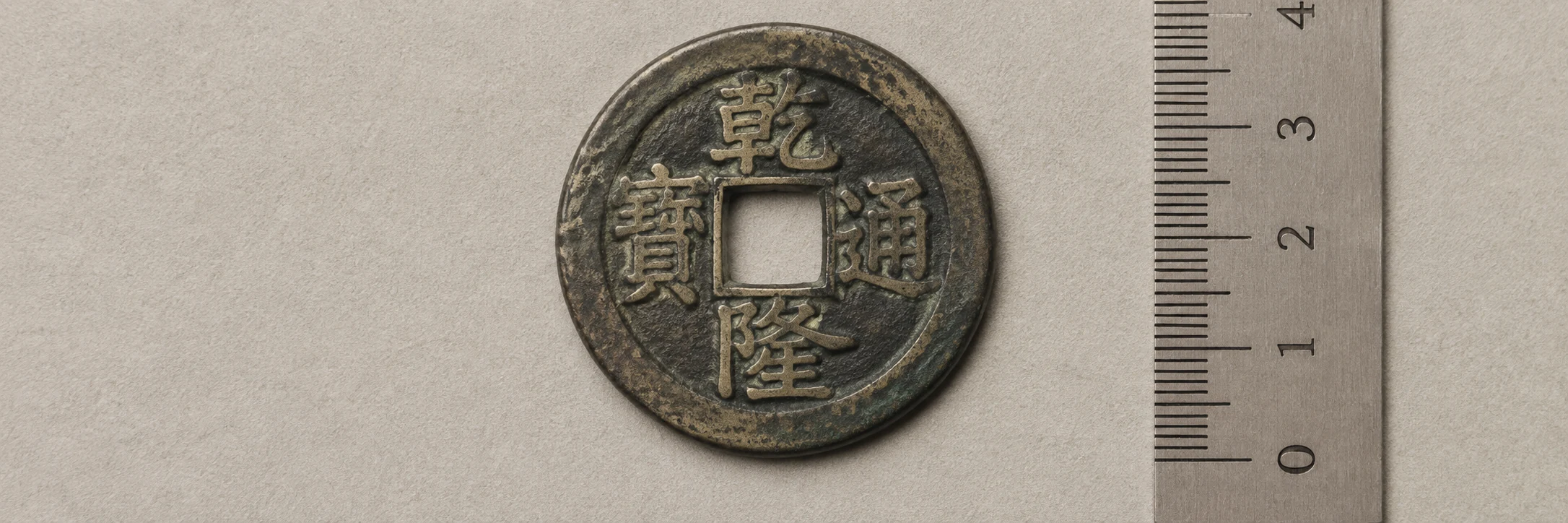
Photograph the coin straight from above so the square hole and characters are readable. If there are marks on the reverse side, photograph those too. Shadows inside the hole can hide details, so use even light.
The system can look at Chinese characters, the square hole, round shape, metal color, casting style, visible symbols, and any reverse marks. For better results, do not rotate or crop out the edge.
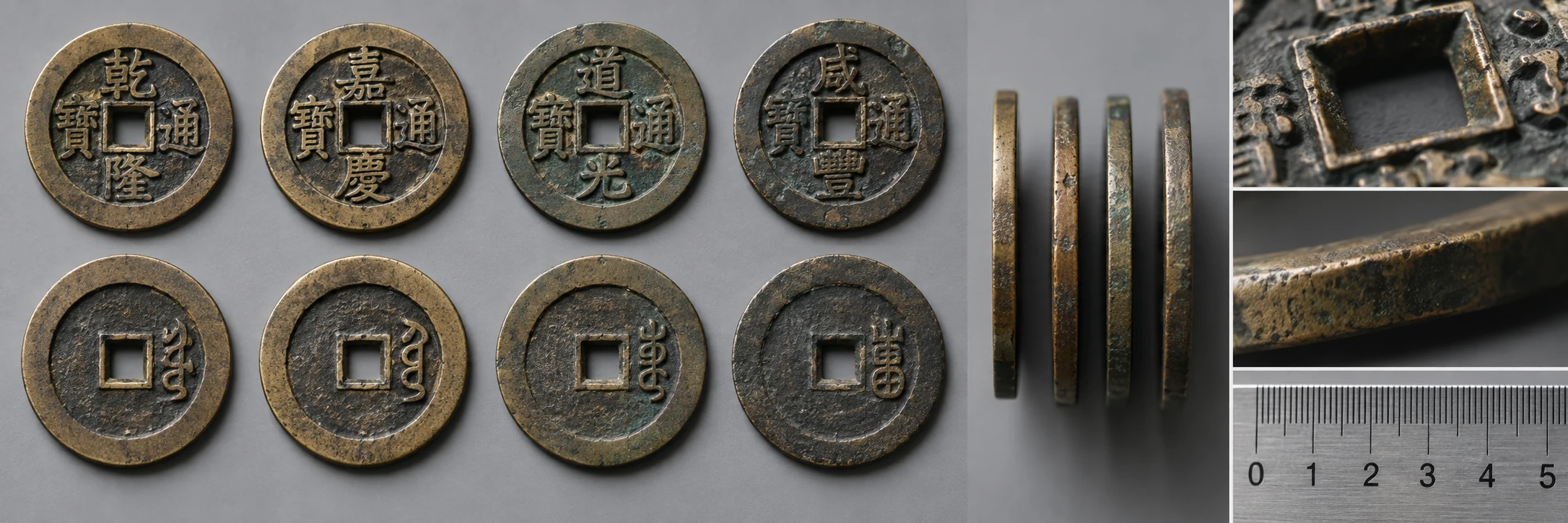
Key Details on Chinese Cash Coins
The four characters around the hole are usually the most important clue. Their order, style, and spacing can point to a dynasty or reign title. Reverse marks can also help identify mint or issue differences.
Because reproductions are common, a photo cannot prove authenticity. Weight, diameter, metal, surface, and expert review may be needed for valuable pieces.
Chinese Coin Value
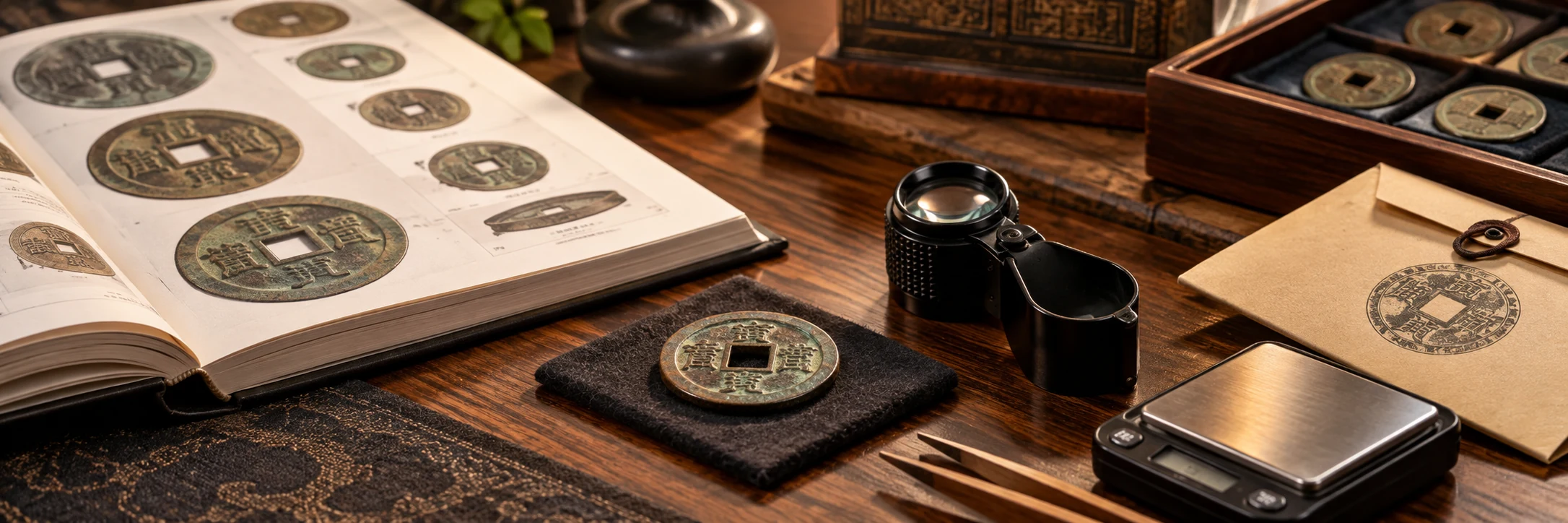
Many Chinese cash coins are common, but certain periods, rare inscriptions, good preservation, and authenticated pieces can be more valuable. Condition matters, but cleaning can damage patina and reduce collector interest.
Use estimated value as a first guide. If the coin may be old, rare, or expensive, ask a professional before selling or cleaning it.
FAQ
How do I identify Chinese coins?
Start with clear photos of both sides, especially the characters around the square hole and any reverse marks.
What does the square hole mean?
Many traditional Chinese cash coins have a square center hole from historical casting and stringing methods.
Are old Chinese coins valuable?
Some are common and some are valuable. Period, inscription, condition, rarity, and authenticity all matter.
Can I identify Chinese characters from a photo?
A clear photo can help read or compare characters, but worn or stylized script may still need expert review.
Sources and further reading
Use these catalog and reference sites to compare the identification, specifications, and market context. They are reference points, not guarantees of a sale price.