
Rare Coin Identifier
A rare coin identifier is for people who want to know whether a coin may be unusual, collectible, or valuable. Rarity is not only about age. A newer coin with a minting error can sometimes be more interesting than an older common coin.
CoinsIdentification helps you check visible clues such as date, mint mark, design, condition, and possible errors. It can suggest a possible value range, but it cannot replace professional grading or authentication.
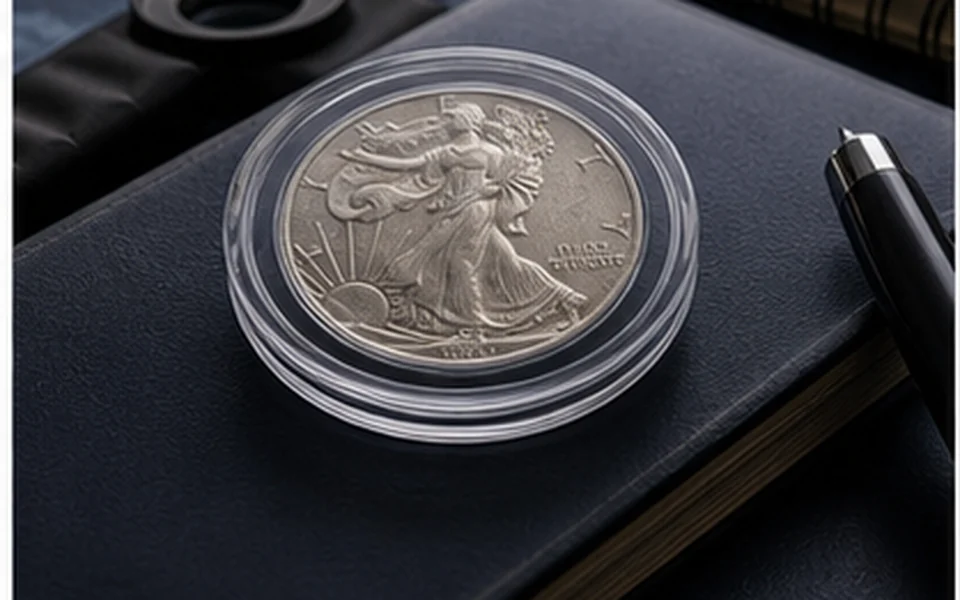
Use the scanner when you are ready to compare your coin with the clues in this guide.
Scan your coinCheck the exact date, mint mark, variety, mintage context, condition, and demand. Age or unusual color alone does not make a coin rare.
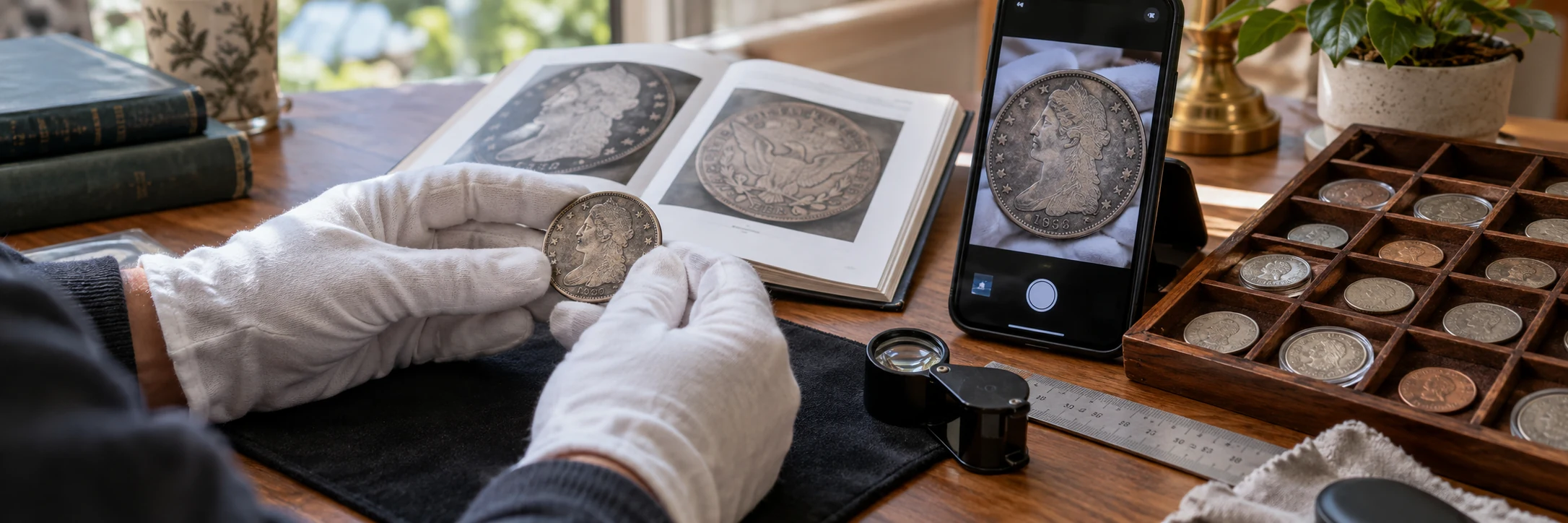
Worked example: checking a possible rare date
Compare the date, mint mark, variety, and condition with several known examples. A coin is not rare only because it is old or has an unusual color.
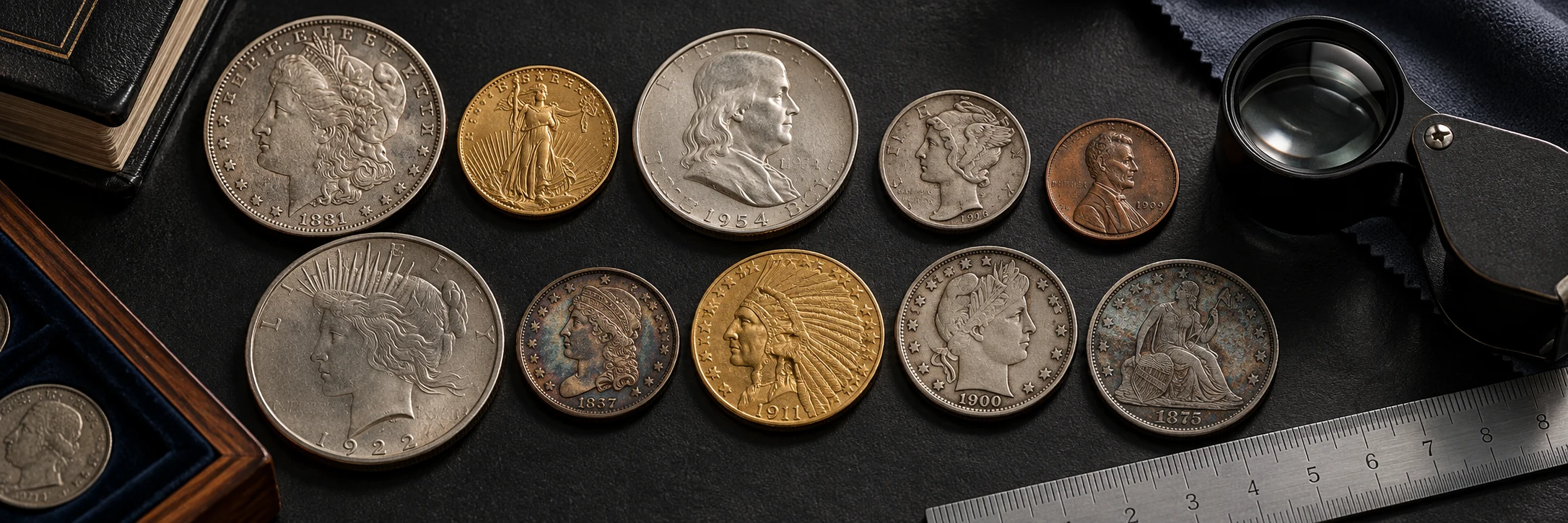
What Makes a Coin Rare?
A coin may be rare because of low mintage, a rare year, mint mark, minting error, historical event, limited circulation, or excellent condition. Sometimes the smallest detail changes the value.
Old does not automatically mean rare. Many old coins were produced in large numbers. At the same time, some modern coins with errors, low mintages, or special varieties can attract collectors.
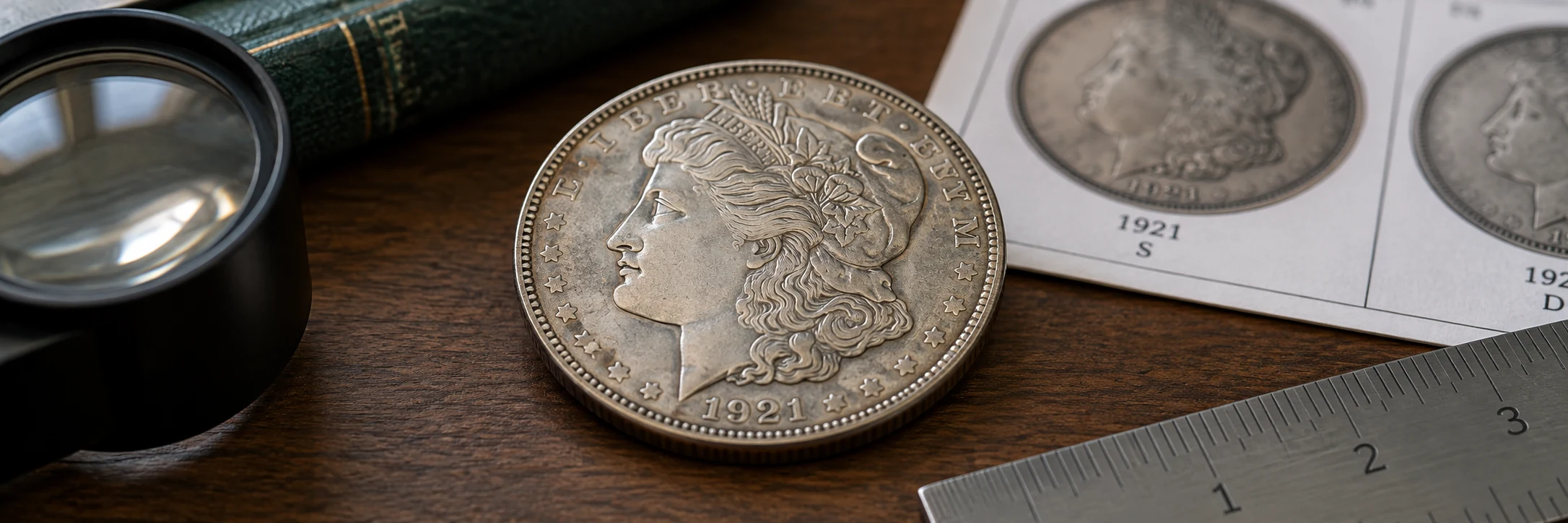
How to Check If a Coin Is Rare
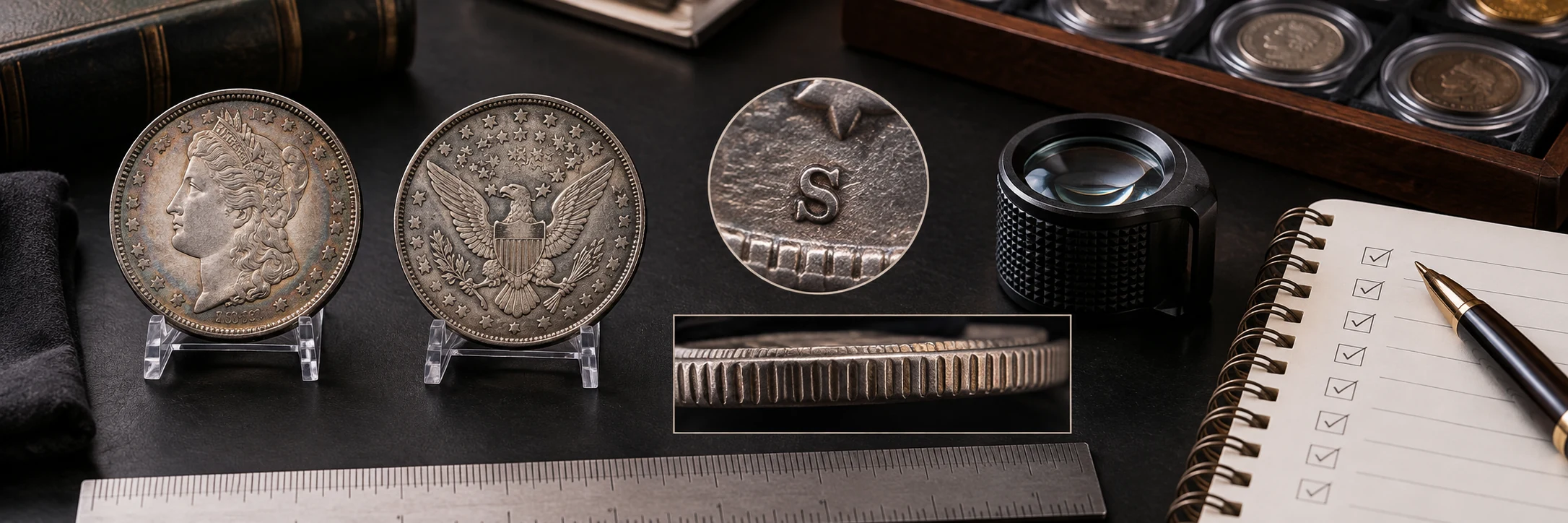
Start with the date and mint mark. Then compare the design, lettering, edge, and condition with known examples. If you see anything unusual, photograph it closely without cleaning or scratching the coin.
Upload clear photos of both sides. A possible match can help you learn what terms to search for, such as doubled die, off-center strike, missing detail, wrong planchet, or die crack.
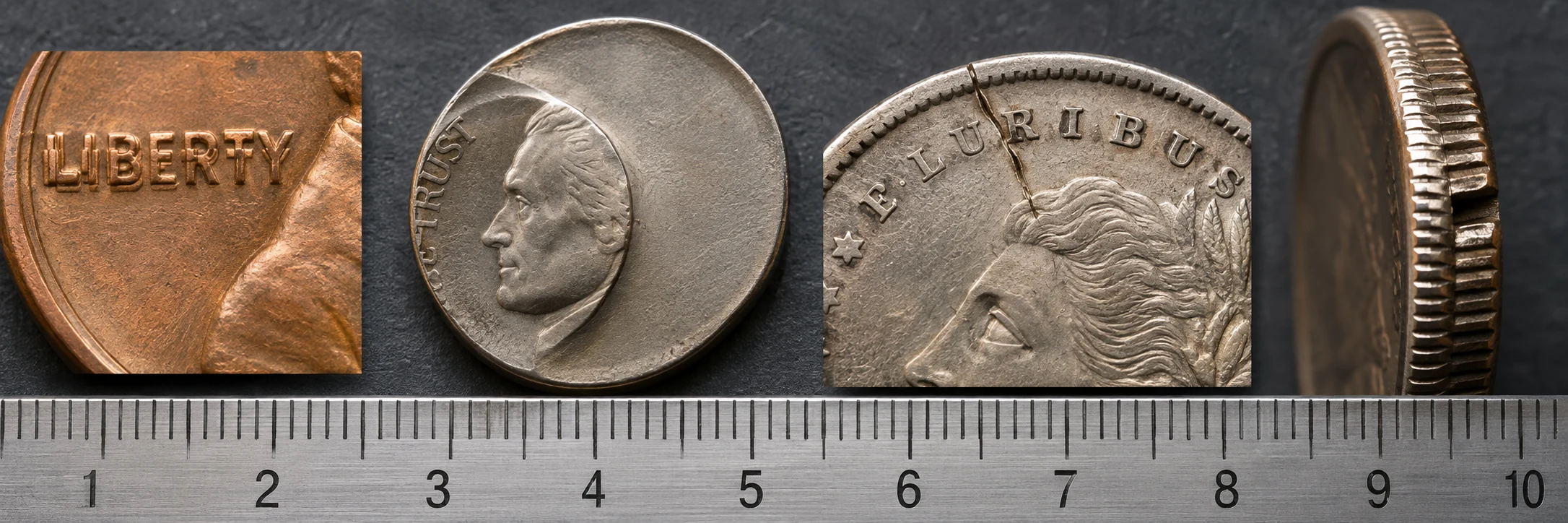
Rare Coin Errors to Notice
Some minting errors are easy to miss. Look for doubled letters, off-center strikes, missing details, unusual edges, die cracks, or a coin that appears to be struck on the wrong metal.
Damage is not the same as an error. Scratches, dents, corrosion, and post-mint damage usually do not increase value. If you are unsure, get an expert opinion.
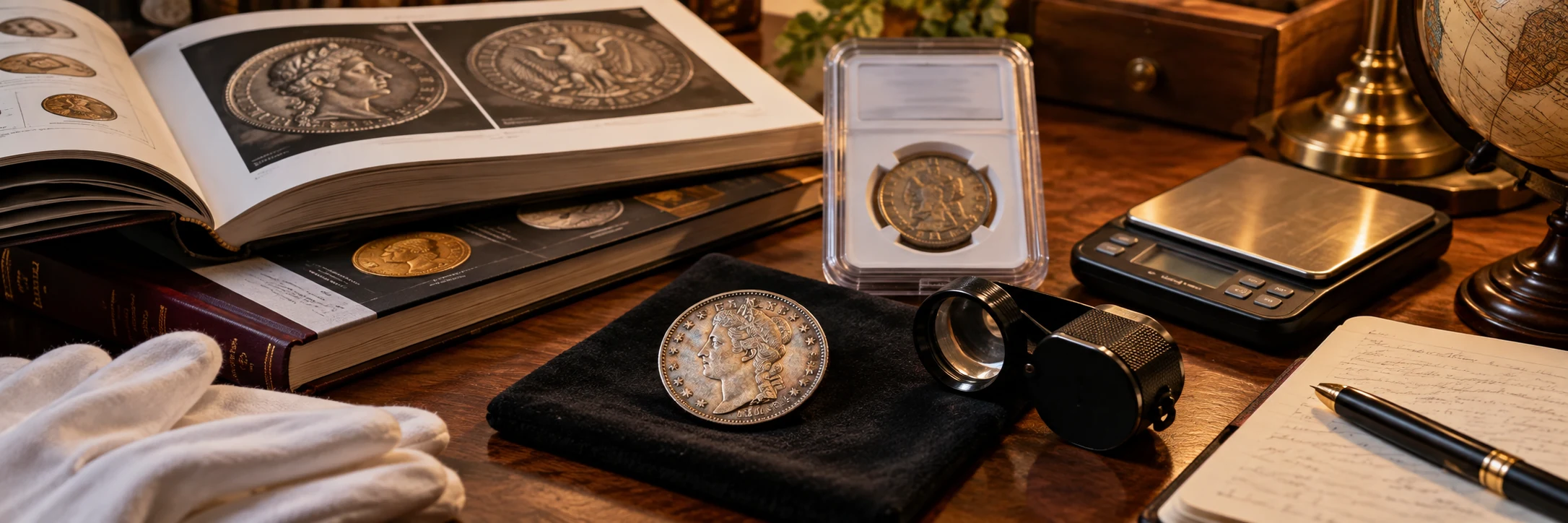
Rare Coin Value Is Not Always Obvious
The possible value of a rare coin depends on rarity, condition, demand, authenticity, and real market sales. Two coins with the same date can have different prices because one has a better grade or a scarcer mint mark.
Treat online estimates as a first step. If a coin may be high value, do not sell it based only on one photo result. Professional grading or appraisal may be worth the cost.
FAQ
How do I know if my coin is rare?
Check date, mint mark, condition, mintage, errors, and compare it with similar known coins.
Are old coins always rare?
No. Some old coins are very common, while some newer error coins can be valuable.
What mint errors can make a coin valuable?
Doubled dies, off-center strikes, wrong planchets, missing details, and unusual edges may matter.
Should I sell a rare coin without appraisal?
For potentially valuable coins, professional review is recommended before selling.
Sources and further reading
Use these catalog and reference sites to compare the identification, specifications, and market context. They are reference points, not guarantees of a sale price.