
1946 Wheat Penny Value, Errors & Mint Mark Guide
Most 1946 Wheat Pennies are common bronze cents and circulated examples usually have modest collector value. The mint mark, condition and original BN, RB or RD color become more important in Mint State, while documented mint-mark varieties and genuine errors are valued separately.
Reviewed by the Coins Identification editorial team · Prices last reviewed September 2026
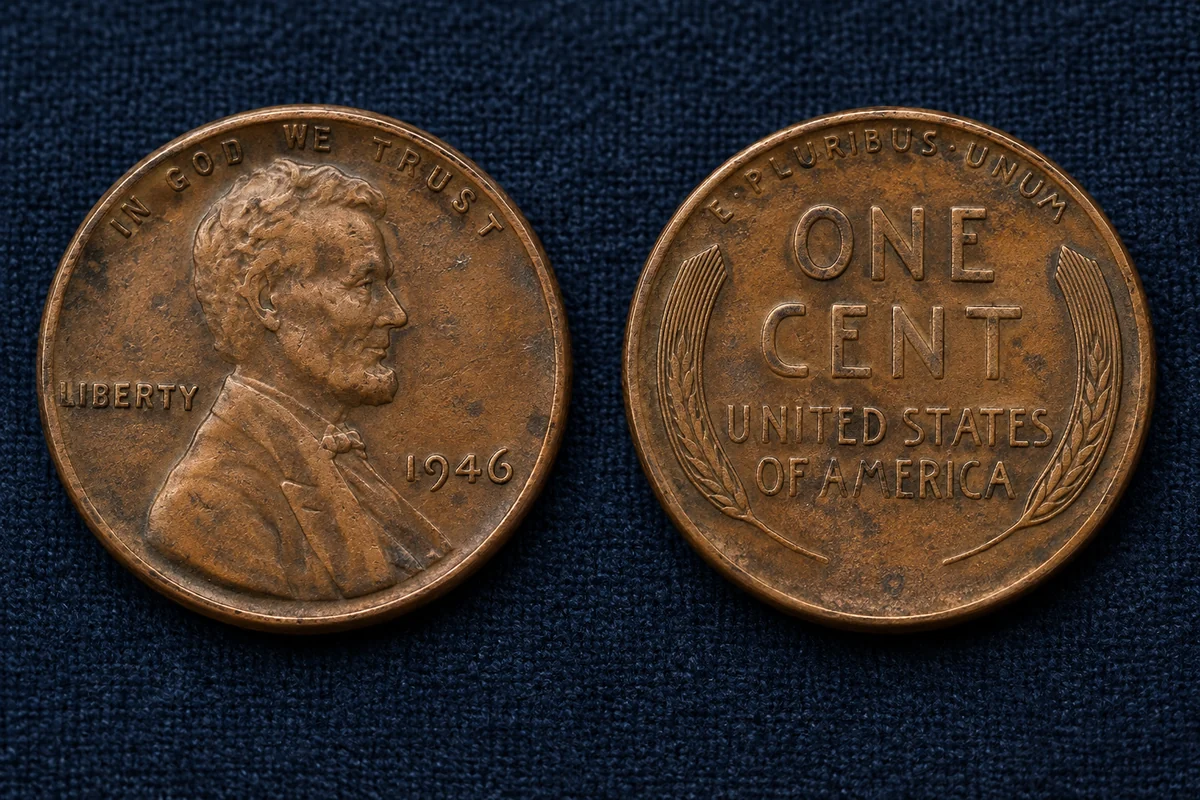
How Much Is a 1946 Wheat Penny Worth?
The normal bronze issue is the right starting point.
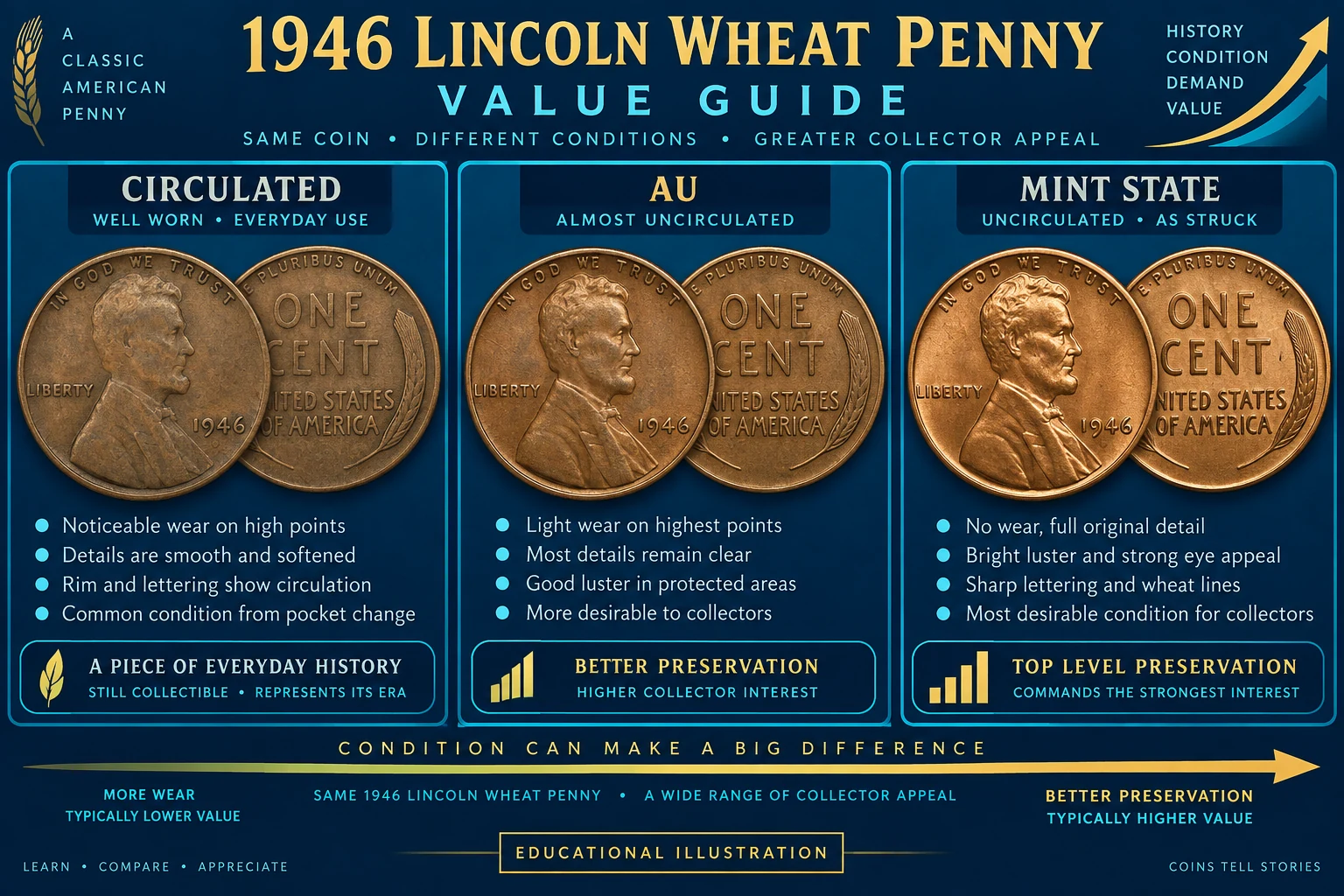
Most circulated 1946 Wheat Pennies are common and usually bring a modest amount. A coin found in a jar or old album is normally worth more as a collectible than as metal. The mint mark matters because Philadelphia, Denver and San Francisco struck different quantities, while numerical grade separates worn coins from Mint State pieces. In Mint State, BN, RB and RD color designations can create large differences between otherwise similar grades.
Original surfaces and a strong strike matter too. High-grade Red examples can bring meaningful premiums, but an unusually bright surface may be cleaned or recolored. A recognized mint-mark variety or a genuine mint error belongs in a separate market from a regular date-and-mint coin. Compare the exact issue, grade, color and certification rather than a headline auction number.
1946 Wheat Penny Market Context
Mint, grade, color and certification define the comparison.
| Issue | Circulation context | Certified-market basis | Mint |
|---|---|---|---|
| 1946 No Mint Mark | Common regular issue | Match the exact BN/RB/RD grade and a certified sale | Philadelphia |
| 1946-D | Common regular issue | Match the exact BN/RB/RD grade and a certified sale | Denver |
| 1946-S | Lower regular mintage; grade still controls | Match the exact BN/RB/RD grade and a certified sale | San Francisco |
The table is an issue comparison, not a universal price list. Use the exact mint, grade, color and certification in the PCGS Price Guide, then use NGC or completed sales as a second reference.
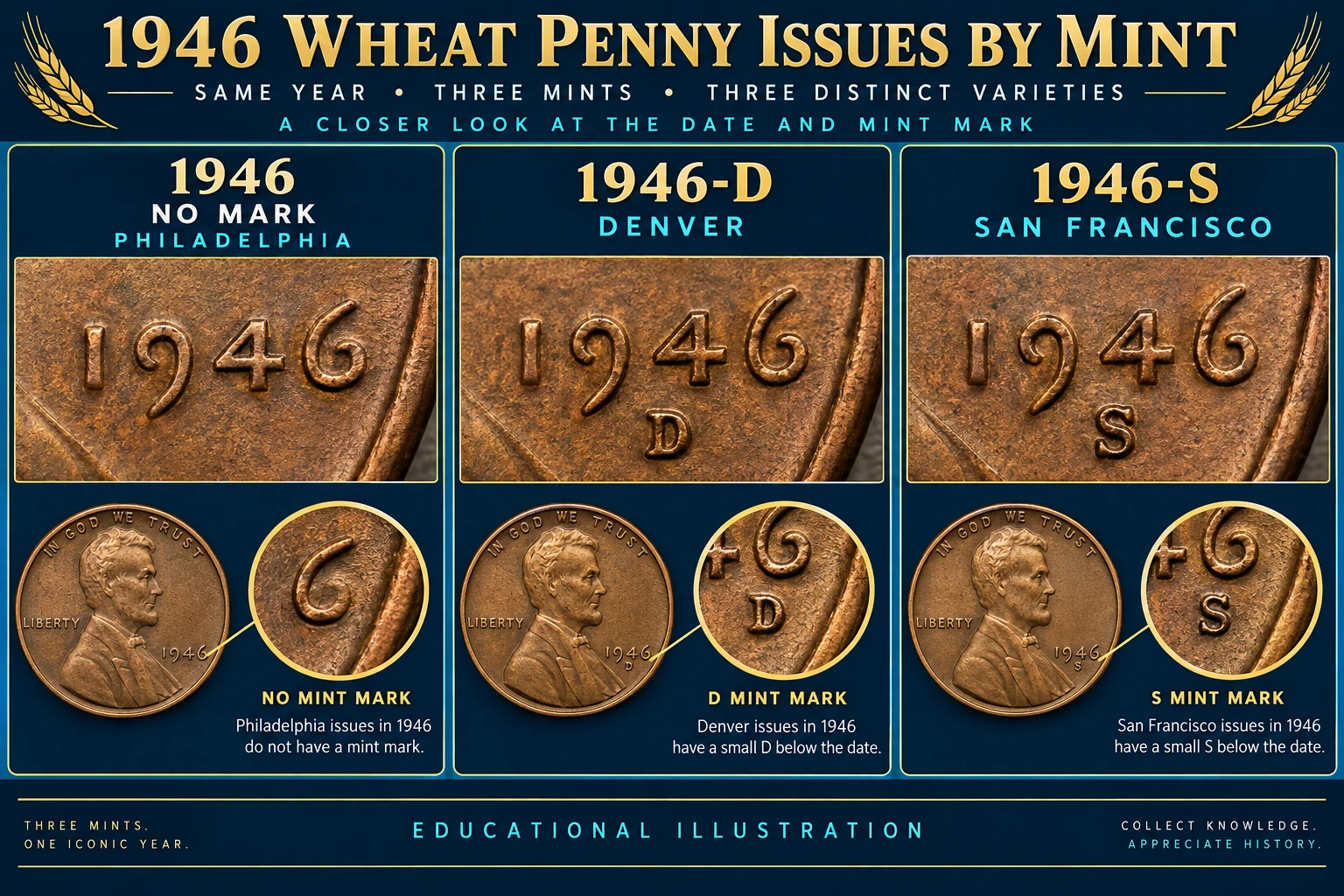
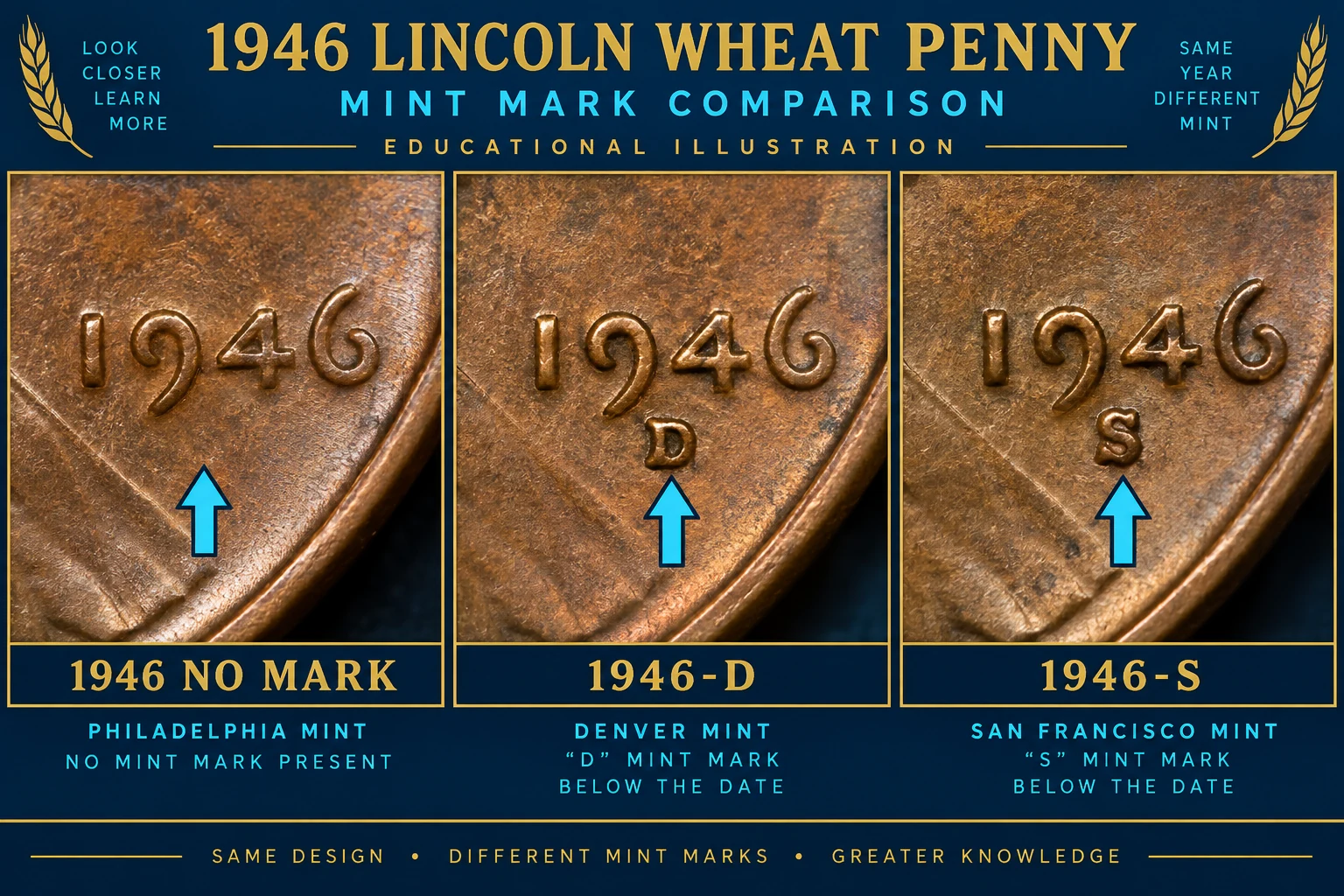
1946 Wheat Penny Value by Mint Mark
No mark, D and S identify the striking mint.
1946 No Mint Mark Wheat Penny Value
No mint mark means Philadelphia. The absence of a letter is normal and does not indicate an error. Philadelphia struck 991,655,000 cents. Circulated examples are common; certified Mint State value depends on grade, original color and surface.
1946-D Wheat Penny Value
D identifies Denver. Denver struck 315,690,000 cents. Keep a regular 1946-D separate from any documented doubled die, clip or off-center error. Use a dedicated Denver page when one is added to the catalog.
1946-S Wheat Penny Value
S identifies San Francisco. San Francisco struck 198,100,000 cents, the lowest regular 1946 mintage. Lower mintage alone does not make every 1946-S rare; grade and color still decide demand.
1946 Wheat Penny Value Chart
Use the exact mint, grade and BN/RB/RD color rather than a generic date estimate.
A single 1946 value would be misleading because Philadelphia, Denver and San Francisco issues trade in separate grade populations. Use the linked PCGS Price Guide for the exact issue and color, then compare NGC or completed sales. No neighboring grade is used as a substitute.
How Color Affects 1946 Wheat Penny Value
BN, RB and RD are separate from numerical grade.
BN means Brown, RB means Red-Brown and RD means Red. The designation describes how much original copper color remains, while the numerical grade describes wear and preservation. PCGS catalogs 1946 Philadelphia cents in BN, RB and RD, and the same color framework applies to Denver and San Francisco issues. An MS65 RD can command more demand than an MS65 BN, but a bright surface is not automatically original Red.
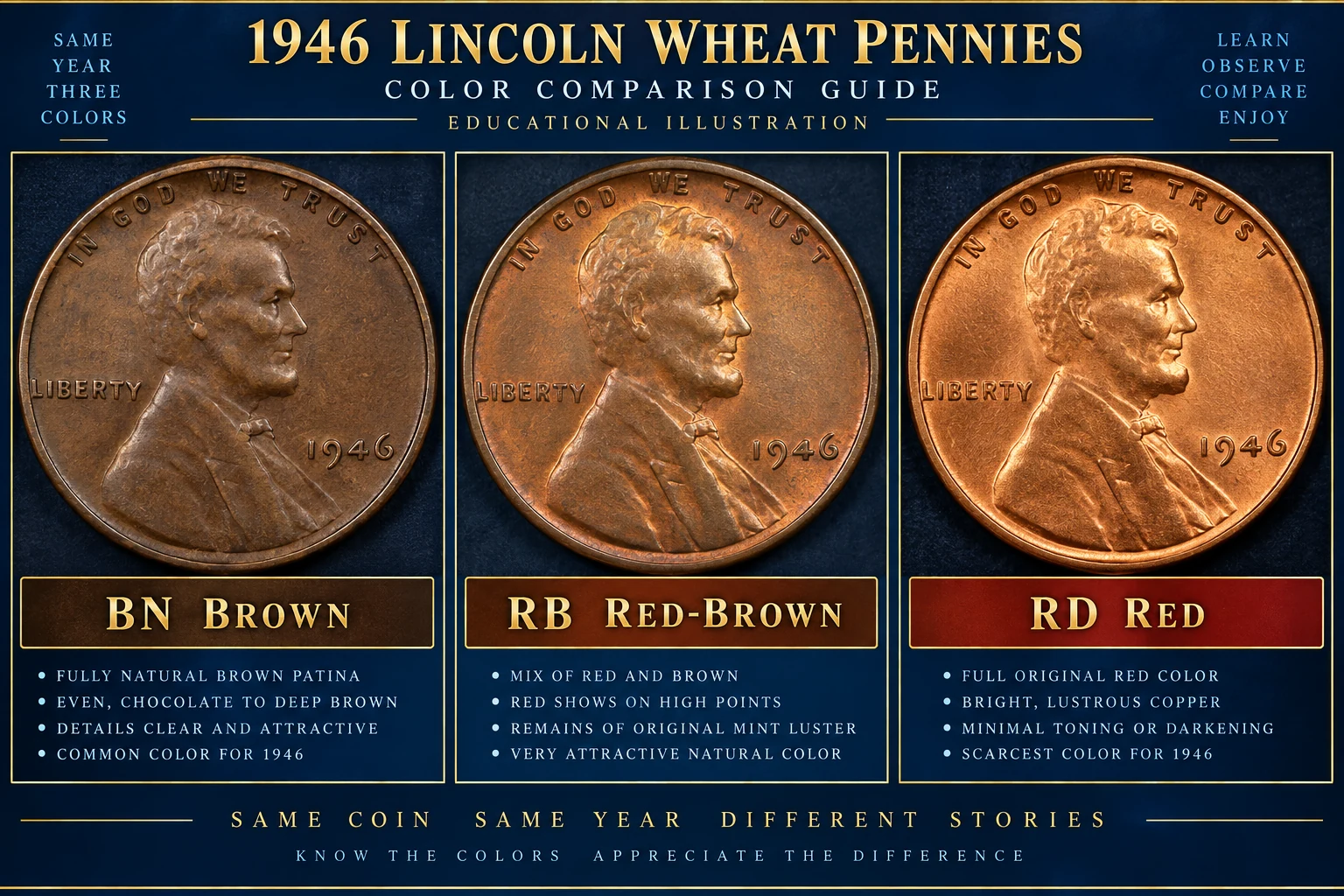
What Makes a 1946 Wheat Penny Valuable?
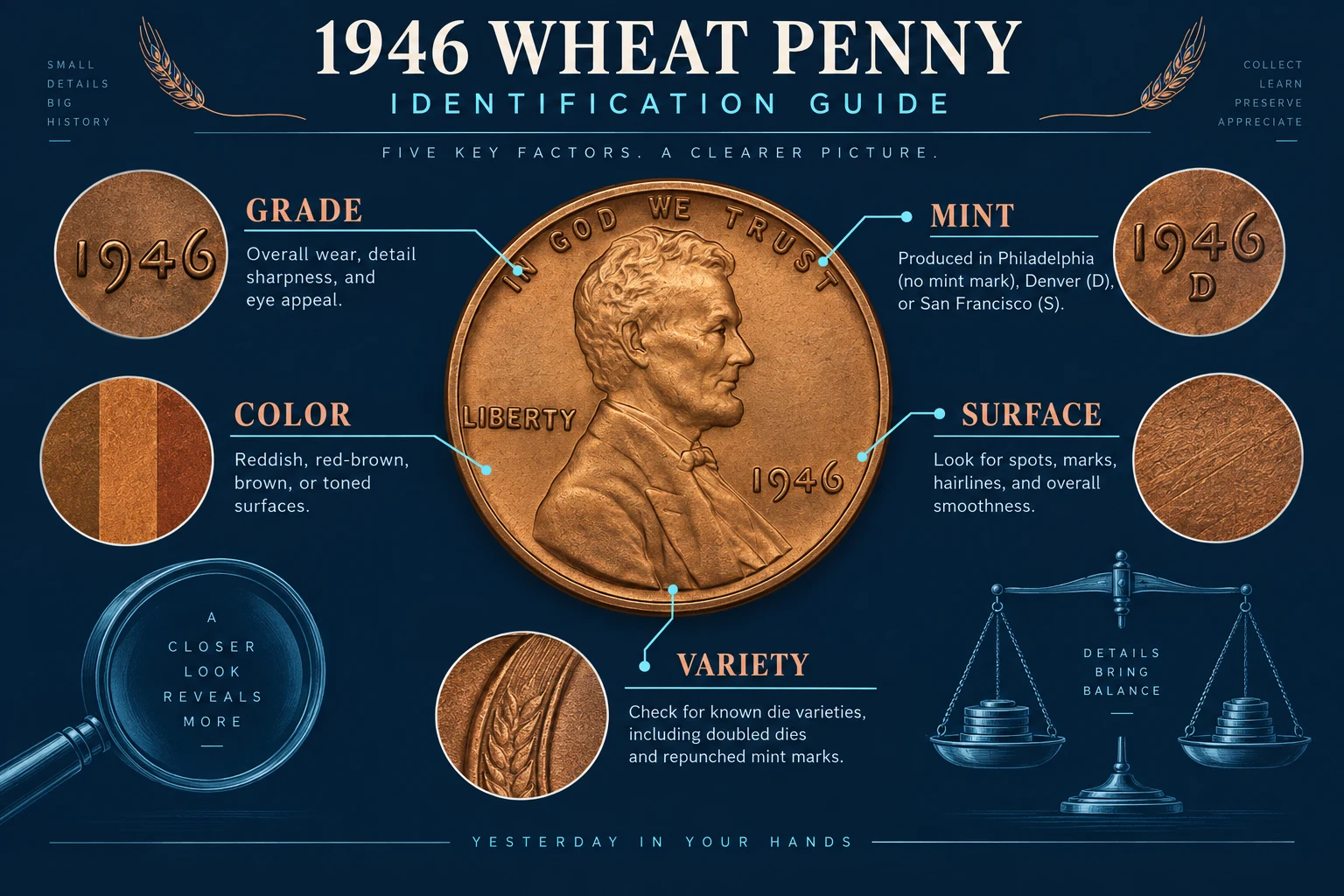
Mint mark, grade, original BN/RB/RD color, original surface, strike quality, a verified variety, a legitimate mint error and third-party certification all influence value. A cleanly struck original-red coin may bring stronger demand than a brown coin at the same grade. A documented mint-mark variety or off-center strike must stay separate from a regular issue comparable.
Start by recording the date and mint mark. Then describe wear and color without cleaning the coin. Compare only with a certified coin carrying the same issue, grade and designation. A photograph can suggest a question, but it cannot replace examination of the metal and surfaces.
1946 Wheat Penny Mintage
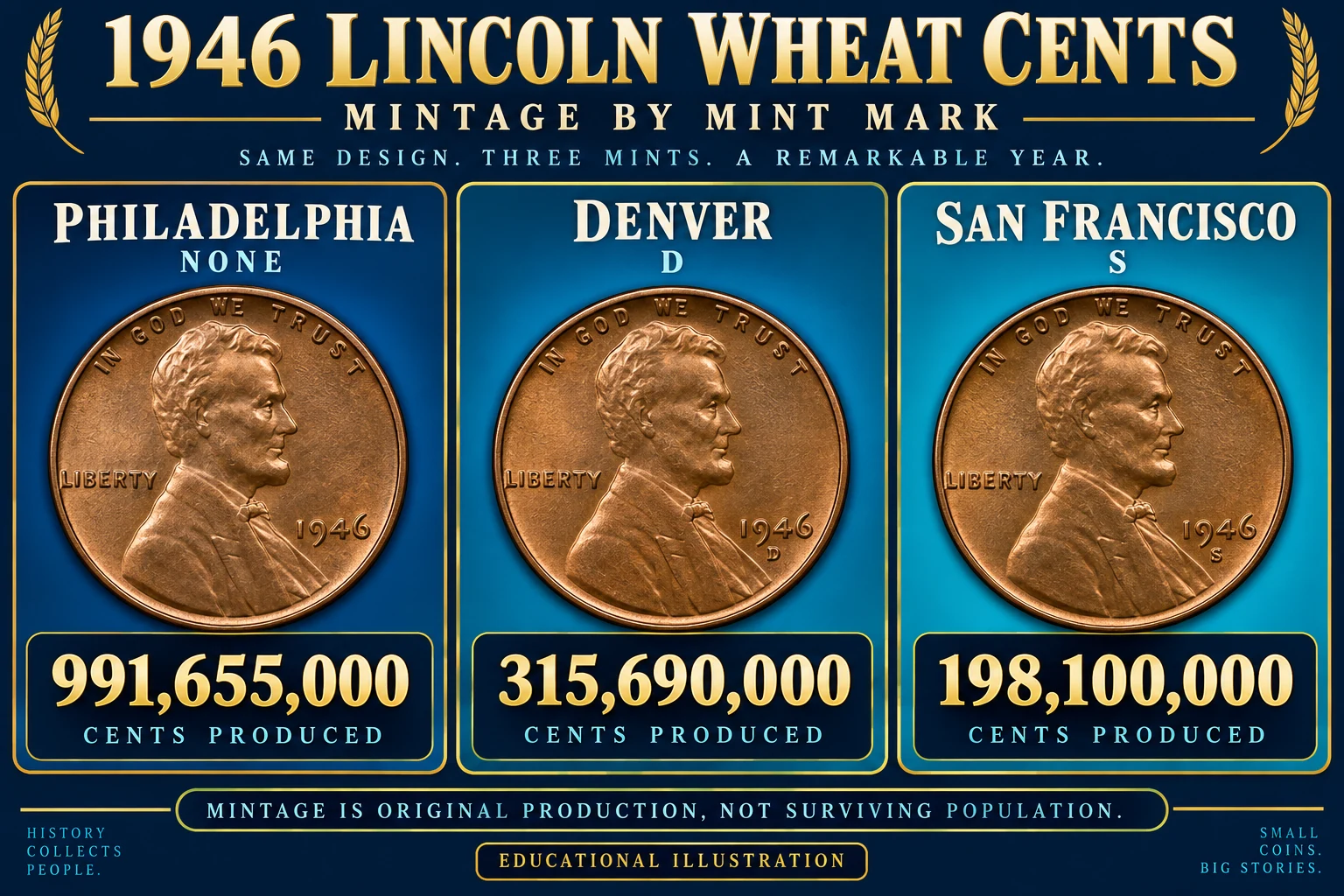
Original production across three mints.
| Mint | Mint Mark | Mintage |
|---|---|---|
| Philadelphia | None | 991,655,000 |
| Denver | D | 315,690,000 |
| San Francisco | S | 198,100,000 |
| Total | Regular issues | 1,505,445,000 |
The total is original production, not a surviving population. The lower San Francisco mintage provides context, but survival, grade and color determine the market for an individual coin.
1946 Wheat Penny Errors and Varieties
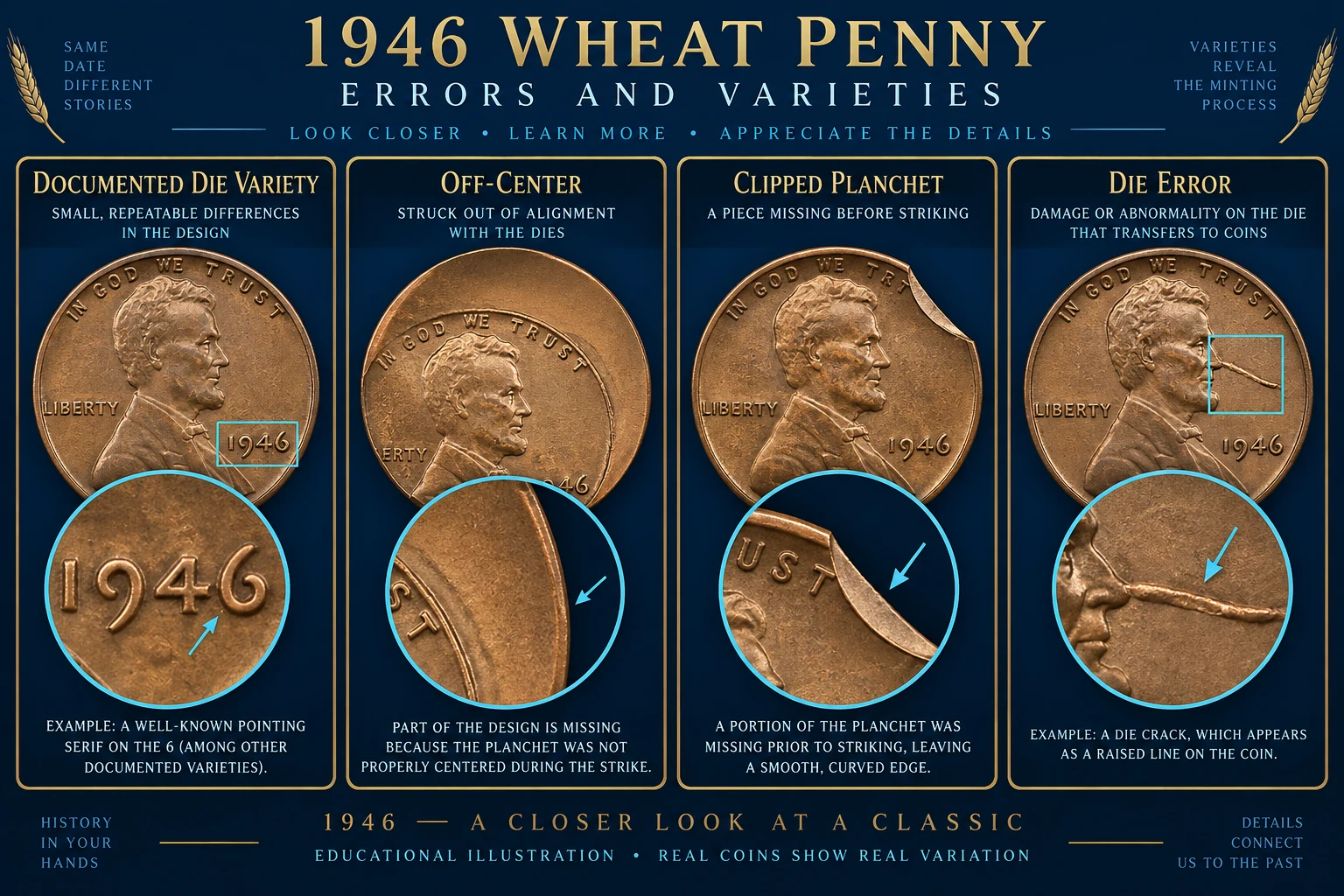
Use recognized attributions only.
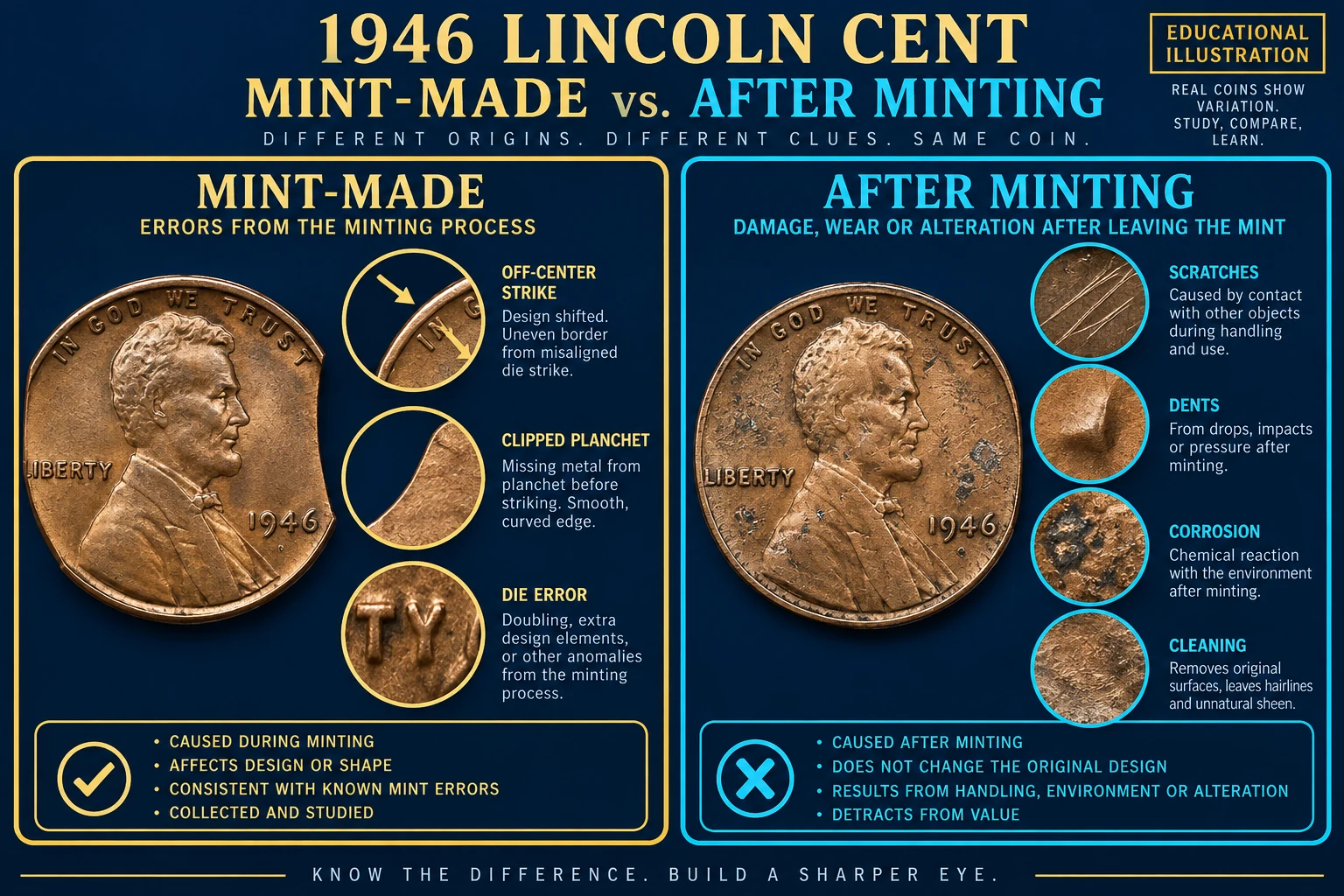
Possible mint-created
- 1946-S Inverted MM FS-501
- 1946-S/D OMM FS-511
- Off-center strike
- Clipped planchet
- Die crack or other documented variety
Usually post-mint
- Scratches and dents
- Corrosion and discoloration
- Cleaning and polishing
- Machine doubling without attribution
Mint Error or Post-Mint Damage?
A genuine error is created during striking and should affect the metal, design or planchet in a consistent way. Scratches, dents, corrosion, cleaning and chemical discoloration happen after striking. Compare the complete coin, edge and relief with recognized references.
Machine Doubling and False Attributions?
A genuine doubled die is created in the die-making process and repeats across coins struck by that die. Machine doubling is a flat, shelf-like strike effect that can make a letter or digit look doubled without creating a cataloged variety. Compare the shape, direction and location of the separation with an authoritative variety reference. Do not label every doubled-looking 1946 date as a cataloged variety.
Mint Error or Post-Mint Damage?
Possible mint-created clues include documented mint-mark varieties, off-center strikes, clips and die cracks. Scratches, dents, corrosion, cleaning, polishing and chemical discoloration happen after striking. Compare the complete coin, edge and relief with recognized references before assigning a rare attribution.
Is a 1946 Wheat Penny Made of Copper?
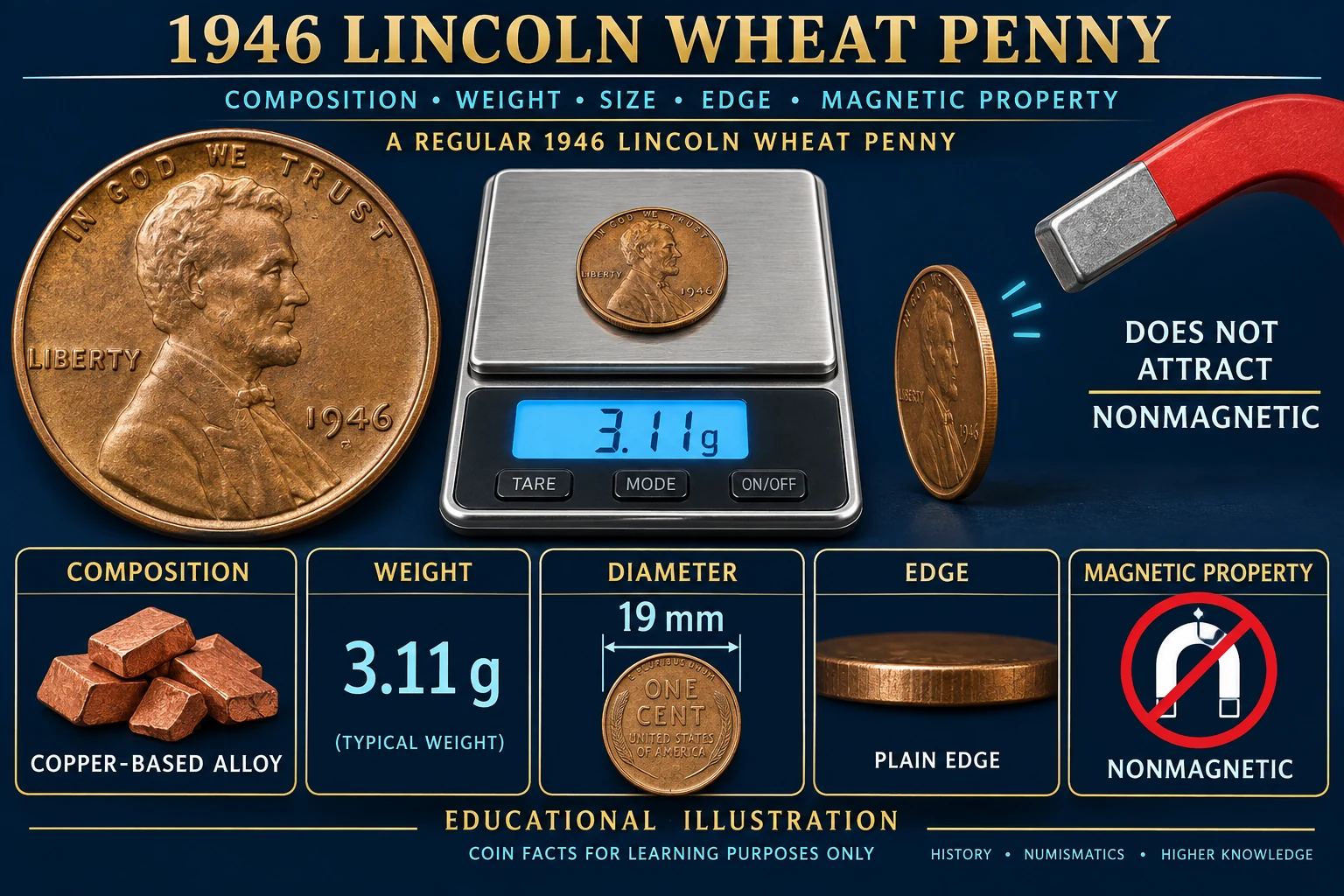
Yes. A normal 1946 Wheat Penny is a copper-based bronze cent. The consistent reference specification is 95% copper with 5% tin and zinc, about 3.11 g, about 19 mm and nonmagnetic. Normal 1946 cents are not steel. Weight and magnet response are screening clues, not authentication.
How to Identify a 1946 Wheat Penny
Use several clues together.
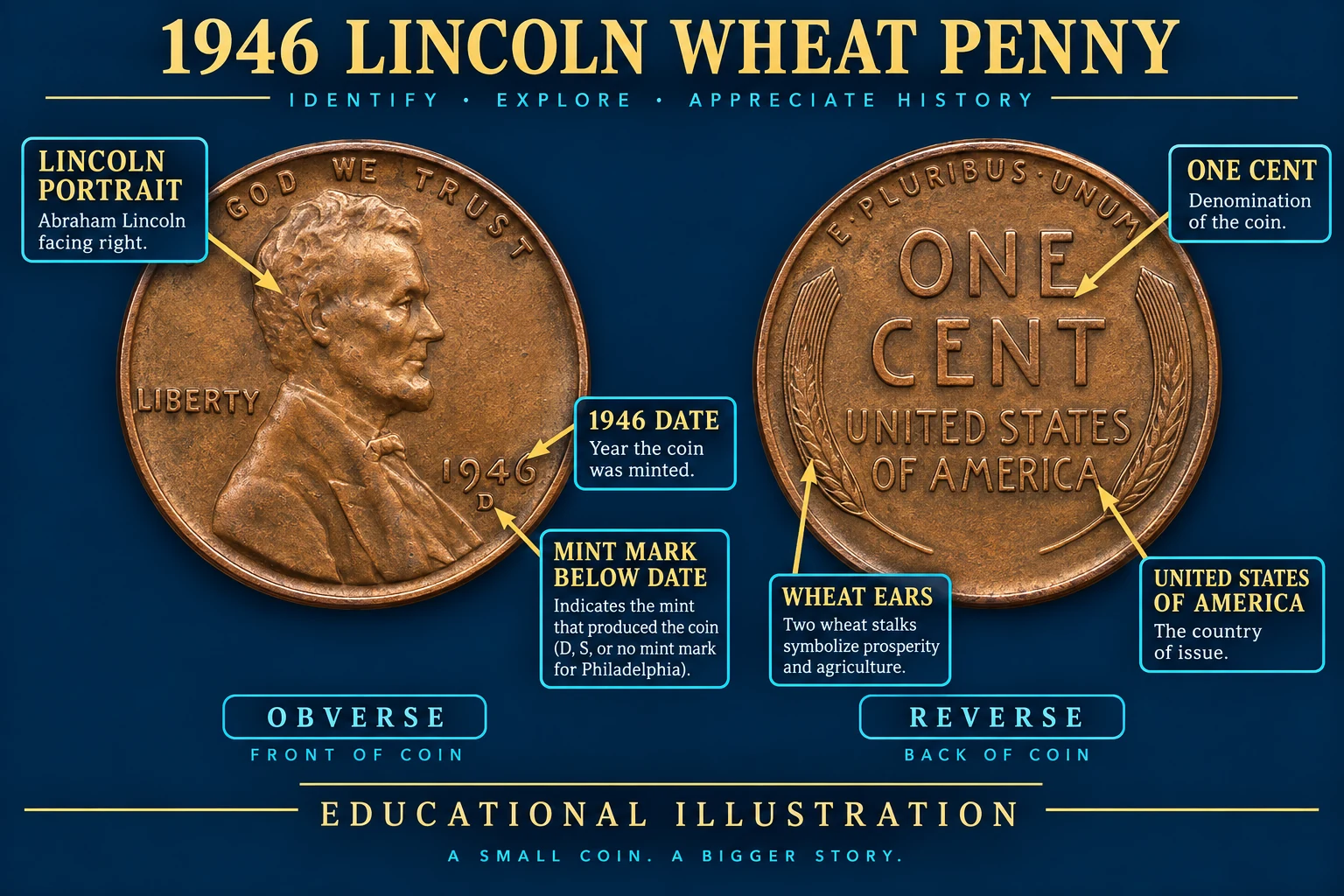
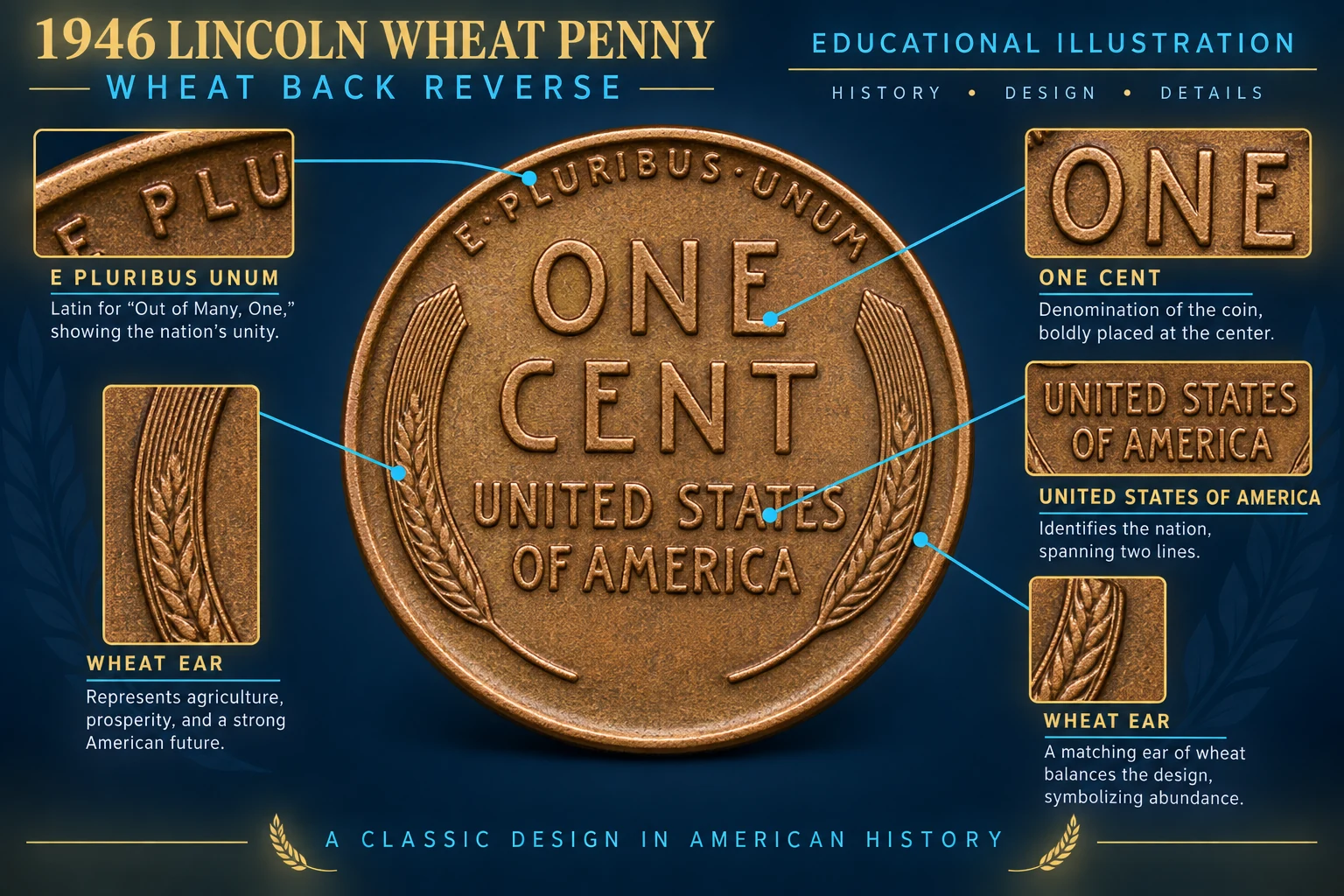
“Wheat back” is an informal name for the Lincoln Wheat Cent reverse with two wheat ears. Confirm the date, mint mark, bronze weight and nonmagnetic response together.
Is a 1946 Wheat Penny Worth a Million Dollars?
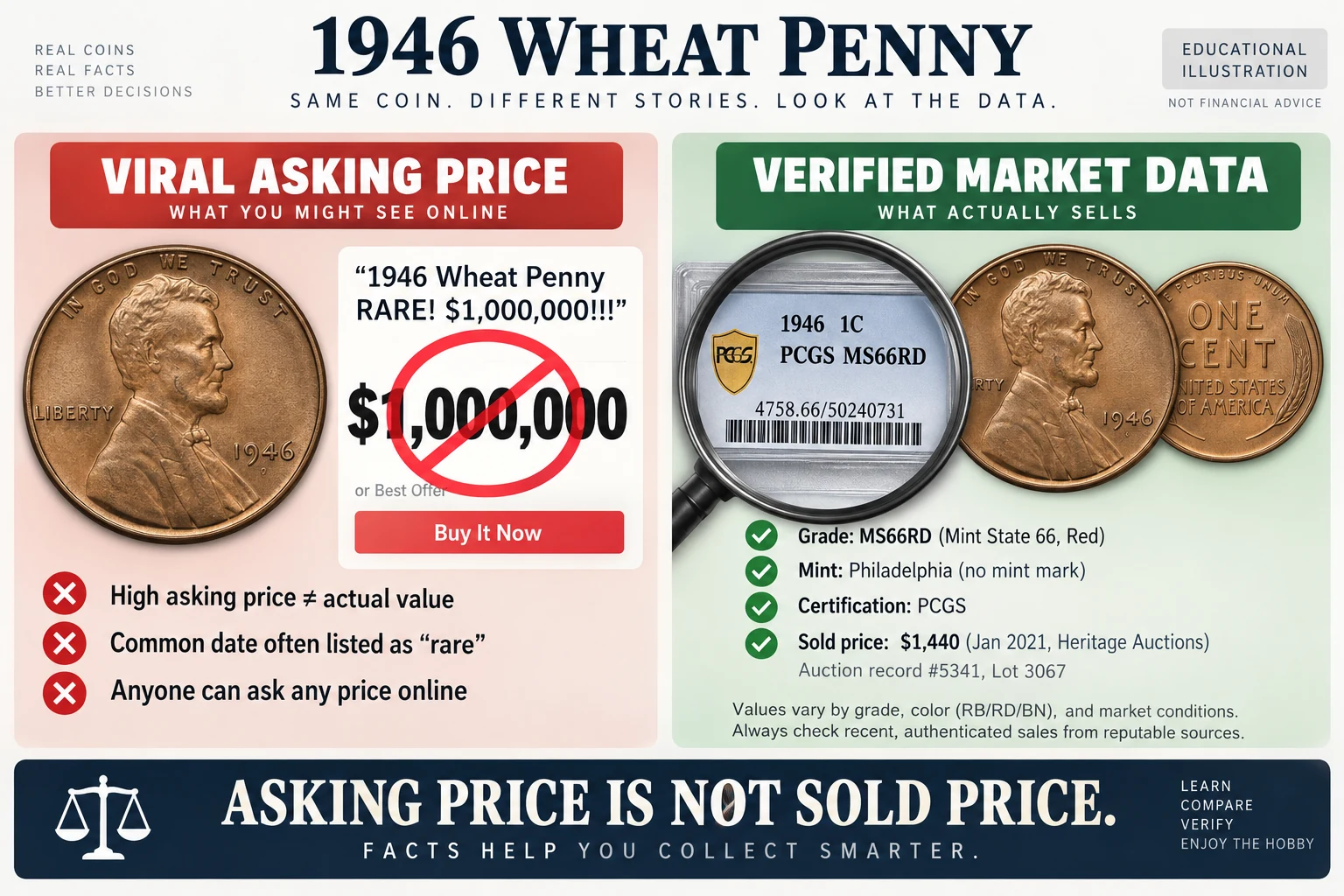
A normal 1946 Wheat Penny is not a million-dollar coin. Viral posts and asking prices are not verified sales. Exceptional results require a documented variety, exceptional preservation, respected certification and a verified auction record.
What Is the Wheat Back?
The reverse shows two wheat ears around ONE CENT and UNITED STATES OF AMERICA. It identifies the Lincoln Wheat Cent series, not a special error by itself.
1946 Wheat Penny Specifications
The 1946 Wheat Penny After the War
Production context, not a general war history.
In 1946 the Mint continued striking the familiar copper-based Lincoln Wheat Cent while wartime production was winding down. The regular cent used the bronze alloy, with copper making up 95 percent and tin and zinc the balance. Philadelphia, Denver and San Francisco together struck more than 1.5 billion pieces. That large output explains why circulated 1946 cents are usually easy to find, while original-red coins in the highest grades are a much smaller surviving group. The date sits at the transition from wartime scarcity back to ordinary peacetime production, but the coin itself remains a normal bronze issue rather than a steel cent.
1946 Wheat Penny Auction Records
Exceptional records are not typical values.
| Issue | Grade / color | Certification | Auction house | Date | Realized |
|---|---|---|---|---|---|
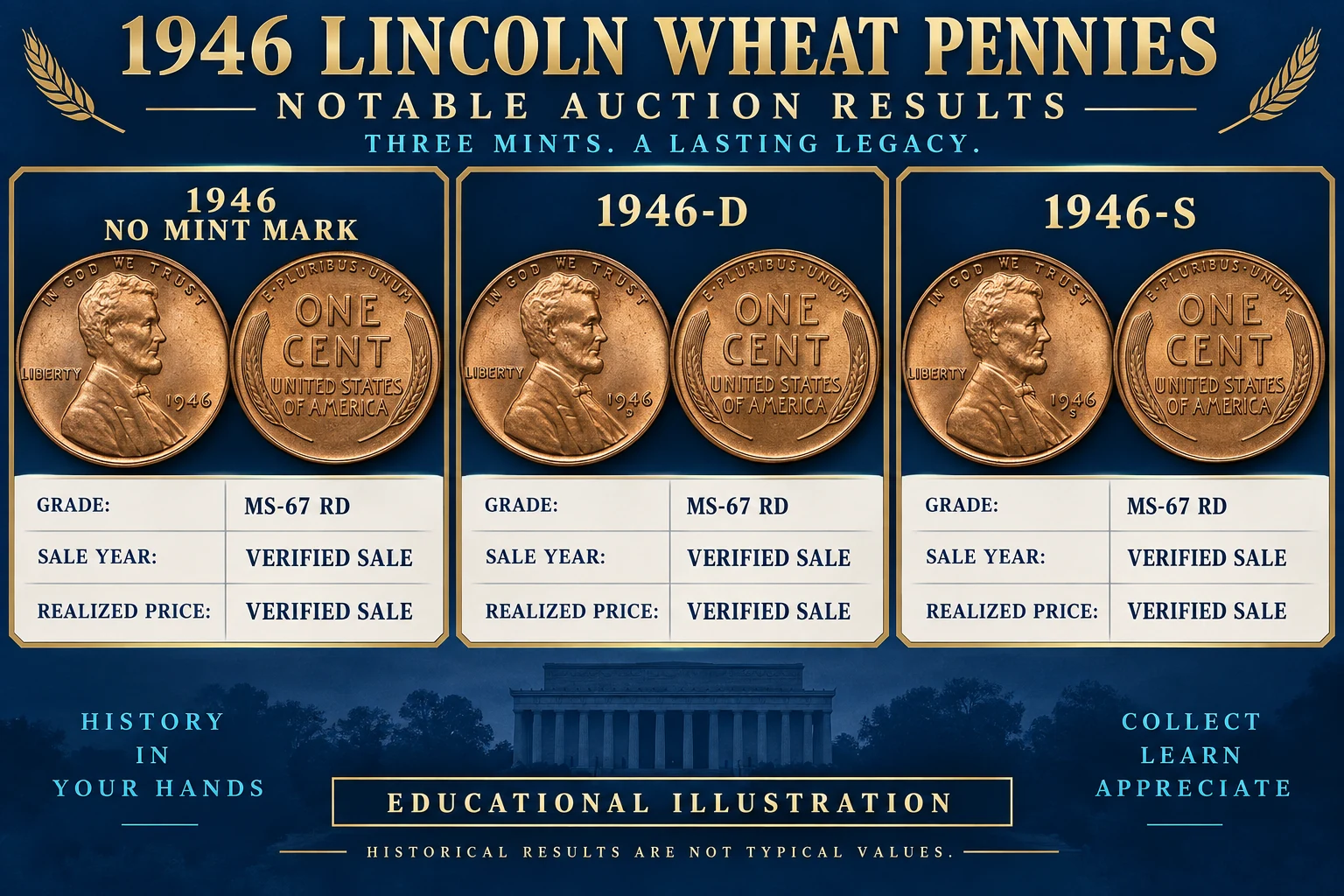
| 1946 No Mint Mark | MS67 RD | PCGS | David Lawrence RC | Jan 2019 | $775 |
| 1946 No Mint Mark | MS67 RD | PCGS | Heritage | Jan 2006 | $14,950 |
| 1946 No Mint Mark | MS67+ RD | PCGS | Heritage | Jan 2025 | $9,600 |
These are individual certified results, not typical prices for circulated 1946 Wheat Pennies. Verify the specific auction lot before repeating a record.
Don't Clean a 1946 Wheat Penny
Cleaning can remove the original surface, create hairlines and change a BN, RB or RD assessment. Polishing does not improve a numismatic grade. Handle the coin by the edge, keep it dry and leave the patina and marks available for examination.
1946 Wheat Penny FAQ
How much is a 1946 Wheat Penny worth?
Most circulated examples are modestly valued. Mint, grade, original color and surface quality determine premiums.
What is a 1946 Wheat Penny with no mint mark worth?
No mint mark means Philadelphia. Value depends on condition, color and certification.
What does D or S mean on a 1946 penny?
D identifies Denver and S identifies San Francisco. The letter appears below the date on the obverse.
How many 1946 Wheat Pennies were made?
Philadelphia struck 991,655,000, Denver 315,690,000 and San Francisco 198,100,000 regular cents.
Is a 1946 Wheat Penny made of copper?
Yes. A normal cent is 95% copper with 5% tin and zinc, weighs about 3.11 g and is nonmagnetic.
What errors should I look for on a 1946 penny?
Look for documented off-center strikes, clips, die cracks and recognized San Francisco varieties. Verify unusual coins with a specialist.
Is there a 1946-S mint mark variety?
PCGS documents 1946-S Inverted MM FS-501 and 1946-S/D OMM FS-511. These are separate attributions, not ordinary 1946-S cents.
Is a 1946 Wheat Penny worth a million dollars?
A normal 1946 cent is not a million-dollar coin. Viral asking prices are not verified sales.
What does the wheat back mean?
The two wheat ears identify the Lincoln Wheat Cent reverse, used through 1958.
Should I clean a 1946 Wheat Penny?
No. Cleaning can remove the original surface, create hairlines and reduce collector value.
What makes a 1946 Wheat Penny valuable?
High grade, original RD color, clean surfaces, a documented variety, a genuine mint error and certification can raise demand.
Related Lincoln Cents
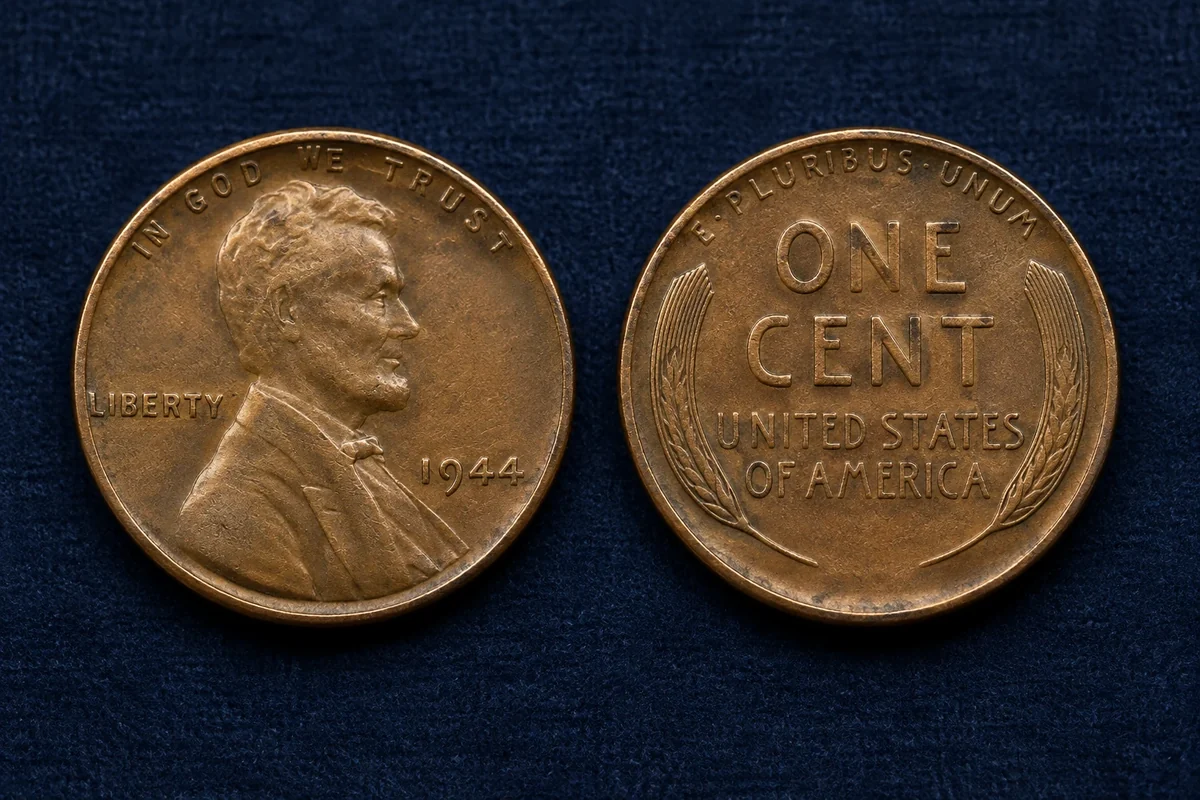
1944 Wheat Penny
Compare date, mint mark, composition and grade.
View coin →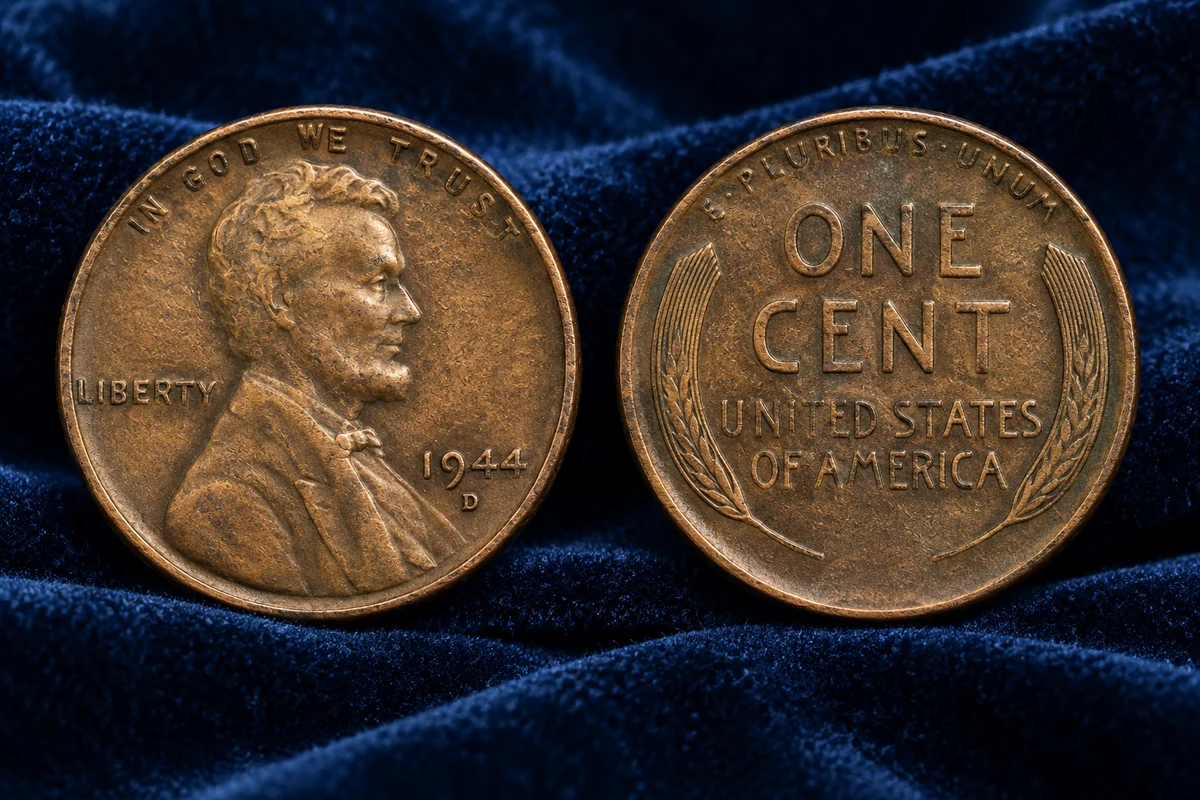
1944-D Wheat Penny
Compare date, mint mark, composition and grade.
View coin →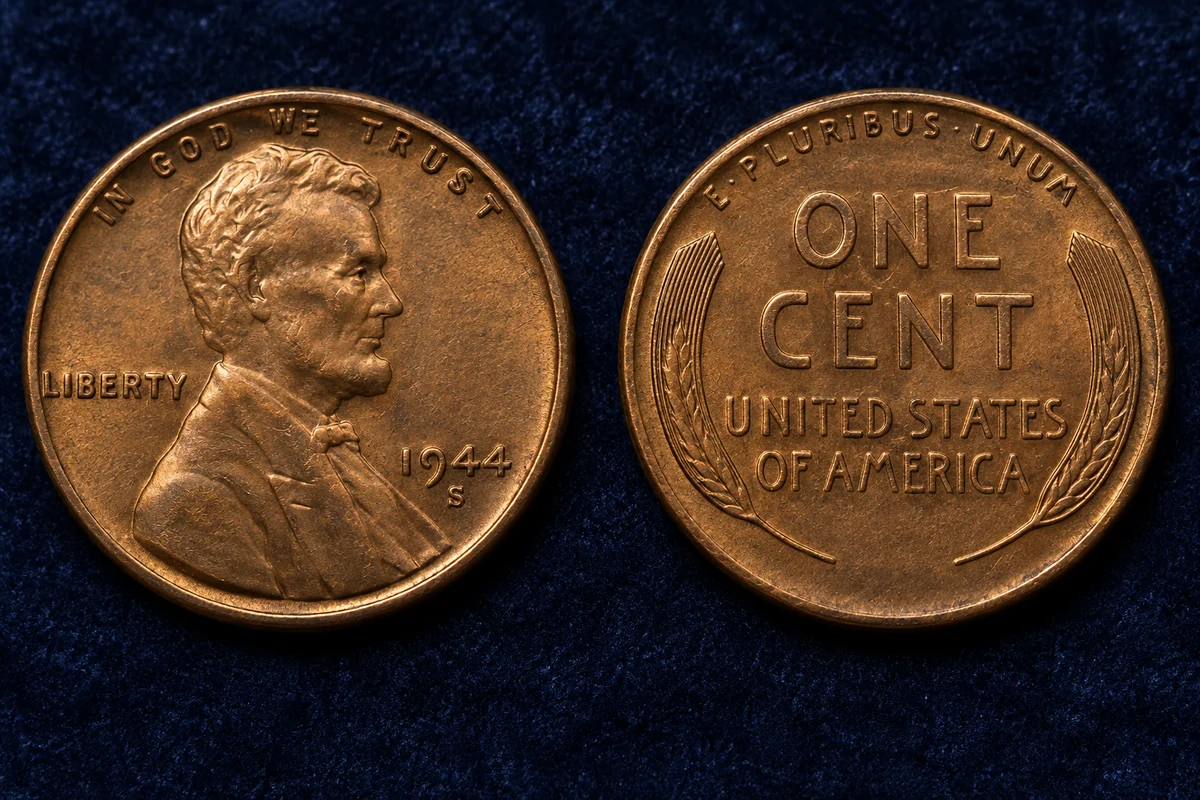
1944-S Wheat Penny
Compare date, mint mark, composition and grade.
View coin →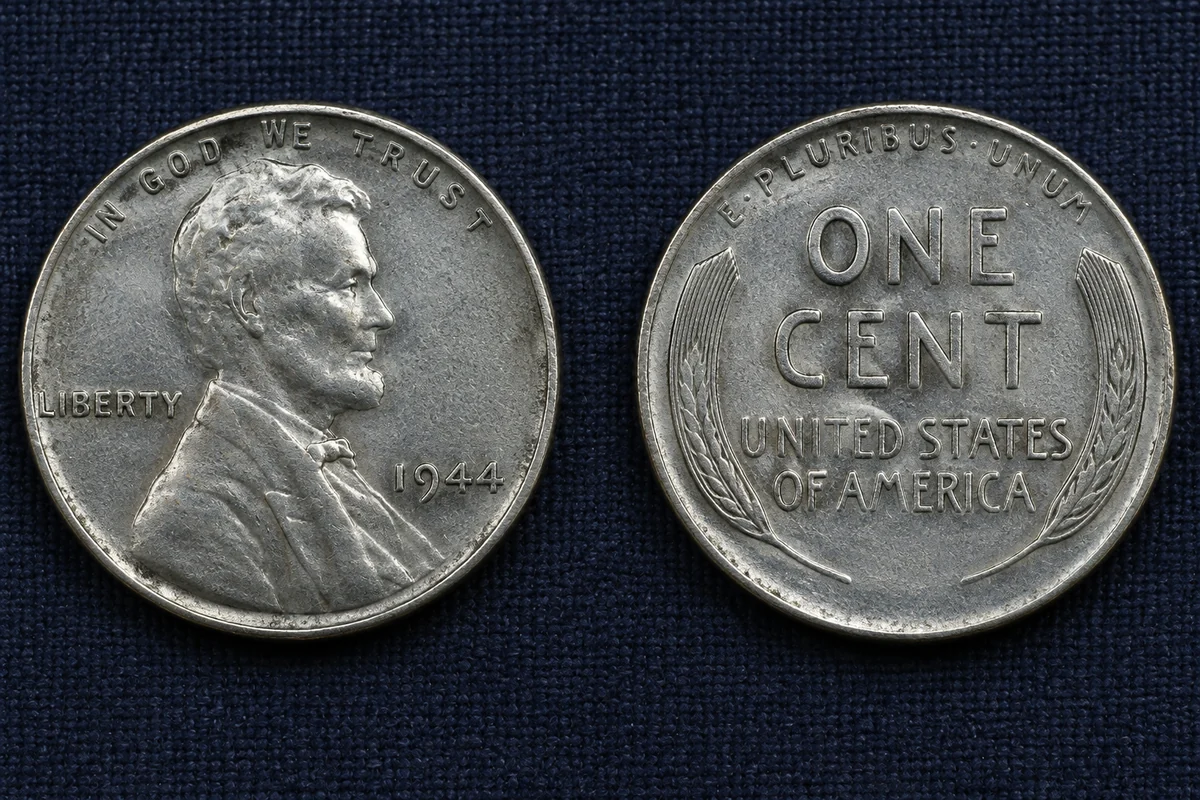
1944 Steel Penny
Compare date, mint mark, composition and grade.
View coin →