
1944 Steel Penny Value & Identification Guide
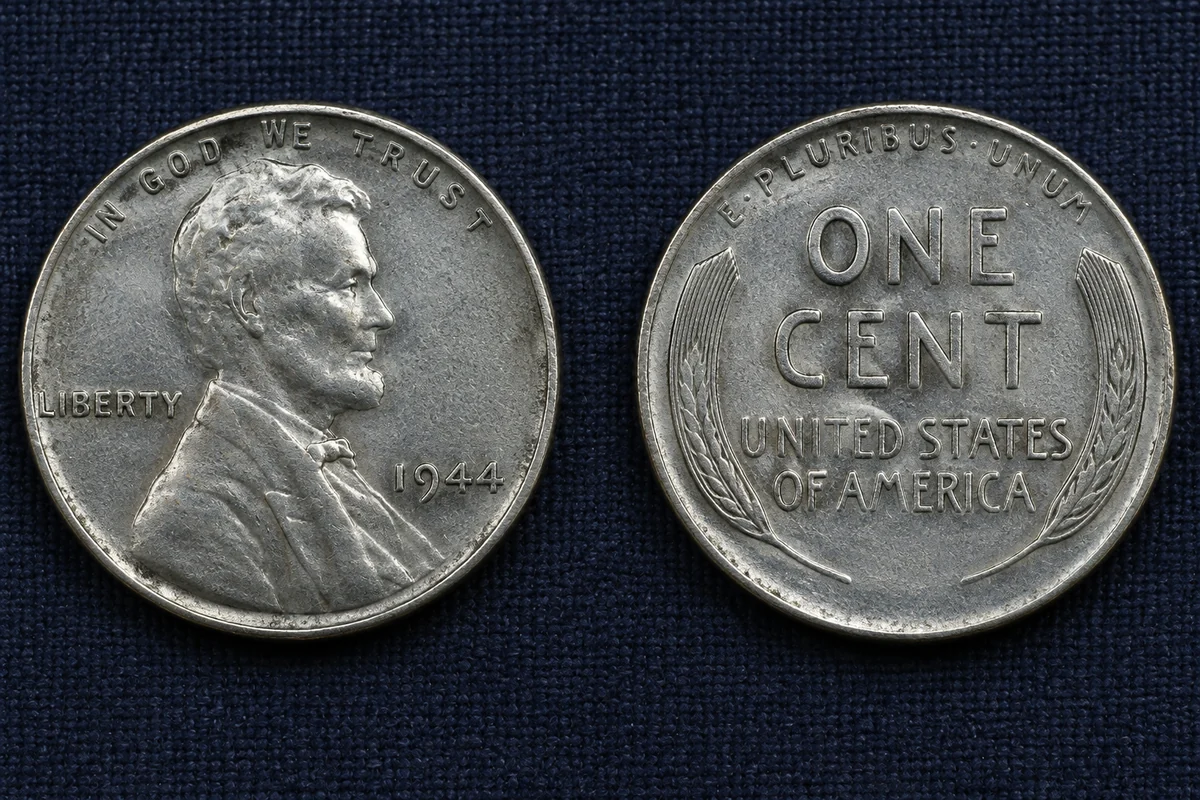
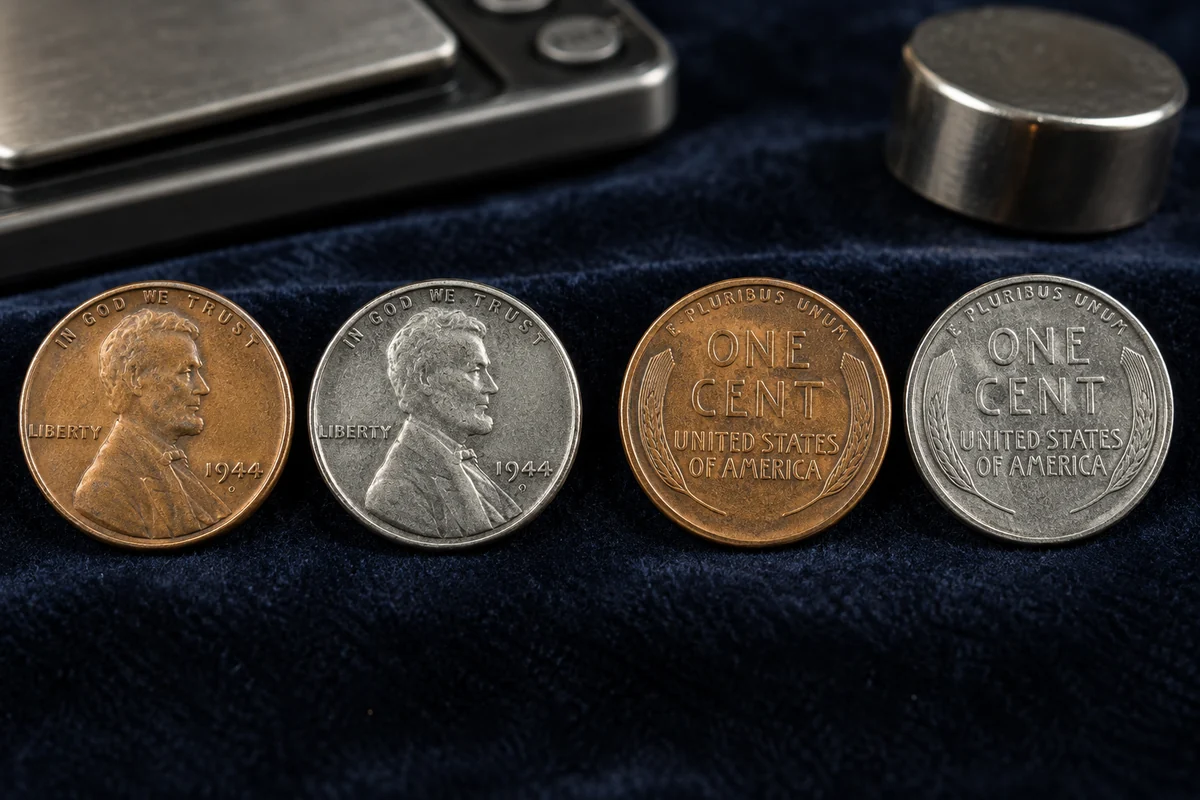
Genuine 1944 steel cents are extremely rare off-metal coins, not regular 1944 pennies. There is no single price because only a small number are known and results vary by mint, grade, certification and provenance. A genuine example should be magnetic and weigh about 2.70 g, but those tests alone do not prove authenticity.
Reviewed by the Coins Identification editorial team · Updated September 16, 2026
How Much Is a 1944 Steel Penny Worth?
Historical sales show a market for verified coins, not a stable price for every gray 1944 cent.
A genuine 1944 Steel Penny can be worth from five figures to much more, but there is no universal 1944 steel penny price. Philadelphia, Denver and San Francisco examples have different documented rarity levels. Grade changes the result, and certification is critical because a raw coin may be plated, corroded or an altered date. Provenance can also move an auction result when a coin comes from a recognized collection or has a clear chain of ownership. The prices below belong to specific certified or cataloged auction examples. They are historical realized prices, not appraisals for an ordinary 1944 Wheat Penny. Do not use a headline record to price a raw gray coin. First confirm the date, mint, metal and surface. Then compare a documented sale with the same issue and a similar grade. If the coin is not authenticated, the responsible answer is that its rarity and value are unconfirmed.
Verified 1944 Steel Penny Auction Results
Each row is tied to a named issue, grade, service and auction record.
1944 Philadelphia Steel
PCGS #82722| Issue | Grade | Certification | Auction | Date | Realized price |
|---|---|---|---|---|---|
| 1944 Philadelphia Steel | AU55 | PCGS | Heritage Auctions | February 2001 | $11,500 |
| 1944 Philadelphia Steel | AU55 | PCGS | Heritage Auctions | November 2024 | $33,600 |
Source record: PCGS Auction Prices, lot 5492. Historical auction result, not a current appraisal.
1944-D Steel
PCGS #82725| Issue | Grade | Certification | Auction | Date | Realized price |
|---|---|---|---|---|---|
| 1944-D Steel | MS63 | PCGS | Heritage Auctions | January 2013 | $82,250 |
| 1944-D Steel | MS63 | NGC | Heritage Auctions | August 2007 | $115,000 |
| 1944-D Steel | AU53 | PCGS | Heritage Auctions | July 2010 | $37,375 |
Source record: PCGS condition census, lot 5548. Historical auction result, not a current appraisal.
1944-S Steel
PCGS #82731| Issue | Grade | Certification | Auction | Date | Realized price |
|---|---|---|---|---|---|
| 1944-S Steel | MS66 | PCGS | Heritage Auctions | August 2021 | $408,000 |
Source record: PCGS Auction Prices, lot 3002. Historical auction result, not a current appraisal.
How Rare Is a 1944 Steel Penny?
These figures describe current documented or estimated survivors, not original mintage.
| Mint | Current documented rarity information |
|---|---|
| Philadelphia | PCGS estimates roughly 25 to 30 survivors |
| Denver | PCGS accounts for seven demonstrably different examples |
| San Francisco | Two examples known |
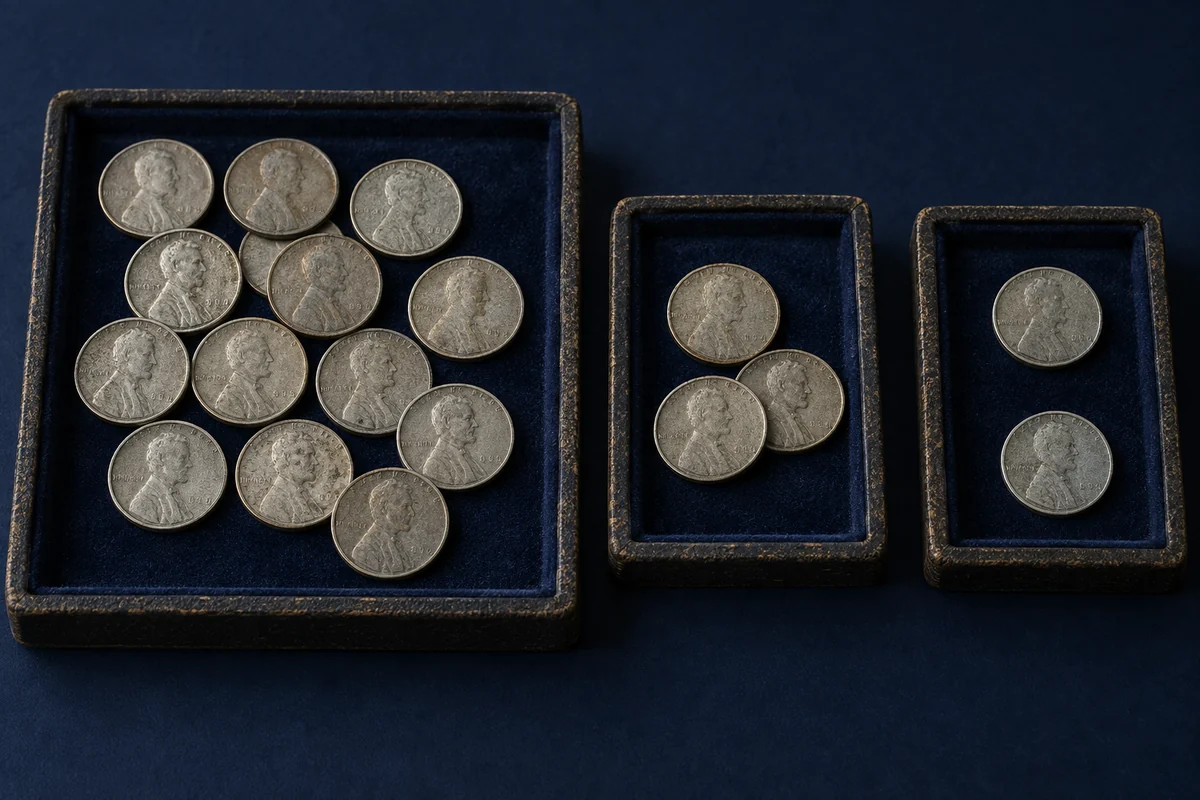
These are known or surviving population estimates, not original mintage figures. PCGS notes that the Philadelphia estimate is an estimate and that Denver examples are demonstrably different coins.
How Many 1944 Steel Pennies Were Made?
The original number of 1944 steel cents struck is unknown. A mintage is the number of pieces produced at the Mint, while a known population is the number of identifiable examples that have been found, documented or certified. Estimated survivors are another step: specialists infer how many may still exist from the examples already studied, but the estimate can change. That is why it is incorrect to add the Philadelphia, Denver and San Francisco counts and call the total a mintage. PCGS lists the regular 1944 steel issues with mintage unknown. Use the population language on this page when discussing rarity, and reserve mintage for official production totals.
Philadelphia, 1944-D and 1944-S Steel Pennies
Mint attribution changes both the rarity context and the right comparison set.
Philadelphia 1944 Steel Penny
PCGS #82722 is the Philadelphia off-metal issue. PCGS estimates roughly 25 to 30 surviving examples. The blank may have been leftover 1943 steel or a planchet associated with foreign-coin production. That origin is not proven for every coin.
Original mintage: unknown1944-D Steel Penny
D means Denver. This is not a normal 1944-D Wheat Penny. PCGS #82725 accounts for seven demonstrably different steel cents. Do not write seven as a mintage figure.
Original mintage: unknown1944-S Steel Penny
S means San Francisco. PCGS #82731 currently lists only two known examples. The documented MS66 sale is an exceptionally rare certified coin, not a typical value for an ordinary 1944-S bronze cent.
Original mintage: unknownWhy Do 1944 Steel Pennies Exist?
Regular 1943 Lincoln cents were made on zinc-coated steel planchets because copper was needed for wartime production. In 1944 the cent returned to a copper-based alloy. A few cents dated 1944 were nevertheless struck on steel planchets, creating off-metal or wrong-planchet errors. For the Philadelphia issue, PCGS discusses two possible sources for the leftover blanks: steel planchets left from the 1943 cent run, or blanks connected with foreign-coin production, including Belgian 2-franc planchets. Those possibilities explain how a steel blank could be present, but they do not prove one origin for every surviving coin. Denver and San Francisco examples are especially scarce. The production story is therefore a reason to investigate a 1944 steel claim, not a substitute for checking the physical coin and its documented history.
1943 vs 1944 Steel Penny
Steel is normal for 1943 and an off-metal error for 1944.
| Feature | 1943 Steel Penny | 1944 Steel Penny |
|---|---|---|
| Steel composition | Normal issue | Error / off-metal |
| Typical? | Yes for 1943 | No |
| Weight | About 2.70 g | About 2.70 g |
| Magnetic | Yes | Yes |
| Rarity | Common as an issue | Extremely rare |
For the regular wartime coin, see the 1943 Steel Penny guide.
How to Identify a Possible 1944 Steel Penny
Use independent clues in this order, then stop and seek professional authentication.
- Confirm the dateRead 1944 clearly and look for signs of an altered date.
- Check the mint markNo mark is Philadelphia, D is Denver and S is San Francisco.
- Test magnet responseA steel planchet should attract a magnet. This is a screening clue.
- Weigh the coinCompare a clean reading near 2.70 g on a scale accurate to 0.01 g.
- Inspect surfacesLook for plating, corrosion, scratches, seams or an unnatural film.
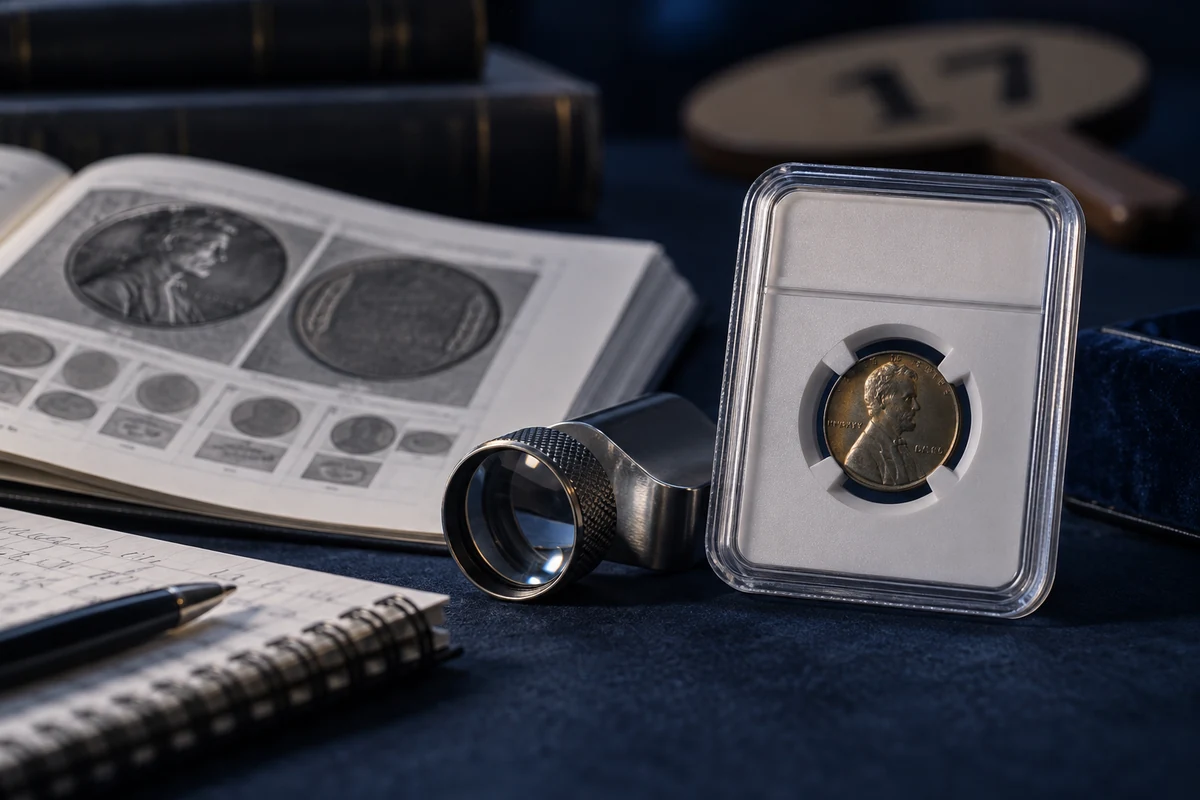
- Seek professional authenticationPCGS or NGC can examine the metal, strike and surface before a rarity claim.
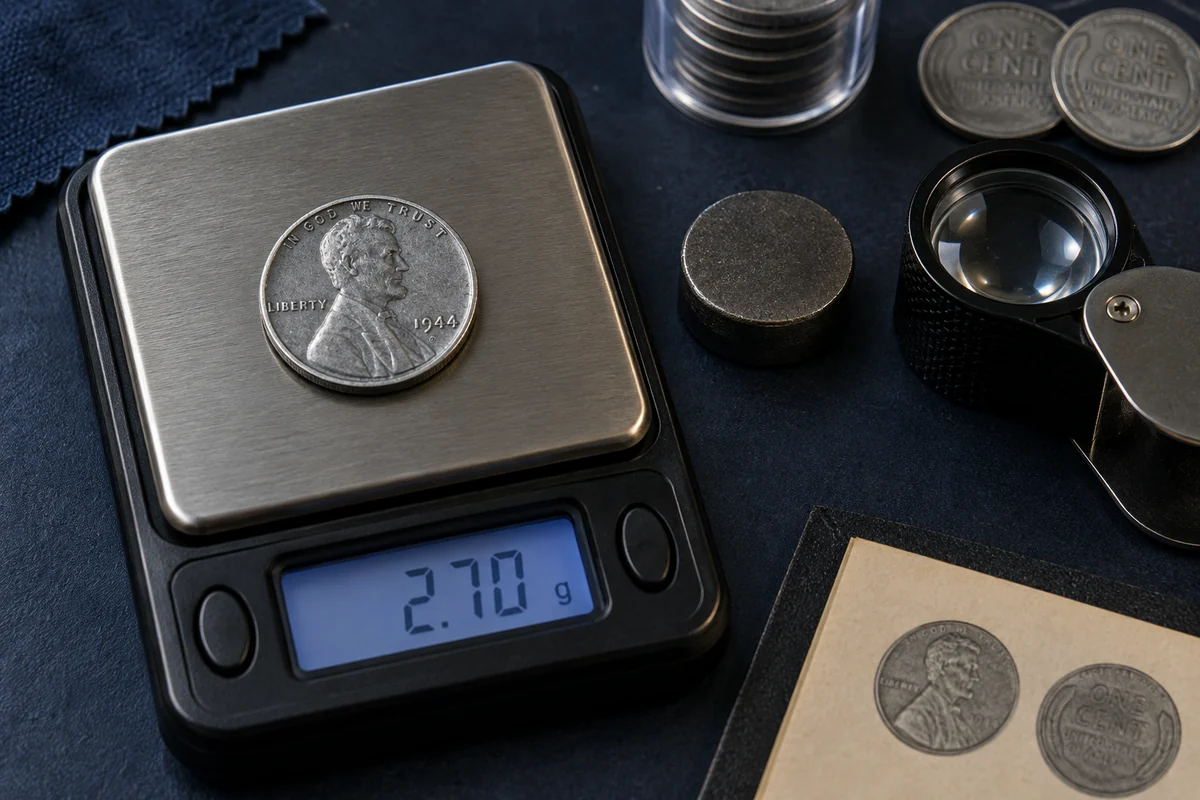
Normal 1944 Bronze vs Possible 1944 Steel
| Feature | Normal 1944 Bronze | Possible 1944 Steel |
|---|---|---|
| Weight | About 3.11 g | About 2.70 g |
| Magnet | No attraction | Magnetic |
| Normal appearance | Copper / brown | Gray / steel |
| Status | Regular issue | Rare off-metal |
| Authentication | Usually unnecessary | Essential for rarity claim |
1944 Steel Penny Mint Marks
Use the mark to select the correct rarity and auction comparison.
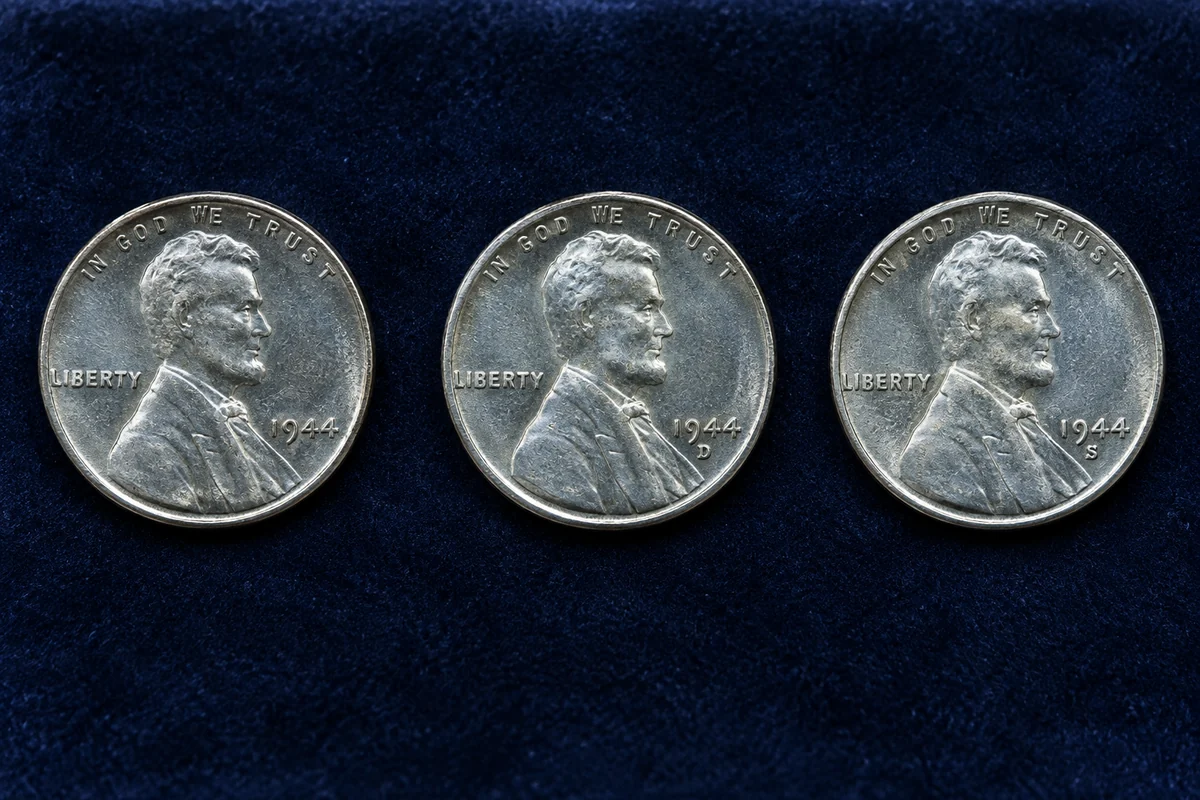
Mint mark alone does not prove a steel planchet. Confirm the metal and surface separately.
Why a Gray 1944 Penny May Not Be a Genuine Steel Cent
A gray or silver-colored 1944 penny may be plated, corroded, surface-altered or an altered date. A normal bronze cent can change color after cleaning or chemical exposure, and lighting can make copper look cold. The 1943 steel cent is common enough that an altered 1943 date can create a dangerous false rarity claim. Record both sides, check the date under magnification and use magnet response plus an accurate scale for initial screening. Do not scratch, file, cut, drill, use acid, chemically strip or polish the coin. These actions destroy evidence and can reduce value.
How to Authenticate a 1944 Steel Penny
If the 1944 date looks correct, the coin responds to a magnet and the weight is close to 2.70 g, stop home testing. A recognized grading service such as PCGS or NGC can examine the planchet, strike, date, mint mark, surface and signs of alteration. Send clear photographs and your recorded measurements with the coin, but do not add scratches or chemical tests. The service can also compare the coin with known examples and issue a certification number when the evidence supports an attribution. Provenance matters because a documented chain of ownership can help explain how an unusual off-metal cent entered the market. Authentication is essential before using any rare auction result, offering the coin for sale or making a public rarity claim. A magnet and scale tell you what to investigate. They do not tell you that the coin is genuine.
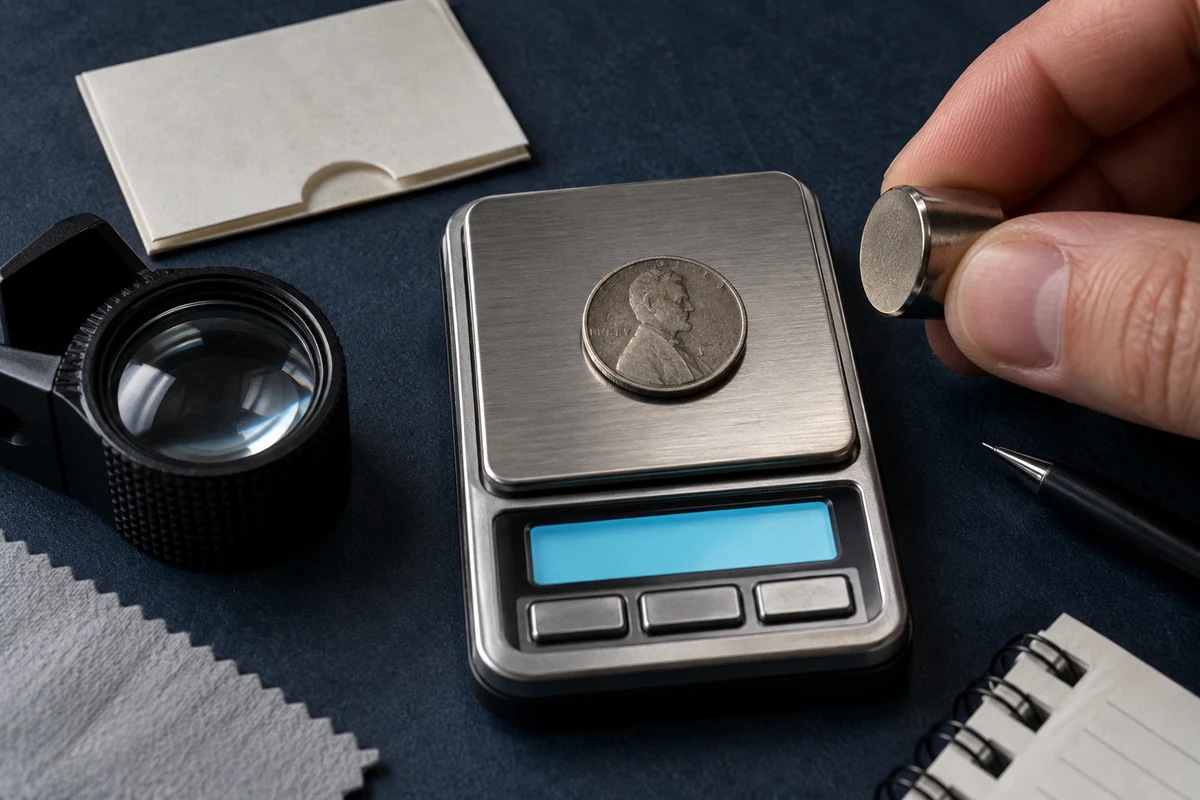
Buying a 1944 Steel Penny
A raw 1944 steel cent is a high-risk purchase because plated and altered coins are common. For a certified example, verify the service, certification number, exact mint, holder description and auction history. Ask for provenance when available and compare the physical coin with the certification record. A marketplace listing that only shows a gray color or a magnet test is not enough evidence. The site does not publish current marketplace listings or offer coins for sale.
1944 Steel Penny FAQ
How much is a 1944 Steel Penny worth?
There is no single price. Verified sales range widely by mint, grade, certification, provenance and buyer demand. A raw gray cent cannot be priced from a rare auction record.
Is a 1944 Steel Penny real?
A few genuine off-metal cents are documented, but plated, corroded and altered-date coins are much more common. Magnet and weight are screening clues only.
How many 1944 Steel Pennies are known?
PCGS estimates roughly 25 to 30 surviving Philadelphia examples, accounts for seven demonstrably different Denver examples and lists two known San Francisco examples.
How many 1944 Steel Pennies were made?
The original number struck is unknown. Known examples and estimated survivors are not the same as original mintage.
What should a 1944 Steel Penny weigh?
The cataloged steel issues are about 2.70 grams and measure 19.00 mm. Dirt, corrosion and scale error can affect a raw reading.
Should a 1944 Steel Penny stick to a magnet?
Yes, a steel planchet should respond to a magnet. That result does not prove the date, mint or authenticity.
What is a 1944-D Steel Penny?
It is an extremely rare Denver off-metal strike with a D below the date. PCGS can account for seven demonstrably different examples, not a mintage of seven.
What is a 1944-S Steel Penny?
It is an extremely rare San Francisco off-metal strike. PCGS currently lists two known examples.
Why is my 1944 penny silver-colored?
Plating, corrosion, cleaning and lighting can make an ordinary bronze cent look gray. Preserve it and compare weight and magnet response without damaging the surface.
How can I tell a 1944 Steel Penny from a plated coin?
Use non-destructive screening, then have the metal and surfaces examined by a recognized grading service. Color alone cannot separate the two.
Related Lincoln cent guides
Use the normal issue pages when your coin does not match the rare steel profile.
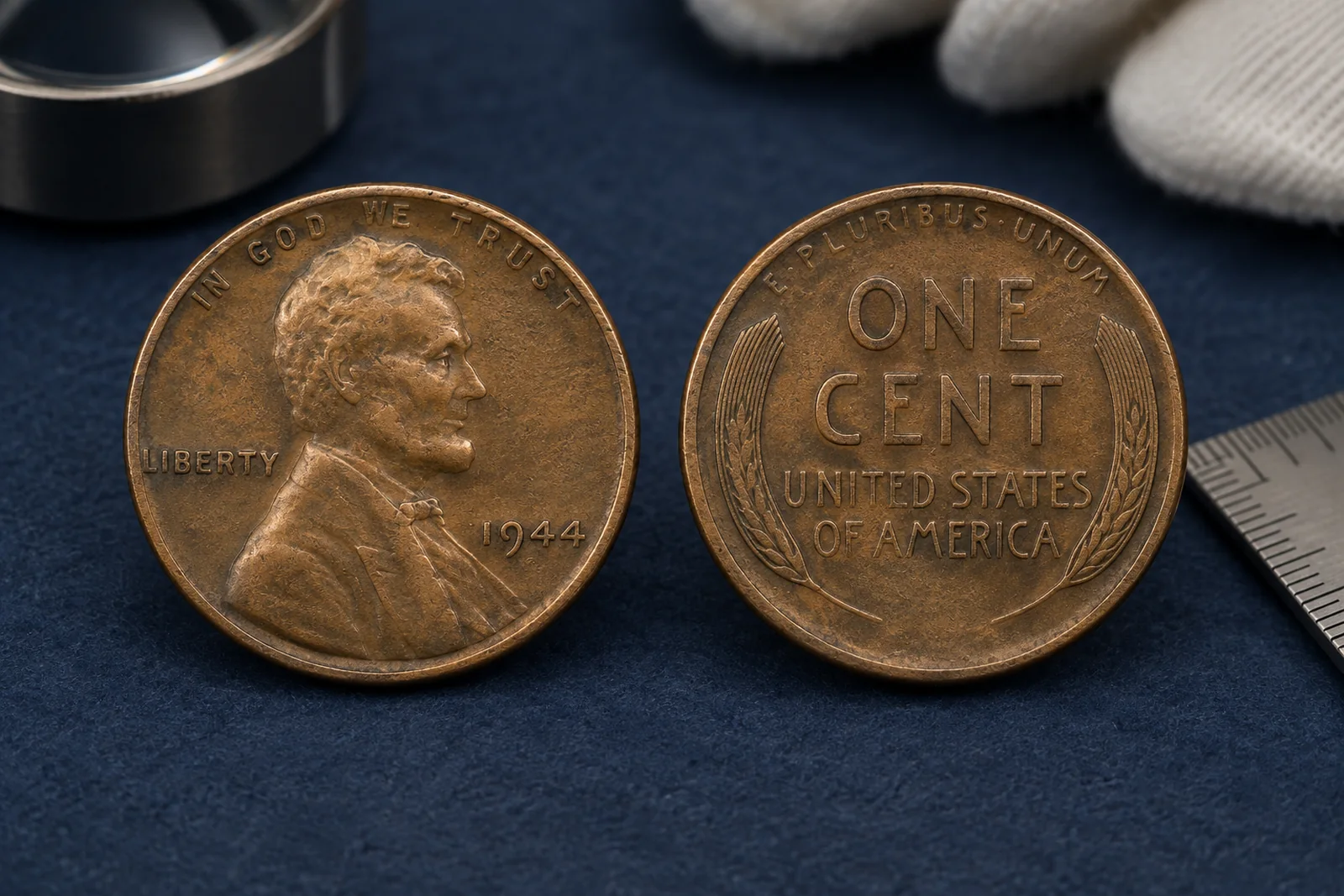
1944 Wheat Penny
Regular bronze issue with about 3.11 g weight and no magnet response.
Open guide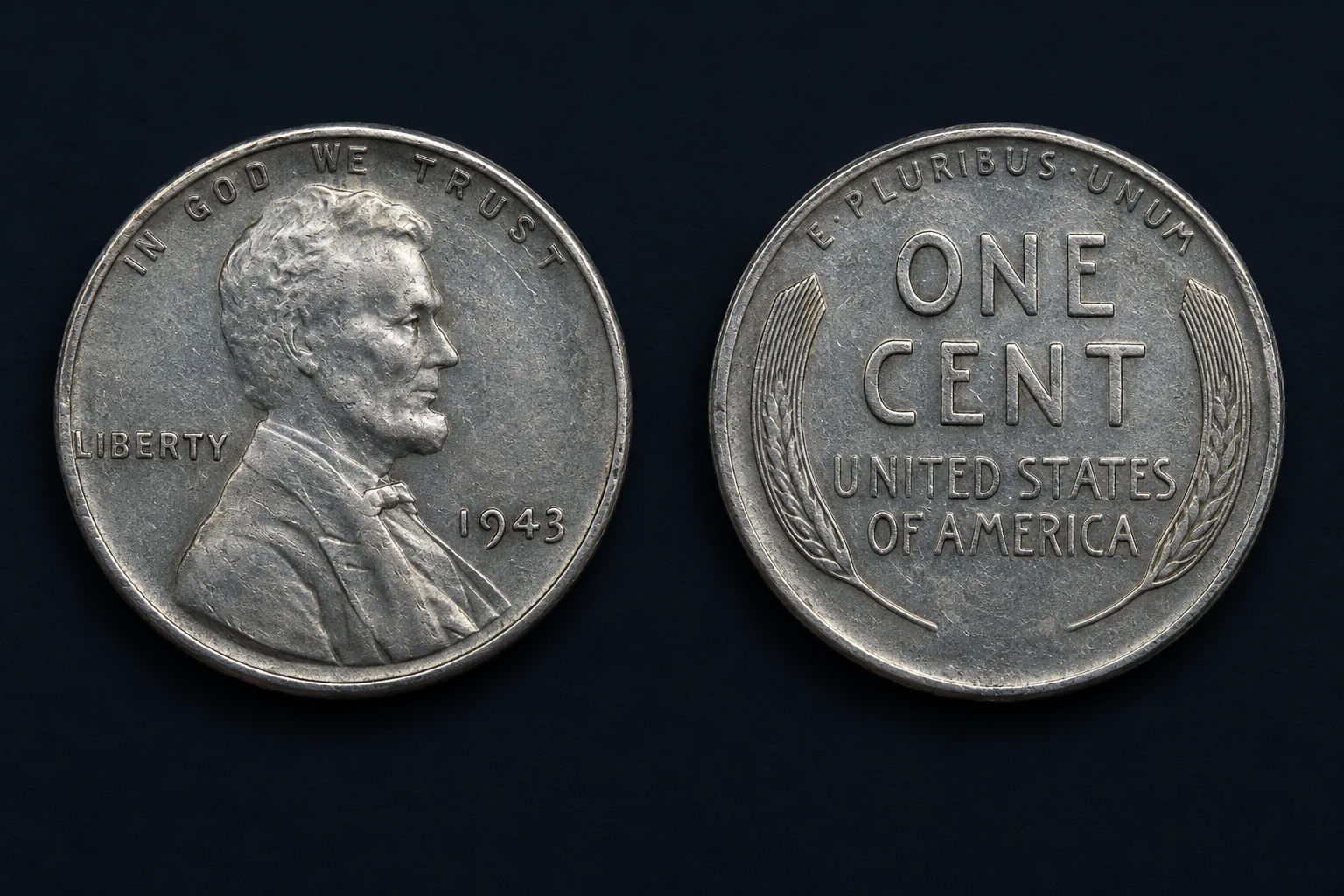
1943 Steel Penny
Regular wartime steel issue for a direct metal and date comparison.
Open guide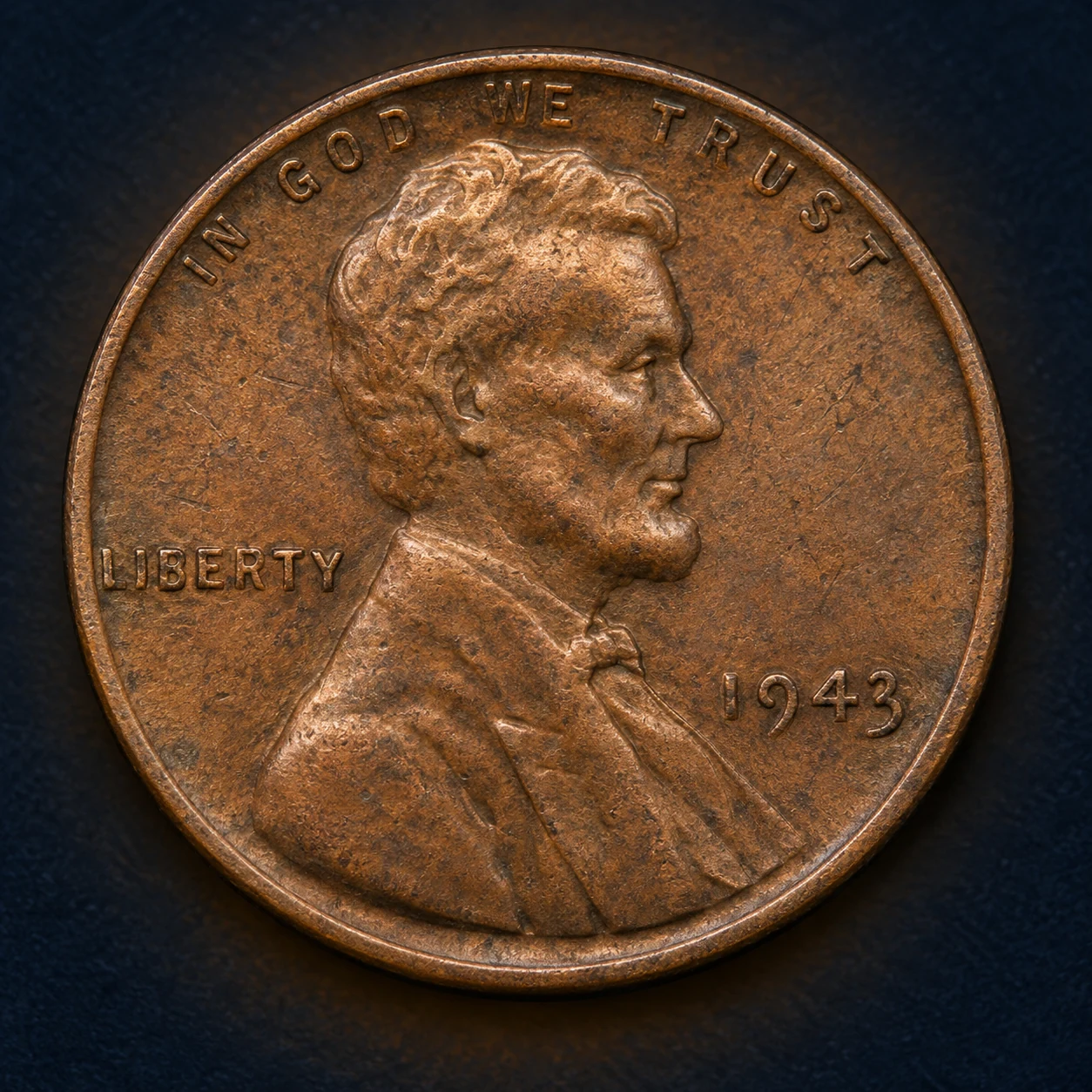
1943 Bronze Penny
Another transitional off-metal rarity that requires authentication.
Open guide