
1944-D Wheat Penny Value, Errors & D/S Guide
Most 1944-D Wheat Pennies are common bronze cents, so circulated examples are usually modestly priced. Value rises with grade and original color, while the recognized 1944-D/S variety and the extremely rare 1944-D steel off-metal cent belong to separate value categories.
Reviewed by the Coins Identification editorial team · Prices last reviewed September 2026
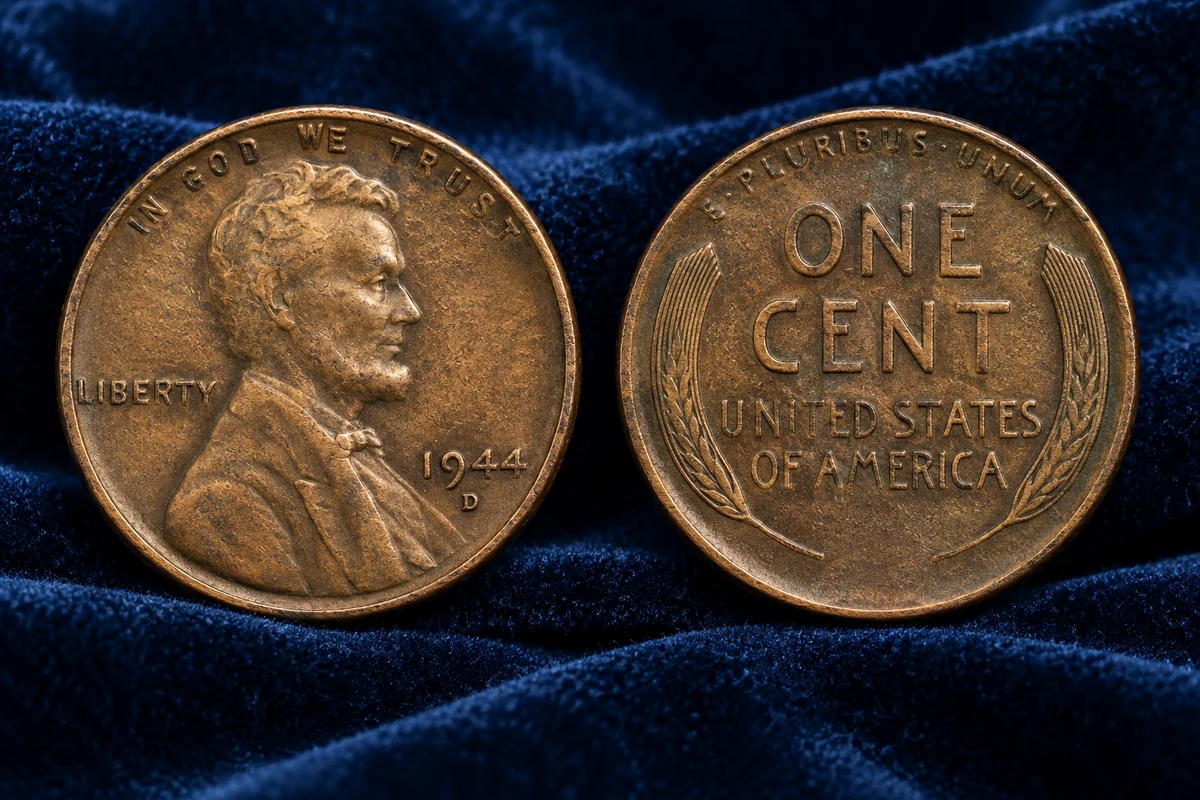
How Much Is a 1944-D Wheat Penny Worth?
The regular bronze Denver cent is the correct starting point.
Most circulated 1944-D Wheat Pennies are common bronze cents and usually bring a modest amount. Certified Mint State examples cost more because wear is absent, and original Red color can command a premium over Brown at the same numerical grade. Surface quality, luster and strike also matter. A polished, corroded or recolored coin can be worth less than a naturally toned example with the same date and grade. The D identifies Denver, but the mint mark alone does not make a normal 1944-D rare.
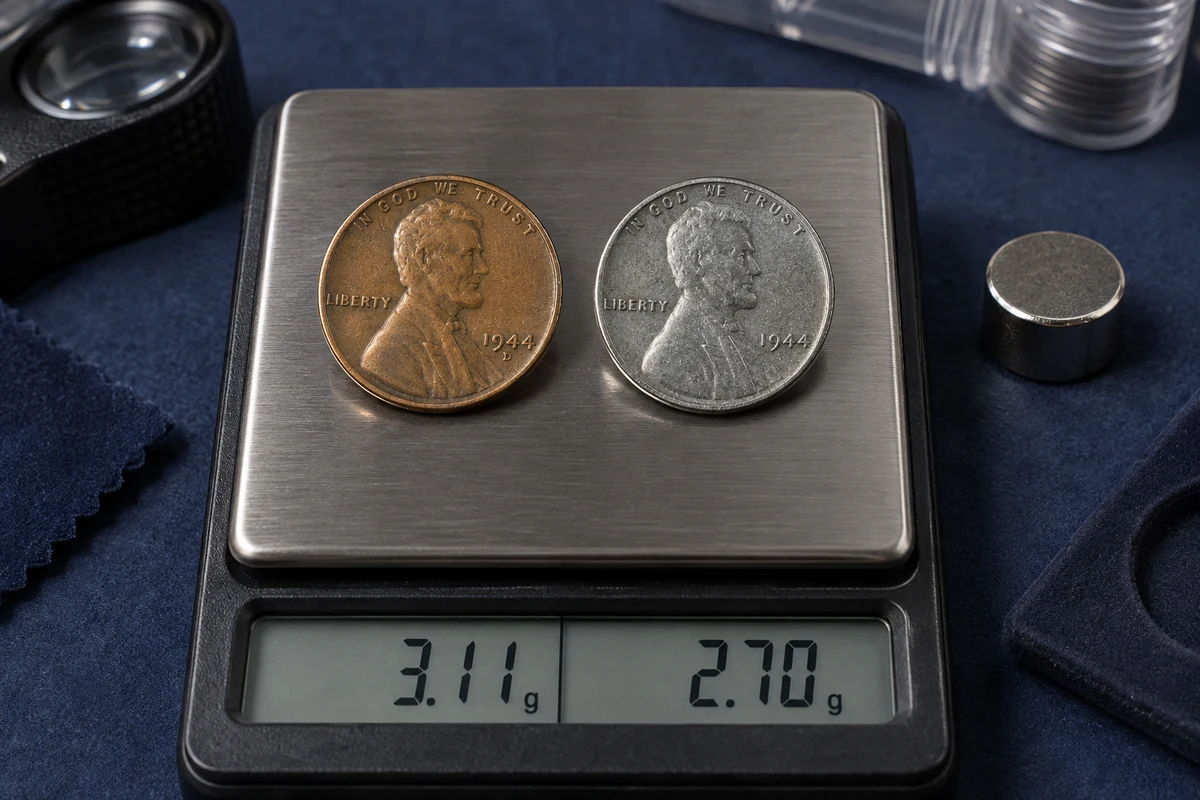
Keep separate comparisons for the 1944-D/S overmintmark and any steel wrong-planchet claim. A normal 1944-D weighs about 3.11 g and is nonmagnetic. A possible steel cent is near 2.70 g and magnetic, but those tests only screen the coin. The values below are reference points for regular bronze pieces and should be checked against the current PCGS guide before a purchase or sale.
1944-D Wheat Penny Value at a Glance
Published reference points for the regular bronze issue.
| Condition | Grade | Color | Reference value | Scope |
|---|---|---|---|---|
| Good | G4 | BN | Not in embedded snapshot | Circulated |
| Fine | F12 | BN | Not in embedded snapshot | Circulated |
| Extremely Fine | XF40 | BN | Not in embedded snapshot | Circulated |
| About Uncirculated | AU50 | BN | Not in embedded snapshot | Circulated |
| Mint State | MS63 | BN / RB / RD | $1.75 / $4.75 / $8.25 | Reference snapshot |
| Gem Mint State | MS67 | BN / RD | $35 / $150 | Reference snapshot |
Prices last reviewed: September 2026. The displayed MS63 and MS67 points are the published reference snapshots used for this guide. Use the linked PCGS Price Guide for grades or color combinations not shown.
1944-D Wheat Penny Value Chart
Blank cells stay labeled when the current reference does not publish a value.
| Grade | BN | RB | RD |
|---|---|---|---|
| MS60 | Not in embedded snapshot | Not in embedded snapshot | Not in embedded snapshot |
| MS62 | Not in embedded snapshot | Not in embedded snapshot | Not in embedded snapshot |
| MS63 | $1.75 | $4.75 | $8.25 |
| MS64 | Not in embedded snapshot | Not in embedded snapshot | $16–$18 PCGS snapshot |
| MS65 | Not in embedded snapshot | Not in embedded snapshot | $24–$28 PCGS snapshot |
| MS66 | Not in embedded snapshot | Not in embedded snapshot | $38–$75 PCGS snapshot |
| MS67 | $35 | Not in embedded snapshot | $150 |
| MS68 | Not in embedded snapshot | Not in embedded snapshot | Not in embedded snapshot |
Do not interpolate a missing BN, RB or RD value from another color. PCGS may update values or show a range, so recheck the linked guide when using this chart.
How Color Affects 1944-D Wheat Penny Value
BN, RB and RD are separate from the numerical grade.
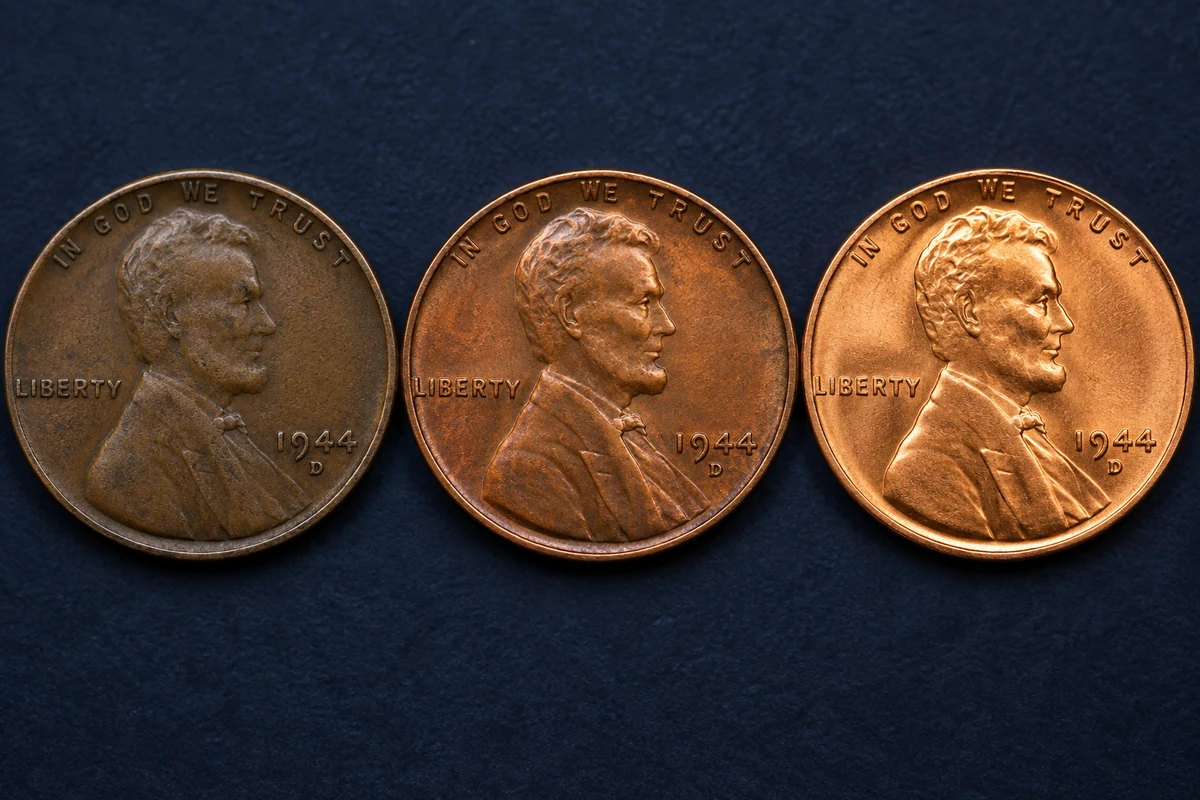
BN means Brown, RB means Red-Brown and RD means Red. On a copper 1944-D cent, the designation describes how much original red luster remains. An MS63 RD can bring more than an MS63 BN because the red surface is scarcer and attracts stronger demand. Color does not replace grade. A bright coin with hairlines, cleaning or artificial recoloring is not the same as an original RD example.
Judge the color in neutral light and inspect protected recesses, lettering and fields for consistent luster. Wear, oxidation and storage can move a coin toward brown. Polishing can make it look bright while removing the original surface that graders need to see. Compare a 1944-D with other certified Denver cents at the same grade and designation before using a price reference.
What Makes a 1944-D Wheat Penny Valuable?
The strongest value factors are numerical grade, original BN, RB or RD color, surface quality, strike, the recognized D/S variety, another documented variety, a wrong-planchet error and third-party certification. A sharp original-red cent with clean fields can bring a premium over a worn brown example. A D/S attribution creates a separate market and must not be mixed into the regular D value chart.
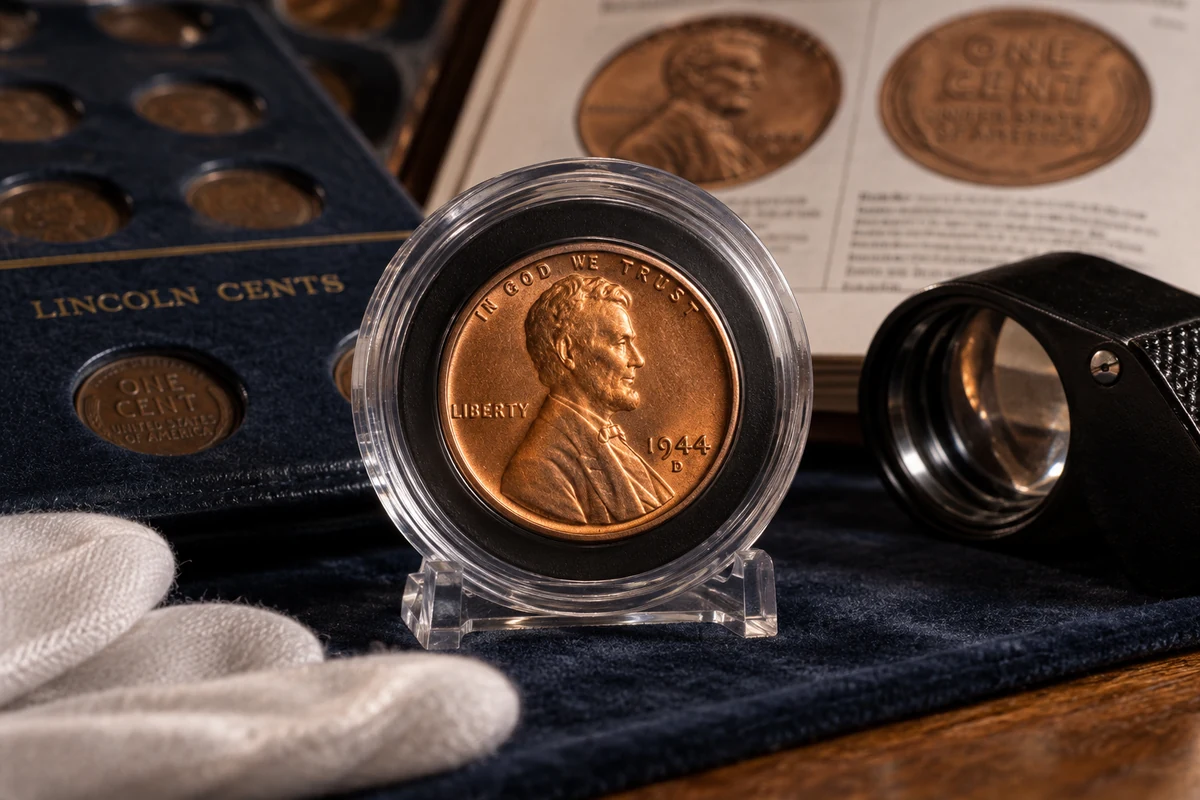
Record the issue first, then describe wear and color without cleaning the coin. Compare only with a coin carrying the same mint, grade, color and variety attribution. A photograph can raise a question, but metal, surface and certification decide whether a rare claim is credible.
Where Is the D Mint Mark on a 1944 Wheat Penny?
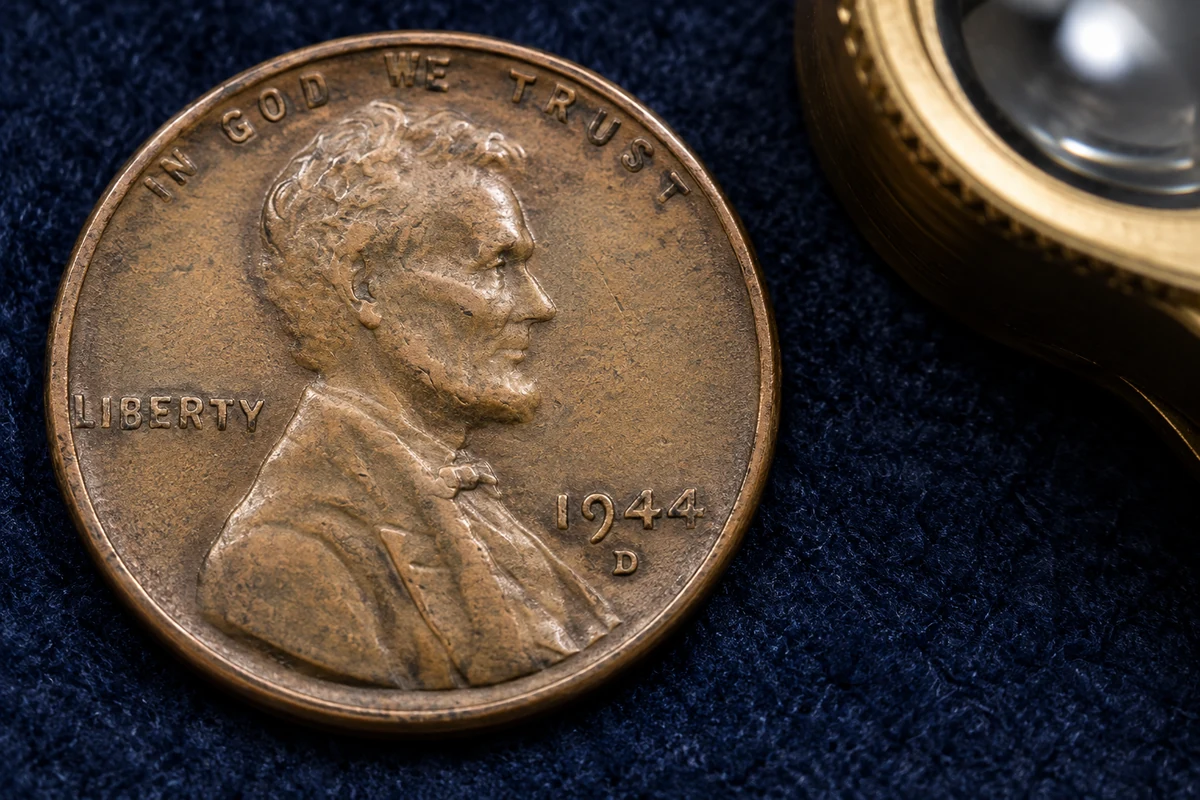
The D mint mark is below the date on the obverse. D means Denver, and it is a normal part of the 1944-D design. Compare the complete letter with a certified reference. A weak D can come from strike quality, die fill or wear; an apparent second letter needs documented diagnostics before it is called D/S.
How Many 1944-D Wheat Pennies Were Made?
430,578,000 regular bronze cents.
Denver struck 430,578,000 1944-D Wheat Pennies. That is the original mintage for the regular bronze issue. It is not a surviving population and it does not describe the number of high-grade Red examples available today. Mintage also does not include a rare steel wrong-planchet piece or change the separate attribution of a D/S variety.
| Issue | Mint mark | Original mintage |
|---|---|---|
| 1944-D Wheat Penny | D | 430,578,000 |
Is a 1944-D Wheat Penny Made of Copper?
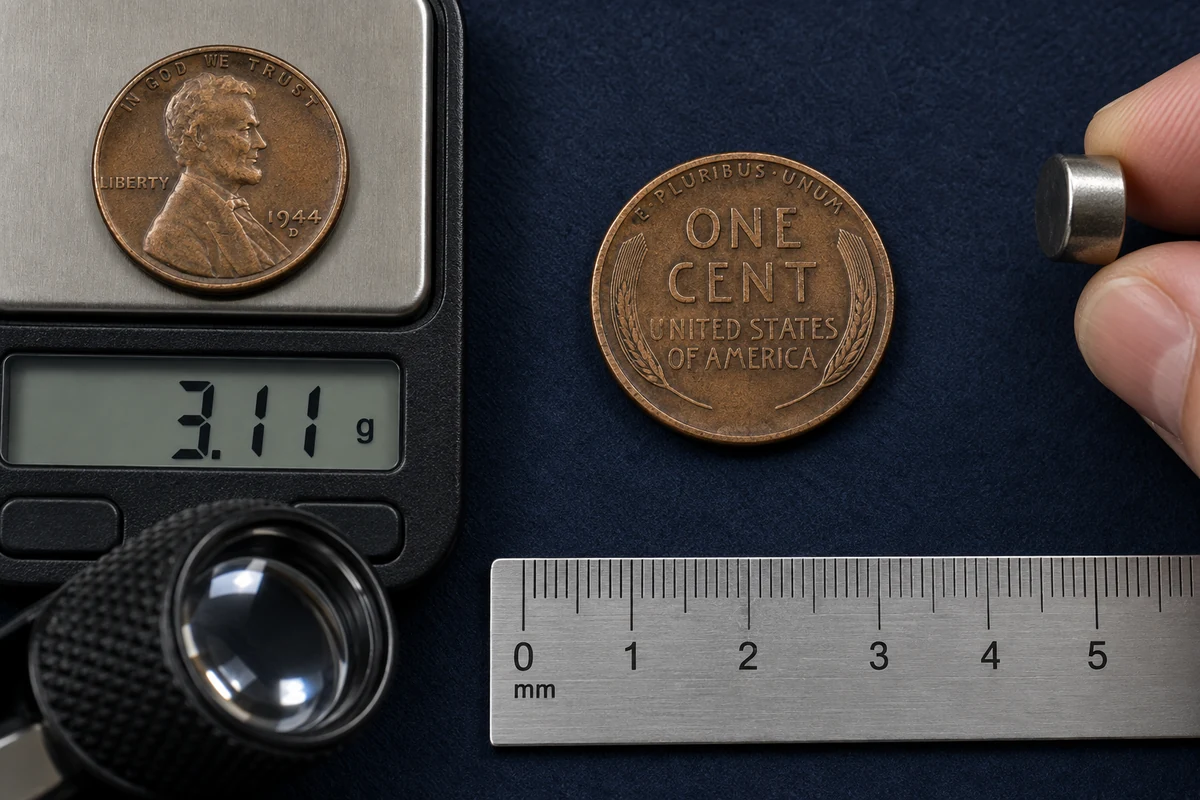
Yes. A normal 1944-D Wheat Penny uses the standard 1944 copper-based composition. The alloy is 95% copper with 5% tin and zinc. The coin should weigh about 3.11 g, measure about 19 mm and remain nonmagnetic. Copper or bronze is normal in 1944. Steel is the rare composition branch, unlike 1943 where steel was the regular issue.
A copper-colored surface does not prove a coin is original, and a gray surface does not prove steel. Use weight and magnet response as screening clues, then preserve the coin for examination.
1944-D/S Wheat Penny: D Over S
PCGS catalogs the major FS-511 attribution.
1944-D/S Wheat Penny Value
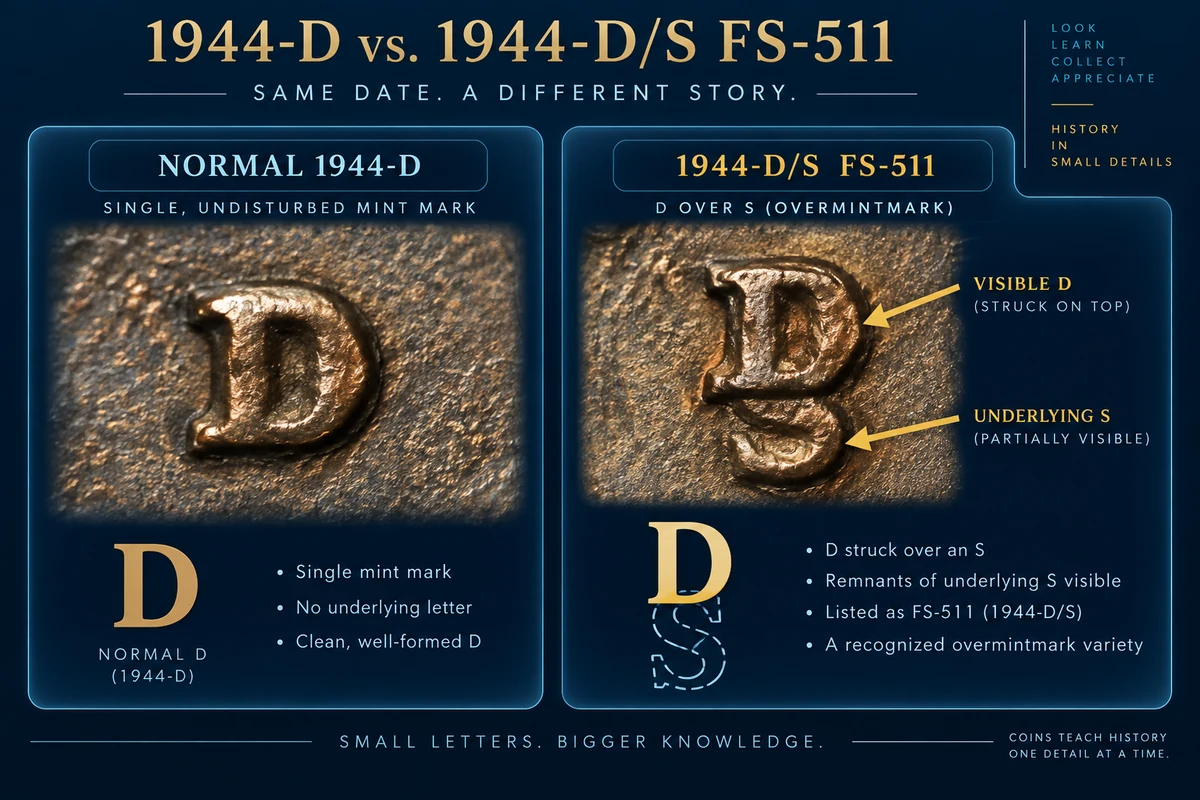
A 1944-D/S was made when a D was punched over an underlying S. This is not the same as a damaged D, die fill or a bright scratch. Some searches call it an “S over D,” but the recognized attribution is 1944-D/S, a D over S. Compare the full mint-mark area with published diagnostics and use a recognized grading service before assigning the variety.
| Grade | BN | RB | RD |
|---|---|---|---|
| MS60 | $300 | $325 | $400 |
| MS63 | $450–$460 | Not in embedded snapshot | $575–$615 |
| MS64 | $500–$565 | Not in embedded snapshot | $700–$1,100 |
| MS65 | $650–$675 | Not in embedded snapshot | $1,850–$2,000 |
| MS66 | $850 | Not in embedded snapshot | $3,750–$14,000 |
PCGS Price Guide snapshot, September 2026. These D/S references do not belong in the regular 1944-D chart.
1944-D Wheat Penny Errors and Varieties
Separate mint-made events from later damage.
Possible mint-created
- 1944-D/S FS-511 overmintmark
- Recognized RPM or doubled-die attribution
- Off-center strike
- Clipped planchet
- Die crack
- Wrong planchet or steel off-metal
Usually post-mint
- Scratches and dents
- Corrosion or plating
- Polishing and cleaning
- Chemical discoloration
- Machine doubling without a recognized attribution
1944-D Steel Wheat Penny
A normal 1944-D is bronze, not steel.
A genuine 1944-D steel cent is an extremely rare wrong-planchet strike. The normal Denver issue is bronze, about 3.11 g and nonmagnetic. A possible steel candidate is near 2.70 g and magnetic, but plating, corrosion and altered dates can imitate that profile. Do not mix steel auction records with regular 1944-D values. Stop home testing and use professional authentication before making a rarity claim.
See the 1944 Steel Penny guide for the dedicated rarity, population and auction discussion.
How to Identify a 1944-D Wheat Penny
Use several clues together.
Start with the 1944 date and the D directly below it. Confirm the two wheat ears on the reverse. A normal bronze cent is close to 3.11 g, about 19 mm and nonmagnetic. “Wheat back” is an informal name for the reverse with two wheat ears; the correct series name is Lincoln Wheat Cent.
Don't Clean a 1944-D Wheat Penny
Cleaning can remove the original surface, change BN, RB or RD color, leave hairlines and reduce collector value. Do not polish, scrub or chemically treat the coin. Handle it by the edge, record the weight and leave the evidence available for a recognized grading service.
1944-D Wheat Penny Auction Records
Auction results are not price-guide values.
| Issue | Grade | Color | Certification | Auction | Date | Realized price |
|---|---|---|---|---|---|---|
| Regular 1944-D | Lot-specific result | BN / RB / RD | PCGS or NGC | Named auction house | Lot-specific | Source record required |
| 1944-D/S FS-511 | MS66 | RD | NGC FS-512 | Heritage | October 2022 | $1,020 |
The D/S result is kept separate from regular 1944-D bronze values. Steel is covered only on the dedicated 1944 Steel Penny page.
1944-D Wheat Penny FAQ
How much is a 1944-D Wheat Penny worth?
Most circulated examples are modestly priced. Certified Mint State value depends on grade, BN, RB or RD color, surface quality and any recognized variety.
What does the D mean on a 1944 Wheat Penny?
The D means the cent was struck at the Denver Mint. It is the normal mint mark for this issue.
Where is the D mint mark?
Look directly below the 1944 date on the obverse. The mint mark is part of the design, not an error.
How many 1944-D Wheat Pennies were made?
Denver struck 430,578,000 regular bronze cents in 1944. Mintage is the number struck, not the number surviving today.
Is a 1944-D Wheat Penny made of copper?
Yes. A normal 1944-D uses the standard 95% copper, 5% tin and zinc alloy and weighs about 3.11 grams.
What should a normal 1944-D penny weigh?
A normal bronze example is close to 3.11 g and measures about 19 mm. A scale reading alone does not grade the coin.
Is a 1944-D Wheat Penny magnetic?
No. The regular bronze issue is nonmagnetic. A magnetic 1944-D may be a rare steel wrong-planchet candidate or an altered coin.
What is a 1944-D/S Wheat Penny?
It is the recognized FS-511 overmintmark variety, made when a D was punched over an underlying S. Confirm it with published diagnostics.
Are there 1944-D Steel Pennies?
Yes, a small number of rare off-metal pieces are documented. They belong to a separate 1944 Steel Penny guide and require authentication.
What errors should I look for on a 1944-D?
Check the documented D/S variety, recognized RPM or doubled-die attributions, off-center strikes, clips, die cracks and wrong-planchet pieces. Damage and plating are not mint errors.
Related Lincoln Cents
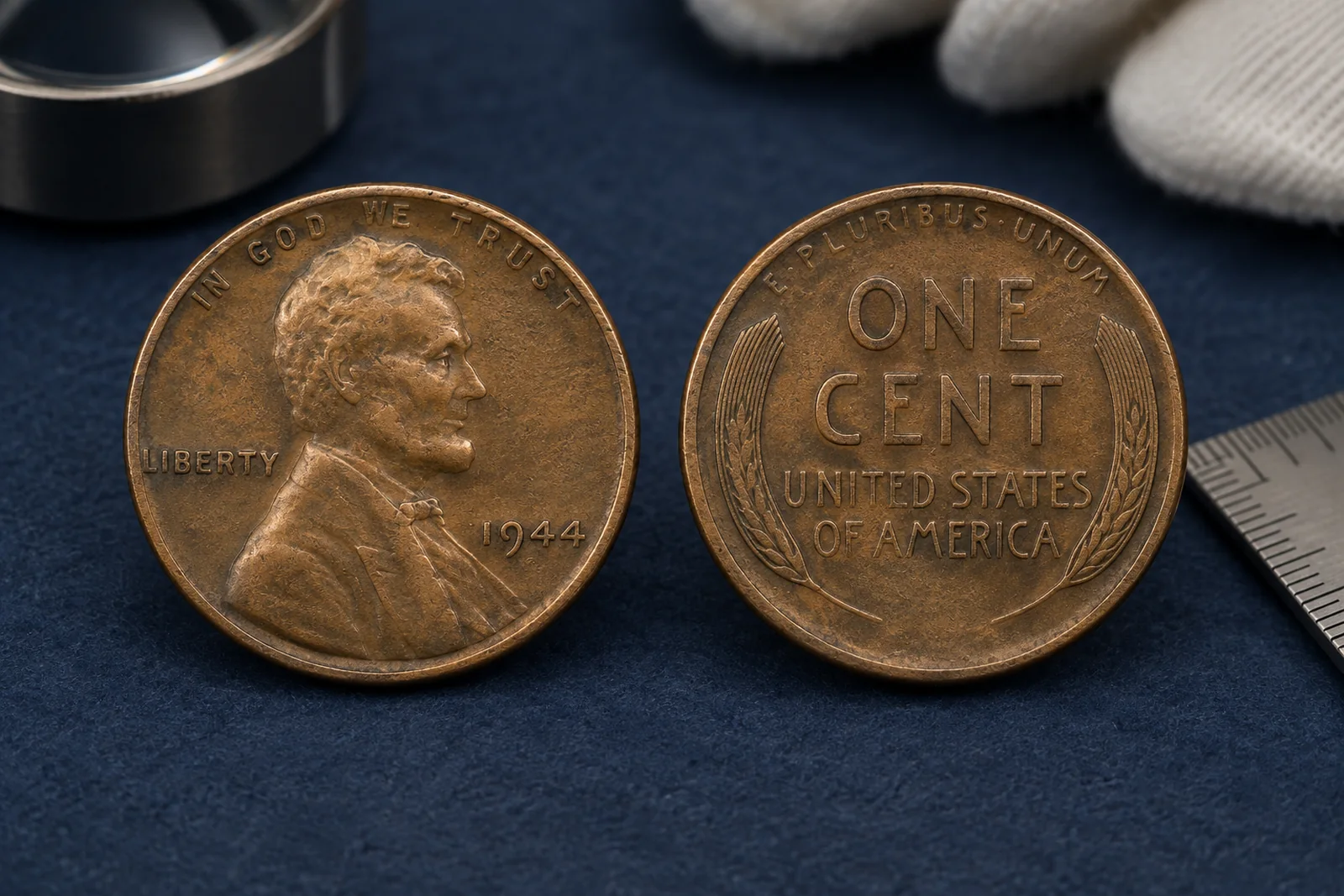
1944 Wheat Penny
Compare the date, metal, mint mark and identification clues.
View coin →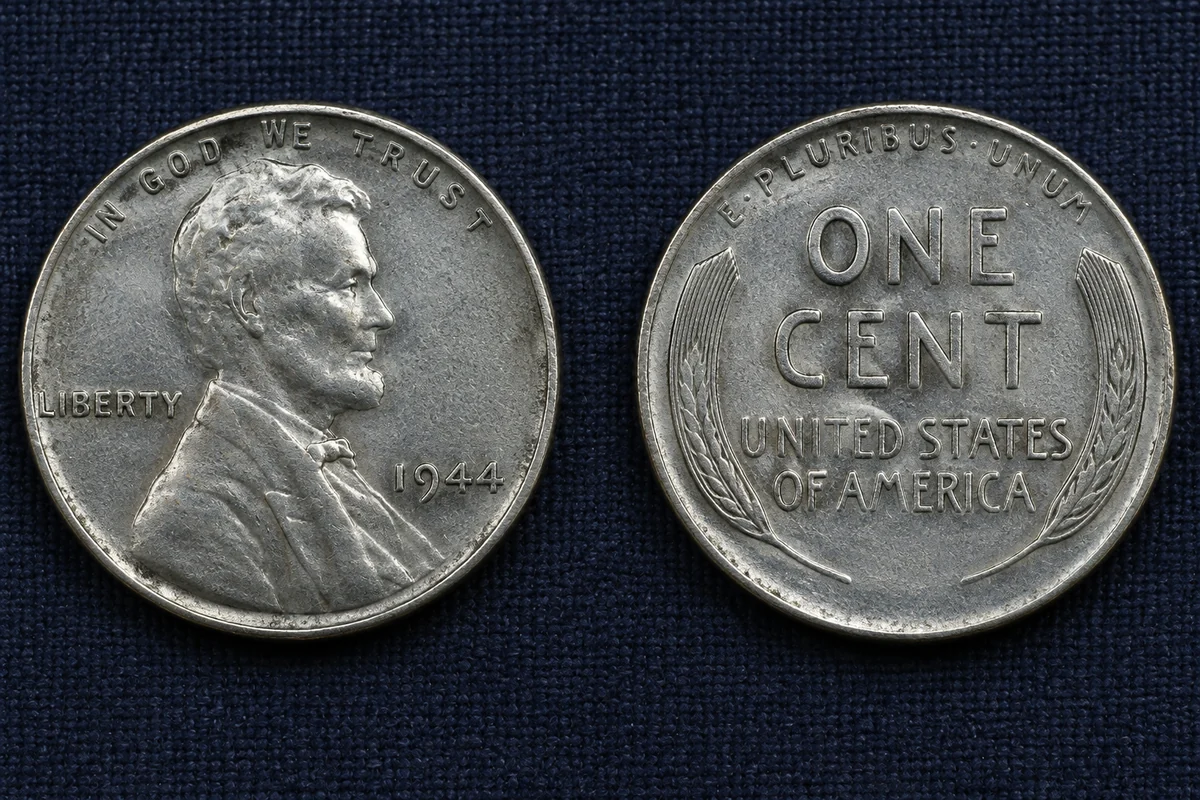
1944 Steel Penny
Compare the date, metal, mint mark and identification clues.
View coin →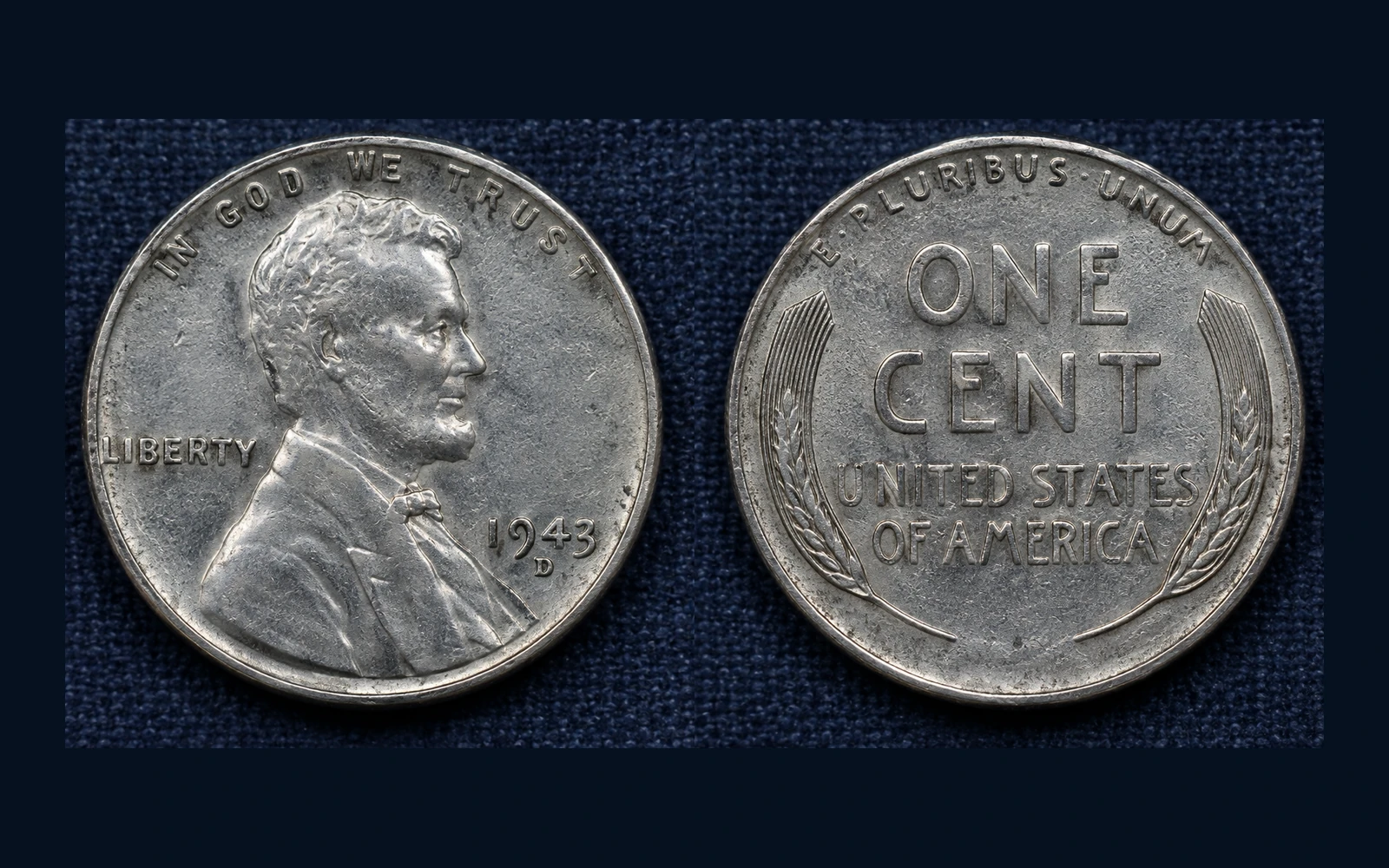
1943-D Steel Penny
Compare the date, metal, mint mark and identification clues.
View coin →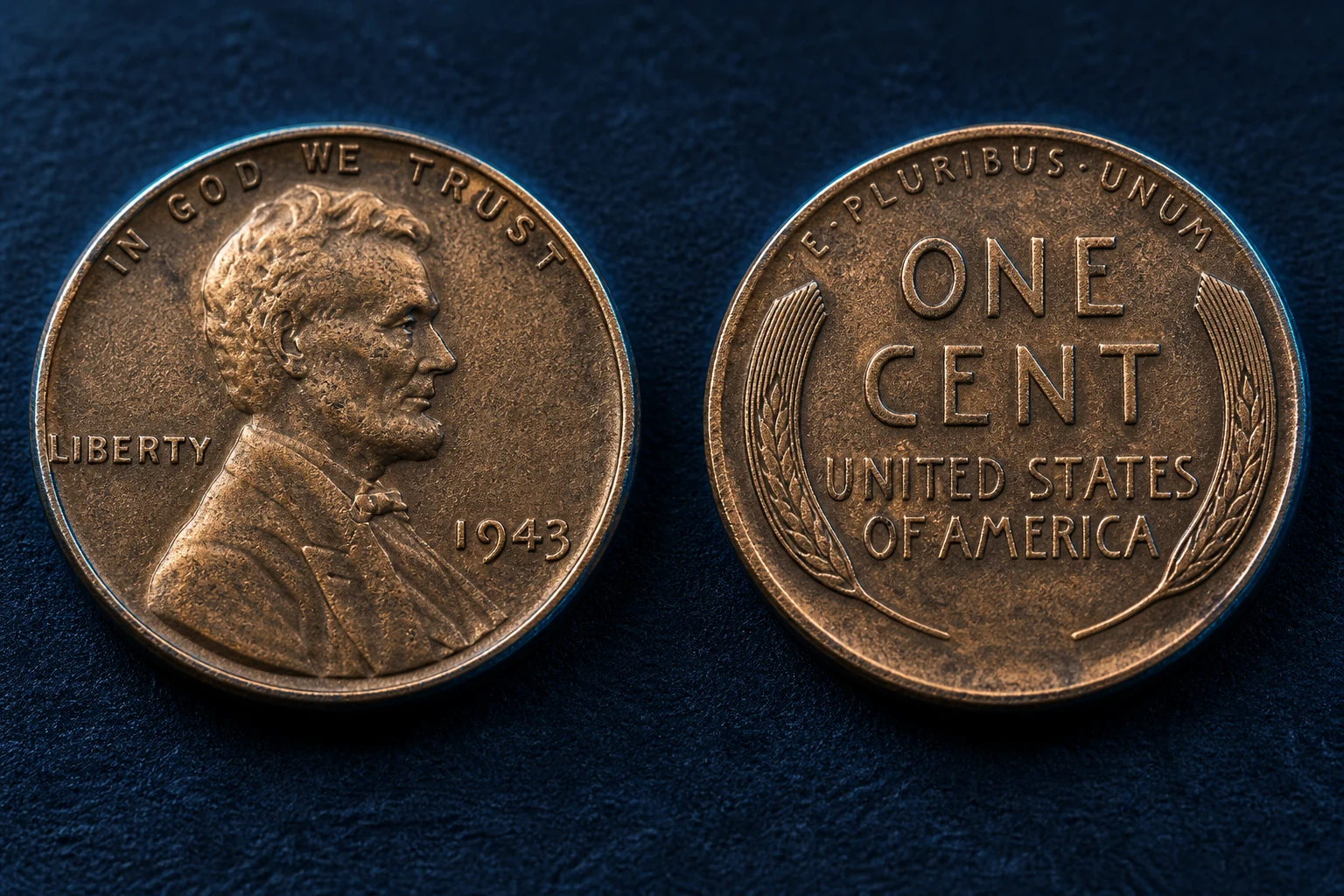
1943 Bronze Penny
Compare the date, metal, mint mark and identification clues.
View coin →