Date and era
- Record
- Full or partial year
- Check
- Calendar or ruler era
- Keep
- Original characters

An old coin can be difficult to identify when the date is worn, the lettering is unfamiliar, or the design belongs to a currency that no longer circulates. Portraits, shields, symbols, denomination words, mint marks, and the shape of the edge can still narrow the possibilities when both sides are photographed clearly.
This guide gives you a careful workflow for identifying old coins without confusing age with rarity. It explains what to record, how to separate a historic circulation coin from a commemorative or reproduction, and which evidence matters before researching value.
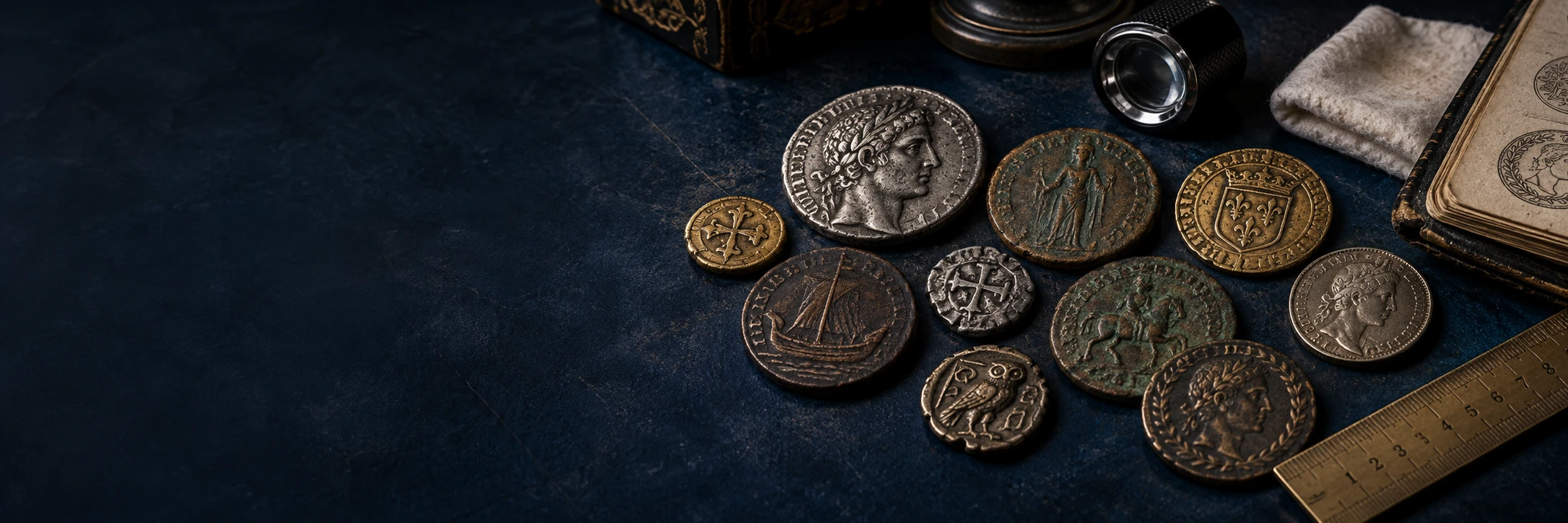
Use the scanner when you are ready to compare your coin with the clues in this guide.
Scan your coinRead the date, currency, portrait, and inscription, then confirm mint, edge, measurements, condition, and authenticity before researching an old coin value.
Use this checklist to organize a worn coin before searching. It is a research aid, not an authentication or appraisal result.
Remember: age and patina narrow the research path, but the exact issue, authenticity, condition, composition, and demand determine whether a premium is supported.
Start with the clearest date and denomination, then document both sides, the edge, portrait, inscription, mint mark, diameter, and weight. Compare the complete design with likely period matches before deciding whether the coin is a common circulation issue, a reproduction, or a piece that needs expert review.
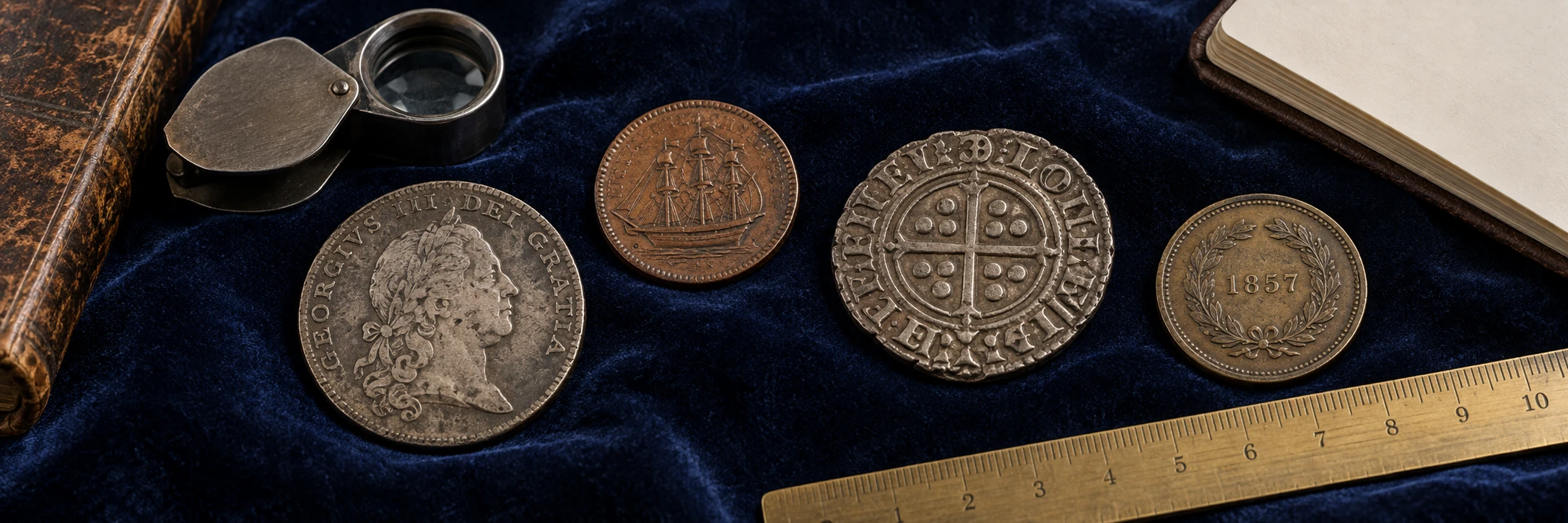
Begin with the clearest visible date, denomination, and currency wording. A year can place the coin in a country, ruler, monetary reform, or design period, while a portrait, shield, animal, or building helps narrow the type when the lettering is incomplete.
Do not assume that a dark surface or worn edge means the coin is ancient. Modern coins can tone, and historic coins can be common. First decide whether the piece is a familiar national issue, a colonial or trade coin, a commemorative, or a reproduction.
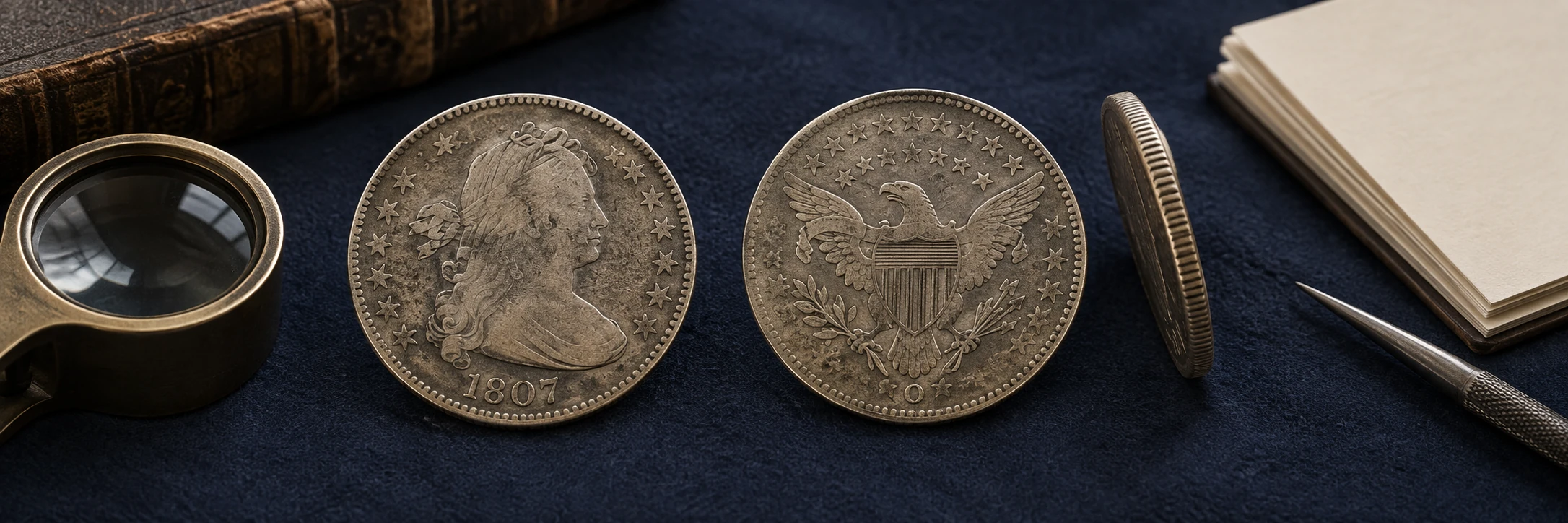
Photograph the obverse and reverse as separate, straight-on images. The portrait side may identify a ruler, while the reverse supplies the denomination, date, motto, mint mark, or issuing authority. Keep the complete rim in frame so lettering and clipping remain visible.
Transcribe the characters exactly as seen, including partial letters, accents, numerals, and unfamiliar symbols. A short inscription can be more useful than a guessed translation, especially when several countries used similar portraits or heraldic designs.
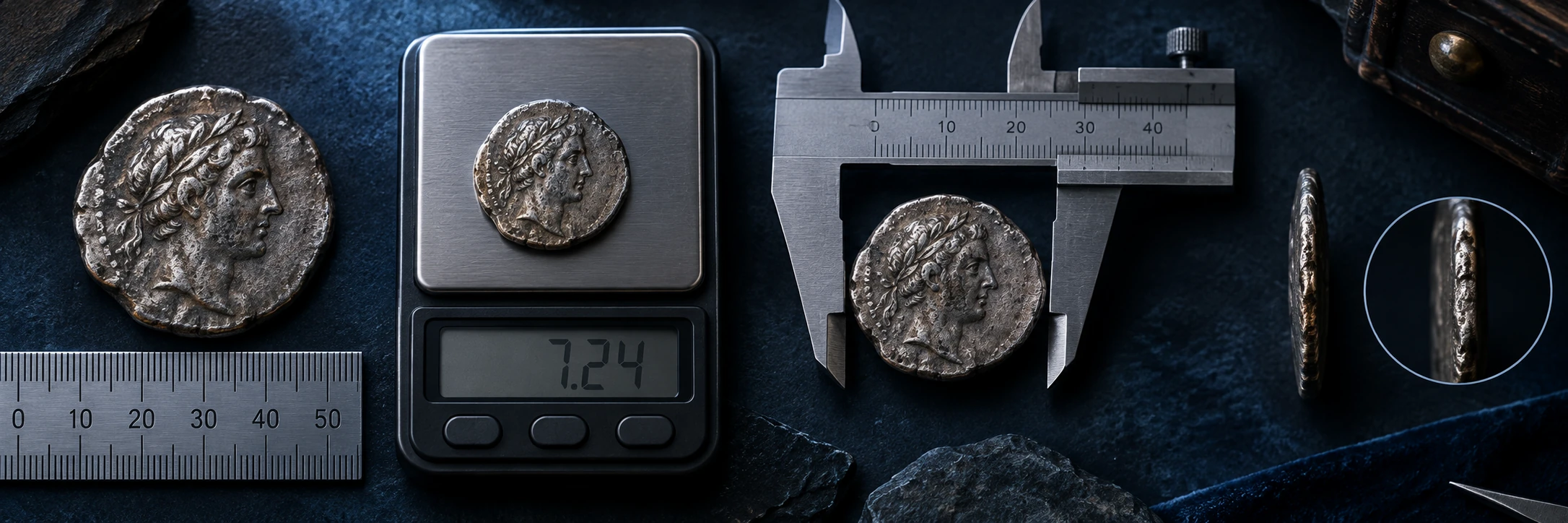
Once you have a likely type, use physical clues to test it. Record the diameter, thickness, weight, edge style, and any edge lettering or seams. Mint marks and small initials can separate issues that share the same portrait and denomination.
Metal color is only a starting clue. Patina, cleaning, plating, and lighting can make copper, bronze, silver-colored, and nickel pieces look alike. Measurements support an identification, but they cannot prove authenticity by themselves.
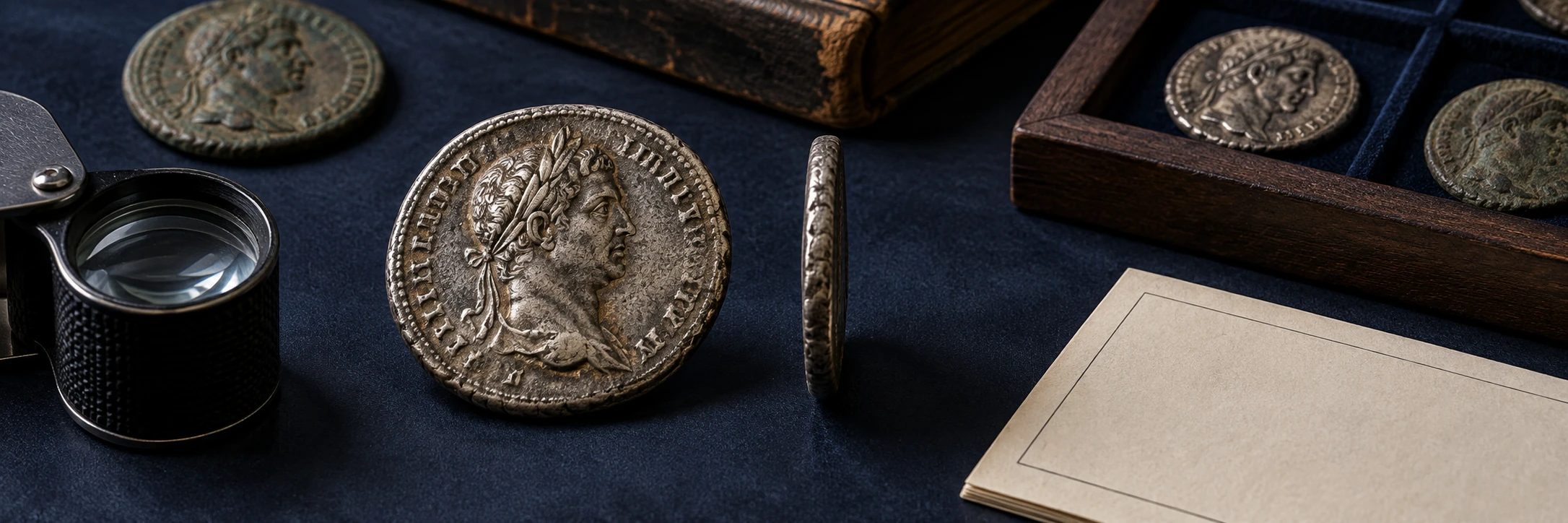
Old-looking surfaces can come from storage, soil, cleaning, artificial aging, or corrosion. Compare the relief, lettering, edge, and weight as a set. A cast seam, soft details, repeating pits, or an incorrect size can signal a reproduction, but a photo alone cannot settle authenticity.
Never scrub, polish, or scratch a coin to reveal a date. Cleaning can remove original surface and reduce collector interest. If the coin may be ancient, precious metal, or unusually valuable, keep notes about where it came from and seek an in-person review before selling it.
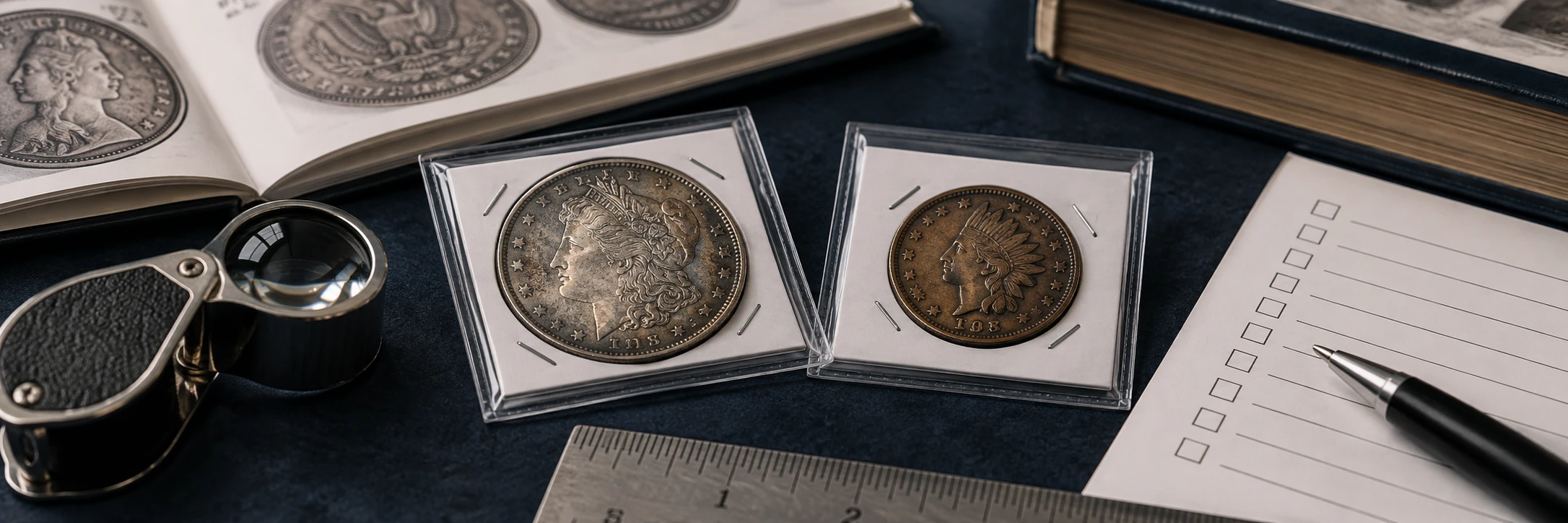
Many old coins are common and trade for modest amounts. A premium can depend on a scarce date, mint mark, variety or error, precious-metal content, historical importance, strong condition, provenance, or collector demand. Age, patina, and a famous portrait alone do not establish a high value.
Compare the exact country, denomination, date, mint, variety, composition, condition, and finish with completed sales. Treat an online asking price as a lead rather than proof, and arrange authentication for a suspected rarity or valuable metal coin.
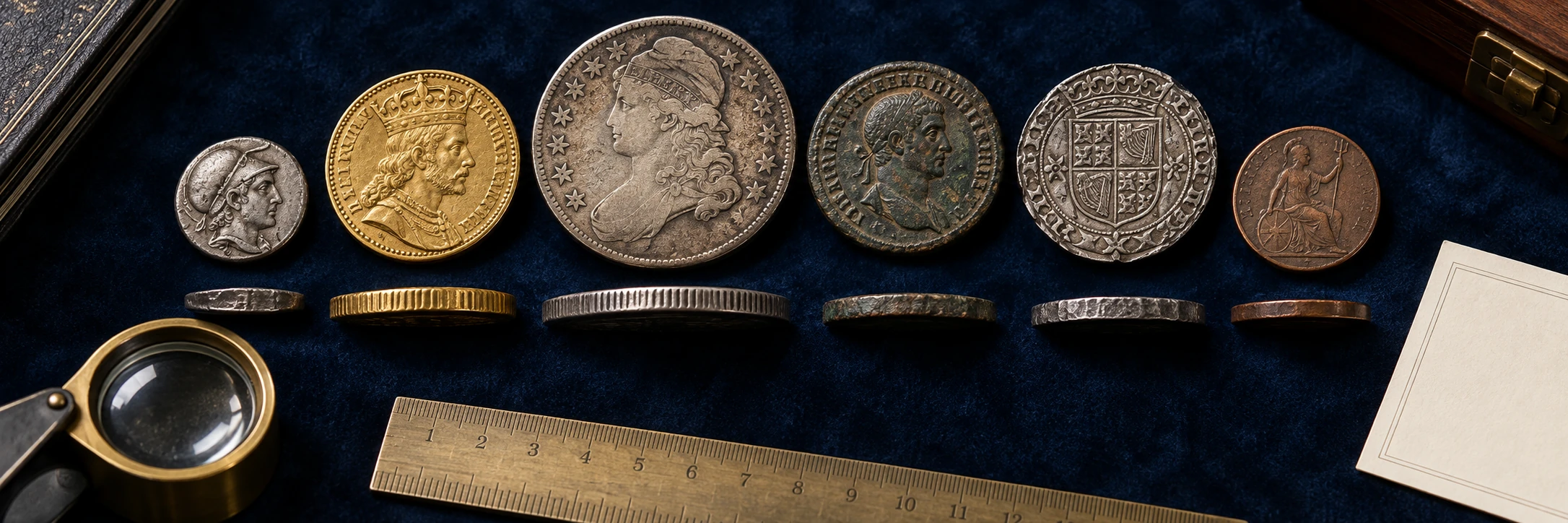
Photograph both sides and the edge, then compare the date, denomination, portrait, inscription, mint mark, size, metal appearance, and condition.
No. Patina and wear can appear on many modern and historic coins. Date, design, lettering, measurements, and edge clues are more useful.
Record every visible letter or symbol and photograph the full rim. Partial lettering, portrait style, and denomination clues can still narrow the type.
Look for mismatched weight, size, edge, relief, seams, and surfaces, but remember that a photo cannot prove authenticity.
No. Cleaning can damage the original surface and lower collector interest. Photograph it as found and ask for advice first.
No. A photo supports identification, but value depends on the exact issue, authenticity, condition, metal, rarity, provenance, and current market evidence.