One won
- Motif
- Rose of Sharon
- Clue
- Small aluminum-style coin
- Check
- Year and Hangul

South Korean coins are often easier to narrow down once you recognize the design family. A rose of Sharon, turtle ship, Dabotap pagoda, rice stalk, Admiral Yi Sun-sin, or flying crane can point to a familiar denomination, while Hangul, the year, metal color, and size help confirm the match.
This guide explains how to identify Korean won coins from a photo without relying on a single symbol. It covers the common 1, 5, 10, 50, 100, and 500 won circulation designs, older date changes, commemorative issues, and the evidence worth recording before researching value.
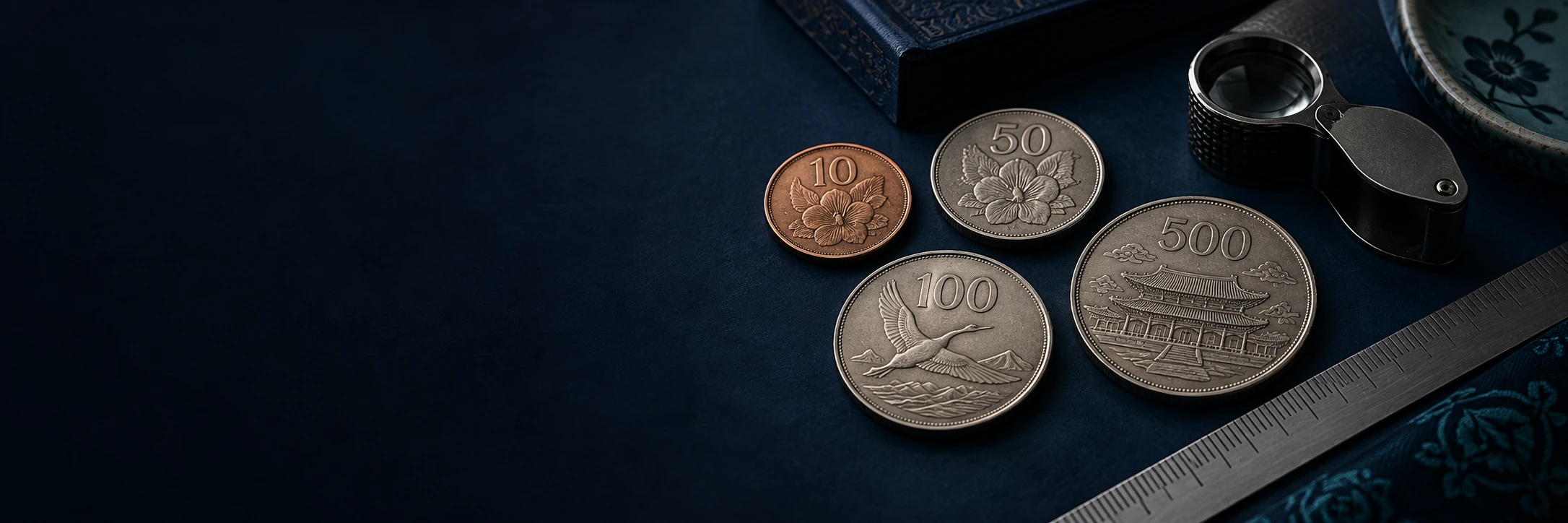
Use the scanner when you are ready to compare your coin with the clues in this guide.
Scan your coinRead the won denomination and year, identify the national motif, then confirm both sides, edge, size, and condition before researching a Korean coin value.
Use the standard design family as a visual starting point. Older dates, commemoratives, and special sets can use different subjects or specifications.
Remember: motif and color narrow the first match, but the exact year, size, edge, condition, and issue type decide whether the coin is the same variety.
Start with the 100 won denomination and Admiral Yi Sun-sin portrait, then record the full year, Hangul text, reverse layout, edge, diameter, and weight. Compare the coin with the standard circulation design for that date before considering a commemorative issue, variety, or collector premium.
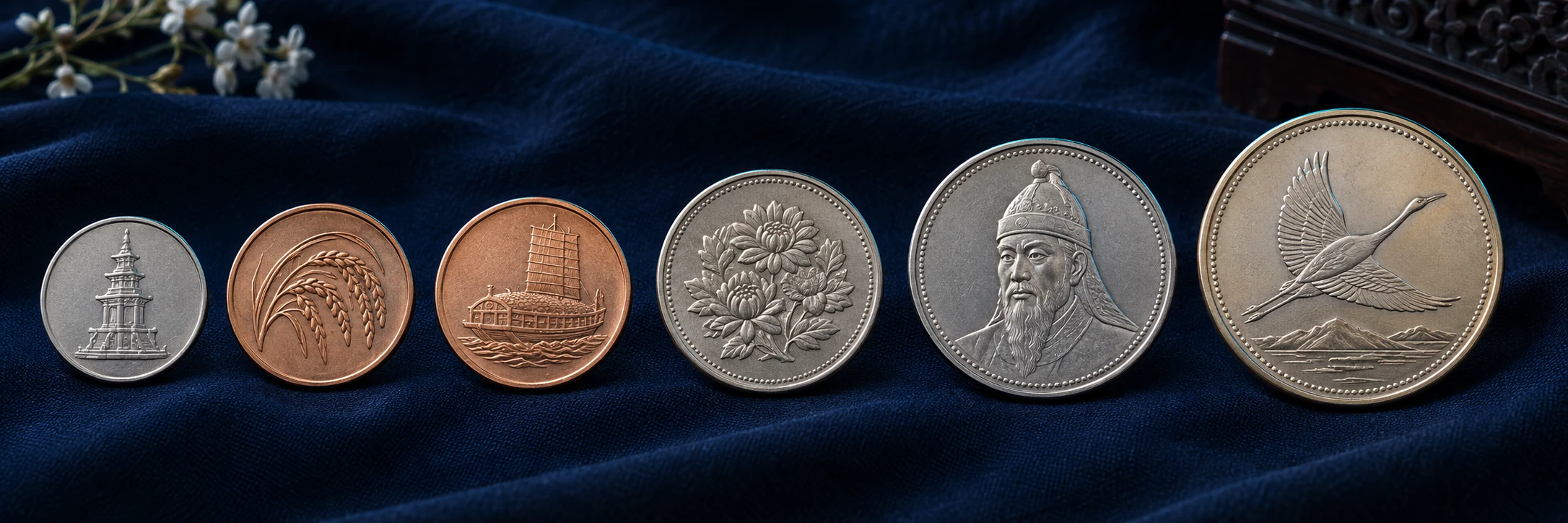
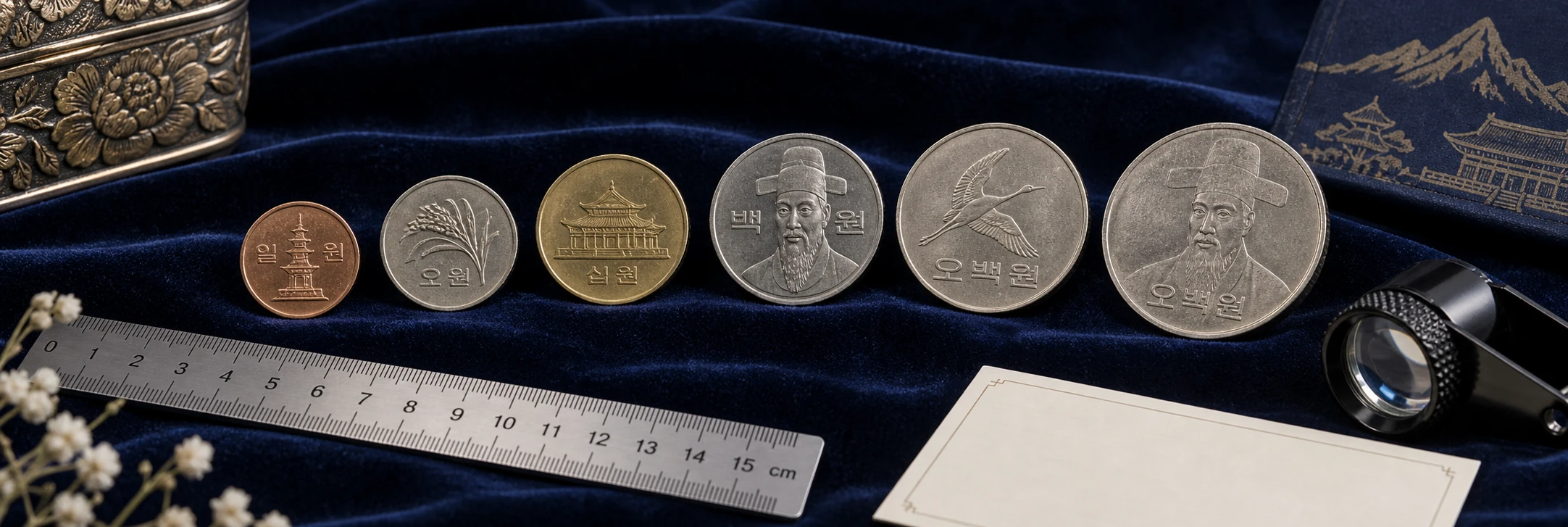
Begin by looking for the Korean denomination characters 원 and the number or value shown on the coin. The familiar circulation series uses a different reverse motif for each denomination: a rose of Sharon on 1 won, a turtle ship on 5 won, Dabotap pagoda on 10 won, rice stalks on 50 won, Admiral Yi Sun-sin on 100 won, and a crane on 500 won.
Use the motif as a first filter, then check the whole rim, lettering, date, and metal appearance. A commemorative coin may use a familiar value with a completely different subject, so one picture or symbol is never enough on its own.
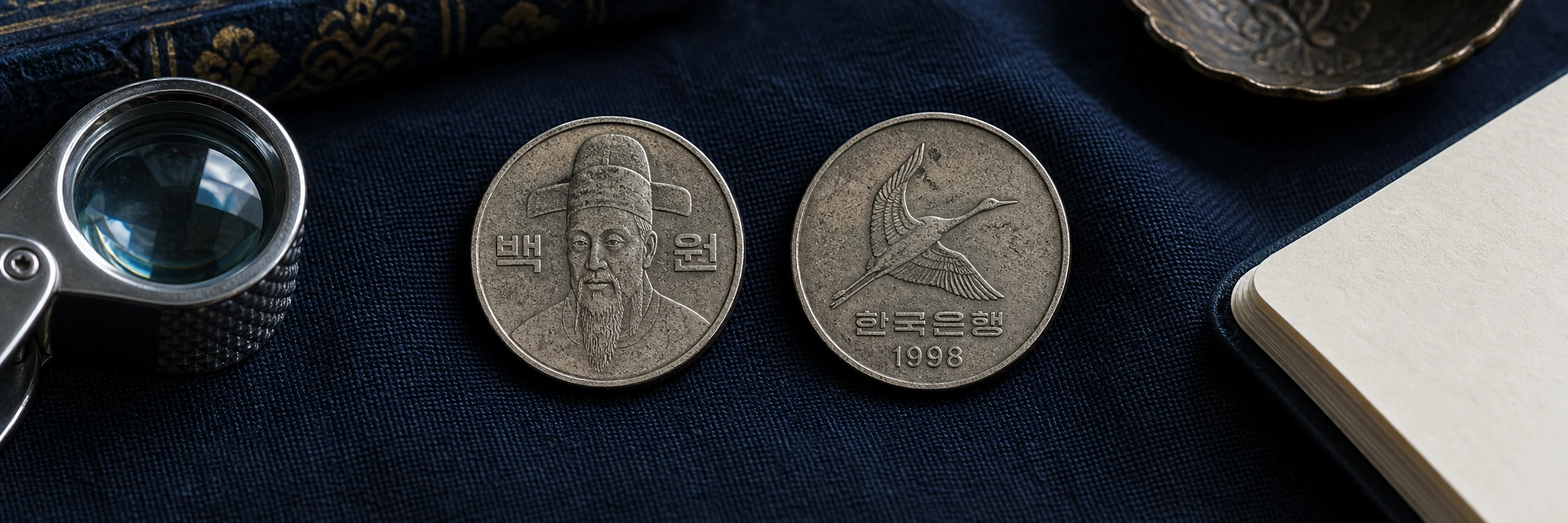
Korean circulation coins normally show a large Arabic year alongside Korean characters. Photograph the date side straight on and keep every digit visible; worn or partially cropped dates can make two otherwise similar issues look identical.
The word 한국은행 identifies the Bank of Korea on many circulation designs. Record its position, the denomination text, the year, and any small designer or mint details. If a date seems unfamiliar, preserve the original characters in your notes rather than guessing at a translation.
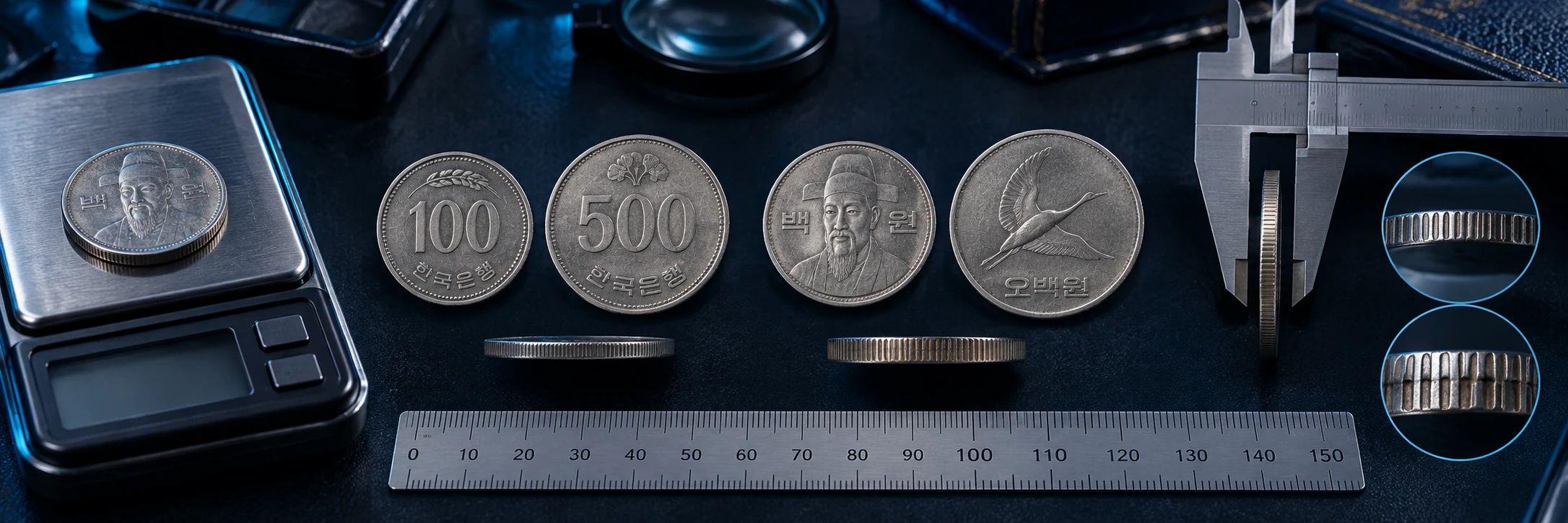
A photo can suggest a denomination, but measurements make the comparison safer. Place the coin flat beside a ruler, record its approximate diameter and weight when possible, and photograph the edge separately. Similar silver-colored coins can differ in thickness, edge treatment, and weight.
Metal color is only a clue. Toning, circulation wear, plating, and indoor lighting can change how aluminum, bronze, brass, and copper-nickel appear. Use the design, date, size, edge, and surface together instead of calling a coin silver or valuable from color alone.
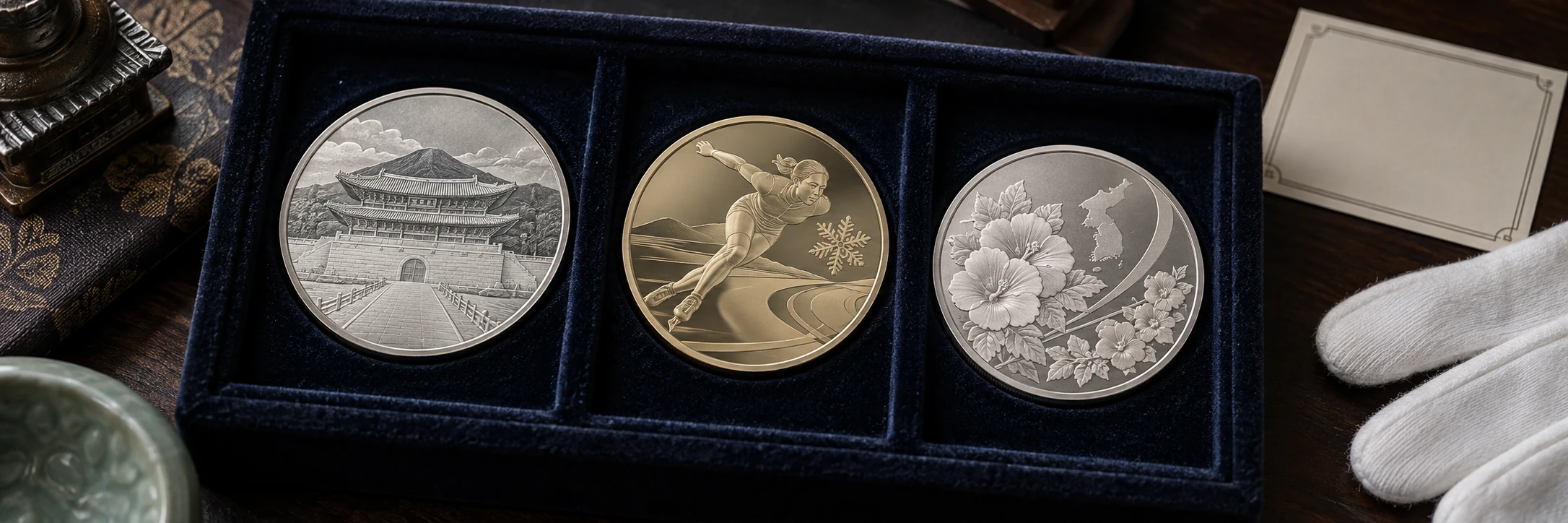
South Korea has issued commemorative and special-set coins for national events, anniversaries, cultural subjects, and international occasions. These pieces may keep a won denomination while replacing the standard animal, building, or portrait with a new design.
Record the exact subject, year, denomination, composition, finish, packaging, and whether the coin was found in change or came from a set. A polished surface or unusual design does not automatically mean that the coin is rare.
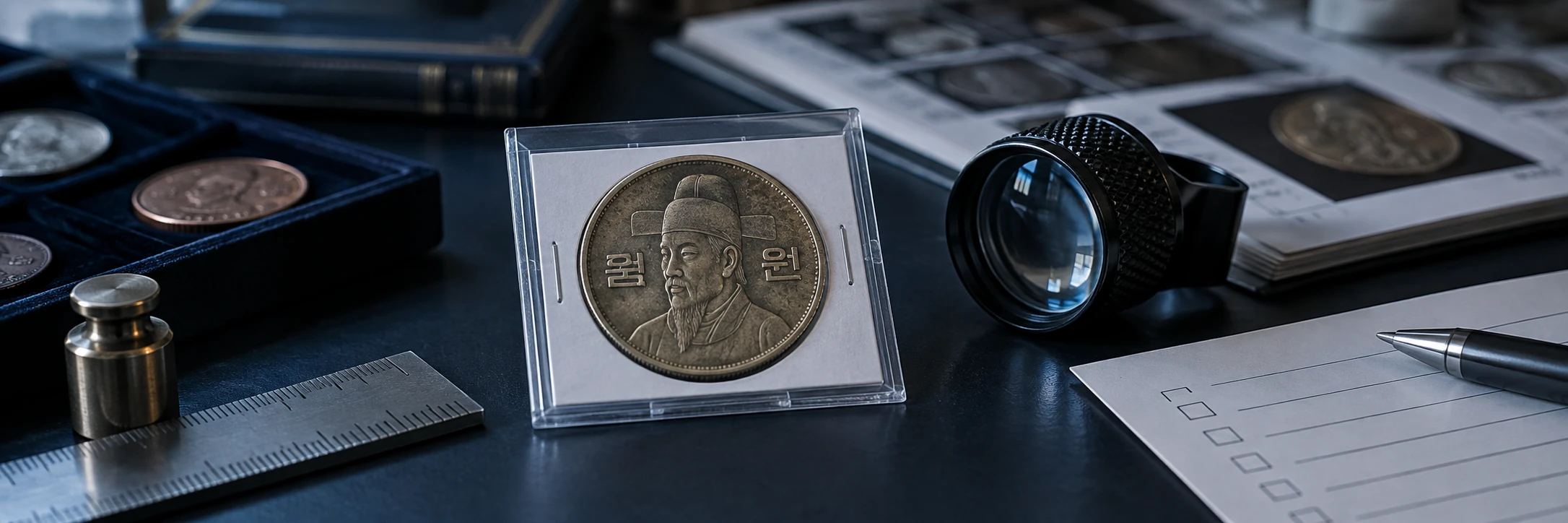
Most worn modern won coins are common. A premium can depend on a scarce date, a recognized variety or mint error, silver or gold composition in a special issue, proof quality, strong preservation, or collector demand. The presence of Hangul or a historic-looking motif alone does not establish a high value.
After identifying the exact issue, compare the same date, design, composition, condition, and finish with completed sales. Do not clean the coin before research, and arrange in-person authentication for a suspected error, precious-metal piece, or expensive commemorative coin.
Photograph both sides, read the won denomination and year, identify the reverse motif, then compare the edge, size, metal appearance, and condition.
The standard series uses national and cultural motifs such as the rose of Sharon, turtle ship, Dabotap pagoda, rice, Admiral Yi Sun-sin, and a crane to distinguish denominations.
Look for the Arabic year on the date side and keep all digits visible. The year can separate older compositions, design changes, and commemorative issues.
Some are common, while others may attract a premium because of rarity, condition, metal, a recognized variety, or collector demand. Age alone is not enough.
No. Color and wear can mislead. Weight, dimensions, testing, and authentication are needed before making a precious-metal claim.
No. A photo supports identification, but value depends on the exact issue, authenticity, condition, finish, mintage, and current market evidence.