Flan and rim
- Record
- Shape and thickness
- Check
- Clipped or folded edge
- Keep
- Whole coin in frame

Hammered coins were made by placing a blank metal flan between dies and striking it by hand. The result can be beautifully detailed but irregular: the design may be off-center, the rim may be incomplete, and only part of a legend may survive. Those traits are useful clues when they are recorded carefully.
This guide explains how to identify a hammered coin from a photo without mistaking a soft strike, clipped flan, or worn surface for a rare variety. It shows what to photograph, how to read portraits and legends, and what to check before researching authenticity or value.
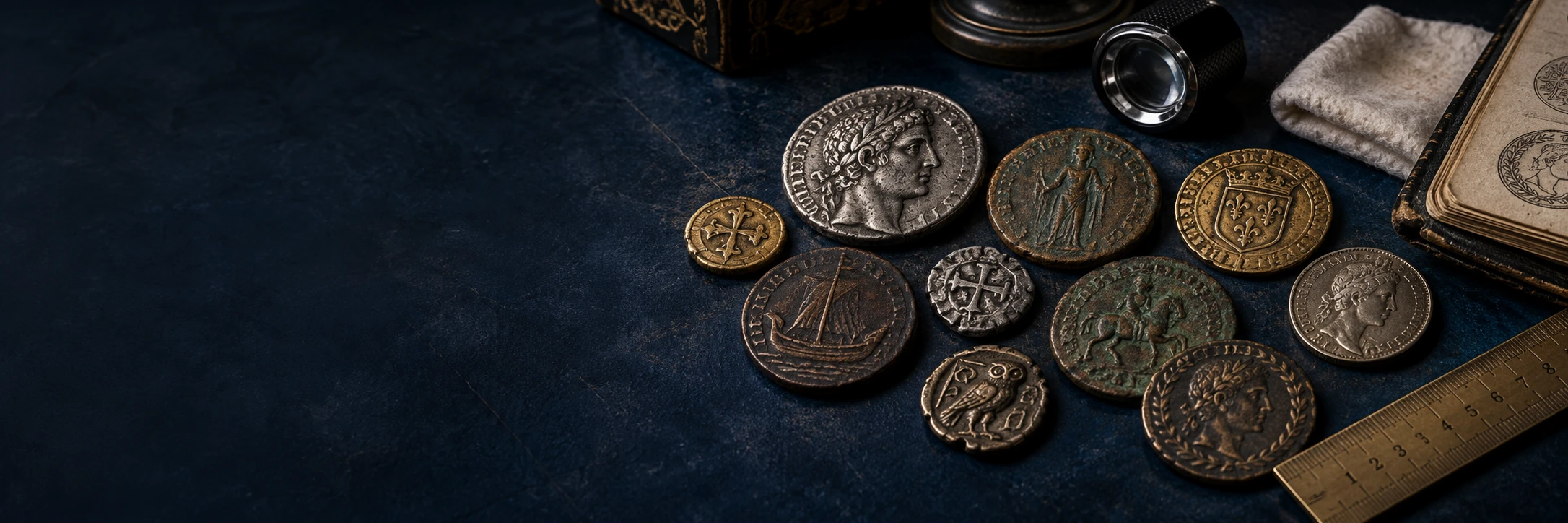
Use the scanner when you are ready to compare your coin with the clues in this guide.
Scan your coinRecord the flan, portrait, legend, mint, edge, strike, and measurements, then check authenticity and the exact hand-struck type before researching value.
Use this checklist to organize a hand-struck coin before searching. It is a research aid, not an authentication or appraisal result.
Remember: an uneven flan or weak rim can be normal for hand striking, while the exact attribution, authenticity, condition, metal, and demand determine whether a premium is supported.
Start with the flan shape and strike quality, then document the portrait, surviving legend, symbols, mint mark, die axis, edge, diameter, and weight. Compare the complete design with likely hand-struck types before deciding whether the weak rim is normal variation, later damage, or a rare variety.
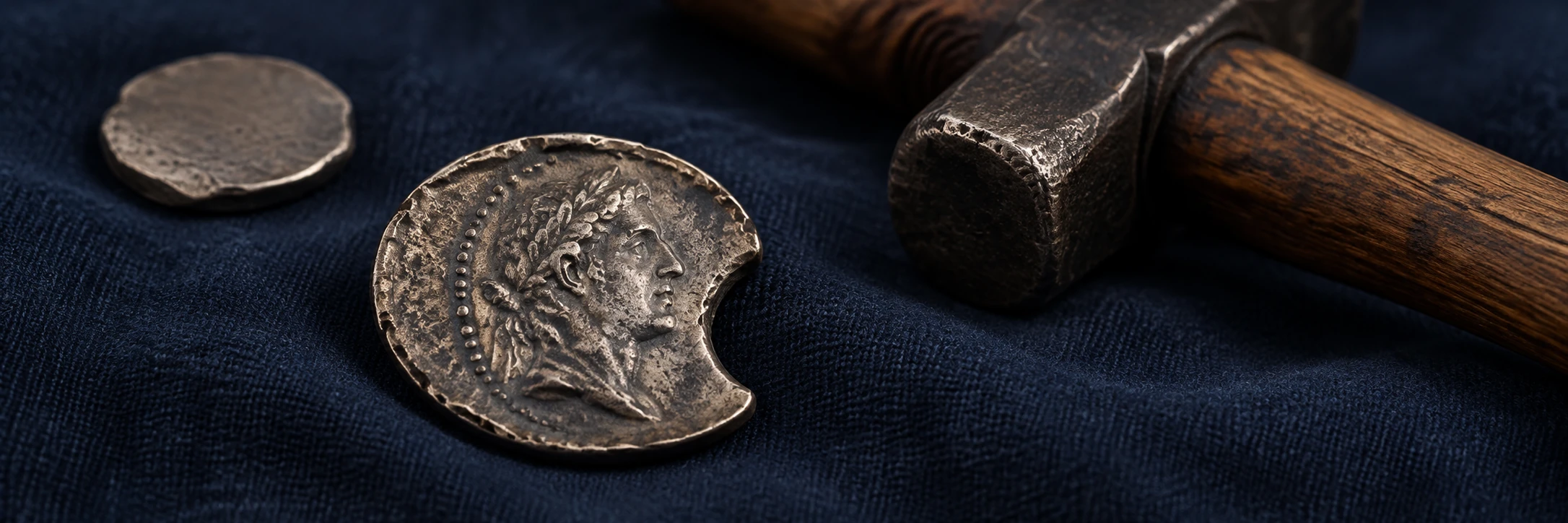
Look at the blank itself before trying to name a ruler. Hammered flans can be thin, broad, uneven, clipped, or slightly folded at the edge. Silver, gold, and base-metal pieces also reflect light differently, but color alone cannot identify a period or composition.
Note whether the relief is sharp in the center and weak at the rim, whether one side is rotated, and whether the coin appears hand-struck rather than machine-made. These observations narrow the research path without turning a visual impression into a final attribution.
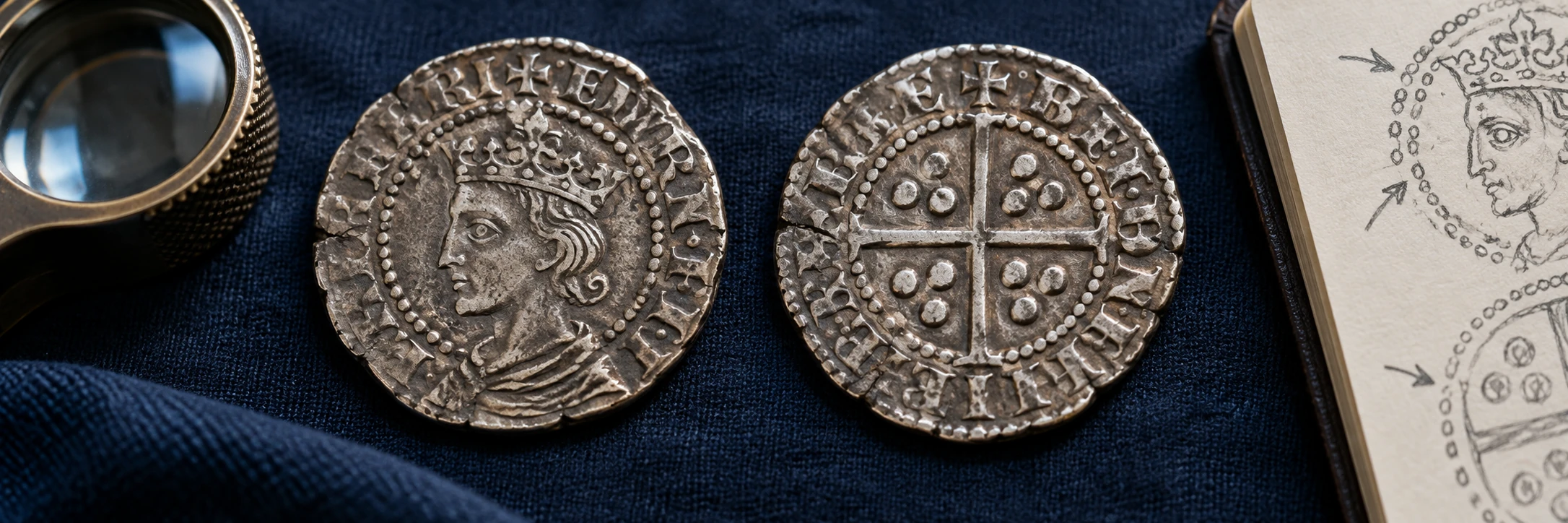
Photograph both sides flat and keep the entire flan in frame. A crowned head, helmet, saint, animal, cross, shield, or seated figure can point toward a ruler, kingdom, mint, or denomination, while a few readable letters may confirm the issuing authority.
Transcribe the characters exactly as they appear, even when the legend is broken by the edge. Record the direction of the lettering, abbreviations, punctuation, and any border pellets or ornaments. A guessed reading can lead to the wrong country or century.
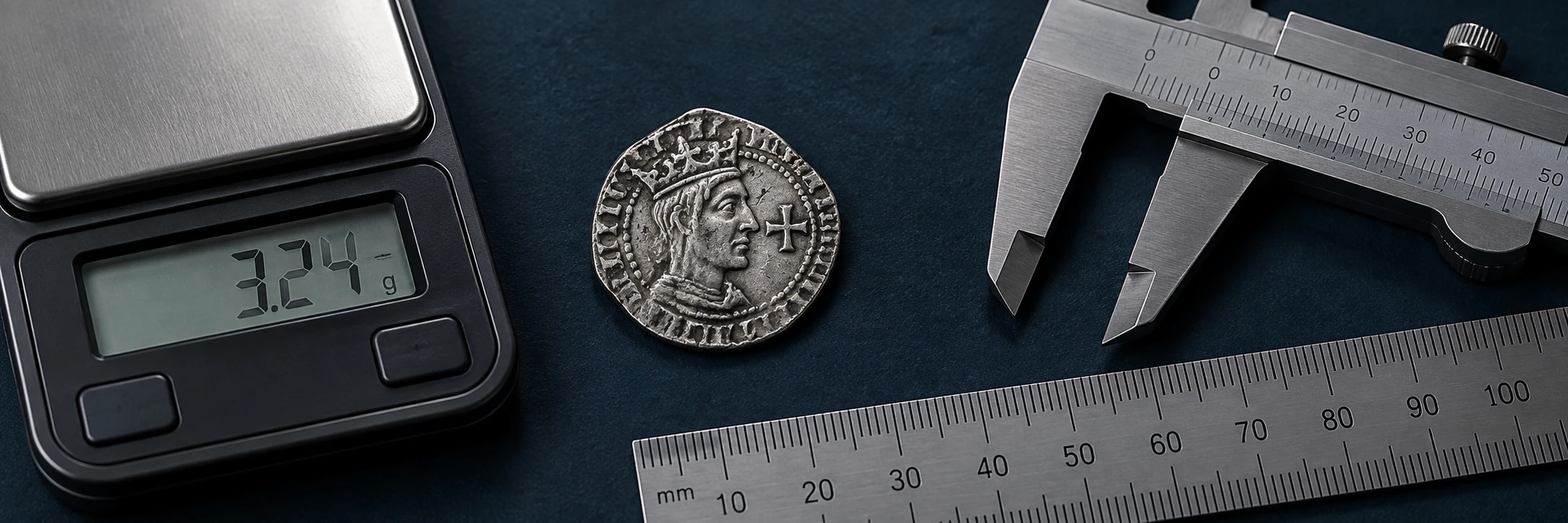
Once a likely type is found, measure the coin and photograph the edge. Weight, diameter, thickness, edge splits, and any lettering or milling help separate similar hammered issues. A mint mark may be tiny, hidden in the design, or visible only on one side.
Do not compare a hammered coin to a perfectly round modern coin at the same apparent size. Hand-struck flans vary, and wear can remove the rim. Measurements are cross-checks for an attribution; they do not prove that the coin is genuine.
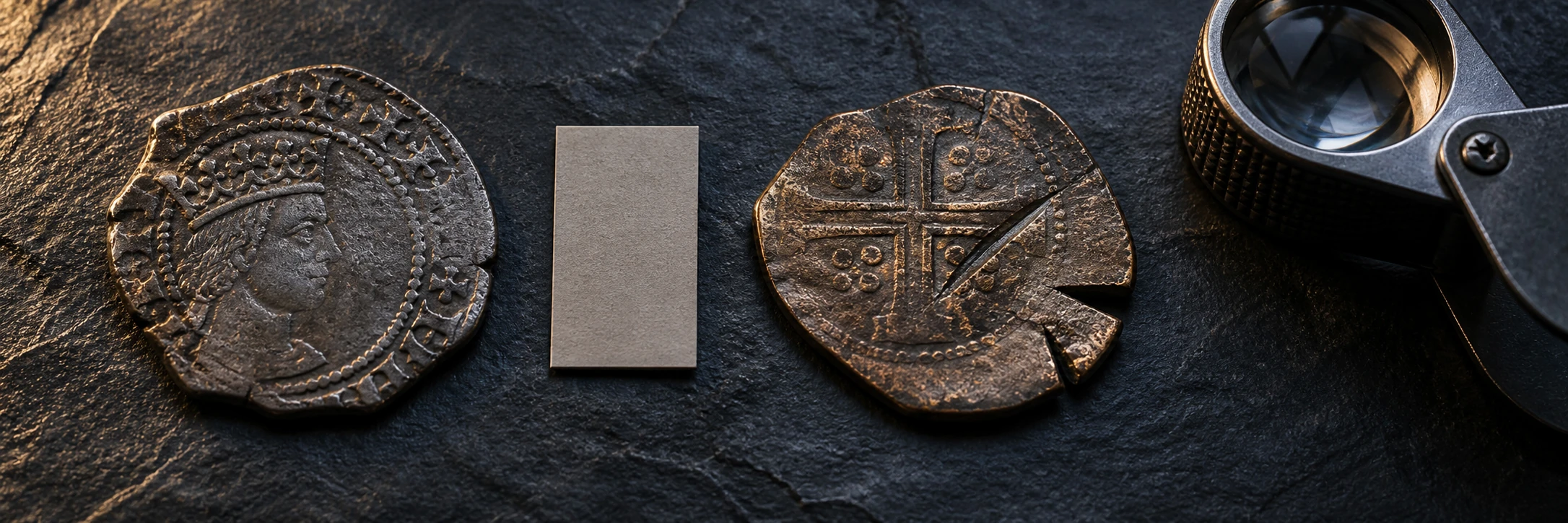
An incomplete legend, double edge, weak rim, or uneven border can be normal for a hammered coin. Compare the relief and metal flow with known examples before calling it an error. Clipping, filing, bends, scratches, and test cuts may be later damage rather than part of the minting process.
A cast copy can imitate a hand-struck appearance but often has soft repeating details, a seam, bubbles, or an incorrect weight. Keep the coin uncleaned, photograph suspicious areas with gentle side light, and seek an in-person review when the piece may be valuable or historically important.
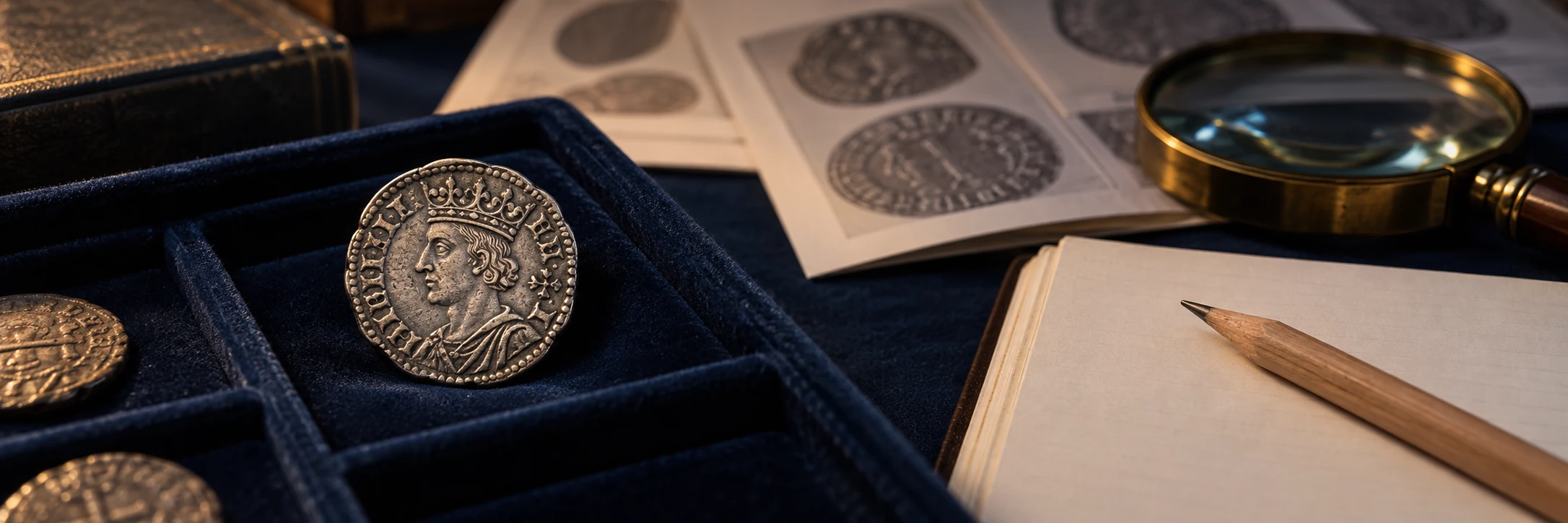
Hammered coins can range from common worn issues to scarce rulers, mints, varieties, and exceptional metals. Value depends on the exact attribution, legend, date or reign, denomination, metal, rarity, condition, provenance, and demand. An irregular flan or attractive portrait alone does not establish a premium.
Compare the same ruler, type, mint, legend, weight standard, and condition with completed sales. Avoid polishing or straightening the coin. For a suspected precious-metal, rare, or ancient piece, arrange authentication before buying or selling.
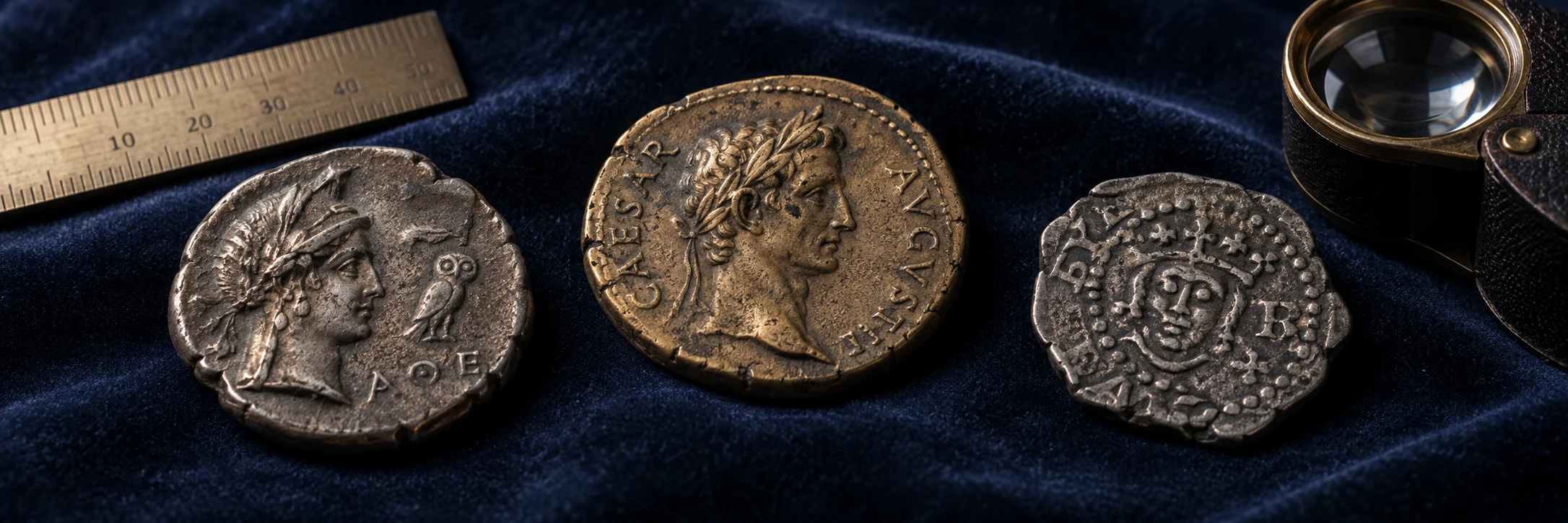
A hammered coin was struck by hand between dies, so its flan, rim, alignment, and design can be irregular compared with a modern machine-made coin.
Photograph both sides and the edge, then compare the flan, portrait, symbols, surviving legend, mint mark, weight, diameter, and strike style.
No. Off-center strikes and incomplete rims are common features of hand striking. Rarity depends on the exact type, variety, condition, and demand.
Look for soft repeating details, seams, bubbles, incorrect weight, and inconsistent metal flow, but remember that a photo cannot prove authenticity.
No. Cleaning or straightening can damage the surface and reduce collector interest. Photograph it as found and ask for advice first.
No. A photo supports identification, but value depends on the exact attribution, authenticity, metal, condition, provenance, rarity, and current market evidence.