
1909-S VDB Penny Value, Rarity & Identification Guide
The 1909-S VDB Lincoln cent is one of the most important key dates in the United States. Only 484,000 were struck at San Francisco before the V.D.B. initials were removed from the reverse, but the coin is also heavily altered and counterfeited.
A real example is identified by more than an S and V.D.B. The date, mintmark position, S shape, VDB letter structure, surfaces and physical specifications must agree before a major value claim is credible.
Reviewed by the Coins Identification editorial team · Values checked September 2026
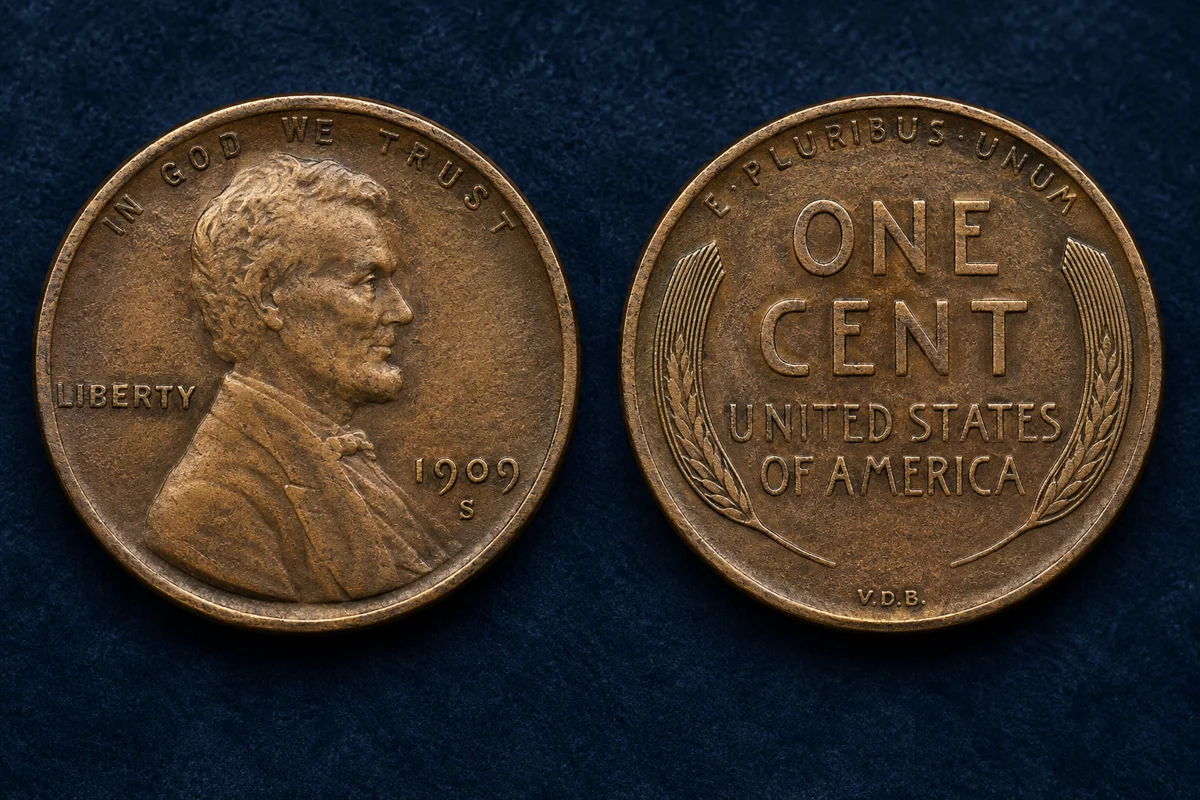
1909-S VDB Penny Value, Rarity and Authentication
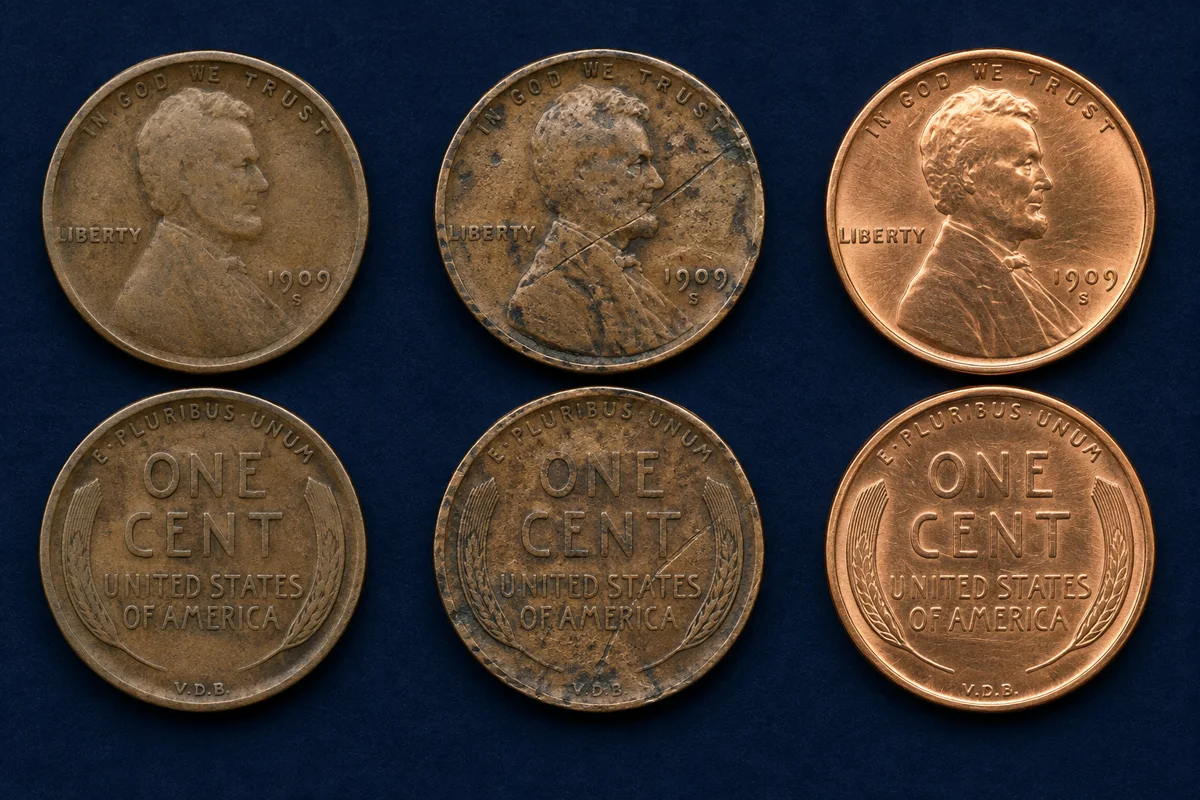
The 1909-S VDB Lincoln cent is valuable because only 484,000 were struck, it is a first-year issue, and the V.D.B. initials were removed from later 1909 production. A genuine coin can be desirable in circulated condition and can bring many thousands of dollars in Mint State, but the range is controlled by grade, BN/RB/RD color, original surfaces, eye appeal, damage, cleaning and certification.
The coin is also one of the most commonly altered collectible U.S. coins. A counterfeiter can add an S to a 1909 VDB or add V.D.B. to a 1909-S without initials. Matching a date, S and VDB is only the first screen; a valuable candidate should be authenticated before purchase or sale.
How Much Is a 1909-S VDB Penny Worth?
Values are not one fixed number.
The live PCGS Price Guide separates the 1909-S VDB into Brown, Red-Brown and Red designations. The selected guide checkpoints below are a research starting point, not a guaranteed offer. The guide changes, and a certified coin with strong eye appeal can trade above or below a published figure.
| Grade checkpoint | BN context | RB context | RD context | How to use it |
|---|---|---|---|---|
| G4 | $875+ | — | — | Circulated; compare color and surface. |
| F12 | $1,500+ | — | — | Circulated guide point; do not interpolate missing colors. |
| XF40 | $2,750+ | $3,000+ | $3,500+ | Strong circulated example; compare problem-free surfaces. |
| AU50 | $3,250+ | $3,500+ | $4,600+ | The grade and originality gap becomes more important. |
| MS60 | $4,750+ | $9,000+ | $17,500+ | Mint State; certification and eye appeal matter. |
| MS65 | $9,500+ | $11,000+ | $47,500+ | High-grade context; use the live guide before quoting. |
| MS67 | — | $50,000+ | $150,000+ | Top-end context; the January 2026 RD record reached $170,800. |
The public PCGS page is the live reference for the full grade matrix. Blank cells are intentionally not estimated. Open the current PCGS Price Guide.
Circulated vs. Mint State 1909-S VDB Pennies
Circulated: G through AU
Genuine worn examples remain collectible because the date, S and V.D.B. belong to a low-mintage key date. Cleaning, corrosion, scratches, rim damage or an altered mintmark can cut value sharply even when the apparent grade looks strong.
Mint State: MS60 and higher
Mint State coins are judged by luster, marks, strike, color designation and surface originality. Two coins with the same numeric grade can trade very differently when one is original BN/RB/RD and the other is recolored or repaired.
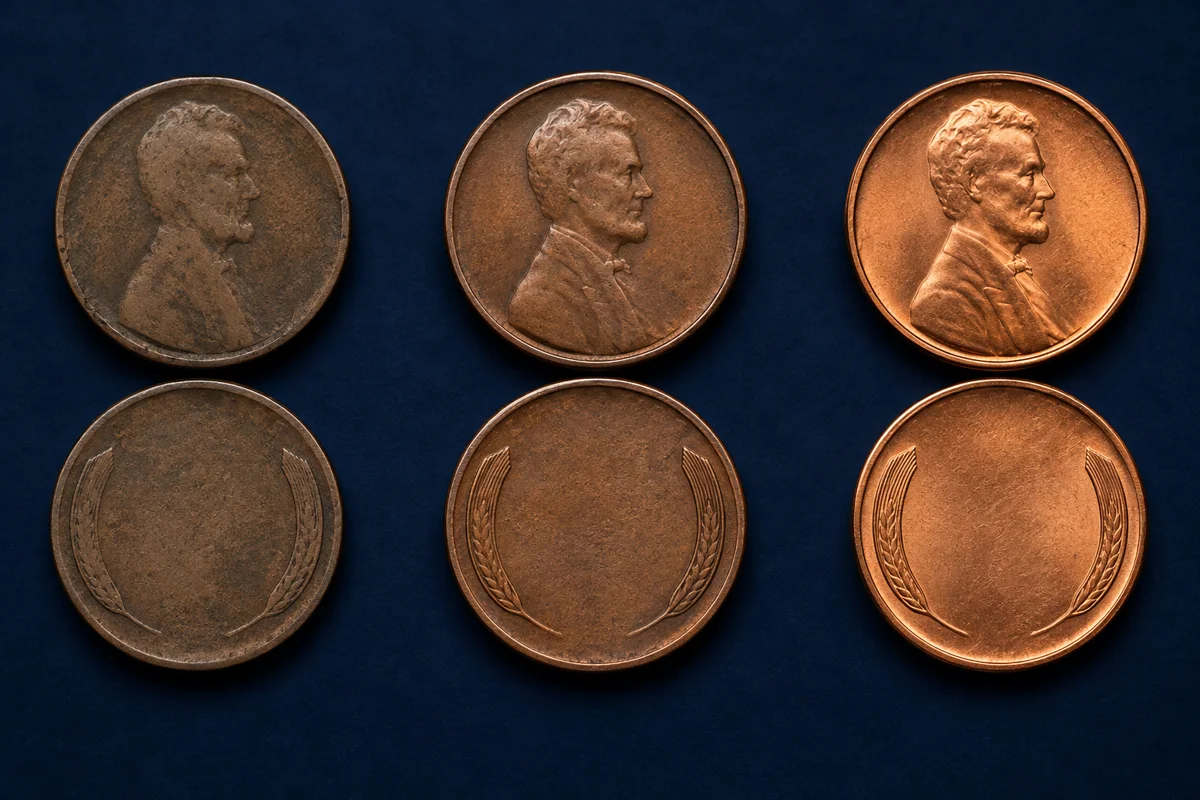
Why Color Matters
Color is separate from numerical grade.
BN means Brown, RB means Red-Brown and RD means Red. NGC’s color framework uses original red luster thresholds: RD represents at least 85% original red, RB at least 15%, and BN less than 15%. Red is not automatically better in every comparison: originality, surface quality, grade, strike and eye appeal also matter.
Less than 15% original red.
At least 15% original red.
At least 85% original red.
The editorial illustration is not a color-authentication reference. Use certified examples and the current grading service standards.
Why Is the 1909-S VDB Penny So Rare?
San Francisco struck only 484,000 cents with the V.D.B. initials before the initials were removed. That is the lowest mintage among the four main 1909 Lincoln cent combinations. The coin also launched a new Lincoln design, carries a short-lived reverse feature and has been a central target for collectors for more than a century.
The correct claim is that it is one of the most famous and important key dates in the Lincoln cent series. It is not useful to call it the absolute rarest Lincoln cent without qualification because proof issues, errors and condition rarities can have smaller populations.
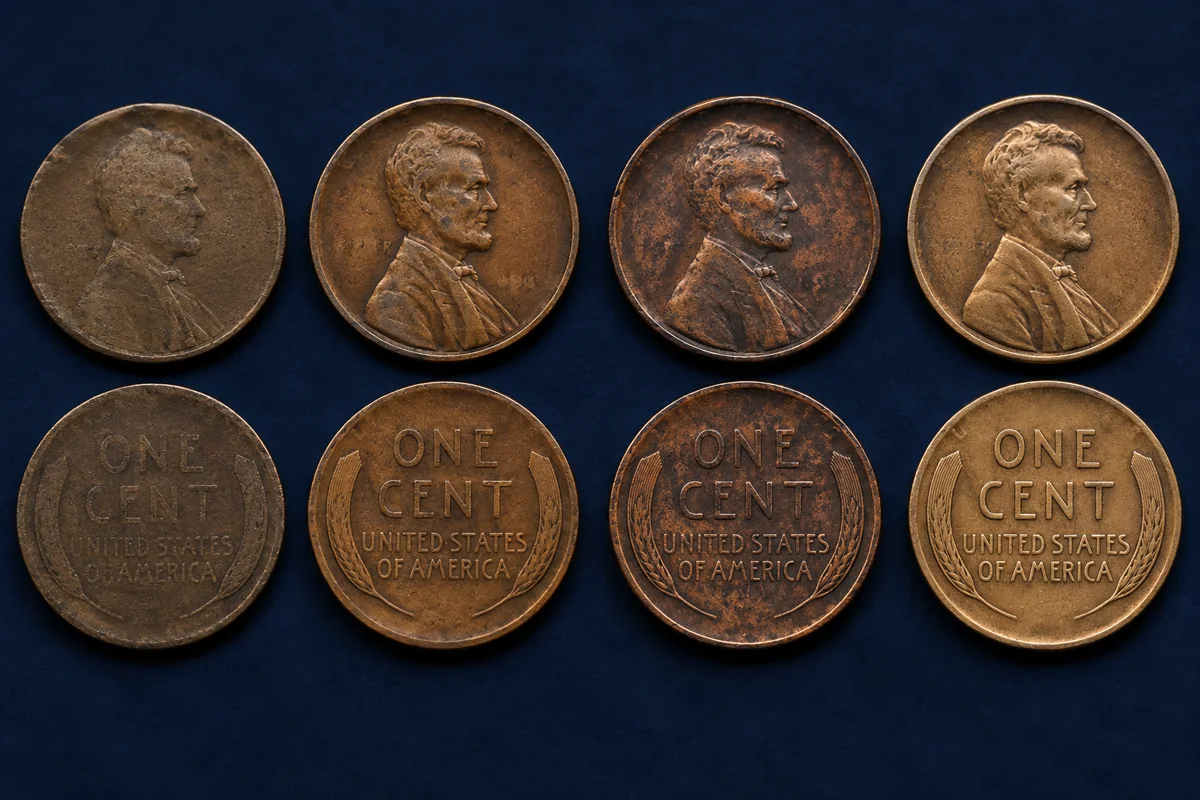
The Four Main 1909 Lincoln Cents
| Coin | Mint mark | V.D.B. | Mintage |
|---|---|---|---|
| 1909 VDB | None | Yes | 27,995,000 |
| 1909-S VDB | S | Yes | 484,000 |
| 1909 | None | No | 72,702,618 |
| 1909-S | S | No | 1,825,000 |
Mintage figures are supported by the U.S. government historical record and specialist references; PCGS lists the 1909-S VDB mintage as 484,000.
Where Is the S Mint Mark?
The S mint mark appears on the obverse below the date. On a genuine 1909-S VDB it must be in one of four documented positions. Compare height, rightward placement, serifs and the metal immediately around the letter.
Where Are the VDB Initials?
V.D.B. is at the bottom center of the reverse between the wheat stalks. The initials stand for Victor David Brenner. A genuine 1909-S without VDB is a different issue; an added VDB is a known alteration risk.
How to Identify a 1909-S VDB Penny
Use the clues in order.
Read 1909 straight on.
It should be below the date.
Inspect the complete wheat reverse.
Find the initials at bottom center.
Check serifs and the raised dot.
Compare with one of four known positions.
Look at the B crossbar and D base.
Weight is about 3.11 g; edge is plain.
Inspect tool marks and unnatural surfaces.
Use a professional service for value claims.
Real vs. Fake 1909-S VDB Penny
Finding S and VDB is not enough.
NGC identifies the 1909-S VDB as one of the most commonly altered and counterfeited collectible coins. The two common alterations are an added S on a 1909 VDB and added V.D.B. initials on a genuine 1909-S cent without VDB. Die-transfer counterfeits can reproduce genuine markers, so diagnostics increase confidence but never replace professional examination.
ALTERED: Added S
A counterfeiter starts with a 1909 VDB Philadelphia cent and adds an S. Check position, parallel serifs, the raised dot in the upper curve, tool marks and the surface around the letter.
ALTERED: Added V.D.B.
A genuine 1909-S without VDB can be altered by adding the initials. Compare the B crossbar, D base, letter structure and signs of tooling or disturbed metal.
OUTRIGHT COUNTERFEIT
A struck or transfer counterfeit may have a plausible date, S and VDB. Weak design detail, odd surfaces, wrong metal or a wrong reverse die can be warning signs.
Use NGC and PCGS reference diagnostics
These diagnostic blocks intentionally use text rather than AI-generated close-ups. Compare your coin with the NGC authentication guide and the PCGS counterfeit reference.
The Four Genuine 1909-S VDB Mint Mark Positions
Do not reject a coin because it differs from one photograph.
Researchers identify four genuine obverse die positions. The S generally moves down and to the right from position 1 to position 4. Position 1 is highest in relation to the 9s; position 2 is near the bottoms of the 9s; position 3 is farther right and below more of the 0; position 4 is lowest and farthest right.
Highest
The top of the S sits above the legs of the 9s. This die also appears on some non-VDB 1909-S cents, so an added VDB risk matters.
Near the 9s
The S is approximately level with the bottoms of the 9s and leans slightly right.
Farther right
The S sits farther right and below more of the 0 in the date.
Lowest
The S is significantly lower and farther right than the other positions.
A position match increases confidence; it does not guarantee authenticity. Sophisticated counterfeits can copy a genuine host coin.
What Should a Genuine S Look Like?
NGC and PCGS describe a small raised dot inside the upper curve of the genuine S and straight, parallel serifs. The dot can be weak or difficult to see, so its absence alone does not condemn a coin. Wrong position, tilted serifs, disturbed metal and a mismatch with the date are stronger warning signs.
What Should Genuine VDB Look Like?
On genuine examples, the central crossbar of the B and the bottom of the D show characteristic slanting. Some genuine pieces also show strike doubling in the initials. A flat added-looking letter, tool marks and a surface mismatch deserve specialist review.
How to Authenticate a 1909-S VDB Penny
Diagnostics are not a guarantee
A matching S position and VDB shape do not guarantee authenticity. Die-transfer counterfeits can reproduce genuine markers. A potentially valuable 1909-S VDB should be professionally authenticated before a major purchase or sale.
1909-S VDB Penny Specifications
| Year | 1909 | Mint | San Francisco |
|---|---|---|---|
| Mint mark | S | Denomination | One cent |
| Series | Lincoln Wheat Cent | Designer | Victor David Brenner |
| Mintage | 484,000 | Composition | 95% copper alloy |
| Weight | 3.11 g | Diameter | 19.05 mm |
| Edge | Plain | Reverse initials | V.D.B. |
3.11 g ≠ automatically genuine. A counterfeit or altered genuine cent can still have approximately the correct weight.
What Does VDB Mean on a 1909 Penny?
VDB stands for Victor David Brenner, the designer of the Lincoln cent. He placed his initials at the bottom center of the reverse, between the wheat stalks. The placement was visible and drew public and press criticism after the new cent was released.
Why Were the VDB Initials Removed?
The Mint responded to criticism by removing the initials from new reverse dies rather than continuing the same prominent placement. That short production window is why the 1909-S VDB is distinct from the much more common 1909-S without VDB. The initials returned in 1918 in a less prominent location on Lincoln’s shoulder.
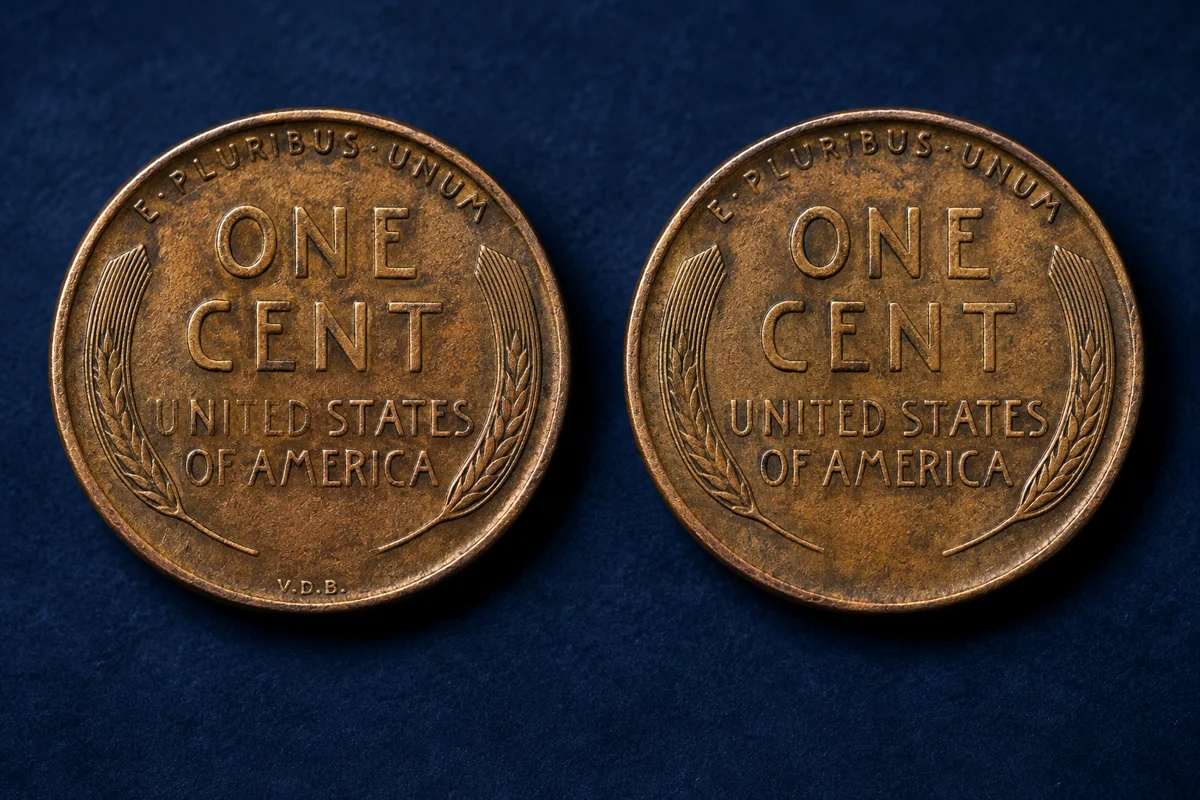
What Makes a 1909-S VDB Valuable?
- 484,000 mintage
- First-year Lincoln cent status
- Key-date demand
- V.D.B. removal story
- Grade and BN/RB/RD color
- Original surfaces and eye appeal
- Authentication and certification
Most Valuable 1909-S VDB Pennies Sold at Auction
Records are not typical values.
| Grade / color | Certification | Auction | Date | Realized |
|---|---|---|---|---|
| VG10 BN | PCGS | David Lawrence RC | Feb 2022 | $925 |
| XF40 BN | PCGS | Heritage Auctions | Mar 2008 | $1,265 |
| MS64 BN | NGC | Goldberg Auctioneers | Feb 2023 | $2,760 |
| MS65 RB | PCGS | Heritage Auctions | Jan 2025 | $3,840 |
| MS65 RD | NGC | Scotsman | Jul 2023 | $7,375 |
| MS65 RD | PCGS | Heritage Auctions | Mar 2025 | $6,600 |
| MS67 RD | PCGS | Heritage Auctions | Jan 17, 2026 | $170,800 |
These are individual PCGS-listed auction records and appearances, not a price promise. Review the PCGS auction database before citing a result.
Is a Worn 1909-S VDB Penny Still Valuable?
Yes. A genuine circulated coin can retain collector value because the low mintage and key-date demand survive ordinary wear. The important distinction is between honest wear and a problem surface. Cleaning, corrosion, scratches, rim damage, tooling or an altered S/VDB can make a coin worth far less than a problem-free example of similar apparent grade.
1909-S VDB Penny for Sale: What to Check
- Prefer a PCGS- or NGC-certified example.
- Verify the certification and holder.
- Check the S and V.D.B. areas.
- Compare the S with all four positions.
- Inspect surfaces for tooling or unnatural color.
- Compare completed auction sales, not asking prices.
Where Can I Sell One?
For a possible genuine key date, authenticate or grade first. Then choose an established dealer or auction venue based on the coin’s value and certification. Do not rely on a photograph alone for a high-value valuation.
Should You Clean It?
No. Do not polish, dip, brush, scrape or use chemicals. Leave the S, V.D.B. and surfaces unchanged for examination.
1909-S VDB vs. 1909 VDB
| Feature | 1909-S VDB | 1909 VDB |
|---|---|---|
| Mint | San Francisco | Philadelphia |
| Mint mark | S | None |
| V.D.B. | Yes | Yes |
| Mintage | 484,000 | 27,995,000 |
| Relative rarity | Key date | Much more common |
| Authentication risk | Very high | Lower, but still inspect the coin |
1909-S VDB vs. 1909-S
| Feature | 1909-S VDB | 1909-S |
|---|---|---|
| S | Yes | Yes |
| V.D.B. | Yes | No |
| Mintage | 484,000 | 1,825,000 |
| Key diagnostic | S + V.D.B. | No V.D.B. |
1909-S VDB Penny FAQ
How much is a 1909-S VDB penny worth?
A genuine example has collector value in circulated grades and can be worth thousands in Mint State. Grade, BN/RB/RD color, surface, originality, certification and eye appeal all matter; use the current PCGS or NGC guide for the exact grade.
Why is the 1909-S VDB so valuable?
Only 484,000 were struck at San Francisco before the V.D.B. initials were removed, making it a first-year key date with strong Lincoln cent demand.
How many 1909-S VDB pennies were minted?
The San Francisco Mint struck 484,000 1909-S VDB cents.
Where is the S on a 1909-S VDB penny?
The S mint mark is on the obverse directly below the 1909 date.
Where are the VDB initials?
V.D.B. appears at the bottom center of the reverse between the wheat stalks.
What does VDB stand for?
VDB stands for Victor David Brenner, the designer of the Lincoln cent.
How can I tell if my 1909-S VDB is real?
Check the date, S, V.D.B., one of the four documented S positions, the S serifs, VDB letter structure, surfaces and physical specifications. A valuable coin still needs professional authentication.
How many genuine S mint mark positions are there?
Four documented obverse die positions are recognized for genuine 1909-S VDB cents. The S moves down and to the right from position 1 to position 4.
What does a fake 1909-S VDB look like?
Common alterations add an S to a 1909 VDB or add V.D.B. to a 1909-S without initials. Entirely struck counterfeits and die-transfer counterfeits also exist.
Can the S mint mark be added?
Yes. NGC specifically lists added mint marks as a common alteration. Look for wrong position, wrong serifs and disturbed metal around the S.
Can VDB initials be added?
Yes. A genuine 1909-S cent without VDB can be altered by adding the initials. Compare letter shape, slanted crossbars and surface texture.
How much does a 1909-S VDB weigh?
The normal bronze specification is about 3.11 g. Weight is only a screening check and does not prove authenticity.
Is a worn 1909-S VDB still valuable?
Yes, if genuine and not harshly cleaned, damaged or altered. Circulated examples remain desirable because of the low mintage and key-date status.
Should I buy an uncertified 1909-S VDB?
Use considerably more caution with a raw high-value example. Prefer PCGS- or NGC-certified coins and verify the holder and certification.
Should I clean a 1909-S VDB?
No. Do not polish, dip, brush, scrape or chemically treat a possible key date. Preserve the surface for examination.
Related Lincoln Cents
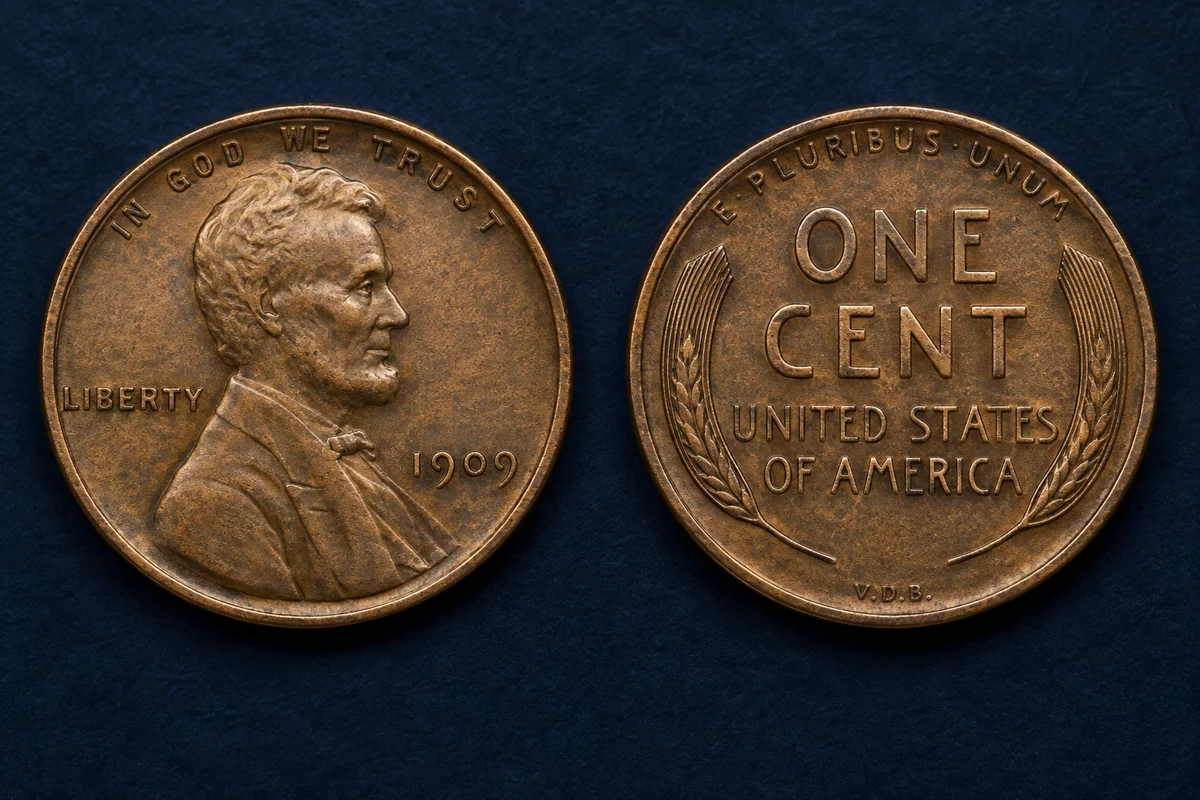
1909 VDB Penny
Compare date, mint mark, design and authentication clues.
View coin →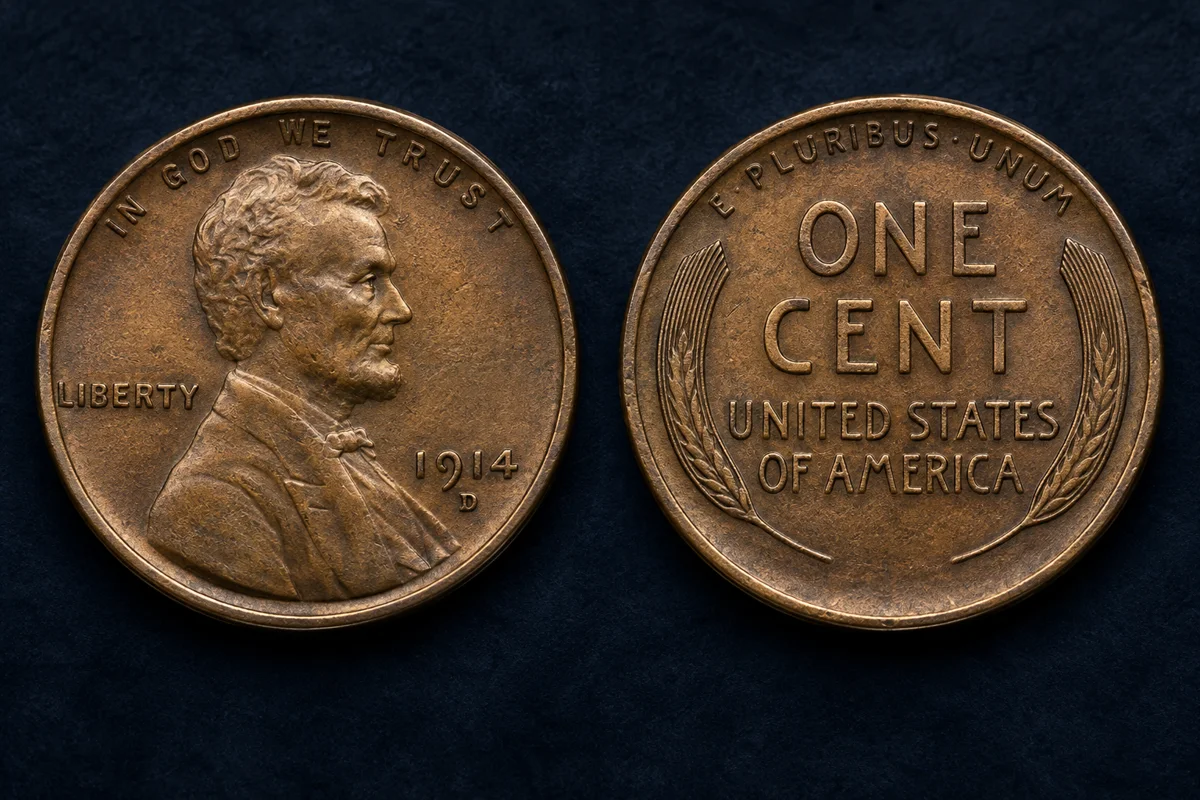
1914-D Penny
Compare date, mint mark, design and authentication clues.
View coin →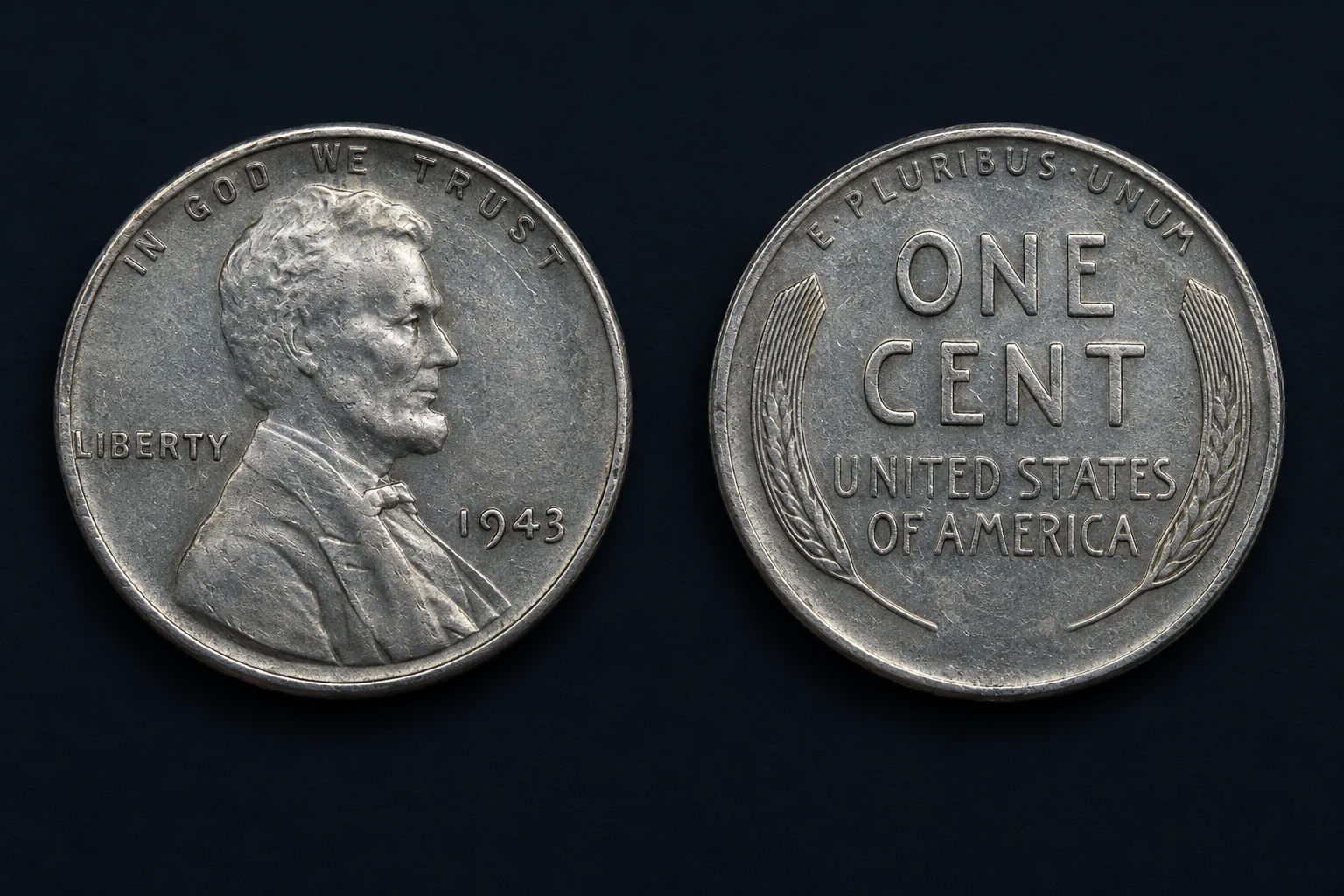
1943 Steel Penny
Compare date, mint mark, design and authentication clues.
View coin →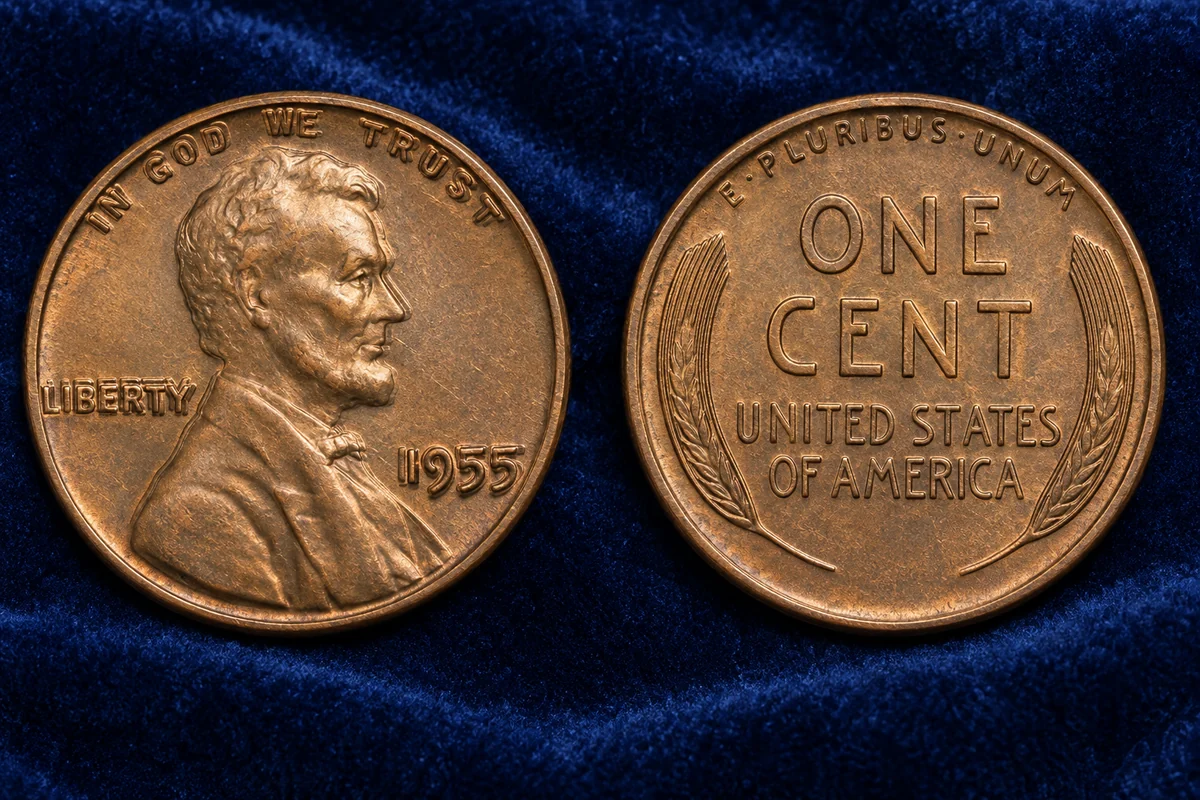
1955 Double Die Penny
Compare date, mint mark, design and authentication clues.
View coin →Sources Used for This Guide
Use the specialist references below for current price checks and authentication comparisons. Third-party asking prices are not treated as evidence.