
1955 Doubled Die Penny Value & Identification Guide
The famous 1955 Doubled Die is a Philadelphia Lincoln Wheat Cent with dramatic obverse doubling. The strongest separation appears on the date, LIBERTY and IN GOD WE TRUST. Genuine examples can be worth thousands of dollars, with grade and original color driving the largest premiums. No mint mark is correct for this variety.
FS-101 terminology and specifications checked against PCGS references · Prices shown only where a source is identified

How Much Is a 1955 Doubled Die Penny Worth?
Authenticity comes before price.
Even circulated genuine examples have substantial collector value. Grade, BN/RB/RD color, original surface and certification separate one coin from another. A certified genuine coin is a different market object from a raw coin that merely looks doubled in a photograph. Auction records show what one coin realized, not a guaranteed value for every example.
PCGS references place an AU58 BN guide value around $2,800 in the current snapshot, while a high-grade MS65 RD example has a guide value around $65,500. These are source snapshots, not appraisals. Recheck the linked PCGS record for the exact grade, color and attribution before quoting a price.

1955 Doubled Die Penny Value Chart
Only published numeric checkpoints are shown.
| Grade | Color | PCGS guide checkpoint |
|---|---|---|
| AU58 | BN | $2,800 PCGS snapshot |
| MS65 | RD | $65,500 PCGS snapshot |
This table contains only source-backed numeric checkpoints. Other grade/color combinations are omitted because the checked source does not publish a numeric checkpoint for them; no value is invented or interpolated. See the PCGS CoinFacts FS-101 record for the live guide and exact color designation.
How Color Affects 1955 Doubled Die Penny Value
BN, RB and RD are separate designations.
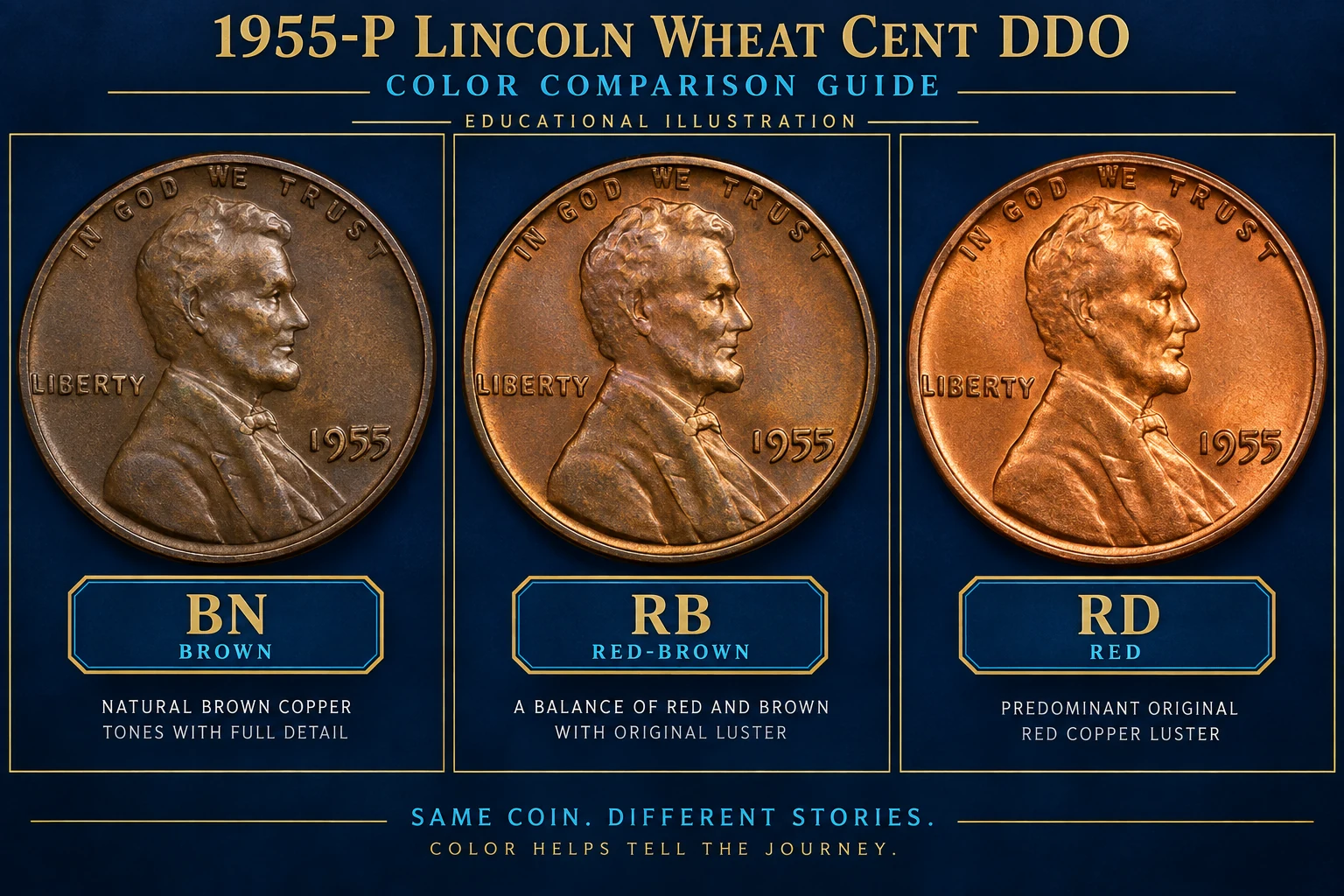
BN means Brown, RB means Red-Brown and RD means Red. PCGS catalogs the 1955 DDO in all three color designations. RD does not mean shiny: cleaning, artificial brightening or recoloring cannot create a genuine RD designation. Original surfaces and stable copper color matter when a grading service evaluates a valuable variety.
What Does a 1955 Doubled Die Penny Look Like?
Look for a matching pattern, not one isolated mark.
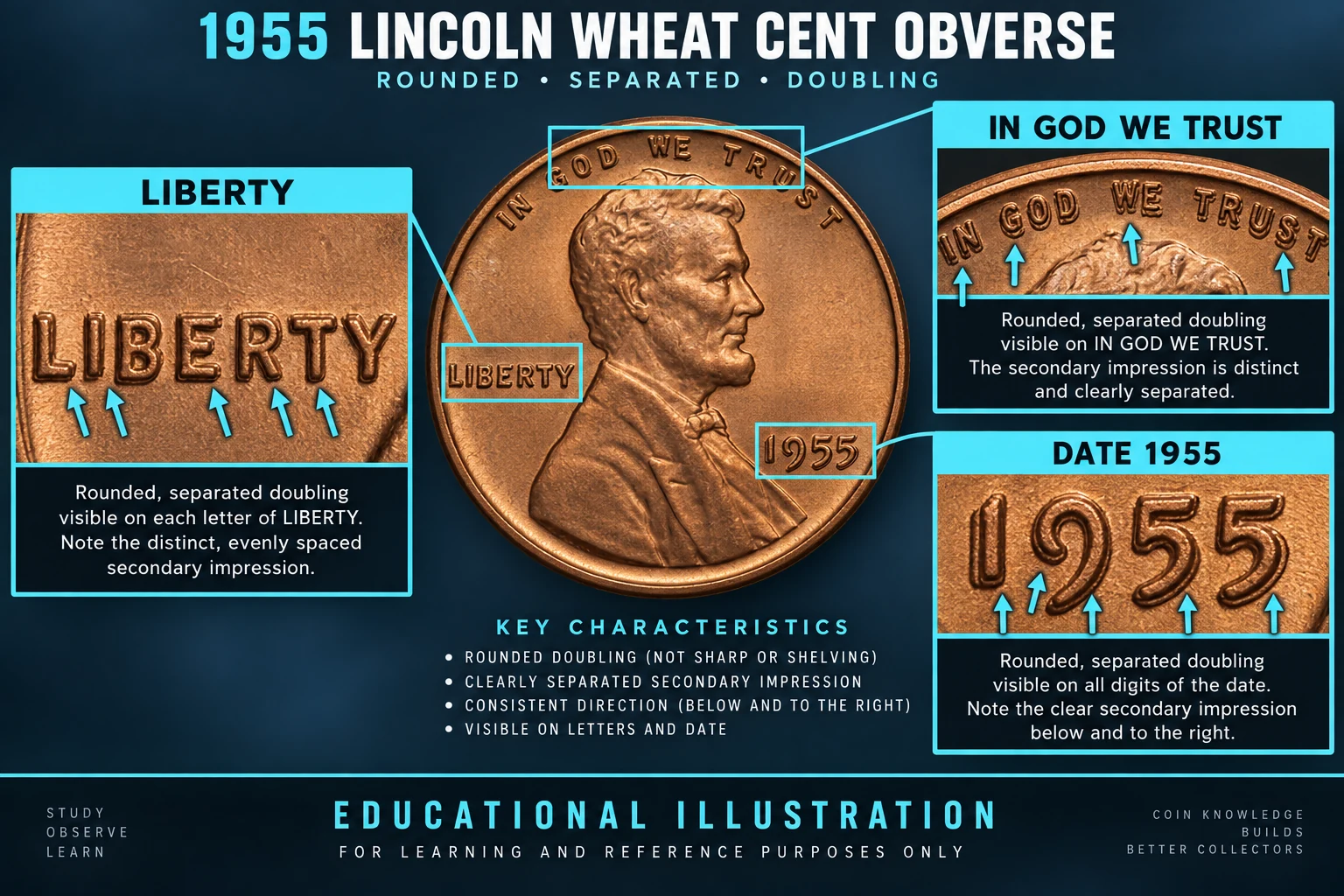
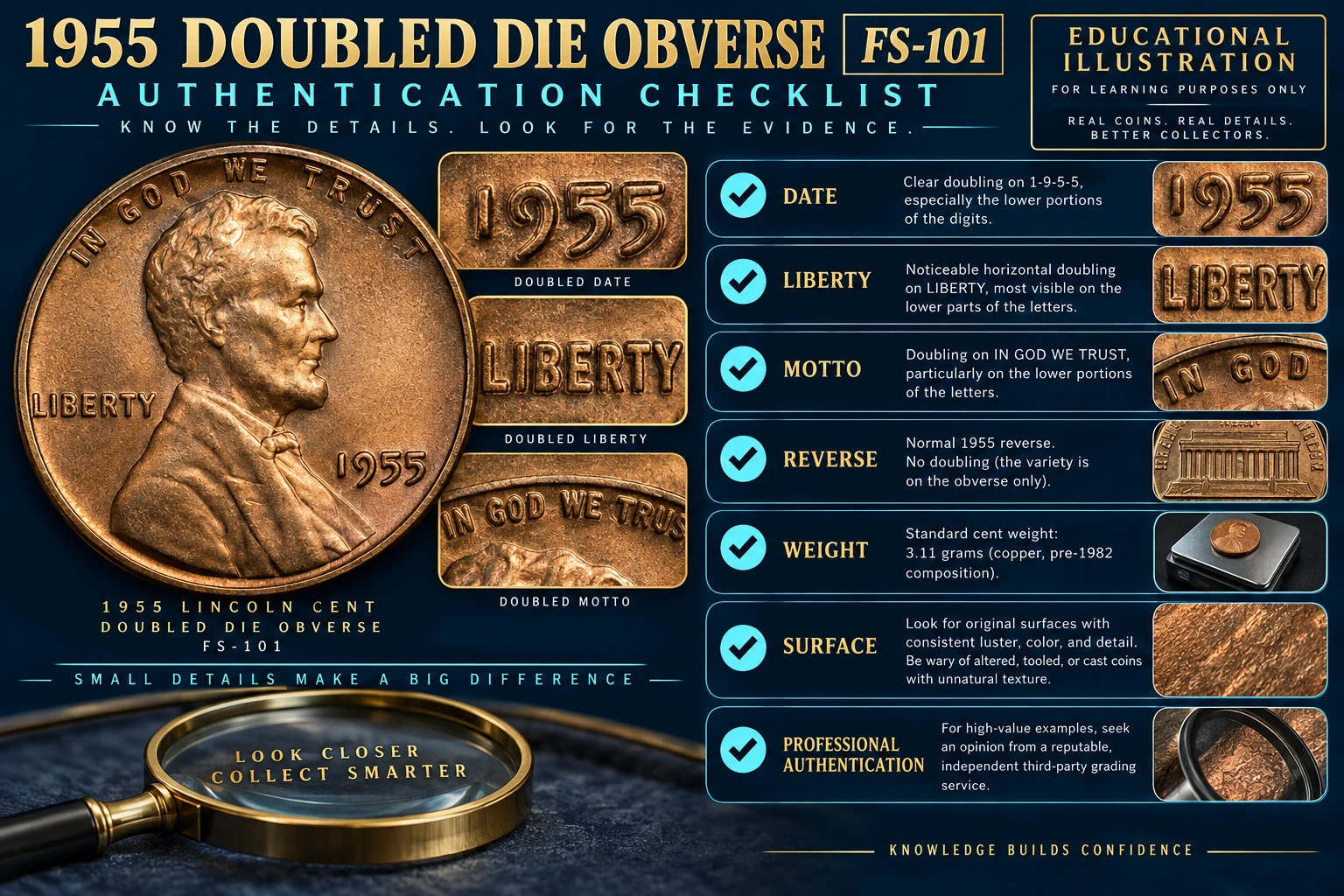
The famous FS-101 has wide, rounded separation caused by a rotated hub impression during die production. The date, LIBERTY and IN GOD WE TRUST are the quickest places to screen a possible example. The doubling should repeat as a coherent design feature across the obverse. A small blurry image, a scratch or a flat shelf edge cannot establish attribution.
1955 Doubled Die Date
The date is one of the easiest first checks because genuine FS-101 doubling creates clear separation around the numerals. Compare the shape and direction of the secondary design with a trusted reference under magnification. Do not authenticate a coin from the date alone: the lettering and motto must support the same attribution.

Check LIBERTY
On a genuine 1955 DDO, LIBERTY shows rounded, separated lettering that agrees with the other obverse markers. Wear can soften the edges, while scratches and machine doubling can create misleading lines. Compare the full word and the date together instead of judging a single letter.

Check IN GOD WE TRUST
The motto is another strong screen for the famous variety. Look for the same broad, rounded hub doubling rather than a thin scratch or a shelf-like edge. A real attribution needs agreement among the date, LIBERTY and motto.

Does the Reverse Help Identify a Genuine 1955 DDO?
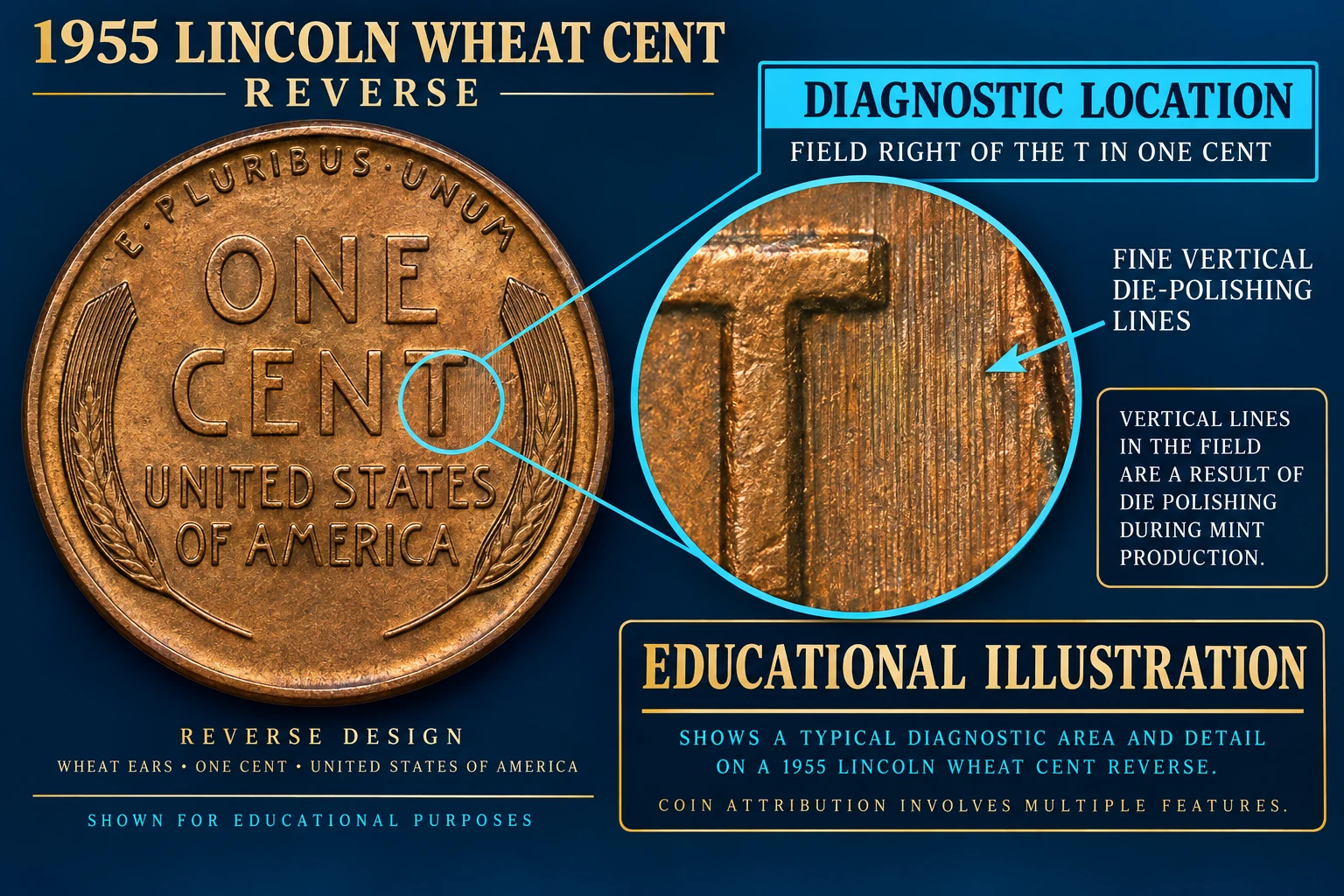
The reverse is not the primary FS-101 diagnostic, but PCGS references note a reverse die that is about five percent misaligned and documented fine vertical die-polishing lines near the T in ONE CENT. Treat that location as supporting context only. Seeing one line does not prove authenticity.
1955 Doubled Die vs Machine Doubling
Die creation and striking leave different clues.
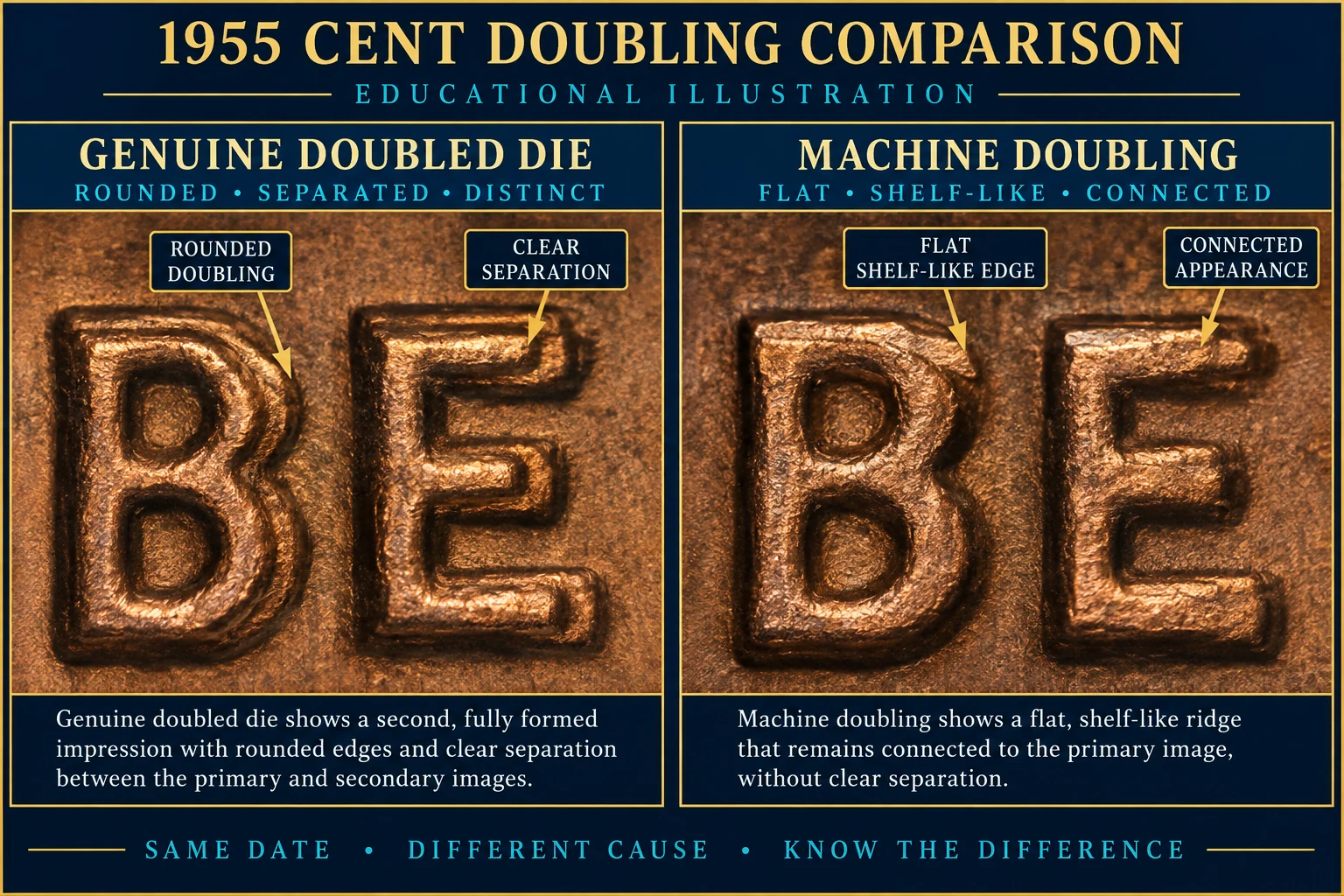
A doubled die is formed when a working die receives a misaligned hub impression. Machine doubling happens during the strike and often looks flatter, pushed or shelf-like. Genuine FS-101 doubling has rounded, separated design elements that remain consistent across the date and lettering. Compare the shape, direction and location with a recognized reference.
How to Spot a Fake 1955 Doubled Die Penny
Use warnings to decide when to stop and authenticate.
Warning signs include an altered date, unnatural lettering, cast or microporous surfaces, a beveled or incorrect edge and doubling that does not match the known die markers. Do not copy or recreate these features. Compare the full coin, edge, weight and multiple diagnostics, then submit an expensive candidate to PCGS or NGC.

How to Authenticate a 1955 Doubled Die Penny
A candidate should match the date, LIBERTY, motto and supporting reverse context, while also fitting the 3.11 g bronze specification. For a valuable coin, professional authentication is the next step. Verify the certification number, exact FS-101 attribution, grade and color before buying or selling.
How Many 1955 Doubled Die Pennies Are There?
Production estimates are not survival counts.
PCGS references describe approximately 40,000 coins struck and about 24,000 released into circulation. The remainder were reportedly found and destroyed before release. Struck, released and surviving today are separate concepts. A current survival estimate should be labeled as an estimate with its checking date, not presented as an exact census.

How Was the 1955 Doubled Die Created?
During die production, a working die received more than one hub impression. In the famous 1955 variety, the later impression was rotated from the first, leaving separated design elements on the finished die. PCGS classifies the variety as Class I rotated hub doubling. Coins struck from that die repeat the design separation. The coin was not simply struck twice: the doubling was already present on the die before coins were made.
Does a Genuine 1955 Doubled Die Have a Mint Mark?
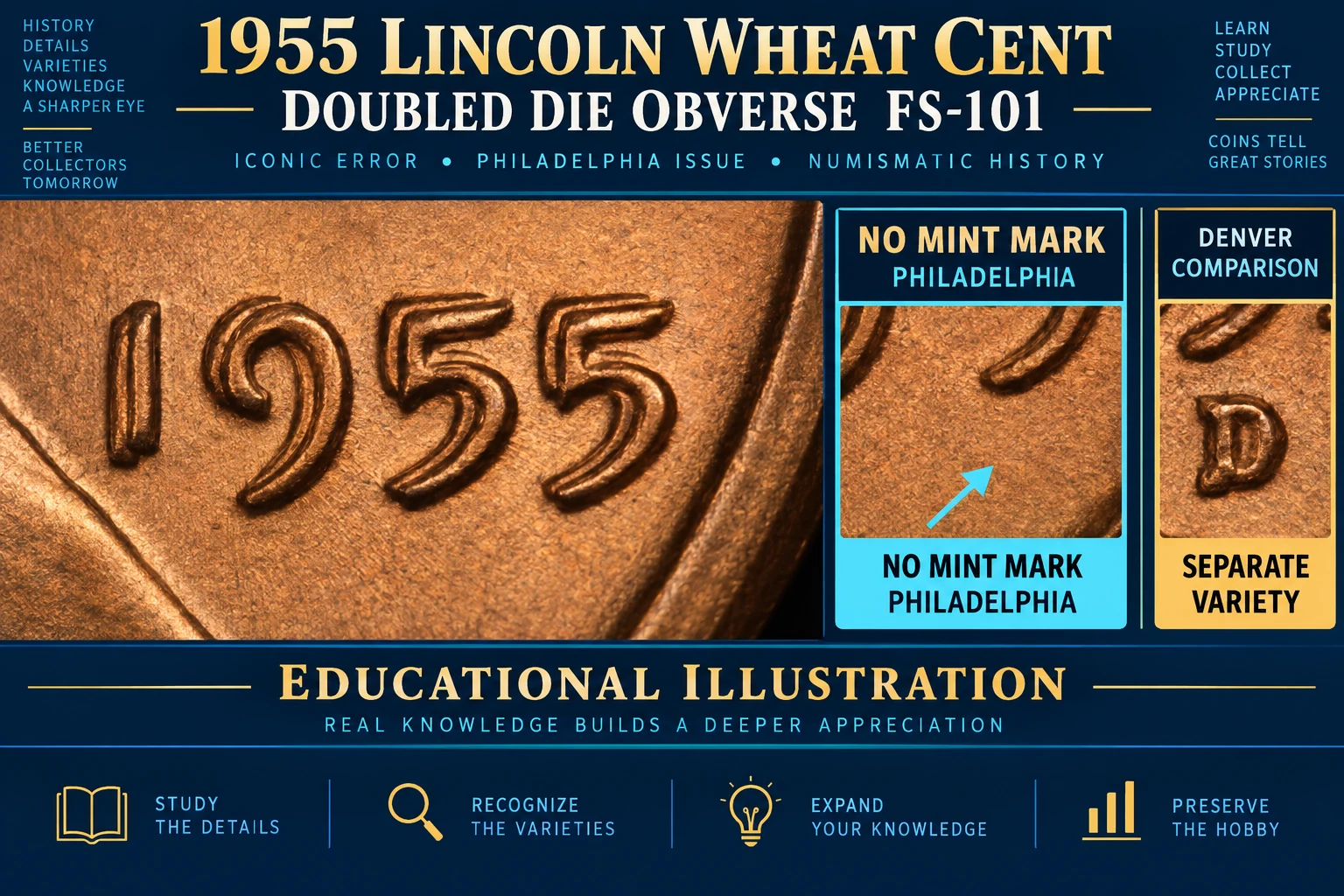
The famous FS-101 was struck at Philadelphia and has no mint mark. A D below the date identifies Denver and belongs to a separate 1955-D doubled-die or other Denver variety. Do not mix 1955-D DDO searches with the famous Philadelphia issue.
Is There a 1955-D Doubled Die Penny?
Yes, but it is a different variety.
Recognized 1955-D doubled-die varieties exist in PCGS catalogs, including a 1955-D DDO FS-101. They are not the famous Philadelphia 1955 Doubled Die that most collectors mean by “the 1955 Doubled Die.” A D mint mark changes the attribution, the reference record and the value comparison. This page keeps the Denver topic brief so a future 1955-D guide can cover its own varieties and prices without mixing markets.
What Makes a 1955 Doubled Die Penny Valuable?
Authenticity is factor one.
Authenticity, grade, BN/RB/RD color, original surface, strike quality, eye appeal, certification and relevant provenance all affect demand. A high-grade RD coin with original surfaces can be worth dramatically more than a worn or cleaned example. A raw coin with a promising date is still only a candidate until the complete diagnostic pattern is confirmed.
1955 Doubled Die Penny Auction Records
Historical sales are not appraisals.
| Grade / color | Certification | Auction house | Date | Realized |
|---|---|---|---|---|
| AU58 BN | PCGS FS-101 | Heritage | May 2025 | $2,400 |
| MS64 RD | PCGS FS-101 | Heritage | Aug 2024 | $10,200 |
| MS65 RD | PCGS FS-101 | Heritage | Jan 2025 | $90,000 |
| MS66 BN | PCGS FS-101 | Heritage | Sep 2016 | $30,550 |
| MS66 RB | PCGS FS-101 | Heritage | Aug 2024 | $15,600 |
Each row is an individual reported sale. Verify the exact lot, attribution, certification, grade, color and date before citing it.
Buying a 1955 Doubled Die Penny
Prefer traceable evidence.
For an expensive variety, prefer a PCGS or NGC certified example. Verify the certification number, read the exact attribution and compare the grade and color with the seller's description. Check auction history and clear photos of the date, LIBERTY, motto and edge. Asking prices on marketplaces are not evidence of value, and a raw coin should be treated as an unverified candidate.
The Cigarette Pack Story
How some coins entered circulation.
PCGS describes a practical route into circulation through cigarette vending machines. A pack cost 23 cents and the machine accepted a quarter, so two cents could be placed in the pack as change. That small change transaction helped explain how examples of the dramatic 1955 DDO reached the public. The story adds context to the variety's discovery history, but it does not change the need for diagnostic attribution.
Should You Clean a 1955 Doubled Die Penny?
No. Cleaning can remove original surfaces, create hairlines and reduce the value of a genuine variety. Leave the date and lettering untouched so a specialist can examine the metal, color and diagnostics.
1955 Doubled Die Penny FAQ
What is a 1955 Doubled Die Penny?
The famous variety is the Philadelphia 1955 Doubled Die Obverse, FS-101. Strong, rounded doubling appears on the date, LIBERTY and IN GOD WE TRUST.
How much is a 1955 Doubled Die Penny worth?
Authentic examples have substantial collector value, but grade, BN/RB/RD color, surface and certification create large differences. Use the current PCGS guide and verified sales for the exact grade.
What does a genuine 1955 Doubled Die look like?
Look for consistent, rounded separation on 1955, LIBERTY and the motto. One blurry edge or a scratch is not enough for attribution.
Does the famous 1955 Doubled Die have a mint mark?
No. The famous FS-101 is a Philadelphia issue, so no mint mark is correct.
Is there a 1955-D Doubled Die Penny?
Yes. PCGS catalogs separate 1955-D doubled-die varieties. They are not the famous Philadelphia FS-101 and should not be mixed with it.
Is there a famous 1955-S Doubled Die?
No. The famous FS-101 is not an S-mint coin. Any 1955-S variety must be evaluated as its own attribution.
How many 1955 Doubled Die Pennies were made?
PCGS references describe about 40,000 struck and about 24,000 released. Struck, released and surviving today are different populations, so the figures are estimates.
What is FS-101?
FS-101 is the recognized attribution for the famous 1955 Doubled Die Obverse in the official variety system.
How can I tell a real doubled die from machine doubling?
A genuine doubled die has rounded, separated design elements created on the die. Machine doubling is usually flatter and shelf-like from the strike. Compare multiple markers.
What should a 1955 Doubled Die weigh?
A normal bronze Lincoln cent specification is about 3.11 grams and 19 mm with a plain edge. Specifications support screening but do not prove attribution.
Should I buy a raw 1955 Doubled Die?
For an expensive variety, prefer a certified coin, verify the certification number and confirm the exact FS-101 attribution, grade and color.
Should I clean one?
No. Cleaning can remove original surfaces and materially reduce numismatic value.
Related Lincoln Cents
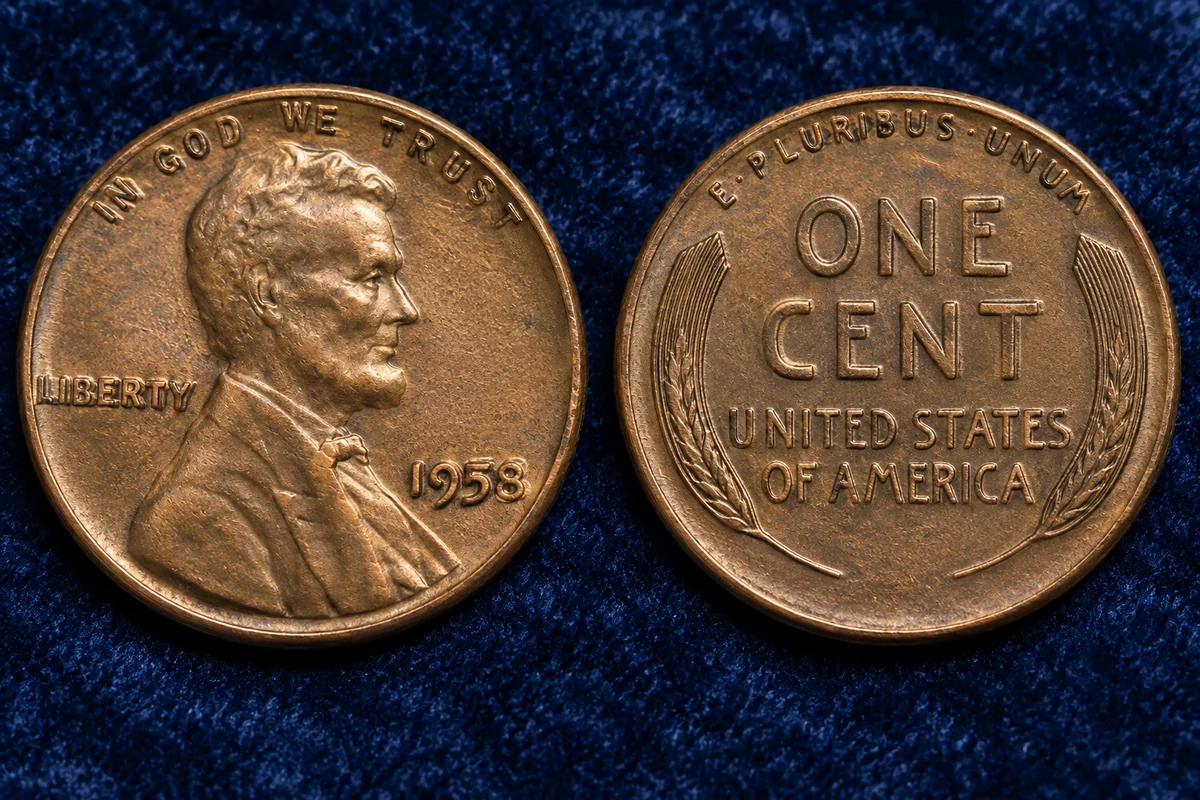
1958 Doubled Die Penny
Compare the variety, diagnostics and market context.
View coin →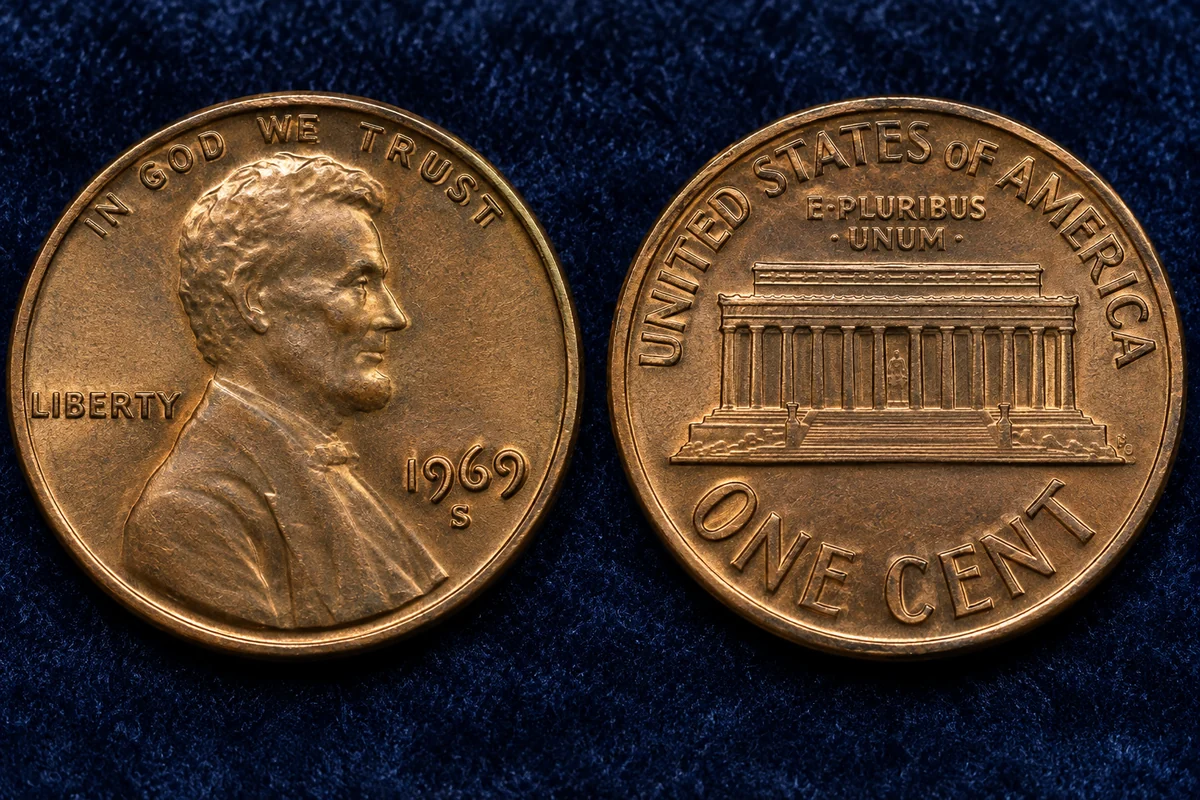
1969-S Doubled Die Penny
Compare the variety, diagnostics and market context.
View coin →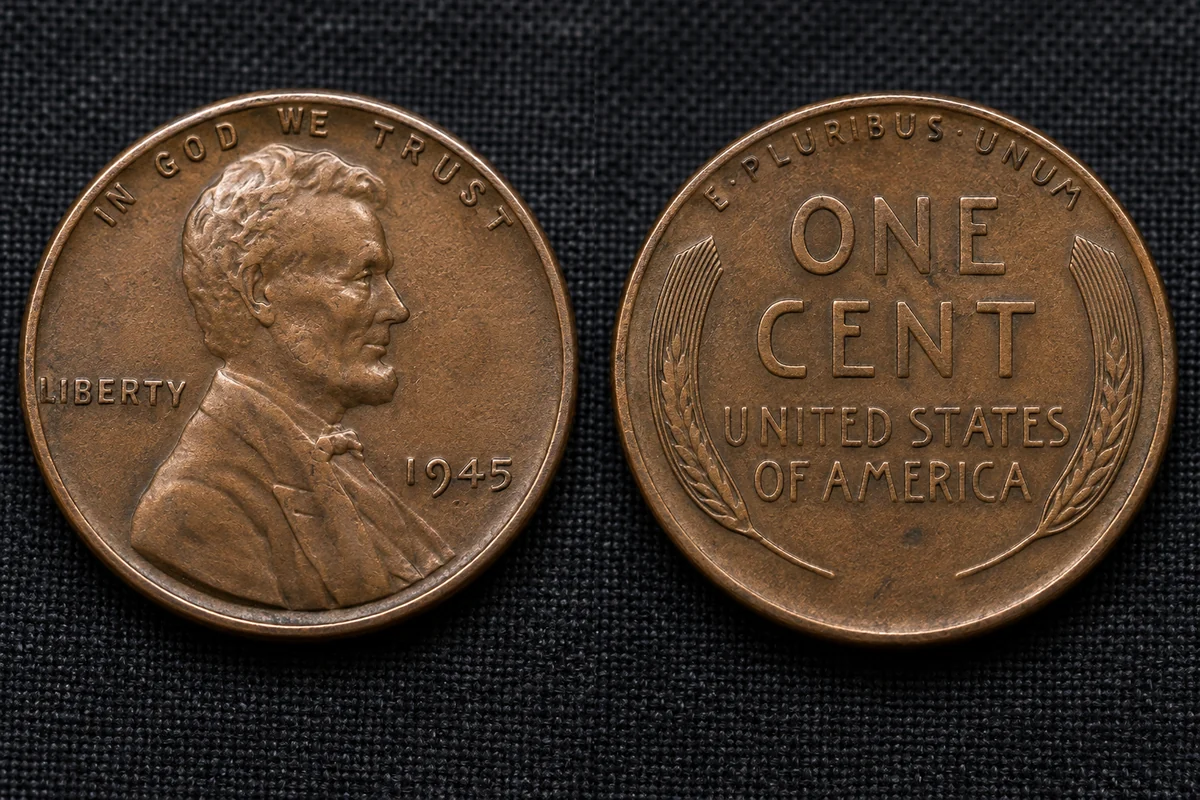
1945 Wheat Penny
Compare the variety, diagnostics and market context.
View coin →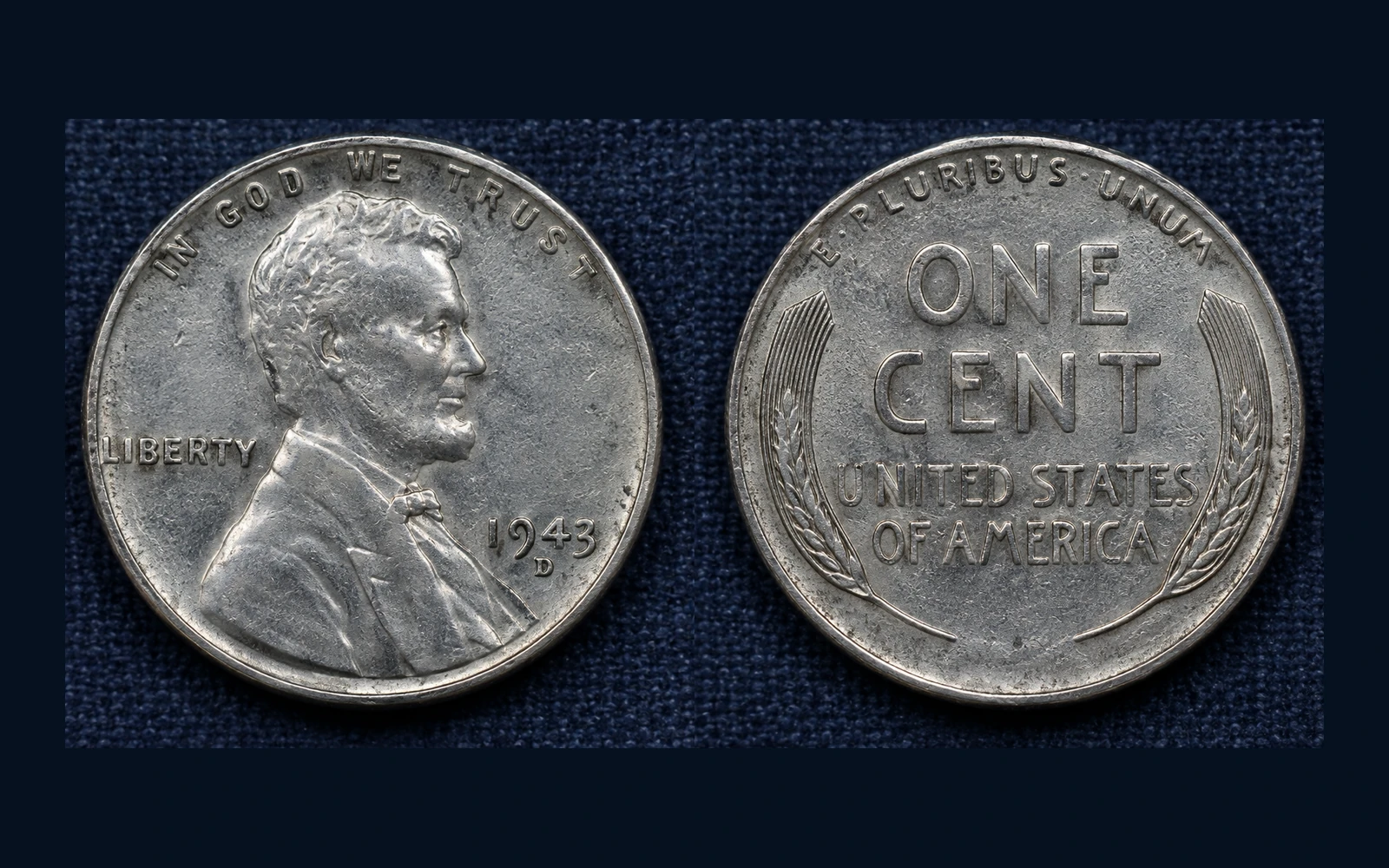
1943-D Steel Penny
Compare the variety, diagnostics and market context.
View coin →