
1958 Doubled Die Penny Value & Identification Guide
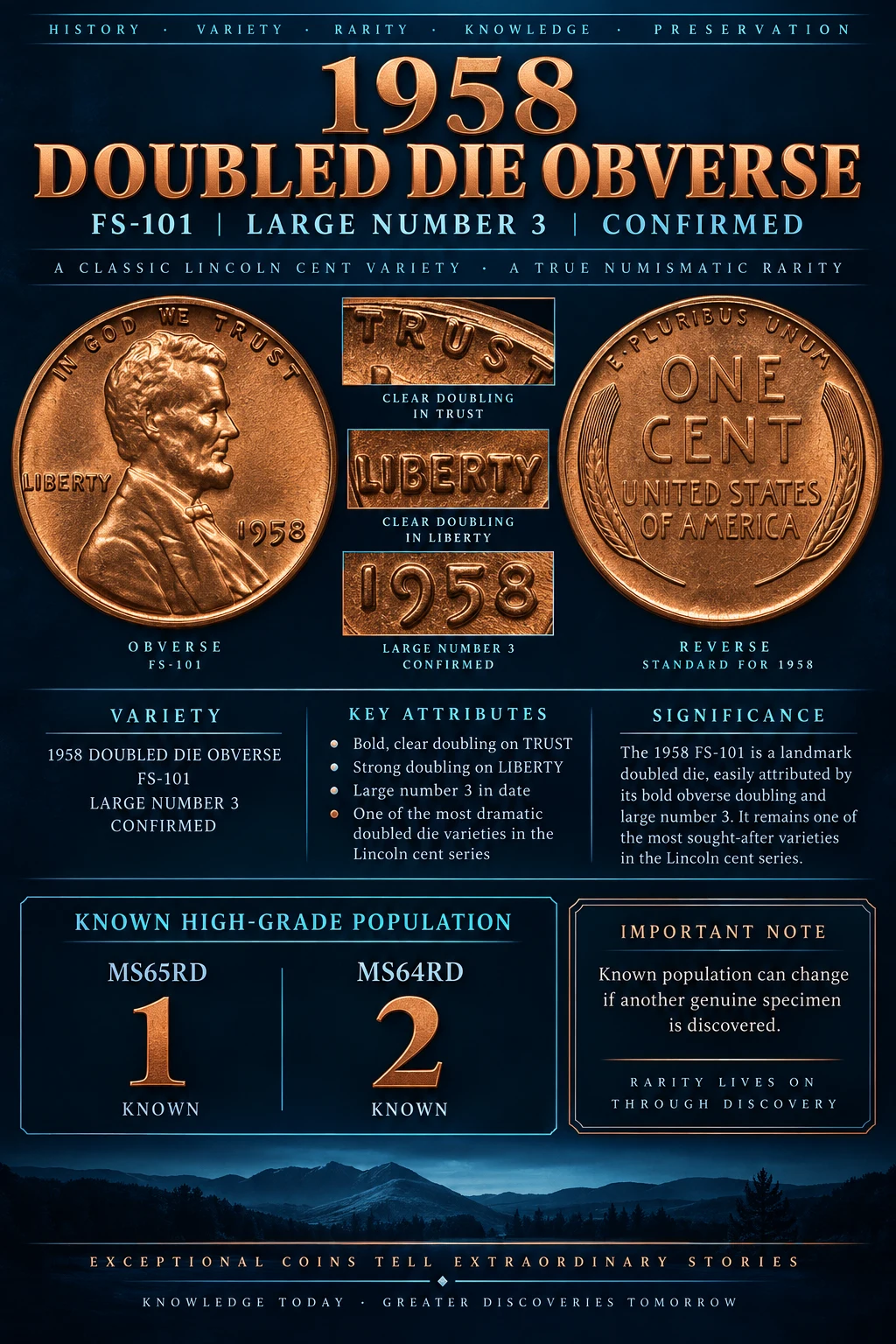
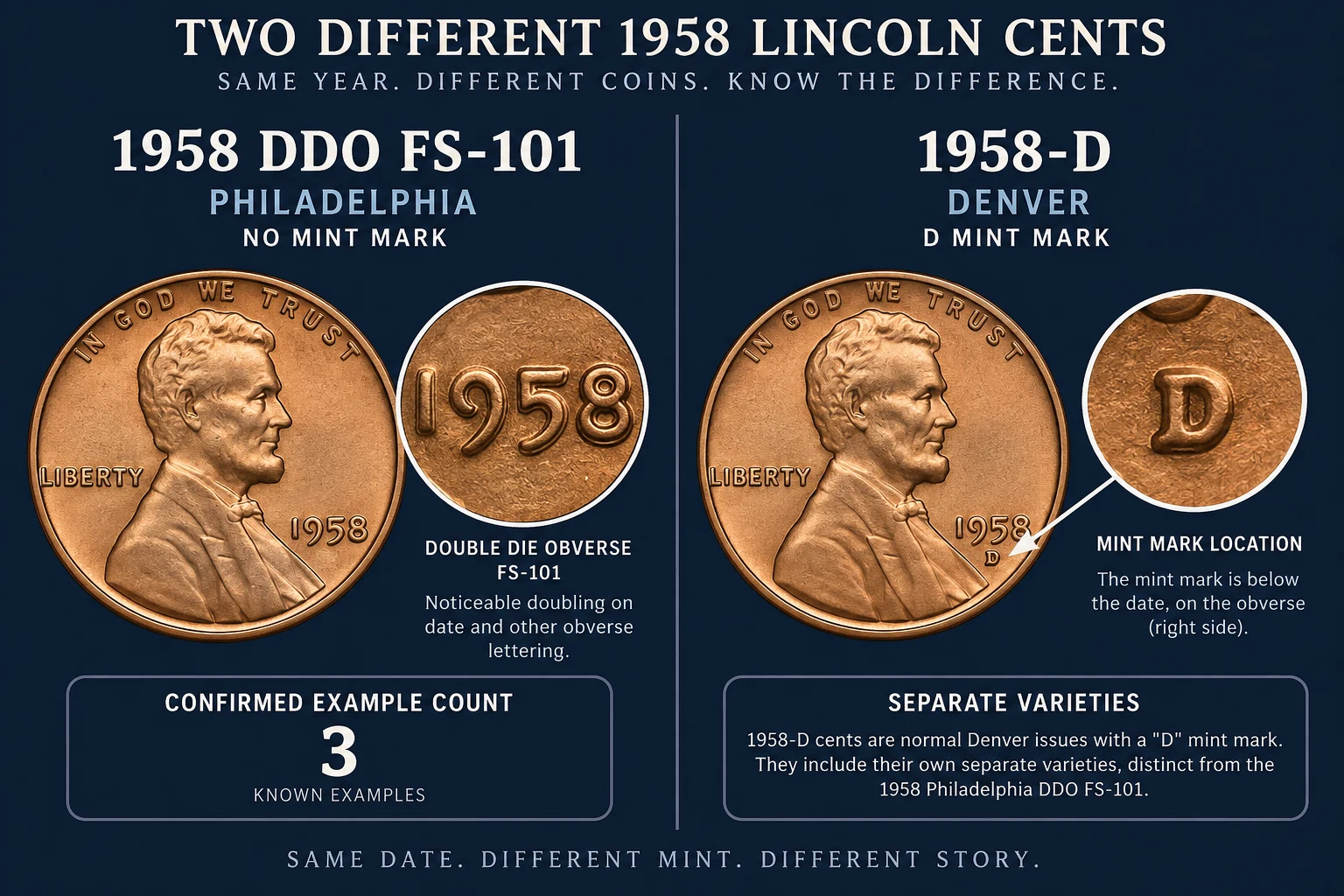
The variety is often searched for as the “1958 double die penny,” but the standard numismatic term is 1958 Doubled Die Obverse, or DDO. FS-101 is one of the rarest Lincoln Wheat Cent varieties, with three confirmed examples currently known.
Reviewed by the Coins Identification editorial team · Facts and auction history checked September 2026
How Much Is a 1958 Doubled Die Penny Worth?
Authenticity comes before price.
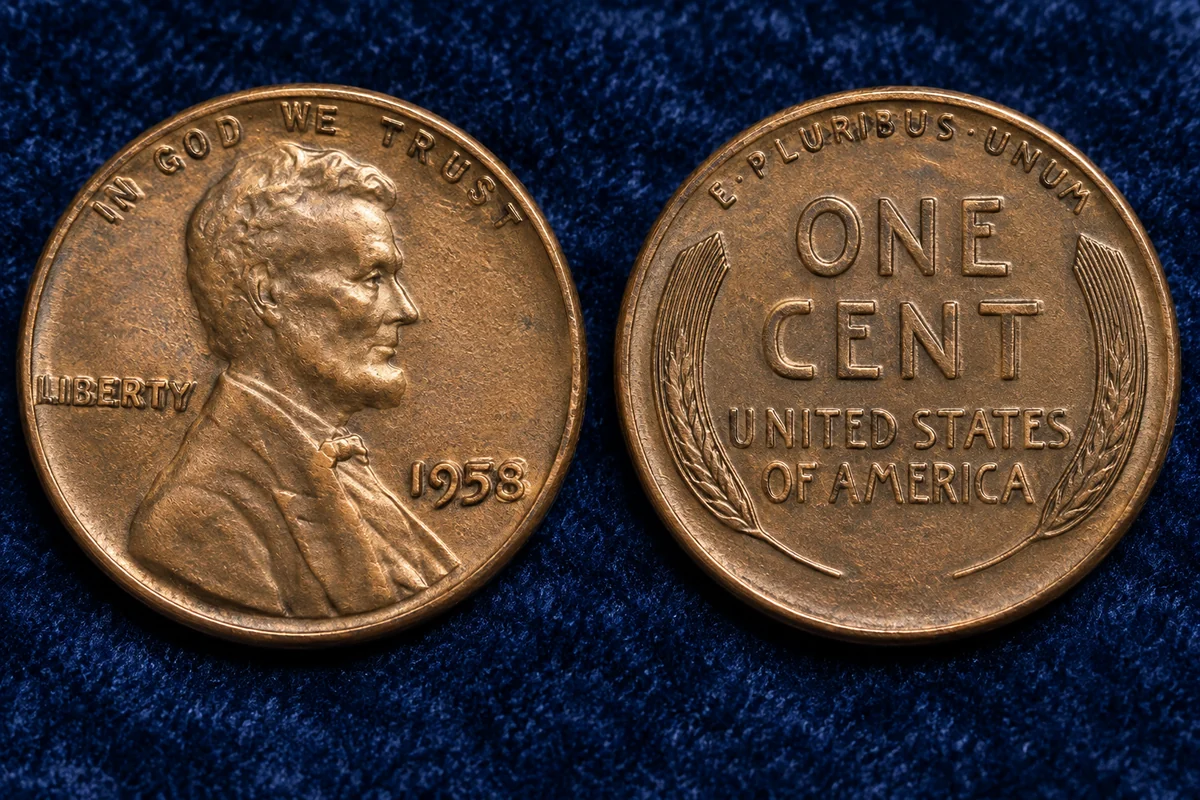
There is no normal value ladder for this variety. PCGS and NGC currently describe only three confirmed examples, so the market is driven by the exact authenticated specimen, its grade and color, provenance and auction competition.
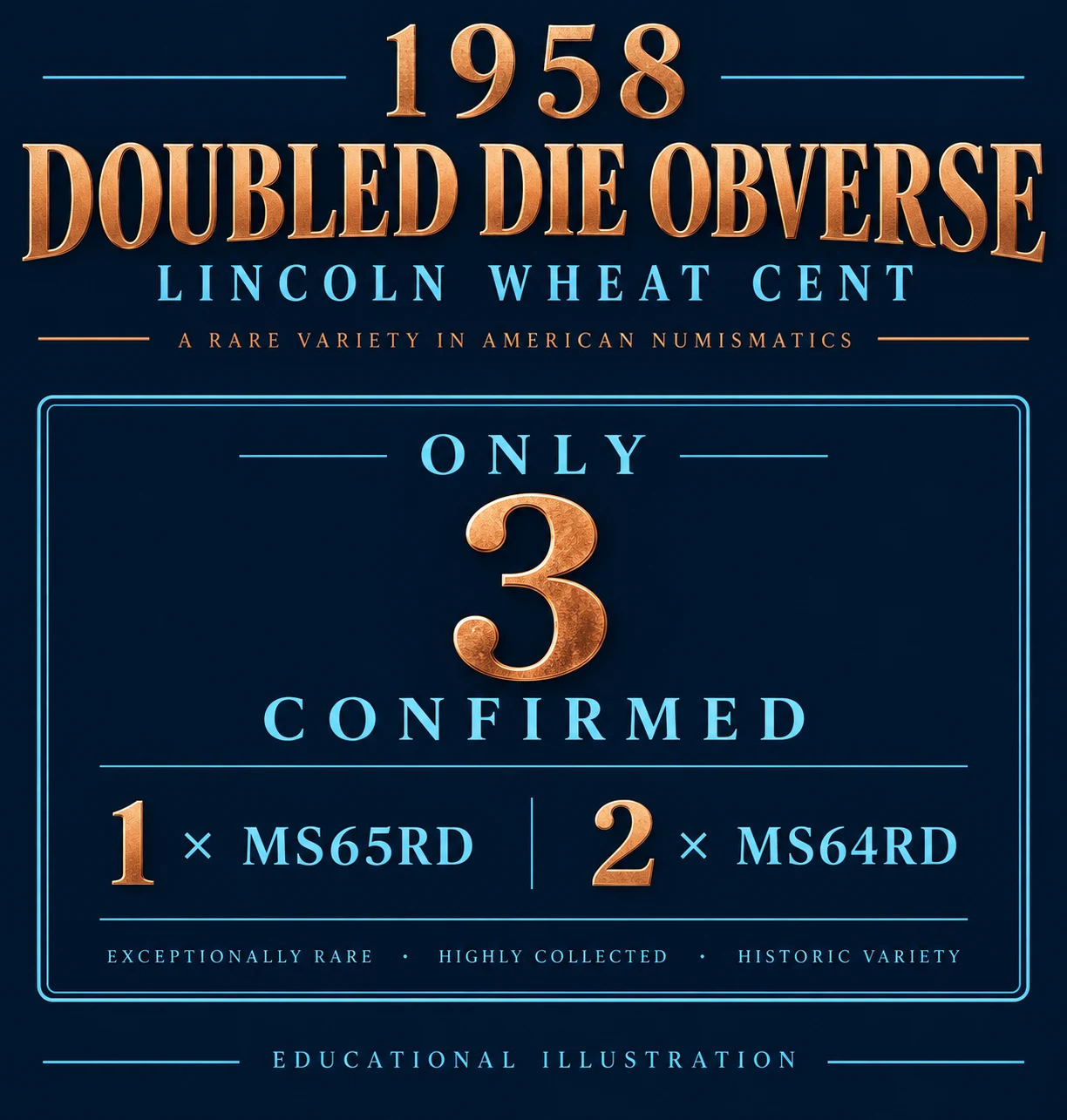
The best-known documented result is a PCGS MS64RD 1958 DDO FS-101 that sold for $336,000 at Stack's Bowers in March 2018. That is one specific coin, not a price for every doubled-looking 1958 cent.
Known 1958 Doubled Die Examples
Three confirmed specimens are currently described.
| Known example | Grade | Color | Certification | Documented sale |
|---|---|---|---|---|
| Specimen 1 | MS65 | RD | PCGS | Verified history |
| Specimen 2 | MS64 | RD | PCGS | $336,000 documented result |
| Specimen 3 | MS64 | RD | PCGS | Verified history |
Do not treat a provenance label as a new coin. One specimen can appear in more than one historical sale.
Did a 1958 Doubled Die Penny Really Sell for $336,000?
Yes. A PCGS-graded MS64RD 1958 Doubled Die Obverse FS-101 sold for $336,000 at Stack's Bowers in March 2018. The price reflects the tiny known population, dramatic doubling, original Red color, high grade and intense collector competition.
It does not mean every 1958 cent with a doubled-looking letter is valuable. Confirm the attribution, certification and individual lot first.
What Does a 1958 Doubled Die Penny Look Like?
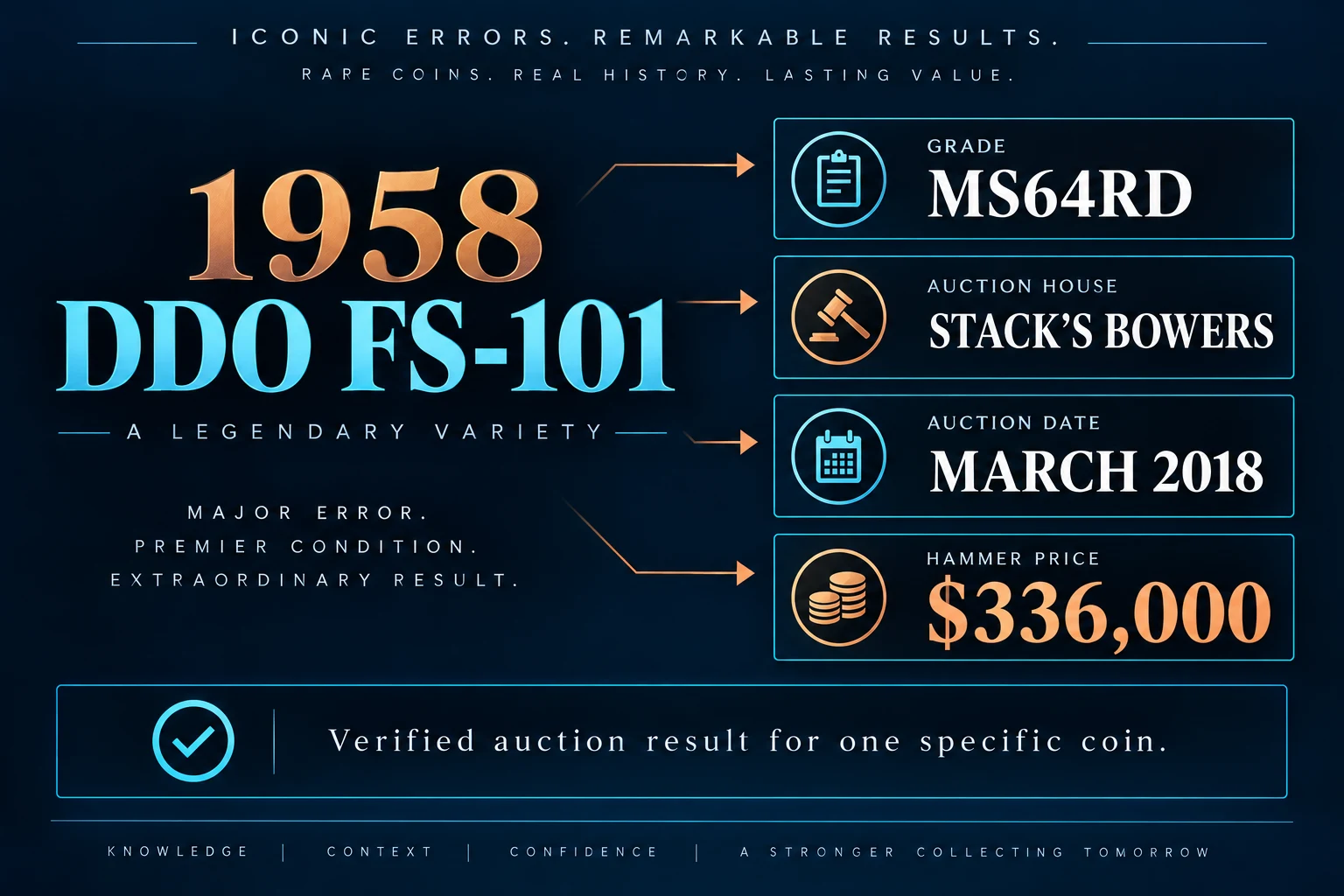
Look for a coherent pattern across the obverse.
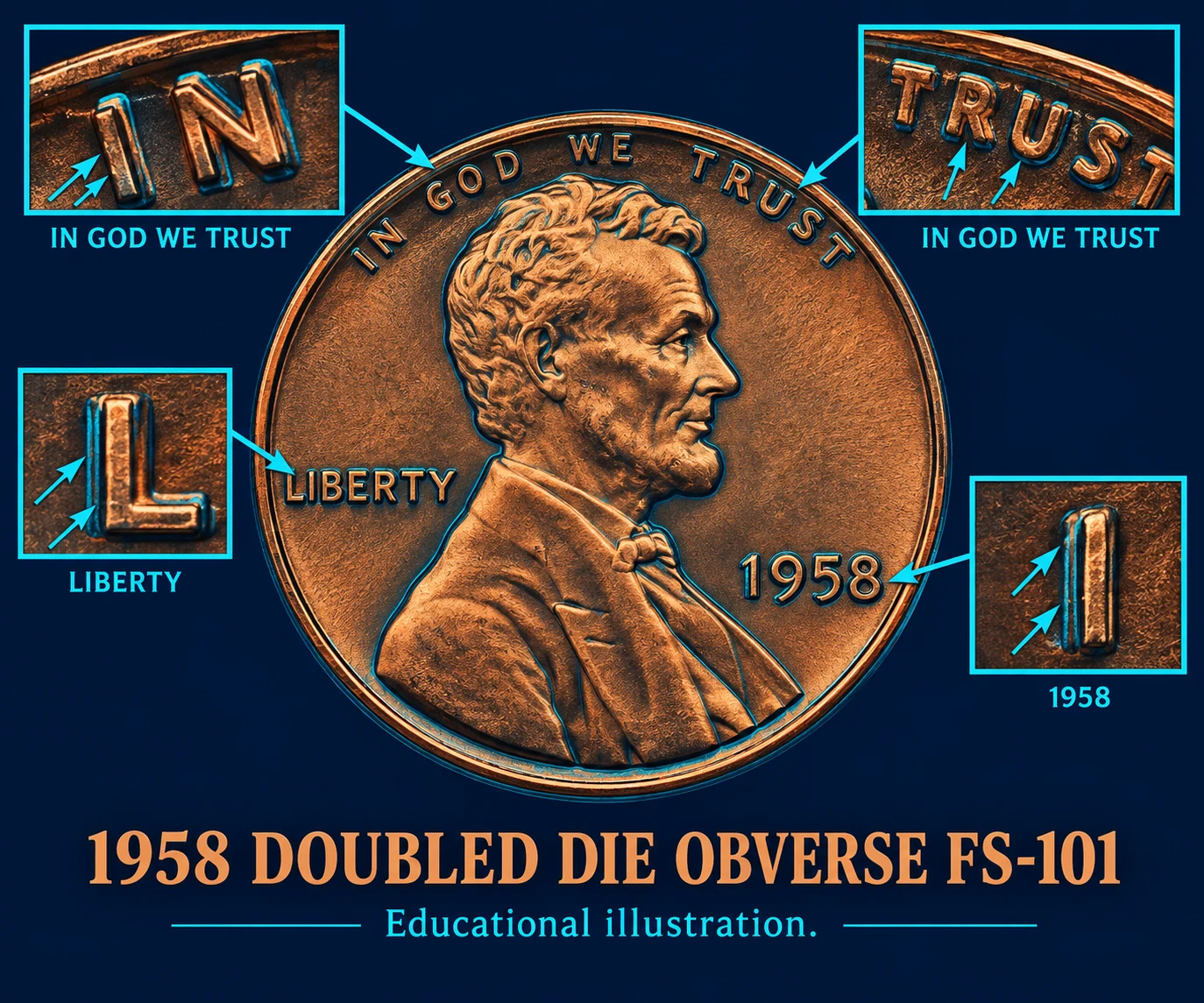
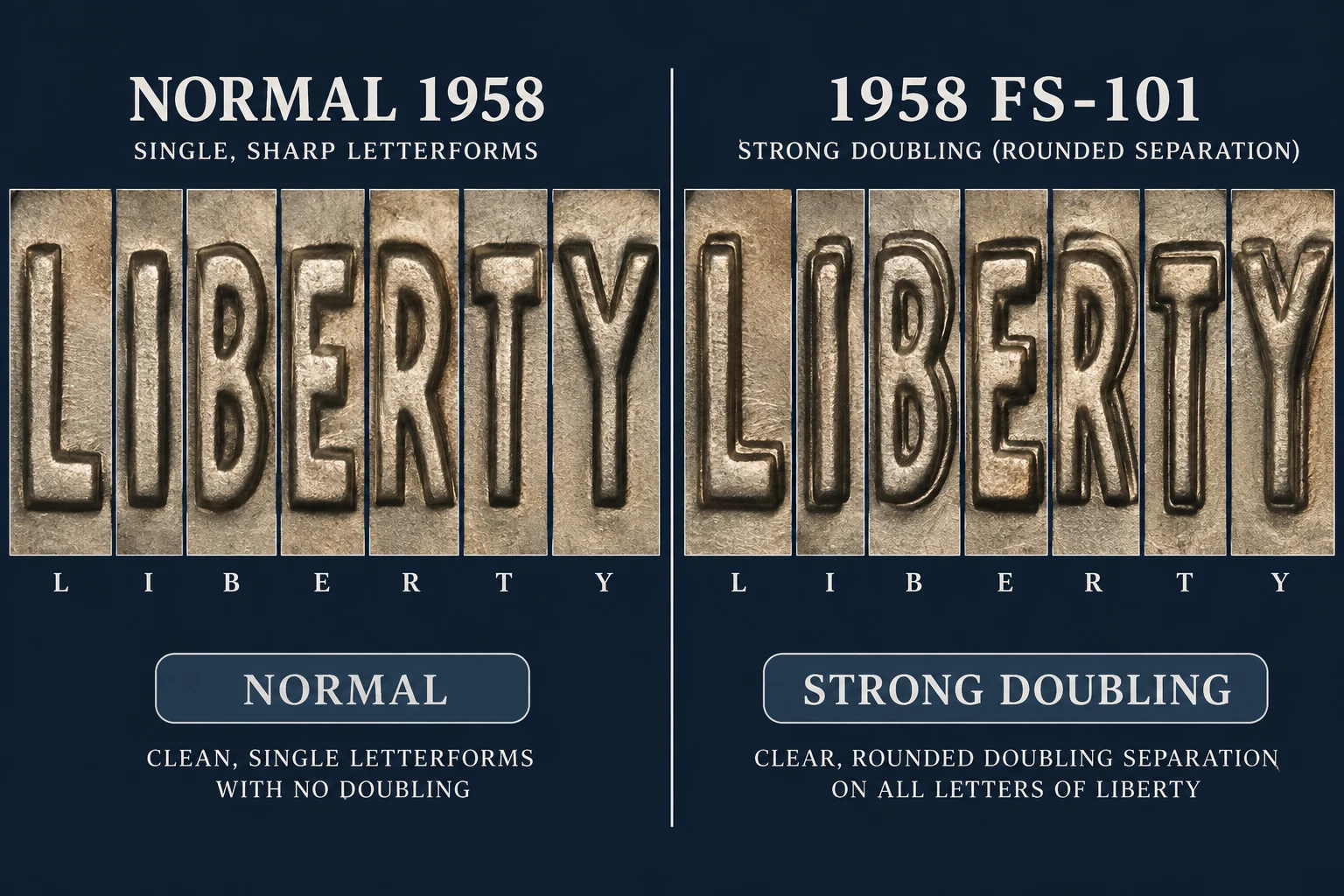
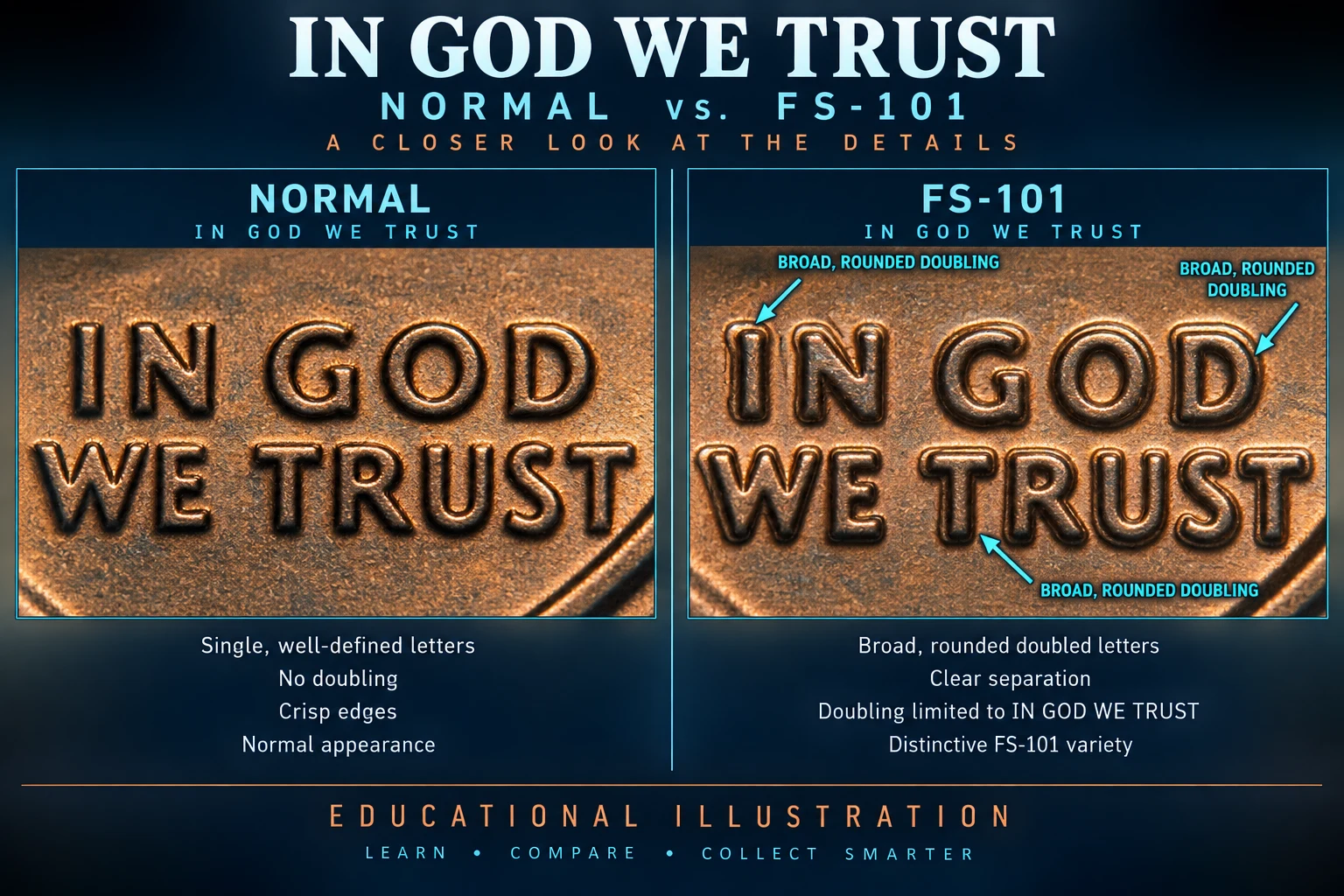
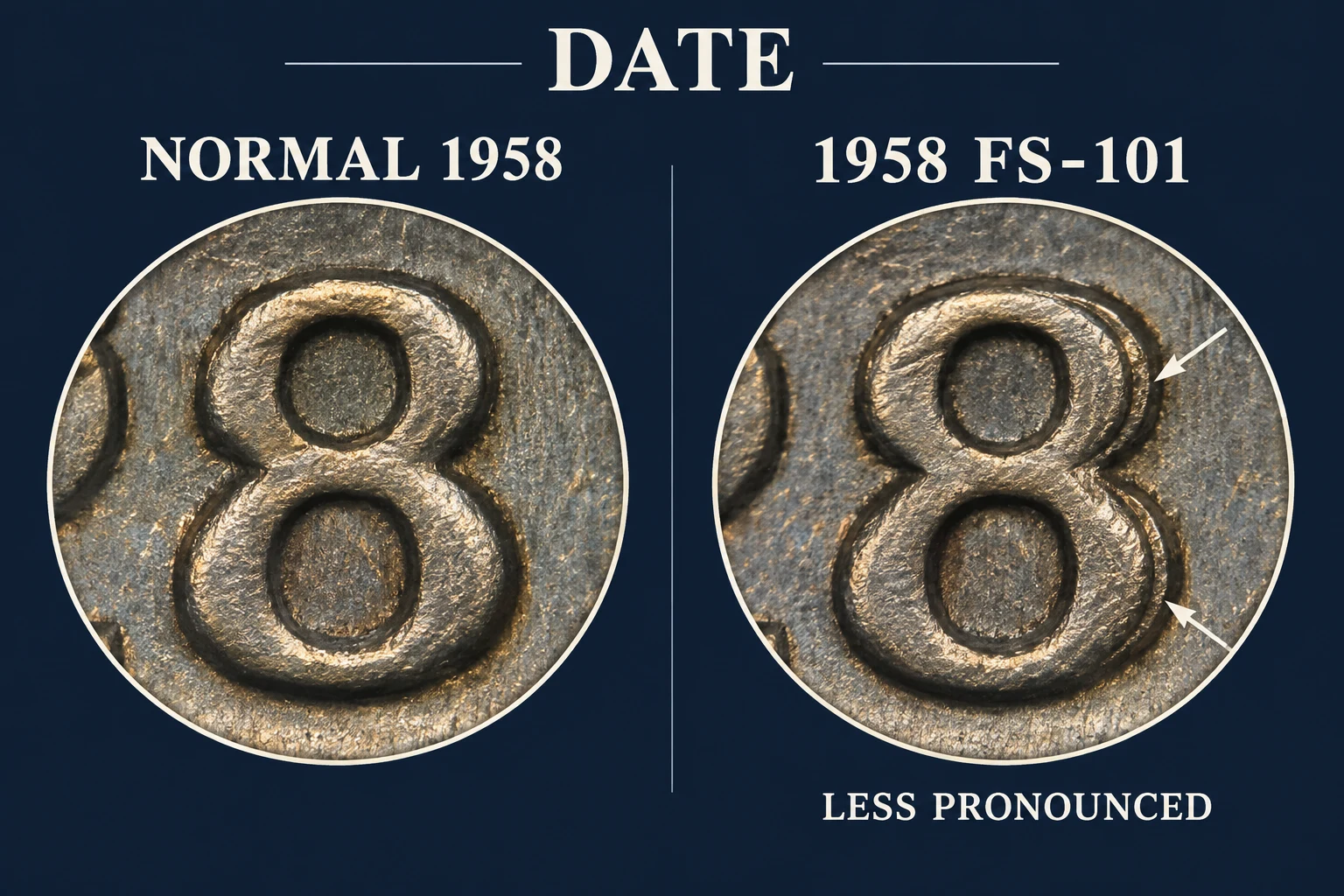
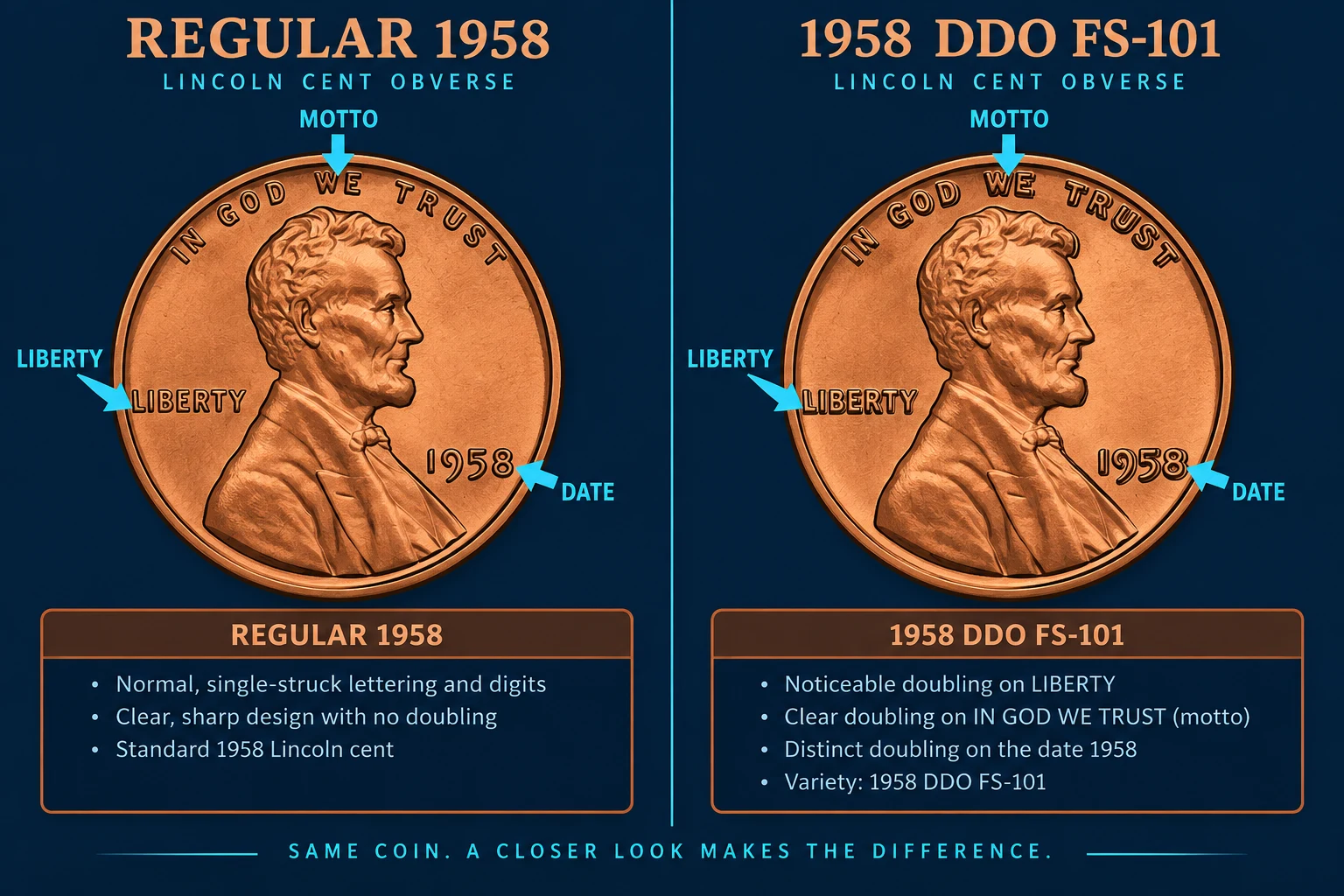
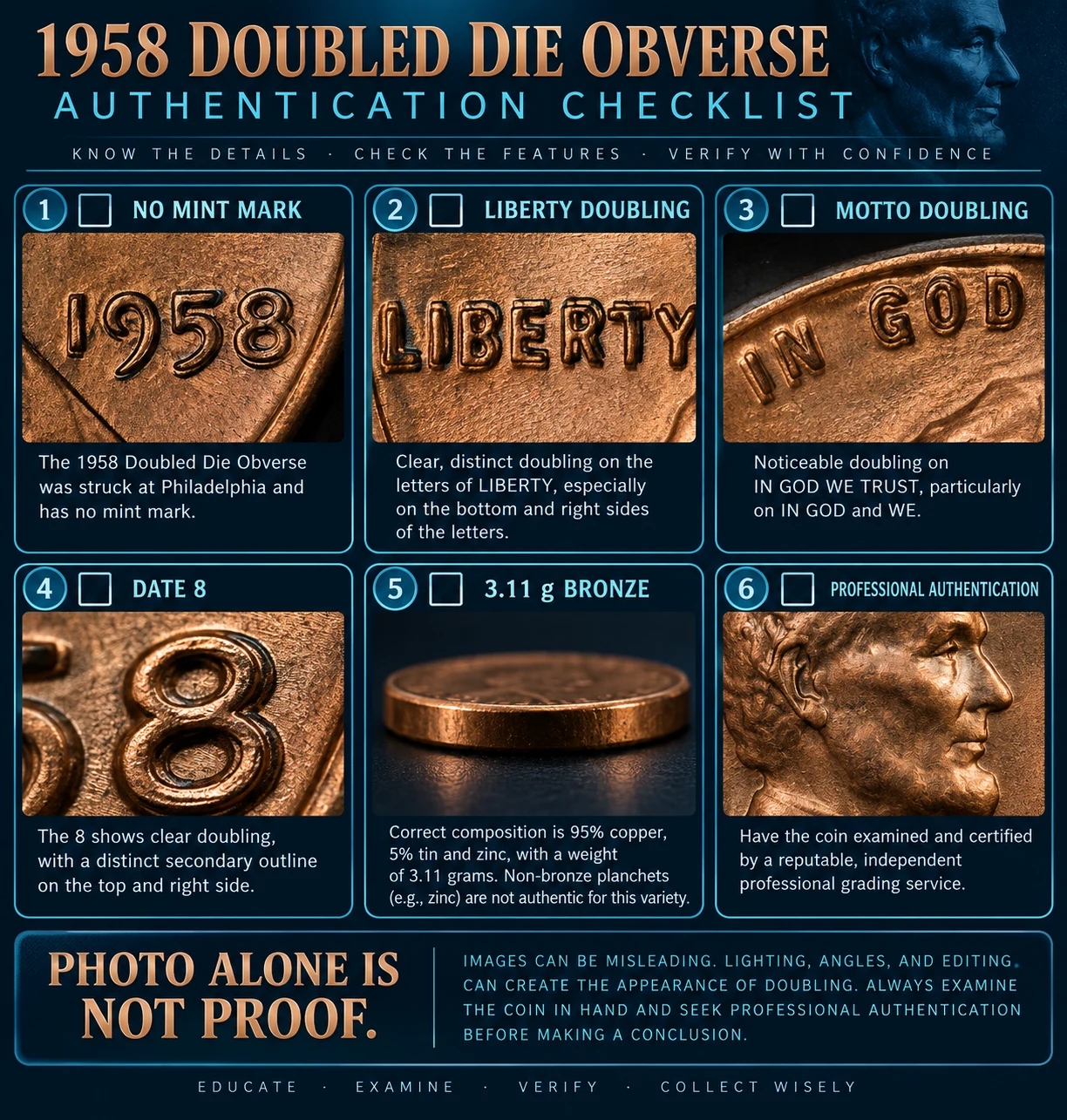
PCGS describes wide and pronounced doubling on LIBERTY and IN GOD WE TRUST, with less pronounced doubling on the date, especially the 8. The pattern should match the known FS-101 diagnostics. A single blurry edge, scratch or flat shelf is not enough.
Check LIBERTY
On the famous FS-101, LIBERTY shows broad, rounded separation across the letters. Compare the full word with an authoritative reference and check that the date and motto show the same die pattern.
Check IN GOD WE TRUST
The motto is another pronounced FS-101 diagnostic. Look for wide, rounded separation across multiple letters rather than a thin scratch or shelf-like edge. The motto should agree with LIBERTY and the date.
Check the 1958 Date
The date has less pronounced doubling than LIBERTY and the motto, with the 8 often providing the clearest place to look. Do not authenticate the variety from the date alone.
1958 Doubled Die vs Regular 1958 Penny
| Feature | Regular 1958 | 1958 DDO FS-101 |
|---|---|---|
| LIBERTY | Normal lettering | Strong rounded doubling |
| IN GOD WE TRUST | Normal lettering | Strong rounded doubling |
| Date | Normal | Less pronounced doubling, especially 8 |
| Mint mark | None on Philadelphia | None on Philadelphia |
| Rarity | Common issue | Three confirmed examples |
| Attribution | Regular cent | FS-101 / DDO-001 |
1958 Doubled Die vs Machine Doubling
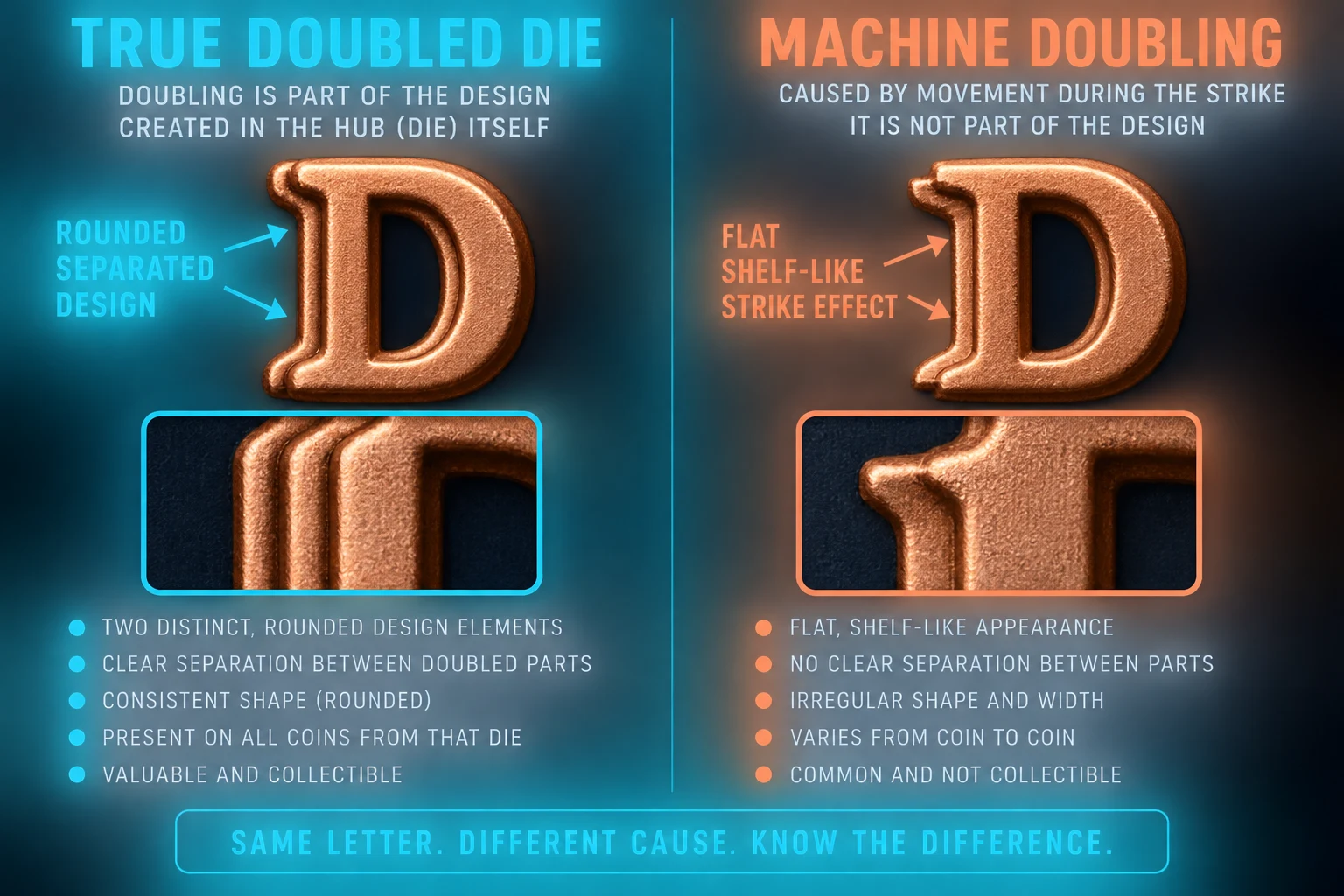
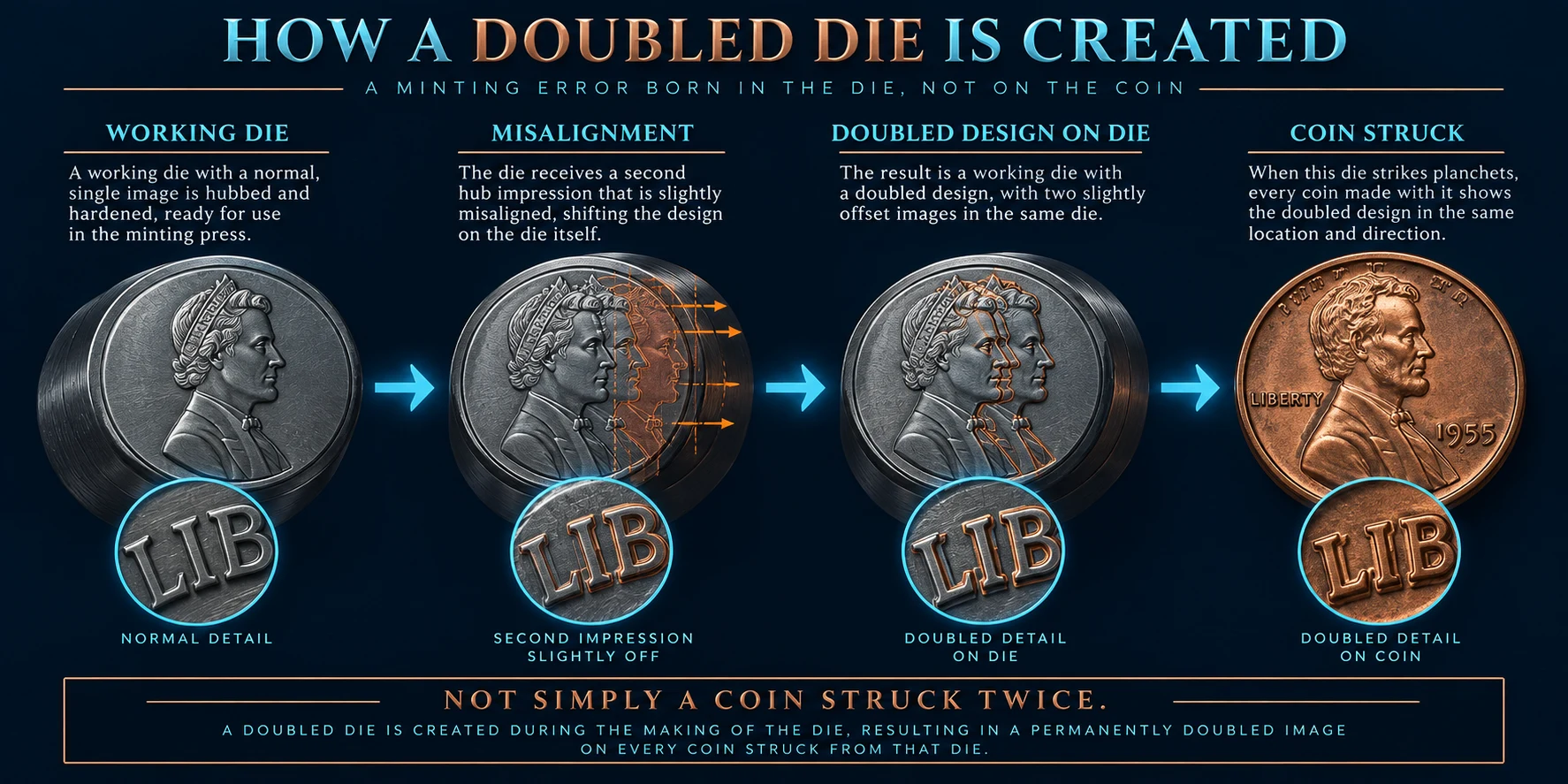
A genuine doubled die is formed during die-making and creates rounded, separated design elements. Machine doubling occurs during the strike and usually appears flat, pushed or shelf-like. It does not create the same collector premium.
How Rare Is the 1958 Doubled Die Penny?
Three confirmed examples are currently known. PCGS and NGC describe one MS65RD and two MS64RD specimens. That is a known population, not a claim that no other genuine coin can ever be discovered.
When Was the 1958 Doubled Die Discovered?
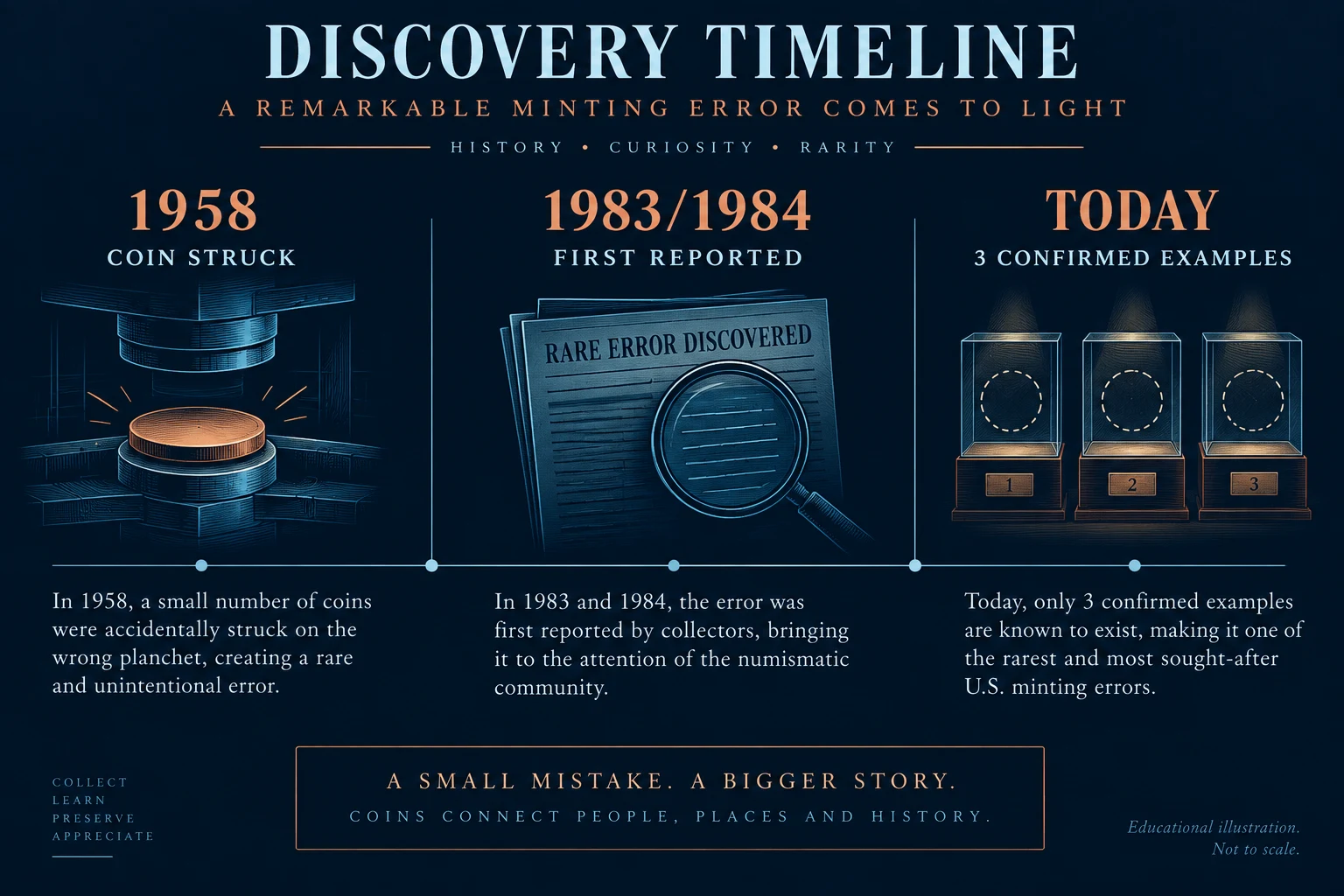
The variety was not known to the numismatic community until the early 1980s. PCGS records the first report around 1983 or 1984 through ERRORAMA in Cherry Hill, New Jersey. The discovery date is approximate because the source gives a range.
Does the 1958 Doubled Die Have a Mint Mark?
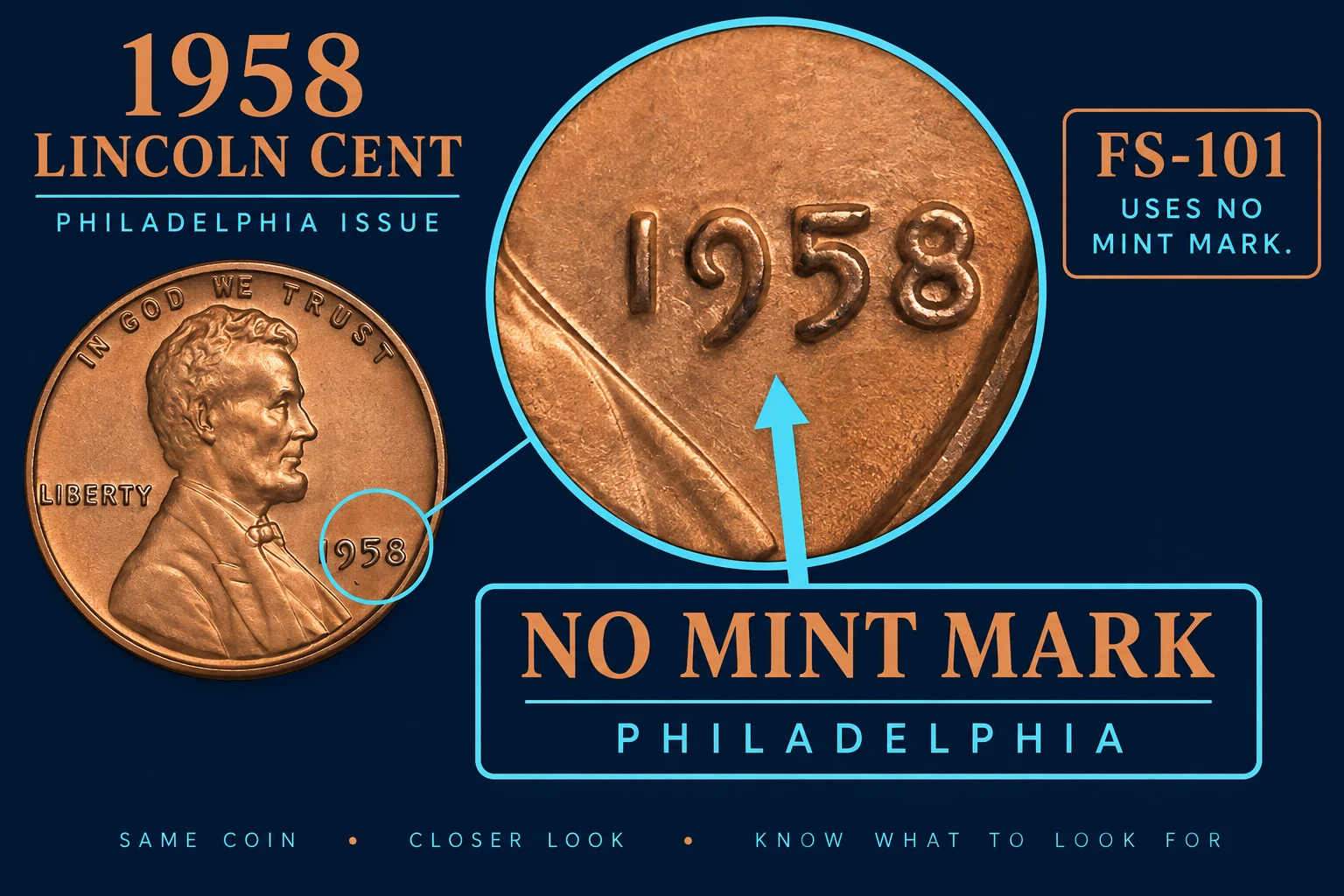
No. The famous FS-101 is a Philadelphia cent, so no mint mark below the date is correct. Do not call the absence of a letter a missing-mint-mark error.
Is There a 1958-D Doubled Die Penny?
The famous ultra-rare 1958 DDO FS-101 is a Philadelphia cent with no mint mark, not a 1958-D. Denver has separate RPM and other variety attributions, including documented RPM listings, but they are not the three-known FS-101. Do not use FS-101 prices for a Denver coin.
Why Is the 1958 Doubled Die So Valuable?
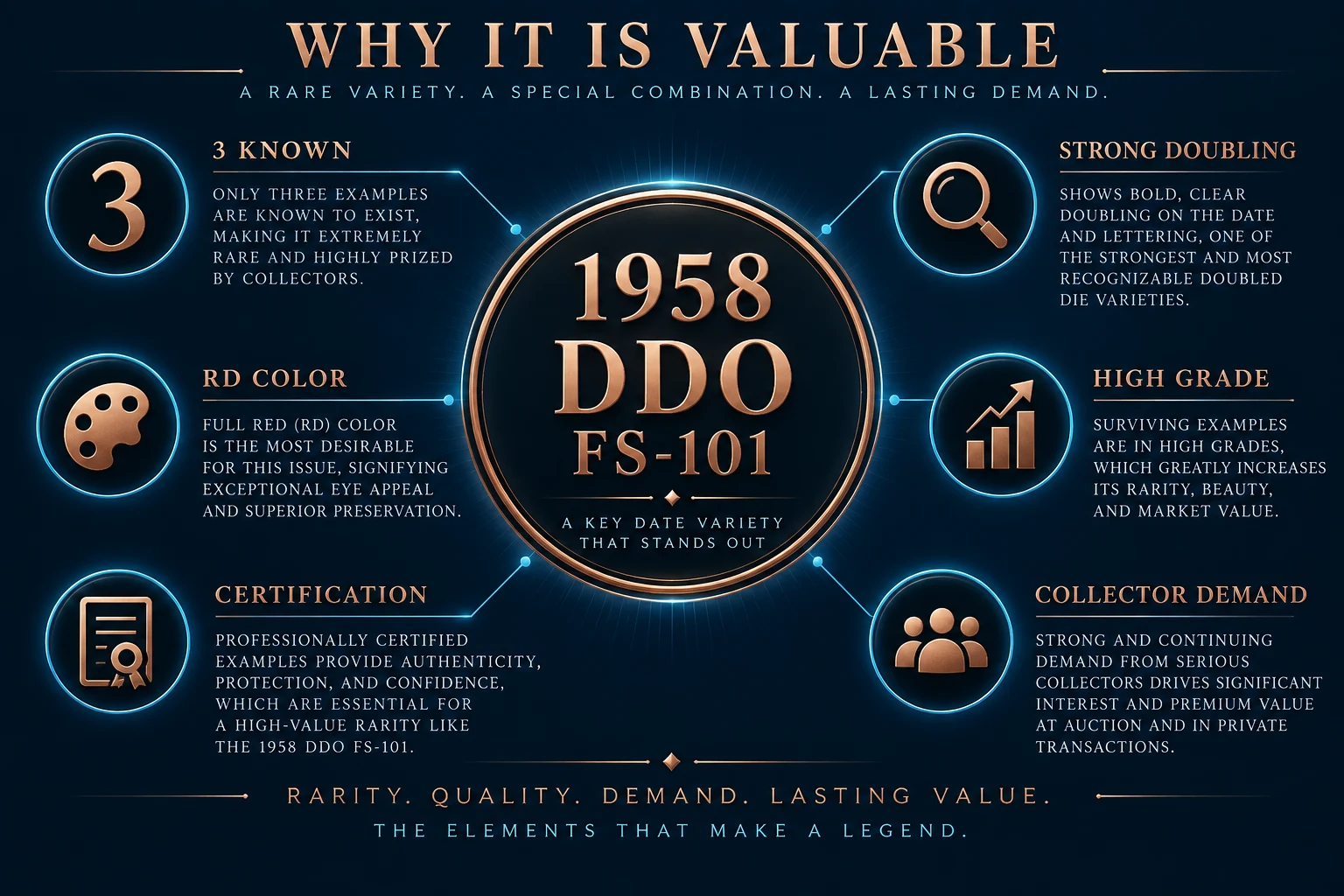
Extreme rarity, dramatic doubling, original Red color, high grade, certification, Lincoln cent demand and very few market opportunities all matter. A buyer is competing for one of only a few known coins, not for a normal date-and-mint cent.
1958 Doubled Die Penny Auction History
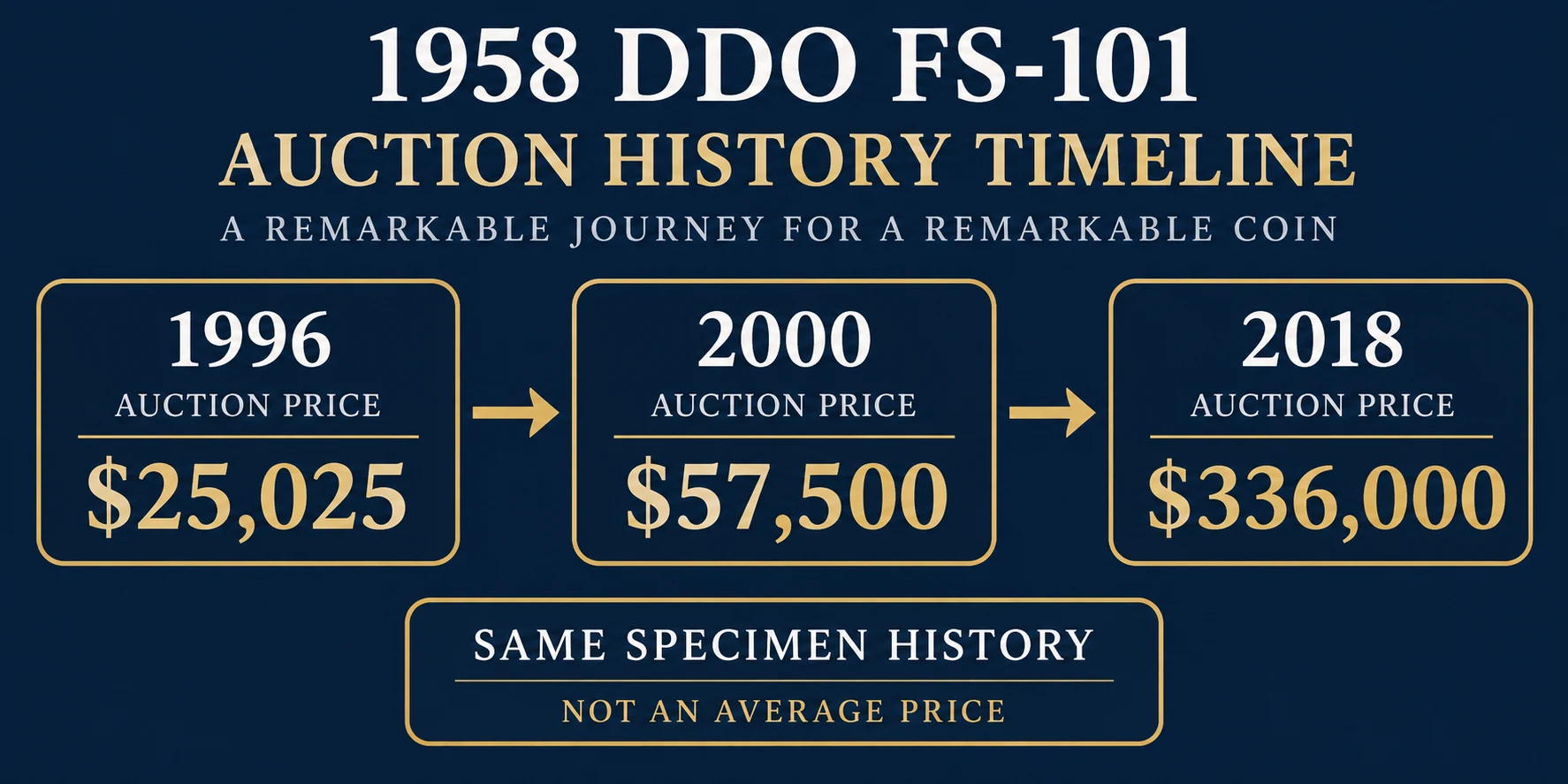
Historical results are not an average price.
| Year | Reported result | Context |
|---|---|---|
| 1996 | $25,025 | Historical sale record |
| 2000 | $57,500 | Historical sale record |
| 2018 | $336,000 | MS64RD Stack's Bowers result |
Some historical sales can involve the same specimen. They should not be counted as three different coins or treated as an average market price.
How to Authenticate a 1958 Doubled Die Penny
Check for no mint mark, strong LIBERTY doubling, strong motto doubling, the less pronounced date doubling, correct bronze specifications and known die diagnostics. A plausible discovery should go to a professional grading service. One photograph never proves authenticity.
Why Most “1958 Doubled Die” Finds Are Not FS-101
Machine doubling, die deterioration, damage, lighting, image blur, normal lettering and confusion with 1958-D can all create a false positive. Compare the shape and position of separation across multiple design areas without dismissing a coin before it is examined.

How Was the 1958 Doubled Die Created?
A doubled die begins with a doubled design on the working die, caused by a misaligned hub impression during die production. Coins struck afterward receive that doubled design. The coin was not simply struck twice.
Can You Buy a 1958 Doubled Die Penny?
Public market appearances are extremely rare because only three confirmed examples are currently known. Any raw “1958 DDO” listing deserves caution. An asking price does not establish authenticity, and a photo cannot verify the known diagnostics. Prefer a coin with a verifiable certification, provenance and matching FS-101 attribution.
1958 Doubled Die Penny Specifications
Do Not Clean a Possible 1958 DDO
Cleaning can remove original surfaces, create hairlines and obscure the diagnostic areas. Handle the coin by the edge, keep it dry and submit a valuable candidate for professional review.
1958 Doubled Die Penny FAQ
What is a 1958 Doubled Die Penny?
The famous variety is the Philadelphia 1958 Doubled Die Obverse, FS-101, also called DDO-001.
How much is a 1958 Doubled Die Penny worth?
There is no normal grade-by-grade market ladder because only three examples are currently confirmed. Value depends on the specific authenticated specimen and auction demand.
Did a 1958 Doubled Die really sell for $336,000?
Yes. A PCGS MS64RD example sold at Stack's Bowers in March 2018. That result belongs to one specific coin.
What does a genuine 1958 Doubled Die look like?
Strong, rounded doubling is most apparent on LIBERTY and IN GOD WE TRUST, with less pronounced doubling on the date, especially the 8.
How many 1958 Doubled Die Pennies are known?
PCGS and NGC currently describe three confirmed examples: one MS65RD and two MS64RD.
Does the famous 1958 DDO have a mint mark?
No. FS-101 is a Philadelphia issue, so the absence of a mint mark is correct.
Is there a 1958-D Doubled Die Penny?
The famous FS-101 is not a 1958-D. Denver has separate RPM and other variety attributions that must be evaluated independently.
What is FS-101 and what does DDO mean?
FS-101 is the recognized attribution for this doubled-die obverse. DDO means Doubled Die Obverse.
How is a doubled die different from machine doubling?
A doubled die is formed during die production and has rounded, separated design. Machine doubling occurs during the strike and is usually flatter and shelf-like.
When was the 1958 Doubled Die discovered?
The variety was first reported around 1983 or 1984, after the 1958 issue had already circulated.
How can I authenticate a possible 1958 DDO?
Compare all known diagnostics, check specifications and submit a plausible high-value candidate to a professional grading service.
Can I buy a 1958 Doubled Die Penny?
Public appearances are extremely rare. Treat any raw listing with caution and verify certification, provenance and diagnostics.
Should I clean a possible 1958 DDO?
No. Cleaning can remove diagnostics and original surfaces, lowering confidence and collector value.
Related Lincoln Cents
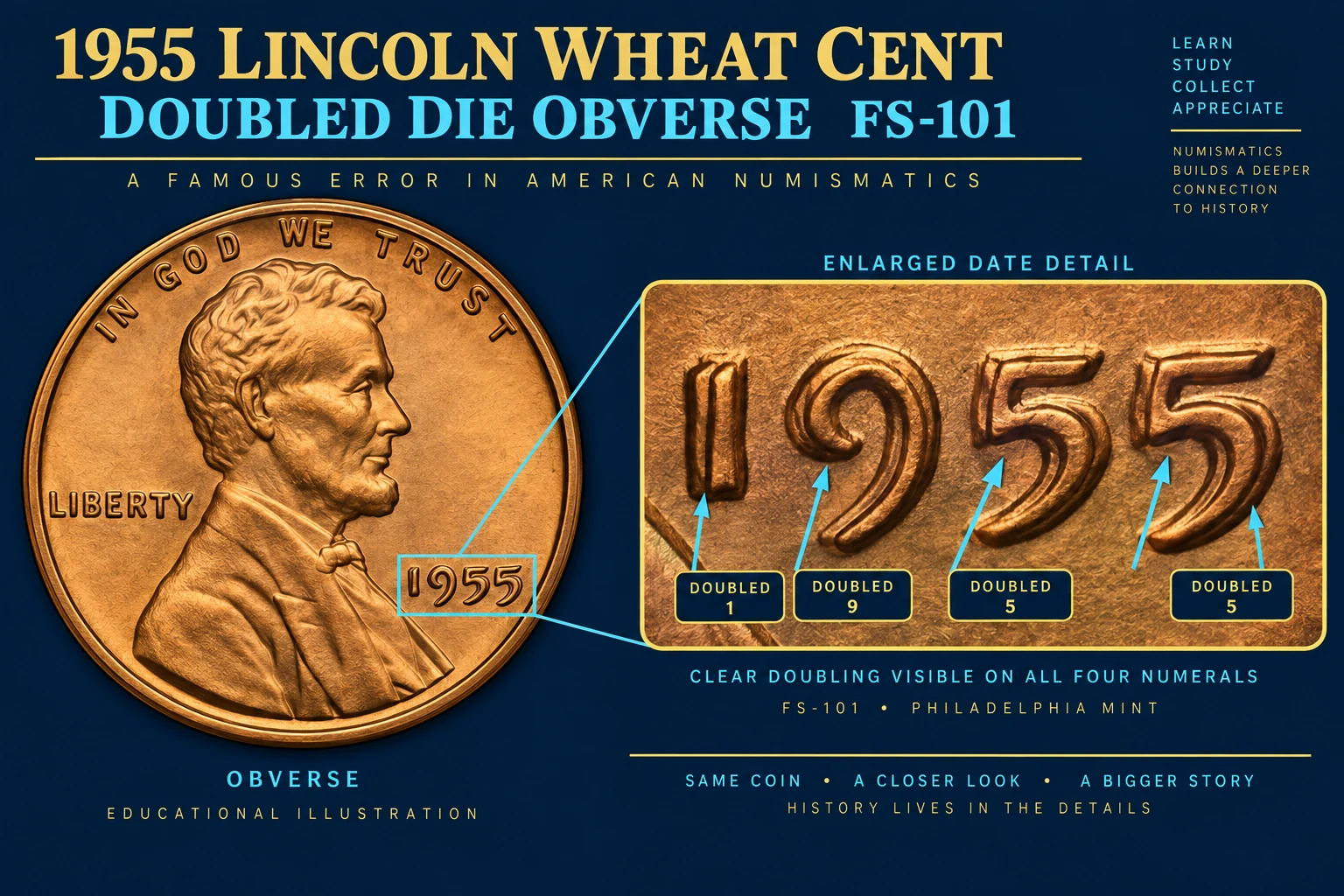
1955 Doubled Die Penny
Compare variety, diagnostics and market context.
View coin →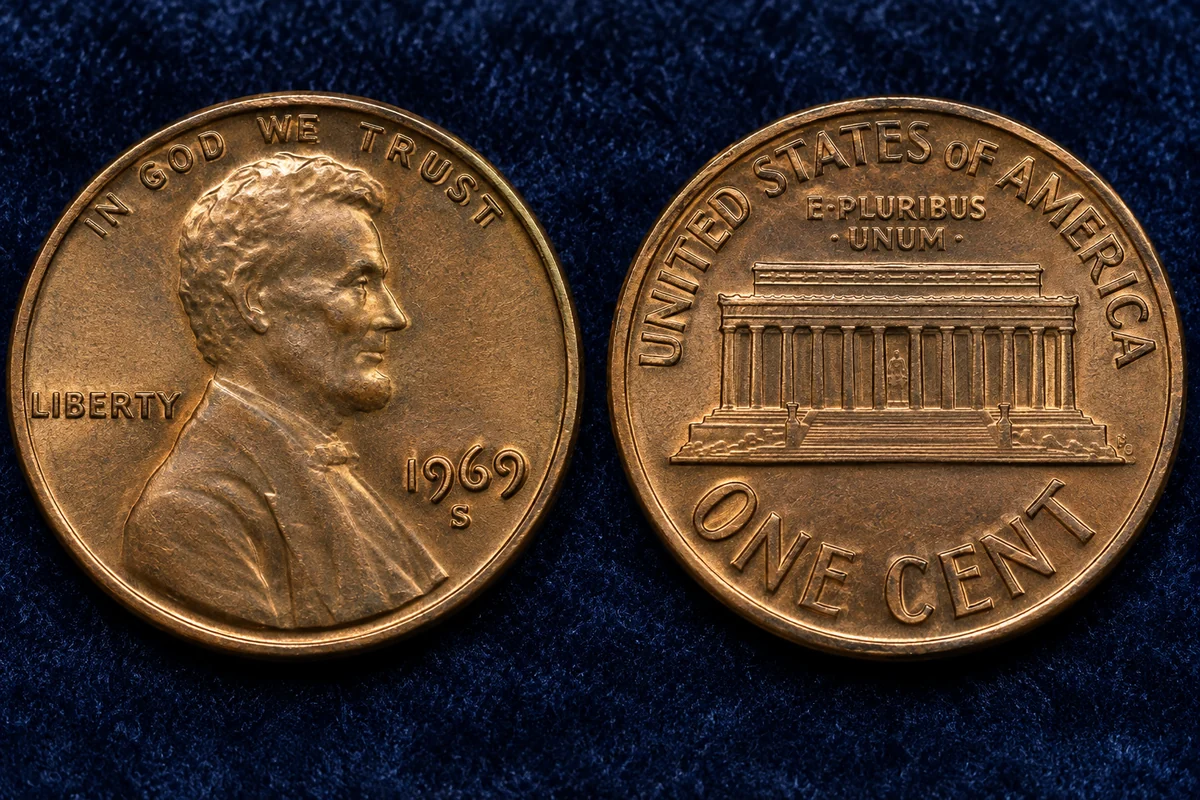
1969-S Doubled Die Penny
Compare variety, diagnostics and market context.
View coin →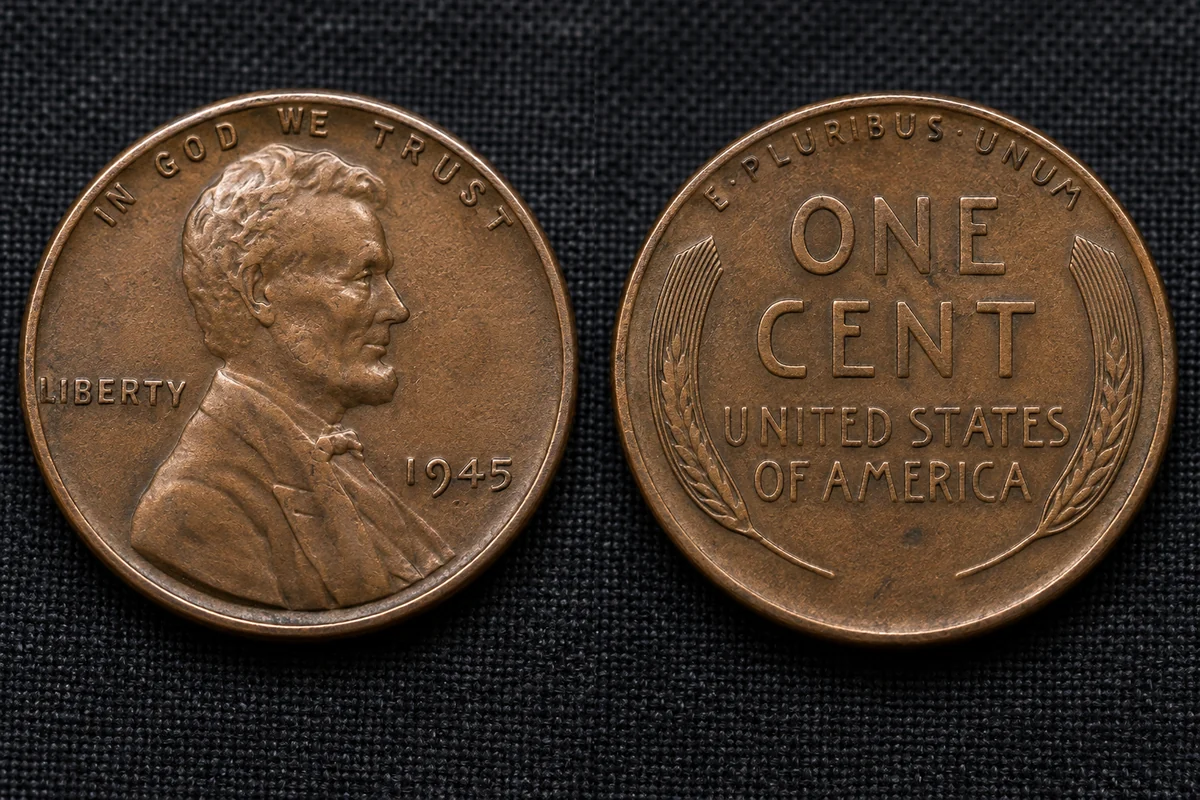
1945 Wheat Penny
Compare variety, diagnostics and market context.
View coin →
1944 Wheat Penny
Compare variety, diagnostics and market context.
View coin →