
1914-D Penny
The 1914-D Penny is a key Denver Lincoln Wheat Cent. Its lower mintage and strong collector demand make date, mint mark, condition and authenticity especially important.
Reviewed by the Coins Identification editorial team · Updated September 14, 2026
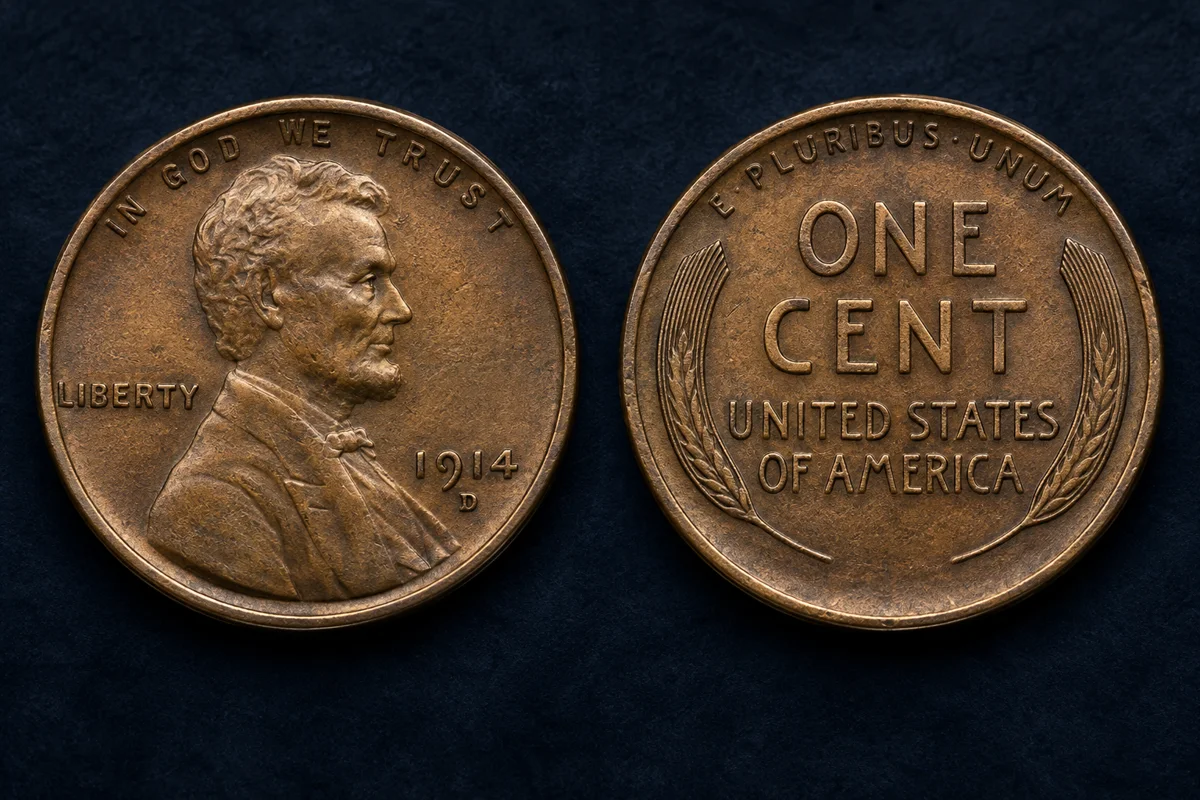
Five checks that should agree
A genuine 1914-D has a D mint mark below the date, a bronze composition and the Lincoln wheat reverse. The mint mark should be examined carefully.
- 01Date
Confirm the 1914 date and inspect the digits for alteration.
- 02Mint mark
Find the D directly below the date.
- 03Weight
A normal bronze cent is about 3.11 g.
- 04Reverse
Confirm the two wheat ears and correct lettering.
- 05Authentication
Use a grading service for a valuable or questionable example.
Separate evidence from excitement
One unusual color is not enough. Use magnet response, weight, design and surface together.
Expected 1914-D bronze profile
The normal 1914-D is a bronze Lincoln Wheat Cent with a plain edge, about 3.11 g and a D below the date. Circulated pieces commonly show brown color and wear.
The D mint mark needs close inspection
A repaired, added or altered D can turn a common 1914 cent into a false rarity claim. Compare the letter shape and surrounding metal with authenticated references.
Find the mint mark
Denver used a D below the date. Because the mint mark is central to the attribution, photograph it straight on and look for disturbed metal, unusual spacing or mismatched style.
- Mint locations
- Denver (D below date)
- Reverse
- Two wheat ears around ONE CENT
Judge condition honestly
Grade, color, strike, rim quality and original surface affect demand. Do not polish the coin or use chemical tests that can damage the evidence.
Build a comparable price range
A genuine 1914-D can carry a substantial premium over common-date Wheat Cents. The exact grade, color, surface and certification determine the comparison; avoid assuming every 1914-D has the same value.
- 1
Identify the exact date, mint and metal.
- 2
Describe wear, color and surface problems.
- 3
Compare recent completed sales, not asking prices.
- 4
Authenticate unusual metal or high-value claims.
1914-D Penny FAQ
Why is the 1914-D Penny valuable?
The Denver issue had a lower mintage than many Lincoln cents and is strongly collected, especially in higher grades.
Where is the D mint mark?
It is below the date on the obverse.
How much is a 1914-D Penny worth?
Value depends on authenticity, grade, color, surface and certification.
Can a 1914-D be fake?
Yes. Added or altered mint marks and dates are risks on valuable coins, so specialist authentication is important.
Should I clean it?
No. Cleaning can reduce value and remove evidence of the original surface.
Further reference names
Source organizations are listed for reference; catalog pages do not send visitors to third-party sites.
- PCGS Lincoln cent collector guide
- PCGS CoinFacts — 1914-D
- U.S. Mint — Penny