One cent
- Weight
- 2.35 g
- Diameter
- 19.05 mm
- Edge
- Plain

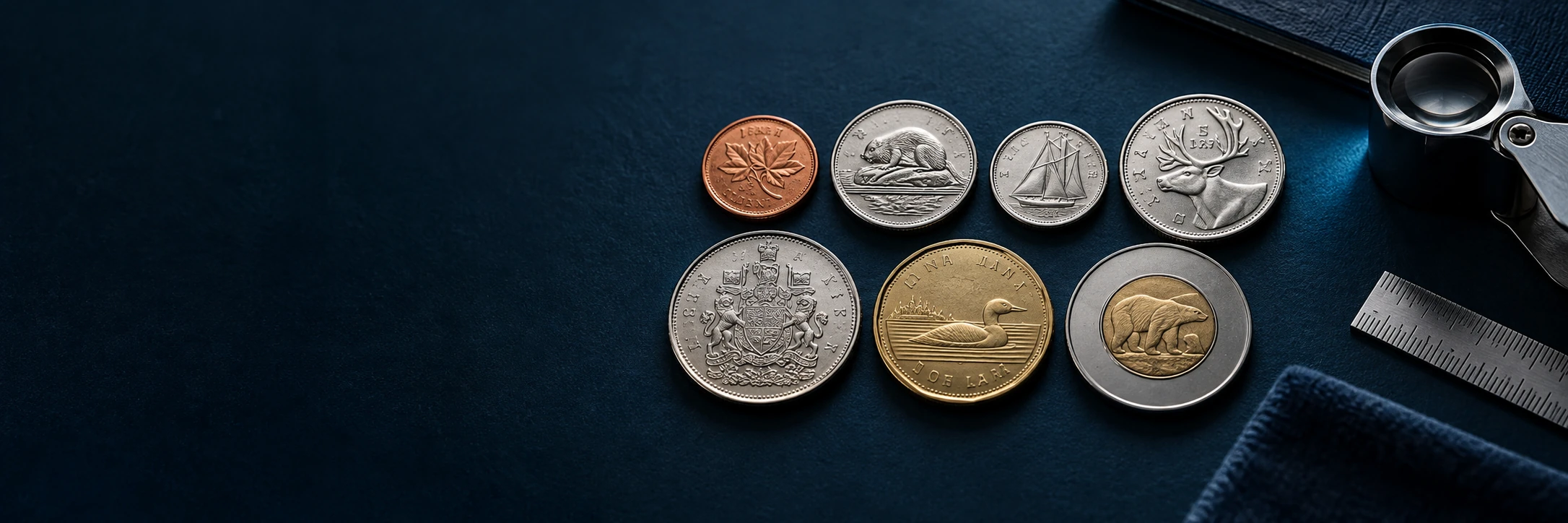
Canadian coins often reveal their identity through a combination of national symbols and practical details. A beaver, caribou, Bluenose schooner, common loon, or polar bear can point to a denomination, while the monarch portrait and date help place the coin in a particular design period.
This guide covers the familiar Canadian decimal series from 1¢ through $2, including the discontinued one-cent piece and less frequently seen 50-cent coin. Start with clear photos of both sides, then confirm the match with shape, edge, weight, diameter, composition, and a Royal Canadian Mint reference.
Use the scanner when you are ready to compare your coin with the clues in this guide.
Scan your coinRead the denomination, monarch portrait, reverse animal or symbol, and year, then confirm shape, edge, weight, and diameter with Royal Canadian Mint specifications before researching value.
Use these modern reference values as a cross-check. Older Canadian issues can have different alloys, weights, and diameters.
Remember: the 1¢ coin is discontinued for cash transactions, and historic dates can use different specifications. Match the exact year and design.
Begin with the 25¢ denomination and caribou reverse, then record the monarch portrait, date, and any commemorative details. Check the 23.88 mm diameter, 4.40 g current reference weight, and reeded edge while confirming whether the coin is a standard issue or a themed quarter. Compare the exact year, design, composition, and condition with completed sales before considering a premium.
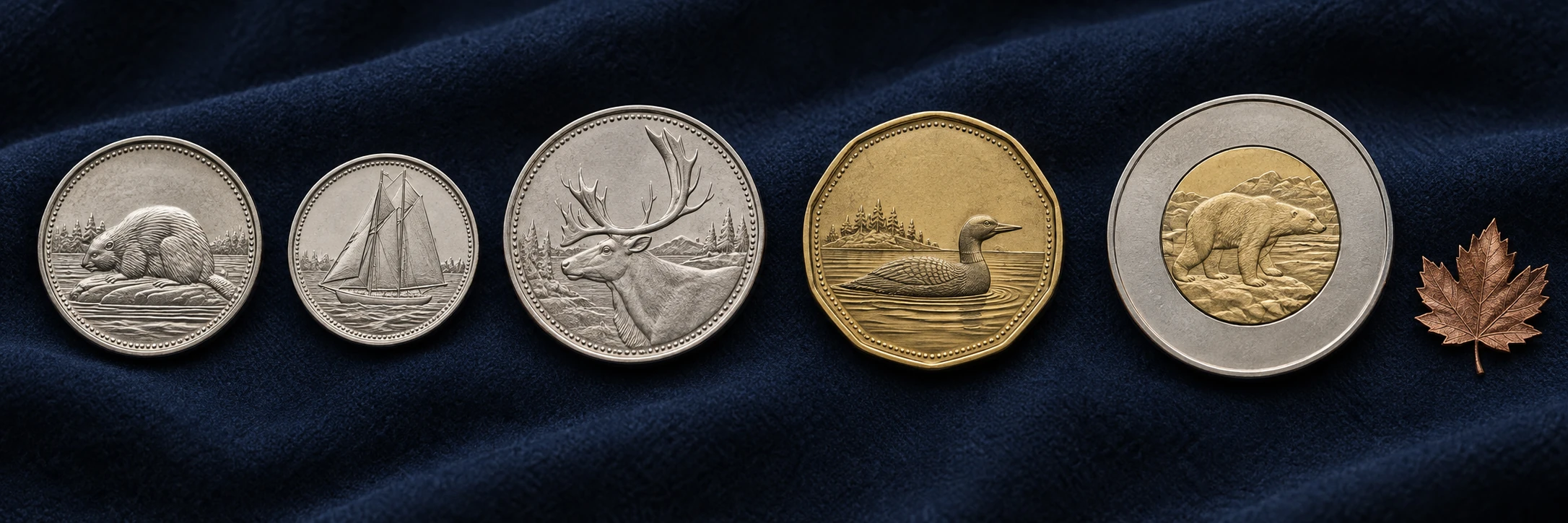
Read the value on the reverse before trying to identify the animal or scene. Common Canadian circulation designs include the beaver on 5¢, the Bluenose on 10¢, the caribou on 25¢, the common loon on $1, and the polar bear on $2. The 50¢ coin carries the Coat of Arms and is much less common in everyday change.
Shape and color help narrow the first match, but they are not enough by themselves. The $1 and $2 are bimetallic or plated modern pieces, while older coins can use different alloys and dimensions. Record the year and photograph the entire rim before comparing a design.
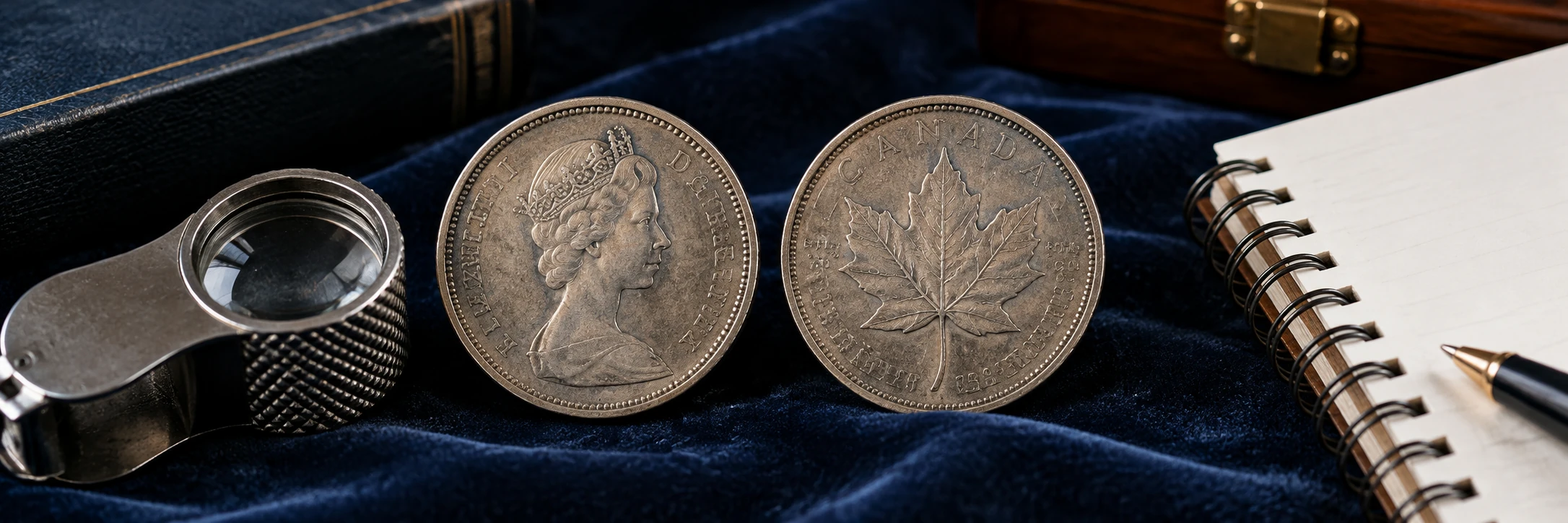
The obverse normally shows the reigning monarch, with the country name and date around the rim. Portrait changes can divide a series into useful date ranges, but a single reign may include more than one effigy and commemorative issue. Compare the facing direction, lettering, crown details, and small designer initials.
The date must be read with the reverse design and denomination. Canada changed the size, weight, plating, and composition of several coins over time, so a familiar animal on an older coin may not match a current specification. Keep both sides together as one identification record.
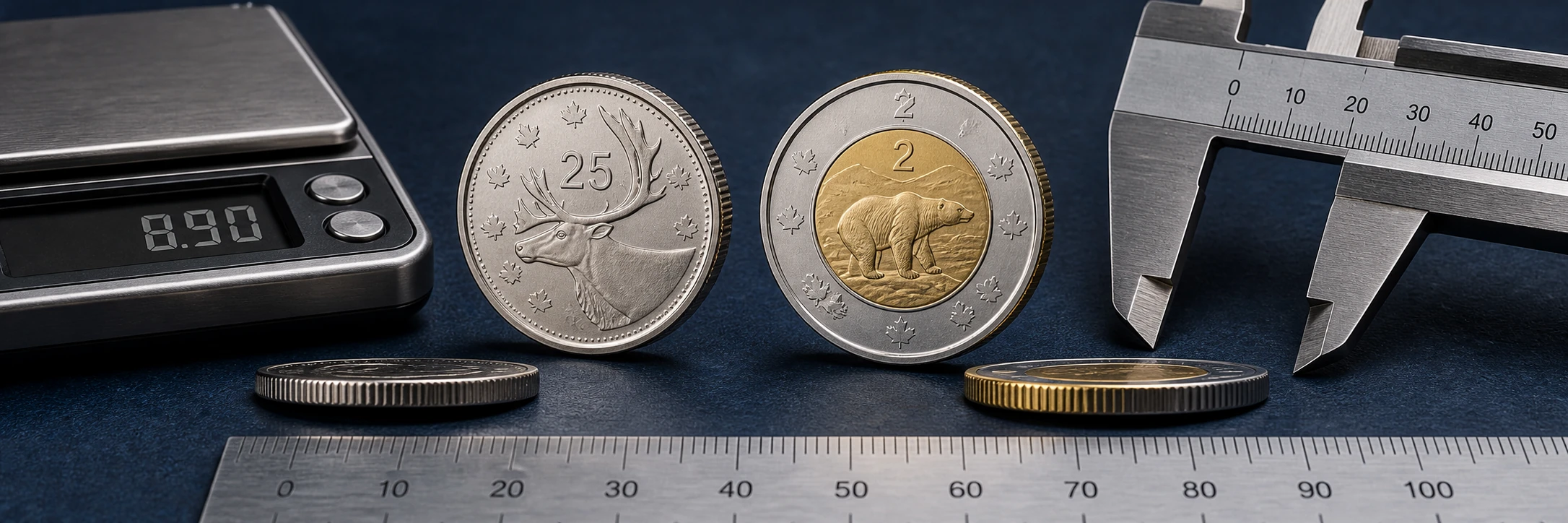
Measure a likely match instead of trusting the apparent size in a photograph. Current reference values include 5¢ at 3.95 g and 21.20 mm, 10¢ at 1.75 g and 18.03 mm, 25¢ at 4.40 g and 23.88 mm, 50¢ at 6.90 g and 27.13 mm, $1 at 6.27 g and 26.50 mm, and $2 at 6.99 g and 28.00 mm. A historic 1¢ reference is 2.35 g and 19.05 mm, but dates and compositions vary.
Inspect the edge under even light. Plain edges, reeding, and the interrupted serrations on the modern $2 can separate similar-looking pieces. The 20¢ denomination is not part of the familiar Canadian decimal circulation set, so a coin marked 20¢ needs especially careful verification rather than an automatic match.
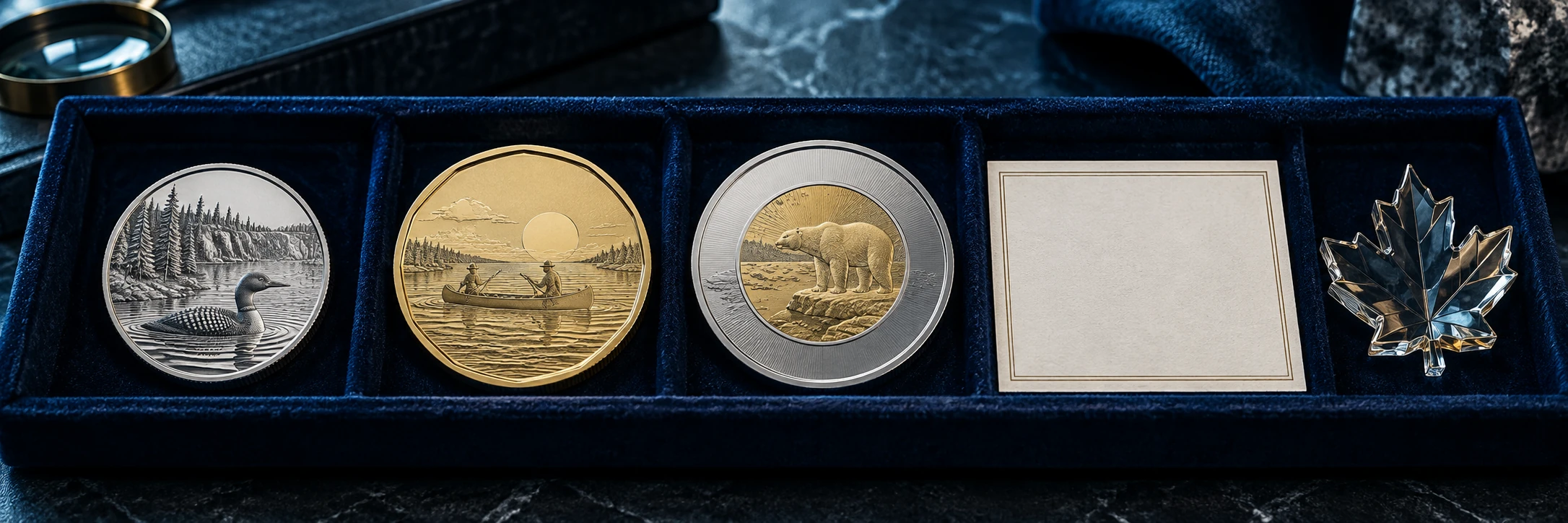
The Royal Canadian Mint has issued many special circulation designs, including themed 25¢ pieces, anniversary 50¢ coins, and special $1 and $2 reverses. The denomination and legal-tender format can remain familiar while the reverse changes to mark a person, event, place, or Canadian story.
A special reverse does not automatically make a coin rare. Record the exact subject, year, finish, mint packaging, and mintage where available. Separate a circulated coin from a proof or uncirculated set before comparing prices.
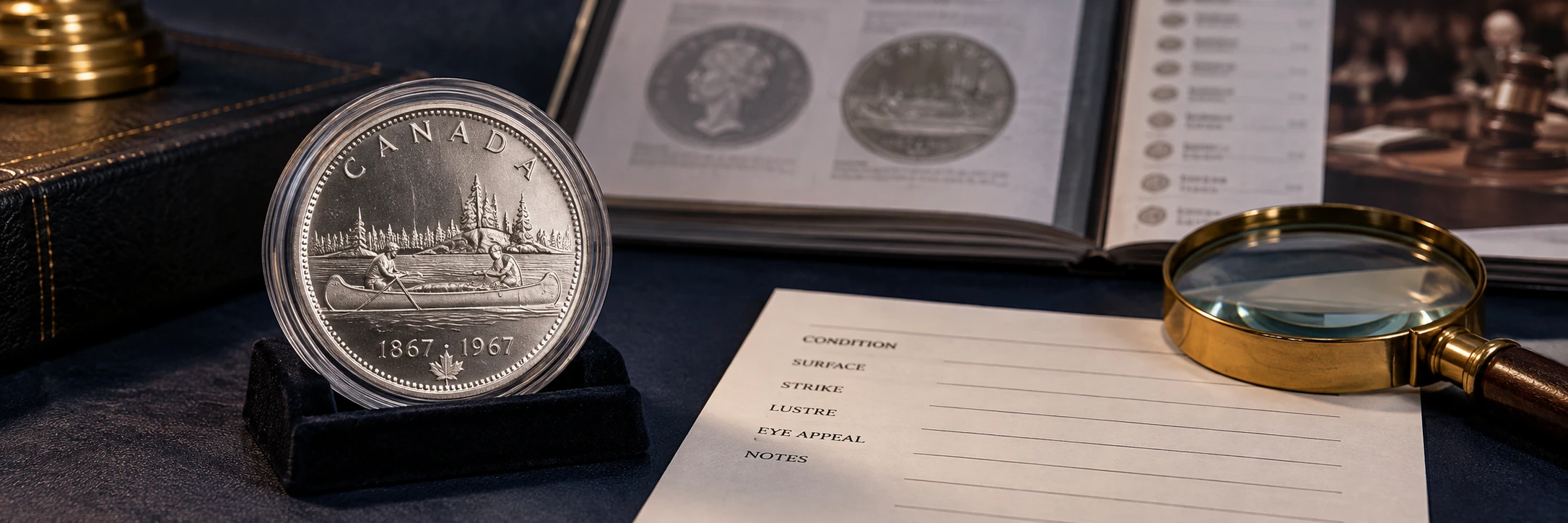
Most worn modern Canadian coins are worth their face value. A premium may depend on a scarce date, low mintage, silver content in an older issue, a recognized variety or mint error, strong preservation, or collector demand. The presence of a maple leaf or a famous animal is not proof of a high value.
Compare several completed sales for the same denomination, design, year, composition, and condition. Be careful with older silver coins and altered or plated pieces: metal testing and an in-person examination may be needed before buying or selling.
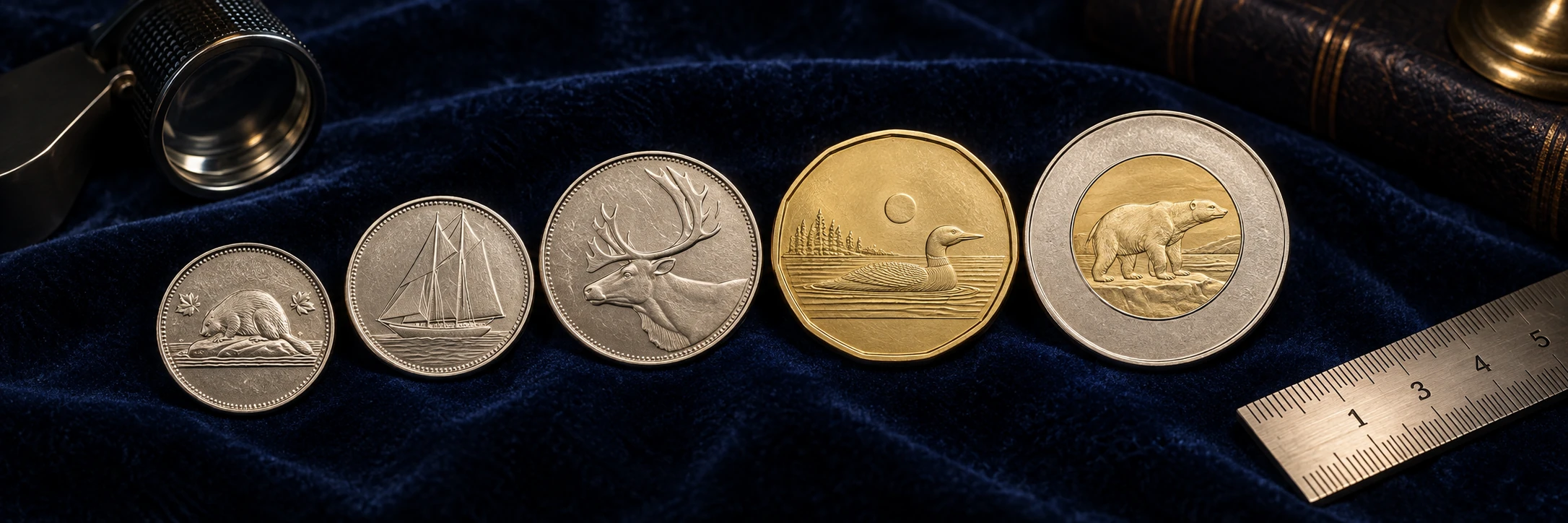
Read the denomination, identify the reverse animal or symbol, note the monarch portrait and date, then compare shape, edge, weight, and diameter with a Royal Canadian Mint reference.
A loonie is the Canadian one-dollar coin, named for the common loon shown on its reverse. Different years and special issues can use other reverse designs.
A toonie is the Canadian two-dollar coin. The familiar circulation design is bimetallic with a polar bear reverse, while special issues may change the design.
Some themed or low-mintage quarters have collector interest, but an animal design alone does not establish a premium. Confirm the exact year, issue, condition, and sales evidence.
The Royal Canadian Mint stopped distributing the 1¢ coin for cash transactions in 2012. Older cents remain collectible and can have date-specific specifications.
No. A photo supports identification; value depends on the exact issue, composition, condition, authenticity, variety, packaging, and current demand.
Use these catalog and reference sites to compare the identification, specifications, and market context. They are reference points, not guarantees of a sale price.