One pence
- Weight
- 3.56 g
- Diameter
- 20.32 mm
- Edge
- Plain

British coins are easier to narrow down when you read the denomination, the monarch portrait, and the reverse design as one set. A familiar crown, shield, animal, or plant can appear on more than one issue, while older coins may use a different size or composition for the same face value.
This guide covers the eight current UK circulation denominations from 1p to £2 and explains how to handle older decimal coins, commemorative designs, and possible errors. Use a clear photo first, then confirm the match with the date, edge, weight, diameter, and a trusted Royal Mint reference.
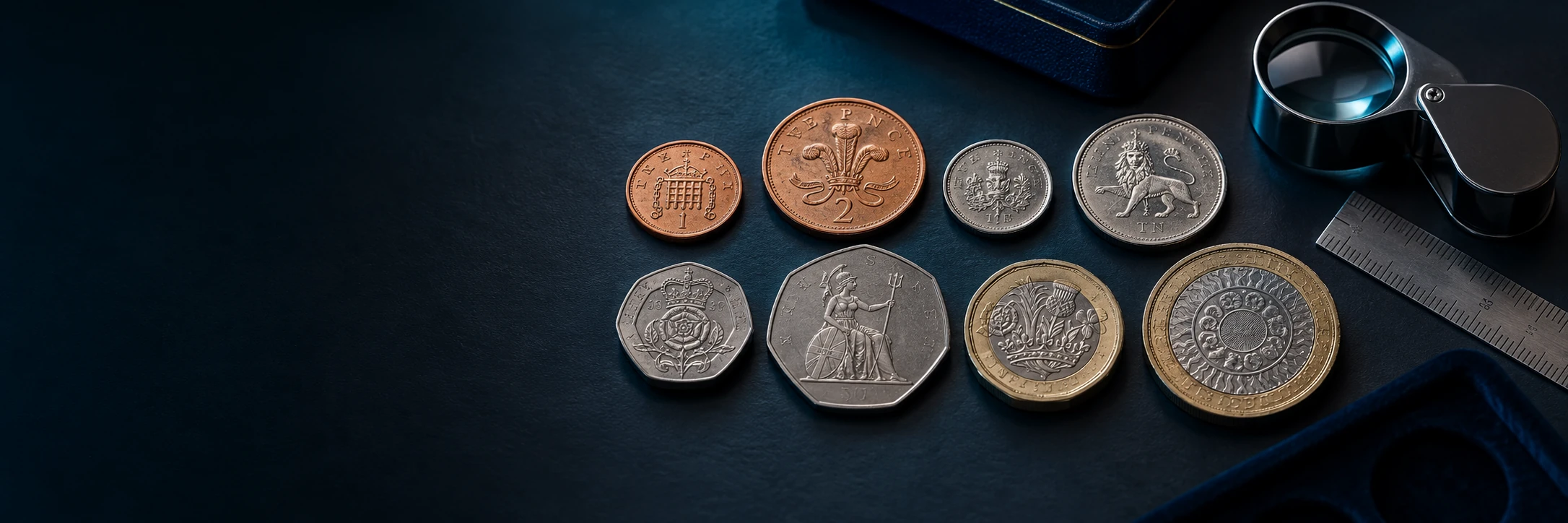
Use the scanner when you are ready to compare your coin with the clues in this guide.
Scan your coinRead the denomination, monarch portrait, reverse design, and year, then confirm the coin shape, edge, weight, and diameter with Royal Mint specifications before researching value.
Use these current circulating specifications as a cross-check. Older decimal coins can have different sizes, weights, and compositions.
Important: the same face value can have older and current specifications. Match the year and design before treating a measurement as evidence.
Start with the seven-sided outline and the 50p denomination, then identify the monarch portrait and the complete reverse subject. Record the year, designer initials, edge, 27.30 mm diameter, and 8.00 g current-specification weight, while checking whether the coin belongs to an older large 50p series. Compare the exact design and mintage with completed sales; a popular theme alone does not prove rarity.
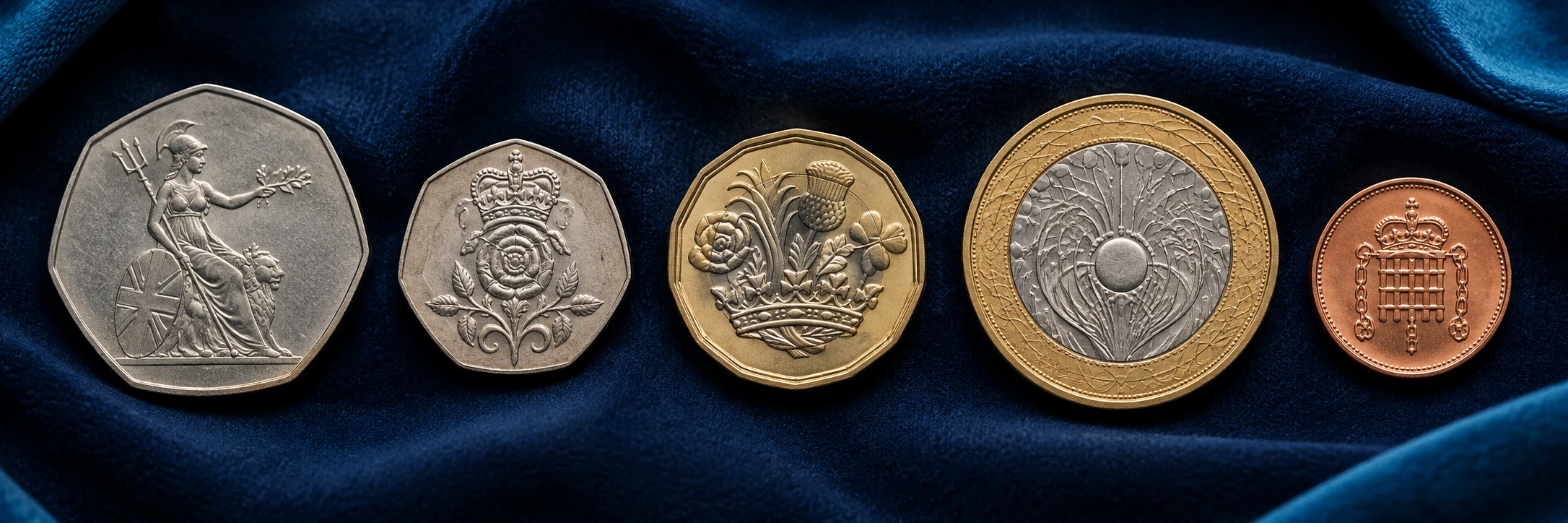
Read the value on the reverse before trying to name the design. Current UK circulation coins run from 1p, 2p and 5p through 10p, 20p, 50p, £1 and £2. The 20p and 50p are distinctive seven-sided coins, while the current £1 is twelve-sided and the £2 is round and bimetallic.
Shape is a strong first clue, but older issues can differ. Large and small versions of 5p, 10p and 50p circulated in different periods, and the round £1 lost legal-tender status after the twelve-sided coin entered circulation. Always record the year before comparing dimensions.
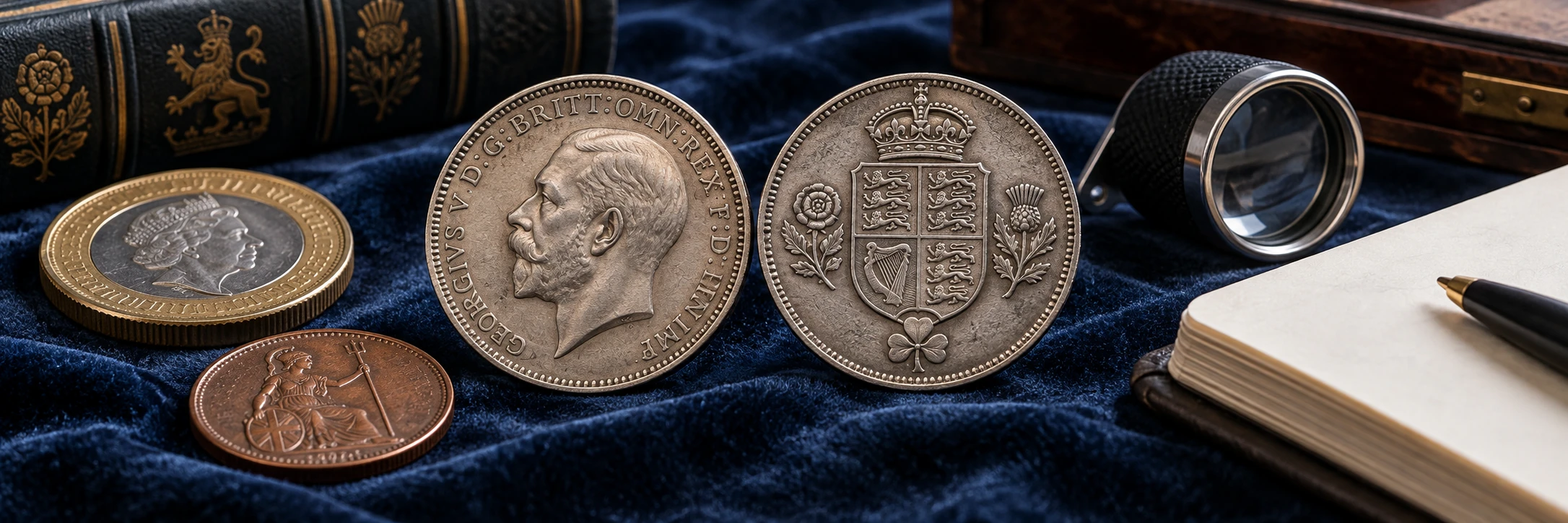
The obverse normally shows the reigning monarch, and the portrait can place a coin within a broad date range. Compare the facing direction, lettering, crown or laurels, and the small designer initials. A portrait alone is not enough because each reign can include multiple designs and commemorative issues.
The reverse carries the denomination and a national or commemorative motif. Look for the Royal Shield, a floral emblem, Britannia, a plant, an animal, a building, or a person. Photograph the complete rim so lettering and stars are not cut off, then compare both sides with a Royal Mint design record.
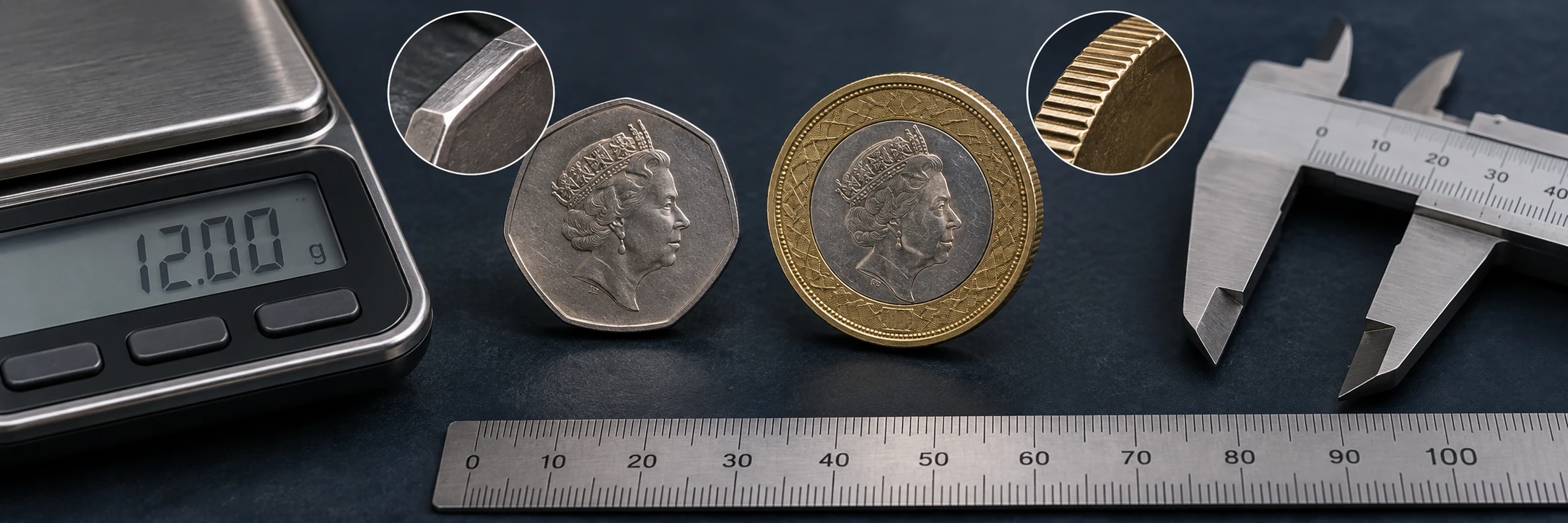
Once a type looks likely, weigh the coin and measure its diameter. For current circulating pieces, the 1p is 3.56 g and 20.32 mm, the 2p is 7.13 g and 25.91 mm, the 5p is 3.25 g and 18.00 mm, and the 10p is 6.50 g and 24.50 mm. The 20p is 5.00 g and 21.40 mm, the 50p is 8.00 g and 27.30 mm, the £1 is 8.75 g and 23.03 mm, and the £2 is 12.00 g and 28.40 mm.
Inspect the edge under even light. Plain, milled, and lettered edges can separate similar-looking issues, but the edge specification may change with an older size, a proof, or a commemorative release. A correct measurement supports an identification; it does not authenticate a coin by itself.
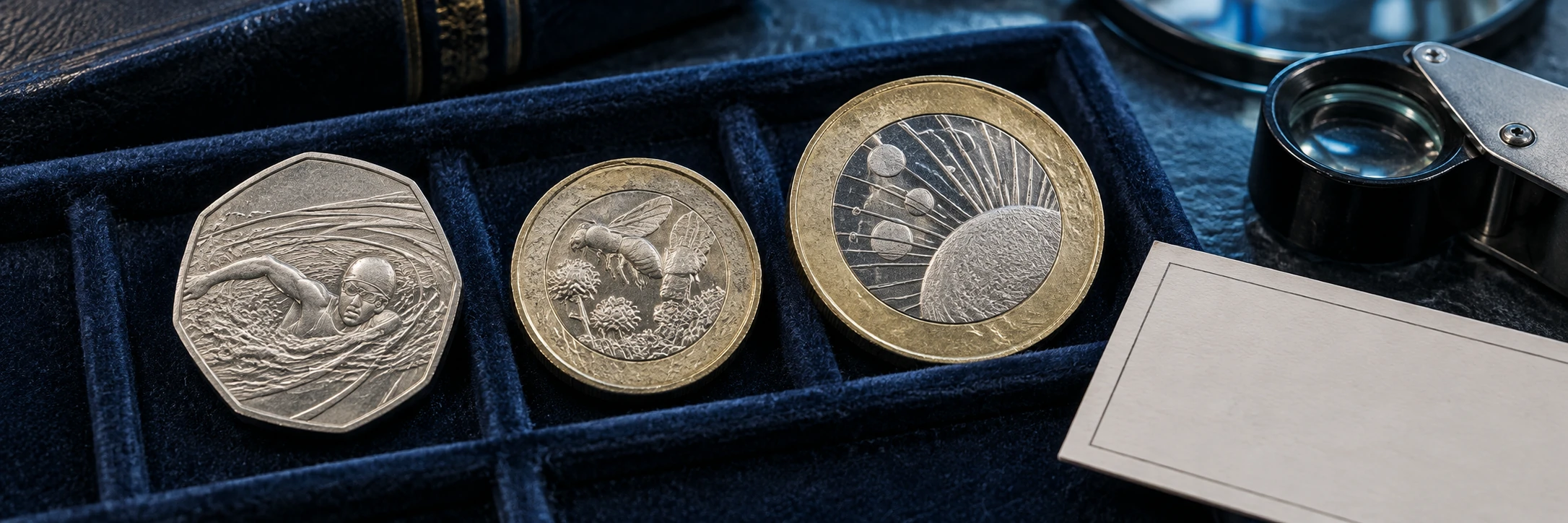
The Royal Mint has issued many circulating commemorative coins, especially 50p and £2 pieces. A special reverse may celebrate an event, person, place, or story while the coin keeps its normal denomination and legal-tender status. Record the subject and year exactly before searching for a catalog entry.
A popular design is not automatically scarce. Check mintage, whether the coin is circulated or a proof, the presence of a presentation set, and the condition of the surfaces. Compare completed sales for the exact design rather than relying on a headline price or an unsold listing.
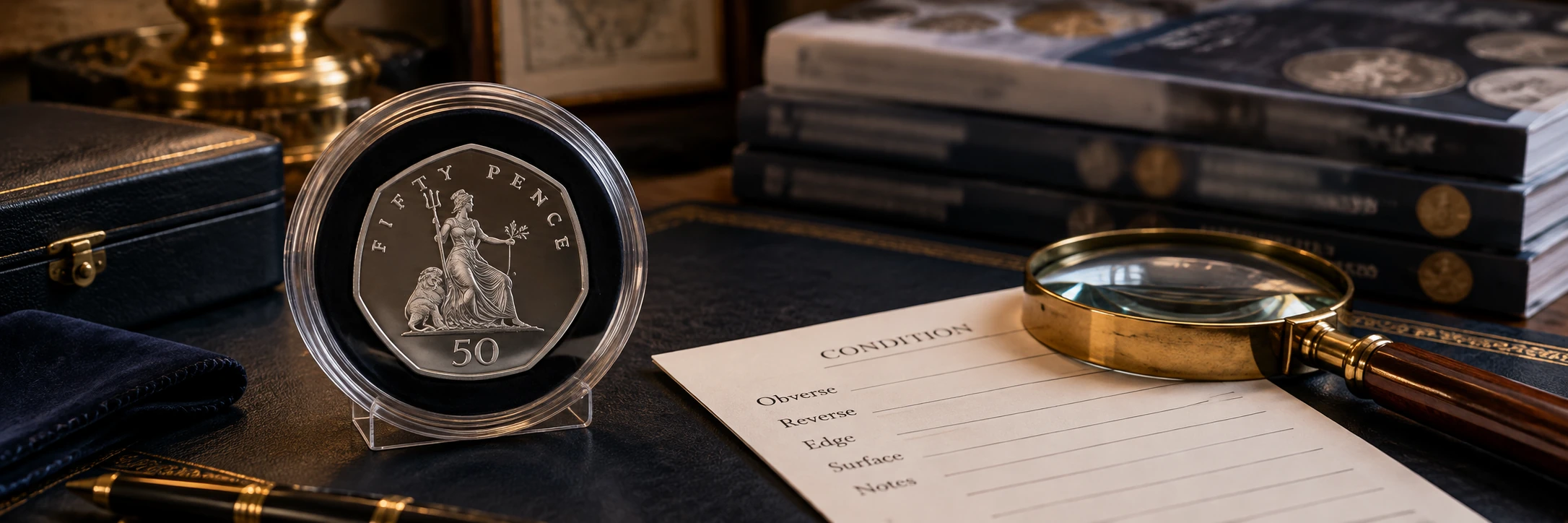
Most worn modern British coins are worth their face value. A collector premium can come from a scarce date or design, a low mintage, a recognized variety or mint error, an uncirculated finish, original packaging, or strong demand. Metal color and age alone do not establish a higher value.
Use several recent completed sales for the same denomination, design, year, and condition. Separate circulation pieces from proof or brilliant-uncirculated examples, and ask for an in-person opinion if a coin may be altered, counterfeit, or unusually valuable.
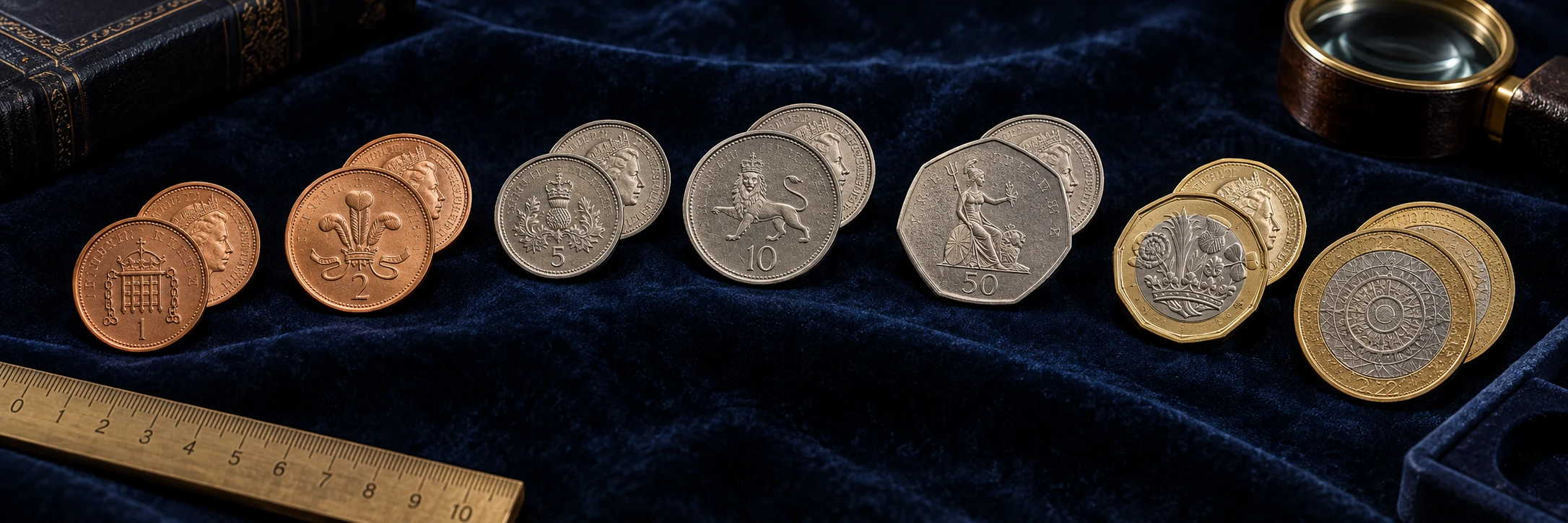
Read the denomination, identify the monarch portrait and reverse design, record the year, then compare shape, edge, weight, and diameter with a Royal Mint specification.
The 20p and 50p have a curved equilateral heptagon shape. Older large 50p pieces are larger than the current small 50p.
The older circulation £1 is round, while the current £1 is twelve-sided and entered circulation in 2017. Record the year and compare the exact specification.
Some have a collector premium, but most are not rare simply because the reverse is different. Confirm the exact design, mintage, condition, and market sales.
Portrait style can indicate a reign and broad date range, but several obverse designs and commemorative issues can occur within the same reign.
No. A photo supports identification; the final value depends on the exact issue, condition, authenticity, variety, packaging, and current demand.
Use these catalog and reference sites to compare the identification, specifications, and market context. They are reference points, not guarantees of a sale price.