Five cents
- Design
- Echidna
- Weight
- 2.83 g
- Diameter
- 19.41 mm
- Edge
- Milled

Australian circulation coins are unusually helpful to identify because each denomination has a familiar national design. An echidna, lyrebird, platypus, Coat of Arms, kangaroos, or Aboriginal elder can point to the denomination, while the monarch portrait and date place the coin in a particular issue period.
This guide explains how to identify Australian decimal coins from 5 cents to $2, how to handle the withdrawn 1 and 2 cent pieces, and how to separate an everyday coin from a commemorative or collector issue. Start with sharp photos of both sides, then confirm the match with shape, edge, weight, diameter, composition, and a Royal Australian Mint reference.
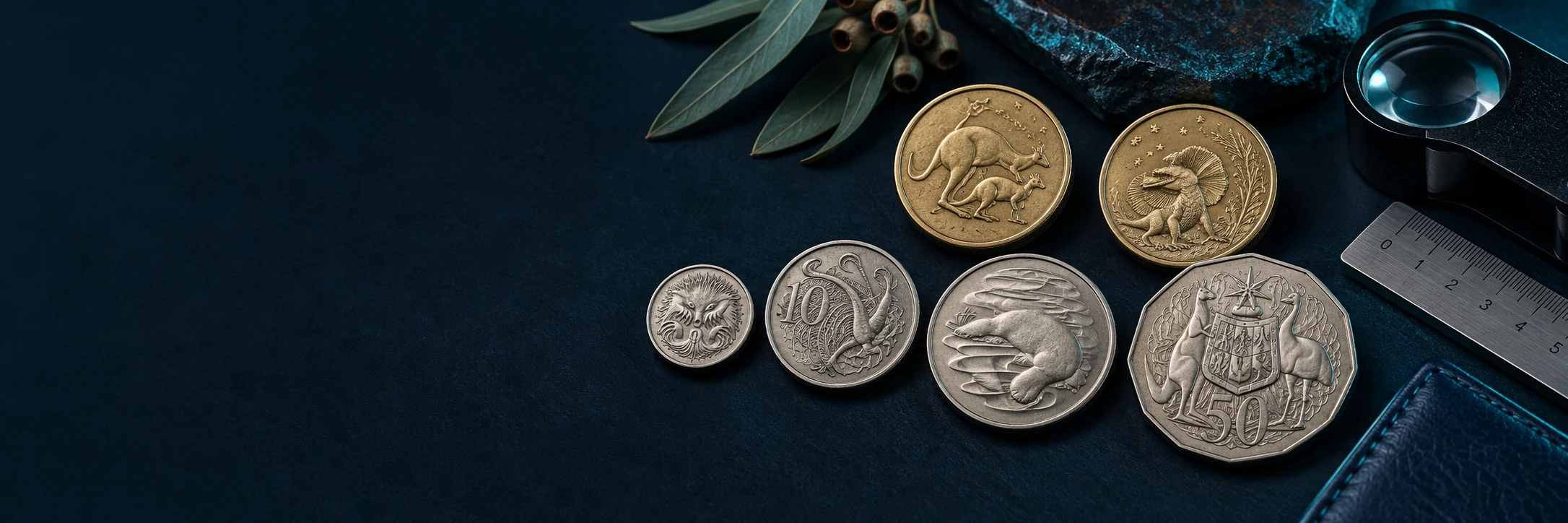
Use the scanner when you are ready to compare your coin with the clues in this guide.
Scan your coinRead the denomination, native animal or national design, monarch portrait, and year, then confirm shape, edge, weight, and diameter with Royal Australian Mint specifications before researching value.
Use these current circulating references as a cross-check. Older decimal, proof, and commemorative issues can have different designs or specifications.
Remember: 1c and 2c coins were withdrawn from circulation, and older issues can differ. Match the exact year, design, and finish before treating a measurement as evidence.
Start with the twelve-sided outline and Coat of Arms reverse to identify the 50c denomination. Record the monarch effigy, date, exact reverse subject, and edge, then compare the 31.51 mm diameter and 15.55 g current reference weight. Check whether the design is a standard or commemorative issue before comparing mintage, finish, condition, and completed sales.
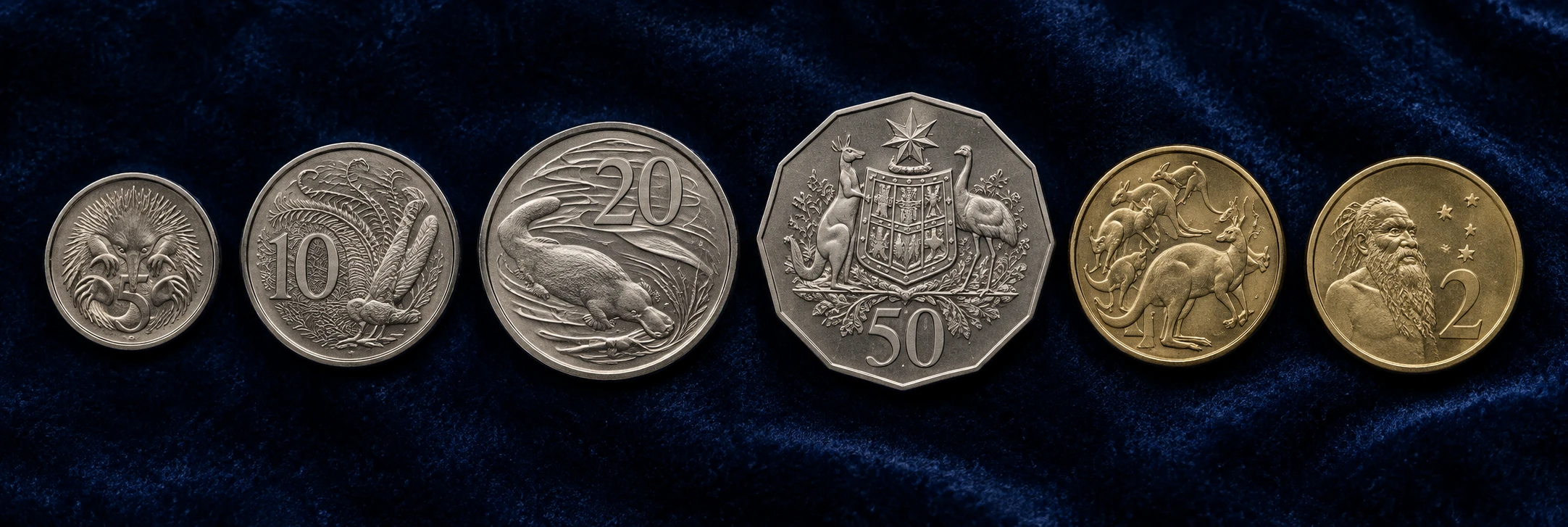
Read the value on the reverse before trying to name the animal. The standard Australian decimal designs pair 5 cents with an echidna, 10 cents with a lyrebird, 20 cents with a platypus, 50 cents with the Australian Coat of Arms, $1 with five kangaroos, and $2 with an Aboriginal elder, Southern Cross, and flora. These motifs are strong first clues, but commemorative reverses can change the picture.
Record the denomination, main subject, and full rim in your notes. A familiar animal does not prove the year or composition, and the same denomination may include special releases. Photograph the reverse straight on, then turn the coin over without losing track of its pair.
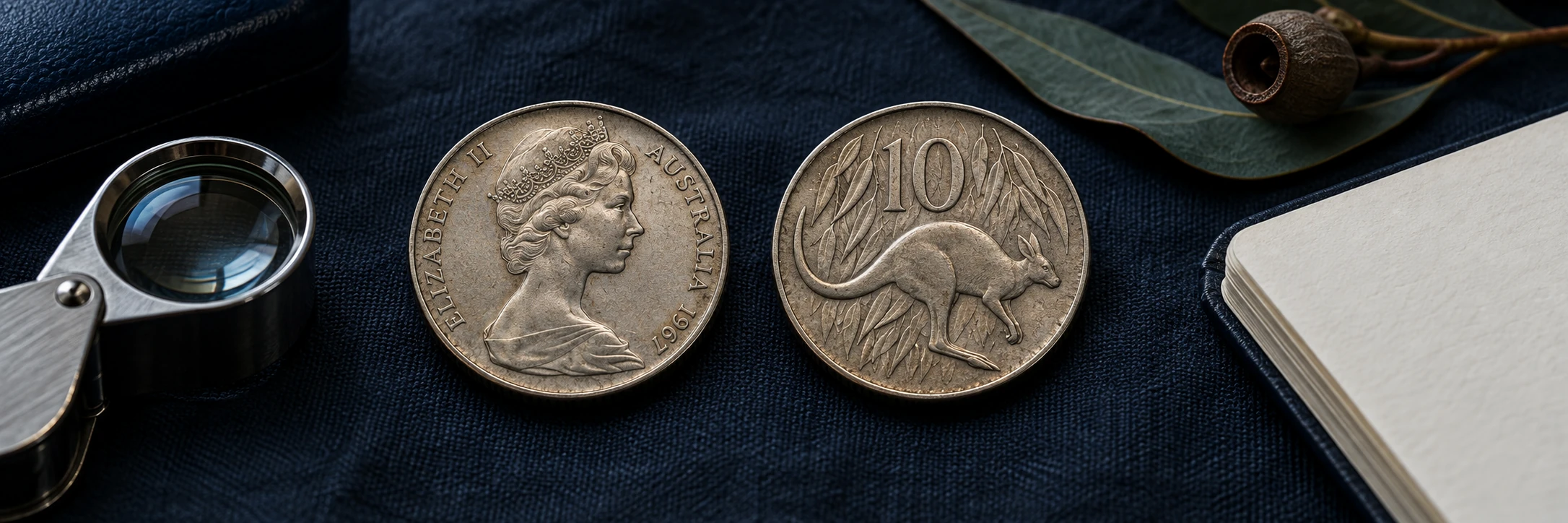
The obverse of Australian legal-tender coins carries an approved monarch effigy. Compare the portrait, facing direction, lettering, and date rather than relying on a generic image of a king or queen. A portrait change can narrow the period, but a single reign may include standard, commemorative, and proof issues.
Read every digit and look for small designer initials or mint details. The 1966 changeover began Australia’s decimal series, while 1 and 2 cent pieces were later withdrawn from circulation. Keep the date with the denomination and reverse design because the same animal may appear across many years.
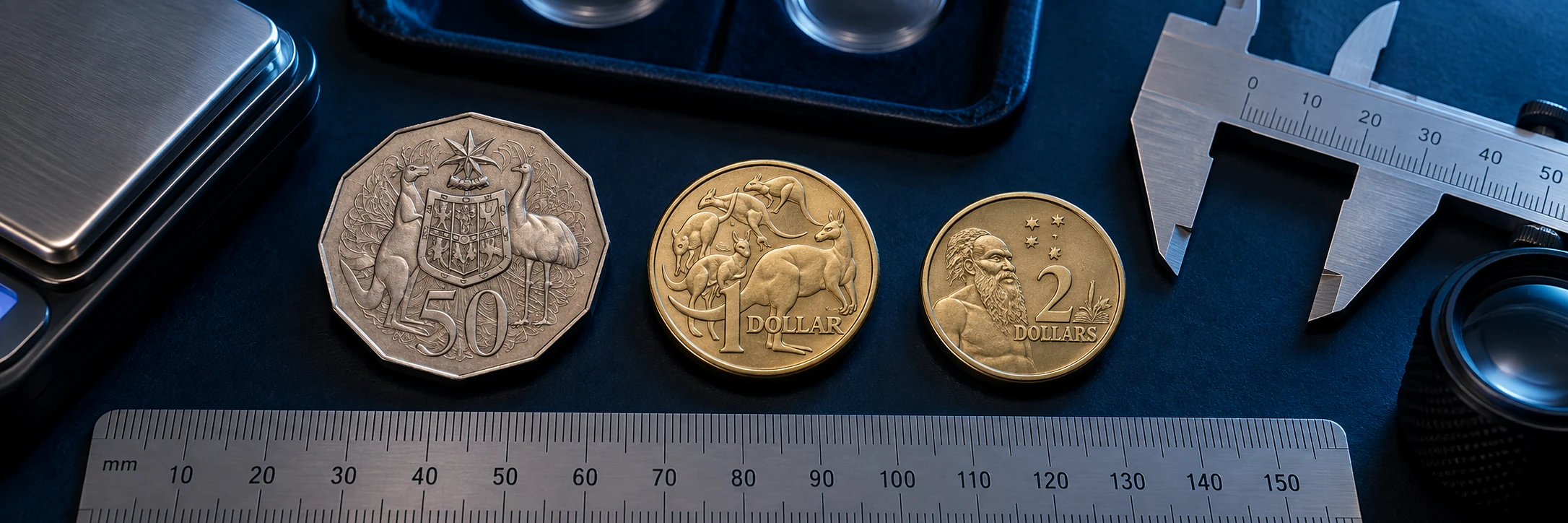
Use measurements to test a likely match. Current reference specifications list 5c at 2.83 g and 19.41 mm, 10c at 6.65 g and 23.60 mm, 20c at 11.30 g and 28.52 mm, and 50c at 15.55 g and 31.51 mm. The 50c is a distinctive twelve-sided coin, while the other familiar circulation pieces are round.
The same Royal Australian Mint reference lists the $1 at 9.00 g and 25.00 mm and the $2 at 6.60 g and 20.50 mm; both use interrupted milling. Older dates, withdrawn cents, proof coins, and special issues can differ, so treat these as reference checks rather than an authenticity guarantee. Metal color alone is weak evidence.
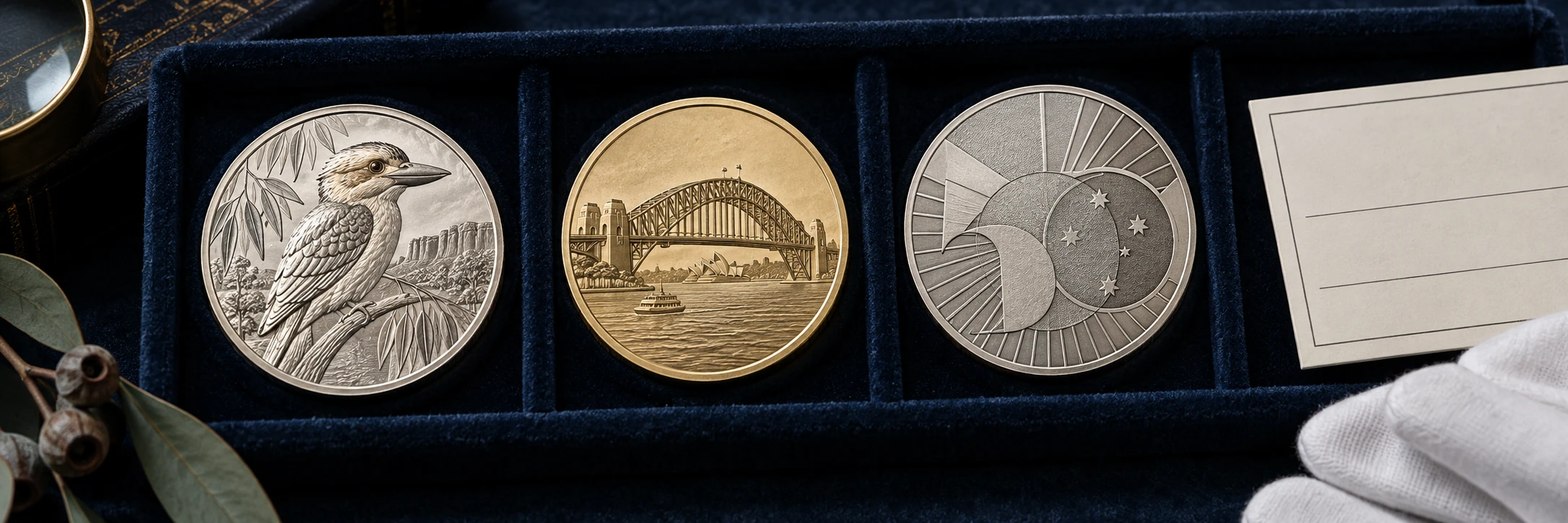
Australia regularly changes the reverse of circulating coins for anniversaries, community themes, and national events. A commemorative coin can retain the same denomination and physical format while replacing the standard animal or Coat of Arms with a new subject. Record the exact design, year, inscriptions, and any privy or mint mark before searching.
Separate coins found in change from uncirculated rolls, proof sets, colored issues, and souvenir pieces. Packaging and finish can affect collector demand, but a special image alone does not establish rarity. Use the Royal Australian Mint issue record to confirm whether a design circulated and how many were made.
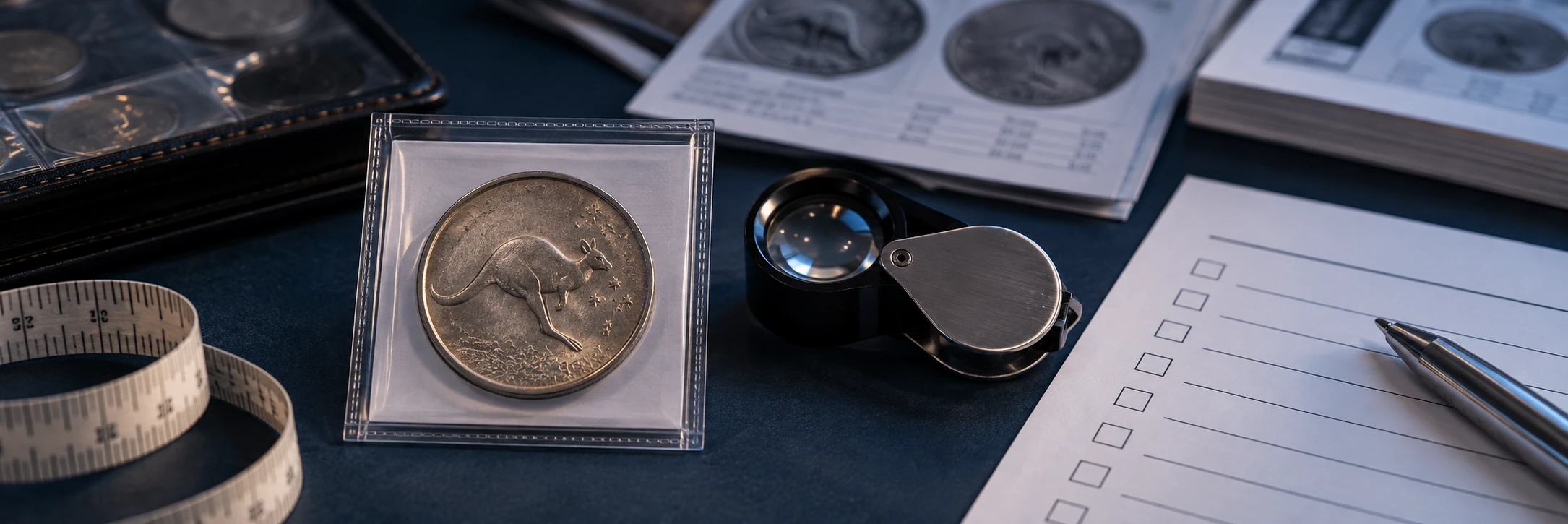
Most worn modern Australian coins are worth their face value. A premium may depend on a scarce date, low mintage, recognized variety or mint error, proof or uncirculated finish, strong preservation, or collector demand. Withdrawn 1c and 2c pieces can attract interest, but age by itself is not proof of value.
Compare the exact denomination, reverse, year, composition, condition, and finish with completed sales. Do not treat an asking price as a sale result. If a coin may be rare, altered, counterfeit, or expensive, arrange an in-person examination before buying or selling and avoid cleaning the surface.
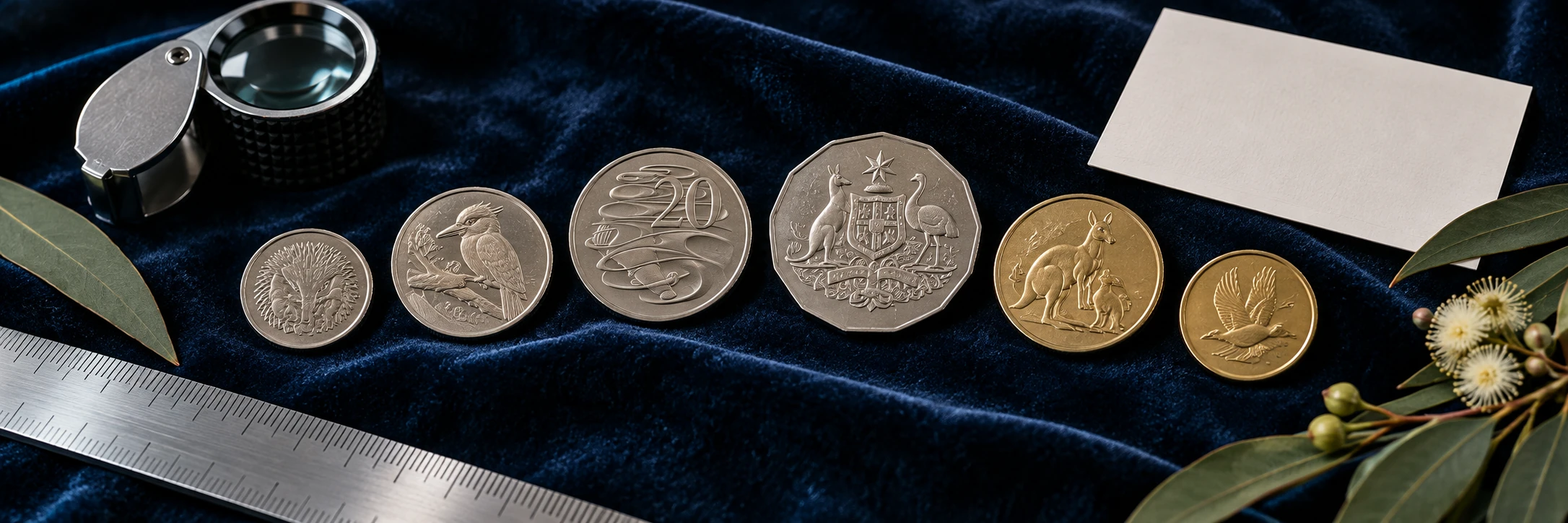
Photograph both sides, read the denomination and date, identify the animal or national design, then confirm the shape, edge, weight, and diameter with a Royal Australian Mint reference.
The standard designs use an echidna on 5c, lyrebird on 10c, platypus on 20c, Coat of Arms on 50c, kangaroos on $1, and an Aboriginal elder design on $2. Commemorative issues can use different reverses.
The standard 50c is a twelve-sided coin, which makes its outline a useful identification clue. Older and commemorative issues still need a date and design check.
Most circulated examples are common and worth face value. Scarcer dates, low-mintage commemoratives, varieties, proof issues, and high-grade coins can attract a premium.
They were withdrawn from circulation after the decimal era, but existing pieces can still be collected. Confirm the date, design, condition, and exact specification before estimating value.
No. A photo can support identification, but value also depends on authenticity, mintage, composition, condition, finish, certification, and current completed-sale evidence.
Use these catalog and reference sites to compare the identification, specifications, and market context. They are reference points, not guarantees of a sale price.