
Arabic Coin Identification
Arabic coins and Middle Eastern coins often include Arabic script, calligraphy, different date systems, religious phrases, rulers, national emblems, or symbols that may be unfamiliar to many users.
CoinsIdentification helps you upload a photo and check possible country, period, denomination, metal, and estimated value. The result is a starting point for research, especially when the date or script is hard to read.
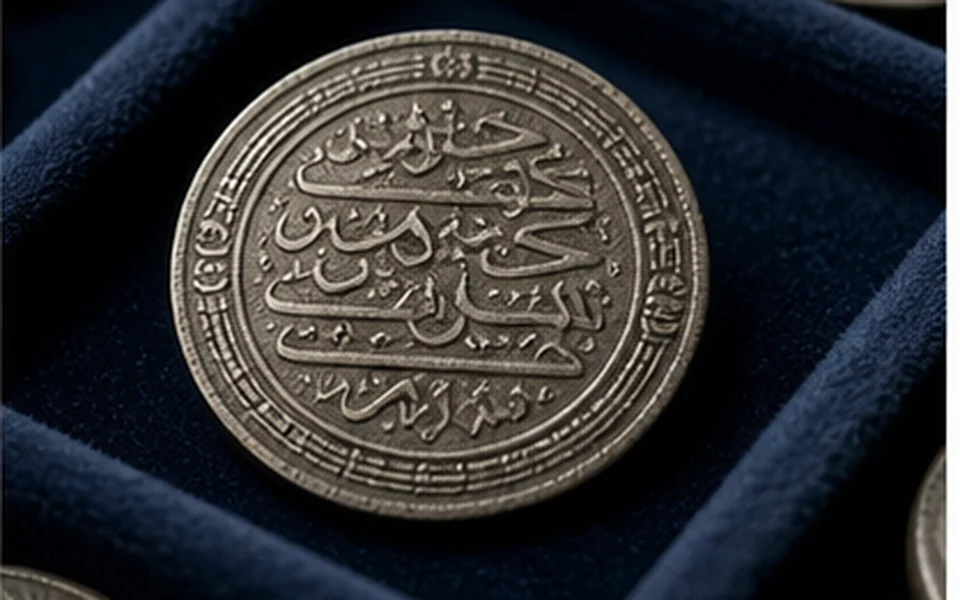
Use the scanner when you are ready to compare your coin with the clues in this guide.
Scan your coinPhotograph both sides in even light, note the script and date format, and compare the denomination, ruler or emblem, and metal with a catalog.
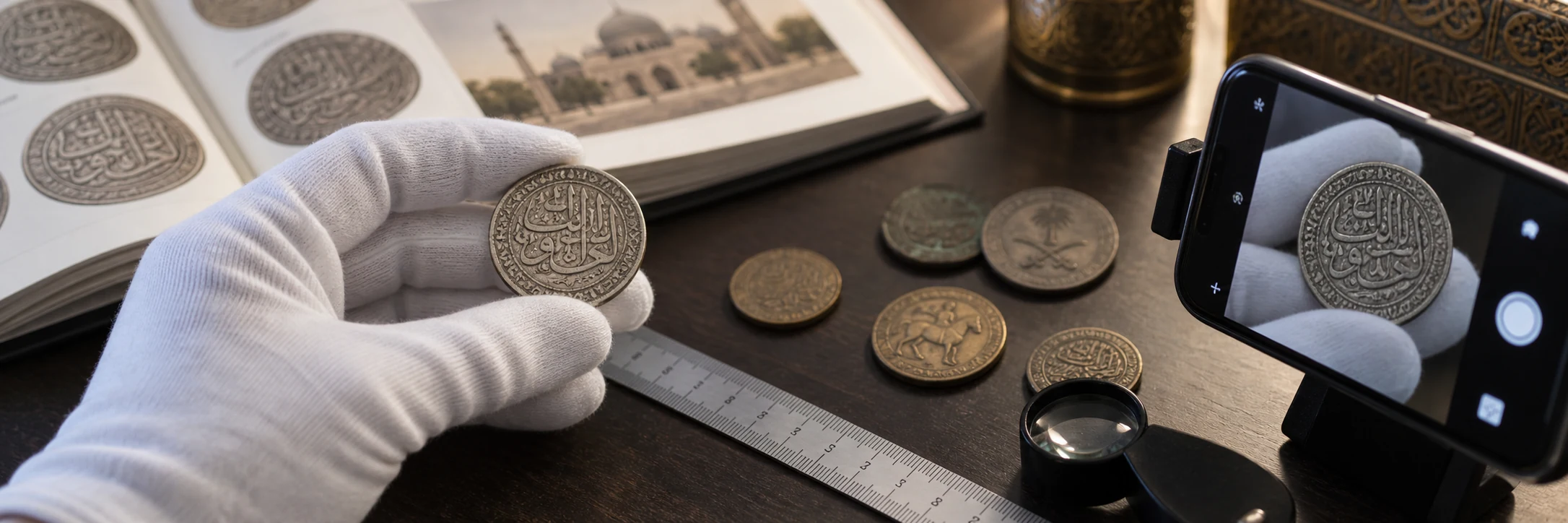
Worked example: reading a date and inscription
Take a straight-on image with side lighting, transcribe any characters you can recognize, and compare the date format, calligraphy, denomination, and symbols with a catalog.
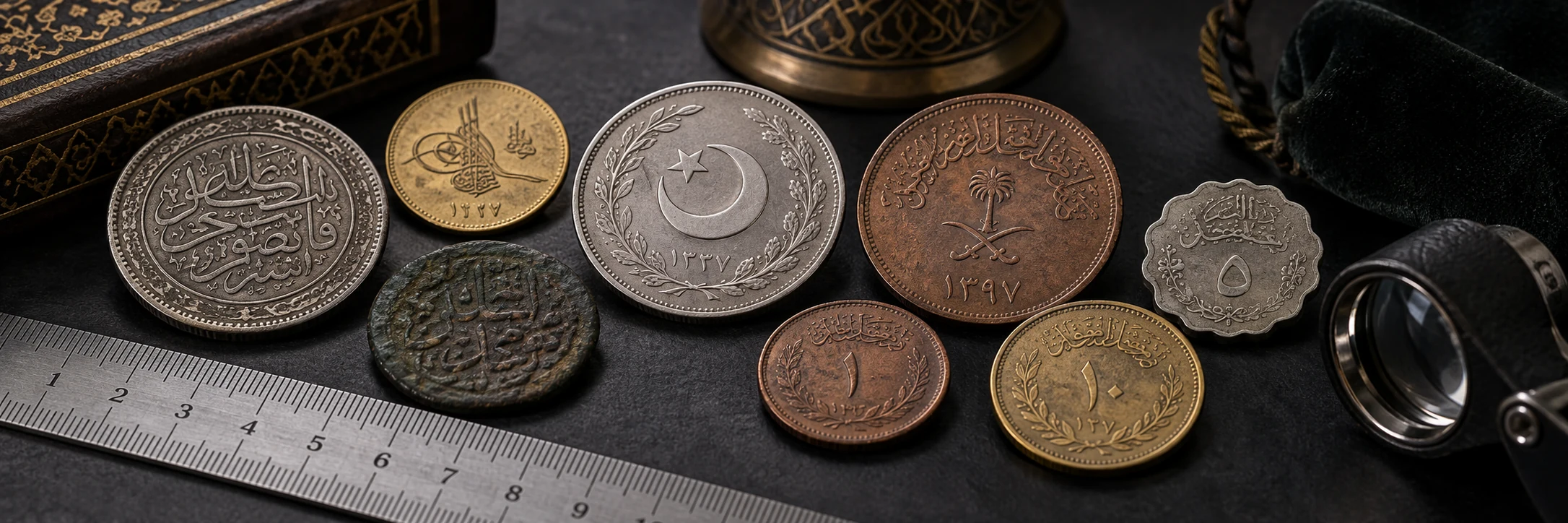
Why Arabic Coins Need Careful Identification
Arabic coins may use Hijri dates, Gregorian dates, or both. Some dates use Arabic numerals, some use Eastern Arabic numerals, and older Islamic coins may rely mostly on inscriptions rather than portraits.
Calligraphic designs can be beautiful but difficult to read from a poor photo. Clear lighting and a straight angle help the system see letters, numbers, country names, and symbols.
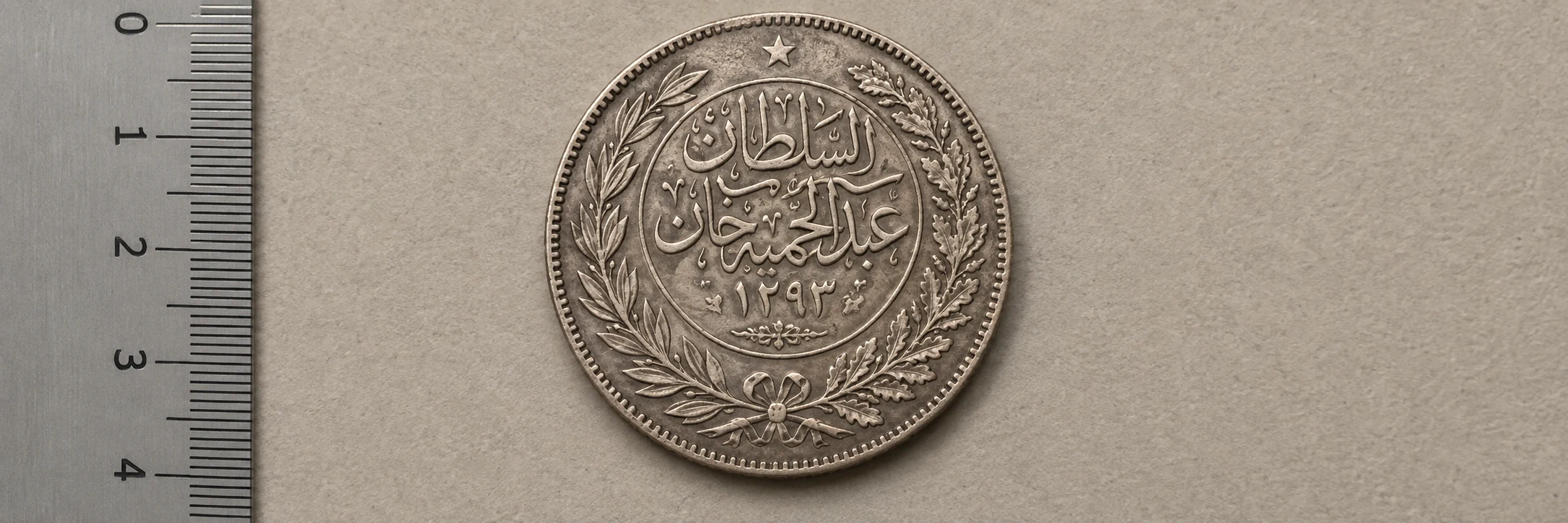
How to Identify Arabic Coins Online
Upload a clear photo of both sides. The tool can analyze Arabic script, numbers, country name, denomination, date, symbols, metal color, and design style. If the coin includes both Arabic and English text, make sure both are visible.
Avoid reflections on shiny coins and keep the whole coin in frame. If the coin has a special edge or a visible mint mark, photograph that as well.
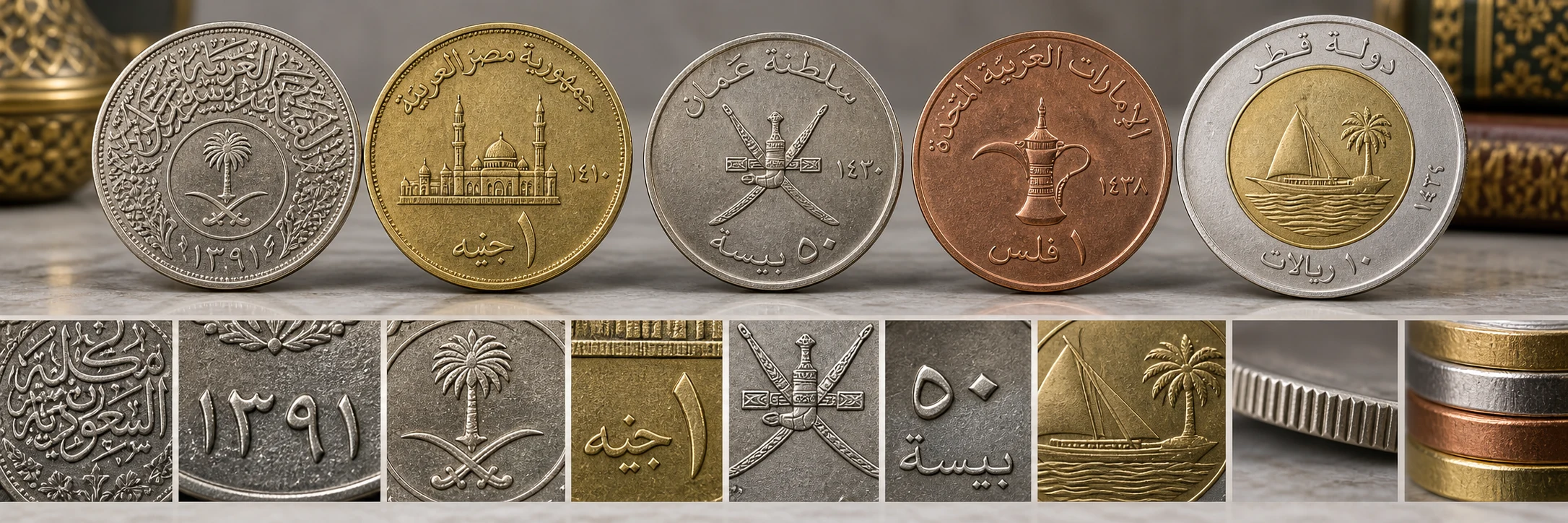
Important Details on Arabic and Middle Eastern Coins
The same region may have many coin designs from different countries and periods. Script style, date format, national emblem, and denomination are often the fastest clues.
Older Islamic coins may need expert help because inscriptions, authenticity, and historical context can be complex. Do not clean older coins to make writing clearer.
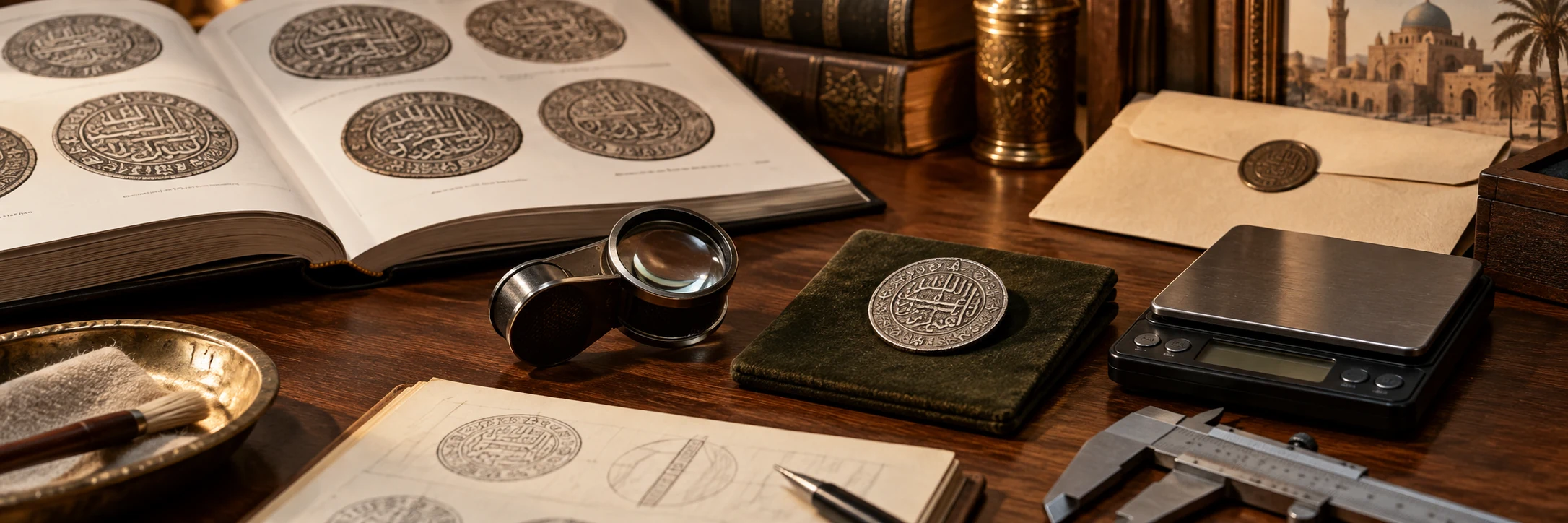
Arabic Coin Value
Arabic coin value depends on country, year, metal, condition, historical period, rarity, and demand. Some modern coins are common, while older silver, gold, or historically important coins may be more valuable.
Estimated value is only a guide. For rare, ancient, silver, or gold coins, get professional evaluation before selling.
FAQ
Can I identify Arabic coins by photo?
Yes. A clear photo can help read script, dates, symbols, denomination, and country clues.
Why is the date different on Arabic coins?
Some Arabic coins use the Hijri calendar or Eastern Arabic numerals, so the date may not look familiar.
Are Middle Eastern coins valuable?
Some are common, while others can be valuable because of age, rarity, metal, condition, or history.
What details should be visible?
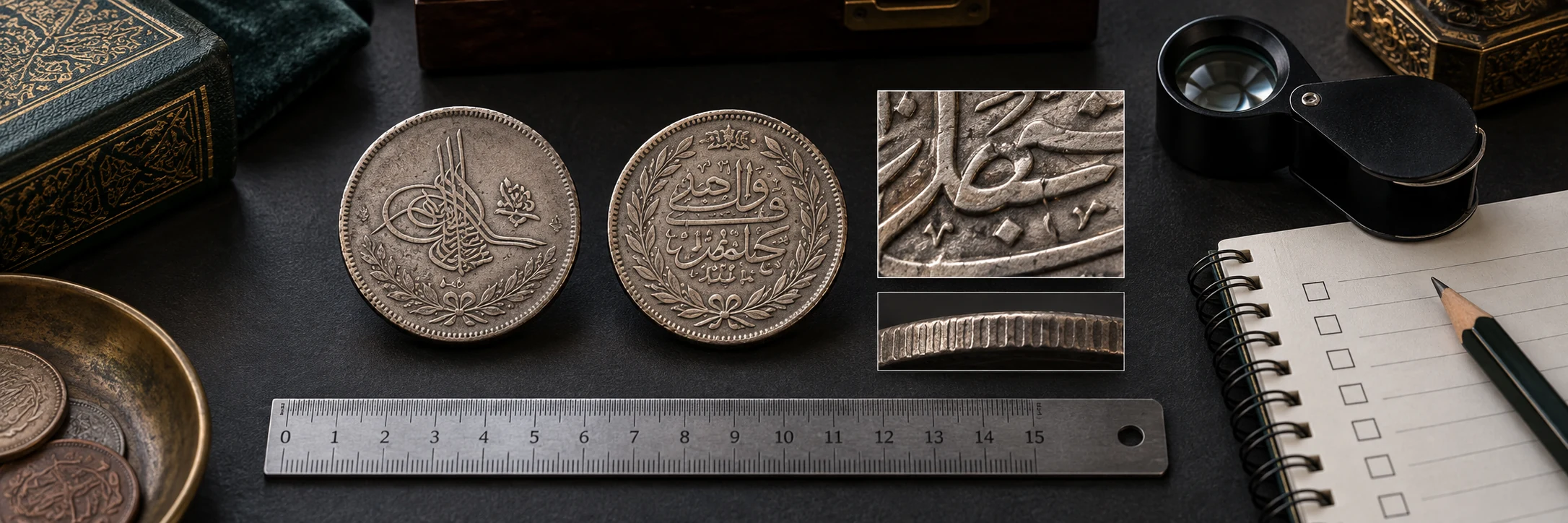
Show both sides, the date, script, denomination, country name, emblem, and edge if possible.
Sources and further reading
Use these catalog and reference sites to compare the identification, specifications, and market context. They are reference points, not guarantees of a sale price.