
Roman Coin Identification
Roman coins are often identified by the emperor portrait, Latin inscriptions, reverse figure, mint marks, metal, and denomination. A clear photo can help connect these clues to a possible Roman coin type and period.
CoinsIdentification can help you compare visible details and understand what to research next. Roman coin value depends strongly on emperor, condition, rarity, metal, readable inscriptions, and collector demand.
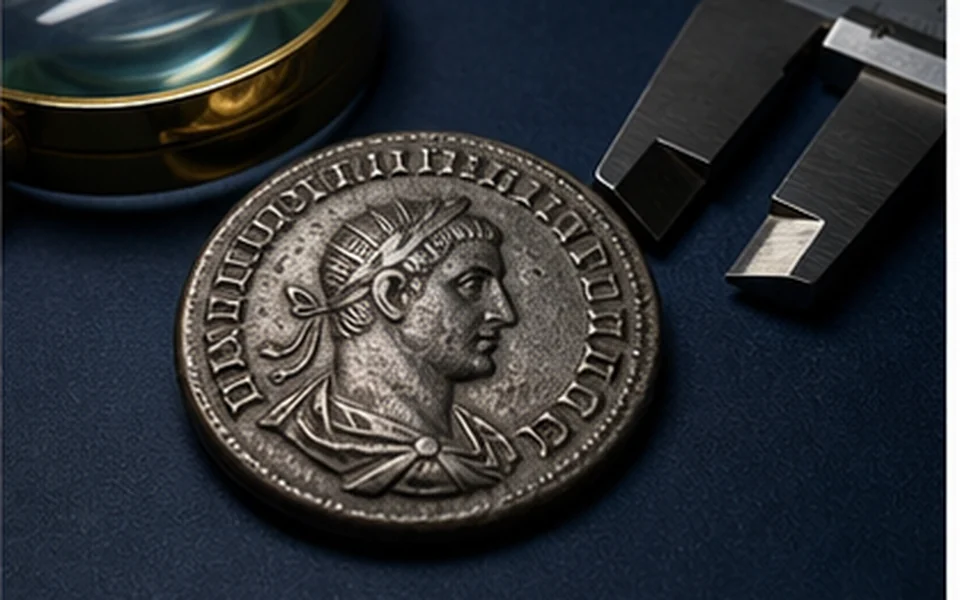
Use the scanner when you are ready to compare your coin with the clues in this guide.
Scan your coinRead the visible Latin legend, identify the portrait and reverse figure, then compare the mint and denomination clues with a Roman coin catalog.
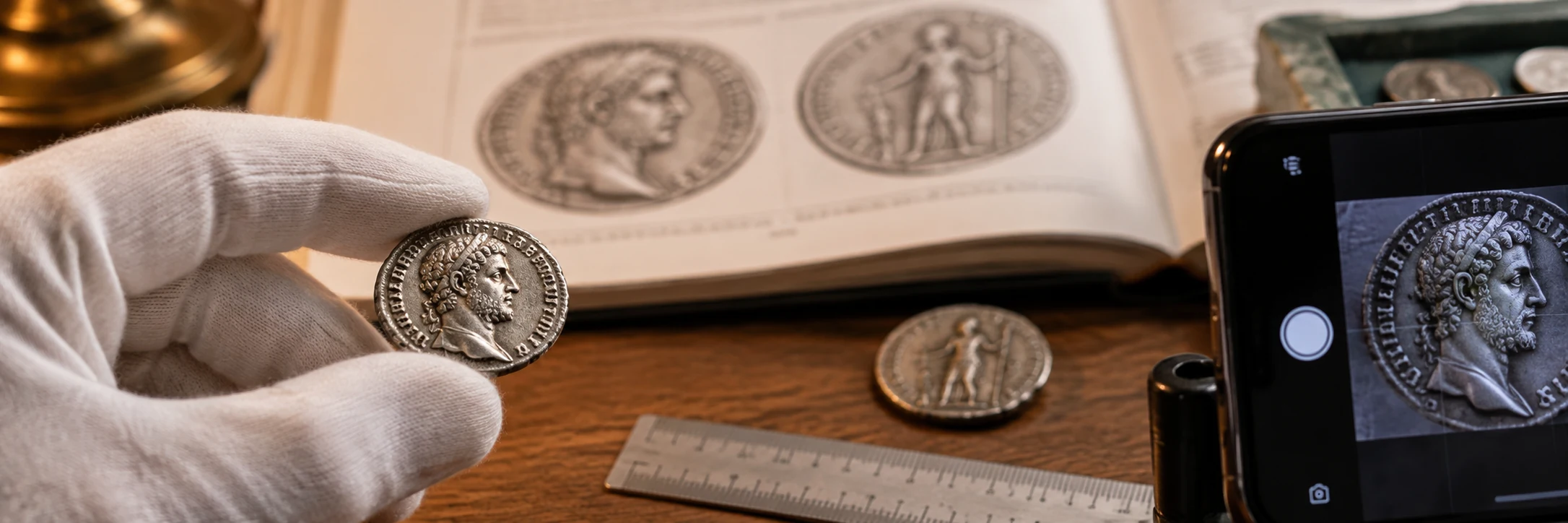
Worked example: an Augustus denarius
The Numista record for an Augustus denarius (N#333147) lists a bare head of Augustus with the Latin legend “S P Q R IMP CAESARI AVG COS XI TRI POT VI” on the obverse and a triumphal arch with a quadriga on the reverse. Use that order of checks—portrait, readable legend, reverse scene, metal, weight and diameter—when comparing a worn Roman coin; a partial match is only a lead.
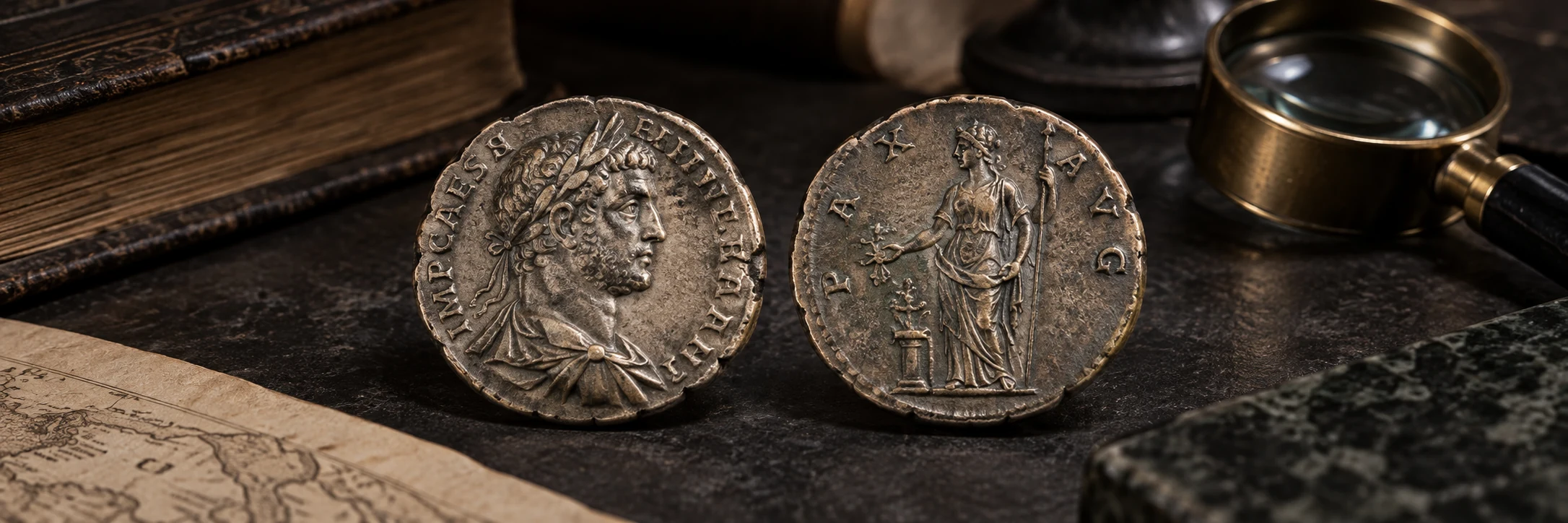
How Roman Coin Identification Works
The portrait side is often the first clue. Roman coins may show an emperor, empress, or ruler facing right or left. Around the edge, Latin inscriptions can include abbreviated titles and names. Even partial letters can help identify a likely ruler.
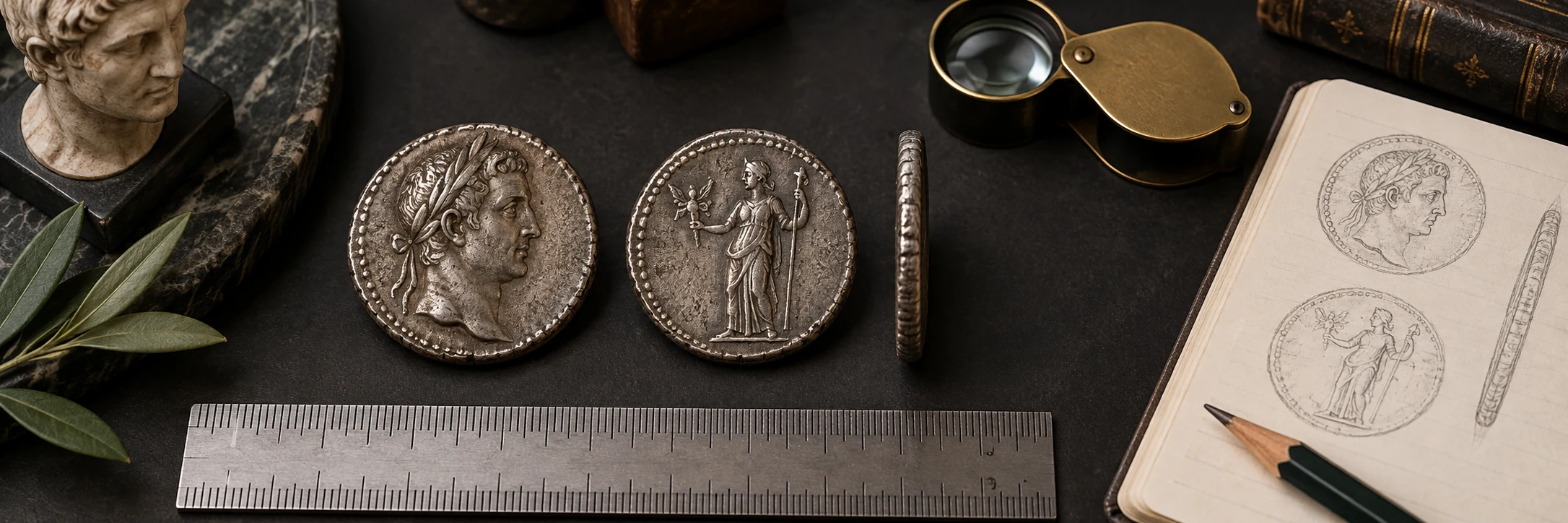
The reverse side may show a goddess, military symbol, victory, altar, temple, legionary standard, or seated figure. These reverse designs can be essential because several emperors used similar portrait styles.
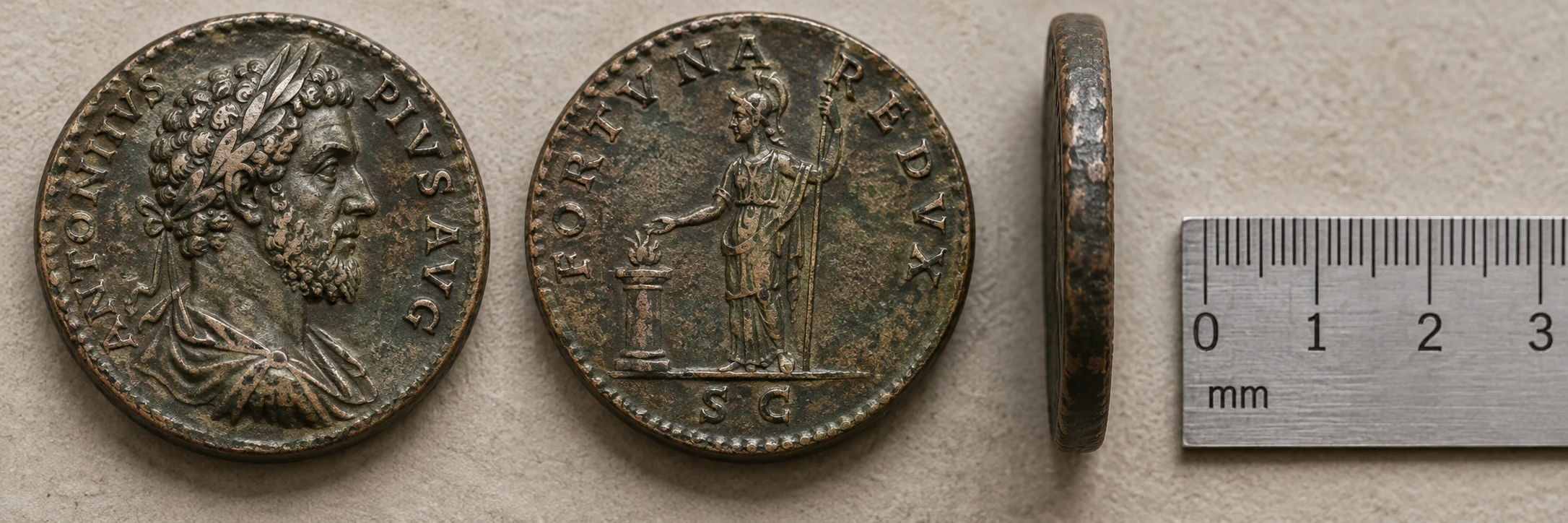
Key Details on Roman Coins
When you upload a Roman coin photo, try to show the full edge and all readable letters. If possible, add both sides and measure the coin. Bronze, silver, and gold Roman coins have different denominations and value ranges.
Common details include the emperor portrait, Latin inscriptions, reverse figure, letters around the edge, mint marks, metal, size, and weight. A worn coin can still be identifiable if the portrait shape and reverse symbol are clear.
Common Roman Coin Types
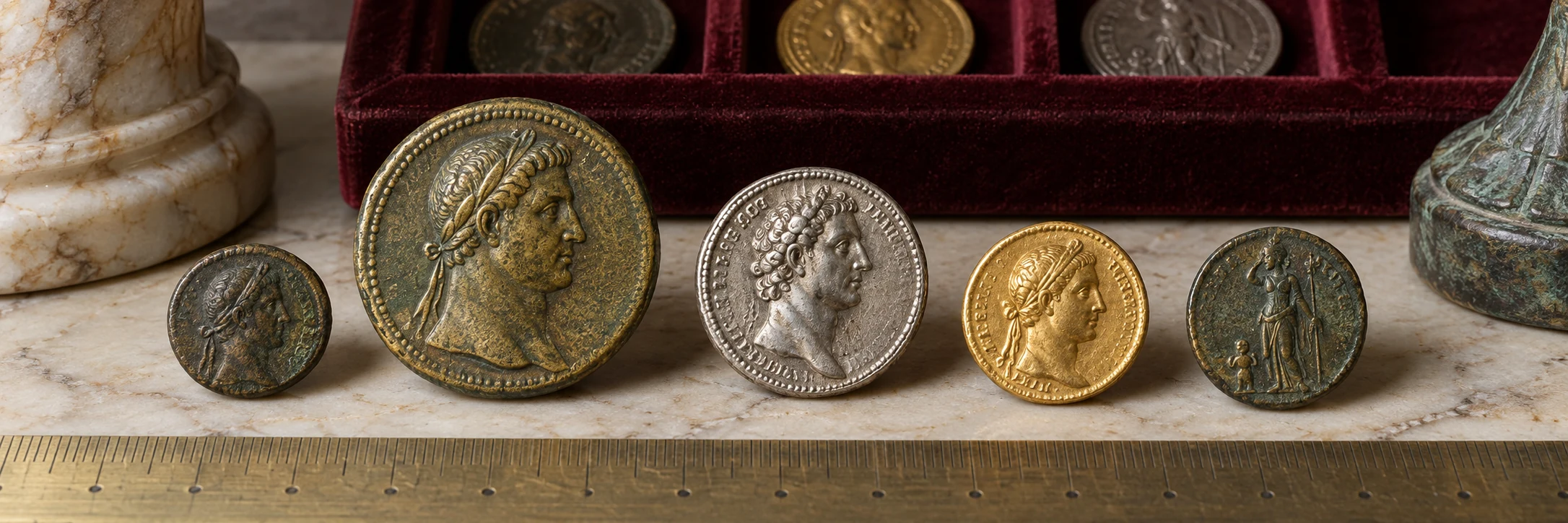
Roman coins include types such as denarius, sestertius, antoninianus, as, follis, and aureus. A denarius is often silver, a sestertius is usually large bronze or brass, and an aureus is gold. Later Roman coins may be smaller and more difficult to identify.
Knowing the approximate diameter and weight can help separate similar types. A photo is useful, but measurements make the identification much stronger.
Roman Coin Value and Rarity
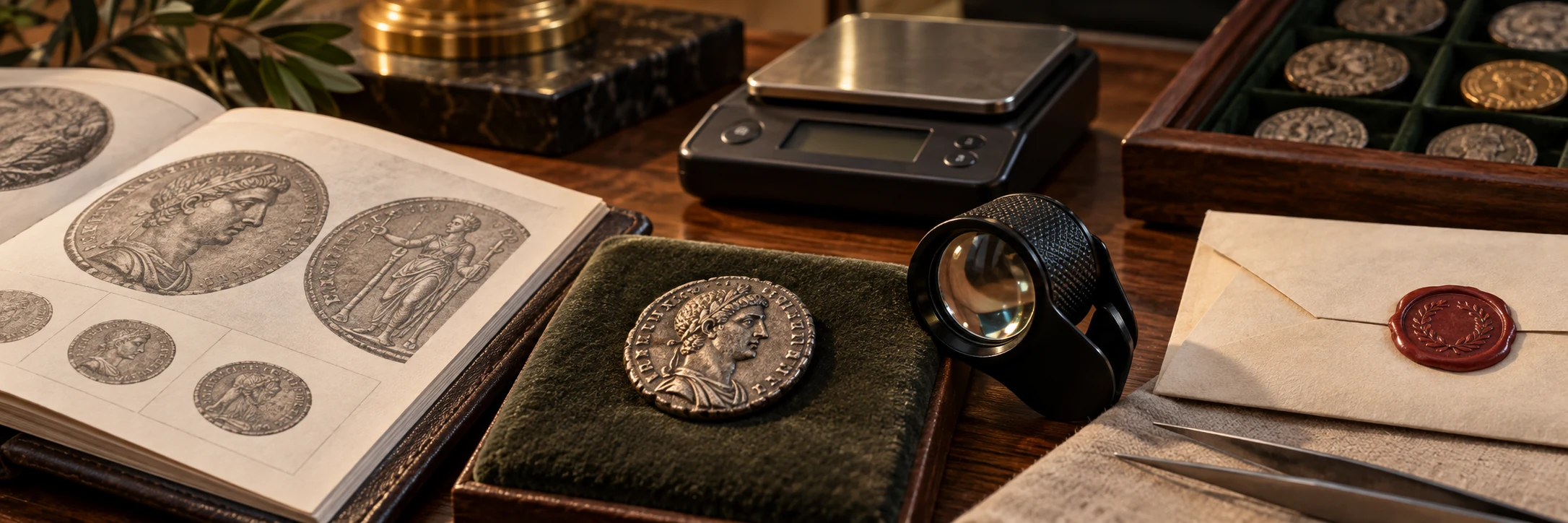
Roman coin value can range widely. Common late bronze coins may be affordable, while rare emperors, sharp portraits, readable legends, silver denarii, gold aurei, and historically important issues can be much more valuable.
Use any online value as an estimate. If the coin may be rare or expensive, professional authentication is important before buying, selling, or cleaning it.
FAQ
How do I identify a Roman coin?
Look for the emperor portrait, Latin letters, reverse design, metal, size, and any mint marks.
Can I identify the emperor on a Roman coin?
Often yes, if the portrait and enough of the inscription are visible. Worn legends may make this harder.
Are Roman coins valuable?
Some are common and affordable, while rare rulers, metals, and high-grade examples can be valuable.
What if the letters are hard to read?
Use clear side lighting and photograph both sides. Partial letters may still help narrow the result.
Sources and further reading
Use these catalog and reference sites to compare the identification, specifications, and market context. They are reference points, not guarantees of a sale price.