
Greek Coin Identification
Greek coins have their own visual language. Instead of focusing only on rulers, many Greek coins show city symbols, gods, animals, mythological scenes, and Greek letters. A clear photo can help identify the possible city, period, metal, and type.
This page is for users who want to identify an ancient Greek coin by photo and understand the clues that matter before researching value or authenticity.
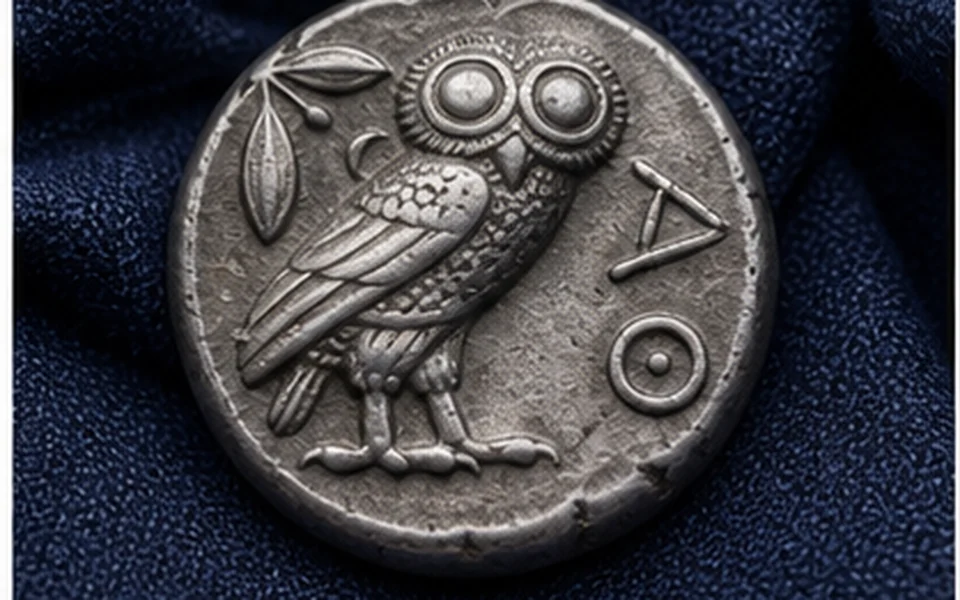
Use the scanner when you are ready to compare your coin with the clues in this guide.
Scan your coinUse the lettering, deity or animal, city symbol, portrait, metal, and shape together. A single familiar symbol is not enough to identify the issue.
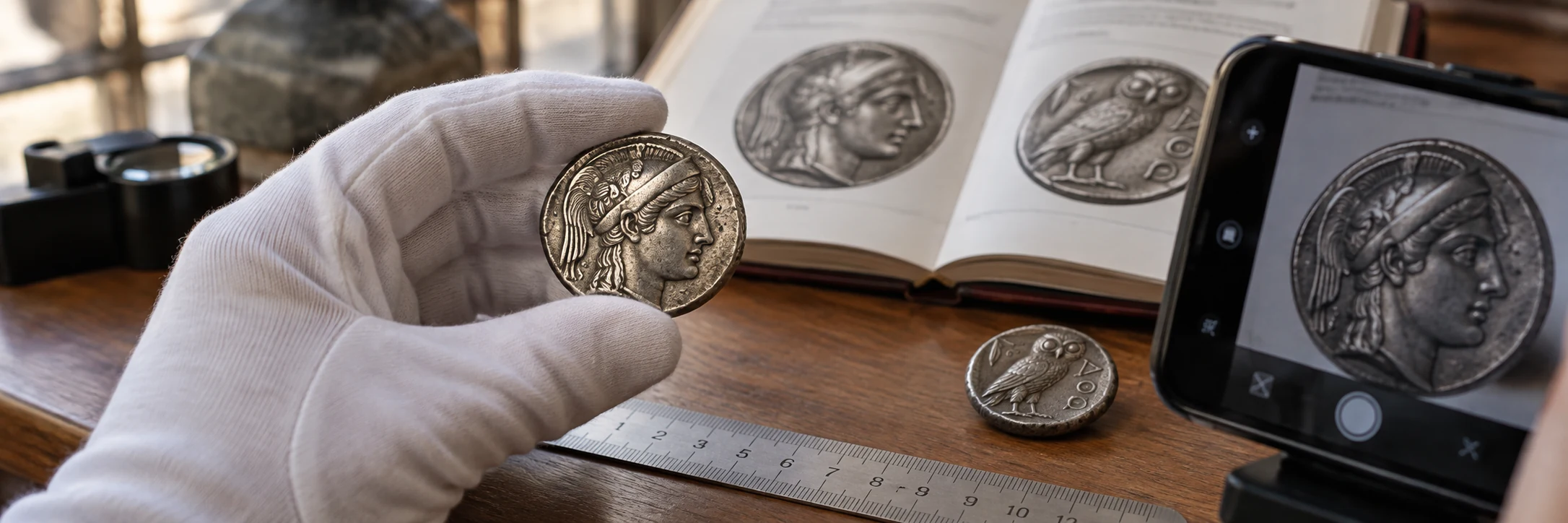
Worked example: a symbol on the reverse
Start with the visible symbol, lettering, and portrait, then compare the city or issuer clues in a catalog. Photograph the whole rim so the shape and wear remain visible.
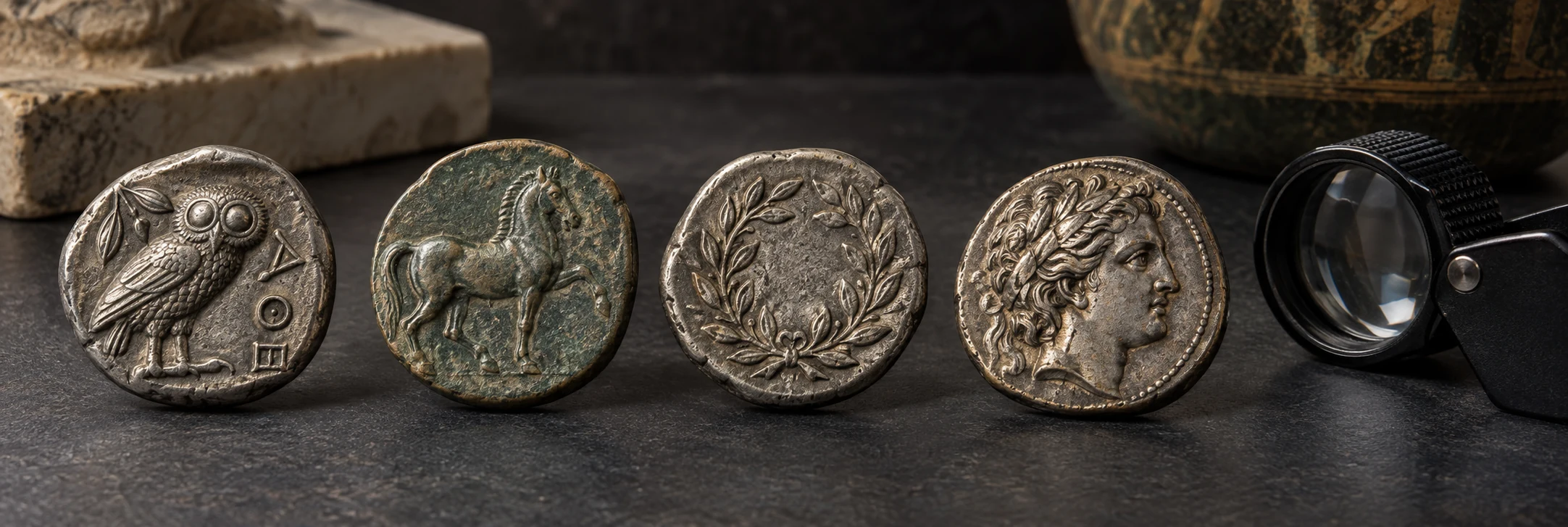
What Makes Greek Coins Unique
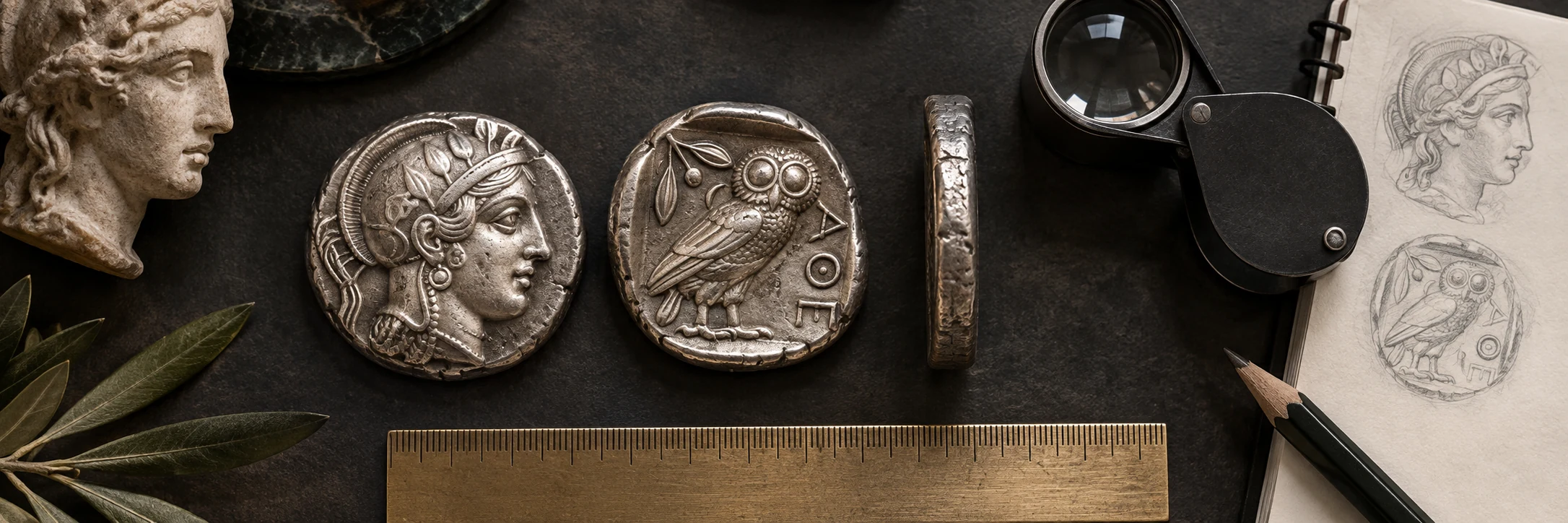
Greek coins often feature strong artistic designs: Athena, Zeus, Apollo, owls, horses, eagles, lions, wreaths, and city emblems. The style of the portrait or symbol can be just as important as the text.
Many Greek coins were struck in silver or bronze and may have an irregular flan shape. A worn Greek coin can still be recognizable if the main symbol or city letters remain visible.
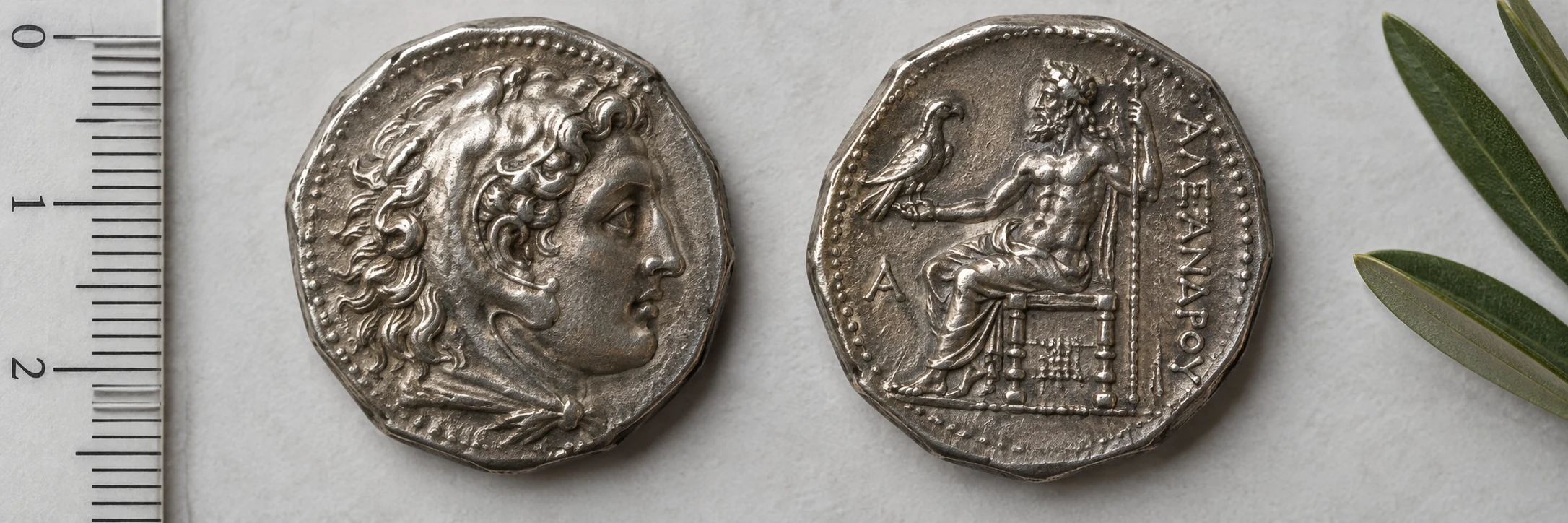
How to Identify Greek Coins by Photo
Upload both sides of the coin if possible. The system can check Greek letters, deity portraits, animal symbols, city marks, metal appearance, and shape. If the coin has a clear owl, horse, eagle, or head of a deity, that can quickly guide the search.
Try to photograph the coin straight from above with soft light. Avoid bright reflections on silver surfaces. If you know the weight and diameter, keep them for comparison because many Greek types have similar designs.
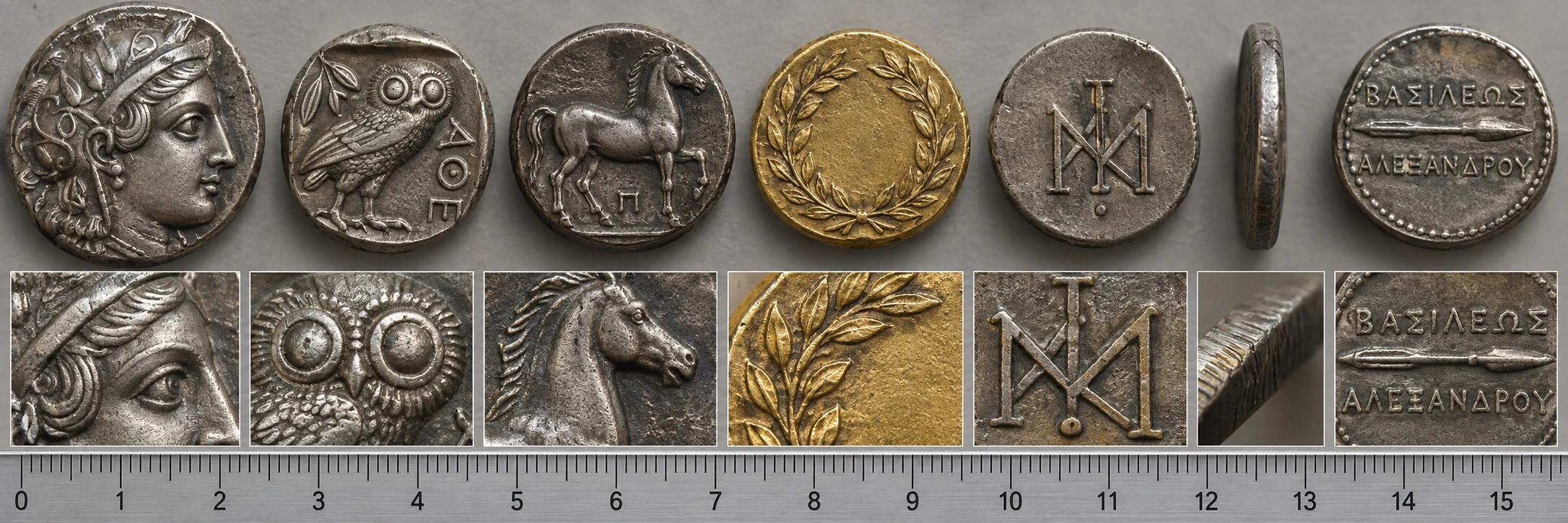
Details That Matter on Greek Coins
A small symbol may change the identification. City marks, monograms, reverse symbols, and letter positions can separate similar coins. The front and back must be compared together because one side alone can be misleading.
If a coin appears ancient and valuable, do not clean it. Original surfaces and patina can be important for both value and authentication.
Greek Coin Value
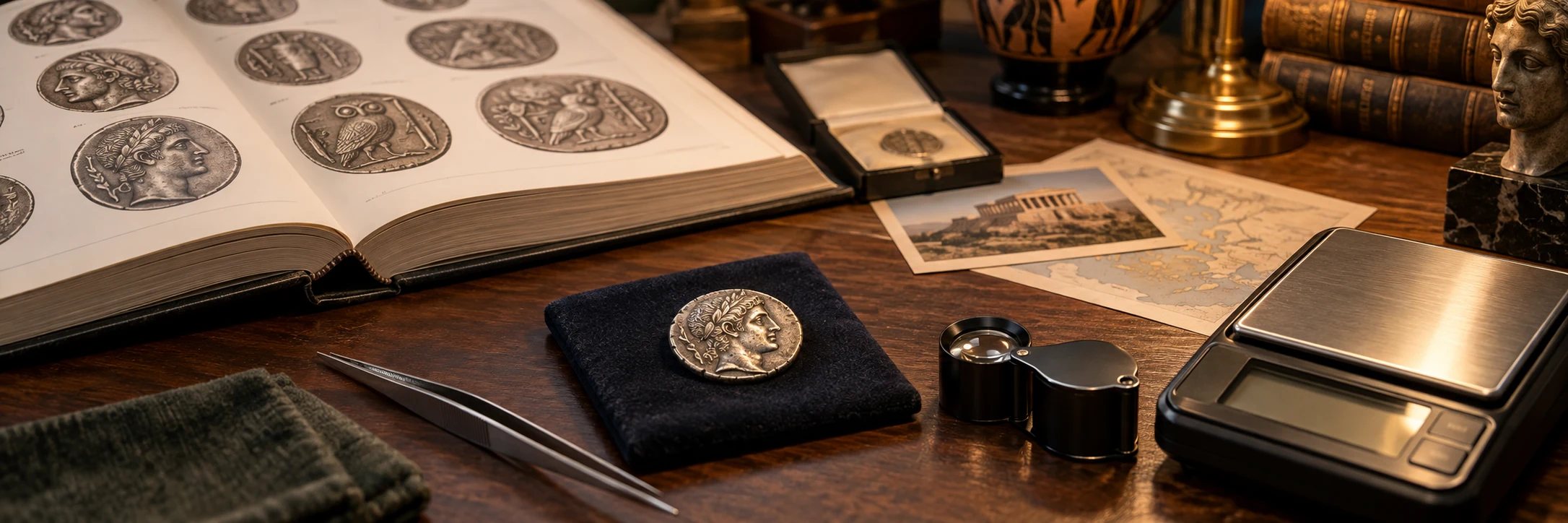
Greek coin value depends on city, period, rarity, metal, condition, historical importance, and authenticity. Famous types and high-grade silver coins may attract strong collector demand, while damaged or common examples may have lower value.
Any online value should be treated as an estimated range. For rare, ancient, silver, or high-value coins, professional appraisal is recommended before selling.
FAQ
How can I identify an ancient Greek coin?
Check symbols, Greek letters, city marks, deity portraits, animals, metal, and both sides of the coin.
What symbols are common on Greek coins?
Owls, horses, eagles, lions, wreaths, gods, goddesses, and city emblems are common clues.
Are Greek coins rare?
Some are common, while certain cities, periods, metals, and high-grade examples can be rare.
Can a worn Greek coin still be valuable?
Yes, but value depends on identification, condition, rarity, metal, and authenticity.
Sources and further reading
Use these catalog and reference sites to compare the identification, specifications, and market context. They are reference points, not guarantees of a sale price.