Copper euro cents
- Clue
- Small copper-colored group
- Design
- Marianne
- Record
- Year and stars

French coins are easiest to narrow down when you first separate modern euros from historic francs. French euro national sides use familiar symbols such as Marianne, the Sower, and the tree of life, while franc coins can show different portraits, inscriptions, dates, and metals from one series to the next.
This guide explains how to identify French coins from a photo, record the details that separate similar issues, and research value carefully. It covers common euro denominations, older francs, commemorative designs, and the evidence to check before treating an unusual coin as rare.
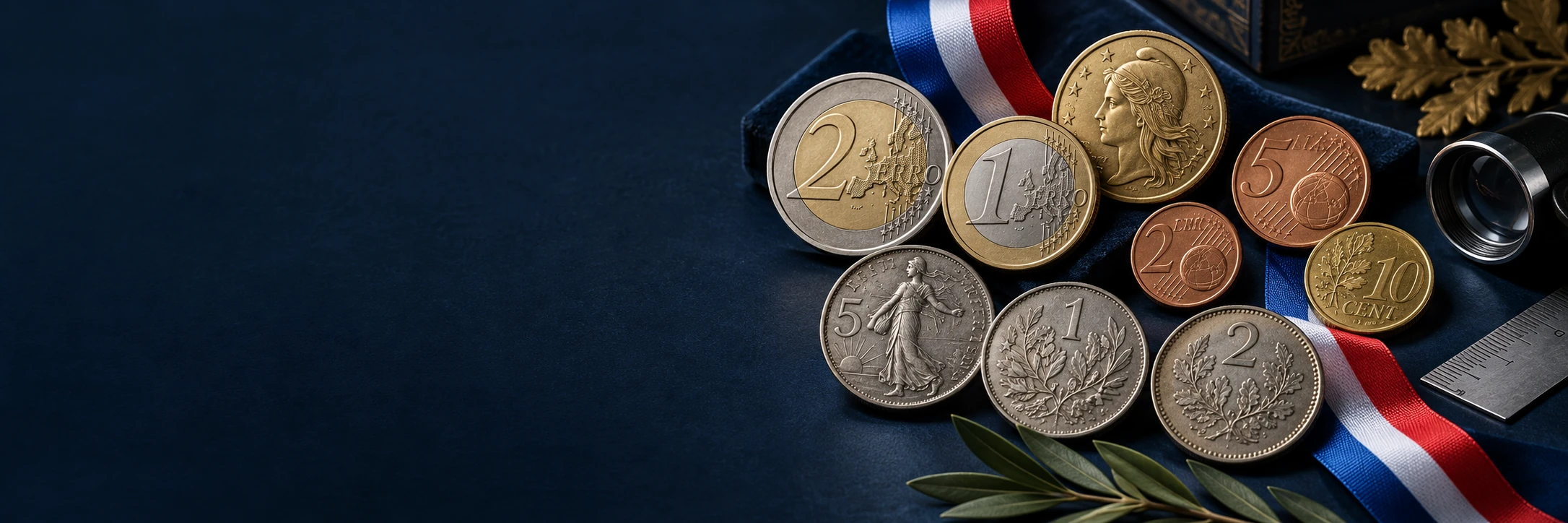
Use the scanner when you are ready to compare your coin with the clues in this guide.
Scan your coinSeparate euro from franc, read the French national symbol and date, then confirm denomination, edge, size, and condition before researching value.
Use currency, color, and national design as a visual starting point. Exact dates, commemorative issues, and older francs can use different subjects or specifications.
Remember: euro color and franc wording narrow the family, but the exact year, design, edge, condition, and issue type decide whether the coin is the same variety.
Start with the bimetallic €1 format and the French tree of life national side, then record the date, stars, edge, and small mint or designer marks. Compare the design period and surface condition before deciding whether the coin is a standard circulation issue or a commemorative variety.
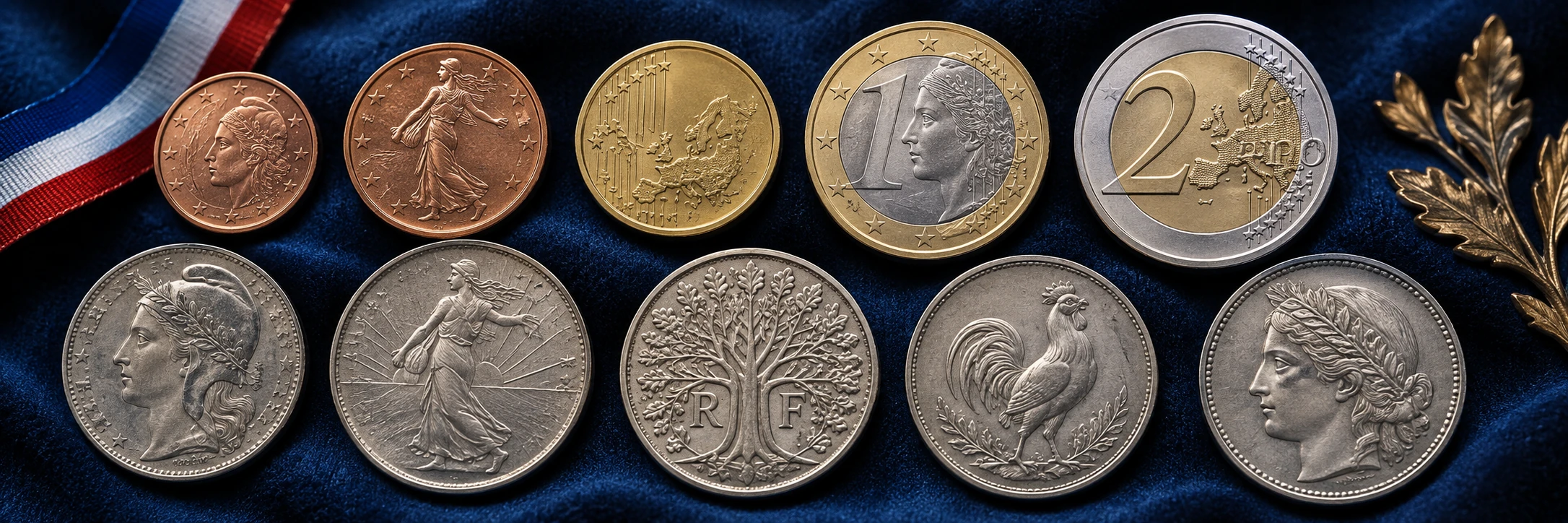
Look for the currency family before studying small details. A euro symbol, a familiar euro denomination, or the modern French national side points to the current series. The word FRANC, an older French denomination, or a pre-euro portrait points toward a historic issue.
Once the family is clear, photograph both sides and note the full outline. The same portrait can appear in more than one size or date range, and a commemorative euro can replace a standard national design. Treat the currency mark as a starting clue rather than a final identification.
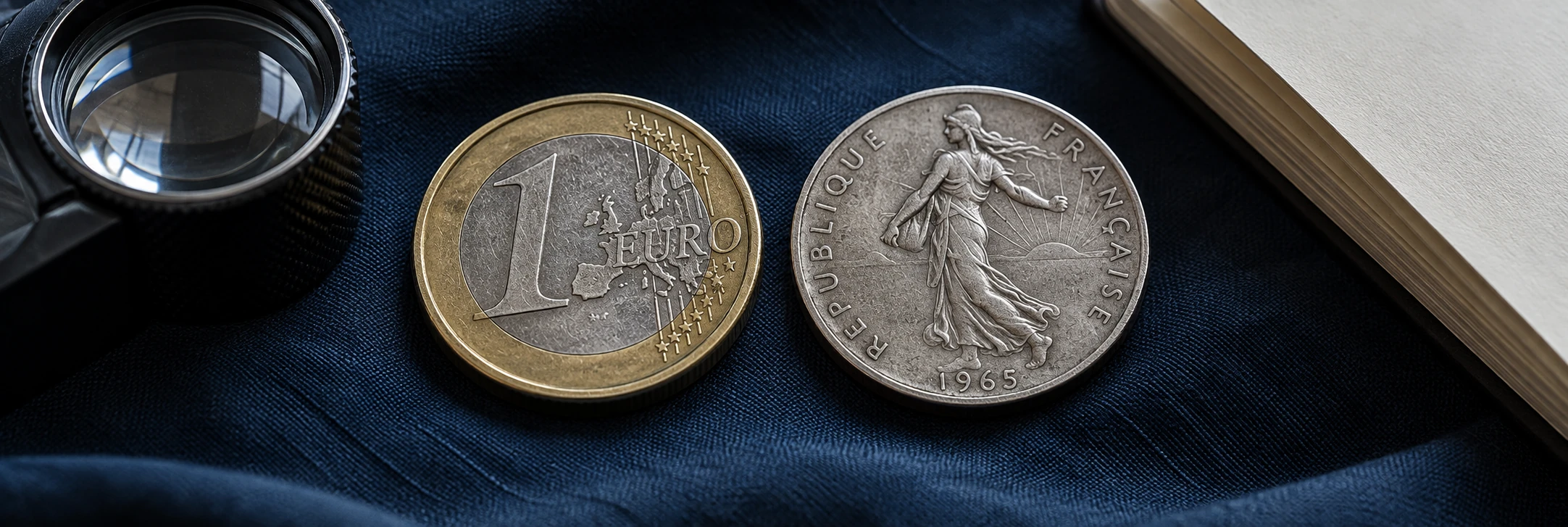
On French euro coins, the small cents commonly use Marianne or the Sower, while the one and two euro coins use a tree design with an inscription associated with the Republic. Compare the figure, lettering, stars, date, and mint or designer marks as one complete layout.
Franc coins can include REPUBLIQUE FRANÇAISE, LIBERTE, EGALITE, FRATERNITE, RF, or a denomination written in francs. Record accents and partial letters exactly as they appear. The date and portrait together can separate similar-looking series from different reforms or monarchic periods.
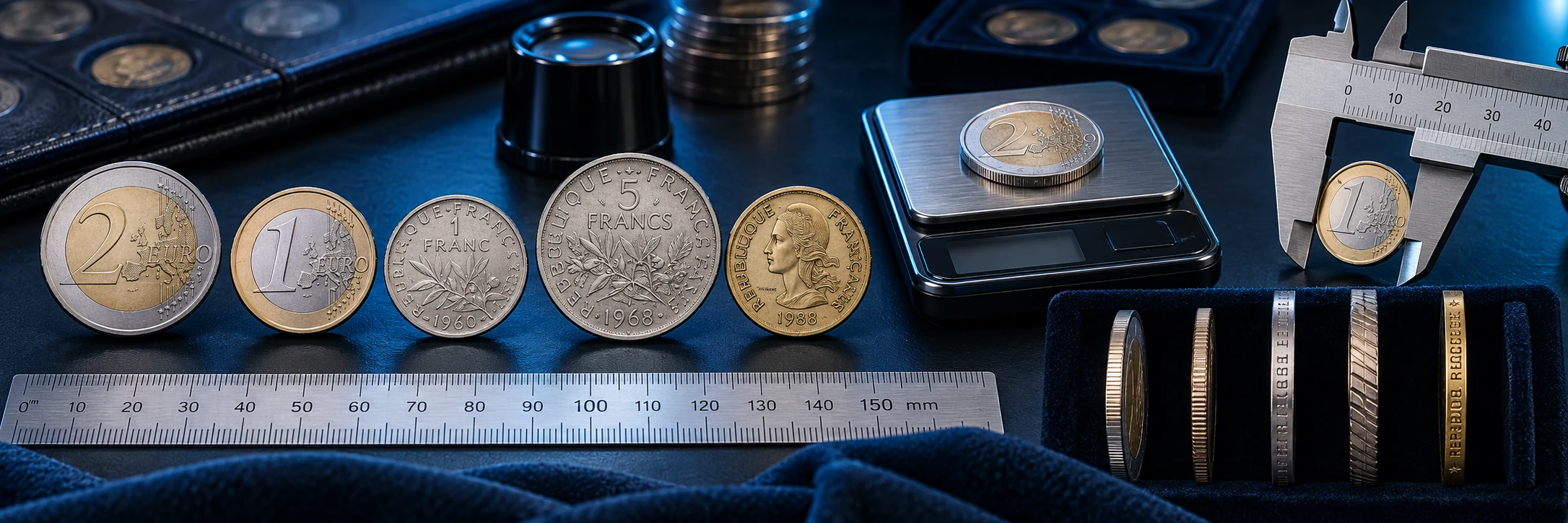
Euro color groups help with a quick first sort: copper-colored cents are the smallest group, yellow-gold cents are larger, and the one and two euro pieces are bimetallic. Check the edge for grooves, lettering, or alternating sections when two candidates look alike.
For francs, compare diameter, thickness, weight, and edge with the exact date and series. Nickel, bronze, brass, and plated surfaces can change appearance with wear and lighting, so color alone cannot prove the denomination or metal content.
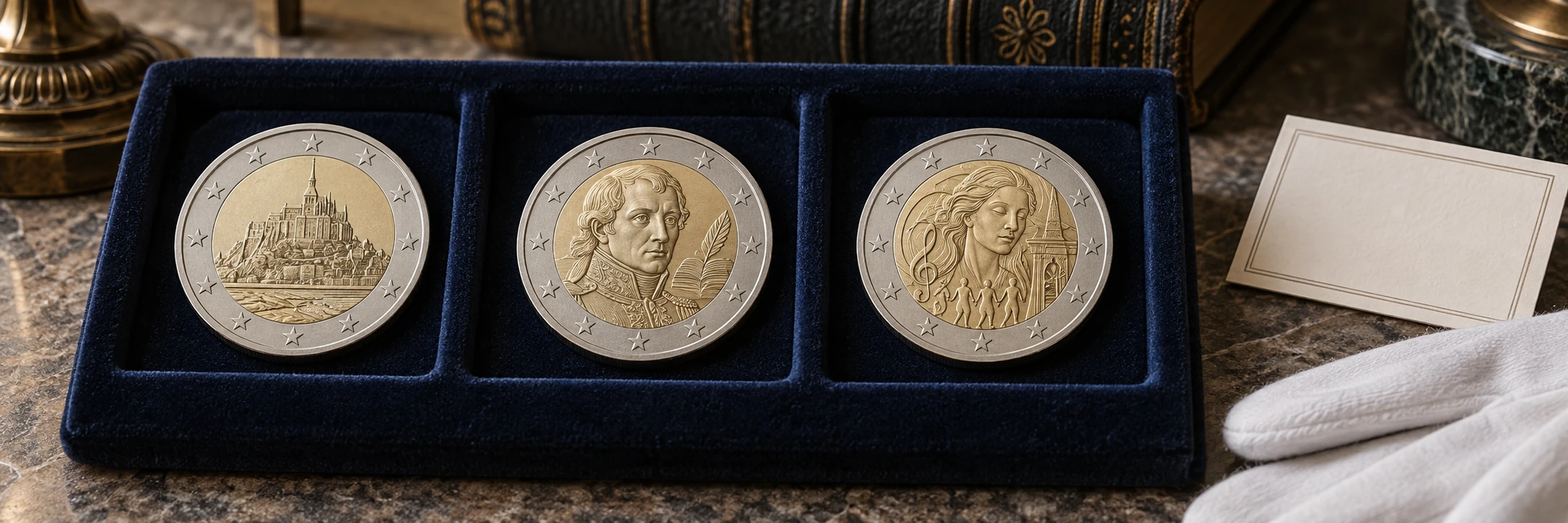
France has issued commemorative euro coins for historic figures, places, anniversaries, and cultural themes. A familiar denomination may carry a completely different national side, while proof and official-set examples can have sharper surfaces than coins found in circulation.
Historic francs also include ordinary circulation pieces, special editions, and precious-metal commemoratives. Record the exact subject, year, finish, packaging, and any edge inscription before comparing a listing. A famous person or attractive patina is a clue, not proof of scarcity.
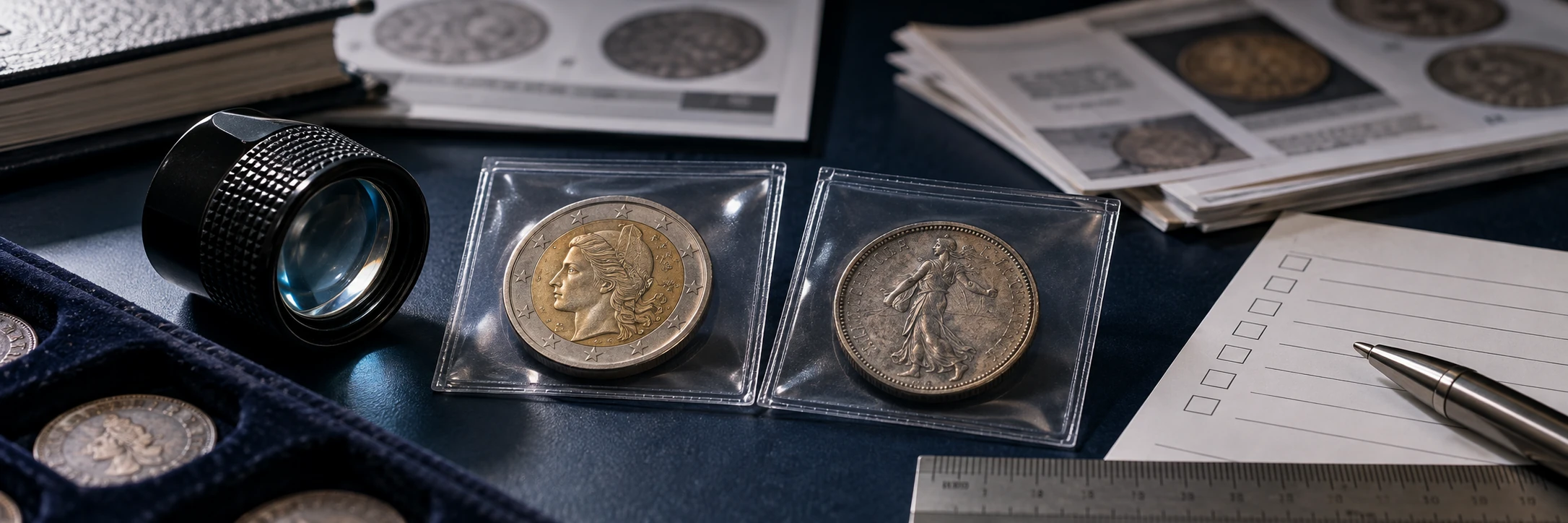
Most circulated modern French euro coins trade close to face value. A premium can depend on a scarce date, low mintage, recognized variety or mint error, silver or gold content, proof finish, strong preservation, or collector demand. Historic francs vary just as widely; age, Marianne, or a large denomination alone does not establish high value.
After confirming the exact issue, compare matching dates, designs, composition, finish, and condition with completed sales. Do not clean the coin before research, and seek in-person authentication for suspected errors, precious-metal pieces, or expensive commemoratives before buying or selling.
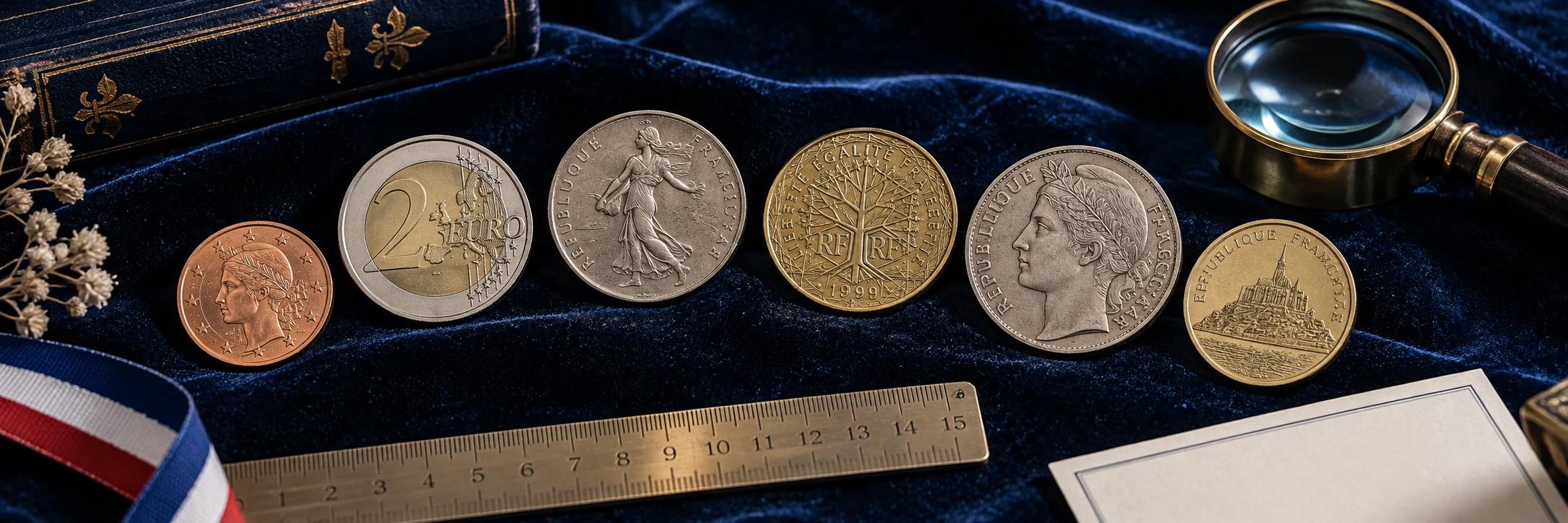
First separate euros from francs, then photograph both sides and compare the denomination, French symbol, date, edge, size, and metal appearance.
Common French national designs include Marianne on the small cents, the Sower on the middle cents, and a tree of life on the one and two euro coins.
Look for FRANC wording, a pre-euro denomination, older French inscriptions, and a date or portrait layout that does not match the modern euro series.
Some are common, while others may be worth more because of rarity, condition, metal, a recognized variety, or collector demand. Age alone is not enough.
No. Toning, plating, wear, and lighting can change the appearance. Use weight, dimensions, date, composition evidence, and authentication.
No. A photo supports identification, but value depends on the exact issue, authenticity, condition, finish, mintage, and current market evidence.