2009 Lincoln Penny Value, Designs & Errors Guide
The 2009 Lincoln penny is a one-year commemorative series with four different reverse designs representing stages of Abraham Lincoln's life. Circulation cents were struck in Philadelphia and Denver, while proof versions were produced at San Francisco.
Identify the reverse first, then check the mint mark, issue type, composition, grade and any documented variety. A regular worn cent, a 95% copper Satin Finish cent and a proof are different coins with different valuation logic.
Reviewed by the Coins Identification editorial team · Updated
2009 Lincoln Penny Overview
Design comes before price.
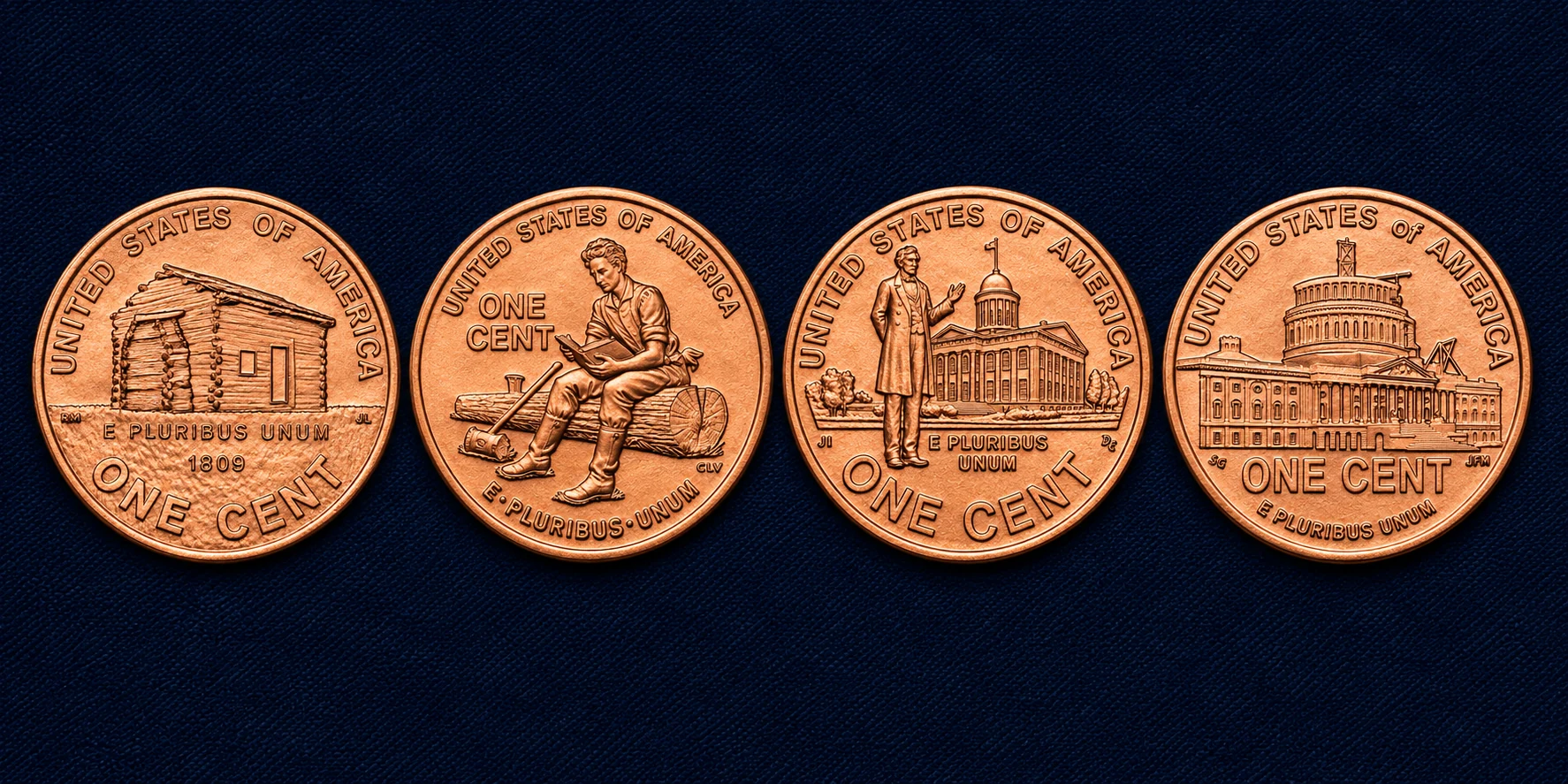
The 2009 Lincoln Bicentennial cent marked both the 200th anniversary of Abraham Lincoln's birth and the 100th anniversary of the Lincoln cent. The U.S. Mint issued four reverse designs at roughly three-month intervals: Birth and Early Childhood in Kentucky, Formative Years in Indiana, Professional Life in Illinois, and Presidency in Washington, D.C.
Philadelphia and Denver produced circulation strikes in copper-plated zinc. San Francisco produced proof versions, while the 2009 Uncirculated Mint Set supplied eight P/D Satin Finish cents in the older 95% copper alloy. Value depends on the exact design, mint, issue type, composition, color, grade and any recognized error or die variety.
How Much Is a 2009 Lincoln Penny Worth?
There is no single 2009 penny price.
Most circulated 2009 Lincoln pennies are close to face value. A high-grade RD circulation coin, a 95% copper Satin Finish coin, a proof, a documented doubled-die variety and a major mint error follow different markets. The reverse design and mint mark narrow the issue before grade and composition can be used sensibly.
For verified context, PCGS lists a $250 guide value for a 2009 Philadelphia Birth MS67RD, $18 for a 2009 Philadelphia Formative Years MS66RD and documented auction results of $1,939 for a Professional Life MS68RD and $4,700 for a Denver Presidency MS68RD. These are examples for specific certified coins, not promises for raw pocket change.
2009 Lincoln Penny Value Reference
Regular circulation strikes · same grade and color in each column.
| Design | P · MS65 RD | D · MS65 RD | P · MS67 RD | D · MS67 RD |
|---|---|---|---|---|
| Birth and Early Childhood | $12 | $12 | $250 | $160 |
| Formative Years | $10 | $10 | $275 | $125 |
| Professional Life | $12 | $12 | $160 | $1,000 |
| Presidency | $12 | $12 | $140 | $190 |
These are PCGS Price Guide estimates, not completed-sale amounts. Regular circulated examples can be worth only face value. Do not transfer a Satin Finish, proof, high-grade or error price to a normal worn circulation cent.
The Four 2009 Lincoln Penny Designs
All four themes are official U.S. Mint designs.
| Design | Theme | Reverse image |
|---|---|---|
| Birth and Early Childhood | Kentucky, 1809-1816 | Log cabin |
| Formative Years | Indiana, 1816-1830 | Young Lincoln reading |
| Professional Life | Illinois, 1830-1861 | Lincoln before the State Capitol |
| Presidency | Washington, D.C., 1861-1865 | Unfinished U.S. Capitol dome |
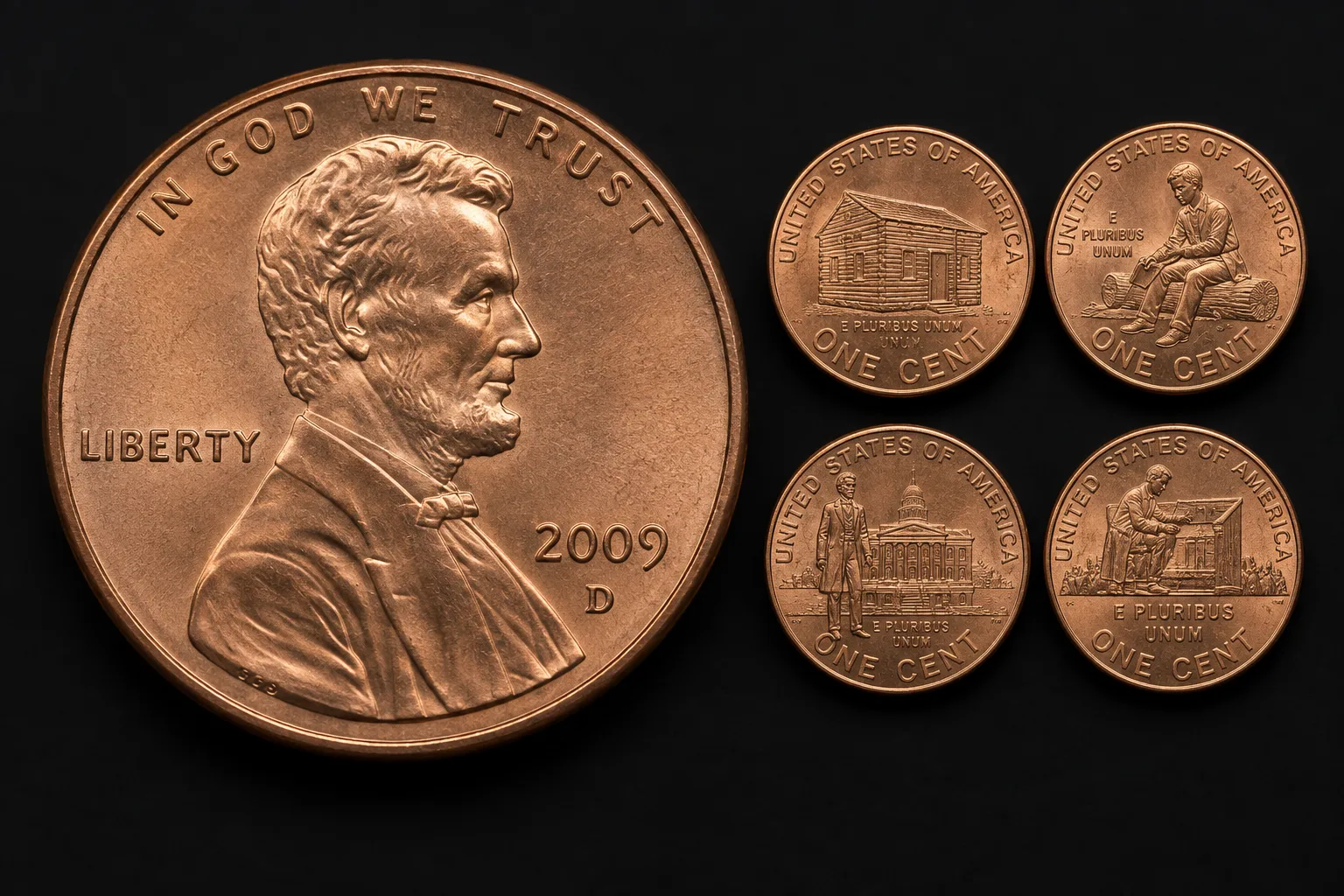
See the official U.S. Mint four-design program. The four detailed illustrations below follow those reverse themes.
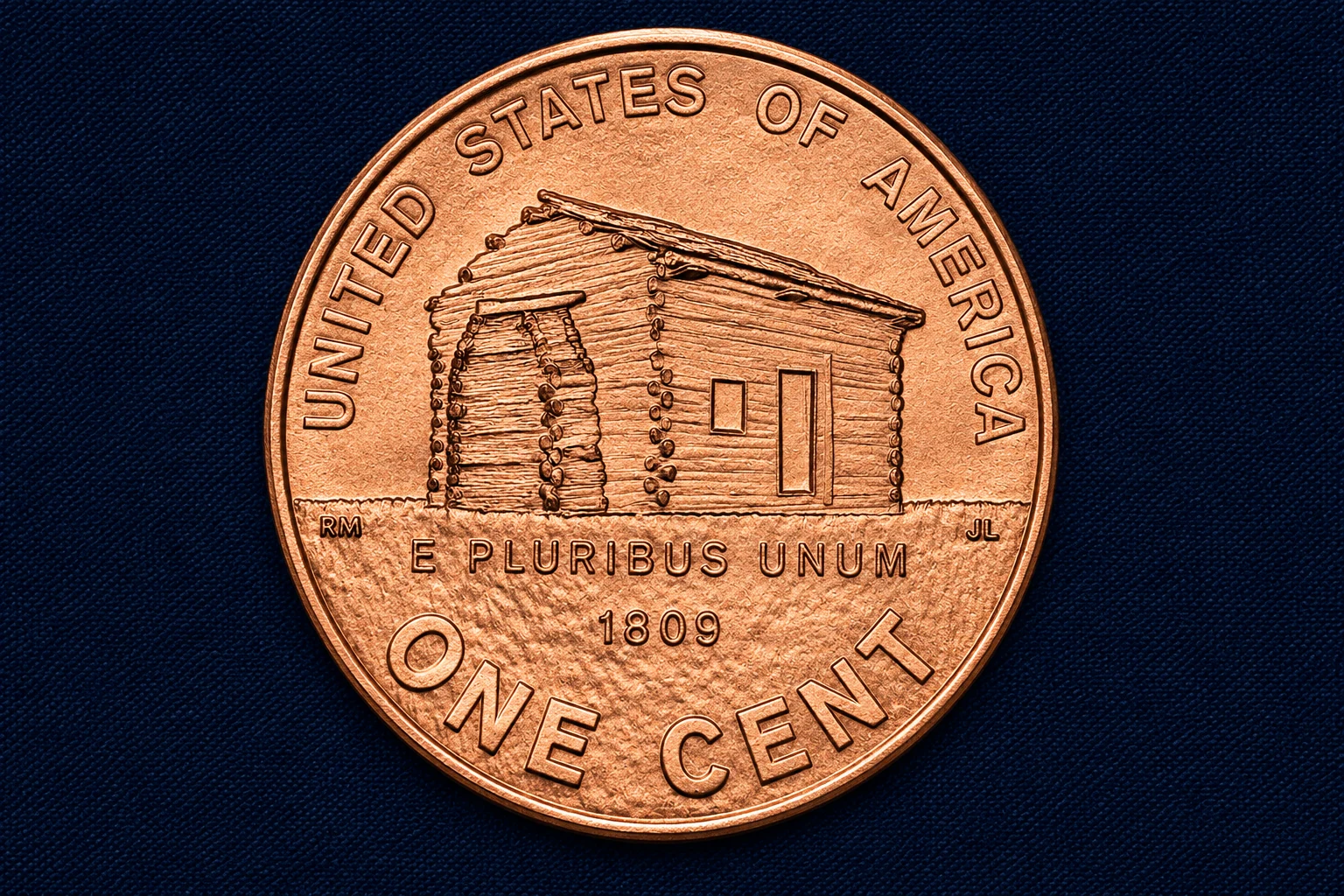
2009 Birth and Early Childhood Penny
Often called the 2009 Log Cabin penny, this reverse represents Lincoln's birth and early childhood in Kentucky. It was issued as Philadelphia and Denver circulation cents, as a 95% copper Satin Finish collector coin and in proof format.
2009 Log Cabin Penny Value
A worn circulation example is usually a modest coin. A sharply struck RD example can be worth more when certified, while a Satin Finish or proof should be compared only with the same issue type. PCGS lists a $250 guide value for a Philadelphia MS67RD and a $4,800 auction result for a Philadelphia MS68RD.
2009 Formative Years Penny
The Formative Years reverse shows a young Lincoln reading during a break from rail splitting in Indiana. It is the second design in the program and one of the most important reverses to check for documented die varieties.
2009 Formative Years Penny Value
Do not mix a normal circulation coin with a recognized DDR attribution. PCGS lists several Formative Years reverse doubled-die varieties, including FS-806, FS-807, FS-808 and FS-809. A normal Philadelphia MS66RD had a PCGS guide reference of $18 in the checked data, while a PCGS-listed MS66RD sale realized $32.

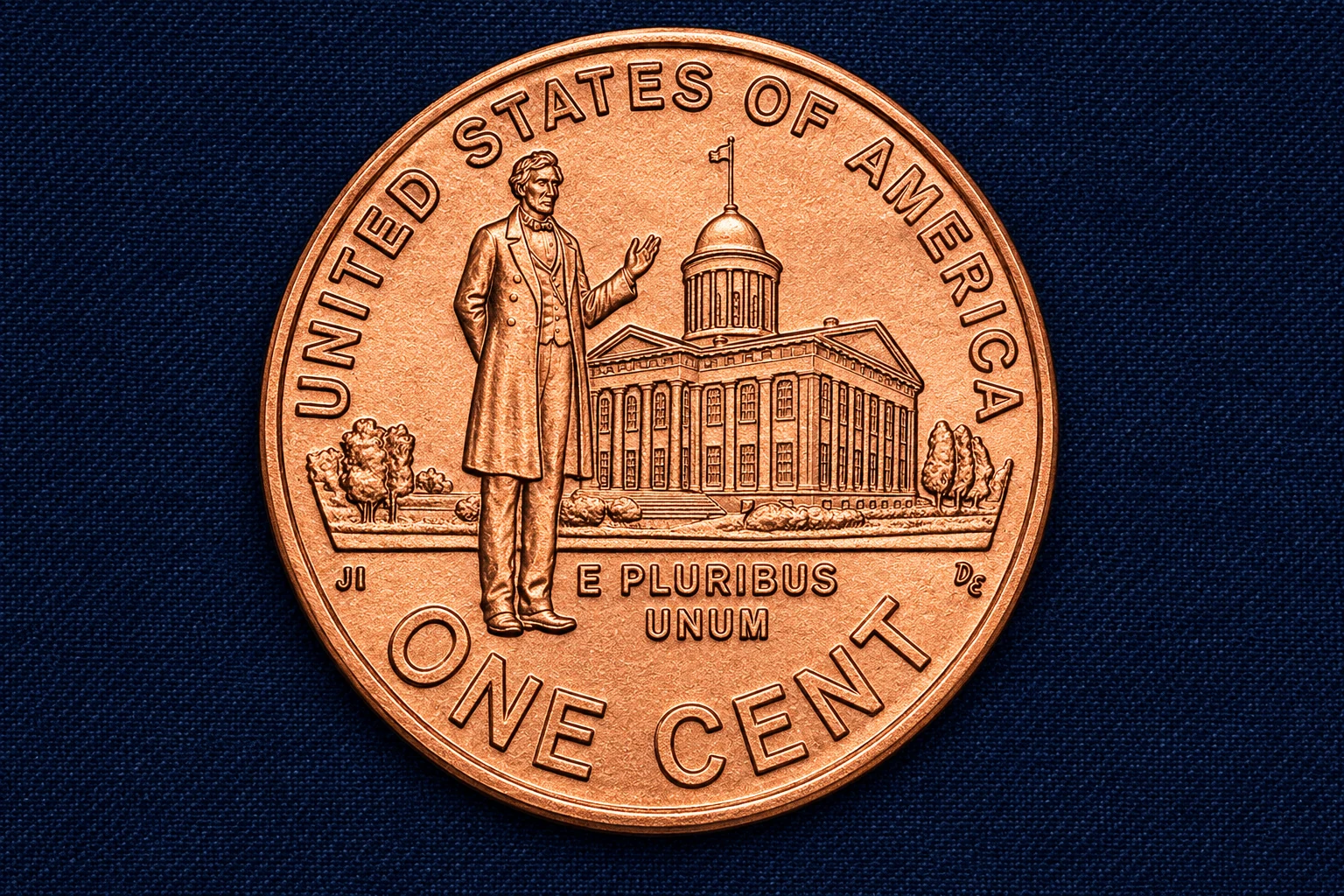
2009 Professional Life Penny
The Professional Life reverse shows Lincoln before the Illinois State Capitol and represents his professional and political life in Illinois. It was the third reverse released in 2009. Lincoln stands with one arm raised in front of the Old State Capitol in Springfield; this is not the later Illinois Capitol building.
2009 Professional Life Penny Value
Grade and issue type matter more than the design name alone. A PCGS MS68RD Philadelphia example realized $1,939 at Heritage in 2017. Satin Finish pieces are a separate 95% copper collector issue, with a PCGS-listed SP69 record of $130.
2009 Presidency Penny
The Presidency reverse shows the partially completed U.S. Capitol dome, reflecting the challenges of Lincoln's presidency and the preservation of the Union. It is the last of the four 2009 designs.
2009 Presidency Penny Value
The Philadelphia circulation issue has the lowest mintage of the eight P/D design combinations, but low mintage does not guarantee a large premium. A Denver MS68RD realized $4,700 in a Heritage sale, which reflects one exceptional certified coin rather than every 2009-D Presidency cent.

2009 Lincoln Penny Mintage
Design and mint must be read together.
| Design | Philadelphia | Denver | Total |
|---|---|---|---|
| Birth and Early Childhood | 284,400,000 | 350,400,000 | 634,800,000 |
| Formative Years | 376,000,000 | 363,600,000 | 739,600,000 |
| Professional Life | 316,000,000 | 336,000,000 | 652,000,000 |
| Presidency | 129,600,000 | 198,000,000 | 327,600,000 |
| Total | 1,106,000,000 | 1,248,000,000 | 2,354,000,000 |
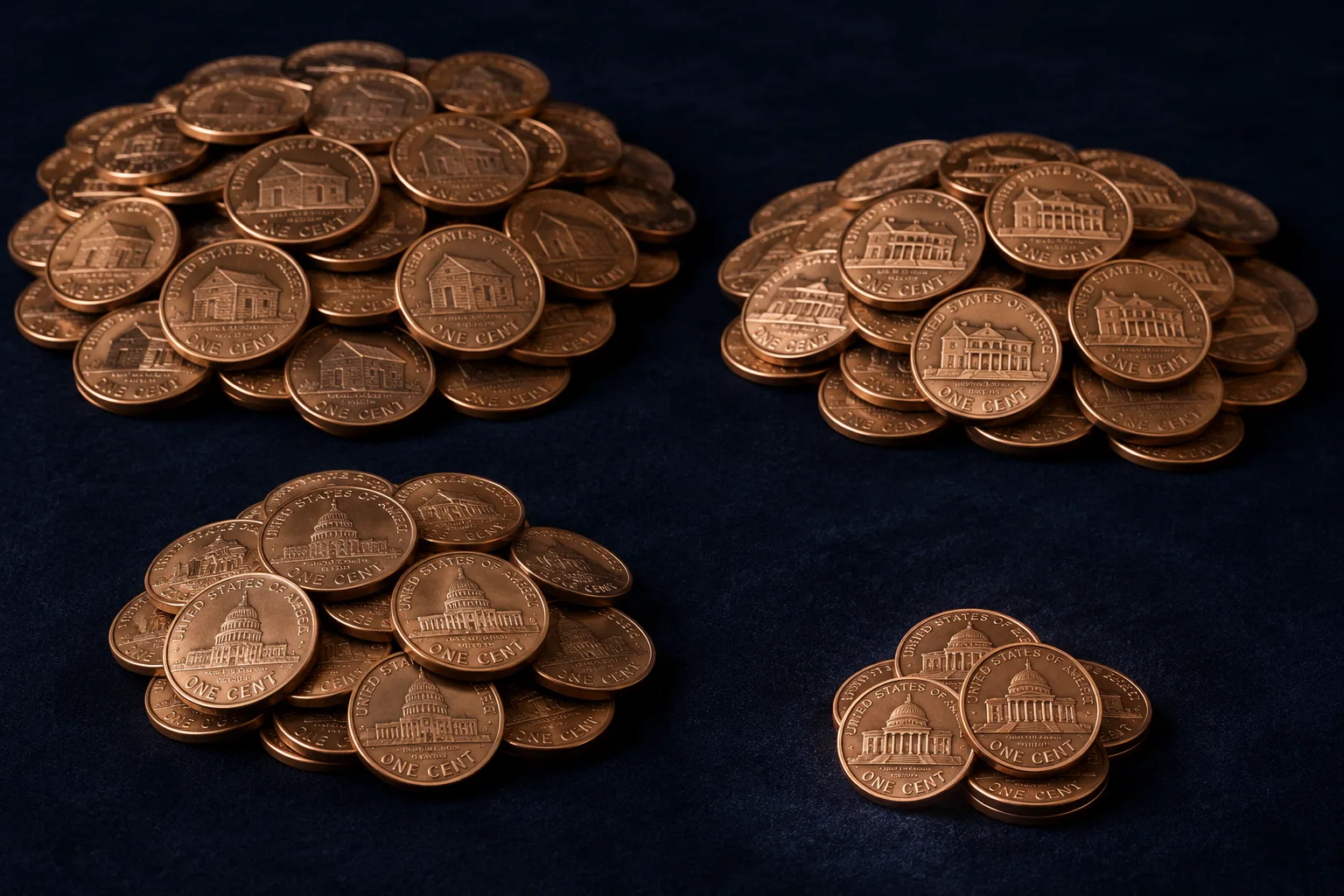
Which 2009 Penny Has the Lowest Mintage?
Low mintage is a clue, not a price guarantee.
The 2009 Philadelphia Presidency cent has the lowest circulation mintage of the eight P/D design-and-mint combinations, at 129.6 million coins. It is lower than the Denver Presidency issue and all six other design-and-mint combinations in the table above. A coin still needs the correct design, issue type, condition and market demand before the mintage creates a premium.
2009 Penny With No Mint Mark
A 2009 penny without a mint mark was struck at Philadelphia. The absence of a letter below the date is normal and is not an error. All four circulation designs exist in Philadelphia format.
2009 No Mint Mark Penny Value
Start with the reverse design, then compare the exact Philadelphia issue and grade. A worn no-mark coin is usually modestly valued; high-grade RD, Satin Finish and recognized variety examples belong to separate references. The 2009 proofs carry an S mint mark.
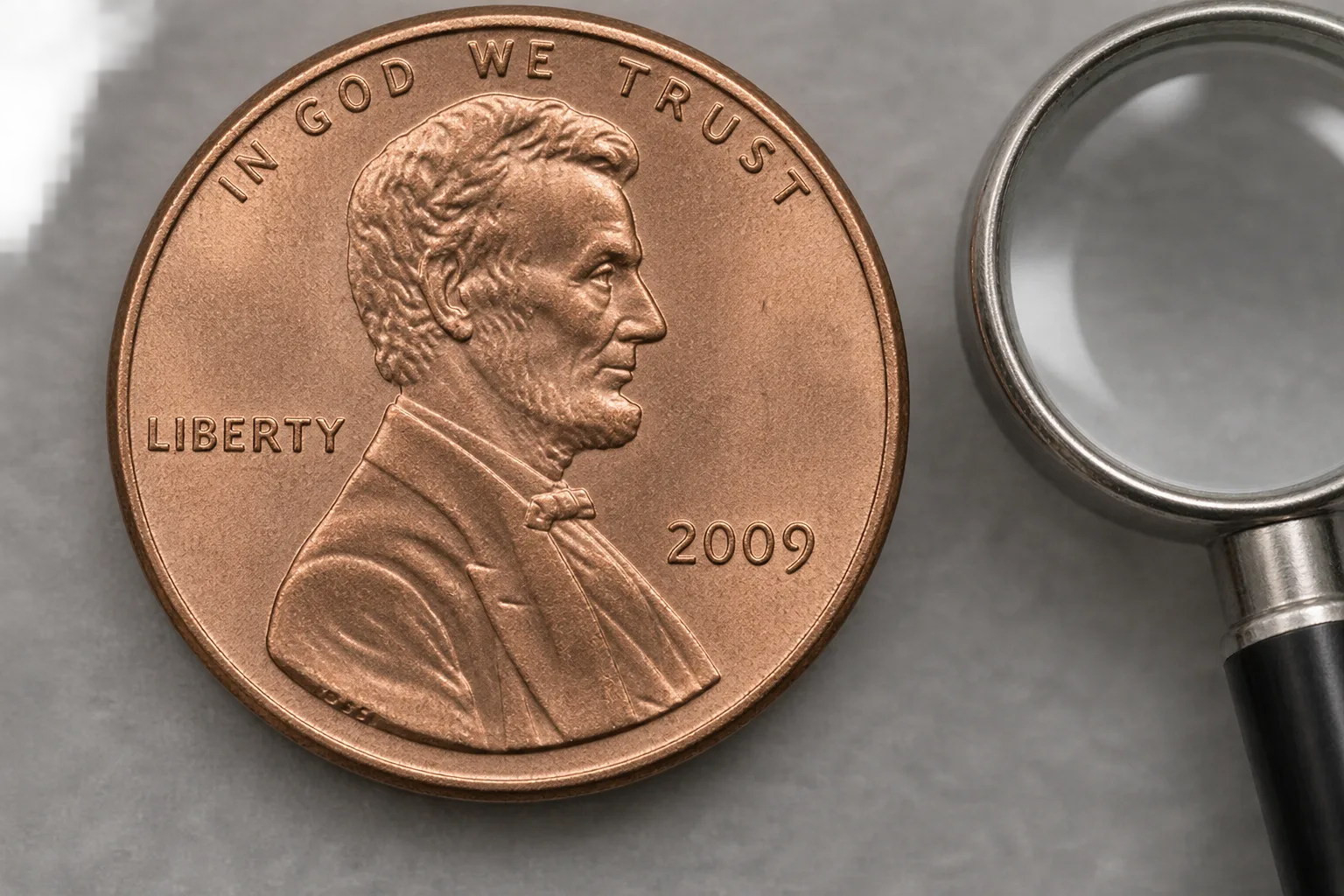
2009-D Penny Value
All four circulation reverses were struck at Denver.
A D below the date identifies Denver. PCGS recognizes 2009-D examples for all four circulation designs. The D is not a guarantee of rarity: use design, condition, color, issue type and any documented variety to find the correct value.
| Denver check | What it tells you | Comparison basis |
|---|---|---|
| D below date | Denver circulation mint | Match the same reverse design |
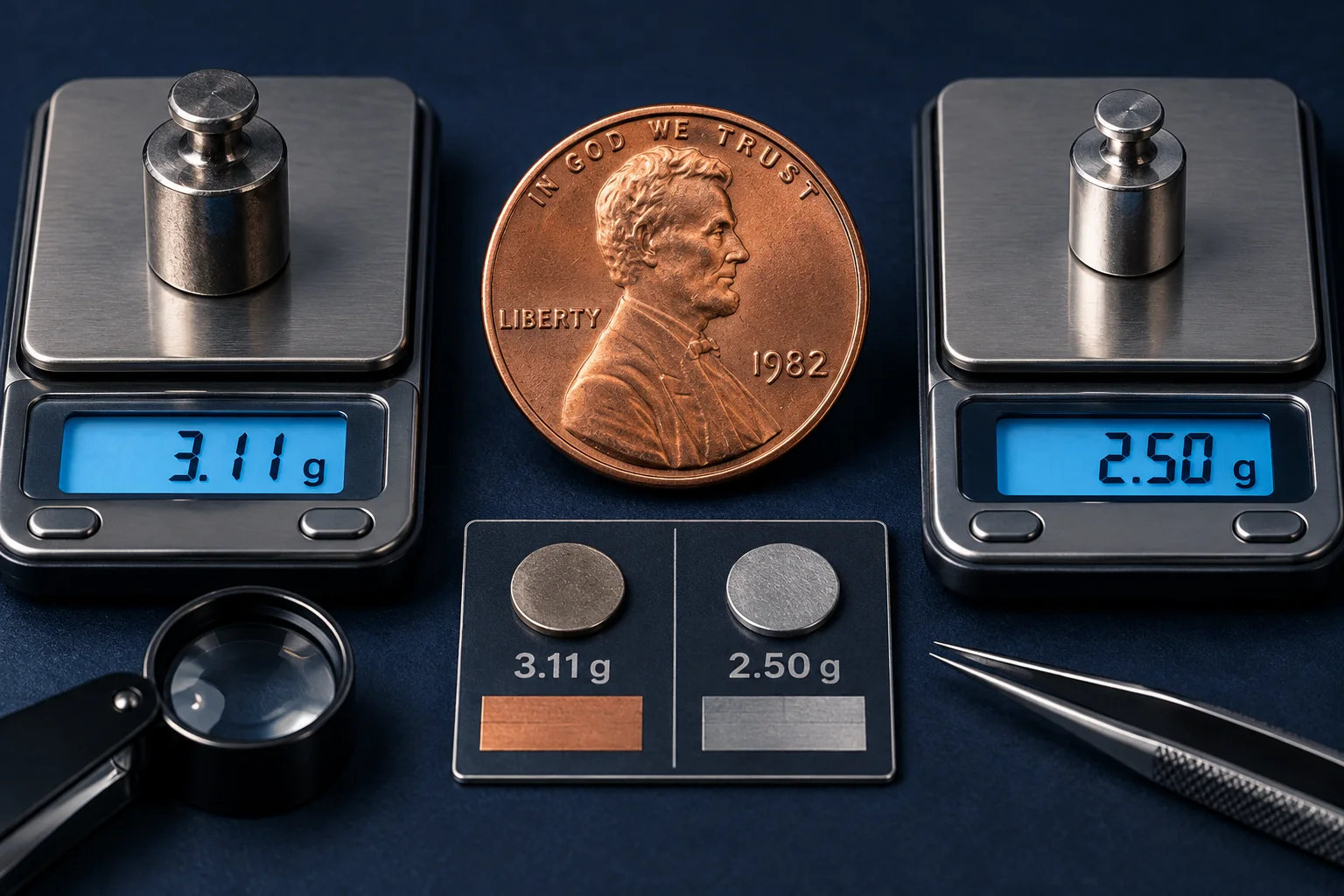
| 2.50 g | Typical circulation zinc cent | Composition screening clue |
| 3.11 g and satin surface | Possible Mint Set collector issue | Match Satin Finish references |
2009-S Lincoln Penny
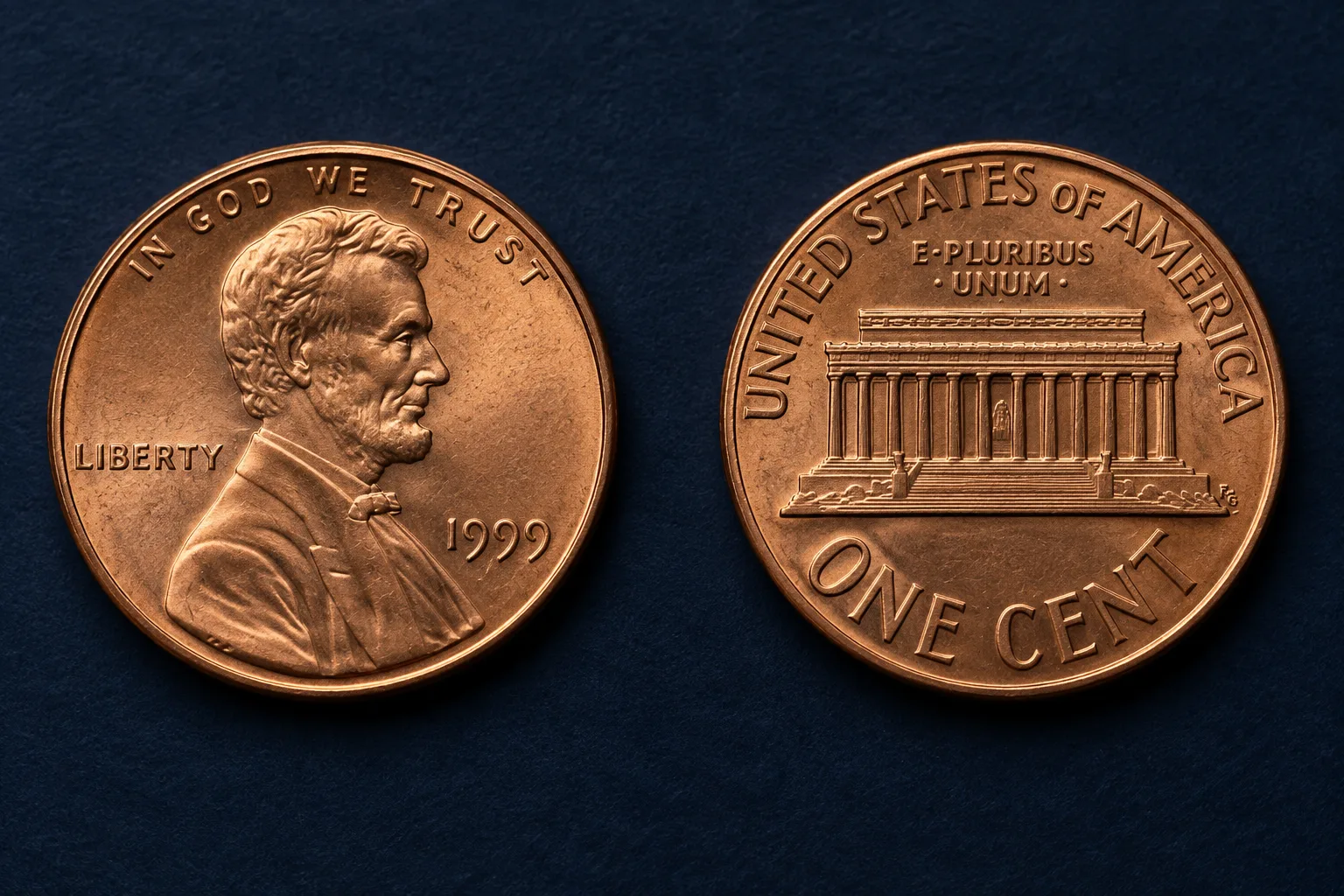
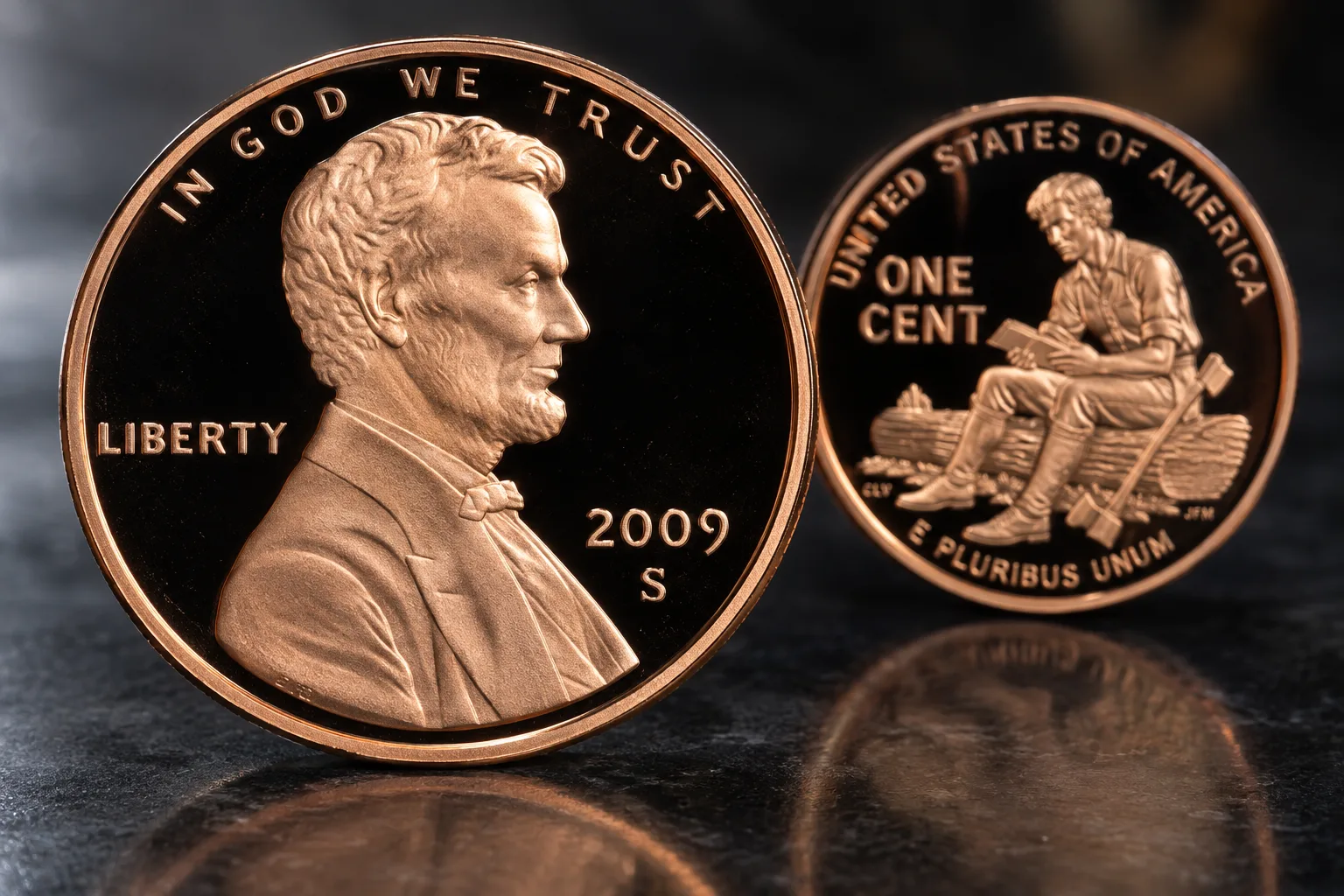
The S identifies San Francisco proof issues. All four 2009 reverse designs were produced as proofs. They are collector coins, not ordinary circulation cents, so their mirror fields, frosted relief and packaging context should be considered before a price comparison.
Do not call a 2009-S penny rare merely because it is absent from pocket change. A proof belongs in a proof reference, while a 2009 P or D circulation strike belongs in a circulation reference.
| Reverse design | PR69 DCAM | PR70 DCAM |
|---|---|---|
| Birth and Early Childhood | $14 | $160 |
| Formative Years | $14 | $100 |
| Professional Life | $14 | $100 |
| Presidency | $14 | $110 |
PCGS proof guide. DCAM is Deep Cameo. These are certified proof grades, not circulation MS grades or Satin Finish SP grades.
Are 2009 Pennies Made of Copper?
It depends on the version.
Regular P and D circulation cents are copper-plated zinc. The copper coating does not make them 95% copper. The special P/D coins in the 2009 Uncirculated Mint Set and the four proof versions use the older 95% copper, 5% tin and zinc alloy connected with the original 1909 cent.
| Version | Composition | Typical source |
|---|---|---|
| Circulation P/D | 2.5% copper, balance zinc | Federal Reserve circulation |
| 2009 Satin Finish P/D | 95% copper, 3% zinc, 2% tin | 2009 Uncirculated Mint Set |
| Proof S | 95% copper, 5% tin and zinc | 2009 proof set |
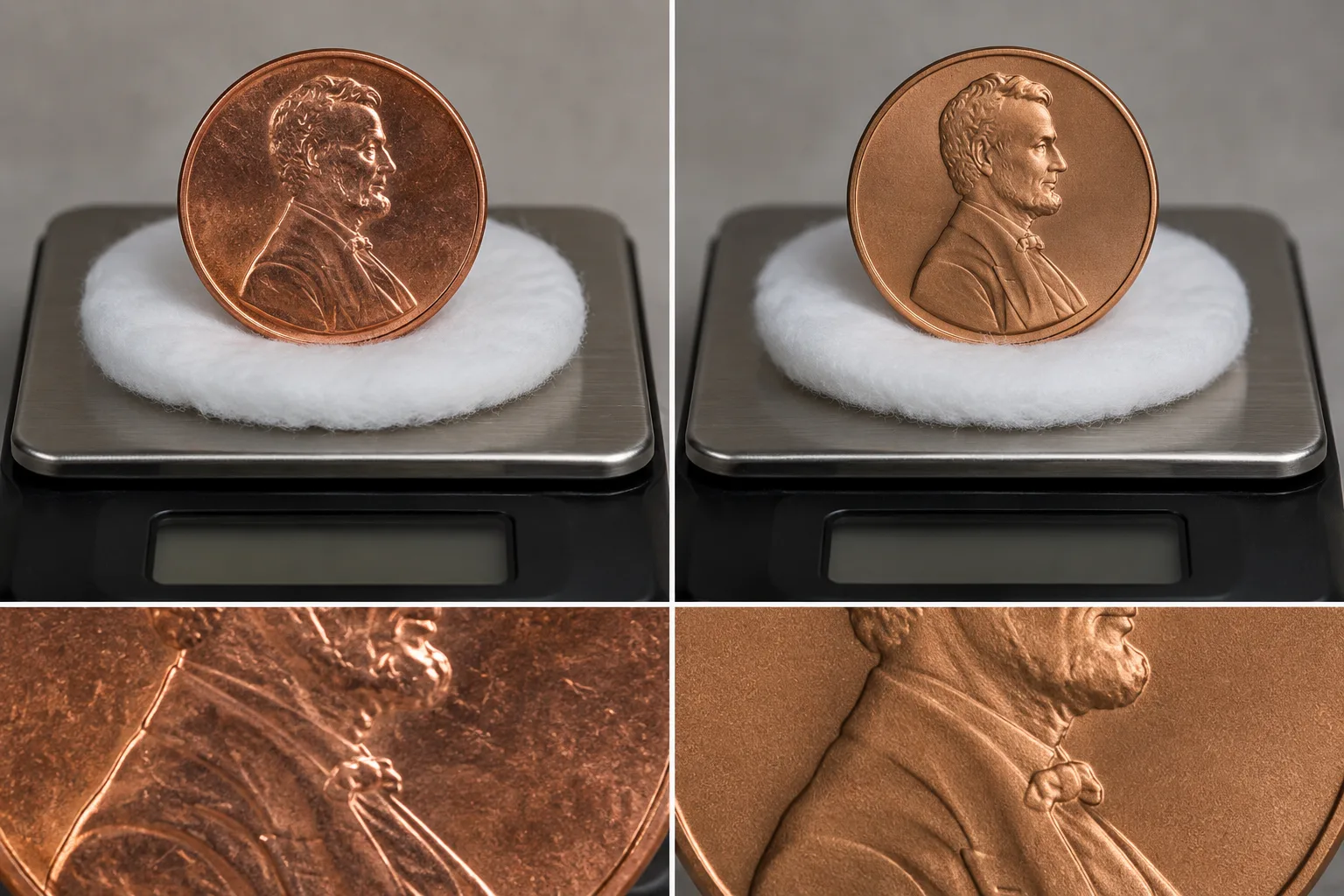
The U.S. Mint’s 2009 Uncirculated Set release specifies 95% copper, 3% zinc and 2% tin for the collector cents. The circulation and collector alloys must stay separate.
2009 Satin Finish Lincoln Cents
Eight P/D coins came from the Mint Set.
The 2009 Uncirculated Mint Set contained eight Lincoln cents: four designs from Philadelphia and four from Denver. They used a satin finish and the 95% copper alloy, not the copper-plated zinc used for normal circulation strikes. PCGS reports that approximately 771,204 sets were sold.
That number describes sets sold, not a separate circulation mintage. Each set supplied one example of each of the eight P/D combinations. Satin Finish cents can carry a premium because they are a different collector issue with a smaller supply than the circulation strikes.
Compare Satin Finish coins using the SP grade and exact mint. The separately labeled Satin Finish sales below are historical transactions, not current guide estimates or prices for ordinary 2.50 g cents. PCGS Satin Finish reference.
How Much Does a 2009 Penny Weigh?
Use a calibrated scale and handle the coin gently.
| Issue | Reference weight | What it means |
|---|---|---|
| Regular P/D circulation | 2.50 g | Copper-plated zinc screening reference |
| Satin Finish collector issue | 3.11 g | 95% copper alloy screening reference |
| Proof | 3.11 g | 95% copper alloy screening reference |
Weight can be affected by dirt, wear, scale error or damage. It can separate the two common compositions, but it does not by itself authenticate a coin or establish a variety.
Which 2009 Pennies Are Valuable?
Value follows the exact issue.
2009 Lincoln Penny Errors & Varieties
Attribution matters more than a dramatic photograph.
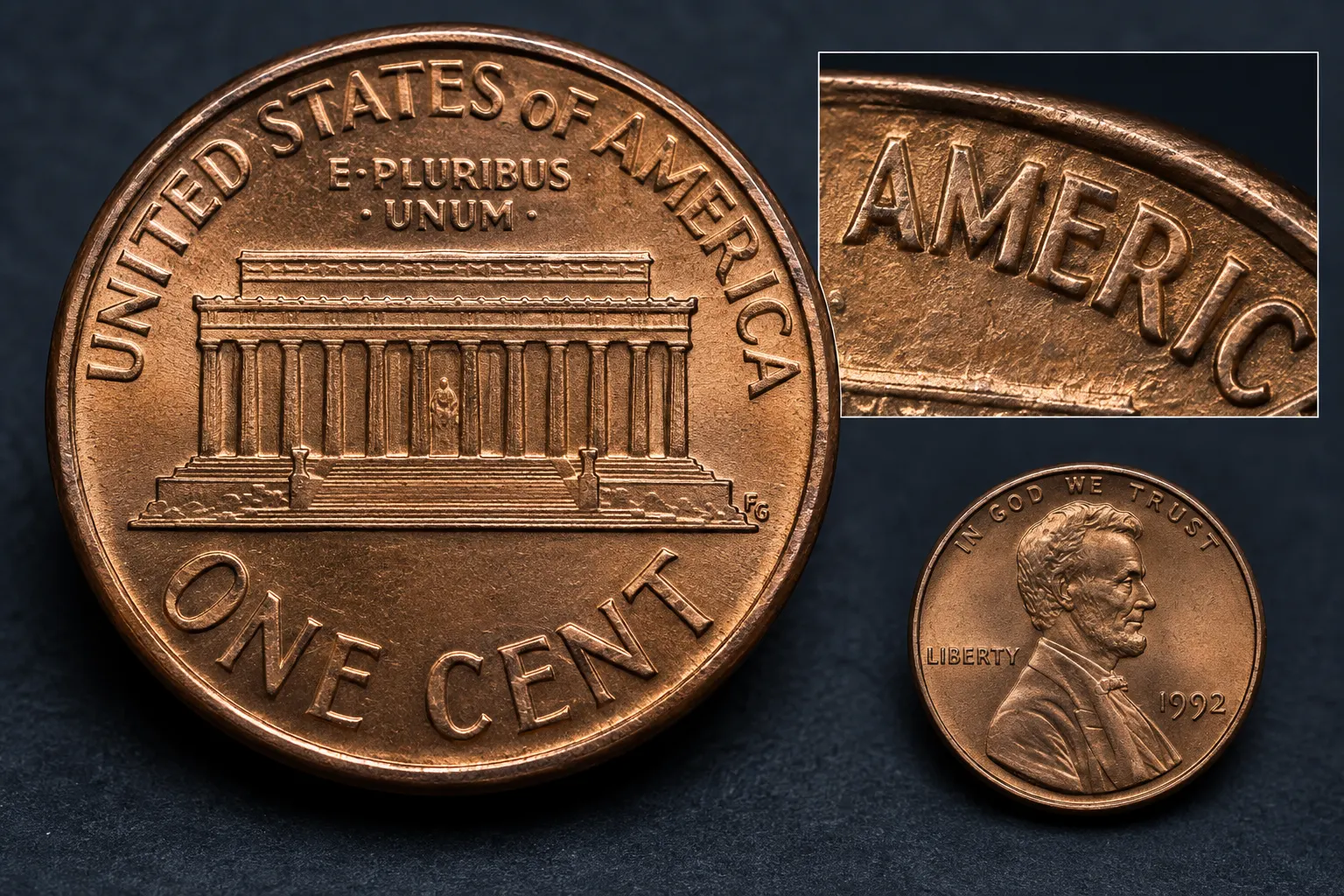
Separate recognized die varieties from mint errors and from post-mint damage. The Formative Years reverse deserves extra attention because PCGS lists attributed DDR varieties including FS-806, FS-807, FS-808 and FS-809. A coin with extra-looking fingers, a fuzzy date or a doubled edge is not automatically one of them.
| Category | Examples | What to do |
|---|---|---|
| Recognized die variety | Formative Years DDR attributions | Match the exact published diagnostics |
| Mint error | Off-center, wrong planchet, clipped planchet | Document the strike and seek specialist review |
| Post-mint damage | Scratches, corrosion after striking, zinc rot | Do not market it as an error without evidence |
How to Identify Your 2009 Lincoln Penny
Design, mint, type, grade, then value.
This sequence prevents the most common mistake: pricing a normal copper-plated zinc cent as if it were a 95% copper Satin Finish coin, a proof or a recognized error.
What Makes a 2009 Lincoln Penny Valuable?
There is no automatic winner among the four designs.
Most Valuable 2009 Lincoln Pennies Sold at Auction
Selected recorded sales, grouped by issue type; not an exhaustive ranking.
| Design | Mint / type | Grade | Auction | Date | Realized |
|---|---|---|---|---|---|
| Birth and Early Childhood | P circulation | MS68 RD | Stack’s Bowers · lot 2176 | April 2025 | $4,800 |
| Formative Years | P circulation | MS67 RD | eBay · PCGS record | Aug. 31, 2010 | $1,995 |
| Professional Life | P circulation | MS68RD | Heritage | Apr. 4, 2017 | $1,939 |
| Presidency | D circulation | MS68RD | Heritage | Aug. 10, 2016 | $4,700 |
Satin Finish collector sales
| Design | Mint / type | Grade | Venue | Date | Realized |
|---|---|---|---|---|---|
| Early Childhood | P Satin Finish | SP69 RD | eBay · PCGS record | Jan. 4, 2022 | $112 |
| Formative Years | P Satin Finish | SP69 RD | Heritage | Oct. 23, 2011 | $299 |
| Professional Life | P Satin Finish | SP69 RD | eBay · PCGS record | Jul. 7, 2018 | $130 |
Amounts are rounded to the nearest dollar. The figures are individual recorded transactions checked against PCGS records; eBay transactions are labeled as such, and a recorded sale does not guarantee authentication of a listing. Original Stack’s Bowers lot 2176 confirms the $4,800 Birth example. Formative Years RD sale reference. Do not use eBay asking prices, an exceptional grade record or a Satin Finish result to price a normal raw circulation cent.
Why Did the Penny Change in 2009?
A one-year reverse program honored two anniversaries.
Public Law 109-145 authorized four 2009 cent reverse designs to mark the bicentennial of Abraham Lincoln's birth and the centennial of the first Lincoln cent. The U.S. Mint described the program as the first major Lincoln cent design change in half a century. The reverse themes move from Lincoln's childhood in Kentucky through Indiana and Illinois to his presidency in Washington, D.C.
After the fourth design, the cent moved to the Shield reverse in 2010. That makes 2009 a one-year type series, but a one-year design does not make every example rare. The important separation is between common circulation coins and the smaller collector issues, high-grade certified pieces and documented varieties.
2009 Lincoln Penny Specifications
Composition changes with the issue type.
| Specification | Circulation version | 95% copper collector version |
|---|---|---|
| Denomination | One Cent | One Cent |
| Year | 2009 | 2009 |
| Composition | 2.5% copper, balance zinc | 95% copper, 5% tin and zinc |
| Weight | 2.50 g | 3.11 g |
| Diameter | 19.05 mm | 19.00 mm reference |
| Edge | Plain | Plain |
| Obverse | Lincoln by Victor David Brenner | Lincoln by Victor David Brenner |
| Reverse | Four 2009 designs | Four 2009 designs |
References round the cent diameter to either 19.00 or 19.05 mm. That rounding is not a diagnostic for circulation versus Satin Finish or proof; use the issue, surface and reference weight together.
Should You Clean a 2009 Lincoln Penny?
No. Do not polish, scrape, dip or chemically alter a 2009 cent that might be Satin Finish, proof, high-grade RD, a recognized variety or a major error. Cleaning can remove original surfaces and the evidence needed for attribution. Store it safely, photograph both sides and seek a specialist opinion.
2009 Lincoln Penny FAQ
How much is a 2009 Lincoln penny worth?
Most circulated 2009 cents are close to face value. Premiums depend on the reverse design, mint mark, condition, Satin Finish or proof status, composition and any recognized variety or error.
What are the four 2009 penny designs?
Birth and Early Childhood in Kentucky, Formative Years in Indiana, Professional Life in Illinois, and Presidency in Washington, D.C.
Which 2009 penny has the lowest mintage?
The Philadelphia Presidency circulation cent has the lowest P/D design-and-mint combination mintage at 129.6 million. Low mintage does not automatically create a high price.
Is a 2009 penny with no mint mark an error?
No. A 2009 cent without a mint mark was struck at Philadelphia. No mint mark is normal for all four Philadelphia circulation designs.
Is there a 2009-S penny?
Yes. The S identifies San Francisco proof issues. A 2009-S cent is not a regular circulation coin simply because it is hard to find in change.
Are 2009 pennies made of copper?
It depends on the issue. Regular P and D circulation cents are copper-plated zinc, while the collector Satin Finish and proof versions use a 95% copper alloy with tin and zinc.
How much does a 2009 penny weigh?
A regular copper-plated zinc circulation cent weighs about 2.50 grams. A 95% copper collector or proof version weighs about 3.11 grams. Weight is a screening clue, not authentication by itself.
What is a 2009 Satin Finish penny?
It is a special collector strike from the 2009 Uncirculated Mint Set. The set supplied one P and one D example of each reverse design, with a satin surface and 95% copper alloy.
What errors should I look for on a 2009 penny?
Look for documented die varieties, off-center strikes, wrong planchets and clipped planchets. Plating blisters can originate during striking; later corrosion or plating damage is a different process. Unusual surfaces alone do not establish a valuable error.