
1999 Wide AM Penny Value & Identification Guide
The 1999 Wide AM penny is a scarce Philadelphia business-strike variety with a proof-style reverse. Its key clue is the clear gap between the A and M in AMERICA, where a normal 1999 business strike has Close AM spacing.
Genuine 1999 Wide AM cents were struck in Philadelphia and have no mint mark. The AM spacing is the primary screen, while the FG initials near the Lincoln Memorial provide a secondary check. PCGS describes the variety as a circulation strike that accidentally received a proof-style reverse design.
Variety, auction and population references checked September 19, 2026
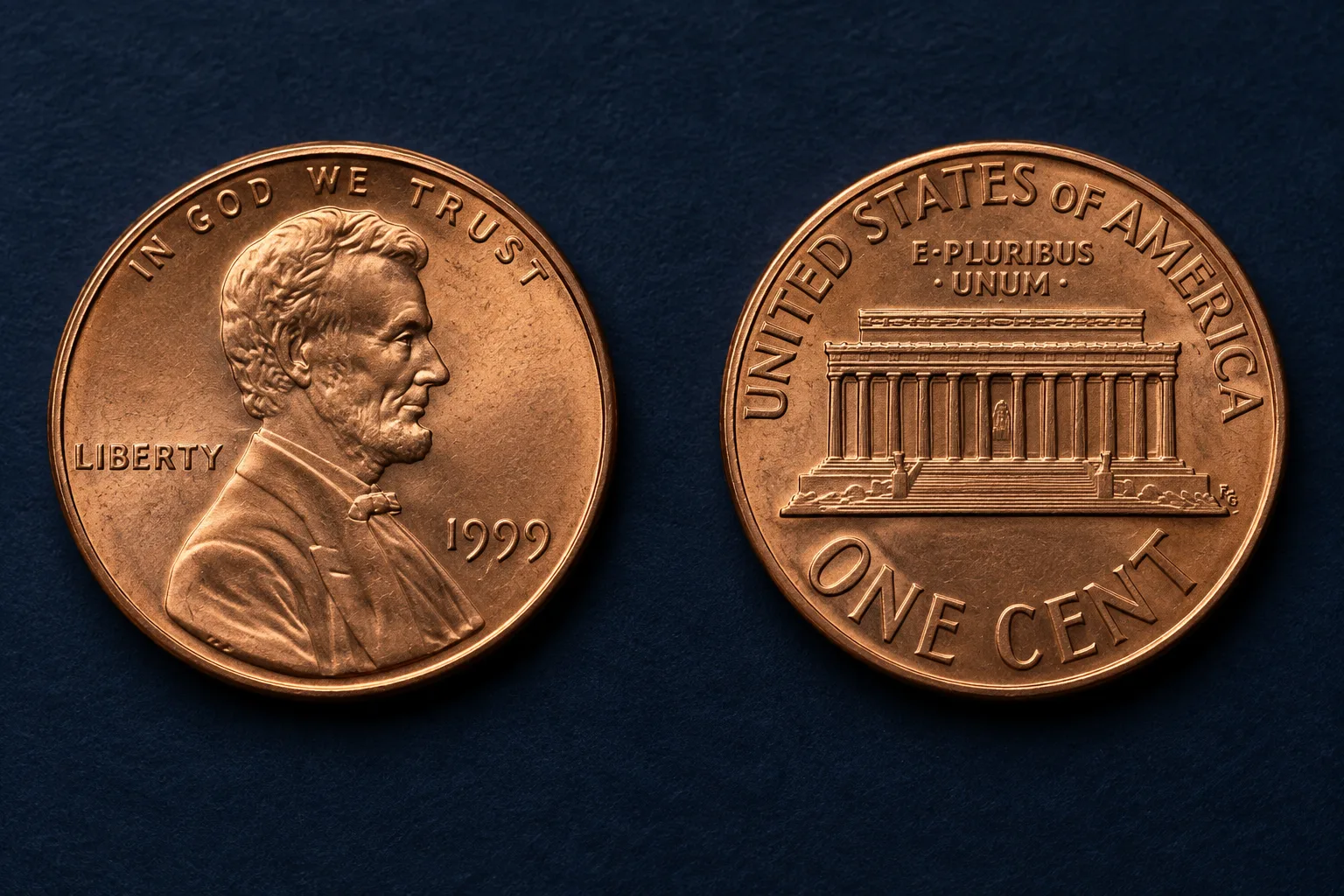
How Much Is a 1999 Wide AM Penny Worth?
Attribution comes before price.
A genuine 1999 Wide AM can be worth hundreds or thousands of dollars. The spread is wide because circulated BN pieces, Red-Brown examples and top-grade RD coins are different markets. The date, Wide AM reverse, grade, color, surface and certification must all agree.
Recent PCGS-listed records include $200 for an AU58BN, $440 for an MS65RD, $1,292.50 for an MS67RD, $3,960 for an MS68RD Heritage sale and a $4,583 PCGS auction record for an MS68RD. These are completed-sale reference points, not a guaranteed offer for an ungraded coin.
1999 Wide AM Penny Value Chart
Only published guide checkpoints are shown by color and grade.
| Grade | Color | PCGS guide checkpoint |
|---|---|---|
| VF20 | BN | $19 |
| VF20 | RB | $16 |
| VF20 | RD | $25 |
| XF40 | BN | $36 |
| XF40 | RB | $32 |
| XF40 | RD | $48 |
| AU50 | BN | $55 |
| AU50 | RB | $45 |
| AU50 | RD | $67 |
| AU55 | BN | $73 |
| AU55 | RB | $62 |
| AU55 | RD | $92 |
| AU58 | BN | $78 |
| AU58 | RB | $73 |
| AU58 | RD | $100 |
| MS60 | BN | $82 |
| MS60 | RB | $86 |
| MS60 | RD | $140 |
| MS61 | BN | $92 |
| MS61 | RB | $100 |
| MS61 | RD | $160 |
| MS62 | BN | $100 |
| MS62 | RB | $130 |
| MS62 | RD | $170 |
| MS63 | BN | $110 |
| MS63 | RB | $160 |
| MS63 | RD | $180 |
| MS64 | BN | $130 |
| MS64 | RB | $200 |
| MS64 | RD | $220 |
| MS65 | BN | $180 |
| MS65 | RD | $260 |
| MS66 | RD | $350 |
| MS67 | RD | $1,600 |
| MS68 | RD | $6,000 |
Only source-backed numeric checkpoints are shown. Grade/color combinations without a published checkpoint are omitted rather than filled with an estimate. Review the live PCGS Price Guide and completed auction records for the exact certified coin. The total Philadelphia 1999 cent mintage of 5,237,600,000 is not a count of Wide AM coins.
How Color Affects Value
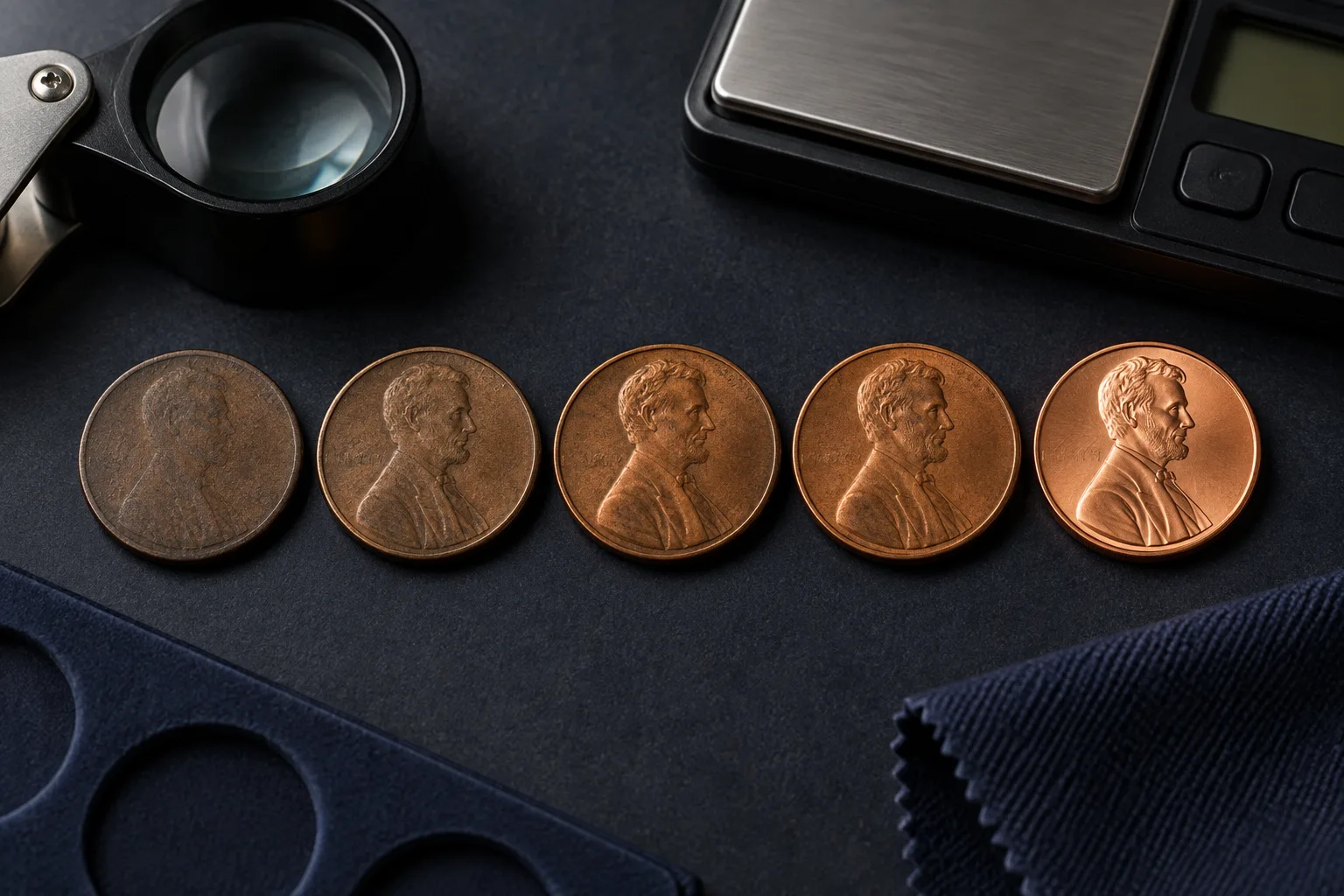
BN means Brown, RB means Red-Brown and RD means Red. Color is separate from the numerical grade. A certified MS65BN and an MS65RD are not interchangeable market references.
Original copper color, clean fields and an undisturbed surface help a rare variety. A bright appearance after polishing or chemical treatment is not the same as original Red color.
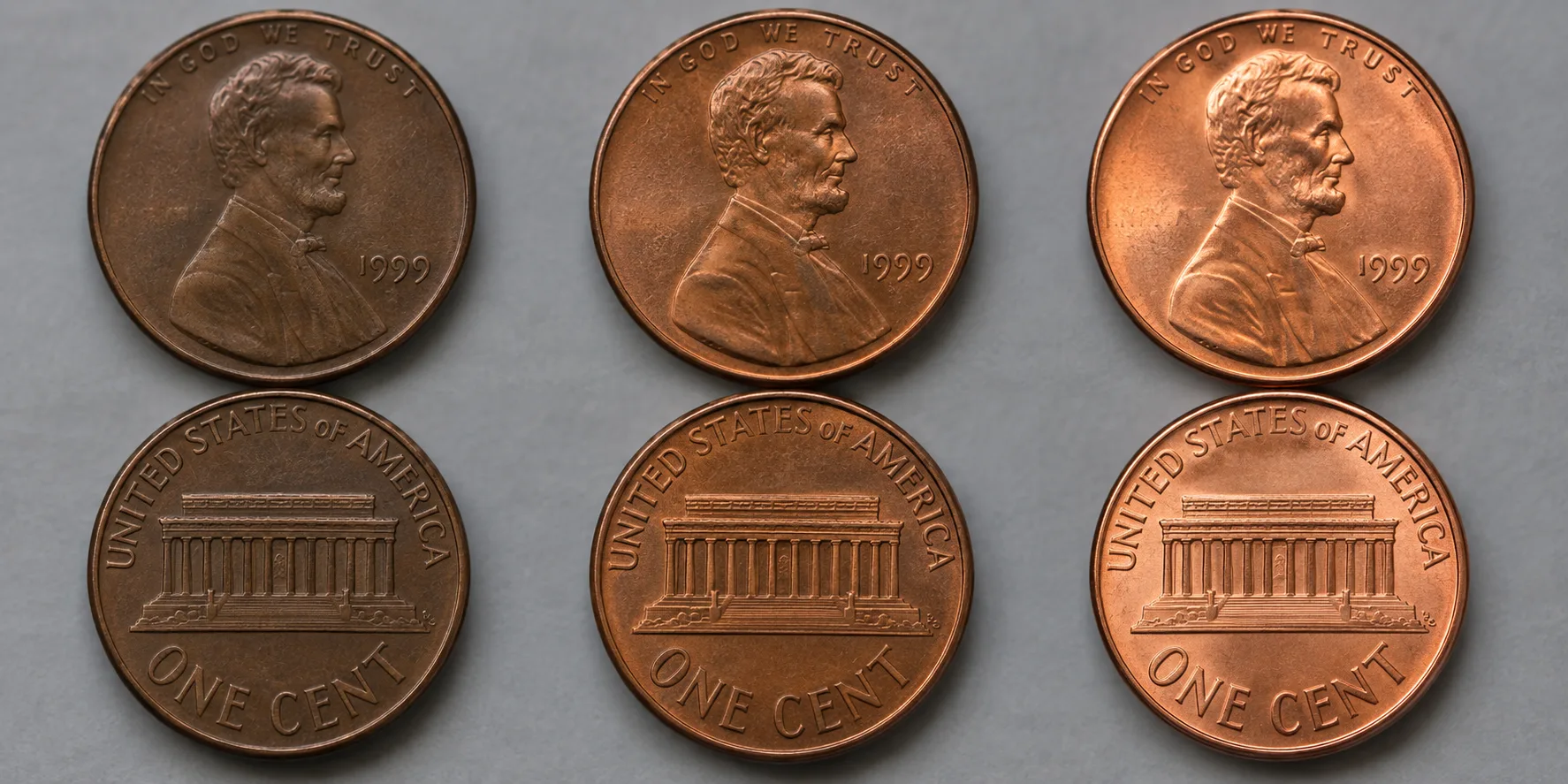
What Does a 1999 Wide AM Penny Look Like?
Start with the reverse.
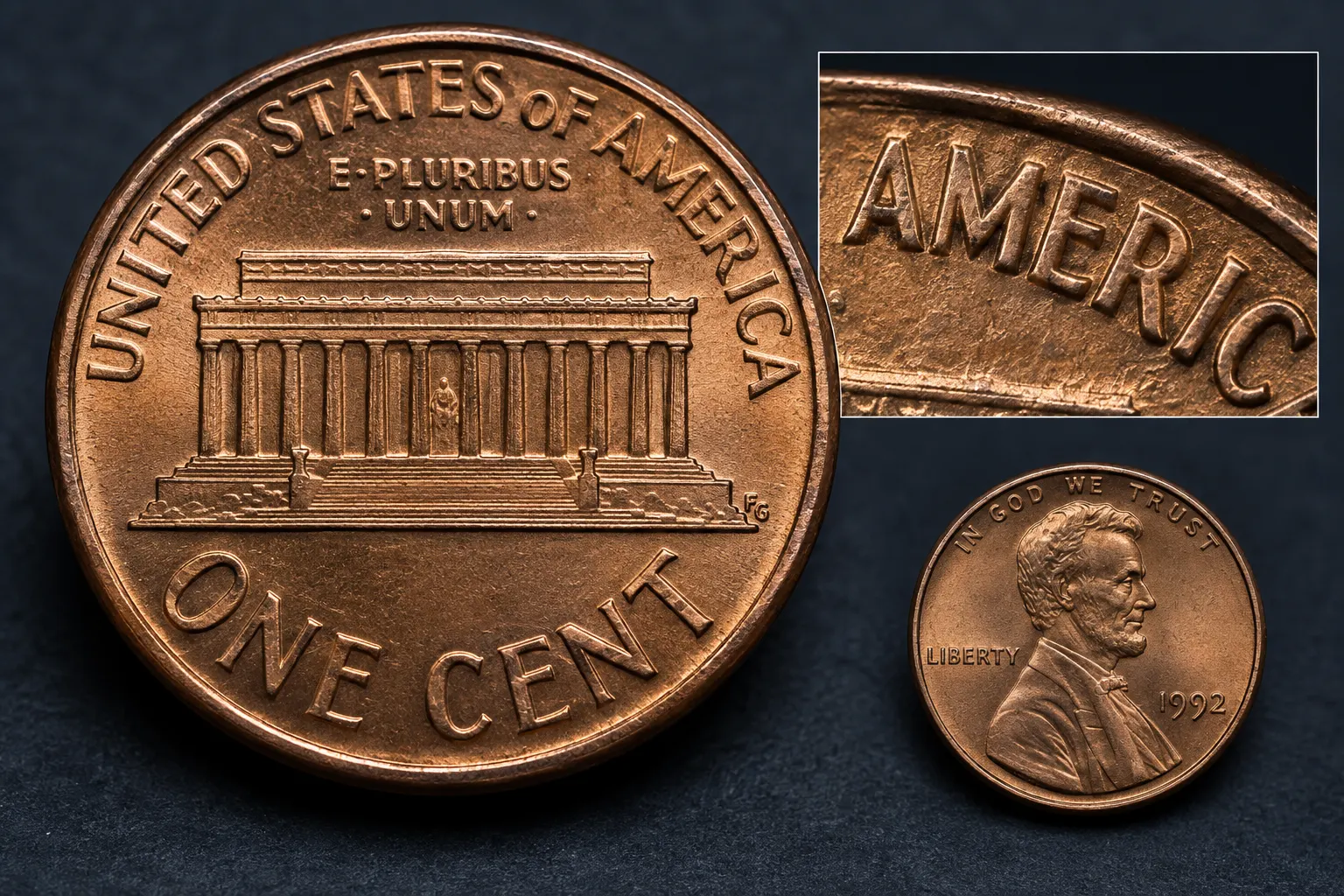
The Wide AM diagnostic is in AMERICA on the reverse. The bases of the A and M are visibly separated. On the normal 1999 business strike, those bases are nearly touching. The open gap should be clear in a sharp, straight-on view, while the rest of the reverse and the FG position should support the same attribution.
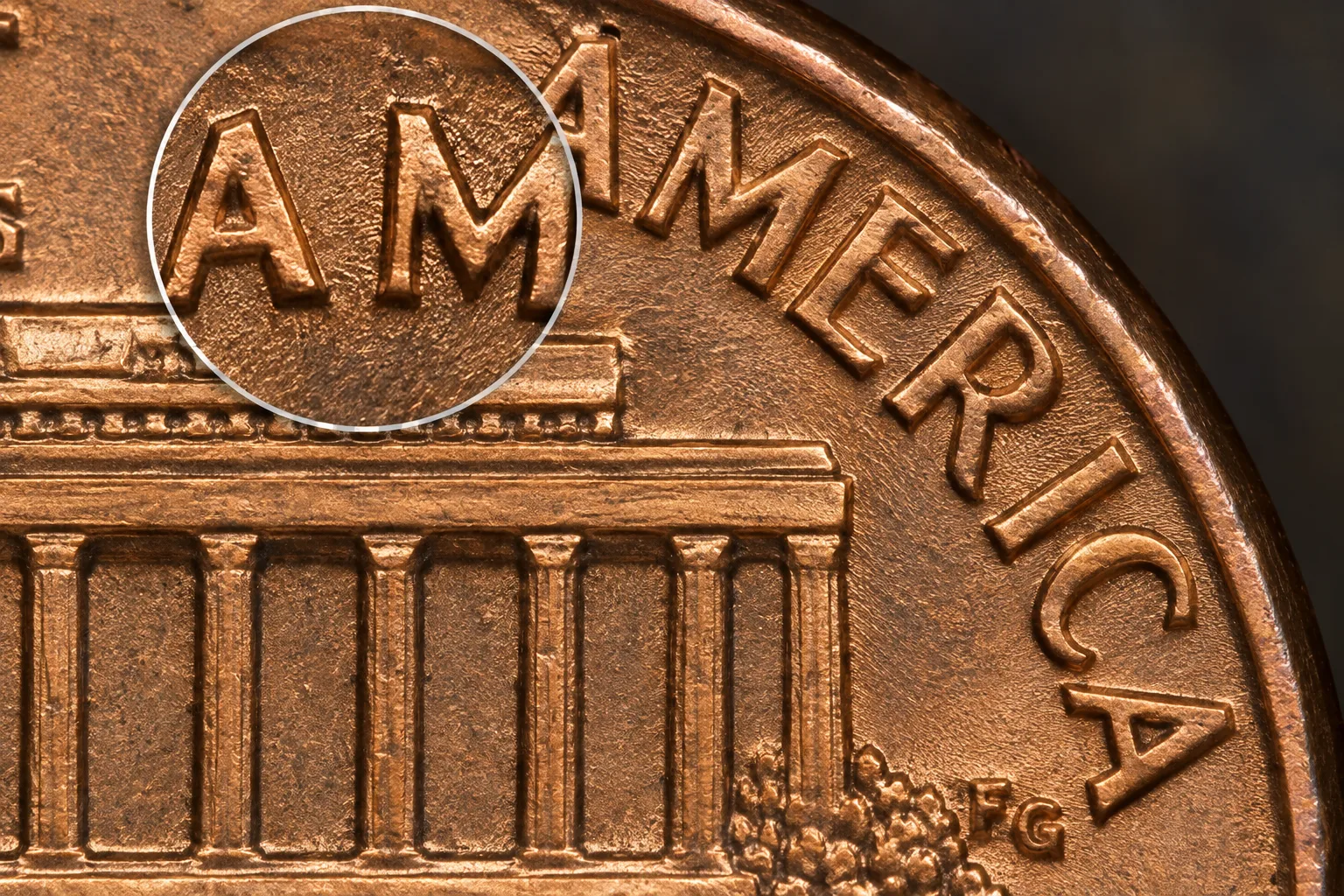
1999 Wide AM Penny Pictures
Each view answers a different question.
1999 Wide AM vs Close AM
The gap is the first screen.
| Feature | Wide AM | Close AM |
|---|---|---|
| A and M | Visible gap between the bases | Nearly touching at the bases |
| Business-strike status | Scarce proof-style reverse on a circulation strike | Normal 1999 circulation reverse |
| FG position | Closer to the Memorial | Normal business-reverse position |
| Rarity | Scarcest of the 1998, 1999 and 2000 dates | Common |
| Collector premium | Strong when authenticated | Usually regular 1999 value |
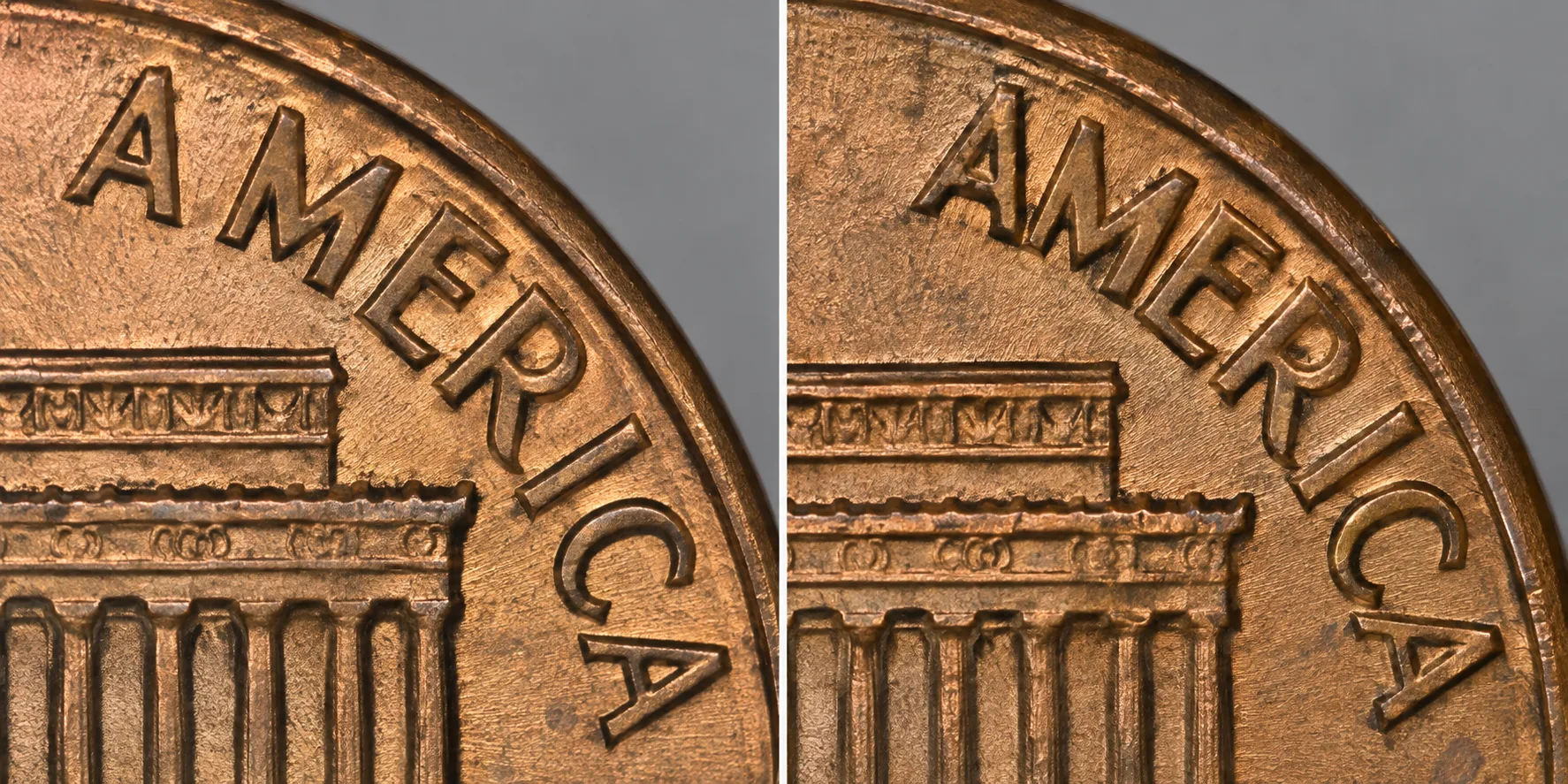
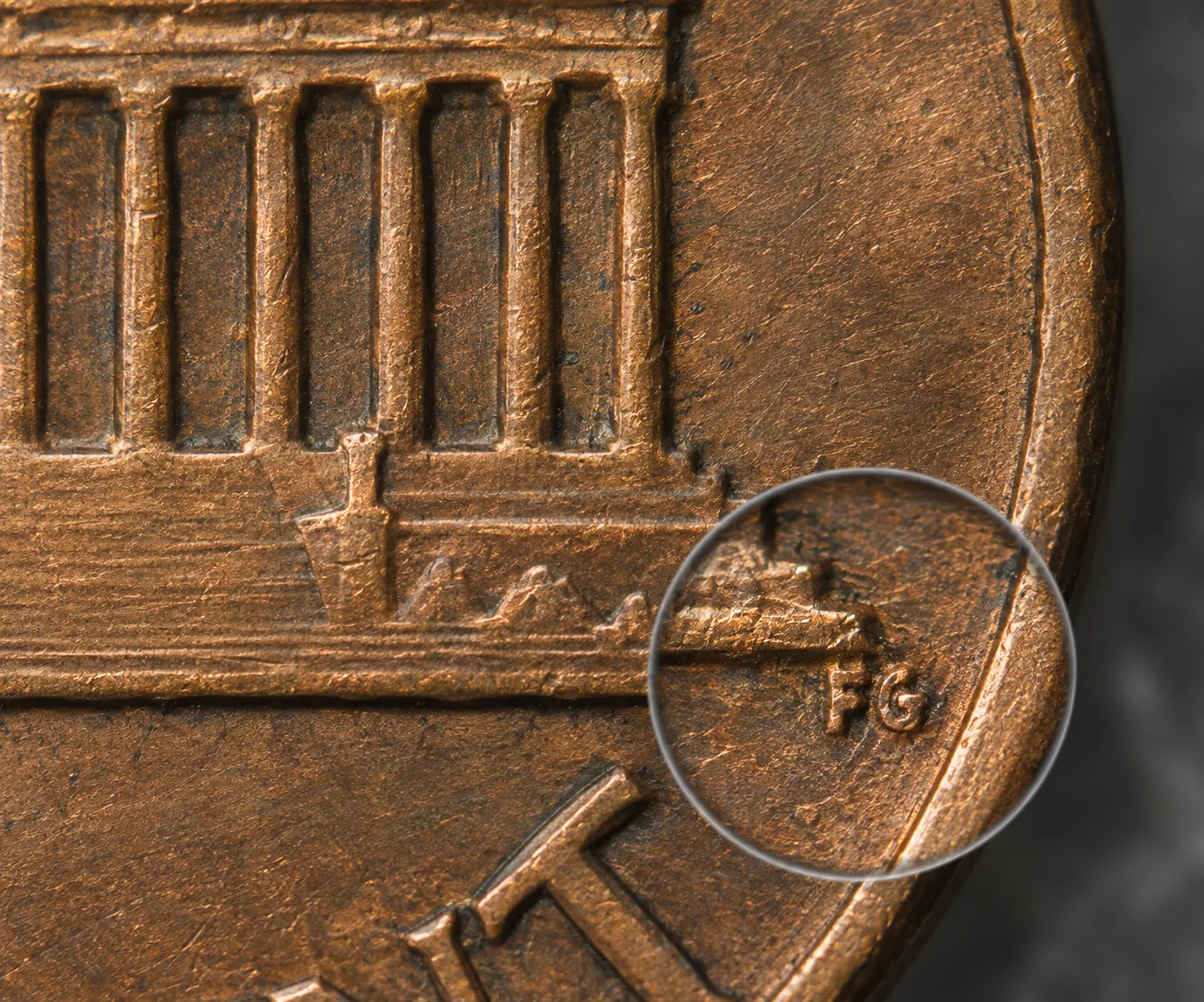
Check the FG Initials
FG represents designer Frank Gasparro. The initials sit near the lower-right side of the Lincoln Memorial on the reverse. On the Wide AM proof-style reverse, the initials are closer to the Memorial than on the normal Close AM business reverse.
Use FG as confirmation, not as the primary discovery tool. A coin that has an open-looking AM but the wrong broader reverse profile should not be called FS-901 from one close-up.
How to Identify a 1999 Wide AM Penny
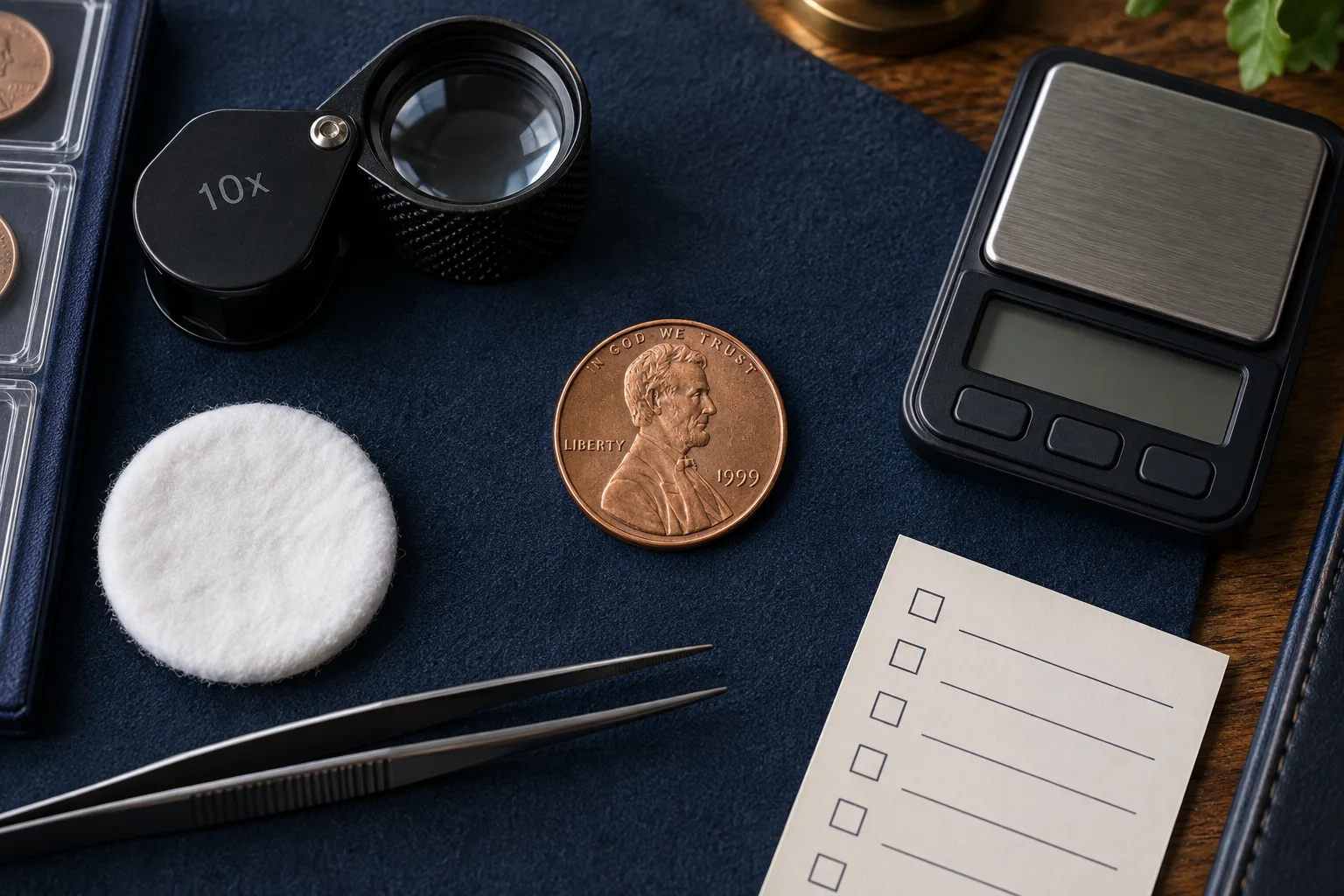
Follow the same order every time.
Does a 1999 Wide AM Penny Have a Mint Mark?
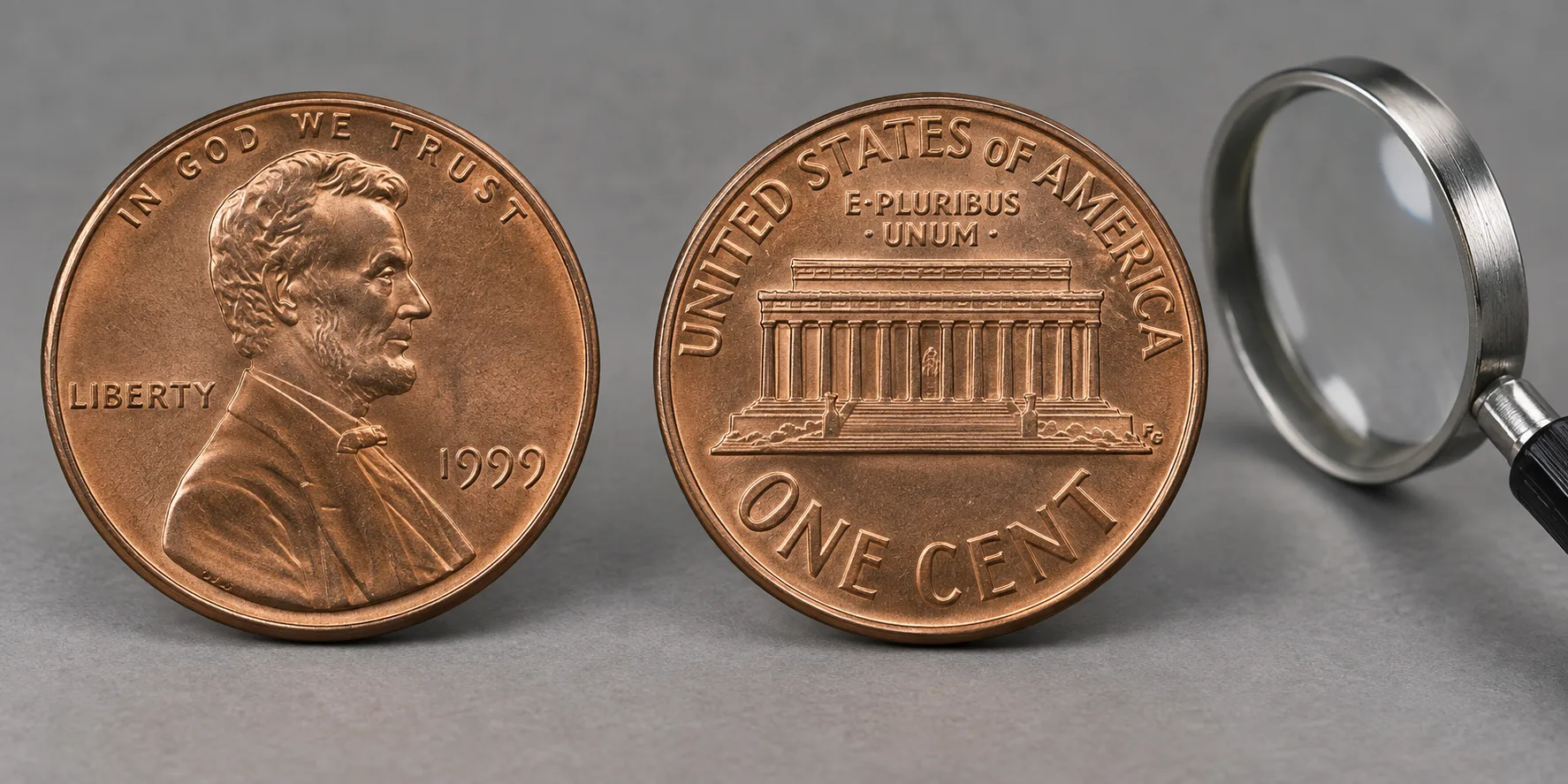
The recognized Philadelphia 1999 Wide AM business strike has no physical mint mark below the date. Collectors sometimes write 1999-P to identify Philadelphia, but that P is shorthand only. It is not stamped on the coin.
The missing letter is normal for Philadelphia and does not prove the variety. The reverse AM spacing and supporting diagnostics still have to match FS-901.
Is There a 1999-D Wide AM Penny?
Do not transfer the attribution automatically.
A D below the date identifies Denver, but it does not turn a coin into the recognized 1999 Wide AM FS-901. The major documented Wide AM business-strike discussion centers on Philadelphia examples. If a 1999-D coin appears to show an open gap, compare it with a specialist reference and do not use Philadelphia Wide AM prices until the attribution is independently established.
1999 Wide AM Business Strike vs 1999-S Proof Penny
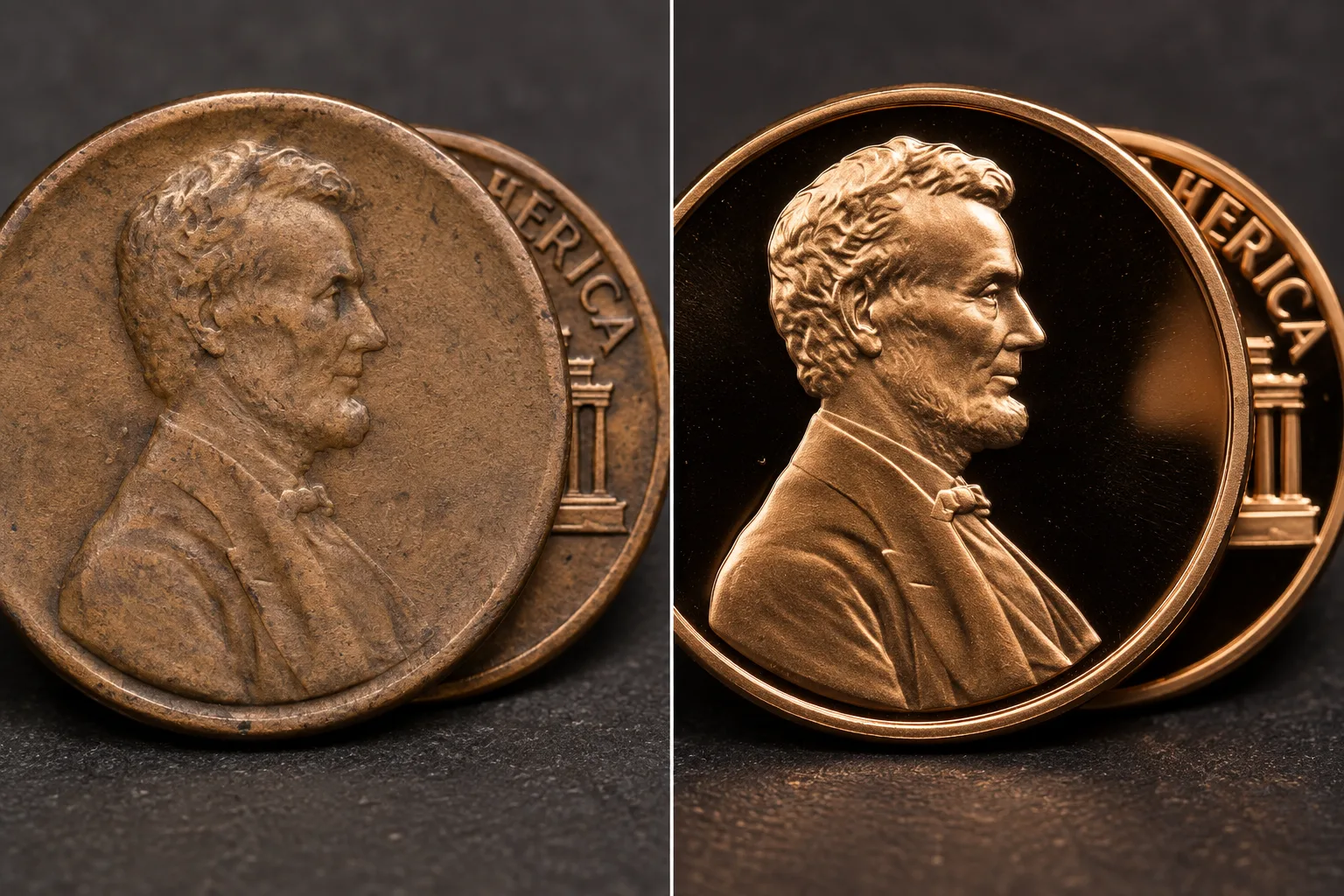
Proof cents normally use the separated Wide AM reverse style, so Wide AM by itself does not prove a rare coin. The collectible discovery is a 1999 Philadelphia business strike carrying that proof-style reverse. A 1999-S proof normally has Wide AM, while the scarce 1999-S Close AM proof is the opposite reverse-design mix-up.
A circulation strike can be bright and a circulated proof can lose its mirror appearance. Finish is supporting evidence, not a replacement for the date, mint and reverse attribution.
| Coin | Normal AM style | Scarce variety |
|---|---|---|
| 1999 Philadelphia business strike | Close AM | Wide AM, FS-901 |
| 1999-S proof | Wide AM | Close AM, FS-901 |
Compare the 1999-S Close AM proof with the PCGS reference; it is a separate proof variety, not the Philadelphia business-strike Wide AM.
Why Does the 1999 Wide AM Penny Exist?
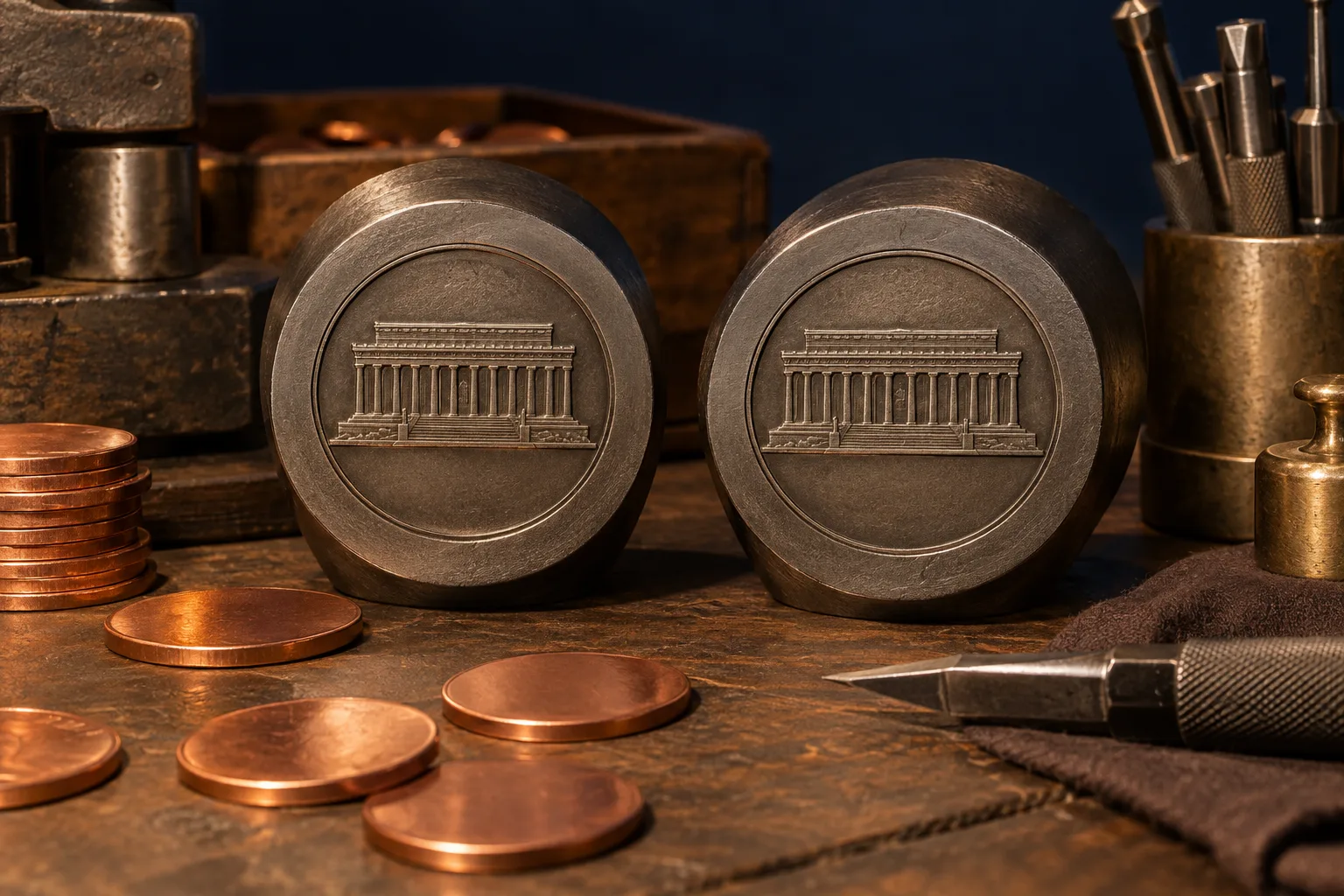
PCGS describes the reverse of the business-strike coin as having been struck with a reverse proof die. That explains the separated AM lettering and the related FG placement. The exact production path is less important for screening than recognizing that the coin is a circulation strike with a proof-style reverse.
Normal circulation cents of this period used the Close AM reverse, while proof cents used the Wide AM design. A small number of Philadelphia business strikes received the proof-style reverse, creating the 1999 Wide AM variety. The same broad reverse-design mix-up is documented across the 1998, 1999 and 2000 Philadelphia dates.
Use precise language: this is a recognized reverse variety or transitional-style issue, not automatically a doubled die. Die doubling is a different phenomenon with different diagnostics.
How Rare Is the 1999 Wide AM Penny?
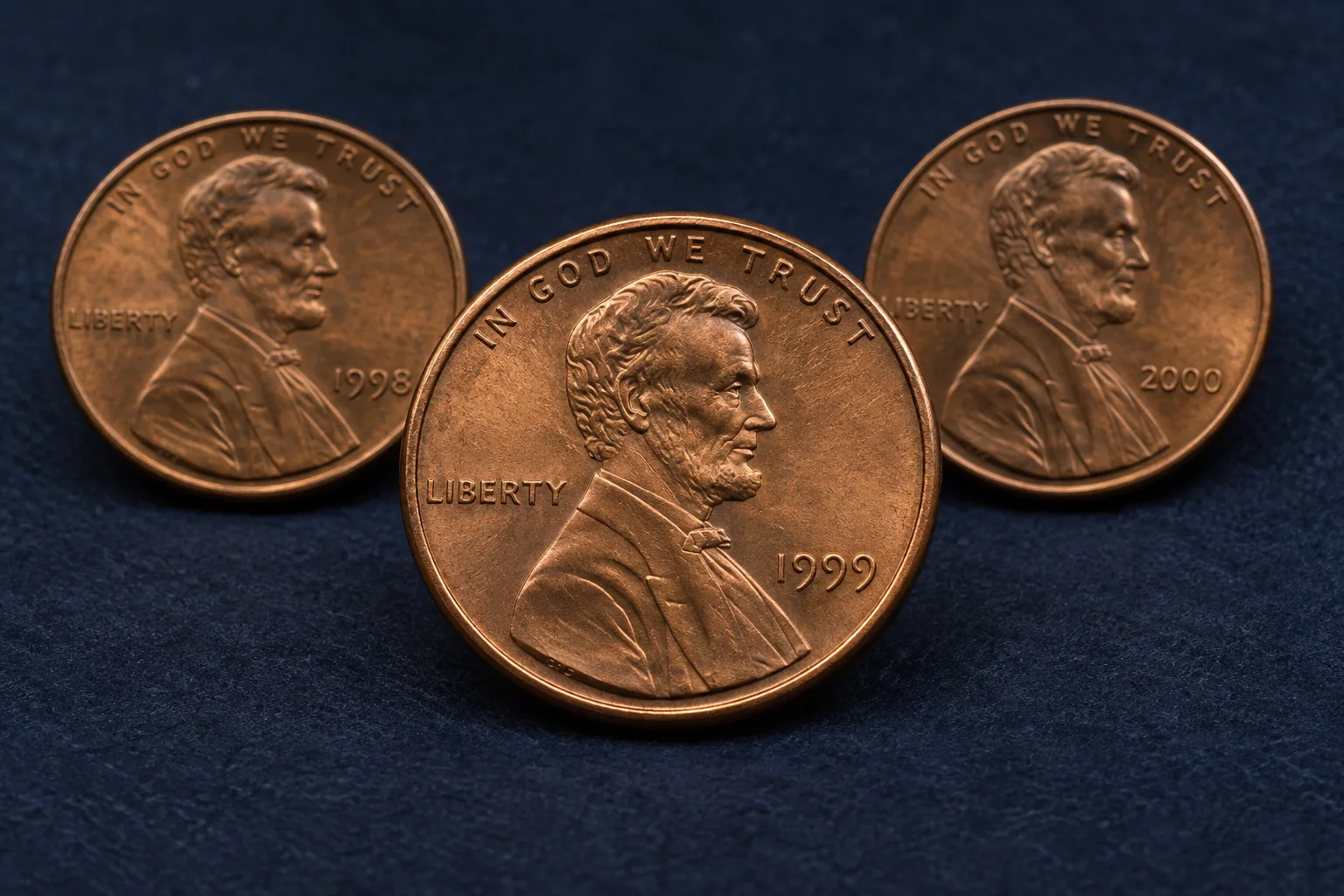
PCGS identifies 1999 as the scarcest of the 1998, 1999 and 2000 Wide AM business-strike dates. Current PCGS text says just over 1,000 coins have been graded in the variety, but certification totals are not a count of every surviving coin.
A population report can include resubmissions, and ungraded coins are outside the report. Treat the number as a certification reference rather than a precise census. The variety can still appear in lower grades, while high-grade Red coins create the strongest auction competition.
1998 vs 1999 vs 2000 Wide AM Pennies
All three dates need the same careful screen.
| Date | Business-strike Wide AM status | Collector context |
|---|---|---|
| 1998 | Recognized Wide AM examples | Scarce variety with its own diagnostics |
| 1999 | FS-901, Philadelphia, no mint mark | Scarcest of the three in PCGS commentary |
| 2000 | Recognized Wide AM examples | Important comparison date, but not a 1999 attribution |
What Makes a 1999 Wide AM Penny Valuable?
Rarity starts the conversation; condition finishes it.
1999 Wide AM Penny Auction Records
Records describe individual coins.
| Attribution | Grade | Service | Sale | Date | Realized |
|---|---|---|---|---|---|
| 1999 Wide AM FS-901 | MS68RD | PCGS | Legend Rare Coin Auctions | Jan. 30, 2020 | $4,583 |
| 1999 Wide AM FS-901 | MS68RD | PCGS | Heritage Auctions | Nov. 19-22, 2020 | $3,960 |
| 1999 Wide AM FS-901 | MS67RD | PCGS | Legend Rare Coin Auctions | Sep. 2019 | $1,292.50 |
| 1999 Wide AM FS-901 | MS65RD | PCGS | GreatCollections | Feb. 2014 | $440 |
| 1999 Wide AM FS-901 | AU58BN | PCGS | PCGS-listed eBay sale | Mar. 2023 | $200 |
Auction amounts are historical completed-sale references checked against PCGS Auction Prices. The AU58BN eBay row is secondary context only; PCGS warns it does not guarantee eBay listing accuracy. These figures are not current guaranteed values and should not be copied to a raw or differently graded coin.
1999 Wide AM Penny for Sale: What to Check
Do not buy the headline before checking the coin.
Where Can I Sell a 1999 Wide AM Penny?
Authenticate it before advertising a rare variety. A raw coin that only looks open in a phone photograph should not be marketed as FS-901. If the AM, FG and mint combination is convincing, professional grading can make the result easier for a dealer or auction house to evaluate.
A specialist auction house may suit a high-grade certified RD example. A reputable dealer can be practical for a lower-grade authenticated coin. Active listings show hopes, while completed sales show market evidence.
How to Authenticate a 1999 Wide AM Penny
Several checks should agree.
1999 Wide AM Penny Specifications
These are the basic Lincoln cent specifications.
| Specification | Detail |
|---|---|
| Year | 1999 |
| Denomination | One Cent |
| Series | Lincoln Memorial Cent |
| Variety | Wide AM |
| Attribution | FS-901 |
| Mint | Philadelphia |
| Mint mark | None |
| Composition | Copper-plated zinc |
| Weight | 2.50 g |
| Diameter | 19 mm |
| Edge | Plain |
| Diagnostic side | Reverse |
| Primary diagnostic | Wide AM gap |
| Secondary diagnostic | FG initials |
Should You Clean a 1999 Wide AM Penny?
No. Do not polish, scrape the AM, use chemicals or modify the surface. Cleaning can create hairlines, remove original evidence and reduce the grade or value. Keep a possible Wide AM in a soft holder, photograph both sides and have it reviewed without alteration.
1999 Wide AM Penny FAQ
How much is a 1999 Wide AM Penny worth?
A genuine 1999 Wide AM can be worth much more than a normal 1999 cent. Grade, color, surface, attribution and certification control the result, so compare the exact coin with completed sales.
What does a 1999 Wide AM Penny look like?
On the reverse, the A and M in AMERICA have a clear separation at their bases. A sharp, straight-on image is needed because wear and camera angle can mislead.
Where is the Wide AM on a 1999 penny?
Flip to the reverse and inspect the AM in AMERICA near the upper-right lettering. The gap between A and M is the first diagnostic.
How big should the gap be on a 1999 Wide AM?
The gap should be visibly open compared with the nearly touching bases on a normal Close AM. Do not use a ruler or a blurry phone image as the only test.
What is the difference between Wide AM and Close AM?
Wide AM has separated A and M bases and uses the proof-style reverse hub. Close AM has nearly touching bases and is the normal 1999 business-strike reverse.
How can I tell Wide AM from a damaged letter?
Compare the complete reverse design with a trusted reference. Scratches, strike weakness, glare and image stretching can make ordinary Close AM look open.
What do the FG initials show on a 1999 Wide AM?
FG is a secondary diagnostic near the Lincoln Memorial. On the Wide AM proof-style reverse it sits closer to the Memorial than on the normal Close AM business reverse.
Does a 1999 Wide AM Penny have a mint mark?
The Philadelphia business strike has no physical mint mark. Collectors may write 1999-P, but no P appears below the date.
Why does the Philadelphia 1999 cent have no mint mark?
Philadelphia cents traditionally use no mint mark. The absence of a letter is normal and is not a mint error.
Is there a 1999-D Wide AM Penny?
Do not automatically attribute a 1999-D coin as FS-901. The well-known 1999 Wide AM business-strike variety is the Philadelphia issue; a D coin needs separate specialist evidence.
Are 1999 proof cents Wide AM?
Proof cents from this era normally use the separated Wide AM style. The scarce discovery is a business-strike 1999 cent carrying that proof-style reverse.
Why does the 1999 Wide AM Penny exist?
The reverse resembles a proof-style hub that was used on a small number of Philadelphia circulation strikes. It is best described as a reverse design or transitional variety, not automatically a doubled die.
Is the 1999 Wide AM a mint error?
Collectors and grading services recognize it as FS-901, a business strike with a proof-style reverse. Calling every example a generic mint error is less precise than naming the variety.
What is FS-901?
FS-901 is the recognized attribution used for the 1999 Wide AM business-strike variety. Attribution requires more than seeing an open gap in one photograph.
How rare is the 1999 Wide AM Penny?
PCGS describes 1999 as the scarcest of the 1998, 1999 and 2000 Wide AM business-strike dates. More than 1,000 examples have been certified, but that is not an exact surviving population.
How many 1999 Wide AM Pennies are known?
Certification totals are a useful reference but not a census. Resubmissions can count more than once, and raw coins remain outside grading-service populations.
How does 1999 compare with 1998 and 2000 Wide AM cents?
All three dates are known with Wide AM business strikes, but PCGS identifies 1999 as the scarcest and most difficult of the group.
Can a 1999 Wide AM Penny still be found in circulation?
It is possible, although the strongest examples are more likely to be separated by collectors. Any promising coin should be screened gently and left uncleaned.
How can I authenticate a 1999 Wide AM Penny?
Confirm the date, Philadelphia format, AM spacing, FG position, die details and normal specifications, then use a recognized grading service for a valuable candidate.
Should I clean a 1999 Wide AM Penny?
No. Polishing, scraping or chemical cleaning can destroy surface evidence and reduce collector value. Preserve the coin and photograph both sides instead.
Related Lincoln Cents
Sources Used for This Guide
Price, variety attribution and specifications should be checked against specialist references. Active listings are not treated as completed-sale evidence.