
How Coins Identification Works
Coins Identification follows a simple process: upload a clear coin photo, analyze visible details, prepare a possible match, show a practical value range, and give links for further checking. The goal is to help users move from uncertainty to a useful research direction.
The system is designed for first-step identification. It works best when the photo is sharp, the coin fills most of the frame, and important details such as year, denomination, portrait, symbols, and lettering are visible.
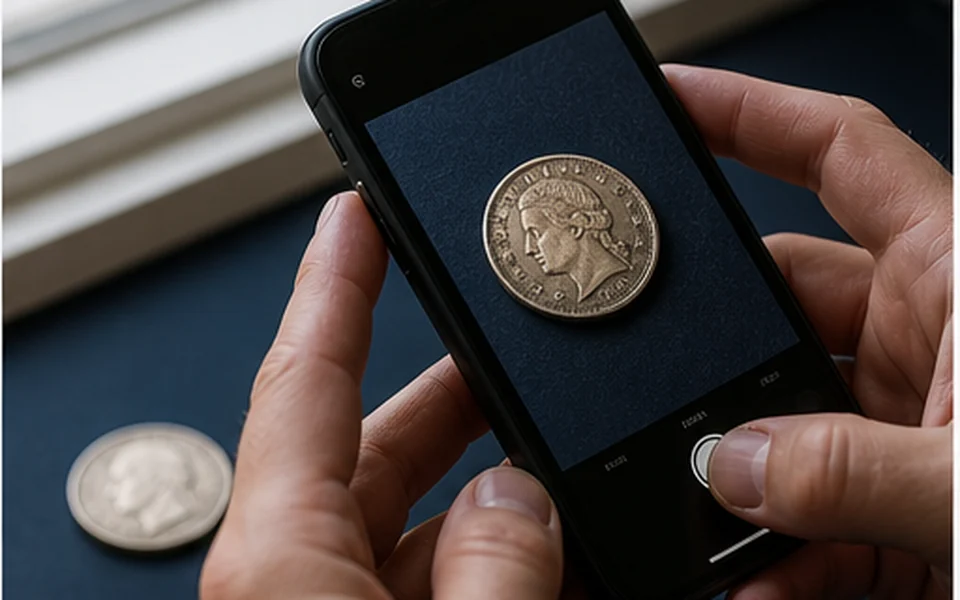
Upload or photograph the coin
You can choose an image from your device or use the camera when your browser supports it. The best photo shows one coin, centered, with the full rim visible. For better identification, take both sides separately and keep the date and letters readable.
The image is prepared for analysis
Before analysis, the site checks that the upload is a real image file and limits file size for security. Large images are optimized so the recognition service can process them more reliably. Temporary upload files are deleted after the request finishes.
Visible details are reviewed
The recognition process checks evidence visible in the image. This may include inscriptions, numbers, portraits, coats of arms, animals, monuments, mint marks, edge clues, shape, metal appearance, and design style. If text is readable, it can strongly improve the possible match.
The system does not know details that are hidden from the photo. If the reverse side is missing, the result may be less certain. If the photo is a screenshot, contains extra interface elements, or shows a coin at an angle, recognition may be weaker.
A possible result is shown
The result page may show a possible coin name, country, year, denomination, material, rarity clue, confidence score, and estimated market range. It also includes market checking links so users can compare active listings, sold examples, visual matches, and reference catalogs.
Every result should be treated as a research lead. For common coins, the result may be enough to understand the basics. For rare, ancient, silver, gold, or error coins, additional confirmation is recommended.
Why the result is approximate
Coin identification and value estimation depend on details that photos cannot always prove. Grade, authenticity, metal content, surface cleaning, weight, diameter, and provenance may need physical inspection. Market prices also change over time.
That is why Coins Identification uses estimated ranges and practical notes instead of guaranteed prices. The service is useful for learning what to check next, not for replacing expert appraisal.